
Free to view and download. The full data and report are open to everyone, with no sign-up or registration required.
Download the full report (PDF)WheelTug_ground_collisions_Oct3126_V15.pdf · 30.0 MB · updated 31 October 2026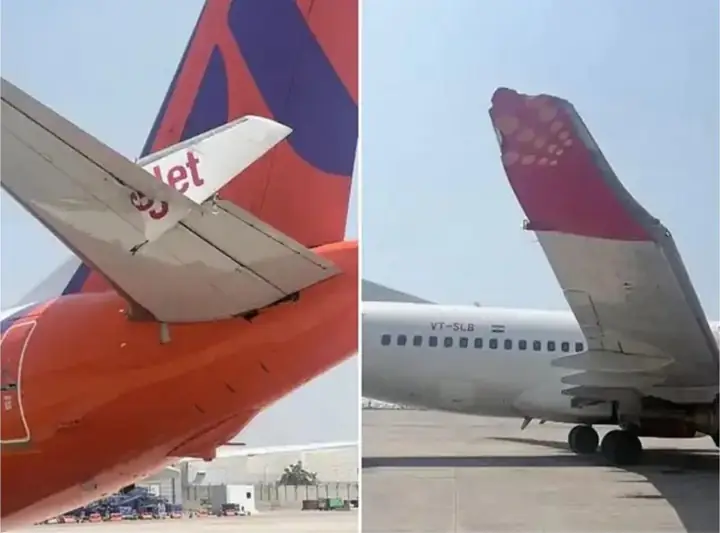
Introduction and summary
This Report aims to cover all known instances where the presence of WheelTug and WheelTug Vision (WTV) would have reduced or avoided the incident.
Compiled 29 Oct 2026. 637 incidents, grouped under Human factors, Equipment failure, Cause not stated, Ramp worker injury, Poor-visibility taxi, Jet blast and FOD ingestion.
Incidents before 2016 are only included in cases where we have photo evidence. The main period runs from 2016 to 29 October 2026; earlier cases (from 2004) appear only where a credited photo and a date are available, and are marked "Earlier cases (pre-2016, photo evidence)".
Published estimates put the cost of aircraft ground damage at about $5 billion a year, possibly doubling to about $10 billion a year by 2035; see What Ground Damage Costs: Published Estimates.
This report only includes known, publicly reported incidents. A great many ground collisions, especially minor ones, are never reported.
WheelTug is a pilot-controlled electric nose-wheel drive: the aircraft pushes back and taxis without a tug or tow bar, with main engines off. WheelTug Vision adds cameras showing wingtips, the nose gear and the aircraft's surroundings.
Ground crew role. With WheelTug, responsibility for pushback ('wheelback') shifts from ground handling staff to the flight crew, and no pushback tug or tow bar is needed (EUROCONTROL, Sustainable Taxi Operations: Concept of Operations & Industry Guidance, Ed. 1.0, 2024, pp. 26 and 41). The same document notes that a marshaller is required only until WheelTug Vision is certified as a safety-critical system (p. 80). Over time, WheelTug will be able to reduce or eliminate reliance on ground crew for pushback and taxi.
Categories and every "Our assessment" paragraph are my own judgement from the published descriptions. They are not investigator findings. Facts come from the linked sources, mainly Aviation Safety Network (ASN), investigators (NTSB, AAIB, ATSB, BFU, DSB, CIAIAC, AKISA and others) and news outlets. Where a fact could not be verified, it was left out.
Summary: incidents per category
| Category | Sub-category | Incidents | Description |
|---|---|---|---|
| Human factors | 516 | Collisions where a person's action or misjudgement is the main published factor. Secondary tags note when ATC or marshalling was also involved. | |
| Taxi crew (flight or maintenance) | 268 | An aircraft moving under its own power (flight crew, or maintenance staff taxiing) struck another aircraft, a building, a vehicle or an object. | |
| Tug / pushback driver | 136 | Pushback or tow-off-stand events where the tug driver or pushback team misjudged clearance or the pushback itself caused contact, including pushback near-misses. | |
| Wing-walker / towing crew | 69 | Maintenance or repositioning tows (often with no flight crew on board) where the towing team misjudged clearance. | |
| Ground vehicle driver | 43 | A ground vehicle and a moving aircraft collided, with the vehicle driver's actions the main factor. | |
| Equipment failure | 39 | Collisions where a piece of equipment failed. | |
| Tow bar failure / tow bar left attached | 34 | Tow bar or shear pin broke or disconnected during pushback or towing, or a tow bar was left attached. | |
| Aircraft brake / steering / nose-gear failure | 2 | The aircraft's own brakes, hydraulics, steering or nose gear failed during a ground move. | |
| Tug failure (mechanical, brakes, fire, other) | 3 | The tug itself failed (mechanical, brakes, fire or other). | |
| Cause not stated | 13 | Ground collisions where the published sources do not say enough to assign a cause. | |
| Ramp worker injury | 24 | Ramp or ground staff injured (or exposed, near-miss) around a moving aircraft, tug or running engine. | |
| Poor-visibility taxi | 4 | Darkness, snow, fog or rain cited as a factor in a taxi collision. | |
| Exceptional congestion cases that WT would have avoided | 1 | Exceptional ground gridlock in which aircraft were stuck until a tug arrived to back one of them up. WheelTug lets the flight crew reverse the aircraft under its own power. Routine taxi congestion is not included. | |
| Runway blockage, tow required (no collision) | 1 | An aircraft stopped on the runway and could not vacate under its own power, so it had to wait for a tow. No collision occurred; these cases are counted separately from collisions. | |
| Jet blast | 19 | See the dedicated Jet Blast section. | |
| FOD ingestion | 20 | Engine ingestion during ground operations or taxi (debris, hoses, containers, ground equipment, items left in the cowling, people). See the dedicated FOD Ingestion section. | |
| Total | 637 |
Secondary tags: 47 incidents tagged "ATC / marshalling involved"; 17 tagged "Taxi crew"; 13 with another secondary tag.
Economic Impact of These Collisions
We do not have the specific repair costs of these incidents, the cost of the disruption they caused, or any legal expenses. We do, however, sometimes know how long each aircraft was out of service, as measured by ADS-B flight data and cited public sources such as ASN, AvHerald, investigator reports and news follow-ups.
133 incidents (159 aircraft) have a figure, each from a cited source or ADS-B flight data. The typical aircraft was out 3 days; 16 were out more than a month and 15 were written off.
Measured in flights, the 74 aircraft with an ADS-B flight-data baseline missed about 3,670 flights in total; the median aircraft missed about 11.5 flights. 6 of these aircraft had not been seen flying again by the end of our flight data, so their figures are minimums ("at least"). Written-off aircraft are not counted as missed flights or time out of service.
Method: missed flights = the aircraft's average daily flights (sectors) in the 30 days before the collision, from the ADS-B flight data, multiplied by its days out of service and rounded; where the aircraft was not flying for part of that period, its active days are used instead. Shown only where a flight-log baseline exists; older incidents have no figure.
Time out of service is counted from the incident to the aircraft's first normal revenue flight; repair or ferry flights in between are not counted. "At least" means the aircraft had not flown again by the end of the available data. Where a flight log and a cited public source disagree, the public source is used and the flight-log figure is shown in brackets. These figures are our reading of flight logs and public sources, not investigator findings. Of the 159 aircraft, 125 have a duration, 18 a minimum, 15 were written off and 1 have an approximate figure.
Cost of a day out of service. Published estimates give a sense of scale: IBA put the direct cost of a grounded 737 MAX 8 at about US$150,000 per aircraft per day (IBA, 2019). EUROCONTROL's Standard Inputs put the cost of a flight cancelled on the day at €6,790 (50 seats) to €123,900 (400-seat wide-body), in 2022 prices (EUROCONTROL Standard Inputs, table 14.1). For industry-wide estimates of what ground damage costs, see What Ground Damage Costs: Published Estimates.
Assumption: if we assume the time out of service is roughly the same for incidents where we have no time-out-of-service data, then the 637 incidents listed in this report translate into an average cost per incident of about $520,000, and an average annual cost of about $30 million.1
This report only includes known, publicly reported incidents. A great many ground collisions, especially minor ones, are never reported.
1 Per incident: the median time out of service, 3.5 days, across the 143 aircraft with a duration or minimum figure, times IBA's US$150,000 per aircraft per day. We use the median because a few long repairs pull the mean up to 18.8 days (about $2.8 million per incident). Written-off aircraft are excluded (they are valued separately below); "at least" figures are counted at their minimum. Per year: the cost per incident times the 610 incidents from 1 Jan 2016 to 29 Oct 2026 (10.8 years), divided by 10.8; earlier years are left out because before 2016 this report only includes incidents with photo evidence. This counts the aircraft-out-of-service cost only, not repairs, disruption or other costs.
Written-off aircraft
15 aircraft written off, with an estimated combined value of about $56–111 million at the time.
| ID | Date | Registration | Type / operator | Built (age) | Estimated value at the time | Basis | Write-off source |
|---|---|---|---|---|---|---|---|
| GC-0337 | 2023-07-22 | 15003 | Airbus CC-150 Polaris (A310-300) / Royal Canadian Air Force | 1987 (36 years) | $1–3 million (estimate) | end-of-life military A310 | ASN |
| GC-0264 | 2022-05-31 | PK-WGF | ATR 72-500 / Wings Air | 2012 (10 years) | $5–9 million (estimate) | below the published 2012 ATR72-600 half-life value of about $9.2m (Fintech) | ASN |
| GC-0203 | 2020-10-06 | HK-5228 | Boeing 737-4B6(SF) / AerCaribe Cargo | 1992 (28 years) | $1–3 million (estimate) | 28-year-old 737-400 freighter | ASN |
| GC-0173 | 2019-11-25 | N975DL | McDonnell Douglas MD-88 / Delta Air Lines | 1991 (28 years) | $0.5–1.5 million (estimate) | retiring MD-88; ASN: uneconomical to repair with imminent retirement | ASN |
| GC-0152 | 2019-07-30 | VH-NJW | Avro RJ85 / Cobham Aviation Services | 1998 (21 years) | $0.5–2 million (estimate) | 21-year-old RJ85 | ASN |
| GC-0142 | 2019-05-10 | C-FJXZ | DHC-8-311 / Air Canada Express, opb Jazz | 1991 (28 years) | $0.5–2 million (estimate) | 28-year-old Dash 8-300 | ASN |
| GC-0137 | 2019-04-04 | N977DL | McDonnell Douglas MD-88 / Delta Air Lines | 1991 (28 years) | $0.5–1.5 million (estimate) | retiring MD-88 | ASN |
| GC-0095 | 2018-09-28 | PT-MZJ | Airbus A320-232 / LATAM Airlines Brasil | 2000 (18 years) | $4–8 million (estimate) | 18-year-old A320 | ASN |
| GC-0081 | 2018-06-11 | D-AIFA | Airbus A340-313 / Lufthansa | 2000 (18 years) | $3–8 million (estimate) | 18-year-old A340-300 | ASN |
| GC-0072 | 2018-03-28 | 4X-EAK | Boeing 767-3Q8ER / El Al | 1997 (21 years) | $4–10 million (estimate) | 21-year-old 767-300ER | ASN |
| GC-0061 | 2017-11-29 | 9V-SQK | Boeing 777-212ER / Singapore Airlines | 2003 (14 years) | $15–30 million (estimate) | 14-year-old 777-200ER | ASN |
| GC-0042 | 2017-08-03 | PK-WFF | ATR 72-500 / Wings Air | 2009 (8 years) | $7–11 million (estimate) | 8-year-old ATR72-500 | ASN |
| GC-0013 | 2016-12-26 | SE-DST | Avro RJ100 / BRA Braathens Regional | 1994 (22 years) | $0.5–2 million (estimate) | 22-year-old RJ100 | ASN |
| GC-0590 | 2016-08-04 | N368SW | Boeing 737-3H4 / Southwest Airlines | 1993 (23 years) | $1–3 million (estimate) | 23-year-old 737-300 | ASN |
| GC-0579 | 2016-04-04 | PK-TNJ | ATR 42-600 / TransNusa | 2014 (2 years) | $12–17 million (estimate) | 2-year-old ATR42-600 | ASN |
Build years from the ASN entries. No published market value, appraisal or insurance payout was found for any of these aircraft, so each value is our estimate band for an aircraft of that type and age at the time, not an appraisal. Only the PK-WGF band is anchored on a published value. The aircraft were mostly 18 years old or more, near the end of their economic life, which is why several were not worth repairing.
Top 5 airports and Top 5 airlines by number of incidents
| # | Airline / operator | Incidents |
|---|---|---|
| 1 | American Airlines | 34 |
| 2 | Delta Air Lines | 31 |
| 3 | United Airlines | 30 |
| 4 | JetBlue Airways | 20 |
| 5 | Southwest Airlines | 19 |
Counted from all 637 incidents in this report. An incident involving two airlines counts once for each airline; incidents with no airport or airline stated are not counted. Spelling variants of the same airline are combined; regional brands such as Delta Connection or United Express are counted separately from the mainline airline. Tied entries share a rank, and if there is a tie at fifth place all tied entries are shown. Click a name to see its incidents.
| ID | Date | Aircraft / operator | Kind of incident | Missed flights | Time out of service | Source |
|---|---|---|---|---|---|---|
| GC-0539 | 2026-10-27 | WestJet Boeing 737 MAX 8 (C-FRYV) | Human factors / Wing-walker / towing crew | — | at least 3 days (no flights seen 27 Oct 18:09 EDT to 30 Oct 17:35 EDT) | FlightAware |
| GC-0538 | 2026-10-24 | Flexjet Gulfstream G700 (N103FX) | Equipment failure / Tow bar failure / tow bar left attached | — | at least 6 days (last flight arrived LIRA 23 Oct; none to 30 Oct) | FlightAware |
| GC-0537 | 2026-10-20 | JetBlue Airways Airbus A320-232 (N746JB) | Human factors / Tug / pushback driver | at least 26 | at least 9 days (no flights 20-28 Oct; first movement 29 Oct as JBU8454 ALB-MCO, possibly a non-revenue ferry - not confirmed) | FlightAware |
| GC-0536 | 2026-10-19 | Frontier Airlines Airbus A321neo (N669FR) | FOD ingestion | ≈ 0 | 0 days (flew again same day) | FlightAware |
| GC-0533 | 2026-10-06 | Delta Air Lines Airbus A350-941 (N512DN) | Human factors / Taxi crew (flight or maintenance) | — | about 6 days (FlightAware confirms in service by 16 Oct) | ADS-B flight data; FlightAware; Simple Flying |
| GC-0533 | 2026-10-06 | Air Canada Boeing 777-233LR (C-FIVK) | Human factors / Taxi crew (flight or maintenance) | at least 40 | at least 24 days (no flights in FlightAware 14-day window 16-30 Oct 2026) | FlightAware; ASN |
| GC-0532 | 2026-10-02 | Air Serbia A320 (YU-APS) | Human factors / Taxi crew (flight or maintenance) | ≈ 2 | less than 1 day | ADS-B flight data |
| GC-0531 | 2026-09-30 | Corendon 737 MAX 8 (TC-MKD) | Human factors / Ground vehicle driver | ≈ 9 | about 2 days | ADS-B flight data |
| GC-0530 | 2026-09-04 | IndiGo A321neo (VT-NOG) | Human factors / Taxi crew (flight or maintenance) | ≈ 16 | about 3 days | ADS-B flight data |
| GC-0528 | 2026-08-24 | Kalitta 747-400F (N709CK) | Human factors / Taxi crew (flight or maintenance) | ≈ 6 | about 3 days | ADS-B flight data |
| GC-0527 | 2026-08-24 | French Bee A350-900 (F-HREY) | Ramp worker injury | ≈ 5 | about 3 days | ADS-B flight data |
| GC-0526 | 2026-08-20 | Venezolana MD-83 (YV3499) | Human factors / Taxi crew (flight or maintenance) | — | at least 2 months (no flights after Aug 17 to data end) | ADS-B flight data |
| GC-0525 | 2026-08-19 | GOL 737 MAX 8 (PR-XMS) | Human factors / Taxi crew (flight or maintenance) | ≈ 2 | less than 1 day | ADS-B flight data |
| GC-0524 | 2026-07-27 | Endeavor CRJ900 (N931XJ) | Human factors / Tug / pushback driver | ≈ 7 | about 1–2 days | ADS-B flight data |
| GC-0524 | 2026-07-27 | Frontier A320neo (N364FR) | Human factors / Tug / pushback driver | ≈ 11 | about 3–4 days | ADS-B flight data |
| GC-0522 | 2026-07-20 | Southwest 737-700 (N904WN) | Human factors / Tug / pushback driver | ≈ 2 | less than 1 day | ADS-B flight data |
| GC-0522 | 2026-07-20 | Southwest Airlines Boeing 737-7H4 (N440LV) | Human factors / Tug / pushback driver | — | at least 15 hours (still on ground) | ASN |
| GC-0521 | 2026-07-19 | Korean Air 777-300ER (HL7783) | Jet blast | ≈ 2 | about 1 day | ADS-B flight data |
| GC-0520 | 2026-07-16 | Israir, opb FLYYO Airbus A320-214 (YR-ADC) | Human factors / Tug / pushback driver | ≈ 3 | 17 hours (flight log: about 1–2 days) | ASN |
| GC-0519 | 2026-07-07 | Saudia 787-9 (HZ-AR12) | Human factors / Taxi crew (flight or maintenance) | ≈ 36 | about 21 days | ADS-B flight data |
| GC-0518 | 2026-06-11 | Turkish Airlines 777-300ER (TC-LKD) | Human factors / Taxi crew (flight or maintenance) | at least 141 | at least 4.5 months (last sector Jun 9; nothing through 25 Oct) | ADS-B flight data |
| GC-0517 | 2026-06-11 | Southwest 737-800 (N8525S) | Human factors / Taxi crew (flight or maintenance) | ≈ 12 | about 4 days | ADS-B flight data |
| GC-0517 | 2026-06-11 | Southwest 737-700 (N7889A) | Human factors / Taxi crew (flight or maintenance) | ≈ 3 | less than 1 day | ADS-B flight data |
| GC-0516 | 2026-06-10 | Alaska 737-800 (N520AS) | Human factors / Tug / pushback driver | ≈ 1 | less than 1 day | ADS-B flight data |
| GC-0515 | 2026-06-04 | Iberia A350-900 (EC-NXD) | Human factors / Ground vehicle driver | ≈ 9 | about 8 days | ADS-B flight data |
| GC-0514 | 2026-05-26 | Eurowings, opb Smartwings Boeing 737-86N (OK-TVV) | Human factors / Ground vehicle driver | ≈ 5 | 27 hours | ASN |
| GC-0513 | 2026-05-21 | United 737-900ER (N75433) | Human factors / Taxi crew (flight or maintenance) | ≈ 7 | about 2 days | ADS-B flight data |
| GC-0513 | 2026-05-21 | ANA 777F (JA771F) | Human factors / Taxi crew (flight or maintenance) | ≈ 7 | about 5 days | ADS-B flight data |
| GC-0512 | 2026-05-17 | Envoy E175 (N314AD) | Human factors / Taxi crew (flight or maintenance) | ≈ 43 | about 8 days | ADS-B flight data |
| GC-0511 | 2026-05-04 | Southwest 737 MAX 8 (N8897K) | Human factors / Tug / pushback driver | ≈ 16 | about 3 days | ADS-B flight data |
| GC-0511 | 2026-05-04 | Southwest 737 MAX 8 (N8701Q) | Human factors / Tug / pushback driver | ≈ 30 | about 6 days | ADS-B flight data |
| GC-0510 | 2026-05-02 | China Eastern Airlines Airbus A350-941 (B-324W) | Human factors / Taxi crew (flight or maintenance) | at least 287 | at least 5.7 months (last sector May 1; nothing through 25 Oct) (public minimum at least 20 days (still on ground 22 May 2026)) | ADS-B flight data; AvHerald |
| GC-0509 | 2026-04-22 | Aerolineas Argentinas 737-800 (LV-FVN) | Human factors / Taxi crew (flight or maintenance) | ≈ 418 | about 93 days | ADS-B flight data |
| GC-0509 | 2026-04-22 | LATAM Airlines Chile Airbus A321-211 (CC-BEJ) | Human factors / Taxi crew (flight or maintenance) | ≈ 3 | about 1 day (flight log: about 2 days) | ASN |
| GC-0508 | 2026-04-16 | Akasa 737 MAX 8 (VT-YBA) | Human factors / Taxi crew (flight or maintenance) | ≈ 68 | about 15 days | ADS-B flight data |
| GC-0508 | 2026-04-16 | SpiceJet 737-700 (VT-SLB) | Human factors / Taxi crew (flight or maintenance) | ≈ 12 | about 4 days | ADS-B flight data |
| GC-0507 | 2026-03-29 | United Express, opb SkyWest Embraer ERJ-175LR (N166SY) | Human factors / Tug / pushback driver | ≈ 23 | 5 days | ASN |
| GC-0506 | 2026-03-29 | Windrose E190 (UR-EMA) | Jet blast | ≈ 11 | about 3.5 days | ADS-B flight data |
| GC-0505 | 2026-03-24 | United 737 MAX 8 (N17316) | Jet blast | ≈ 2 | less than 1 day | ADS-B flight data |
| GC-0504 | 2026-03-06 | United 737-800 (N27213) | Human factors / Taxi crew (flight or maintenance) | ≈ 82 | about 24 days | ADS-B flight data |
| GC-0503 | 2026-03-03 | Spirit A321neo (N720NK) | Human factors / Tug / pushback driver | ≈ 53 | about 14 days | ADS-B flight data |
| GC-0503 | 2026-03-03 | Singapore A350 (9V-SGA) | Human factors / Tug / pushback driver | ≈ 1 | about 0–3 days | ADS-B flight data |
| GC-0502 | 2026-02-21 | Finnair Airbus A350-941 (OH-LWR) | Human factors / Taxi crew (flight or maintenance) | ≈ 3 | 2 days | ASN |
| GC-0501 | 2026-02-21 | E190 (VBW) (XT-ABI) | Ramp worker injury | ≈ 1 | about 1 day | ADS-B flight data |
| GC-0500 | 2026-02-21 | KLM 737-800 (PH-BGC) | Human factors / Tug / pushback driver | ≈ 87 | about 49 days | ADS-B flight data |
| GC-0500 | 2026-02-21 | KLM 737-800 (PH-BCL) | Human factors / Tug / pushback driver | ≈ 167 | about 35 days | ADS-B flight data |
| GC-0499 | 2026-02-18 | Ryanair 737 MAX 8 (EI-IGL) | Ramp worker injury | ≈ 12 | about 3.5 days | ADS-B flight data |
| GC-0497 | 2026-02-03 | Air India A320neo (VT-TYB) | Human factors / Taxi crew (flight or maintenance) | ≈ 3 | less than 1 day | ADS-B flight data |
| GC-0497 | 2026-02-03 | IndiGo A320 (VT-IFV) | Human factors / Taxi crew (flight or maintenance) | ≈ 35 | about 6 days | ADS-B flight data |
| GC-0496 | 2026-01-15 | Air India A350 (VT-JRB) | FOD ingestion | ≈ 67 | about 38 days | ADS-B flight data |
| GC-0494 | 2026-01-07 | American A321 (N182UW) | FOD ingestion | ≈ 13 | about 4 days | ADS-B flight data |
| GC-0493 | 2026-01-01 | Southwest 737 MAX 8 (N8909L) | Human factors / Wing-walker / towing crew | ≈ 152 | about 29 days (Jan 5 RDU-DAL likely ferry, Jan 15 DAL-PAE likely MRO; normal service from Jan 30) | ADS-B flight data |
| GC-0493 | 2026-01-01 | Avelo 737-700 (N707VL) | Human factors / Wing-walker / towing crew | ≈ 15 | about 3.6 days | ADS-B flight data |
| GC-0492 | 2025-12-22 | Ryanair 737 MAX 8 (EI-ILN) | Cause not stated | ≈ 4 | about 1 day | ADS-B flight data |
| GC-0491 | 2025-12-19 | SAS A320neo (EI-SIL) | Human factors / Tug / pushback driver | ≈ 10 | about 2 days | ADS-B flight data |
| GC-0489 | 2025-12-14 | JetBlue A321 (N988JT) | Human factors / Taxi crew (flight or maintenance) | ≈ 7 | about 2.8 days | ADS-B flight data |
| GC-0488 | 2025-11-29 | United A320 (N490UA) | Poor-visibility taxi | ≈ 14 | about 4.4 days | ADS-B flight data |
| GC-0488 | 2025-11-29 | American Eagle, opb Envoy (other aircraft in N490UA collision) Embraer ERJ-175LR (N317TB) | Poor-visibility taxi | — | 67 days | ASN |
| GC-0487 | 2025-11-28 | Cayman Airways 737 MAX 8 (VP-CIZ) | Human factors / Taxi crew (flight or maintenance) | ≈ 3 | about 1 day | ADS-B flight data |
| GC-0623 | 2025-11-21 | China Airlines A350 (B-18915) | FOD ingestion | ≈ 1 | less than 1 day | ADS-B flight data |
| GC-0486 | 2025-11-12 | American 787-8 (N808AN) | Ramp worker injury | ≈ 2 | about 1–2.5 days | ADS-B flight data |
| GC-0485 | 2025-10-31 | United 737-800 (N35204) | Human factors / Taxi crew (flight or maintenance) | ≈ 6 | about 2 days | ADS-B flight data |
| GC-0485 | 2025-10-31 | United 737-800 (N14250) | Human factors / Taxi crew (flight or maintenance) | ≈ 22 | about 6 days | ADS-B flight data |
| GC-0484 | 2025-10-24 | Brussels A319 (OO-SSF) | Ramp worker injury | ≈ 10 | about 2 days | ADS-B flight data |
| GC-0483 | 2025-10-17 | United 767-300ER (N675UA) | Human factors / Taxi crew (flight or maintenance) | ≈ 18 | about 10 days | ADS-B flight data |
| GC-0483 | 2025-10-17 | United 737-700 (N21723) | Human factors / Taxi crew (flight or maintenance) | ≈ 10 | about 2.4 days | ADS-B flight data |
| GC-0622 | 2025-10-11 | Air Canada A321 (C-FGKN) | Human factors / Wing-walker / towing crew | ≈ 154 | about 52 days | ADS-B flight data |
| GC-0640 | 2025-10-01 | Delta Connection (Endeavor) CRJ-900LR (N902XJ) | Human factors / Taxi crew (flight or maintenance) | at least 386 | at least about 90 days (no flights seen to 30 Dec 2025) | ADS-B flight data |
| GC-0640 | 2025-10-01 | Delta Connection (Endeavor) CRJ-900LR (N480PX) | Human factors / Taxi crew (flight or maintenance) | at least 453 | at least about 90 days (no flights seen to 30 Dec 2025) | ADS-B flight data |
| GC-0482 | 2025-09-27 | China Eastern A350 (B-329E) | Human factors / Tug / pushback driver | ≈ 96 | about 85 days (Dec 1 MAD-TEV likely MRO, Dec 18 TEV-PVG; service Dec 21) | ADS-B flight data |
| GC-0480 | 2025-09-11 | JetBlue A220 (N3257J) | Human factors / Tug / pushback driver | ≈ 53 | about 12 days | ADS-B flight data |
| GC-0479 | 2025-09-01 | United 737-800 (N26232) | Human factors / Tug / pushback driver | ≈ 304 | about 80 days | ADS-B flight data |
| GC-0479 | 2025-09-01 | United 737 MAX 9 (N17594) | Human factors / Tug / pushback driver | ≈ 83 | about 25 days | ADS-B flight data |
| GC-0478 | 2025-08-28 | Juneyao Airlines Boeing 787-9 (B-20D1) | Human factors / Taxi crew (flight or maintenance) | ≈ 25 | 9 days (ferried PVG 3 Sep, service 3 days later) (flight log: about 10 days) | ASN |
| GC-0477 | 2025-08-16 | Frontier A320neo (N365FR) | FOD ingestion | ≈ 22 | about 6 days | ADS-B flight data |
| GC-0475 | 2025-08-15 | easyJet A320 (G-EZWH) | Human factors / Taxi crew (flight or maintenance) | ≈ 15 | about 3.3 days | ADS-B flight data |
| GC-0475 | 2025-08-15 | easyJet A320 (G-EZUN) | Human factors / Taxi crew (flight or maintenance) | ≈ 8 | about 1.7 days | ADS-B flight data |
| GC-0474 | 2025-08-14 | Xiamen 787-8 (B-2763) | Human factors / Taxi crew (flight or maintenance) | ≈ 1 | less than 1 day | ADS-B flight data |
| GC-0473 | 2025-08-10 | Transavia 737-800 (F-HUYR) | Human factors / Ground vehicle driver | ≈ 4 | about 1 day | ADS-B flight data |
| GC-0472 | 2025-08-10 | Delta 757 (N695DL) | Human factors / Tug / pushback driver | ≈ 3 | about 1 day | ADS-B flight data |
| GC-0458 | 2025-04-21 | Air Canada Boeing 737 MAX 8 (C-GEPG) | Human factors / Tug / pushback driver | — | 2 days | ASN |
| GC-0454 | 2025-02-21 | JetBlue Airways Airbus A321-231 (N994JL) | Human factors / Tug / pushback driver | — | 100 days | ASN |
| GC-0453 | 2025-02-18 | Ryanair Boeing 737 MAX 8-200 (EI-IJR) | Human factors / Taxi crew (flight or maintenance) | — | 1 day | ASN |
| GC-0450 | 2025-02-03 | Sunwing Airlines Boeing 737 MAX 8 (C-FZXI) | Human factors / Tug / pushback driver | — | 8 days | ASN |
| GC-0446 | 2025-01-09 | Norwegian Air International Boeing 737-8JP (SE-RPU) | Human factors / Taxi crew (flight or maintenance) | — | 3 days | ASN |
| GC-0631 | 2024-11-29 | American Airlines Boeing 787-9 (N820AL) | Cause not stated | — | at least 21 days (on ground at JFK 29 Nov - 20 Dec 2024, then ferried to SAT for repair) | Simple Flying |
| GC-0435 | 2024-11-11 | Royal Air Maroc Boeing 787-8 (CN-RGB) | Cause not stated | — | 13 days | ASN |
| GC-0427 | 2024-09-15 | JetBlue Airways Airbus A320-232 (N591JB) | Human factors / Taxi crew (flight or maintenance) | — | 31 hours | ASN |
| GC-0425 | 2024-09-10 | Delta Air Lines Airbus A350-941 (N503DN) | Human factors / Taxi crew (flight or maintenance) | — | about 4 months (returned January 2025; the source also says "roughly six months", which conflicts) | AirlineGeeks |
| GC-0425 | 2024-09-10 | Delta Connection, opb Endeavor Air Bombardier CRJ-900LR (N302PQ) | Human factors / Taxi crew (flight or maintenance) | — | about 13 months (test flight 20 Sep 2025 = 375 days; revenue service resumed early Oct 2025) | AeroTime; AirlineGeeks |
| GC-0424 | 2024-08-31 | Delta Air Lines Airbus A330-323 (N808NW) | Human factors / Taxi crew (flight or maintenance) | — | about 1 day (completed trip ATL-GRU-ATL first, then grounded just over 24 h) | ASN |
| GC-0420 | 2024-08-21 | Malta Air, opf Ryanair Boeing 737-8AS (9H-QAA) | Human factors / Tug / pushback driver | — | 16 days | ASN; AAIB |
| GC-0641 | 2024-08-17 | American Eagle (Republic) Embraer E175 (N136HQ) | Cause not stated | — | at least 2 days (still out of service for inspection on 19 Aug 2024) | AeroTime |
| GC-0386 | 2024-02-29 | Sunwing, opb Smartwings Boeing 737-86N (OK-TST) | Human factors / Wing-walker / towing crew | — | 24 days | ASN |
| GC-0385 | 2024-02-27 | China Airlines Airbus A330-302 (B-18317) | Human factors / Taxi crew (flight or maintenance) | — | at least 1 day (ferried to TPE for repairs 28 Feb) | ASN |
| GC-0361 | 2023-11-20 | American Eagle, opb Envoy Embraer ERJ-170 (N766JM) | Human factors / Ground vehicle driver | — | 23 hours | ASN |
| GC-0354 | 2023-10-08 | Royal Air Maroc Boeing 737-8B6 (CN-ROU) | Human factors / Ground vehicle driver | — | at least 8 days (ADS-B) | ASN |
| GC-0339 | 2023-07-29 | STP Airways, lsf EuroAtlantic Boeing 767-34PER (CS-TST) | Human factors / Taxi crew (flight or maintenance) | — | 27 days | ASN |
| GC-0337 | 2023-07-22 | Royal Canadian Air Force Airbus CC-150 Polaris (A310-300) (15003) | Human factors / Taxi crew (flight or maintenance) | — | Written off | ASN |
| GC-0334 | 2023-07-17 | Challenge Airlines Boeing 747-412F (OE-LRG) | Equipment failure / Tow bar failure / tow bar left attached | — | 29 days | ASN |
| GC-0334 | 2023-07-17 | FedEx Express Boeing 757-23A(SF) (N918FD) | Equipment failure / Tow bar failure / tow bar left attached | — | 101 days | ASN |
| GC-0331 | 2023-06-30 | Hawaiian Airlines Boeing 717-22A (N485HA) | Jet blast | — | about 26 hours | ASN |
| GC-0328 | 2023-06-20 | WestJet Boeing 737 MAX 8 (C-GIWJ) | Human factors / Taxi crew (flight or maintenance) | — | 3 days | ASN |
| GC-0319 | 2023-05-03 | Delta Air Lines Boeing 737-8EH (N774DE) | Jet blast | — | 4 days | ASN |
| GC-0317 | 2023-04-16 | EVA Air Boeing 777-35EER (B-16740) | Human factors / Wing-walker / towing crew | — | 127 days | ASN |
| GC-0317 | 2023-04-16 | EVA Air Airbus A321-211 (B-16227) | Human factors / Wing-walker / towing crew | — | 39 days | ASN |
| GC-0316 | 2023-04-13 | Emirates Boeing 777-31HER (A6-EGH) | Human factors / Taxi crew (flight or maintenance) | — | 94 days (repaired, ferried to DXB 11 Jul, service 16 Jul) | ASN |
| GC-0300 | 2022-12-19 | Calm Air International ATR 72-500(F) (C-GREJ) | Human factors / Taxi crew (flight or maintenance) | — | 3 days | ASN |
| GC-0272 | 2022-07-24 | Delta Air Lines Boeing 737-832 (N3744F) | Human factors / Tug / pushback driver | — | 2 days | ASN |
| GC-0269 | 2022-07-07 | Air Canada Boeing 737 MAX 8 (C-FSDB) | Human factors / Taxi crew (flight or maintenance) | — | at least 2 days (ferried to Toronto 9 Jul) | ASN |
| GC-0268 | 2022-07-03 | Biman Bangladesh Airlines Boeing 787-8 (S2-AJU) | Human factors / Wing-walker / towing crew | — | 2.5 days | ASN |
| GC-0265 | 2022-06-17 | Air France Boeing 777-228ER (F-GSPQ) | Human factors / Taxi crew (flight or maintenance) | — | at least 25 days (ferried to Paris 12 Jul) | ASN |
| GC-0265 | 2022-06-17 | ITA Airways Airbus A330-202 (EI-EJL) | Human factors / Taxi crew (flight or maintenance) | — | 2 days | ASN |
| GC-0264 | 2022-05-31 | Wings Air ATR 72-500 (PK-WGF) | Human factors / Taxi crew (flight or maintenance) | — | Written off | ASN |
| GC-0236 | 2021-08-20 | Air Europa Boeing 737-85P (EC-MUZ) | Human factors / Ground vehicle driver | — | 5 days | ASN |
| GC-0234 | 2021-08-06 | Gol Boeing 737-8EH (PR-GUC) | Human factors / Taxi crew (flight or maintenance) | — | 2 days | ASN |
| GC-0233 | 2021-08-04 | Flair Airlines Boeing 737 MAX 8 (C-FLKI) | Human factors / Tug / pushback driver | — | 3 days | ASN |
| GC-0214 | 2021-02-21 | Sky Gates Airlines Boeing 747-467(F) (VP-BCI) | Human factors / Tug / pushback driver | — | 3 days | ASN |
| GC-0211 | 2021-01-19 | Jota Aviation Avro RJ85 (G-JOTR) | Equipment failure / Tow bar failure / tow bar left attached | — | at least 22 days (ferried to Cranfield for repairs 10 Feb) | ASN |
| GC-0203 | 2020-10-06 | AerCaribe Cargo Boeing 737-4B6(SF) (HK-5228) | Equipment failure / Tow bar failure / tow bar left attached | — | Written off | ASN |
| GC-0173 | 2019-11-25 | Delta Air Lines McDonnell Douglas MD-88 (N975DL) | Human factors / Tug / pushback driver | — | Written off | ASN |
| GC-0171 | 2019-11-16 | Air Namibia Airbus A330-243 (V5-ANO) | Human factors / Taxi crew (flight or maintenance) | — | 28 hours | ASN |
| GC-0171 | 2019-11-16 | Korean Air Boeing 777-3B5ER (HL7204) | Human factors / Taxi crew (flight or maintenance) | — | 7 days | ASN |
| GC-0155 | 2019-08-12 | Norwegian Air UK Boeing 787-9 (G-CKWB) | Human factors / Tug / pushback driver | — | 19 days | ASN |
| GC-0152 | 2019-07-30 | Cobham Aviation Services Avro RJ85 (VH-NJW) | Human factors / Taxi crew (flight or maintenance) | — | Written off | ASN |
| GC-0145 | 2019-06-03 | AirBridgeCargo Boeing 747-8HVF (VQ-BRH) | Human factors / Taxi crew (flight or maintenance) | — | 18 hours | ASN |
| GC-0143 | 2019-05-17 | Smartwings Boeing 737-86Q (OK-TVW) | Human factors / Taxi crew (flight or maintenance) | — | Same day | ASN |
| GC-0142 | 2019-05-10 | Air Canada Express, opb Jazz DHC-8-311 (C-FJXZ) | Human factors / Ground vehicle driver | — | Written off | ASN |
| GC-0137 | 2019-04-04 | Delta Air Lines McDonnell Douglas MD-88 (N977DL) | Ramp worker injury | — | Written off | ASN |
| GC-0131 | 2019-03-12 | AirBridgeCargo Boeing 747-8HVF (VQ-BRH) | Human factors / Wing-walker / towing crew | — | 15 hours | ASN |
| GC-0120 | 2019-02-13 | KLM Boeing 747-406M (PH-BFV) | Human factors / Tug / pushback driver | — | 3 days | ASN |
| GC-0112 | 2019-01-03 | WestJet Boeing 737-8CT (C-GAWS) | Human factors / Tug / pushback driver | — | 9 hours | ASN |
| GC-0098 | 2018-10-07 | Ural Airlines Airbus A321-231 (VQ-BGY) | Human factors / Taxi crew (flight or maintenance) | — | less than 1 day | ASN |
| GC-0095 | 2018-09-28 | LATAM Airlines Brasil Airbus A320-232 (PT-MZJ) | Human factors / Wing-walker / towing crew | — | Written off | ASN |
| GC-0081 | 2018-06-11 | Lufthansa Airbus A340-313 (D-AIFA) | Human factors / Wing-walker / towing crew | — | Written off | ASN |
| GC-0077 | 2018-05-07 | Southwest Airlines Boeing 737-8H4 (N8655D) | Human factors / Ground vehicle driver | — | 35 days | ASN |
| GC-0072 | 2018-03-28 | El Al Boeing 767-3Q8ER (4X-EAK) | Human factors / Tug / pushback driver | — | Written off | ASN |
| GC-0061 | 2017-11-29 | Singapore Airlines Boeing 777-212ER (9V-SQK) | Human factors / Wing-walker / towing crew | — | Written off | ASN |
| GC-0059 | 2017-11-26 | Austral Embraer ERJ-190AR (LV-FPS) | Human factors / Tug / pushback driver | — | 18 hours | ASN |
| GC-0046 | 2017-09-01 | Turkish Airlines Airbus A330-303 (TC-LNE) | Human factors / Tug / pushback driver | — | about 12 days (ferried MIA 12 Sep, to IST next day to re-enter service) | ASN |
| GC-0043 | 2017-08-05 | LOT Boeing 787-8 (SP-LRC) | Human factors / Taxi crew (flight or maintenance) | — | at least 14 days (not returned as of 19 Aug 2017) | ASN |
| GC-0043 | 2017-08-05 | Air Canada Rouge Boeing 767-333ER (C-FMWP) | Human factors / Taxi crew (flight or maintenance) | — | 2 days | ASN |
| GC-0042 | 2017-08-03 | Wings Air ATR 72-500 (PK-WFF) | Human factors / Taxi crew (flight or maintenance) | — | Written off | ASN |
| GC-0040 | 2017-07-14 | Qatar Airways Airbus A340-642 (A7-AGC) | Human factors / Taxi crew (flight or maintenance) | — | 7 days | ASN |
| GC-0038 | 2017-06-23 | Vueling Airbus A320-214 (EC-JFF) | Human factors / Ground vehicle driver | — | about 30 hours | ASN |
| GC-0030 | 2017-04-27 | Air Transat Boeing 737-8Q8 (C-GTQF) | Human factors / Taxi crew (flight or maintenance) | — | 6 days | ASN |
| GC-0027 | 2017-04-15 | Air Canada Rouge Boeing 767-316ER (C-FMLV) | Human factors / Ground vehicle driver | — | about 10 days (repaired at MIA, continued to YYZ 25 Apr) | ASN |
| GC-0026 | 2017-04-12 | Viva Aerobus Airbus A320-232 (XA-VAH) | Equipment failure / Tow bar failure / tow bar left attached | — | 2 days | ASN |
| GC-0018 | 2017-02-06 | SereneAir Boeing 737-86X (AP-BNA) | Human factors / Tug / pushback driver | — | 13 days | ASN |
| GC-0013 | 2016-12-26 | BRA Braathens Regional Avro RJ100 (SE-DST) | Human factors / Wing-walker / towing crew | — | Written off | ASN |
| GC-0013 | 2016-12-26 | SAS Airbus A340-313 (OY-KBC) | Human factors / Wing-walker / towing crew | — | 2 days | ASN |
| GC-0008 | 2016-11-30 | IndiGo Airbus A320-232 (VT-IFP) | Human factors / Taxi crew (flight or maintenance) | — | 5 days | ASN |
| GC-0590 | 2016-08-04 | Southwest Airlines Boeing 737-3H4 (N368SW) | Human factors / Tug / pushback driver | — | Written off | ASN |
| GC-0586 | 2016-06-15 | KLM Cityhopper Embraer ERJ-190STD (PH-EZB) | Human factors / Tug / pushback driver | — | about 16 days (repaired at Stuttgart, ferried back to AMS 1 Jul) | ASN |
| GC-0586 | 2016-06-15 | Germanwings Airbus A319-112 (D-AKNU) | Human factors / Tug / pushback driver | — | Same morning | ASN |
| GC-0584 | 2016-05-30 | Singapore Airlines Boeing 777-312 (9V-SYL) | Human factors / Wing-walker / towing crew | — | 6 days | ASN |
| GC-0583 | 2016-05-28 | Vueling Airbus A320-214 (EC-JGM) | Human factors / Tug / pushback driver | — | about 61 days (repaired at MAN, ferried to BCN 28 Jul) | ASN |
| GC-0579 | 2016-04-04 | TransNusa ATR 42-600 (PK-TNJ) | Human factors / Wing-walker / towing crew | — | Written off | ASN |
| GC-0645 | 2013-12-19 | Singapore Airlines Boeing 777-212ER (9V-SRP) | FOD ingestion | — | 3 days | ASN |
What Ground Damage Costs: Published Estimates
Published estimates of what aircraft ground damage costs the industry, newest first except where grouped by origin. Many later figures restate one of two original studies: the Flight Safety Foundation's (2007) or IATA's (2022); the notes say where a figure is recycled.
| Source | Date | Figure | Quote | Note |
|---|---|---|---|---|
| IATA | 8 May 2024 | About US$10 billion a year by 2035 | "the annual cost of ground damage could reach $10 billion by 2035 unless preventive action is taken" | IATA press release. From IATA's 2022 ground damage study. |
| IATA (GSE) | n.d. (current page) | Nearly US$10 billion a year by 2035; 42% lower cost per turn with Enhanced GSE | "Our recent ground damage study estimates that the annual cost of ground damage could double to nearly $10 billion by 2035" | IATA, Enhanced GSE Recognition Program. Restates IATA's 2022 study. The page also says that when 75% of ground support equipment is enhanced GSE, the cost of damage per turn falls by 42%. |
| The Telegraph | 27 Dec 2024 | Billions of dollars a year | "Collisions between planes and tarmac trucks cost billions" | Christopher Jasper, The Telegraph. Headline; news report that draws on IATA figures. |
| FSF, 2022 | 16 Dec 2022 | About US$5 billion a year now; nearly US$10 billion by 2035 | "Aircraft ground damage totals almost $5 billion a year and, without preventive action, could double to nearly $10 billion by 2035" | Linda Werfelman, "Curbing Ground Damage", Flight Safety Foundation, AeroSafety World. Reports IATA's 2022 data; it is the source of the "about $5 billion a year" current figure. |
| AviationPros | 17 Mar 2022 | About US$18,000 direct cost per damage; indirect cost 4–10 times higher | "an average damage's direct cost has been calculated to approximately $18,000 (USD) per damage and the indirect cost (consequential/disruption) 4-10 times higher" | "Break the Ground Damage Code", AviationPros (Ground Support Worldwide). The author's own calculation (Nordic cost level); independent of FSF and IATA. |
| FSF, 2007 | May 2007 | At least US$10 billion a year; average ramp accident about US$250,000 | "The current estimate is that ramp accidents are costing major airlines worldwide at least $10 billion a year" | "Defusing the Ramp", Flight Safety Foundation, AeroSafety World. The origin of the FSF figures (an initial US$5 billion, of which US$4 billion for airlines, later raised to at least US$10 billion). Later "FSF $5–10 billion" citations recycle this article. |
| Allianz (AGCS) | c. 2019 | Average runway-incident claim almost €1.4 million (US$1.6 million) | "the average claim for which is now almost €1.4mn [$1.6mn]" | Allianz Global Corporate & Specialty, "Six aviation loss trends on the radar". Insurer's own claims analysis. Note: this is for runway incidents, not ramp damage specifically. |
| IBA | 15 Mar 2019 | About US$150,000 per day per grounded aircraft | "the direct cost of grounding the 737 MAX 8/9 Fleet will be in the region of 150,000USD per day per aircraft grounding" | IBA, "The direct cost of grounding the Boeing 737 MAX 8 fleet". Independent. A cost of an aircraft out of service (from the 737 MAX grounding), not of ground damage itself. |
These are published estimates by third parties, not figures from this report. We have not checked their methods.
By year and category
| Year | HF: taxi crew | HF: tug / pushback | HF: towing crew | HF: ground vehicle | EF: tow bar | EF: aircraft brake / steering | EF: tug failure | Cause not stated | Ramp worker injury | Poor-visibility taxi | Congestion (WT avoidable) | Runway blockage (no collision) | Jet blast | FOD ingestion | Total |
|---|---|---|---|---|---|---|---|---|---|---|---|---|---|---|---|
| 2026 (to Oct 29) | 19 | 12 | 2 | 4 | 1 | 0 | 0 | 0 | 3 | 0 | 0 | 0 | 3 | 3 | 47 |
| 2025 | 26 | 13 | 5 | 3 | 1 | 0 | 1 | 1 | 4 | 2 | 1 | 0 | 2 | 3 | 62 |
| 2024 | 37 | 19 | 11 | 6 | 2 | 0 | 1 | 3 | 4 | 0 | 0 | 0 | 4 | 5 | 92 |
| 2023 | 32 | 12 | 5 | 9 | 4 | 0 | 0 | 2 | 0 | 1 | 0 | 0 | 3 | 3 | 71 |
| 2022 | 19 | 11 | 5 | 3 | 2 | 0 | 0 | 1 | 3 | 0 | 0 | 1 | 3 | 2 | 50 |
| 2021 | 22 | 11 | 1 | 4 | 7 | 0 | 0 | 2 | 2 | 0 | 0 | 0 | 0 | 0 | 49 |
| 2020 | 10 | 5 | 9 | 0 | 4 | 0 | 0 | 0 | 0 | 0 | 0 | 0 | 0 | 2 | 30 |
| 2019 | 27 | 17 | 8 | 4 | 6 | 0 | 0 | 1 | 3 | 1 | 0 | 0 | 3 | 0 | 70 |
| 2018 | 23 | 9 | 7 | 4 | 0 | 0 | 0 | 0 | 1 | 0 | 0 | 0 | 0 | 1 | 45 |
| 2017 | 21 | 11 | 5 | 5 | 5 | 0 | 0 | 2 | 3 | 0 | 0 | 0 | 1 | 0 | 53 |
| 2016 | 15 | 10 | 10 | 1 | 1 | 1 | 1 | 1 | 1 | 0 | 0 | 0 | 0 | 0 | 41 |
| 2015 | 3 | 1 | 0 | 0 | 0 | 0 | 0 | 0 | 0 | 0 | 0 | 0 | 0 | 0 | 4 |
| 2014 | 3 | 1 | 0 | 0 | 0 | 0 | 0 | 0 | 0 | 0 | 0 | 0 | 0 | 0 | 4 |
| 2013 | 4 | 2 | 0 | 0 | 0 | 0 | 0 | 0 | 0 | 0 | 0 | 0 | 0 | 1 | 7 |
| 2012 | 1 | 0 | 0 | 0 | 0 | 0 | 0 | 0 | 0 | 0 | 0 | 0 | 0 | 0 | 1 |
| 2009 | 1 | 0 | 0 | 0 | 0 | 0 | 0 | 0 | 0 | 0 | 0 | 0 | 0 | 0 | 1 |
| 2008 | 2 | 1 | 0 | 0 | 1 | 0 | 0 | 0 | 0 | 0 | 0 | 0 | 0 | 0 | 4 |
| 2007 | 0 | 1 | 0 | 0 | 0 | 0 | 0 | 0 | 0 | 0 | 0 | 0 | 0 | 0 | 1 |
| 2006 | 3 | 0 | 0 | 0 | 0 | 0 | 0 | 0 | 0 | 0 | 0 | 0 | 0 | 0 | 3 |
| 2005 | 0 | 0 | 0 | 0 | 0 | 1 | 0 | 0 | 0 | 0 | 0 | 0 | 0 | 0 | 1 |
| 2004 | 0 | 0 | 1 | 0 | 0 | 0 | 0 | 0 | 0 | 0 | 0 | 0 | 0 | 0 | 1 |
| Total | 268 | 136 | 69 | 43 | 34 | 2 | 3 | 13 | 24 | 4 | 1 | 1 | 19 | 20 | 637 |
Incidents before 2016 are only included in cases where we have photo evidence. Years before 2016 therefore show only those photo-evidenced cases and are not comparable with later years.
13 incidents are flagged as business-jet, military, government or other non-airliner cases. They show the risk type, not a direct market.
Media: 321 incidents have credited photos and 67 have videos or video links. Every video with a still shows it. 16 videos supplied by WheelTug can be played directly on the website; in this PDF each has a "Video:" link to its file on the website.
Index of all incidents
| ID | Date | Airport | Airline / operator | Category | Media |
|---|---|---|---|---|---|
| GC-0539 | 2026-10-27 | Toronto-Pearson International Airport, ON (YYZ… | WestJet | Human factors / Wing-walker / towing crew | Photo Video |
| GC-0538 | 2026-10-24 | Rome-Ciampino Airport (CIA/LIRA) - Italy | Flexjet | Equipment failure / Tow bar failure / tow bar left attached | |
| GC-0537 | 2026-10-20 | Albany Airport, NY (ALB/KALB) - United States … | JetBlue Airways | Human factors / Tug / pushback driver | Photo |
| GC-0536 | 2026-10-19 | Orlando International (MCO), USA | Frontier Airlines | FOD ingestion | |
| GC-0535 | 2026-10-19 | Moscow-Sheremetyevo (SVO), Russia | iFly | Human factors / Taxi crew (flight or maintenance) | |
| GC-0534 | 2026-10-09 | New York-John F. Kennedy International Airport… | Delta Air Lines | Human factors / Tug / pushback driver | |
| GC-0533 | 2026-10-06 | Los Angeles International Airport, CA (LAX/KLA… | Air Canada / Delta Air Lines | Human factors / Taxi crew (flight or maintenance) | Photo Video |
| GC-0532 | 2026-10-02 | Paris-Charles de Gaulle Airport (CDG/LFPG) - F… | Air Serbia | Human factors / Taxi crew (flight or maintenance) | Photo Video |
| GC-0531 | 2026-09-30 | Friedrichshafen Airport (FDH/EDNY), Friedrichs… | Corendon Airlines | Human factors / Ground vehicle driver | Photo Video |
| GC-0530 | 2026-09-04 | Srinagar-Sheikh ul-Alam International Airport … | IndiGo Airlines | Human factors / Taxi crew (flight or maintenance) | Photo Video |
| GC-0529 | 2026-08-25 | Sydney (SYD), Australia | Jetstar / QantasLink | Human factors / Tug / pushback driver | |
| GC-0528 | 2026-08-24 | Chicago-O'Hare International Airport, IL (ORD/… | Kalitta Air | Human factors / Taxi crew (flight or maintenance) | |
| GC-0527 | 2026-08-24 | Montréal-Pierre Elliot Trudeau International A… | French Bee | Ramp worker injury | Photo |
| GC-0526 | 2026-08-20 | Maracay-El Libertador Air Base (MYC/SVBL) - Ve… | Venezolana - Linea Aerea Bolivariana | Human factors / Taxi crew (flight or maintenance) | Photo |
| GC-0525 | 2026-08-19 | São Paulo-Guarulhos International Airport, SP … | GOL Linhas Aereas | Human factors / Taxi crew (flight or maintenance) | Photo Video |
| GC-0625 | 2026-08-10 | Milan-Linate Airport (LIN/LIML) - Italy | Slam Air (aircraft); dnata (vehicle) | Human factors / Ground vehicle driver | |
| GC-0524 | 2026-07-27 | Charlotte Douglas International Airport(CLT/KC… | Frontier Airlines / Delta Connection, op | Human factors / Tug / pushback driver | Photo |
| GC-0523 | 2026-07-26 | Toronto-Pearson International Airport, ON (YYZ… | Gridiron Air | Human factors / Taxi crew (flight or maintenance) | |
| GC-0522 | 2026-07-20 | New Orleans-Louis Armstrong International Airp… | Southwest Airlines | Human factors / Tug / pushback driver | |
| GC-0521 | 2026-07-19 | Boston-Logan International Airport, MA (BOS/KB… | Korean Air | Jet blast | |
| GC-0520 | 2026-07-16 | London-Luton Airport (LTN/EGGW) - United Kingd… | Israir, opb FLYYO | Human factors / Tug / pushback driver | |
| GC-0519 | 2026-07-07 | Manila-Ninoy Aquino International Airport (MNL… | Saudi Arabian Airlines | Human factors / Taxi crew (flight or maintenance) | Photo |
| GC-0518 | 2026-06-11 | Antalya Airport (AYT/LTAI) - Türkiye | THY Turkish Airlines | Human factors / Taxi crew (flight or maintenance) | Photo Video |
| GC-0517 | 2026-06-11 | Providence-Theodore Francis Greene State Airpo… | Southwest Airlines | Human factors / Taxi crew (flight or maintenance) | Photo |
| GC-0516 | 2026-06-10 | Reno-Tahoe International Airport, NV (RNO/KRNO… | Alaska Airlines | Human factors / Tug / pushback driver | |
| GC-0515 | 2026-06-04 | Guayaquil-José Joaquín de Olmedo International… | Iberia | Human factors / Ground vehicle driver | Photo Video |
| GC-0514 | 2026-05-26 | Málaga-Costa del Sol Airport (AGP/LEMG) - Spain | Eurowings, opb Smartwings | Human factors / Ground vehicle driver | |
| GC-0513 | 2026-05-21 | Chicago-O'Hare International Airport, IL (ORD/… | ANA Cargo / United Airlines | Human factors / Taxi crew (flight or maintenance) | |
| GC-0512 | 2026-05-17 | Washington-Ronald Reagan National Airport, DC … | American Eagle, opb Envoy | Human factors / Taxi crew (flight or maintenance) | |
| GC-0511 | 2026-05-04 | Baltimore/Washington International Thurgood Ma… | Southwest Airlines | Human factors / Tug / pushback driver | Photo |
| GC-0510 | 2026-05-02 | Shanghai Hongqiao International Airport (SHA/Z… | China Eastern Airlines | Human factors / Taxi crew (flight or maintenance) | Photo Video |
| GC-0509 | 2026-04-22 | Santiago-Arturo Merino Benitez Airport (SCL/SC… | LATAM Airlines Chile / Aerolineas Argent | Human factors / Taxi crew (flight or maintenance) | Photo |
| GC-0508 | 2026-04-16 | Delhi-Indira Gandhi International Airport (DEL… | Akasa Air / SpiceJet | Human factors / Taxi crew (flight or maintenance) | Photo |
| GC-0507 | 2026-03-29 | Chicago-O'Hare International Airport, IL (ORD/… | United Express, opb SkyWest Airlines | Human factors / Tug / pushback driver | |
| GC-0506 | 2026-03-29 | Lagos-Murtala Muhammed International Airport (… | Windrose Airlines, lst United Nigeria Ai | Jet blast | Photo |
| GC-0505 | 2026-03-24 | Washington-Dulles International Airport, VA (I… | United Airlines | Jet blast | |
| GC-0624 | 2026-03-21 | Syracuse-Hancock International Airport, NY (SY… | American Airlines | Human factors / Tug / pushback driver | Photo |
| GC-0504 | 2026-03-06 | Denver International Airport (DEN/KDEN), Denve… | United Airlines | Human factors / Taxi crew (flight or maintenance) | Photo |
| GC-0503 | 2026-03-03 | Newark-Liberty International Airport, NJ (EWR/… | Singapore Airlines / Spirit Airlines | Human factors / Tug / pushback driver | Photo |
| GC-0502 | 2026-02-21 | Dallas/Fort Worth International Airport, TX (D… | Finnair | Human factors / Taxi crew (flight or maintenance) | |
| GC-0501 | 2026-02-21 | Ouagadougou Airport (OUA/DFFD) - Burkina Faso | Air Burkina ? | Ramp worker injury | |
| GC-0500 | 2026-02-21 | Amsterdam-Schiphol International Airport (AMS/… | KLM Royal Dutch Airlines | Human factors / Tug / pushback driver | Photo |
| GC-0499 | 2026-02-18 | Faro Airport (FAO/LPFR) - Portugal | Ryanair | Ramp worker injury | |
| GC-0497 | 2026-02-03 | Mumbai-Chhatrapati Shivaji International Airpo… | IndiGo Airlines / Air India | Human factors / Taxi crew (flight or maintenance) | Photo |
| GC-0496 | 2026-01-15 | Delhi-Indira Gandhi International Airport (DEL… | Air India | FOD ingestion | Photo |
| GC-0494 | 2026-01-07 | Raleigh-Durham International Airport, NC (RDU/… | American Airlines | FOD ingestion | |
| GC-0493 | 2026-01-01 | Raleigh-Durham International Airport, NC (RDU/… | Avelo Airlines / Southwest Airlines | Human factors / Wing-walker / towing crew | Photo |
| GC-0492 | 2025-12-22 | Edinburgh-Turnhouse Airport (EDI/EGPH) - Unite… | Ryanair | Cause not stated | Photo Video |
| GC-0491 | 2025-12-19 | Helsinki-Vantaa Airport (HEL/EFHK) - Finland | SAS Scandinavian Airlines, opb SAS Conne | Human factors / Tug / pushback driver | Photo |
| GC-0490 | 2025-12-14 | New York/John F. Kennedy International Airport… | Japan Airlines (JAL) | Human factors / Wing-walker / towing crew | |
| GC-0489 | 2025-12-14 | New York-John F. Kennedy International Airport… | JetBlue Airways | Human factors / Taxi crew (flight or maintenance) | |
| GC-0488 | 2025-11-29 | Chicago-O'Hare International Airport, IL (ORD/… | United Airlines | Poor-visibility taxi | Photo |
| GC-0487 | 2025-11-28 | Tampa International Airport, FL (TPA/KTPA) - U… | Cayman Airways | Human factors / Taxi crew (flight or maintenance) | Photo |
| GC-0623 | 2025-11-21 | Taipei-Taoyuan International Airport (TPE/RCTP… | China Airlines | FOD ingestion | |
| GC-0486 | 2025-11-12 | Dallas/Fort Worth International Airport, TX (D… | American Airlines | Ramp worker injury | |
| GC-0485 | 2025-10-31 | New York-La Guardia Airport, NY (LGA/KLGA) - U… | United Airlines | Human factors / Taxi crew (flight or maintenance) | Photo |
| GC-0484 | 2025-10-24 | Birmingham International Airport (BHX/EGBB) - … | Brussels Airlines | Ramp worker injury | |
| GC-0483 | 2025-10-17 | Chicago O'Hare International Airport (ORD/KORD… | United Airlines | Human factors / Taxi crew (flight or maintenance) | Photo |
| GC-0622 | 2025-10-11 | Toronto–Lester B. Pearson International Airpor… | Air Canada | Human factors / Wing-walker / towing crew | Video |
| GC-0639 | 2025-10-04 | Unknown (not identified) | Not identified | Human factors / Ground vehicle driver | Video |
| GC-0638 | 2025-10-04 | Unknown (not identified) | Not identified | Human factors / Taxi crew (flight or maintenance) | Video |
| GC-0637 | 2025-10-04 | Unknown (not identified) | Not identified | Human factors / Tug / pushback driver | Video |
| GC-0636 | 2025-10-04 | Unknown (not identified) | Not identified | Jet blast | Video |
| GC-0635 | 2025-10-04 | Unknown (not identified) | Not identified | Human factors / Ground vehicle driver | Video |
| GC-0640 | 2025-10-01 | New York-La Guardia Airport, NY (LGA/KLGA) - U… | Delta Connection, opb Endeavor Air | Human factors / Taxi crew (flight or maintenance) | Photo |
| GC-0482 | 2025-09-27 | Madrid-Barajas Adolfo Suárez Airport (MAD/LEMD… | China Eastern Airlines | Human factors / Tug / pushback driver | |
| GC-0481 | 2025-09-24 | Moskva-Sheremetyevo Airport (SVO/UUEE) - Russia | Rossiya | Human factors / Taxi crew (flight or maintenance) | Photo |
| GC-0480 | 2025-09-11 | Richmond International Airport - United States… | JetBlue Airways | Human factors / Tug / pushback driver | Photo |
| GC-0479 | 2025-09-01 | San Francisco International Airport, CA (SFO/K… | United Airlines | Human factors / Tug / pushback driver | Photo |
| GC-0478 | 2025-08-28 | Helsinki-Vantaa Airport (HEL/EFHK) - Finland | Juneyao Airlines | Human factors / Taxi crew (flight or maintenance) | Photo |
| GC-0477 | 2025-08-16 | Charlotte-Douglas International Airport (CLT/K… | Frontier Airlines | FOD ingestion | Photo |
| GC-0476 | 2025-08-16 | Helsinki-Vantaa Airport (HEL/EFHK) - Finland | Finnair, opb NoRRA - Nordic Regional Air | Human factors / Wing-walker / towing crew | Photo |
| GC-0475 | 2025-08-15 | Manchester International Airport (MAN/EGCC) - … | easyJet | Human factors / Taxi crew (flight or maintenance) | Photo |
| GC-0474 | 2025-08-14 | Sydney-Kingsford Smith International Airport, … | Xiamen Airlines | Human factors / Taxi crew (flight or maintenance) | |
| GC-0473 | 2025-08-10 | Madeira-Cristiano Ronaldo International Airpor… | Transavia France | Human factors / Ground vehicle driver | |
| GC-0472 | 2025-08-10 | Hartsfield–Jackson Atlanta Int. Airport (ATL/K… | Delta Air Lines | Human factors / Tug / pushback driver | |
| GC-0471 | 2025-08-05 | Helsinki-Vantaa Airport (HEL/EFHK) - Finland | Finnair | Human factors / Wing-walker / towing crew | |
| GC-0470 | 2025-07-27 | Melbourne-Tullamarine Airport, VIC (MEL/YMML) … | Virgin Australia Airlines | Equipment failure / Tow bar failure / tow bar left attached | Photo |
| GC-0633 | 2025-07-25 | Istanbul Airport (IST/LTFM) - Türkiye | Turkish Airlines | Equipment failure / Tug failure (mechanical, brakes, fire, other) | |
| GC-0469 | 2025-07-18 | Santa Barbara Municipal Airport (SBA/KSBA), Sa… | United Airlines | Jet blast | |
| GC-0468 | 2025-07-18 | Charleston International Airport, SC (CHS/KCHS… | Breeze Airways / All Nippon Airways - AN | Human factors / Taxi crew (flight or maintenance) | Photo |
| GC-0643 | 2025-07-08 | Bergamo-Orio Al Serio Airport (BGY/LIME) - Ita… | Volotea | FOD ingestion | |
| GC-0467 | 2025-06-27 | Hanoi-Noi Bai International Airport (HAN/VVNB)… | Vietnam Airlines | Human factors / Taxi crew (flight or maintenance) | Photo |
| GC-0466 | 2025-06-27 | Adler/Sochi Airport (AER/URSS) - Russia | UTair Airlines | Human factors / Taxi crew (flight or maintenance) | Photo |
| GC-0465 | 2025-06-19 | Kalamata Airport (KLX/LGKL) - Greece | Ryanair | Human factors / Taxi crew (flight or maintenance) | Photo |
| GC-0463 | 2025-06-08 | Phoenix-Sky Harbor International Airport, AZ (… | United Airlines | Human factors / Taxi crew (flight or maintenance) | |
| GC-0462 | 2025-05-21 | Brisbane International Airport, QLD (BNE/YBBN)… | Air New Zealand | Human factors / Taxi crew (flight or maintenance) | |
| GC-0621 | 2025-05-17 | Seattle-Tacoma International Airport, WA (SEA/… | Alaska Airlines | Human factors / Tug / pushback driver | |
| GC-0461 | 2025-05-13 | Chicago-O'Hare International Airport, IL (ORD/… | United Express, opb SkyWest Airlines | Human factors / Tug / pushback driver | |
| GC-0460 | 2025-05-12 | Bimini International Airport (BIM/MYBS) - Baha… | Western Air | Poor-visibility taxi | Photo |
| GC-0459 | 2025-05-05 | San Francisco International Airport, CA - Unit… | United Airlines | Human factors / Tug / pushback driver | Photo Video |
| GC-0458 | 2025-04-21 | Montreal-Pierre Elliott Trudeau International … | Air Canada | Human factors / Tug / pushback driver | |
| GC-0457 | 2025-04-16 | Sebha Airport (SEB/HLLS) - Libya | Libyan Airlines | Human factors / Taxi crew (flight or maintenance) | Photo |
| GC-0620 | 2025-04-10 | Washington-Ronald Reagan National Airport, DC … | American Eagle, opb PSA Airlines and Rep | Human factors / Taxi crew (flight or maintenance) | |
| GC-0456 | 2025-03-19 | Sheridan Airport, WY (SHR/KSHR) - United State… | Bighorn Airways | Human factors / Taxi crew (flight or maintenance) | |
| GC-0455 | 2025-03-14 | Cleveland-Hopkins International Airport, OH (C… | American Airlines | Human factors / Tug / pushback driver | |
| GC-0454 | 2025-02-21 | John F. Kennedy International Airport (JFK/KJF… | JetBlue Airways | Human factors / Tug / pushback driver | |
| GC-0453 | 2025-02-18 | Tallinn-Lennart Meri Airport (TLL/EETN) - Esto… | Ryanair | Human factors / Taxi crew (flight or maintenance) | Photo |
| GC-0452 | 2025-02-12 | Johannesburg-O.R. Tambo International Airport … | CemAir | Human factors / Wing-walker / towing crew | Photo |
| GC-0632 | 2025-02-07 | San Diego International Airport (SAN/KSAN) - U… | JetBlue Airways / Lufthansa | Exceptional congestion cases that WT would have avoided | Video |
| GC-0451 | 2025-02-05 | Seattle/Tacoma International Airport, WA (SEA/… | Delta Air Lines / Japan Airlines (JAL) | Human factors / Taxi crew (flight or maintenance) | Photo Video |
| GC-0450 | 2025-02-03 | Toronto-Pearson International Airport, ON (YYZ… | Sunwing Airlines | Human factors / Tug / pushback driver | |
| GC-0449 | 2025-02-02 | Fukushima Airport (FKS/RJSF) - Japan | All Nippon Airways - ANA | Human factors / Taxi crew (flight or maintenance) | Photo |
| GC-0448 | 2025-02-01 | Chicago O’Hare International Airport (ORD/KORD… | American Eagle, opb Air Wisconsin | Ramp worker injury | Photo Video |
| GC-0619 | 2025-01-27 | Charlotte-Douglas International Airport, NC (C… | American Airlines (ground crew) | Ramp worker injury | |
| GC-0447 | 2025-01-21 | Santiago-Arturo Merino Benitez Airport (SCL/SC… | KLM Royal Dutch Airlines | Human factors / Taxi crew (flight or maintenance) | |
| GC-0618 | 2025-01-17 | Aberdeen-Dyce Airport (ABZ/EGPD) - United King… | TUI Airways | Human factors / Taxi crew (flight or maintenance) | |
| GC-0446 | 2025-01-09 | København-Kastrup Airport (CPH/EKCH) - Denmark | Norwegian Air International | Human factors / Taxi crew (flight or maintenance) | Video |
| GC-0445 | 2025-01-08 | Chicago-O'Hare International Airport , IL (ORD… | United Airlines / American Airlines | Human factors / Taxi crew (flight or maintenance) | Photo |
| GC-0444 | 2024-12-27 | HESG - Egypt | Air Arabia | Human factors / Taxi crew (flight or maintenance) | |
| GC-0443 | 2024-12-26 | Miami International (MIA) | United Airlines | Human factors / Wing-walker / towing crew | Video |
| GC-0442 | 2024-12-15 | Philadelphia International Airport, PA (PHL/KP… | American Airlines | Human factors / Tug / pushback driver | |
| GC-0441 | 2024-12-04 | New York-John F. Kennedy International Airport… | JetBlue Airways | Jet blast | |
| GC-0440 | 2024-12-03 | São Paulo-Congonhas Airport, SP (CGH/SBSP) - B… | LATAM Airlines Brasil | Human factors / Taxi crew (flight or maintenance) | Photo Video |
| GC-0631 | 2024-11-29 | New York-John F. Kennedy International Airport… | American Airlines | Cause not stated | |
| GC-0439 | 2024-11-28 | Irkutsk Airport (IKT/UIII) - Russia | S7 Airlines | Human factors / Tug / pushback driver | |
| GC-0438 | 2024-11-26 | Kinshasa-N'Djili Airport (FIH/FZAA) - Congo (D… | Serve Air Cargo | Human factors / Tug / pushback driver | |
| GC-0617 | 2024-11-25 | Boston-Logan International Airport, MA (BOS/KB… | JetBlue Airways (towed aircraft); Cape A | Human factors / Wing-walker / towing crew | |
| GC-0437 | 2024-11-25 | Boston-Logan International Airport, MA (BOS/KB… | American Airlines | Human factors / Taxi crew (flight or maintenance) | Photo |
| GC-0436 | 2024-11-21 | Brussel-Zaventem Airport (BRU/EBBR) - Belgium | Swiss International Air Lines | Human factors / Wing-walker / towing crew | |
| GC-0616 | 2024-11-18 | Houston-George Bush Intercontinental Airport, … | United Airlines | Human factors / Tug / pushback driver | |
| GC-0435 | 2024-11-11 | Casablanca-Mohamed V Airport (CMN/GMMN) - Moro… | Royal Air Maroc - RAM | Cause not stated | |
| GC-0434 | 2024-11-03 | Boston-Logan International Airport, MA (BOS/KB… | Delta Air Lines | Human factors / Taxi crew (flight or maintenance) | |
| GC-0433 | 2024-11-02 | Helsinki - Vantaa (HEL / EFHK) - Finland | Finnair | Ramp worker injury | |
| GC-0630 | 2024-10-29 | Chicago O'Hare International Airport (ORD/KORD… | Air India | FOD ingestion | |
| GC-0432 | 2024-10-21 | Chicago O’Hare International Airport (ORD/KORD… | JetBlue Airways | FOD ingestion | |
| GC-0431 | 2024-10-20 | Houston-William P. Hobby Airport, TX (HOU/KHOU… | Frontier Airlines | Human factors / Taxi crew (flight or maintenance) | |
| GC-0430 | 2024-10-17 | Chicago-O'Hare International Airport, IL (ORD/… | American Airlines | FOD ingestion | Photo Video |
| GC-0429 | 2024-10-16 | Medan-Kualanamu International Airport (KNO/WIM… | Garuda Indonesia Airways | Human factors / Ground vehicle driver | |
| GC-0615 | 2024-09-23 | São Paulo-Guarulhos International Airport, SP … | American Airlines | Equipment failure / Tug failure (mechanical, brakes, fire, other) | |
| GC-0428 | 2024-09-17 | Quebec-Jean Lesage International Airport, QC (… | Sunwing Airlines | Human factors / Taxi crew (flight or maintenance) | |
| GC-0427 | 2024-09-15 | Boston-Logan International Airport, MA (BOS/KB… | JetBlue Airways | Human factors / Taxi crew (flight or maintenance) | |
| GC-0426 | 2024-09-11 | Paris-Charles de Gaulle Airport (CDG/LFPG) - F… | Corsair / Air Transat | Human factors / Taxi crew (flight or maintenance) | |
| GC-0425 | 2024-09-10 | Hartsfield-Jackson Atlanta International Airpo… | Delta Connection, opb Endeavor Air / Del | Human factors / Taxi crew (flight or maintenance) | Photo Video |
| GC-0424 | 2024-08-31 | Atlanta Hartsfield-Jackson International Airpo… | Virgin Atlantic Airways / Delta Air Line | Human factors / Taxi crew (flight or maintenance) | |
| GC-0423 | 2024-08-24 | Palma de Mallorca Airport (PMI) - Spain | Condor Flugdienst | Jet blast | |
| GC-0422 | 2024-08-24 | Cairo International Airport (CAI/HECA) - Egypt | Egyptair | Human factors / Taxi crew (flight or maintenance) | |
| GC-0421 | 2024-08-23 | Minderoo Aircraft Landing Area, WA (YMDR) - Au… | Maroomba Airlines | Human factors / Taxi crew (flight or maintenance) | |
| GC-0420 | 2024-08-21 | London Stansted Airport (STN/EGSS) - United Ki… | Malta Air, opf Ryanair | Human factors / Tug / pushback driver | Photo |
| GC-0419 | 2024-08-20 | Riyadh-King Khalid International Airport (RUH/… | Saudi Arabian Airlines | Human factors / Tug / pushback driver | Photo |
| GC-0418 | 2024-08-20 | Boston-Logan International Airport, MA (BOS/KB… | United Airlines | Human factors / Taxi crew (flight or maintenance) | |
| GC-0417 | 2024-08-19 | Anchorage-Ted Stevens International Airport, A… | Kalitta Air | Human factors / Taxi crew (flight or maintenance) | |
| GC-0641 | 2024-08-17 | Philadelphia International Airport, PA (PHL/KP… | American Eagle, opb Republic Airways | Cause not stated | |
| GC-0416 | 2024-07-29 | São Paulo-Congonhas Airport, SP (CGH/SBSP) - B… | Gol Linhas Aéreas | Human factors / Taxi crew (flight or maintenance) | Photo Video |
| GC-0415 | 2024-07-27 | Salt Lake City International Airport (SLC/KSLC… | Delta Air Lines | Human factors / Taxi crew (flight or maintenance) | Video |
| GC-0414 | 2024-07-23 | Tel Aviv-Ben Gurion International Airport (TLV… | Silk Way West Airlines | Human factors / Wing-walker / towing crew | |
| GC-0413 | 2024-07-14 | La Coruña Airport (LCG/LECO) - Spain | Binter Canarias, lsf Galistar Malta | Ramp worker injury | |
| GC-0614 | 2024-07-12 | Manila-Ninoy Aquino International Airport (MNL… | Cebu Pacific | Human factors / Wing-walker / towing crew | Photo |
| GC-0412 | 2024-07-05 | Kazan International Airport (KZN/UWKD) - Russia | Aeroflot | Human factors / Tug / pushback driver | Photo Video |
| GC-0613 | 2024-07-03 | Ho Chi Minh City-Tan Son Nhat International Ai… | EVA Air | Human factors / Taxi crew (flight or maintenance) | Photo |
| GC-0411 | 2024-07-01 | London Heathrow (EGLL), Terminal 5 - United Ki… | British Airways | Human factors / Wing-walker / towing crew | |
| GC-0410 | 2024-06-27 | Warszawa-Frédéric Chopin Airport (WAW/EPWA) - … | LOT Polskie Linie Lotnicze | Human factors / Wing-walker / towing crew | Photo |
| GC-0409 | 2024-06-11 | Edmonton International Airport, AB (YEG/CYEG) … | Flair Airlines | Human factors / Taxi crew (flight or maintenance) | |
| GC-0408 | 2024-06-04 | Koh Samui Airport (USM/VTSM) - Thailand | Bangkok Airways | Human factors / Taxi crew (flight or maintenance) | |
| GC-0407 | 2024-06-02 | Pisco Airport (SPSO) - Peru | Iberia | Human factors / Taxi crew (flight or maintenance) | Photo |
| GC-0406 | 2024-05-29 | Amsterdam-Schiphol International Airport (AMS/… | KLM Cityhopper | FOD ingestion | Photo |
| GC-0405 | 2024-05-23 | Tokyo International Airport/Haneda (HND/RJTT) … | Japan Airlines (JAL) | Human factors / Tug / pushback driver | Photo |
| GC-0404 | 2024-05-21 | Fort Lauderdale International Airport, FL (FLL… | Atlas Air | Human factors / Taxi crew (flight or maintenance) | Photo |
| GC-0403 | 2024-05-19 | Ekaterinburg-Koltsovo Airport (SVX/USSS) - Rus… | Ural Airlines | Ramp worker injury | |
| GC-0402 | 2024-05-16 | Pune-Lohegaon Airport (PNQ/VAPO) - India | Air India | Equipment failure / Tow bar failure / tow bar left attached | Photo |
| GC-0401 | 2024-05-12 | West Palm Beach International Airport, FL (PBI… | Donald Trump | Human factors / Taxi crew (flight or maintenance) | |
| GC-0400 | 2024-05-12 | Cleveland-Hopkins International Airport, OH (C… | Delta Air Lines | Human factors / Taxi crew (flight or maintenance) | |
| GC-0399 | 2024-05-06 | Pelotas-Federal Airport, RS (PET/SBPK) - Brazil | Gol | Human factors / Taxi crew (flight or maintenance) | |
| GC-0398 | 2024-04-29 | Boston-Logan International Airport, MA (BOS/KB… | JetBlue Airways | Equipment failure / Tow bar failure / tow bar left attached | |
| GC-0397 | 2024-04-21 | Charlotte Douglas International (CLT / KCLT) -… | American Airlines | Human factors / Tug / pushback driver | Photo |
| GC-0396 | 2024-04-19 | Denver International Airport, CO (DEN/KDEN) - … | Frontier Airlines | Human factors / Tug / pushback driver | Photo |
| GC-0629 | 2024-04-06 | Vienna International Airport (VIE/LOWW) - Aust… | Austrian Airlines | Human factors / Wing-walker / towing crew | Photo |
| GC-0395 | 2024-04-06 | Teminal 3, London-Heathrow Airport (LHR/EGLL) … | British Airways / Virgin Atlantic Airway | Human factors / Tug / pushback driver | Photo Video |
| GC-0634 | 2024-04-03 | Hong Kong International Airport (HKG/VHHH) - H… | Cathay Pacific | FOD ingestion | Photo |
| GC-0394 | 2024-04-01 | Philadelphia International Airport, PA (PHL/KP… | American Airlines | Human factors / Tug / pushback driver | Photo |
| GC-0393 | 2024-03-28 | Minneapolis-St. Paul International Airport, MN… | Delta Air Lines | Human factors / Taxi crew (flight or maintenance) | Photo Video |
| GC-0392 | 2024-03-27 | Kolkata-Netaji Subhas Chandra Bose Internation… | Air India Express / IndiGo Airlines | Human factors / Taxi crew (flight or maintenance) | Photo |
| GC-0391 | 2024-03-13 | Surat Gujarat Airport (STV/VASU) - India | Air India Express | Human factors / Ground vehicle driver | Photo |
| GC-0390 | 2024-03-09 | Los Angeles International Airport, CA (LAX/KLA… | American Airlines | Human factors / Ground vehicle driver | |
| GC-0389 | 2024-03-07 | Miami International Airport, FL (MIA/KMIA) - U… | American Airlines | Human factors / Tug / pushback driver | Photo Video |
| GC-0388 | 2024-03-03 | Perth Airport, WA (PER/YPPH) - Australia | Qantas | Human factors / Taxi crew (flight or maintenance) | Photo |
| GC-0387 | 2024-03-01 | Aruba Queen Beatrix (AUA) | Amerijet International | Jet blast | |
| GC-0386 | 2024-02-29 | Ottawa-Macdonald-Cartier International Airport… | Sunwing Airlines, opb Smartwings | Human factors / Wing-walker / towing crew | |
| GC-0385 | 2024-02-27 | Manila Ninoy Aquino International Airport (MNL… | China Airlines | Human factors / Taxi crew (flight or maintenance) | |
| GC-0384 | 2024-02-27 | Malta-Luqa International Airport (MLA/LMML) - … | SkyUp Airlines | Human factors / Wing-walker / towing crew | |
| GC-0383 | 2024-02-17 | Novosibirsk, Tolmachevo Airport (OVB/UNNT) - R… | Alrosa | Human factors / Taxi crew (flight or maintenance) | |
| GC-0382 | 2024-02-14 | Oslo-Gardermoen Airport (OSL/ENGM) - Norway | SAS Scandinavian Airlines | Human factors / Tug / pushback driver | |
| GC-0381 | 2024-02-13 | Oslo-Gardermoen Airport (OSL/ENGM) - Norway | Norwegian Air Sweden / Norwegian Air Shu | Human factors / Tug / pushback driver | Photo |
| GC-0380 | 2024-02-11 | Moskva-Sheremetyevo Airport (SVO/UUEE) - Russia | Aeroflot | Human factors / Tug / pushback driver | Photo |
| GC-0379 | 2024-02-09 | Tasiujuaq Airport, QC (YTQ/CYTQ) - Canada | Air Inuit | Human factors / Taxi crew (flight or maintenance) | |
| GC-0378 | 2024-02-09 | Grand Cayman Island-Owen Roberts International… | Delta Air Lines | Human factors / Taxi crew (flight or maintenance) | Photo |
| GC-0377 | 2024-02-08 | Boston-Logan International Airport, MA (BOS/KB… | Jetblue Airways / JetBlue Airways | Human factors / Taxi crew (flight or maintenance) | Photo |
| GC-0612 | 2024-02-06 | Istanbul-Sabiha Gökçen International Airport (… | Pegasus Airlines | Human factors / Taxi crew (flight or maintenance) | Photo |
| GC-0611 | 2024-02-06 | Hong Kong International Airport (HKG/VHHH) - H… | Not stated | Ramp worker injury | |
| GC-0376 | 2024-02-02 | Oslo-Gardermoen Airport (OSL/ENGM) - Norway | Norwegian Air Sweden | Human factors / Tug / pushback driver | |
| GC-0375 | 2024-02-01 | Osaka International Airport/Itami (ITM/RJOO) -… | All Nippon Airways - ANA | Human factors / Taxi crew (flight or maintenance) | |
| GC-0374 | 2024-02-01 | Saint Thomas-Cyril E. King Airport (STT/TIST) … | American Airlines | Human factors / Ground vehicle driver | |
| GC-0373 | 2024-01-22 | Sydney-Kingsford Smith International Airport, … | Jetstar Airways | Human factors / Ground vehicle driver | Photo |
| GC-0628 | 2024-01-18 | Unknown (not stated in the post) | Not stated | Human factors / Tug / pushback driver | Photo |
| GC-0372 | 2024-01-16 | New Chitose Airport (CTS/RJCC) - Japan | Korean Air Lines - KAL / Cathay Pacific | Human factors / Tug / pushback driver | Photo |
| GC-0371 | 2024-01-15 | Caxias do Sul Hugo Cantergiani (CXJ/SBCX), Bra… | LATAM Airlines Brasil | Jet blast | Photo Video |
| GC-0370 | 2024-01-14 | Chicago O'Hare International Airport (ORD/KORD… | Delta Air Lines | Human factors / Taxi crew (flight or maintenance) | Photo |
| GC-0610 | 2024-01-05 | Fort Lauderdale-Hollywood International Airpor… | Silver Airways | Human factors / Wing-walker / towing crew | Video |
| GC-0369 | 2024-01-03 | København-Kastrup Airport (CPH/EKCH) - Denmark | Ryanair | Human factors / Ground vehicle driver | |
| GC-0368 | 2024-01-02 | Sylhet-Osmani International Airport (ZYL/VGSY)… | US-Bangla Airlines | Human factors / Taxi crew (flight or maintenance) | |
| GC-0367 | 2024-01-01 | Chicago-Midway Airport, IL (MDW/KMDW) - United… | Southwest Airlines | Human factors / Taxi crew (flight or maintenance) | |
| GC-0366 | 2023-12-19 | Newark-Liberty International Airport, NJ (EWR/… | JetBlue Airways | Human factors / Ground vehicle driver | |
| GC-0365 | 2023-12-19 | San Francisco International Airport, CA (SFO/K… | Eva Air | Human factors / Tug / pushback driver | Photo |
| GC-0364 | 2023-12-11 | Orlando Sanford International Airport, FL (SFB… | Flair Airlines | FOD ingestion | |
| GC-0609 | 2023-12-05 | Chicago-O'Hare International Airport, IL (ORD/… | United Express, opb SkyWest Airlines and | Human factors / Taxi crew (flight or maintenance) | |
| GC-0363 | 2023-11-30 | Kahului Airport (OGG/PHOG), Kahului, HI - Unit… | Hawaiian Airlines | Equipment failure / Tow bar failure / tow bar left attached | Photo |
| GC-0362 | 2023-11-25 | Raleigh-Durham International Airport, NC (RDU/… | Air France | Human factors / Taxi crew (flight or maintenance) | Photo |
| GC-0361 | 2023-11-20 | Chicago-O'Hare International Airport, IL (ORD/… | American Eagle, opb Envoy Air | Human factors / Ground vehicle driver | |
| GC-0360 | 2023-11-06 | San Francisco International Airport, CA (SFO/K… | JetBlue Airways | Human factors / Tug / pushback driver | |
| GC-0359 | 2023-11-03 | Paris-Orly Airport (ORY/LFPO) - France | Corsair | Human factors / Wing-walker / towing crew | Photo |
| GC-0358 | 2023-11-01 | Madrid-Barajas Adolfo Suárez Airport (MAD/LEMD… | Air Europa / Malta Air, opf Ryanair | Human factors / Taxi crew (flight or maintenance) | Photo |
| GC-0357 | 2023-10-18 | Chicago-O'Hare International Airport, IL (ORD/… | United Airlines | Human factors / Taxi crew (flight or maintenance) | Photo |
| GC-0356 | 2023-10-18 | Belfast International Airport (BFS/EGAA) - Uni… | West Atlantic UK | Human factors / Taxi crew (flight or maintenance) | Photo |
| GC-0355 | 2023-10-10 | Amsterdam-Schiphol International Airport (AMS/… | Air Europa | Human factors / Ground vehicle driver | |
| GC-0354 | 2023-10-08 | Casablanca-Mohamed V Airport (CMN/GMMN) - Moro… | Royal Air Maroc - RAM | Human factors / Ground vehicle driver | |
| GC-0353 | 2023-10-06 | Chicago-O'Hare International Airport, IL (ORD/… | American Eagle, opb Air Wisconsin | Human factors / Ground vehicle driver | Photo Video |
| GC-0352 | 2023-10-04 | London-Stansted Airport (STN/EGSS) - United Ki… | Ryanair | Human factors / Ground vehicle driver | Photo Video |
| GC-0351 | 2023-09-19 | Palma de Mallorca Airport (PMI/LEPA) - Spain | Condor Flugdienst / Air Europa | Human factors / Taxi crew (flight or maintenance) | Photo |
| GC-0350 | 2023-09-17 | Nairobi-Jomo Kenyatta International Airport (N… | ICRC / Aercap | Poor-visibility taxi | |
| GC-0349 | 2023-09-13 | Houston-David Wayne Hooks Airport, TX (DWH/KDW… | Tri-State Charter | Human factors / Ground vehicle driver | |
| GC-0348 | 2023-09-03 | Vancouver International Airport, BC (YVR/CYVR)… | Air Canada Rouge | Human factors / Tug / pushback driver | Photo |
| GC-0347 | 2023-09-03 | Catania-Fontanarossa Airport (CTA/LICC) - Italy | Wizz Air Malta | Equipment failure / Tow bar failure / tow bar left attached | |
| GC-0346 | 2023-08-30 | Paris-Charles de Gaulle Airport (CDG/LFPG) - F… | Air France Delta Air Lines / Delta Air L | Human factors / Taxi crew (flight or maintenance) | |
| GC-0345 | 2023-08-19 | Eureka (CYEU), NU - Canada | Calm Air International | Human factors / Taxi crew (flight or maintenance) | |
| GC-0608 | 2023-08-18 | Mexico City-Benito Juárez International Airpor… | Aeroméxico | Human factors / Taxi crew (flight or maintenance) | |
| GC-0344 | 2023-08-09 | Comox Airport, BC (YQQ/CYQQ) - Canada | WestJet | Human factors / Taxi crew (flight or maintenance) | Photo |
| GC-0343 | 2023-08-07 | Seattle/Tacoma International Airport, WA (SEA/… | Aeromexico | Human factors / Wing-walker / towing crew | Photo Video |
| GC-0342 | 2023-08-06 | Cleveland-Hopkins International Airport, OH (C… | Frontier Airlines | FOD ingestion | |
| GC-0341 | 2023-08-03 | Tlemcen Zenata Airport (TLM/DAON) - Algeria | Air Algerie | Human factors / Taxi crew (flight or maintenance) | Photo |
| GC-0340 | 2023-08-01 | Mumbai-Chhatrapati Shivaji International Airpo… | Vistara | Human factors / Tug / pushback driver | Photo Video |
| GC-0339 | 2023-07-29 | São Tomé Island Airport (TMS/FPST) - São Tomé … | STP Airways, lsf EuroAtlantic Airways | Human factors / Taxi crew (flight or maintenance) | |
| GC-0338 | 2023-07-28 | Fort Lauderdale International Airport, FL (FLL… | Norse Atlantic Airways | Human factors / Taxi crew (flight or maintenance) | |
| GC-0337 | 2023-07-22 | Guam-Andersen AFB (UAM/PGUA) - Guam | Royal Canadian Air Force - RCAF | Human factors / Taxi crew (flight or maintenance) | Photo |
| GC-0336 | 2023-07-20 | Lome Airport (LFW/DXXX) - Togo | Air France | Human factors / Taxi crew (flight or maintenance) | Photo |
| GC-0335 | 2023-07-17 | Amsterdam-Schiphol International Airport (AMS/… | El Al Israel Airlines | Jet blast | |
| GC-0334 | 2023-07-17 | Tel Aviv-Ben Gurion International Airport (TLV… | FedEx Express / Challenge Airlines | Equipment failure / Tow bar failure / tow bar left attached | Photo |
| GC-0333 | 2023-07-05 | Jacksonville International Airport, FL (JAX/KJ… | Southwest Airlines | Human factors / Taxi crew (flight or maintenance) | |
| GC-0332 | 2023-07-04 | Charlotte-Douglas International Airport, NC (C… | American Airlines | Human factors / Tug / pushback driver | |
| GC-0331 | 2023-06-30 | Honolulu-Daniel K. Inouye International Airpor… | Hawaiian Airlines | Jet blast | |
| GC-0330 | 2023-06-28 | Santa Maria Public Airport, CA (SMX/KSMX) - Un… | Eastern Airlines | Human factors / Taxi crew (flight or maintenance) | |
| GC-0650 | 2023-06-25 | Ulan-Ude Mukhino Airport (UUD/UIUU) - Russia | Aviastar-TU | Human factors / Taxi crew (flight or maintenance) | Photo |
| GC-0329 | 2023-06-23 | San Antonio International Airport, TX (SAT/KSA… | Delta Air Lines | FOD ingestion | |
| GC-0328 | 2023-06-20 | London International Airport (CYXU), ON - Cana… | WestJet | Human factors / Taxi crew (flight or maintenance) | Photo |
| GC-0327 | 2023-06-16 | Boston-Logan International Airport, MA (BOS/KB… | United Airlines | Human factors / Taxi crew (flight or maintenance) | Photo Video |
| GC-0326 | 2023-06-10 | Tokyo Internatioanl Airport/Haneda (HND/RJTT) … | Thai Airways International | Human factors / Taxi crew (flight or maintenance) | Photo |
| GC-0325 | 2023-06-05 | Calgary International Airport, AB (YYC/CYYC) -… | WestJet | Equipment failure / Tow bar failure / tow bar left attached | |
| GC-0324 | 2023-05-23 | København-Kastrup Airport (CPH/EKCH) - Denmark | Air Greenland | Human factors / Wing-walker / towing crew | |
| GC-0323 | 2023-05-08 | São Paulo-Guarulhos International Airport, SP … | Gol Linhas Aéreas | Human factors / Ground vehicle driver | Photo |
| GC-0322 | 2023-05-06 | Santiago-Arturo Merino Benitez Airport (SCL/SC… | JetSmart | Human factors / Tug / pushback driver | |
| GC-0321 | 2023-05-05 | Shanghai Pudong Airport (PVG) - China | Beijing Capital Airlines | Human factors / Tug / pushback driver | |
| GC-0320 | 2023-05-04 | Bogotá-Eldorado Airport (BOG/SKBO) - Colombia | LATAM Airlines Chile | Human factors / Tug / pushback driver | Photo Video |
| GC-0319 | 2023-05-03 | Los Angeles International Airport, CA (LAX/KLA… | Delta Air Lines | Jet blast | |
| GC-0607 | 2023-04-28 | Münster/Osnabrück International Airport (FMO/E… | Corendon Airlines Europe; SunExpress | Human factors / Taxi crew (flight or maintenance) | Photo |
| GC-0318 | 2023-04-17 | Mexico City-Benito Juárez International Airpor… | Aeromexico / Delta Air Lines | Human factors / Taxi crew (flight or maintenance) | Photo |
| GC-0317 | 2023-04-16 | Taiwan Taoyuan International Airport (TPE/RCTP… | EVA Air | Human factors / Wing-walker / towing crew | Photo |
| GC-0316 | 2023-04-13 | Miami International Airport, FL (MIA/KMIA) - U… | Emirates / Air Transat | Human factors / Taxi crew (flight or maintenance) | Photo |
| GC-0315 | 2023-03-24 | Tokyo Internatioanl Airport/Haneda (HND/RJTT) … | Solaseed Air | Cause not stated | |
| GC-0606 | 2023-03-19 | Belaya Gora Airport (BGN/UESG) - Russia | Polar Airlines | Human factors / Taxi crew (flight or maintenance) | Photo |
| GC-0314 | 2023-03-14 | Suceava-Salcea Airport (SCV/LRSV) - Romania | Wizz Air | Human factors / Taxi crew (flight or maintenance) | Photo Video |
| GC-0313 | 2023-03-05 | Boston-Logan International Airport, MA (BOS/KB… | United Airlines | Human factors / Tug / pushback driver | Photo |
| GC-0312 | 2023-02-26 | Nairobi-Jomo Kenyatta International Airport (N… | Kenya Airways | Human factors / Taxi crew (flight or maintenance) | |
| GC-0311 | 2023-02-24 | Singapore-Changi International Airport (SIN/WS… | Korean Air | Human factors / Taxi crew (flight or maintenance) | |
| GC-0310 | 2023-02-10 | Los Angeles International Airport, CA (LAX/KLA… | American Airlines | Human factors / Ground vehicle driver | Photo Video |
| GC-0309 | 2023-02-06 | Cape Town International Airport (CPT/FACT) - S… | South African Air Force - SAAF | Human factors / Wing-walker / towing crew | |
| GC-0308 | 2023-02-06 | Ibiza Airport (IBZ/LEIB) - Spain | Vueling | Human factors / Tug / pushback driver | |
| GC-0307 | 2023-02-04 | Halifax/Robert L Stanfield International Airpo… | Air Canada | Human factors / Taxi crew (flight or maintenance) | |
| GC-0306 | 2023-02-03 | Newark-Liberty International Airport, NJ (EWR/… | United Airlines | Human factors / Taxi crew (flight or maintenance) | Photo |
| GC-0305 | 2023-01-26 | Merauke-Mopah Airport, South Papua - Indonesia | Lion Air | Human factors / Taxi crew (flight or maintenance) | Photo Video |
| GC-0304 | 2023-01-25 | Tokyo/Narita International Airport (NRT/RJAA) … | All Nippon Airways - ANA | Human factors / Taxi crew (flight or maintenance) | Photo |
| GC-0303 | 2023-01-18 | New York-John F. Kennedy International Airport… | JetBlue Airways | Human factors / Tug / pushback driver | Photo |
| GC-0302 | 2023-01-11 | Honolulu-Daniel K. Inouye International Airpor… | Hawaiian Airlines | Human factors / Tug / pushback driver | |
| GC-0605 | 2023-01-02 | New York-John F. Kennedy International Airport… | ITA Airways; Delta Connection, opb Endea | Cause not stated | Photo |
| GC-0301 | 2022-12-31 | Montgomery Regional Airport (MGM/KMGM), Montgo… | American Eagle, opb Envoy Air | FOD ingestion | Photo Video |
| GC-0300 | 2022-12-19 | Red Lake Airport, ON (CYRL) - Canada | Calm Air International | Human factors / Taxi crew (flight or maintenance) | |
| GC-0299 | 2022-12-19 | Seoul-Incheon International Airport (ICN/RKSI)… | Air Premia / Lao Airlines | Human factors / Taxi crew (flight or maintenance) | Photo |
| GC-0298 | 2022-12-12 | Toulouse–Blagnac Airport (TLS/LFBO) - France | Condor Flugdienst | Human factors / Wing-walker / towing crew | Photo |
| GC-0627 | 2022-12-10 | Hartsfield-Jackson Atlanta International Airpo… | Delta Air Lines | Ramp worker injury | Video |
| GC-0297 | 2022-11-20 | Paris-Charles de Gaulle Airport (CDG/LFPG) - F… | Bluebird Cargo, opf ASL Airlines Belgium | Human factors / Taxi crew (flight or maintenance) | Photo |
| GC-0296 | 2022-11-16 | Cairns Airport, QLD (CNS/YBCS) - Australia | Rex Airlines | Human factors / Taxi crew (flight or maintenance) | |
| GC-0295 | 2022-11-15 | Montreal-Pierre Elliott Trudeau International … | American Airlines / Air Canada Express, | Human factors / Taxi crew (flight or maintenance) | |
| GC-0293 | 2022-11-11 | Johannesburg-O.R. Tambo International Airport … | South African Airways / FlySafair | Human factors / Wing-walker / towing crew | Photo |
| GC-0292 | 2022-11-09 | Chicago-O'Hare International Airport, IL (ORD/… | American Airlines / Southwest Airlines | Human factors / Taxi crew (flight or maintenance) | |
| GC-0291 | 2022-11-03 | Vancouver International Airport, BC (YVR/CYVR)… | Air Transat | Equipment failure / Tow bar failure / tow bar left attached | Photo |
| GC-0604 | 2022-10-23 | Cologne Bonn Airport (CGN/EDDK) - Germany | SunExpress | Human factors / Ground vehicle driver | Photo |
| GC-0290 | 2022-10-19 | Cape Town International Airport (CPT/FACT) - S… | Ethiopian Airlines | Human factors / Taxi crew (flight or maintenance) | |
| GC-0289 | 2022-10-10 | Denver International Airport, CO (DEN/KDEN) - … | Southwest Airlines | Human factors / Tug / pushback driver | |
| GC-0288 | 2022-10-05 | Athens-Elefthérios Venizélos International Air… | Sky Express | Human factors / Taxi crew (flight or maintenance) | |
| GC-0287 | 2022-09-28 | London-Heathrow Airport (LHR/EGLL) - United Ki… | Icelandair Flugfélag Islands / Korean Ai | Human factors / Taxi crew (flight or maintenance) | Photo |
| GC-0286 | 2022-09-25 | Nairobi-Jomo Kenyatta International Airport (N… | Freedom Airline Express | Human factors / Taxi crew (flight or maintenance) | |
| GC-0285 | 2022-09-18 | LaGuardia Airport (LGA/KLGA), NY - United Stat… | JetBlue Airways | Human factors / Ground vehicle driver | Photo |
| GC-0603 | 2022-09-17 | Fort Myers-Southwest Florida International Air… | United Airlines | Human factors / Tug / pushback driver | Photo |
| GC-0284 | 2022-09-12 | Monterrey-General Mariano Escobedo Internation… | Volaris / Aeroméxico | Human factors / Taxi crew (flight or maintenance) | Photo |
| GC-0649 | 2022-09-07 | Hanoi-Noi Bai International Airport (HAN/VVNB)… | Pacific Airlines | Jet blast | Photo |
| GC-0283 | 2022-09-04 | Frankfurt International Airport (FRA/EDDF) - G… | AeroLogic | Jet blast | Photo |
| GC-0282 | 2022-09-03 | Zürich-Kloten Airport (ZRH/LSZH) - Switzerland | Corendon Airlines | Human factors / Tug / pushback driver | |
| GC-0281 | 2022-08-30 | Barcelona-El Prat Josep Tarradellas Airport (B… | Air Senegal | Human factors / Tug / pushback driver | Photo |
| GC-0280 | 2022-08-12 | Boston-Logan International Airport, MA (BOS/KB… | Delta Air Lines / Delta Connection, opb | Human factors / Tug / pushback driver | Photo |
| GC-0279 | 2022-08-07 | New York-La Guardia Airport, NY (LGA/KLGA) - U… | Southwest Airlines / JetBlue Airways | Human factors / Tug / pushback driver | Photo |
| GC-0278 | 2022-08-05 | Chicago-O'Hare International Airport, IL (ORD/… | Qatar Airways Cargo | Human factors / Taxi crew (flight or maintenance) | Photo |
| GC-0277 | 2022-08-03 | Muskrat Dam (CZMD), ON - Canada | Wasaya Airways | Human factors / Taxi crew (flight or maintenance) | |
| GC-0276 | 2022-08-02 | Larnaca Airport (LCA/LCLK) - Cyprus | El Al Israel Airlines | Jet blast | Video |
| GC-0275 | 2022-08-01 | New York-La Guardia Airport, NY (LGA/KLGA) - U… | American Airlines | Human factors / Wing-walker / towing crew | Photo Video |
| GC-0274 | 2022-08-01 | Anchorage-Ted Stevens International Airport, A… | Korean Air | Human factors / Wing-walker / towing crew | Photo |
| GC-0273 | 2022-07-25 | Rionegro/Medellín-José María Córdova Airport (… | Avianca | Ramp worker injury | |
| GC-0272 | 2022-07-24 | Miami International Airport, FL (MIA/KMIA) - U… | Delta Air Lines | Human factors / Tug / pushback driver | Photo |
| GC-0271 | 2022-07-16 | Moskva-Sheremetyevo Airport (SVO/UUEE) - Russia | Aeroflot Russian Airlines | FOD ingestion | |
| GC-0270 | 2022-07-12 | Abu Dhabi International Airport (AUH/OMAA) - U… | Royal Jet | Human factors / Taxi crew (flight or maintenance) | Photo |
| GC-0602 | 2022-07-10 | Boston-Logan International Airport, MA (BOS/KB… | Air Canada Express, opb Jazz | Human factors / Ground vehicle driver | Photo |
| GC-0269 | 2022-07-07 | Mexico City-Benito Juárez International Airpor… | Air Canada | Human factors / Taxi crew (flight or maintenance) | |
| GC-0268 | 2022-07-03 | Dhaka-Shahjalal International Airport (DAC/VGH… | Biman Bangladesh Airlines | Human factors / Wing-walker / towing crew | Photo |
| GC-0652 | 2022-06-30 | New York-John F. Kennedy International Airport… | JetBlue Airways | Runway blockage, tow required (no collision) | Photo |
| GC-0266 | 2022-06-24 | Newark-Liberty International Airport, NJ (EWR/… | United Airlines | Human factors / Tug / pushback driver | Photo Video |
| GC-0265 | 2022-06-17 | New York-John F. Kennedy International Airport… | ITA Airways / Air France | Human factors / Taxi crew (flight or maintenance) | |
| GC-0264 | 2022-05-31 | Denpasar-Ngurah Rai Bali International Airport… | Wings Air | Human factors / Taxi crew (flight or maintenance) | Photo |
| GC-0644 | 2022-05-01 | Los Angeles International Airport, CA (LAX/KLA… | Southwest Airlines | Human factors / Tug / pushback driver | Video |
| GC-0600 | 2022-04-29 | Campinas-Viracopos (VCP/SBKP), Brazil | Gol / Azul | Human factors / Taxi crew (flight or maintenance) | Photo |
| GC-0263 | 2022-04-12 | Delhi-Indira Gandhi International Airport (DEL… | Air India | Equipment failure / Tow bar failure / tow bar left attached | Photo |
| GC-0262 | 2022-04-10 | Dhaka-Shahjalal International Airport (DAC/VGH… | Biman Bangladesh Airlines | Cause not stated | Photo |
| GC-0261 | 2022-03-28 | Indira Gandhi International Airport (DEL/VIDP)… | SpiceJet | Human factors / Tug / pushback driver | Photo Video |
| GC-0260 | 2022-01-28 | Chicago-O'Hare International Airport, IL (ORD/… | China Airlines Cargo | Human factors / Taxi crew (flight or maintenance) | Photo Video |
| GC-0646 | 2022-01-26 | Cape Town International Airport (CPT/FACT) - S… | British Airways | Human factors / Tug / pushback driver | Video |
| GC-0259 | 2022-01-24 | Qingdao Jiaodong International Airport (TAO/ZS… | Qingdao Airlines | Ramp worker injury | |
| GC-0258 | 2021-12-30 | Newark-Liberty International Airport, NJ (EWR/… | United Express, opb Republic Airways / T | Human factors / Taxi crew (flight or maintenance) | |
| GC-0257 | 2021-12-29 | Dallas/Fort Worth International Airport, TX (D… | American Airlines | Ramp worker injury | |
| GC-0256 | 2021-12-27 | Punta Gorda-Charlotte County Airport, FL (PGD/… | Allegiant Air | Human factors / Tug / pushback driver | Photo |
| GC-0255 | 2021-12-24 | Santiago Arturo Merino Benitez (SCL), Chile | United Airlines | Equipment failure / Tow bar failure / tow bar left attached | Video |
| GC-0254 | 2021-12-22 | Kingman Airport, AZ (IGM/KIGM) - United States… | Kingman Aviation Services | Ramp worker injury | |
| GC-0253 | 2021-12-17 | Frankfurt (FRA), Germany | Malta Air (Ryanair livery) | Equipment failure / Tow bar failure / tow bar left attached | Photo Video |
| GC-0252 | 2021-12-16 | Moskva-Sheremetyevo Airport (SVO/UUEE) - Russia | Aeroflot | Human factors / Ground vehicle driver | Photo |
| GC-0251 | 2021-12-11 | Benin Airport (BNI/DNBE) - Nigeria | Max Air / Air Peace | Human factors / Taxi crew (flight or maintenance) | Photo |
| GC-0250 | 2021-12-11 | Amsterdam-Schiphol International Airport (AMS/… | KLM Cityhopper | Human factors / Ground vehicle driver | Photo |
| GC-0249 | 2021-12-02 | Madrid-Barajas Adolfo Suárez Airport (MAD/LEMD… | Iberia | Human factors / Taxi crew (flight or maintenance) | |
| GC-0248 | 2021-11-27 | Hanoi-Noi Bai International Airport (HAN/VVNB)… | VietJet Air | Human factors / Taxi crew (flight or maintenance) | Photo |
| GC-0247 | 2021-11-03 | San Francisco International Airport, CA (SFO/K… | United Airlines / Singapore Airlines | Human factors / Taxi crew (flight or maintenance) | |
| GC-0246 | 2021-11-02 | Hanoi-Noi Bai International Airport (HAN/VVNB)… | Bamboo Airways | Cause not stated | Photo |
| GC-0245 | 2021-10-28 | Amsterdam-Schiphol International Airport (AMS/… | KLM Royal Dutch Airlines | Human factors / Tug / pushback driver | Photo |
| GC-0244 | 2021-10-26 | Pemba Airport (POL/FQPB) - Mozambique | Linhas Aéreas de Moçambique - LAM | Human factors / Taxi crew (flight or maintenance) | Photo |
| GC-0243 | 2021-10-23 | Miami International Airport, FL (MIA/KMIA) - U… | American Eagle, opb Envoy Air | Human factors / Tug / pushback driver | |
| GC-0242 | 2021-10-22 | Almaty Airport (ALA/UAAA) - Kazakhstan | Fly Jet KZ | Human factors / Taxi crew (flight or maintenance) | Photo |
| GC-0241 | 2021-10-21 | London-Stansted Airport (STN/EGSS) - United Ki… | Ryanair | Human factors / Wing-walker / towing crew | Photo |
| GC-0240 | 2021-10-01 | Astrakhan Airport (ASF/URWA) - Russia | Pobeda Airlines | Human factors / Tug / pushback driver | |
| GC-0239 | 2021-10-01 | Chicago-O'Hare International Airport, IL (ORD/… | United Express, opb SkyWest Airlines / U | Human factors / Taxi crew (flight or maintenance) | |
| GC-0238 | 2021-09-17 | Asheville Regional Airport, NC (AVL/KAVL) - Un… | United Express, opb Air Wisconsin | Human factors / Ground vehicle driver | |
| GC-0237 | 2021-09-01 | Seattle/Tacoma International Airport, WA (SEA/… | Delta Air Lines | Human factors / Tug / pushback driver | |
| GC-0236 | 2021-08-20 | Madrid-Barajas Adolfo Suárez Airport (MAD/LEMD… | Air Europa | Human factors / Ground vehicle driver | Photo |
| GC-0235 | 2021-08-19 | Hollywood Burbank Airport, CA (BUR/KBUR) - Uni… | American Airlines | Human factors / Tug / pushback driver | Photo Video |
| GC-0234 | 2021-08-06 | Ilhéus-Jorge Amado Airport, BA (IOS/SBIL) - Br… | Gol Linhas Aéreas / Azul Linhas Aéreas B | Human factors / Taxi crew (flight or maintenance) | |
| GC-0233 | 2021-08-04 | Toronto–Lester B. Pearson International Airpor… | Flair Airlines | Human factors / Tug / pushback driver | |
| GC-0232 | 2021-07-22 | Detroit-Metropolitan Wayne County Airport, MI … | Delta Air Lines | Human factors / Taxi crew (flight or maintenance) | |
| GC-0231 | 2021-07-22 | Dubai Airport (DXB/OMDB) - United Arab Emirates | Flydubai / Gulf Air | Human factors / Taxi crew (flight or maintenance) | |
| GC-0230 | 2021-07-15 | Córdoba International Airport, CD (COR/SACO) -… | JetSMART Argentina | Human factors / Taxi crew (flight or maintenance) | Photo |
| GC-0229 | 2021-07-03 | Boston-Logan International Airport, MA (BOS/KB… | JetBlue Airways | Human factors / Taxi crew (flight or maintenance) | |
| GC-0227 | 2021-06-19 | Chicago-O'Hare International Airport, IL (ORD/… | Southwest Airlines / Cargolux | Human factors / Taxi crew (flight or maintenance) | Photo |
| GC-0226 | 2021-06-16 | East Midlands Airport (EMA/EGNX) - United King… | Swiftair | Equipment failure / Tow bar failure / tow bar left attached | Photo Video |
| GC-0225 | 2021-05-29 | Almaty Airport (ALA/UAAA) - Kazakhstan | Air Astana | Human factors / Taxi crew (flight or maintenance) | |
| GC-0224 | 2021-05-28 | Dallas/Fort Worth International Airport, TX (D… | American Airlines | Human factors / Taxi crew (flight or maintenance) | Photo |
| GC-0648 | 2021-05-22 | Denpasar-Ngurah Rai Bali International Airport… | Batik Air | Cause not stated | Photo |
| GC-0222 | 2021-05-21 | Chicago-Midway Airport, IL (MDW/KMDW) - United… | Southwest Airlines | Human factors / Taxi crew (flight or maintenance) | Photo |
| GC-0221 | 2021-05-10 | Los Angeles International Airport, CA (LAX/KLA… | Jetblue Airways | Equipment failure / Tow bar failure / tow bar left attached | Photo |
| GC-0220 | 2021-05-01 | Bissau-Osvaldo Vieira Airport (OXB/GGOV) - Gui… | TAP Air Portugal | Human factors / Taxi crew (flight or maintenance) | Photo |
| GC-0651 | 2021-04-22 | Amsterdam-Schiphol International Airport (AMS/… | KLM Royal Dutch Airlines | Human factors / Tug / pushback driver | Photo |
| GC-0219 | 2021-04-06 | Dallas/Fort Worth International Airport, TX (D… | American Airlines | Human factors / Tug / pushback driver | |
| GC-0218 | 2021-04-02 | Malta-Luqa International Airport (MLA/LMML) - … | Malta Air, opf Ryanair | Equipment failure / Tow bar failure / tow bar left attached | Photo |
| GC-0217 | 2021-03-30 | RAAF Richmond Base, NSW (XRH/YSRI) - Australia | NSW Rural Fire Service | Equipment failure / Tow bar failure / tow bar left attached | |
| GC-0216 | 2021-03-14 | Goma Airport (GOM/FZNA) - Congo (Democratic Re… | Congo Airways | Human factors / Taxi crew (flight or maintenance) | |
| GC-0215 | 2021-02-21 | Helsinki-Vantaa Airport (HEL/EFHK) - Finland | Finnair | Human factors / Taxi crew (flight or maintenance) | |
| GC-0214 | 2021-02-21 | Zhukovsky International Airport (ZIA/UUBW) - R… | Sky Gates Airlines | Human factors / Tug / pushback driver | |
| GC-0213 | 2021-02-20 | Vijayawada Airport (VGA/VOBZ) - India | Air India Express | Human factors / Taxi crew (flight or maintenance) | Photo |
| GC-0212 | 2021-02-06 | Gdansk-Lech Walesa Airport (GDN/EPGD) - Poland | Wizz Air | Human factors / Tug / pushback driver | Photo |
| GC-0211 | 2021-01-19 | London-Biggin Hill Airport (BQH/EGKB) - United… | Jota Aviation | Equipment failure / Tow bar failure / tow bar left attached | |
| GC-0210 | 2021-01-08 | Yantai Penglai International Airport (YNT/ZSYT… | Shandong Airlines | Human factors / Taxi crew (flight or maintenance) | Photo |
| GC-0209 | 2020-12-24 | Cincinnati/Northern Kentucky Airport, KY (CVG/… | Kalitta Air | FOD ingestion | |
| GC-0208 | 2020-12-20 | Columbia Metropolitan Airport, SC (CAE/KCAE) -… | Western Global Airlines | Human factors / Taxi crew (flight or maintenance) | Photo |
| GC-0207 | 2020-11-15 | Amsterdam-Schiphol International Airport (AMS/… | KLM Royal Dutch Airlines | Human factors / Wing-walker / towing crew | Photo |
| GC-0206 | 2020-10-29 | Santiago-Arturo Merino Benitez Airport (SCL/SC… | LATAM Airlines Chile | Human factors / Wing-walker / towing crew | Photo |
| GC-0205 | 2020-10-20 | Fort Lauderdale International Airport, FL (FLL… | Spirit Airlines | Human factors / Taxi crew (flight or maintenance) | Photo |
| GC-0204 | 2020-10-15 | Bucaramanga-Palo Negro Airport (BGA/SKBG) - Co… | EasyFly | Human factors / Taxi crew (flight or maintenance) | Photo |
| GC-0203 | 2020-10-06 | San José-Juan Santamaria International Airport… | AerCaribe Cargo | Equipment failure / Tow bar failure / tow bar left attached | Photo |
| GC-0202 | 2020-09-24 | Moskva-Sheremetyevo Airport (SVO/UUEE) - Russia | Aeroflot | Human factors / Taxi crew (flight or maintenance) | |
| GC-0201 | 2020-09-02 | Ezeiza-Ministro Pistarini Airport, BA (EZE/SAE… | Aerolíneas Argentinas | Equipment failure / Tow bar failure / tow bar left attached | Photo |
| GC-0200 | 2020-09-01 | Beirut International Airport (BEY/OLBA) - Leba… | French Air Force | Human factors / Wing-walker / towing crew | |
| GC-0199 | 2020-08-12 | Hong Kong-Chek Lap Kok International Airport (… | Hong Kong Express Airways | Human factors / Wing-walker / towing crew | Photo |
| GC-0198 | 2020-07-29 | Lagos-Murtala Muhammed International Airport (… | THY Turkish Airlines / Middle East Airli | Human factors / Taxi crew (flight or maintenance) | Photo |
| GC-0197 | 2020-07-27 | Bucharest-Baneasa Airport (BBU/LRBS) - Romania | Ryanair | Human factors / Wing-walker / towing crew | |
| GC-0196 | 2020-07-02 | Amsterdam-Schiphol International Airport (AMS/… | TUI fly Netherlands | Human factors / Wing-walker / towing crew | |
| GC-0195 | 2020-06-16 | Aberdeen International Airport (ABZ/EGPD) - Un… | Loganair / Nordic Aviation Capital | Human factors / Taxi crew (flight or maintenance) | Photo |
| GC-0194 | 2020-06-14 | Saint Petersburg Pulkovo Airport (LED/ULLI) - … | Ural Airlines / S7 Airlines | Human factors / Taxi crew (flight or maintenance) | Photo |
| GC-0193 | 2020-05-24 | São Paulo-Guarulhos International Airport, SP … | LATAM Airlines Brasil | Human factors / Tug / pushback driver | Photo |
| GC-0192 | 2020-05-22 | Larnaca Airport (LCA/LCLK) - Cyprus | Aviation Capital Group | Human factors / Wing-walker / towing crew | |
| GC-0191 | 2020-04-16 | Edward River Airport (YPMP), Pormpuraaw, QLD -… | Human factors / Taxi crew (flight or maintenance) | ||
| GC-0190 | 2020-04-16 | Hong Kong-Chek Lap Kok International Airport (… | Cathay Pacific Airways | Human factors / Wing-walker / towing crew | Photo |
| GC-0189 | 2020-04-14 | Dubai Airport (DXB/OMDB) - United Arab Emirates | British Airways / Emirates | Human factors / Tug / pushback driver | Photo |
| GC-0188 | 2020-04-07 | Kuala Lumpur Airport - Malaysia | Malaysia Airlines | Human factors / Tug / pushback driver | |
| GC-0187 | 2020-03-09 | Vientiane-Wattay Airport (VTE/VLVT) - Laos | Thai Airways International | Human factors / Taxi crew (flight or maintenance) | Photo |
| GC-0186 | 2020-02-26 | Fort Lauderdale International Airport, FL (FLL… | Spirit Airlines | FOD ingestion | |
| GC-0185 | 2020-02-23 | Yuzhno-Sakhalinsk Airport (UUS/UHSS) - Russia | Rossiya | Equipment failure / Tow bar failure / tow bar left attached | |
| GC-0184 | 2020-02-10 | Zürich-Kloten Airport (ZRH/LSZH) - Switzerland | Qatar Airways / Helvetic Airways | Human factors / Tug / pushback driver | Photo |
| GC-0183 | 2020-02-07 | Bangkok-Don Muang International Airport (DMK/V… | Nok Air | Human factors / Wing-walker / towing crew | Video |
| GC-0182 | 2020-01-28 | Vancouver International Airport, BC (YVR/CYVR)… | WestJet | Human factors / Taxi crew (flight or maintenance) | |
| GC-0181 | 2020-01-24 | Hong Kong-Chek Lap Kok International Airport (… | Hong Kong Dragon Airlines | Equipment failure / Tow bar failure / tow bar left attached | |
| GC-0180 | 2020-01-20 | Roma-Ciampino Airport (CIA/LIRA) - Italy | West Air Sweden | Human factors / Tug / pushback driver | |
| GC-0179 | 2019-12-27 | Toronto-Pearson International Airport, ON (YYZ… | Air Canada | Human factors / Wing-walker / towing crew | |
| GC-0178 | 2019-12-20 | London-Heathrow Airport (LHR/EGLL) - United Ki… | British Airways | Human factors / Taxi crew (flight or maintenance) | |
| GC-0177 | 2019-12-19 | Chicago-O'Hare International Airport, IL (ORD/… | United Airlines | Human factors / Taxi crew (flight or maintenance) | |
| GC-0176 | 2019-12-13 | Las Vegas-McCarran International Airport, NV (… | El Al Israel Airlines | Human factors / Wing-walker / towing crew | Photo |
| GC-0175 | 2019-12-06 | Toronto-Pearson International Airport, ON (YYZ… | KLM Royal Dutch Airlines | Human factors / Taxi crew (flight or maintenance) | Photo |
| GC-0174 | 2019-11-27 | Kinshasa-N'Djili Airport (FIH/FZAA) - Congo (D… | Turkish Cargo / Ethiopian Airlines | Human factors / Taxi crew (flight or maintenance) | Photo |
| GC-0173 | 2019-11-25 | Atlanta Hartsfield - Jackson (ATL / KATL) - Un… | Delta Air Lines | Human factors / Tug / pushback driver | |
| GC-0172 | 2019-11-24 | Taipei-Taiwan Taoyuan International Airport (T… | Scoot | Human factors / Tug / pushback driver | |
| GC-0171 | 2019-11-16 | Frankfurt International Airport (FRA/EDDF) - G… | Air Namibia / Korean Air | Human factors / Taxi crew (flight or maintenance) | |
| GC-0170 | 2019-11-15 | Moskva-Sheremetyevo Airport (SVO/UUEE) - Russia | Aeroflot | Human factors / Taxi crew (flight or maintenance) | Photo |
| GC-0169 | 2019-11-11 | Istanbul-Atatürk Airport (ISL/LTBA) - Türkiye | ACT Airlines | Ramp worker injury | |
| GC-0168 | 2019-11-08 | Sydney-Kingsford Smith International Airport, … | Qantas | Human factors / Wing-walker / towing crew | Photo |
| GC-0167 | 2019-11-08 | Kathmandu Airport (KTM/VNKT) - Nepal | Shree Airlines | Human factors / Taxi crew (flight or maintenance) | Photo |
| GC-0166 | 2019-10-27 | Nairobi-Wilson Airport (WIL/HKNW) - Kenya | Silverstone Air Services | Human factors / Taxi crew (flight or maintenance) | |
| GC-0165 | 2019-10-18 | Trenton Canadian Forces Base, ON (YTR) - Canada | Royal Canadian Air Force - RCAF | Human factors / Wing-walker / towing crew | Photo |
| GC-0164 | 2019-10-17 | Sarajevo International Airport (SJJ/LQSA) - Bo… | FlyBosnia | Human factors / Taxi crew (flight or maintenance) | |
| GC-0163 | 2019-10-12 | Porto Francisco de Sa Carneiro Airport (LPPR) … | TAAG Angola Airlines | Equipment failure / Tow bar failure / tow bar left attached | Photo Video |
| GC-0162 | 2019-09-12 | Beograd-Nikola Tesla Airport (BEG/LYBE) - Serb… | Air Serbia | Human factors / Taxi crew (flight or maintenance) | |
| GC-0161 | 2019-09-11 | Chicago-O'Hare International Airport, IL (ORD/… | Skywest Airlines, opf American Eagle | Human factors / Tug / pushback driver | |
| GC-0160 | 2019-09-10 | Tirana-Rinas Airport (TIA/LATI) - Albania | Air Horizont, Isf Blue Panorama Airlines | Jet blast | |
| GC-0159 | 2019-09-10 | New York-John F. Kennedy International Airport… | Human factors / Taxi crew (flight or maintenance) | ||
| GC-0158 | 2019-09-03 | Moskva-Sheremetyevo Airport (SVO/UUEE) - Russia | Royal Flight / Aeroflot | Human factors / Wing-walker / towing crew | Photo Video |
| GC-0157 | 2019-08-22 | Birmingham Airport (BHX/EGBB), Elmdon, Birming… | Pakistan International Airlines - PIA | Equipment failure / Tow bar failure / tow bar left attached | Photo |
| GC-0156 | 2019-08-18 | Minneapolis-St. Paul International Airport, MN… | Delta Connection, opb SkyWest Airlines | Human factors / Ground vehicle driver | |
| GC-0155 | 2019-08-12 | London-Gatwick Airport (LGW/EGKK) - United Kin… | Norwegian Air UK | Human factors / Tug / pushback driver | Photo |
| GC-0154 | 2019-08-05 | San Francisco International Airport, CA (SFO/K… | United Airlines | Human factors / Taxi crew (flight or maintenance) | Photo |
| GC-0153 | 2019-08-02 | Vancouver International Airport, BC (YVR/CYVR)… | Air Canada / Edelweiss Air | Human factors / Taxi crew (flight or maintenance) | |
| GC-0152 | 2019-07-30 | Perth Airport, WA (PER) - Australia | Cobham Aviation Services | Human factors / Taxi crew (flight or maintenance) | |
| GC-0151 | 2019-07-29 | Chicago-O'Hare International Airport, IL (ORD/… | American Airlines | Human factors / Tug / pushback driver | |
| GC-0150 | 2019-07-24 | Paris-Charles de Gaulle Airport (CDG/LFPG) - F… | Air Canada | Equipment failure / Tow bar failure / tow bar left attached | |
| GC-0149 | 2019-07-23 | San Francisco International Airport, CA (SFO/K… | United Airlines | Human factors / Tug / pushback driver | |
| GC-0599 | 2019-07-16 | Mumbai Chhatrapati Shivaji International (BOM)… | Air India | Human factors / Wing-walker / towing crew | |
| GC-0148 | 2019-07-09 | Amsterdam-Schiphol International Airport (AMS/… | easyJet Europe / KLM Royal Dutch Airline | Human factors / Tug / pushback driver | Photo |
| GC-0147 | 2019-06-24 | Nice-Côte d'Azur Airport (NCE/LFMN) - France | Kuwait Airways | Human factors / Taxi crew (flight or maintenance) | Photo |
| GC-0146 | 2019-06-16 | Dar Es Salaam International Airport (DAR/HTDA)… | Ethiopian Airlines | Human factors / Taxi crew (flight or maintenance) | Photo |
| GC-0145 | 2019-06-03 | Karlsruhe/Baden-Baden Airport (EDSB) - Germany | AirBridgeCargo Airlines | Human factors / Taxi crew (flight or maintenance) | |
| GC-0144 | 2019-05-25 | Makassar-Sultan Hasanuddin International Airpo… | Batik Air | Ramp worker injury | |
| GC-0143 | 2019-05-17 | Praha-Václav Havel Airport (PRG/LKPR) - Czechia | Smartwings, lsf Swift Air / Smartwings | Human factors / Taxi crew (flight or maintenance) | Photo |
| GC-0142 | 2019-05-10 | Toronto-Pearson International Airport, ON (YYZ… | Air Canada Express, opb Jazz Aviation | Human factors / Ground vehicle driver | Photo |
| GC-0141 | 2019-05-06 | Kuwait International Airport (KWI/OKBK) - Kuwa… | Kuwait Airways | Equipment failure / Tow bar failure / tow bar left attached | Photo |
| GC-0140 | 2019-04-30 | East Midlands Airport (EMA/EGNX) - United King… | Jet2 / Ryanair | Poor-visibility taxi | Photo |
| GC-0139 | 2019-04-22 | Raleigh-Durham International Airport (KRDU), N… | Delta Air Lines | Cause not stated | |
| GC-0138 | 2019-04-19 | Johannesburg-O.R. Tambo International Airport … | Comair / Mango | Human factors / Taxi crew (flight or maintenance) | Photo |
| GC-0137 | 2019-04-04 | Atlanta Hartsfield-Jackson International Airpo… | Delta Air Lines | Ramp worker injury | Photo |
| GC-0136 | 2019-04-03 | Belfast International Airport (BFS/EGAA) - Uni… | easyJet | Equipment failure / Tow bar failure / tow bar left attached | Photo |
| GC-0135 | 2019-03-23 | Bristol Airport (BRS/EGGD) - United Kingdom | Wizz Air | Human factors / Tug / pushback driver | |
| GC-0134 | 2019-03-21 | Tokyo/Narita International Airport (NRT/RJAA) … | FedEx Express / All Nippon Airways - ANA | Human factors / Tug / pushback driver | Photo |
| GC-0133 | 2019-03-21 | São Tomé Island Airport (TMS/FPST) - São Tomé … | Afrijet | Human factors / Ground vehicle driver | |
| GC-0132 | 2019-03-12 | Toronto-Pearson International Airport, ON (YYZ… | Pakistan International Airlines - PIA | Human factors / Taxi crew (flight or maintenance) | |
| GC-0131 | 2019-03-12 | Moskva-Sheremetyevo Airport (SVO/UUEE) - Russia | AirBridgeCargo Airlines | Human factors / Wing-walker / towing crew | Photo |
| GC-0130 | 2019-03-10 | Atlanta Hartsfield-Jackson International Airpo… | Delta Air Lines | Human factors / Taxi crew (flight or maintenance) | |
| GC-0129 | 2019-03-10 | Charlotte-Douglas International Airport, NC (C… | PSA Airlines, opf American Eagle | Human factors / Tug / pushback driver | Photo |
| GC-0128 | 2019-03-06 | Port of Spain-Piarco Airport (POS/TTPP) - Trin… | Caribbean Airlines | Human factors / Taxi crew (flight or maintenance) | Photo |
| GC-0127 | 2019-03-02 | Southampton-Eastleigh Airport (SOU/EGHI) - Uni… | Flybe | Human factors / Ground vehicle driver | |
| GC-0126 | 2019-03-02 | Newark-Liberty International Airport, NJ (EWR/… | Southwest Airlines | Human factors / Taxi crew (flight or maintenance) | Photo |
| GC-0125 | 2019-02-25 | New York-John F. Kennedy International Airport… | Endeavor Air | Jet blast | |
| GC-0124 | 2019-02-22 | Los Angeles International Airport, CA (LAX/KLA… | Hawaiian Airlines | Equipment failure / Tow bar failure / tow bar left attached | |
| GC-0123 | 2019-02-14 | Warszawa-Frédéric Chopin Airport (WAW/EPWA) - … | El Al Israel Airlines | Human factors / Tug / pushback driver | |
| GC-0122 | 2019-02-14 | Moskva-Vnukovo Airport (VKO/UUWW) - Russia | Rossiya / Azur Air | Human factors / Tug / pushback driver | Photo |
| GC-0121 | 2019-02-13 | Buffalo Niagara International Airport, NY (BUF… | United Airlines | Human factors / Tug / pushback driver | |
| GC-0120 | 2019-02-13 | Amsterdam-Schiphol International Airport (AMS/… | KLM Royal Dutch Airlines | Human factors / Tug / pushback driver | Photo |
| GC-0119 | 2019-02-13 | Paris-Charles de Gaulle Airport (CDG/LFPG) - F… | Air Mauritius / Air France | Human factors / Wing-walker / towing crew | Photo |
| GC-0118 | 2019-02-12 | Kotzebue-Ralph Wien Memorial Airport, AK (OTZ/… | Alaska Airlines | Human factors / Taxi crew (flight or maintenance) | |
| GC-0117 | 2019-02-06 | Moscow Domodedovo Airport (UUDD) - Russia | Yamal Airlines | Human factors / Taxi crew (flight or maintenance) | |
| GC-0116 | 2019-02-03 | Amsterdam-Schiphol International Airport (AMS/… | easyJet / SAS Scandinavian Airlines | Human factors / Taxi crew (flight or maintenance) | |
| GC-0115 | 2019-01-28 | Denver International Airport, CO (DEN/KDEN) - … | Frontier Airlines | Human factors / Tug / pushback driver | |
| GC-0598 | 2019-01-26 | Sofia-Vrazhdebna Airport (SOF/LBSF) - Bulgaria | British Airways | Human factors / Tug / pushback driver | |
| GC-0114 | 2019-01-18 | Malta-Luqa Airport (MLA/LMML) - Malta | Ryanair / THY Turkish Airlines | Human factors / Taxi crew (flight or maintenance) | |
| GC-0113 | 2019-01-12 | San José-Juan Santamaria International Airport… | Copa Airlines | Jet blast | |
| GC-0112 | 2019-01-03 | Vancouver International Airport, BC (YVR/CYVR)… | WestJet | Human factors / Tug / pushback driver | |
| GC-0111 | 2018-12-18 | Oslo-Gardermoen Airport (OSL/ENGM) - Norway | Ethiopian Airlines | Human factors / Taxi crew (flight or maintenance) | Photo |
| GC-0110 | 2018-12-04 | Athens-Elefthérios Venizélos International Air… | Ellinair | Human factors / Taxi crew (flight or maintenance) | |
| GC-0109 | 2018-12-01 | New York-La Guardia Airport, NY (LGA/KLGA) - U… | PSA Airlines | Human factors / Wing-walker / towing crew | |
| GC-0108 | 2018-11-29 | Edmonton International Airport, AB (YEG/CYEG) … | Cargojet Airways | Human factors / Taxi crew (flight or maintenance) | |
| GC-0107 | 2018-11-28 | Stockholm-Arlanda Airport (ARN/ESSA) - Sweden | Air India | Human factors / Taxi crew (flight or maintenance) | Photo |
| GC-0106 | 2018-11-25 | Calgary International Airport, AB (YYC/CYYC) -… | WestJet | FOD ingestion | |
| GC-0105 | 2018-11-19 | Buenos Aires/Ezeiza-Ministro Pistarini Airport… | Aerolineas Argentinas | Human factors / Ground vehicle driver | Photo Video |
| GC-0104 | 2018-11-15 | Saint Louis-Lambert International Airport, MO … | WOW Air / Southwest Airlines | Human factors / Taxi crew (flight or maintenance) | Photo |
| GC-0103 | 2018-11-08 | Milano Linate Airport (LIML) - Italy | Alitalia | Human factors / Tug / pushback driver | Photo |
| GC-0102 | 2018-11-07 | Bengkulu-Fatmawati Soekarno Airport (BKS/WIGG)… | Lion Air | Human factors / Taxi crew (flight or maintenance) | Photo |
| GC-0101 | 2018-10-31 | Paris-Charles de Gaulle Airport (CDG/LFPG) - F… | Delta Air Lines / Air France | Human factors / Taxi crew (flight or maintenance) | Photo |
| GC-0100 | 2018-10-22 | New York-La Guardia Airport, NY (LGA/KLGA) - U… | American Eagle, opb Republic Airways / A | Human factors / Taxi crew (flight or maintenance) | Photo |
| GC-0099 | 2018-10-15 | Amsterdam-Schiphol International Airport (AMS/… | KLM Royal Dutch Airlines | Human factors / Wing-walker / towing crew | Photo |
| GC-0098 | 2018-10-07 | Moskva-Zhukovsky (Ramenskoye) Airport (ZIA/UUB… | Ural Airlines / Pegas Fly | Human factors / Taxi crew (flight or maintenance) | |
| GC-0097 | 2018-10-06 | Dalian Airport (DLC/ZYTL) - China | Spring Airlines | Human factors / Ground vehicle driver | |
| GC-0096 | 2018-10-05 | San Antonio International Airport, TX (SAT/KSA… | Delta Air Lines | Human factors / Wing-walker / towing crew | |
| GC-0095 | 2018-09-28 | São Paulo-Congonhas Airport, SP (CGH/SBSP) - B… | LATAM Airlines Brasil | Human factors / Wing-walker / towing crew | Photo |
| GC-0094 | 2018-09-18 | Singapore-Changi International Airport (SIN/WS… | Singapore Airlines | Human factors / Tug / pushback driver | |
| GC-0093 | 2018-09-14 | Saint Petersburg Pulkovo Airport (LED/ULLI) - … | Pobeda Airlines | Human factors / Taxi crew (flight or maintenance) | Photo |
| GC-0092 | 2018-09-07 | Toronto-Pearson International Airport, ON (YYZ… | Air Canada Express, opb Sky Regional Air | Human factors / Tug / pushback driver | |
| GC-0091 | 2018-09-05 | Nanjing-Lukou International Airport (NKG/ZSNJ)… | Capital Airlines | Human factors / Taxi crew (flight or maintenance) | Photo |
| GC-0090 | 2018-08-24 | Philadelphia International Airport, PA (PHL/KP… | Aer Lingus | Ramp worker injury | |
| GC-0089 | 2018-08-15 | Roma-Fiumicino Airport (FCO/LIRF) - Italy | Cathay Pacific Airways | Human factors / Tug / pushback driver | Photo |
| GC-0088 | 2018-08-15 | Chicago-O'Hare International Airport, IL (ORD/… | United Airlines | Human factors / Tug / pushback driver | Photo Video |
| GC-0087 | 2018-08-09 | Istanbul-Atatürk International Airport (IST/LT… | THY Turkish Airlines / Royal Air Maroc - | Human factors / Taxi crew (flight or maintenance) | Photo |
| GC-0086 | 2018-08-03 | Newark-Liberty International Airport, NJ (EWR/… | United Express, opb ExpressJet Airlines | Human factors / Tug / pushback driver | Photo |
| GC-0085 | 2018-07-08 | Destin-Fort Walton Beach Airport, FL (VPS/KVPS… | Allegiant Air | Human factors / Taxi crew (flight or maintenance) | |
| GC-0084 | 2018-07-07 | Malé-Velana International Airport (MLE/VRMM) -… | Qatar Airways / AirAsia X | Human factors / Taxi crew (flight or maintenance) | Photo |
| GC-0083 | 2018-06-26 | Seoul-Gimpo (Kimpo) International Airport (SEL… | Korean Air / Asiana Airlines | Human factors / Wing-walker / towing crew | Photo |
| GC-0082 | 2018-06-16 | Roma-Fiumicino Airport (FCO/LIRF) - Italy | China Southern Airlines | Human factors / Taxi crew (flight or maintenance) | |
| GC-0081 | 2018-06-11 | Frankfurt International Airport (FRA/EDDF) - G… | Lufthansa | Human factors / Wing-walker / towing crew | Photo |
| GC-0079 | 2018-05-13 | Istanbul-Atatürk International Airport (IST/LT… | Asiana Airlines / THY Turkish Airlines | Human factors / Taxi crew (flight or maintenance) | Photo |
| GC-0078 | 2018-05-12 | Port Moresby-Jacksons International Airport (P… | Air Niugini | Human factors / Taxi crew (flight or maintenance) | Photo |
| GC-0077 | 2018-05-07 | Baltimore/Washington International Thurgood Ma… | Southwest Airlines | Human factors / Ground vehicle driver | |
| GC-0076 | 2018-05-05 | Los Angeles International Airport, CA (LAX/KLA… | Lufthansa | Human factors / Taxi crew (flight or maintenance) | |
| GC-0075 | 2018-05-01 | New York-John F. Kennedy International Airport… | Delta Air Lines / Delta Connection, opb | Human factors / Taxi crew (flight or maintenance) | |
| GC-0074 | 2018-04-30 | London-Stansted Airport (STN/EGSS) - United Ki… | Ryanair | Human factors / Tug / pushback driver | Photo |
| GC-0073 | 2018-04-08 | Delhi-Indira Gandhi International Airport (DEL… | Jet Airways | Human factors / Ground vehicle driver | Photo |
| GC-0072 | 2018-03-28 | Tel Aviv-Ben Gurion International Airport (TLV… | El Al Israel Airlines / Germania | Human factors / Tug / pushback driver | Photo Video |
| GC-0071 | 2018-03-15 | Kinshasa-N'Djili Airport (FIH/FZAA) - Congo (D… | Ethiopian Airlines | Human factors / Taxi crew (flight or maintenance) | |
| GC-0070 | 2018-03-06 | Seoul-Incheon International Airport (ICN/RKSI)… | Korean Air | Human factors / Tug / pushback driver | Photo |
| GC-0069 | 2018-01-26 | Abuja-Nnamdi Azikiwe International Airport (AB… | Dana Air | Human factors / Taxi crew (flight or maintenance) | |
| GC-0068 | 2018-01-10 | Bristol Airport (BRS/EGGD) - United Kingdom | Privajet / Eastern Airways | Human factors / Taxi crew (flight or maintenance) | |
| GC-0067 | 2018-01-06 | New York-John F. Kennedy International Airport… | China Southern Airlines / Kuwait Airways | Human factors / Taxi crew (flight or maintenance) | Photo |
| GC-0066 | 2018-01-05 | Toronto-Pearson International Airport, ON (YYZ… | Sunwing Airlines / WestJet | Human factors / Wing-walker / towing crew | Photo |
| GC-0065 | 2017-12-29 | Kagoshima Airport (KOJ/RJFK) - Japan | Japan Coast Guard | Ramp worker injury | |
| GC-0064 | 2017-12-12 | Detroit-Metropolitan Wayne County Airport, MI … | Delta Air Lines | Human factors / Tug / pushback driver | |
| GC-0063 | 2017-12-03 | Miami International Airport, FL (MIA/KMIA) - U… | American Airlines | Human factors / Taxi crew (flight or maintenance) | |
| GC-0062 | 2017-12-02 | Toronto-Pearson International Airport, ON (YYZ… | Eva Air | Ramp worker injury | Photo |
| GC-0061 | 2017-11-29 | Singapore-Changi International Airport (SIN/WS… | Singapore Airlines | Human factors / Wing-walker / towing crew | Photo |
| GC-0060 | 2017-11-27 | New York-John F. Kennedy International Airport… | EgyptAir / Virgin Atlantic Airways | Human factors / Taxi crew (flight or maintenance) | Photo |
| GC-0059 | 2017-11-26 | Buenos Aires-Jorge Newbery Airport, BA (AEP/SA… | Austral Lineas Aéreas | Human factors / Tug / pushback driver | Photo |
| GC-0058 | 2017-11-03 | Riga International Airport (RIX/EVRA) - Latvia | Air Baltic | Human factors / Ground vehicle driver | Photo |
| GC-0057 | 2017-10-31 | Kyiv-Boryspil International Airport (KBP/UKBB)… | Ukraine International Airlines | Human factors / Taxi crew (flight or maintenance) | Photo |
| GC-0056 | 2017-10-17 | Taipei-Sung Shan Airport (TSA/RCSS) - Taiwan | Far Eastern Air Transport - FEAT | Human factors / Wing-walker / towing crew | |
| GC-0055 | 2017-10-14 | Sydney-Kingsford Smith International Airport, … | Qantas | Equipment failure / Tow bar failure / tow bar left attached | |
| GC-0054 | 2017-10-10 | Mexico City-Benito Juárez International Airpor… | Viva Aerobus | Cause not stated | |
| GC-0052 | 2017-09-30 | Washington-Ronald Reagan National Airport, DC … | American Airlines | Human factors / Taxi crew (flight or maintenance) | Photo Video |
| GC-0051 | 2017-09-27 | Dublin Airport (DUB/EIDW) - Ireland | Iberia Express | Equipment failure / Tow bar failure / tow bar left attached | Photo |
| GC-0050 | 2017-09-23 | London Heathrow Airport (LHR/EGLL) - United Ki… | American Airlines | Cause not stated | |
| GC-0049 | 2017-09-17 | Manchester Airport (MAN/EGCC) - United Kingdom | Aurigny Air Services | Human factors / Tug / pushback driver | Photo |
| GC-0048 | 2017-09-13 | Charlotte-Douglas International Airport, NC (C… | PSA Airlines, opf American Eagle | Human factors / Taxi crew (flight or maintenance) | |
| GC-0047 | 2017-09-12 | Los Angeles International Airport, CA (LAX/KLA… | Air Canada / United Airlines | Human factors / Wing-walker / towing crew | Photo |
| GC-0626 | 2017-09-04 | Cochin International Airport (COK/VOCI), Kochi… | Air India Express | Human factors / Taxi crew (flight or maintenance) | Photo |
| GC-0046 | 2017-09-01 | Boston-Logan International Airport, MA (BOS/KB… | THY Turkish Airlines | Human factors / Tug / pushback driver | Photo Video |
| GC-0045 | 2017-08-20 | Frankfurt International Airport (FRA/EDDF) - G… | Lufthansa | Human factors / Wing-walker / towing crew | |
| GC-0044 | 2017-08-15 | New York-John F. Kennedy International Airport… | American Airlines / Delta Air Lines | Human factors / Taxi crew (flight or maintenance) | |
| GC-0647 | 2017-08-08 | Delhi-Indira Gandhi International Airport (DEL… | Ethiopian Airlines / Air India | Human factors / Tug / pushback driver | Photo |
| GC-0043 | 2017-08-05 | Toronto-Pearson International Airport, ON (YYZ… | LOT Polskie Linie Lotnicze / Air Canada | Human factors / Taxi crew (flight or maintenance) | Photo |
| GC-0042 | 2017-08-03 | Medan-Kualanamu International Airport (KNO) - … | Wings Air | Human factors / Taxi crew (flight or maintenance) | Photo |
| GC-0041 | 2017-07-24 | Nairobi-Jomo Kenyatta International Airport (N… | Kenya Airways | Human factors / Tug / pushback driver | Photo |
| GC-0040 | 2017-07-14 | Barcelona-El Prat Josep Tarradellas Airport (B… | Qatar Airways | Human factors / Taxi crew (flight or maintenance) | |
| GC-0597 | 2017-07-07 | Delhi Indira Gandhi International (DEL), India | SpiceJet (aircraft) / IndiGo (passenger | Jet blast | |
| GC-0039 | 2017-06-30 | Chicago-O'Hare International Airport, IL (ORD/… | SkyWest Airlines, opf American Eagle / A | Human factors / Taxi crew (flight or maintenance) | Photo |
| GC-0038 | 2017-06-23 | Alicante Airport (ALC/LEAL) - Spain | Vueling | Human factors / Ground vehicle driver | Photo |
| GC-0037 | 2017-06-12 | Kuwait International Airport (KWI/OKBK) - Kuwa… | Kuwait Airways | Equipment failure / Tow bar failure / tow bar left attached | Photo |
| GC-0036 | 2017-06-09 | Tenerife-Sur Reina Sofia Airport (TFS/GCTS) - … | Thomas Cook Airlines Belgium | Human factors / Tug / pushback driver | Photo |
| GC-0035 | 2017-06-08 | Chicago-O'Hare International Airport, IL (ORD/… | United Express, opb SkyWest Airlines | Human factors / Tug / pushback driver | |
| GC-0034 | 2017-05-27 | Vancouver International Airport, BC (YVR/CYVR)… | Air Canada | Human factors / Taxi crew (flight or maintenance) | |
| GC-0033 | 2017-05-24 | Austin-Bergstrom International Airport, TX (AU… | United Airlines / American Airlines | Human factors / Taxi crew (flight or maintenance) | Photo |
| GC-0032 | 2017-05-20 | Los Angeles International Airport, CA (LAX/KLA… | Aeroméxico | Human factors / Ground vehicle driver | Photo |
| GC-0031 | 2017-05-07 | Delhi-Indira Gandhi International Airport (DEL… | Jet Airways | Human factors / Taxi crew (flight or maintenance) | |
| GC-0030 | 2017-04-27 | Havana-José Martí International Airport (HAV/M… | Air Transat | Human factors / Taxi crew (flight or maintenance) | |
| GC-0029 | 2017-04-20 | Lagos-Murtala Muhammed International Airport (… | Air Peace | Human factors / Taxi crew (flight or maintenance) | |
| GC-0028 | 2017-04-20 | Amsterdam-Schiphol International Airport (AMS/… | KLM Royal Dutch Airlines / British Airwa | Human factors / Tug / pushback driver | |
| GC-0027 | 2017-04-15 | Sint Maarten-Juliana Airport (SXM/TNCM) - Sint… | Air Canada Rouge | Human factors / Ground vehicle driver | |
| GC-0026 | 2017-04-12 | Monterrey-General Mariano Escobedo Internation… | Viva Aerobus | Equipment failure / Tow bar failure / tow bar left attached | |
| GC-0025 | 2017-04-04 | Warszawa-Frédéric Chopin Airport (WAW/EPWA) - … | Qatar Airways | Human factors / Taxi crew (flight or maintenance) | Photo |
| GC-0024 | 2017-03-30 | Singapore-Changi International Airport (SIN/WS… | Emirates / Scoot | Human factors / Taxi crew (flight or maintenance) | Photo |
| GC-0023 | 2017-03-10 | Boston-Logan International Airport, MA (BOS/KB… | Alaska Airlines | Human factors / Ground vehicle driver | Photo |
| GC-0022 | 2017-03-07 | Helsinki-Vantaa Airport (HEL/EFHK) - Finland | Air Berlin | Ramp worker injury | |
| GC-0021 | 2017-03-05 | Cancun (MMUN) - Mexico | Air France | Human factors / Wing-walker / towing crew | |
| GC-0020 | 2017-03-03 | Manchester International Airport (MAN/EGCC) - … | easyJet | Equipment failure / Tow bar failure / tow bar left attached | Photo |
| GC-0019 | 2017-02-16 | Phoenix-Sky Harbor International Airport, AZ (… | Southwest Airlines / Frontier Airlines | Human factors / Tug / pushback driver | Photo |
| GC-0018 | 2017-02-06 | Islamabad International Airport (ISB/OPRN) - P… | SereneAir | Human factors / Tug / pushback driver | Photo Video |
| GC-0017 | 2017-01-25 | Newcastle-Williamtown Airport, NSW (NTL/YWLM) … | Jetstar Airways | Human factors / Taxi crew (flight or maintenance) | |
| GC-0016 | 2017-01-14 | Moskva-Domodedovo Airport (DME/UUDD) - Russia | Saratov Airlines | Human factors / Taxi crew (flight or maintenance) | |
| GC-0015 | 2017-01-03 | Toronto-Pearson International Airport, ON (YYZ… | Pakistan International Airlines - PIA / | Human factors / Taxi crew (flight or maintenance) | Photo |
| GC-0014 | 2016-12-30 | Vancouver International Airport, BC (YVR/CYVR)… | Air Transat | Human factors / Tug / pushback driver | Photo |
| GC-0013 | 2016-12-26 | København-Kastrup Airport (CPH/EKCH) - Denmark | BRA - Braathens Regional Airlines / Scan | Human factors / Wing-walker / towing crew | |
| GC-0012 | 2016-12-17 | Moskva-Sheremetyevo Airport (SVO/UUEE) - Russia | Aeroflot | Human factors / Wing-walker / towing crew | Photo |
| GC-0011 | 2016-12-08 | Kyiv-Boryspil Airport (KBP/UKBB) - Ukraine | Ukraine International Airlines | Equipment failure / Tow bar failure / tow bar left attached | Photo |
| GC-0010 | 2016-12-07 | Hobart Airport, TAS (HBA/YMHB) - Australia | Virgin Australia Airlines | Human factors / Taxi crew (flight or maintenance) | Photo |
| GC-0009 | 2016-12-02 | Miami International Airport, FL (MIA/KMIA) - U… | PAWA Dominicana | Human factors / Taxi crew (flight or maintenance) | Photo |
| GC-0008 | 2016-11-30 | Mumbai-Chhatrapati Shivaji International Airpo… | IndiGo Airlines / Kuwait Airways | Human factors / Taxi crew (flight or maintenance) | |
| GC-0007 | 2016-11-29 | Georgetown-Cheddi Jagan International Airport … | Caribbean Airlines / Fly Jamaica Airways | Human factors / Taxi crew (flight or maintenance) | |
| GC-0006 | 2016-11-21 | Amsterdam-Schiphol International Airport (AMS/… | Hi Fly Malta | Human factors / Taxi crew (flight or maintenance) | Photo |
| GC-0005 | 2016-11-11 | Moscow-Domodedovo Airport (DME/UUDD) - Russia | Human factors / Tug / pushback driver | ||
| GC-0004 | 2016-11-10 | Los Angeles International Airport, CA (LAX/KLA… | China Southern Airlines | Human factors / Tug / pushback driver | Photo |
| GC-0002 | 2016-10-21 | Jakarta-Halim Perdana Kusuma Airport (HLP/WIHH… | Wings Air | Equipment failure / Aircraft brake / steering / nose-gear failure | |
| GC-0001 | 2016-10-05 | Paraburdoo Airport, WA (PBO/YPBO) - Australia | QantasLink, opb Cobham Aviation Services | Human factors / Taxi crew (flight or maintenance) | Photo |
| GC-0596 | 2016-09-27 | Tehran-Imam Khomeini International Airport (IK… | Iran Air / Mahan Air | Human factors / Tug / pushback driver | |
| GC-0595 | 2016-09-08 | Hong Kong-Chek Lap Kok International Airport (… | Cathay Dragon | Human factors / Ground vehicle driver | |
| GC-0594 | 2016-08-28 | Helsinki-Vantaa Airport (HEL/EFHK) - Finland | Finnair | Human factors / Taxi crew (flight or maintenance) | |
| GC-0593 | 2016-08-28 | Seoul-Incheon International Airport (ICN/RKSI)… | Asiana Airlines | Human factors / Wing-walker / towing crew | |
| GC-0592 | 2016-08-23 | Saigon-Tan Son Nhat International Airport (SGN… | Vietnam Airlines | Human factors / Tug / pushback driver | |
| GC-0591 | 2016-08-06 | Singapore-Changi International Airport (SIN/WS… | MRO maintenance tow (operator not stated | Human factors / Wing-walker / towing crew | |
| GC-0590 | 2016-08-04 | Baltimore/Washington International Thurgood Ma… | Southwest Airlines | Human factors / Tug / pushback driver | |
| GC-0589 | 2016-07-11 | Salgado-Filho Int'l (POA/SBPA) - Brazil | LATAM Airlines Brasil | Ramp worker injury | |
| GC-0588 | 2016-06-25 | Dawei Domestic Airport (VYDW) - Myanmar | Myanmar National Airlines / Mann Yadanar | Human factors / Taxi crew (flight or maintenance) | |
| GC-0587 | 2016-06-20 | Ibiza Airport (IBZ/LEIB) - Spain | easyJet | Human factors / Taxi crew (flight or maintenance) | |
| GC-0586 | 2016-06-15 | Stuttgart-Echterdingen Airport (STR/EDDS) - Ge… | KLM Cityhopper / Germanwings | Human factors / Tug / pushback driver | |
| GC-0585 | 2016-05-30 | Chino Airport (KCNO), Chino, CA - United State… | Kalitta Charters II | Human factors / Taxi crew (flight or maintenance) | |
| GC-0584 | 2016-05-30 | Singapore-Changi International Airport (SIN/WS… | Singapore Airlines | Human factors / Wing-walker / towing crew | |
| GC-0583 | 2016-05-28 | Manchester International Airport (MAN/EGCC) - … | Vueling | Human factors / Tug / pushback driver | |
| GC-0582 | 2016-05-11 | Paris-Charles de Gaulle Airport (CDG/LFPG) - F… | Air France | Human factors / Wing-walker / towing crew | |
| GC-0581 | 2016-05-01 | Jakarta-Soekarno-Hatta International Airport (… | Lion Air | Human factors / Taxi crew (flight or maintenance) | |
| GC-0580 | 2016-04-28 | San Francisco International Airport, CA (SFO/K… | United Express, opb SkyWest Airlines | Human factors / Wing-walker / towing crew | |
| GC-0579 | 2016-04-04 | Jakarta-Halim Perdana Kusuma Airport (HLP) - I… | TransNusa Aviation | Human factors / Wing-walker / towing crew | |
| GC-0578 | 2016-03-12 | Comodoro Arturo Merino Benítez International A… | Air Atlanta Icelandic | Human factors / Tug / pushback driver | |
| GC-0577 | 2016-03-02 | Chicago-O'Hare International Airport, IL (ORD/… | Frontier Airlines | Cause not stated | |
| GC-0576 | 2016-02-24 | Lisboa-Humberto Delgado Airport (LIS/LPPT) - P… | TAP Air Portugal | Human factors / Taxi crew (flight or maintenance) | |
| GC-0575 | 2016-02-23 | Mumbai-Chhatrapati Shivaji International Airpo… | Air India | Human factors / Taxi crew (flight or maintenance) | |
| GC-0574 | 2016-02-23 | Los Angeles International Airport, CA (LAX/KLA… | Virgin America | Equipment failure / Tug failure (mechanical, brakes, fire, other) | |
| GC-0573 | 2016-02-19 | Amsterdam-Schiphol International Airport (AMS/… | El Al Israel Airlines | Human factors / Tug / pushback driver | |
| GC-0572 | 2016-02-17 | Detroit-Metropolitan Wayne County Airport, MI … | American Airlines / Southwest Airlines | Human factors / Taxi crew (flight or maintenance) | |
| GC-0571 | 2016-01-24 | Newark-Liberty International Airport, NJ (EWR/… | Delta Air Lines | Human factors / Wing-walker / towing crew | |
| GC-0570 | 2016-01-20 | München-Franz Josef Strauss Airport (MUC/EDDM)… | Iberia | Human factors / Taxi crew (flight or maintenance) | |
| GC-0569 | 2016-01-13 | Lisboa-Portela de Sacavém Airport (LIS/LPPT) -… | TAAG Angola Airlines | Human factors / Wing-walker / towing crew | |
| GC-0568 | 2015-12-06 | Madrid-Barajas (MAD), Spain | Iberia / American Airlines | Human factors / Taxi crew (flight or maintenance) | Photo |
| GC-0567 | 2015-09-13 | Los Angeles International Airport, CA (LAX/KLA… | Alaska Airlines | Human factors / Tug / pushback driver | Photo |
| GC-0566 | 2015-07-06 | Lagos-Murtala Muhammed International Airport (… | Emirates / Hak Air | Human factors / Taxi crew (flight or maintenance) | Photo |
| GC-0565 | 2015-04-01 | Dublin Airport (DUB/EIDW) - Ireland | Ryanair / Ryanair | Human factors / Taxi crew (flight or maintenance) | Photo |
| GC-0564 | 2014-10-22 | Minneapolis-St. Paul International Airport, MN… | Delta Connection, opb Compass Airlines | Human factors / Taxi crew (flight or maintenance) | Photo |
| GC-0563 | 2014-10-19 | Caracas-Simón Bolívar International Airport (C… | TAP Air Portugal | Human factors / Taxi crew (flight or maintenance) | Photo |
| GC-0562 | 2014-10-07 | Dublin Airport (DUB/EIDW) - Ireland | Ryanair / Ryanair | Human factors / Taxi crew (flight or maintenance) | Photo Video |
| GC-0601 | 2014-06-09 | Boston-Logan International Airport, MA (BOS/KB… | Southwest Airlines; JetBlue Airways | Human factors / Tug / pushback driver | Video |
| GC-0561 | 2013-12-22 | Johannesburg O.R. Tambo (JNB), South Africa | British Airways | Human factors / Taxi crew (flight or maintenance) | Photo |
| GC-0645 | 2013-12-19 | Singapore-Changi International Airport (SIN/WS… | Singapore Airlines | FOD ingestion | Photo Video |
| GC-0560 | 2013-10-25 | Lagos-Murtala Muhammed International Airport (… | Turkish Airlines Cargo / Max Air | Human factors / Taxi crew (flight or maintenance) | Photo |
| GC-0559 | 2013-10-19 | Dubai Airport (DXB/OMDB) - United Arab Emirates | Emirates | Human factors / Tug / pushback driver | Photo |
| GC-0558 | 2013-08-10 | Melbourne-Tullamarine Airport, VIC (MEL/YMML) … | Virgin Australia Airlines / Jetstar Airw | Human factors / Tug / pushback driver | Photo |
| GC-0557 | 2013-06-08 | Montréal-Trudeau (YUL/CYUL), Canada | Swiss International Air Lines | Human factors / Taxi crew (flight or maintenance) | Photo |
| GC-0556 | 2013-04-13 | Brasília-Pres. Juscelino Kubitschek Internatio… | TAP Air Portugal | Human factors / Taxi crew (flight or maintenance) | Photo |
| GC-0555 | 2012-02-13 | Buenos Aires-Jorge Newbery Airport, BA (AEP/SA… | LAN Argentina | Human factors / Taxi crew (flight or maintenance) | Photo |
| GC-0554 | 2009-11-04 | Washington-Dulles International Airport, VA (I… | British Airways | Human factors / Taxi crew (flight or maintenance) | Photo |
| GC-0553 | 2008-11-13 | London Stansted (STN) | Ryanair | Equipment failure / Tow bar failure / tow bar left attached | Photo |
| GC-0552 | 2008-04-21 | London City (LCY) | British Airways, operated by BA CityFlye | Human factors / Taxi crew (flight or maintenance) | Photo |
| GC-0551 | 2008-03-13 | Libreville-Léon M’ba Airport (LBV/FOOL) - Gabon | Air Service | Human factors / Tug / pushback driver | Photo |
| GC-0550 | 2008-02-17 | Washington-Ronald Reagan National Airport, DC … | US Airways / US Airways Express, opb Rep | Human factors / Taxi crew (flight or maintenance) | Photo |
| GC-0549 | 2007-07-27 | London Heathrow (LHR) | British Airways | Human factors / Tug / pushback driver | Photo |
| GC-0548 | 2006-12-11 | Stockholm-Arlanda Airport (ARN/ESSA) - Sweden | Syrianair | Human factors / Taxi crew (flight or maintenance) | Photo |
| GC-0547 | 2006-09-10 | Brussel-Zaventem Airport (BRU/EBBR) - Belgium | Royal Air Maroc - RAM | Human factors / Taxi crew (flight or maintenance) | Photo |
| GC-0546 | 2006-02-02 | Melbourne-Tullamarine Airport, VIC (MEL) - Aus… | Qantas / United Airlines | Human factors / Taxi crew (flight or maintenance) | Photo |
| GC-0545 | 2005-05-10 | Minneapolis-St Paul (MSP) | Northwest Airlines | Equipment failure / Aircraft brake / steering / nose-gear failure | Photo |
| GC-0544 | 2004-03-23 | London Heathrow (LHR) | British Airways / Aer Lingus | Human factors / Wing-walker / towing crew | Photo |
Incidents
Human factors (516)
Collisions where a person's action or misjudgement is the main published factor. Secondary tags note when ATC or marshalling was also involved.
Taxi crew (flight or maintenance) (268)
An aircraft moving under its own power (flight crew, or maintenance staff taxiing) struck another aircraft, a building, a vehicle or an object.
An on-board taxi system also allows fine-tuning of the aircraft position at the stand without the assistance of a tug (EUROCONTROL ConOps, p. 27).
| Airline / operator | iFly |
|---|---|
| Aircraft (type, registration) | iFly Airbus A330 (reg not given in source) |
| Category (my classification) | Human factors / Taxi crew (flight or maintenance) |
| What happened | Arriving from Khabarovsk, the A330's left-wing slat struck the jet bridge while the aircraft taxied onto the stand at Sheremetyevo. The slat was replaced. |
| Injuries | No injuries reported. |
| Damage | Minor (slat replaced) |
| Official investigation | No public investigation report found. |
| Source | RIA Novosti: https://ria.ru/20261021/ifly-2125842552.html Further sources listed on that page / found: https://tafs.uz/en/2026/10/21/airbus-a330-ifly-damages-slat-in-collision-with-jet-bridge-at-sheremetyevo https://www.aex.ru/news/2026/10/21/300675/ |
| Airline / operator | Air Canada / Delta Air Lines |
|---|---|
| Aircraft (type, registration) | Air Canada Boeing 777-233LR (C-FIVK); Delta Air Lines Airbus A350-941 (N512DN) |
| Category (my classification) | Human factors / Taxi crew (flight or maintenance) Secondary: Tug involved |
| What happened | Delta Air Lines flight DL7, Airbus A350-941 N512DN, was taxiing for departure to Tokyo Haneda on a taxiway near Terminal 6 when its left wingtip struck the right horizontal stabilizer of Air Canada Boeing 777-233LR C-FIVK. C-FIVK had arrived from Toronto as flight AC785 and, per the FAA, "was being towed when it stopped short of its gate." The impact tore off the A350's winglet, which stayed lodged in the 777's stabilizer. The FAA gives the time as about 10:30 local; ASN lists 11:56. One Delta passenger told ABC News that the Air Canada aircraft began moving into the A350's path (Simple Flying). C-FIVK's return flight AC786 was cancelled; DL7 left on a replacement A350 more than eight hours late (Simple Flying). |
| Injuries | None reported (275 passengers and 15 crew on DL7). |
| Damage | A350 left winglet torn off; gash in the 777's right horizontal stabilizer. Both aircraft taken out of service for inspection and repair. |
| Time out of service | N512DN: about 6 days (FlightAware confirms in service by 16 Oct) (ADS-B flight data; FlightAware; Simple Flying) C-FIVK: at least 24 days (no flights in FlightAware 14-day window 16-30 Oct 2026), at least 40 missed flights (FlightAware; ASN) |
| Official investigation | FAA investigating (FAA statements to CNN and KTLA, 6 Oct 2026); NTSB notified. No report published as of 29 Oct 2026. |
| Source | Aviation Safety Network (ASN) entry: https://aviation-safety.net/wikibase/583046 Further sources listed on that page / found: https://aviation-safety.net/wikibase/583038 https://www.cnn.com/2026/10/06/us/faa-investigating-after-delta-plane-hit-an-air-canada-jet-at-lax https://ktla.com/news/local-news/apparent-collision-between-two-planes-at-los-angeles-international-airport/ https://simpleflying.com/delta-airbus-a350-air-canada-boeing-777-lax-collision/ https://france3-regions.franceinfo.fr/occitanie/haute-garonne/toulouse/video-airbus-a350-coince-dans-la-que… https://abc7.com/post/delta-plane-collides-air-canada-lax-tarmac/19914415/ |
| Note | Winglet removal: France 3 (16 Oct 2026), describing a video shared on social media, reports that two technicians in a lift basket above the 777's tail struck the lodged winglet with a sledgehammer, then used a lever, until it came free and fell to the apron. The winglet had already torn off the A350 at impact; no source found says how the A350 itself was moved clear. |
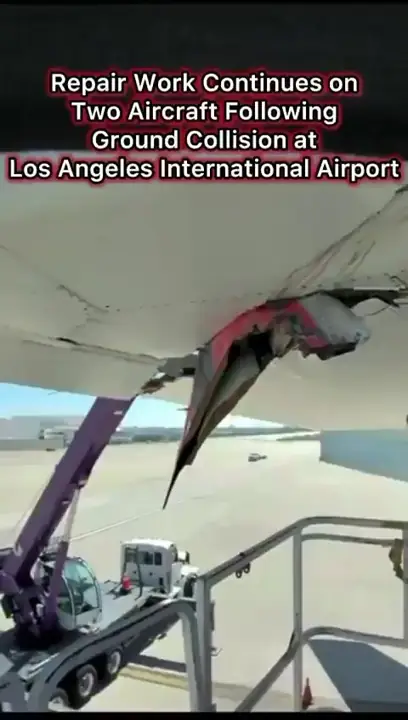 ▶ VIDEO
Still: frame at 6 s from a video posted on X by @AirwayBuzz
 ▶ VIDEO
Still: X video preview frame, @fl360aero on X
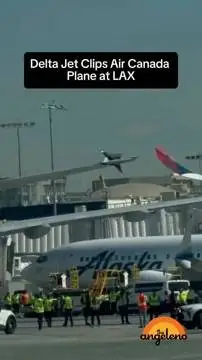 ▶ VIDEO
Still: X video preview frame, @theangelenonews on X
| Airline / operator | Air Serbia |
|---|---|
| Aircraft (type, registration) | Air Serbia Airbus A320-232 (YU-APS) |
| Category (my classification) | Human factors / Taxi crew (flight or maintenance) |
| What happened | Air Serbia flight JU243, an Airbus A320-232 (YU-APS), and easyJet flight flight U24633, a Airbus A320-214 (OE-INL), were involved in a ground contact incident at Paris-Charles de Gaulle Airport (CDG). Contact occurred between the right hand wing tip fence of YU-APS and the left-hand wing tip of OE-INL. The top half of the wing tip fence of YU-APS were severed. No reported injuries and the aircraft was taken out of service for inspection. |
| Injuries | ASN lists 0 fatalities. No reported injuries and the aircraft was taken out of service for inspection. |
| Damage | Minor Location: Paris-Charles de Gaulle Airport (CDG/LFPG) - France Phase: Standing Nature: Passenger - Scheduled Departure airport: Beograd-Nikola Tesla Airport (BEG/LYBE) Destination airport: Paris-Charles de Gaulle Airport (CDG/LFPG) Confidence Rating: Information is only available from news, social media or unofficial sources Narrative: Air Serbia flight JU243, an Airbus A320-232 (YU-APS), and easyJet flight flight U24633, a Airbus A320-214 (OE-INL), were involved in a ground contact incident at Paris-Charles de Gaulle Airport (CDG). Contact occurred between the right hand wing tip fence of YU-APS and the left-hand wing tip of OE-INL. The top half of the wing tip fence of YU-APS were severed. No reported injuries and the aircraft was taken out of service for inspection. ICAO Occurrence |
| Time out of service | YU-APS: less than 1 day, ≈ 2 missed flights (ADS-B flight data) |
| Official investigation | No investigation details on the ASN entry. |
| Source | Aviation Safety Network (ASN) entry: https://aviation-safety.net/wikibase/582881 Further sources listed on that page / found: https://www.aviation.direct/en/bodenkollision-zweier-passagierflugzeuge-am-flughafen-paris-charles-de-gaulle https://www.exyuaviation.com/2026/10/air-serbia-a320-damaged-by-easyjet.html https://aerosillage.com/en/cdg-easyjet-air-serbia-ground-collision-a320/ https://www.facebook.com/reel/2132726513999387/?group_id=589950601821606&s=group&__cft__[0]=AZh0xshELDU8CTO… https://cdn.jetphotos.com/full/5/680053_1691441236.jpg |
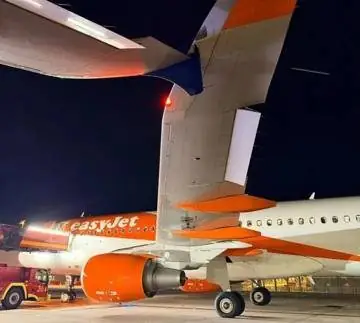
| Airline / operator | IndiGo Airlines |
|---|---|
| Aircraft (type, registration) | IndiGo Airlines Airbus A321-251NX (VT-NOG) |
| Category (my classification) | Human factors / Taxi crew (flight or maintenance) Secondary: Parking at stand (VDGS pole) |
| What happened | IndiGo flight 6E 225 from Navi Mumbai, Airbus A321-251NX VT-NOG, struck the VDGS (Visual Docking Guidance System) pole while parking at Bay 6 after landing at Srinagar. IndiGo said the aircraft "came in contact with a parking stand pole during parking." The nose cone was damaged. Passengers and crew deplaned using manual stairs, and the aircraft was grounded. Zee News attributed the contact to a reported brake failure; airport authorities said the cause would be set only by the inquiry. |
| Injuries | None reported. |
| Damage | Nose cone (radome) damaged. |
| Time out of service | VT-NOG: about 3 days, ≈ 16 missed flights (ADS-B flight data) |
| Official investigation | Airport authorities said an investigation is under way and no conclusion is being drawn (Zee News, 4 Sep 2026). No report published as of 29 Oct 2026. |
| Source | Aviation Safety Network (ASN) entry: https://aviation-safety.net/wikibase/579501 Further sources listed on that page / found: https://zeenews.india.com/india/indigo-flight-6e-225-srinagar-airport-parking-incident-3069904.html https://x.com/aviationbrk/status/2095772620444602729 |
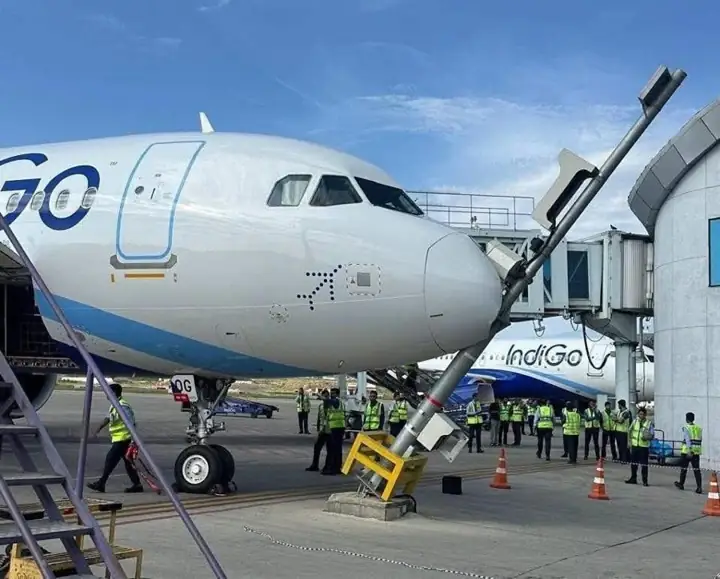
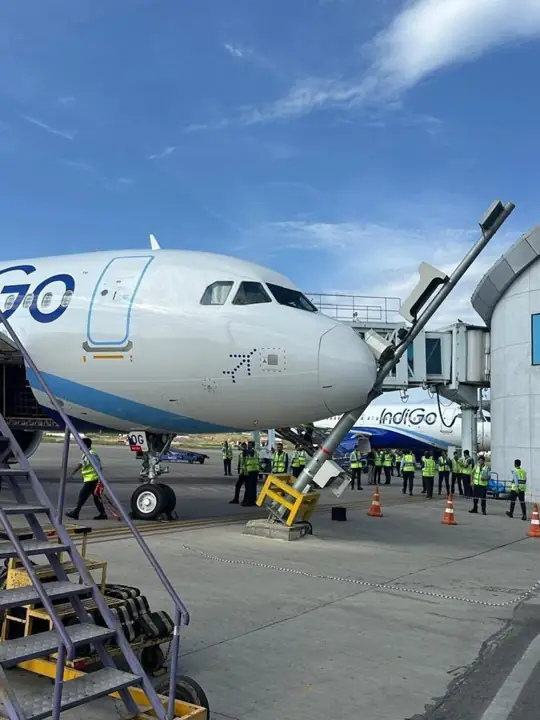
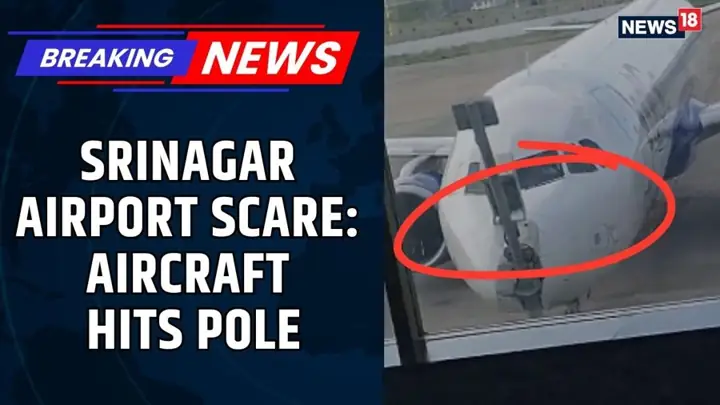
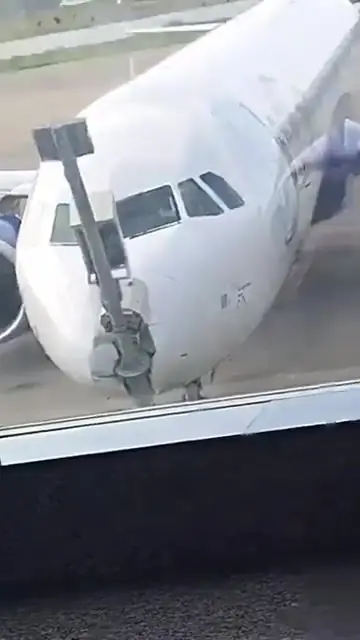 ▶ VIDEO
Still: frame at 1.5 s from a video posted on X by @aviationbrk
| Airline / operator | Kalitta Air |
|---|---|
| Aircraft (type, registration) | Kalitta Air Boeing 747-4B5 (BCF) (N709CK) |
| Category (my classification) | Human factors / Taxi crew (flight or maintenance) |
| What happened | Kalitta Air flight K4961, a Boeing 747-4B5 (BCF), was being marshalled to the cargo ramp when the no.1 engine struck a parked unoccupied k-loader. |
| Injuries | ASN lists 0 fatalities. No injury statement in the ASN narrative. |
| Damage | Not stated |
| Time out of service | N709CK: about 3 days, ≈ 6 missed flights (ADS-B flight data) |
| Official investigation | No investigation details on the ASN entry. |
| Source | Aviation Safety Network (ASN) entry: https://aviation-safety.net/wikibase/579183 Further sources listed on that page / found: https://www.flightaware.com/live/flight/N709CK/history/20260824/0025Z/PANC/KORD |
| Airline / operator | Venezolana - Linea Aerea Bolivariana |
|---|---|
| Aircraft (type, registration) | Venezolana - Linea Aerea Bolivariana McDonnell Douglas MD-83 (YV3499) |
| Category (my classification) | Human factors / Taxi crew (flight or maintenance) |
| What happened | A Venezolana MD-83, YV3499, hit a structure while turning onto runway 09 for departure, causing severe damage to the left-hand wing tip. During taxiing for departure, after completing the taxi checklist, the flight crew operated the aircraft improperly due to an ongoing military event near the far end of taxiway E, specifically at G10, to the left of the aircraft's taxi path. This caused the flight crew to lose situational awareness and fail to notice that the aircraft had deviated beyond the taxiway markings. Upon entering taxiway A, near the runway 09 holding point, the crew contacted the control tower, reporting that they were at the runway 09 holding point and ready for departure. The air traffic controller acknowledged the message and cleared the aircraft for takeoff from runway 09. While completing the pre-takeoff checklist and beginning the turn towards the runway threshold, the aircraft's left wing struck an object. The crew immediately informed the control tower that they were cancelling the takeoff due to a collision with a structure belonging to the air base and requested permission to return to the apron to assess the situation. The control tower authorized the aircraft to taxi along runway 09 and exit via taxiway D. All crew members and passengers were uninjured, but the aircraft sustained structural damage. |
| Injuries | ASN lists 0 fatalities. All crew members and passengers were uninjured, but the aircraft sustained structural damage. |
| Damage | Substantial |
| Time out of service | YV3499: at least 2 months (no flights after Aug 17 to data end) (ADS-B flight data) |
| Official investigation | Investigating agency: JIAAC Venezuela Report number: 025/2026 Status: Preliminary report Duration: 1 month Preliminary report |
| Source | Aviation Safety Network (ASN) entry: https://aviation-safety.net/wikibase/577219 Further sources listed on that page / found: https://www.mppt.gob.ve/download/193659/?tmstv=1791613753 https://t.co/7USVW9a4Nc https://t.co/LQRp8uNgF8 |
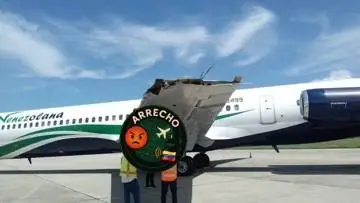
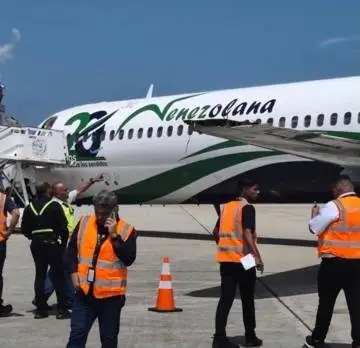
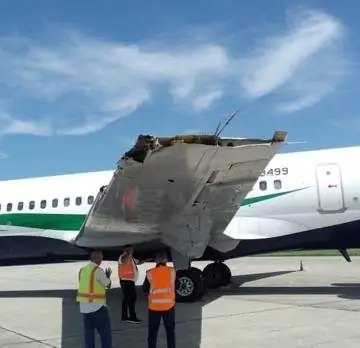
| Airline / operator | GOL Linhas Aereas |
|---|---|
| Aircraft (type, registration) | GOL Linhas Aereas Boeing 737 MAX 8 (PR-XMS) |
| Category (my classification) | Human factors / Taxi crew (flight or maintenance) |
| What happened | GOL flight G37480, a Boeing 737 MAX 8, was struck by an airport passenger bus. The tip of the downward fin of the winglet was hit. |
| Injuries | ASN lists 0 fatalities. No injury statement in the ASN narrative. |
| Damage | Minor |
| Time out of service | PR-XMS: less than 1 day, ≈ 2 missed flights (ADS-B flight data) |
| Official investigation | No investigation details on the ASN entry. |
| Source | Aviation Safety Network (ASN) entry: https://aviation-safety.net/wikibase/577204 Further sources listed on that page / found: https://g1.globo.com/sp/sao-paulo/noticia/2026/08/19/onibus-atinge-asa-de-aviao-da-gol-durante-embarque-no-… https://dedalo.sti.fab.mil.br/ocorrencia/89381 https://t.co/xezTTZP6Qz https://t.co/ULBjiQwqVF |
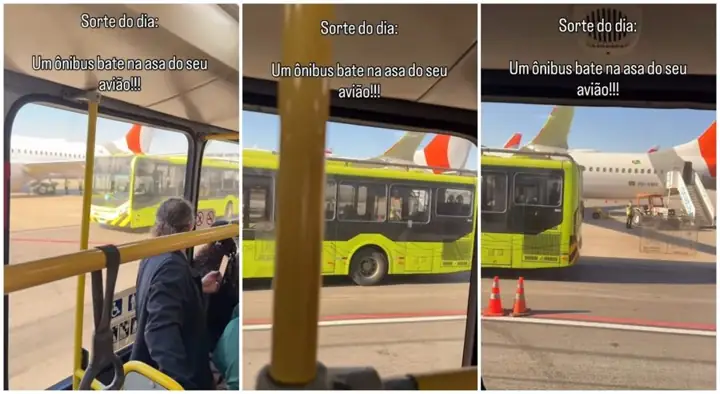
 ▶ VIDEO
Still: X video preview frame, @g1 on X
| Airline / operator | Gridiron Air |
|---|---|
| Aircraft (type, registration) | Gridiron Air Boeing 777-232ER (N860DA) |
| Category (my classification) | Human factors / Taxi crew (flight or maintenance) Secondary: ATC / marshalling involved |
| What happened | Gridiron Air flight RZN860, a Boeing 777-232ER, was being marshalled into Gate 169 at Toronto (YYZ) when the aircraft was directed onto the lead-in line for narrowbody aircraft and their right wingtip struck the left wingtip of C-GHPY, a Boeing 787 operated by Air Canada which was parked at Gate 170. C-GHPY had just begun boarding for flight AC808 from YYZ to Amsterdam-Schiphol (AMS), Netherlands. The wingtip of N860DA ended up on top of the wingtip of C-GHPY. Passengers were deplaned from both aircraft through their respective gates, there were no reported injuries. The wingtips of each aircraft were substantially damaged, there were no fuel spills or leaks reported. N860DA was repaired and was flown to Fort Worth (AFW) on 25 September 2026. C-GHPY was repaired and flew again 9 September 2026. |
| Injuries | ASN lists 0 fatalities. Passengers were deplaned from both aircraft through their respective gates, there were no reported injuries. |
| Damage | Substantial, repaired |
| Official investigation | No investigation details on the ASN entry. |
| Source | Aviation Safety Network (ASN) entry: https://aviation-safety.net/wikibase/583056 |
| Airline / operator | Saudi Arabian Airlines |
|---|---|
| Aircraft (type, registration) | Saudi Arabian Airlines Boeing 787-9 Dreamliner (HZ-AR12) |
| Category (my classification) | Human factors / Taxi crew (flight or maintenance) |
| What happened | Saudi Arabian Airlines flight SV871, a Boeing 787-9 (HZ-AR12), struck the vertical stabilizer of a parked Philippine Airlines A320-214 (RP- C8612), causing severe damage to the A320's rudder. SV871 was taxiing for departure. The A320 was parked at Bay 25. METAR: METAR RPLL 071500Z 23006KT 9999 FEW023CB SCT025 BKN100 26/25 Q1010 NOSIG RMK A2983 CB SW-W METAR RPLL 071600Z 22004KT 180V250 9999 FEW025 SCT100 26/25 Q1009 NOSIG RMK A2980 |
| Injuries | ASN lists 0 fatalities. No injury statement in the ASN narrative. |
| Damage | Minor Location: Manila-Ninoy Aquino International Airport (MNL/RPLL) - Philippines Phase: Taxi Nature: Passenger - Scheduled Departure airport: Manila-Ninoy Aquino International Airport (MNL/RPLL) Destination airport: Jeddah-King Abdulaziz International Airport (JED/OEJN) Confidence Rating: Information is only available from news, social media or unofficial sources Narrative: Saudi Arabian Airlines flight SV871, a Boeing 787-9 (HZ-AR12), struck the vertical stabilizer of a parked Philippine Airlines A320-214 (RP-C8612), causing severe damage to the A320's rudder. SV871 was taxiing for departure. The A320 was parked at Bay 25. METAR: METAR RPLL 071500Z 23006KT 9999 FEW023CB SCT025 BKN100 26/25 Q1010 NOSIG RMK A2983 CB SW-W METAR RPLL 071600Z 22004KT 180V250 9999 FEW025 SCT100 26/25 Q1009 NOSIG RMK A2980 ICAO Occurrence |
| Time out of service | HZ-AR12: about 21 days, ≈ 36 missed flights (ADS-B flight data) |
| Official investigation | No investigation details on the ASN entry. |
| Source | Aviation Safety Network (ASN) entry: https://aviation-safety.net/wikibase/573690 Further sources listed on that page / found: https://www.abs-cbn.com/news/business/2026/7/8/parked-pal-plane-s-tail-fin-damaged-by-saudia-jet-at-naia-1155 https://bole90.com/portalview-169739.html https://www.facebook.com/ANCalerts/videos/a-parked-philippine-airlines-a320-rudder-was-hit-by-the-wingtip-o… https://mp.weixin.qq.com/s/3CDVEHRbR5RecTm9gfckyQ |
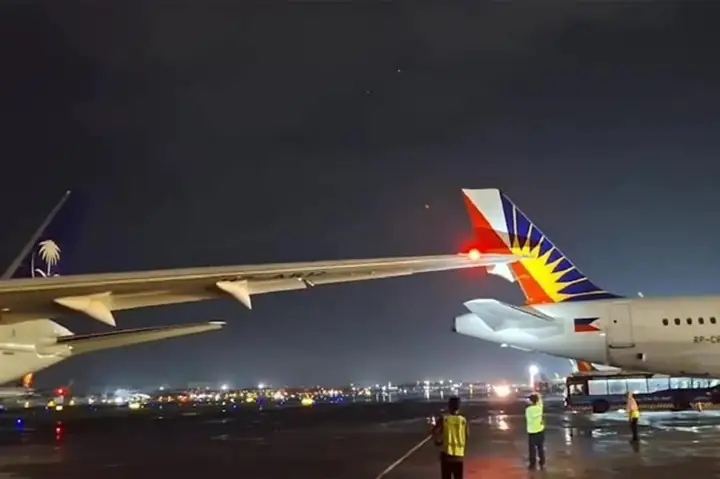
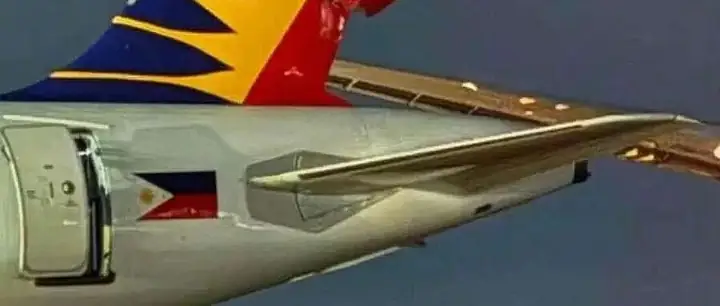
| Airline / operator | THY Turkish Airlines |
|---|---|
| Aircraft (type, registration) | THY Turkish Airlines Boeing 777-3Q8ER (TC-LKD) |
| Category (my classification) | Human factors / Taxi crew (flight or maintenance) |
| What happened | Turkish Airlines flight TK2430, a Boeing 777-300ER, struck a radar antenna tower with the right-hand wing as it taxied to the stand after landing at Antalya Airport (AYT). The mast collapsed and impacted the fuselage. The outer section of the right-hand wing was severely damaged and the fuselage also suffered (localized) substantial damage. The aircraft followed a taxiway with a distance between the centreline and the base of the lighting tower of about 29 meters. The wing span of the aircraft is 64,80 meters (32,80 meters from the centreline of the taxiway). METAR: LTAI 111520Z 11008KT 9999 SCT025 26/21 Q1010 NOSIG RMK RWY18C 12008KT RWY36R 10008KT 070V140 RWY18L 14007KT 100V170 LTAI 111620Z 15007KT 9999 SCT025 SCT180 26/23 Q1010 NOSIG RMK RWY18C 16007KT RWY36R 15007KT RWY18L 17006KT LTAI 111720Z 20003KT 170V230 9999 FEW025 SCT180 25/23 Q1010 NOSIG RMK RWY18C 22003KT 170V250 RWY36R 20004KT 160V240 RWY18L 16003KT |
| Injuries | ASN lists 0 fatalities. No injury statement in the ASN narrative. |
| Damage | Substantial |
| Time out of service | TC-LKD: at least 4.5 months (last sector Jun 9; nothing through 25 Oct), at least 141 missed flights (ADS-B flight data) |
| Official investigation | No investigation details on the ASN entry. |
| Source | Aviation Safety Network (ASN) entry: https://aviation-safety.net/wikibase/572200 Further sources listed on that page / found: https://t24.com.tr/gundem/antalyada-thy-ucagi-kaza-yapti-267-yolcu-tahliye-edildi,1328257?_t=1781203189969 https://simpleflying.com/video/wow-taxiing-turkish-airlines-boeing-777-knocks-over-radar-tower-mast-pierces… https://t.co/Uq4jE4CAap https://x.com/fl360aero/status/2065130377585242373 |
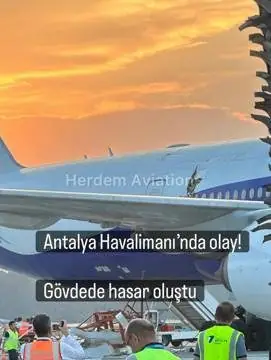
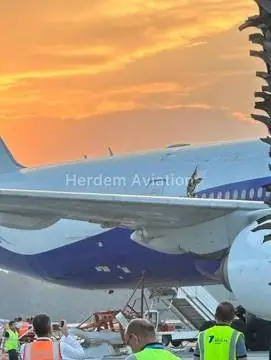
 ▶ VIDEO
Still: X video preview frame, @muratherdemm on X
| Airline / operator | Southwest Airlines |
|---|---|
| Aircraft (type, registration) | Southwest Airlines Boeing 737-79L (WL) (N7889A); Southwest Airlines Boeing 737-8H4 (WL) (N8525S) |
| Category (my classification) | Human factors / Taxi crew (flight or maintenance) |
| What happened | Southwest Airlines flight WN3515, a Boeing 737-800 (N8525S) was taxiing to the runway when the winglet made contact with the horizontal stabilizer of Southwest flight WN3409, a Boeing 737-700 (N7889A). |
| Injuries | ASN lists 0 fatalities. No injury statement in the ASN narrative. |
| Damage | Not stated |
| Time out of service | N8525S: about 4 days, ≈ 12 missed flights (ADS-B flight data) N7889A: less than 1 day, ≈ 3 missed flights (ADS-B flight data) |
| Official investigation | No investigation details on the ASN entry. |
| Source | Aviation Safety Network (ASN) entry: https://aviation-safety.net/wikibase/572258 Further sources listed on that page / found: https://www.jetphotos.com/photo/11953635 https://www.jetphotos.com/photo/11690572 |
| Airline / operator | ANA Cargo / United Airlines |
|---|---|
| Aircraft (type, registration) | ANA Cargo Boeing 777-F81 (JA771F); United Airlines Boeing 737-924ER (N75433) |
| Category (my classification) | Human factors / Taxi crew (flight or maintenance) |
| What happened | United Airlines flight UA1834, a Boeing 737-900ER (N75433), was taxiing to the gate when the left winglet struck the tail cone of ANA Cargo flight ANA8421, a Boeing 777-F (JA771F). The B777-F was taxiing for departure and returned to the apron. The B737 had just landed on runway 09L and continued to the gate. METAR: KORD 211419Z 04011KT 10SM SCT020 OVC027 09/04 A3031 RMK AO2 T00940039 (SPECI) KORD 211451Z 03010KT 10SM BKN018 BKN025 OVC033 09/04 A3030 RMK AO2 SLP264 BKN018 V SCT T00940039 50000 |
| Injuries | ASN lists 0 fatalities. No injury statement in the ASN narrative. |
| Damage | Minor Location: Chicago-O'Hare International Airport, IL (ORD/KORD) - United States of America Phase: Taxi Nature: Cargo Departure airport: Chicago-O'Hare International Airport, IL (ORD/KORD) Destination airport: Tokyo-Narita Airport (NRT/RJAA) Confidence Rating: Information verified through data from accident investigation authorities Narrative: United Airlines flight UA1834, a Boeing 737-900ER (N75433), was taxiing to the gate when the left winglet struck the tail cone of ANA Cargo flight ANA8421, a Boeing 777-F (JA771F). The B777-F was taxiing for departure and returned to the apron. The B737 had just landed on runway 09L and continued to the gate. METAR: KORD 211419Z 04011KT 10SM SCT020 OVC027 09/04 A3031 RMK AO2 T00940039 (SPECI) KORD 211451Z 03010KT 10SM BKN018 BKN025 OVC033 09/04 A3030 RMK AO2 SLP264 BKN018 V SCT T00940039 50000 ICAO Occurrence |
| Time out of service | N75433: about 2 days, ≈ 7 missed flights (ADS-B flight data) JA771F: about 5 days, ≈ 7 missed flights (ADS-B flight data) |
| Official investigation | No investigation details on the ASN entry. |
| Source | Aviation Safety Network (ASN) entry: https://aviation-safety.net/wikibase/570779 Further sources listed on that page / found: https://aviospace.org/united-airlines-boeing-737-hits-ana-cargo-777f-at-chicago-ohare/ https://aviationa2z.com/index.php/2026/05/22/united-737-collides-with-ana-cargo-777f-tail-at-chicago-ohare/ https://i.carnoc.com/detail/657334 |
| Airline / operator | American Eagle, opb Envoy |
|---|---|
| Aircraft (type, registration) | American Eagle, opb Envoy Embraer ERJ-175LR (N314AD) |
| Category (my classification) | Human factors / Taxi crew (flight or maintenance) |
| What happened | Aircraft clipped a blast wall with its left wing while taxiing into hold bay 15 alongside taxiway N. Aircraft was operating as AA4178 enroute from Ronald Reagan Washington National to Boston Logan International Airport |
| Injuries | ASN lists 0 fatalities. No injury statement in the ASN narrative. |
| Damage | Not stated |
| Time out of service | N314AD: about 8 days, ≈ 43 missed flights (ADS-B flight data) |
| Official investigation | No investigation details on the ASN entry. |
| Source | Aviation Safety Network (ASN) entry: https://aviation-safety.net/wikibase/570545 Further sources listed on that page / found: https://www.flightaware.com/resources/registration/N314AD https://www.reddit.com/r/aviation/comments/1tfwylp/we_hit_a_wall_dca/ https://www.reddit.com/user/SWLondonLife/ https://www.reddit.com/r/aviation/ |
| Airline / operator | China Eastern Airlines |
|---|---|
| Aircraft (type, registration) | China Eastern Airlines Airbus A350-941 (B-324W) |
| Category (my classification) | Human factors / Taxi crew (flight or maintenance) |
| What happened | A China Eastern Airlines Airbus A350, registered B-324W, collided with a jet bridge on the apron at Shanghai Hongqiao International Airport after completing flight MU5406. During the takeoff and climb phase, the NAV IR3 FAULT alert was triggered. The flight crew performed ECAM procedures to switch off IR3, after which BRAKES AUTO BRK FAULT, BRAKES G ACCU REINFLATE FAULT and BRAKES Y ACCU REINFLATE FAULT messages appeared. The aircraft decelerated normally after landing. After vacating the runway, the ECAM displayed the message BRAKES NORM BRK FAULT ON ALL WHEELS. Total brake failure occurred while taxiing to the stand. In accordance with the lost brakes memory item, the crew applied maximum reverse thrust. The aircraft moved backward after coming to a stop; after the crew set thrust back to idle, the aircraft moved forward again. The crew repeatedly used reverse thrust thereafter, during which the left wing and No.1 engine collided with the passenger boarding bridge multiple times. |
| Injuries | ASN lists 0 fatalities. No injury statement in the ASN narrative. |
| Damage | Unknown |
| Time out of service | B-324W: at least 5.7 months (last sector May 1; nothing through 25 Oct) (public minimum at least 20 days (still on ground 22 May 2026)), at least 287 missed flights (ADS-B flight data; AvHerald) |
| Official investigation | No investigation details on the ASN entry. |
| Source | Aviation Safety Network (ASN) entry: https://aviation-safety.net/wikibase/569864 Further sources listed on that page / found: https://weibo.com/1647310954/QDuvnB6sQ https://t.co/3NymrUIE9F https://t.co/ybnXzbmOnp https://t.co/Y0Hnj9IDD5 https://t.co/X1aRzSulAT |
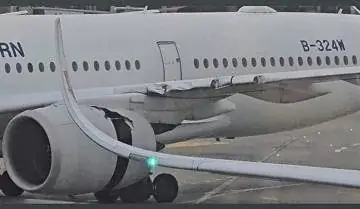
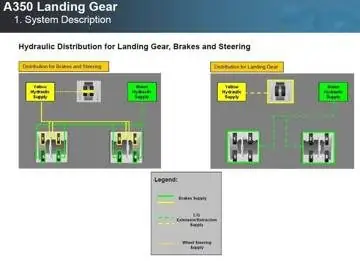
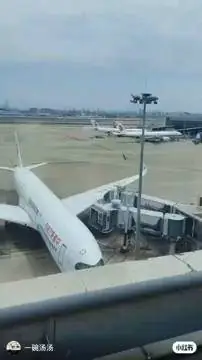 ▶ VIDEO
Still: X video preview frame, @realNyarime on X
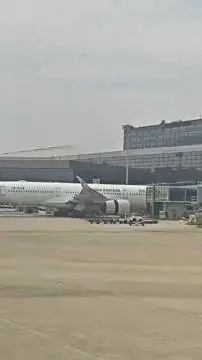 ▶ VIDEO
Still: X video preview frame, @Fahadnaimb on X
 ▶ VIDEO
Still: YouTube thumbnail, Lt Col Mark Hasara
| Airline / operator | LATAM Airlines Chile / Aerolineas Argentinas |
|---|---|
| Aircraft (type, registration) | LATAM Airlines Chile Airbus A321-211 (WL) (CC-BEJ); Aerolineas Argentinas Boeing 737-8SH (WL) (LV-FVN) |
| Category (my classification) | Human factors / Taxi crew (flight or maintenance) |
| What happened | Aerolineas Argentinas flight AR1267, a Boeing 737-800 (LV-FVN) and LATAM Airlines Chile flight LA756, an Airbus A321-211 (CC-BEJ), were involved in a ground contact incident at Santiago (SCL). Both aircraft were taxiing to the departure runway 17R when the A321 taxied along taxiway Z and proceeded to holding pount V1. At that time the left-hand winglet of the A321 struck the right-hand elevator of the B737. Both flights were cancelled. The A321 resumed service about 24 hours after the incident. |
| Injuries | ASN lists 0 fatalities. No injury statement in the ASN narrative. |
| Damage | Minor, repaired Location: Santiago-Arturo Merino Benitez Airport (SCL/SCEL) - Chile Phase: Taxi Nature: Passenger - Scheduled Departure airport: Santiago-Arturo Merino Benitez Airport (SCL/SCEL) Destination airport: São Paulo-Guarulhos International Airport, SP (GRU/SBGR) Investigating agency: DGAC Chile Confidence Rating: Information verified through data from accident investigation authorities Narrative: Aerolineas Argentinas flight AR1267, a Boeing 737-800 (LV-FVN) and LATAM Airlines Chile flight LA756, an Airbus A321- 211 (CC-BEJ), were involved in a ground contact incident at Santiago (SCL). Both aircraft were taxiing to the departure runway 17R when the A321 taxied along taxiway Z and proceeded to holding pount V1. At that time the left-hand winglet of the A321 struck the right-hand elevator of the B737. Both flights were cancelled. The A321 resumed service about 24 hours after the incident. ICAO Occurrence |
| Time out of service | LV-FVN: about 93 days, ≈ 418 missed flights (ADS-B flight data) CC-BEJ: about 1 day, ≈ 3 missed flights (ASN) |
| Official investigation | Investigating agency: DGAC Chile Report number: 2138-26 Status: Preliminary report Duration: Preliminary report Report / investigator link(s): https://www.dgac.gob.cl/wp-content/uploads/2026/05/Informe-preliminar-30-dias-2138-26.pdf |
| Source | Aviation Safety Network (ASN) entry: https://aviation-safety.net/wikibase/569542 Further sources listed on that page / found: https://www.dgac.gob.cl/wp-content/uploads/2026/05/Informe-preliminar-30-dias-2138-26.pdf https://www.lanacion.com.ar/el-mundo/un-avion-de-aerolineas-argentinas-choco-con-uno-de-latam-en-la-pista-d… https://t.co/6JlXoiHzog https://t.co/x6fB2skWot |
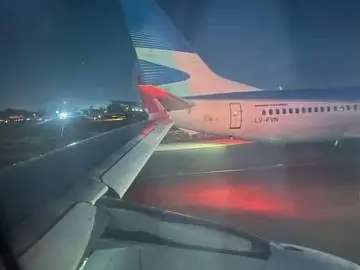
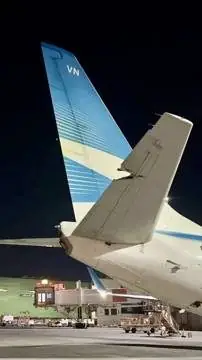
| Airline / operator | Akasa Air / SpiceJet |
|---|---|
| Aircraft (type, registration) | Akasa Air Boeing 737 MAX 8 (VT-YBA); SpiceJet Boeing 737-7GL (WL) (VT- SLB) |
| Category (my classification) | Human factors / Taxi crew (flight or maintenance) |
| What happened | SpiceJet flight SG124, a Boeing 737-700 (VT-SLB) was involved in a ground contact incident with Akasa Air flight QP1406, a Boeing 737 MAX 8 (VT-YBA). Flight SG124, arriving from Leh (IXL), was taxiing into its allocated parking bay (Stand 106) at Terminal 1 when the right-hand winglet hit the left-hand horizontal stabilizer of an Akasa Air Boeing 737, which was positioned on the apron after pushback from Stand 104 for a Delhi–Hyderabad flight. The top of SG124's winglet separated and remained embedded in the horizontal stabilizer. |
| Injuries | ASN lists 0 fatalities. No injury statement in the ASN narrative. |
| Damage | Minor Location: Delhi-Indira Gandhi International Airport (DEL/VIDP) - India Phase: Standing Nature: Passenger - Scheduled Departure airport: Delhi- Indira Gandhi International Airport (DEL/VIDP) Destination airport: Hyderabad-Rajiv Gandhi International Airport (HYD/VOHS) Confidence Rating: Information is only available from news, social media or unofficial sources Narrative: SpiceJet flight SG124, a Boeing 737-700 (VT-SLB) was involved in a ground contact incident with Akasa Air flight QP1406, a Boeing 737 MAX 8 (VT-YBA). Flight SG124, arriving from Leh (IXL), was taxiing into its allocated parking bay (Stand 106) at Terminal 1 when the right-hand winglet hit the left-hand horizontal stabilizer of an Akasa Air Boeing 737, which was positioned on the apron after pushback from Stand 104 for a Delhi–Hyderabad flight. The top of SG124's winglet separated and remained embedded in the horizontal stabilizer. ICAO Occurrence |
| Time out of service | VT-YBA: about 15 days, ≈ 68 missed flights (ADS-B flight data) VT-SLB: about 4 days, ≈ 12 missed flights (ADS-B flight data) |
| Official investigation | No investigation details on the ASN entry. |
| Source | Aviation Safety Network (ASN) entry: https://aviation-safety.net/wikibase/569236 Further sources listed on that page / found: https://www.indiatoday.in/india/story/spicejet-plane-hits-akasa-jet-while-taxiing-at-delhi-airport-suffers-… https://punemirror.com/news/spicejet-akasa-aircraft-collision-delhi-airport/ https://www.instagram.com/p/DXMKsKgjRBs/?utm_source=ig_embed&utm_campaign=loading |
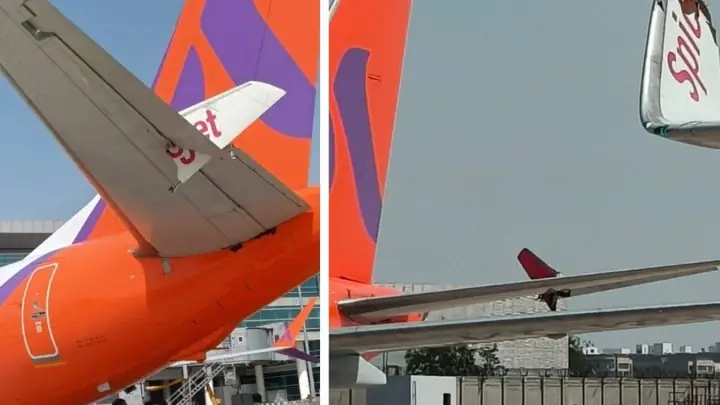
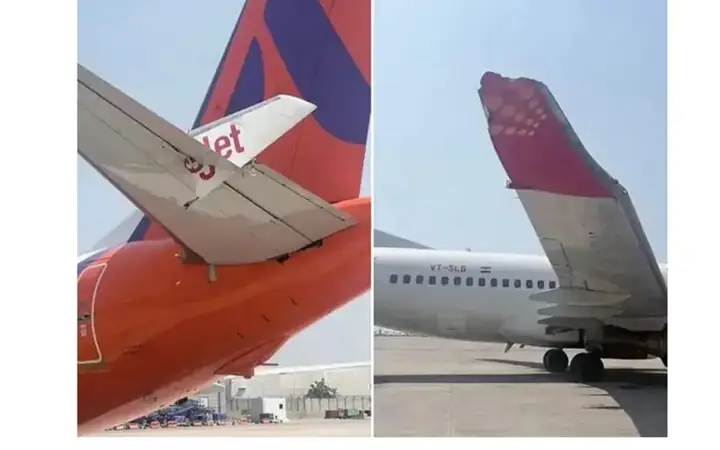
| Airline / operator | United Airlines |
|---|---|
| Aircraft (type, registration) | United Airlines Boeing 737-824 (WL) (N27213) |
| Category (my classification) | Human factors / Taxi crew (flight or maintenance) |
| What happened | On March 6, 2026, about 1024 mountain standard time (MST), United Airlines (UAL) flight 605, a Boeing 737-824, N27213, collided with two Vestergaard Elephant Beta deice trucks, operated by Aeromag, while taxiing out of the deice pad at Denver International Airport (DEN), Denver, Colorado. There were no injuries to the two pilots, 4 flight attendants, and 130 passengers onboard the airplane. One deice agent sustained minor injuries during the event. The airplane sustained substantial damage. Flight 605 was a scheduled domestic passenger flight operating under the provisions of Title 14 Code of Federal Regulations Part 121 from DEN to Nashville International Airport (BNA), Nashville, Tennessee. According to the flight crew statements, they were parked at deice pad C, spot C5, while deicing procedures occurred. The flight crew stated they were engaged in a conversation, when the first officer heard the deice team communicate their post-deice briefing. The captain was unsure if the clearance was for their flight, but the first officer acknowledged the postdeice brief and readback pertinent details, specifically that all deice vehicles were behind the clearance lines. The flight crew conducted the post-deice checks and received clearance to taxi from air traffic control. The flight crew began to taxi and felt the aircraft collide with something. The flight crew stopped the aircraft and contacted the deice team on the radio. At that time, the flight crew was informed that they had not been cleared to exit the deice pad and that they had collided with two deice trucks. According to the Aeromag deice team, flight 605 was being sprayed with type 4 fluid from four of their trucks, MAG 94 and MAG 95 were forward of the wings and MAG 28 and MAG 30 were aft of the wings. The deice agents observed the airplane beginning to move forward and no one was able to stop the airplane movement. The airplane struck trucks MAG 94 (left wing) and MAG 95 (right wing), resulting in MAG 95 being pushed onto its side. A postaccident examination of the airplane revealed damage to the left winglet, the left wing lower skin, slats number 1, 5, 6, 7, and 8, the right wing lower skin, and the right aileron. The investigation is ongoing. |
| Injuries | ASN lists 0 fatalities. There were no injuries to the two pilots, 4 flight attendants, and 130 passengers onboard the airplane.; One deice agent sustained minor injuries during the event. |
| Damage | Substantial |
| Time out of service | N27213: about 24 days, ≈ 82 missed flights (ADS-B flight data) |
| Official investigation | Investigating agency: NTSB Report number: DCA26LA150 Status: Preliminary report Duration: 1 month Preliminary report Report / investigator link(s): https://data.ntsb.gov/carol-repgen/api/Aviation/ReportMain/GenerateNewestReport/202612/pdf |
| Source | Aviation Safety Network (ASN) entry: https://aviation-safety.net/wikibase/567693 Further sources listed on that page / found: https://data.ntsb.gov/carol-repgen/api/Aviation/ReportMain/GenerateNewestReport/202612/pdf https://www.cbsnews.com/colorado/news/united-airlines-plane-strikes-deicing-truck-denver-international-airp… https://kdvr.com/news/local/plane-strikes-deicing-truck-at-dia-amid-snowstorm/ https://cdn.jetphotos.com/full/5/906521_1764045109.jpg |
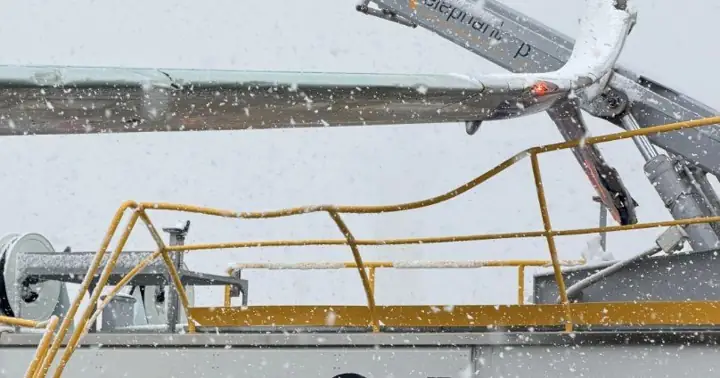
| Airline / operator | Finnair |
|---|---|
| Aircraft (type, registration) | Finnair Airbus A350-941 (OH-LWR) |
| Category (my classification) | Human factors / Taxi crew (flight or maintenance) |
| What happened | Finnair flight AY19, an Airbus A350-941, struck the boarding bridge with a wing. The aircraft resumed service on 23 February 2026. |
| Injuries | ASN lists 0 fatalities. No injury statement in the ASN narrative. |
| Damage | Minor, repaired Location: Dallas/Fort Worth International Airport, TX (DFW/KDFW) - United States of America Phase: Taxi Nature: Passenger - Scheduled Departure airport: Helsinki-Vantaa Airport (HEL/EFHK) Destination airport: Dallas/Fort Worth International Airport, TX (DFW/KDFW) Confidence Rating: Information is only available from news, social media or unofficial sources Narrative: Finnair flight AY19, an Airbus A350-941, struck the boarding bridge with a wing. The aircraft resumed service on 23 February 2026. ICAO Occurrence |
| Time out of service | OH-LWR: 2 days, ≈ 3 missed flights (ASN) |
| Official investigation | No investigation details on the ASN entry. |
| Source | Aviation Safety Network (ASN) entry: https://aviation-safety.net/wikibase/567457 Further sources listed on that page / found: https://www.iltalehti.fi/ulkomaat/a/6c81f5ca-6991-41c8-be82-bdf1c7cc3141 |
| Airline / operator | IndiGo Airlines / Air India |
|---|---|
| Aircraft (type, registration) | IndiGo Airlines Airbus A320-232 (WL) (VT-IFV); Air India Airbus A320-251N (VT-TYB) |
| Category (my classification) | Human factors / Taxi crew (flight or maintenance) |
| What happened | Indigo flight 6E971 (VT-IFV), an Airbus A320,and Air India flight AI2732, an Airbus A320neo (VT-TYB) were involved in a ground contact incident at Mumbai-Chhatrapati Shivaji International Airport (BOM). Flight AI2732 was taxying from C1 towards M4 for departure, whilst the IndiGo A320 was taxying on arrival and joining B1. During taxiing, the right wing tips of both aircraft touched each other. Both aircraft returned to their respective bays for inspection. METAR: VABB 031300Z 32006KT 2500 FU NSC 29/16 Q1013 NOSIG VABB 031400Z 29005KT 2500 FU NSC 28/16 Q1014 NOSIG |
| Injuries | ASN lists 0 fatalities. No injury statement in the ASN narrative. |
| Damage | Minor Location: Mumbai-Chhatrapati Shivaji International Airport (BOM/VABB) - India Phase: Taxi Nature: Passenger - Scheduled Departure airport: Hyderabad-Rajiv Gandhi International Airport (HYD/VOHS) Destination airport: Mumbai-Chhatrapati Shivaji International Airport (BOM/VABB) Confidence Rating: Information is only available from news, social media or unofficial sources Narrative: Indigo flight 6E971 (VT-IFV), an Airbus A320,and Air India flight AI2732, an Airbus A320neo (VT-TYB) were involved in a ground contact incident at Mumbai- Chhatrapati Shivaji International Airport (BOM). Flight AI2732 was taxying from C1 towards M4 for departure, whilst the IndiGo A320 was taxying on arrival and joining B1. During taxiing, the right wing tips of both aircraft touched each other. Both aircraft returned to their respective bays for inspection. METAR: VABB 031300Z 32006KT 2500 FU NSC 29/16 Q1013 NOSIG VABB 031400Z 29005KT 2500 FU NSC 28/16 Q1014 NOSIG ICAO Occurrence |
| Time out of service | VT-TYB: less than 1 day, ≈ 3 missed flights (ADS-B flight data) VT-IFV: about 6 days, ≈ 35 missed flights (ADS-B flight data) |
| Official investigation | No investigation details on the ASN entry. Report / investigator link(s): https://x.com/DGCAIndia/status/2018739557160927713/photo/1?actAsUserId=18119570 |
| Source | Aviation Safety Network (ASN) entry: https://aviation-safety.net/wikibase/566307 Further sources listed on that page / found: https://m.economictimes.com/industry/transportation/airlines-/-aviation/air-india-indigo-aircraft-collide-o… https://www.jetphotos.com/photo/11716087 https://t.co/hZXxlrrx9l https://www.jetphotos.com/photo/11824648 |
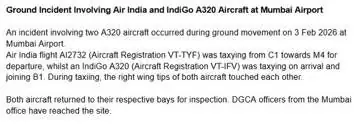
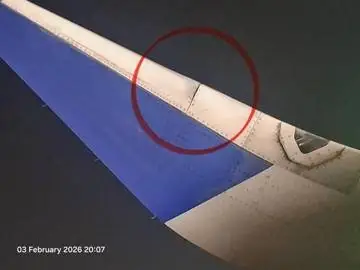
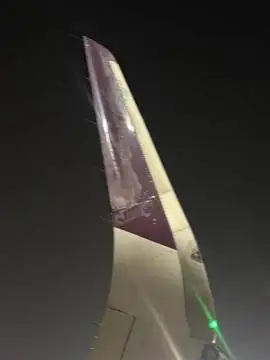
| Airline / operator | JetBlue Airways |
|---|---|
| Aircraft (type, registration) | JetBlue Airways Airbus A321-231 (WL) (N988JT) |
| Category (my classification) | Human factors / Taxi crew (flight or maintenance) |
| What happened | JetBlue Airways flight B62223, an Airbus A321-231, was taxiing to the deicing area at JFK and struck a pole with left wing. |
| Injuries | ASN lists 0 fatalities. No injury statement in the ASN narrative. |
| Damage | Minor |
| Time out of service | N988JT: about 2.8 days, ≈ 7 missed flights (ADS-B flight data) |
| Official investigation | No investigation details on the ASN entry. |
| Source | Aviation Safety Network (ASN) entry: https://aviation-safety.net/wikibase/563621 |
| Airline / operator | Cayman Airways |
|---|---|
| Aircraft (type, registration) | Cayman Airways Boeing 737 MAX 8 (VP-CIZ) |
| Category (my classification) | Human factors / Taxi crew (flight or maintenance) |
| What happened | Cayman Airways flight KX200, a Boeing 737 MAX 8, was parking at the gate when the left winglet contacted a parked catering truck. |
| Injuries | ASN lists 0 fatalities. No injury statement in the ASN narrative. |
| Damage | Not stated |
| Time out of service | VP-CIZ: about 1 day, ≈ 3 missed flights (ADS-B flight data) |
| Official investigation | No investigation details on the ASN entry. |
| Source | Aviation Safety Network (ASN) entry: https://aviation-safety.net/wikibase/562910 Further sources listed on that page / found: https://www.caymancompass.com/2025/11/29/cayman-airways-plane-hits-vehicle-at-tampa-airport/ https://t.co/aoNeLVyeAP |
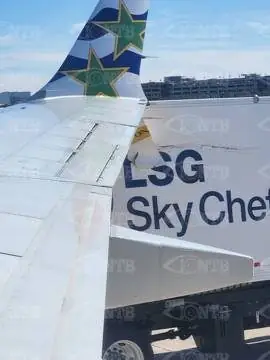
| Airline / operator | United Airlines |
|---|---|
| Aircraft (type, registration) | United Airlines Boeing 737-824 (WL) (N35204); United Airlines Boeing 737-824 (WL) (N14250) |
| Category (my classification) | Human factors / Taxi crew (flight or maintenance) |
| What happened | United Airlines flight UA580, a Boeing 737-824 (N35204) and United Airlines flight UA434, a Boeing 737-824 (N14250) were involved in a ground contact incident at LGA. The left-hand winglet of Flight 580, which had arrived from Chicago, IL (ORD) clipped the tip of the right-hand horizontal stabilizer of Flight 434 while taxiing on a ramp at LaGuardia Airport. Passengers on both aircraft deplaned at the gate. |
| Injuries | ASN lists 0 fatalities. No injury statement in the ASN narrative. |
| Damage | Unknown Location: New York-La Guardia Airport, NY (LGA/KLGA) - United States of America Phase: Taxi Nature: Passenger - Scheduled Departure airport: Chicago-O'Hare International Airport, IL (ORD/KORD) Destination airport: New York-La Guardia Airport, NY (LGA/KLGA) Confidence Rating: Information is only available from news, social media or unofficial sources Narrative: United Airlines flight UA580, a Boeing 737-824 (N35204) and United Airlines flight UA434, a Boeing 737-824 (N14250) were involved in a ground contact incident at LGA. The left-hand winglet of Flight 580, which had arrived from Chicago, IL (ORD) clipped the tip of the right-hand horizontal stabilizer of Flight 434 while taxiing on a ramp at LaGuardia Airport. Passengers on both aircraft deplaned at the gate. ICAO Occurrence |
| Time out of service | N35204: about 2 days, ≈ 6 missed flights (ADS-B flight data) N14250: about 6 days, ≈ 22 missed flights (ADS-B flight data) |
| Official investigation | No investigation details on the ASN entry. |
| Source | Aviation Safety Network (ASN) entry: https://aviation-safety.net/wikibase/561297 |
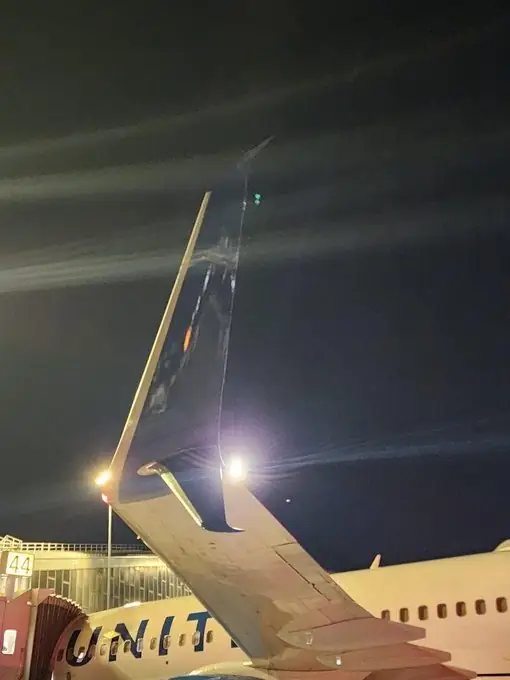
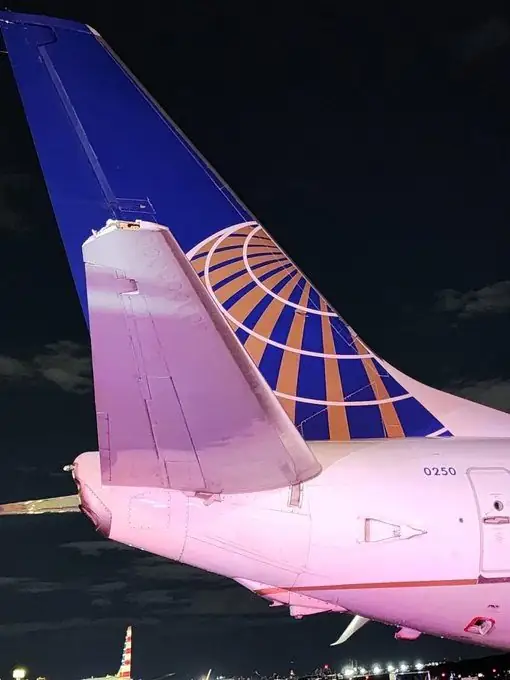
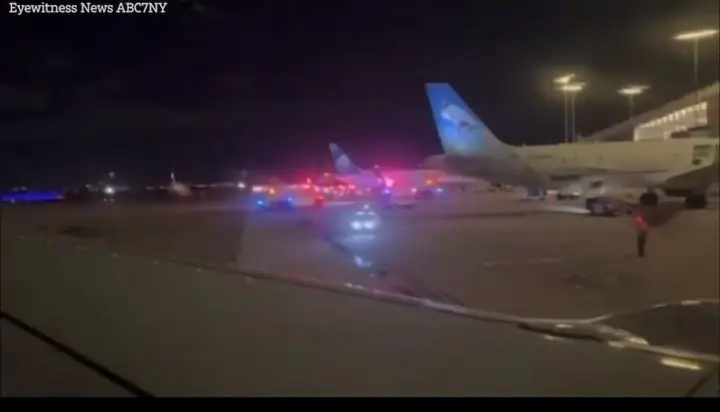
| Airline / operator | United Airlines |
|---|---|
| Aircraft (type, registration) | United Airlines Boeing 767-322ER (WL) (N675UA); United Airlines Boeing 737-724(WL) (N21723) |
| Category (my classification) | Human factors / Taxi crew (flight or maintenance) |
| What happened | Two United Airlines aircraft collided on the ground at Chicago O’Hare International Airport (ORD/KORD), Chicago, Illinois, Friday afternoon. According to United Airlines, UA2652 (Boeing 737-724 WL N21723) was taxiing to its arrival gate when it made contact with the horizontal stabilizer of another United Airlines jet. The other jet was stationary and no passengers were on board. UA2652 was carrying 113 customers and five crew members at the time of the incident. UA2652 is a Boeing 737, while the other plane involved was a Boeing 767, the airline specified. |
| Injuries | ASN lists 0 fatalities. No injury statement in the ASN narrative. |
| Damage | Not stated |
| Time out of service | N675UA: about 10 days, ≈ 18 missed flights (ADS-B flight data) N21723: about 2.4 days, ≈ 10 missed flights (ADS-B flight data) |
| Official investigation | No investigation details on the ASN entry. |
| Source | Aviation Safety Network (ASN) entry: https://aviation-safety.net/wikibase/552225 Further sources listed on that page / found: https://www.goklerdeyiz.net/iki-yolcu-ucagi-yerde-carpisti-3/ https://economictimes.indiatimes.com/nri/latest-updates/united-airlines-plane-clips-tail-of-another-aircraf… |
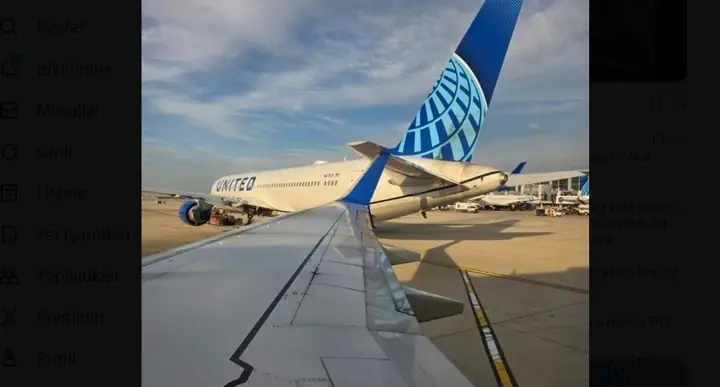
| Airline / operator | Not identified |
|---|---|
| Aircraft (type, registration) | Embraer E-Jet (operator and registration not visible) |
| Category (my classification) | Human factors / Taxi crew (flight or maintenance) |
| What happened | At night under orange apron lights, an E-Jet taxiing on the apron strikes a parked ground power unit or cart with its left engine and drags it. |
| Injuries | Not known |
| Damage | Not known |
| Official investigation | No public investigation found. |
| Source | As shared with WheelTug (LinkedIn montage, A. G. Giordano): https://www.linkedin.com/feed/update/urn:li:activity:7380366854801940481/ |
| Note | Event not identified from public sources; the clip is at 1:19 in a ramp-incident montage posted 4 Oct 2025. |
 ▶ VIDEO
Still: frame at 1:19. As shared with WheelTug (LinkedIn montage, A. G. Giordano)
| Airline / operator | Delta Connection, opb Endeavor Air |
|---|---|
| Aircraft (type, registration) | Delta Connection Bombardier CRJ-900LR (N902XJ); Delta Connection Bombardier CRJ-900LR (N480PX) |
| Category (my classification) | Human factors / Taxi crew (flight or maintenance) Secondary: ATC / marshalling involved |
| What happened | At about 21:56 local time, Endeavor Air flight 5155 (N902XJ), taxiing on taxiway A for departure to Roanoke, struck Endeavor Air flight 5047 (N480PX), which had just arrived from Charlotte, at the intersection of taxiways A and M. The ground controller had told flight 5155 to give way to another Endeavor Air aircraft at taxiway M; the crew read the instruction back, but the captain later said he did not recall hearing it. The right wing of N902XJ hit the nose and the captain's windshield of N480PX, which had stopped about 2 seconds before the impact. Both aircraft were taxiing on engine power. |
| Injuries | One flight attendant on flight 5155 had minor injuries and was taken to hospital. No other injuries among the 93 people on board the two aircraft. |
| Damage | Substantial to both aircraft (NTSB): N480PX nose and captain's windshield; N902XJ outboard right wing, with the outboard slat, aileron and wingtip separated. ASN lists N480PX as repaired. |
| Time out of service | N902XJ: at least about 90 days (no flights seen to 30 Dec 2025), at least 386 missed flights (ADS-B flight data) N480PX: at least about 90 days (no flights seen to 30 Dec 2025), at least 453 missed flights (ADS-B flight data) |
| Official investigation | NTSB, report DCA26FA001 (preliminary report; investigation continuing). Report / investigator link(s): https://data.ntsb.gov/carol-repgen/api/Aviation/ReportMain/GenerateNewestReport/201766/pdf |
| Source | Aviation Safety Network (ASN) entries 548487 and 548480; NTSB preliminary report DCA26FA001: https://aviation-safety.net/wikibase/548487 Further sources listed on that page / found: https://aviation-safety.net/wikibase/548480 https://www.flightglobal.com/ops-safety/2025/10/taxi-clearances-likely-to-be-scrutinised-after-laguardia-cr… https://airlinegeeks.com/2025/10/02/delta-crjs-collide-at-laguardia/ https://www.aerotime.aero/articles/delta-connection-crj-ground-collision-new-york |
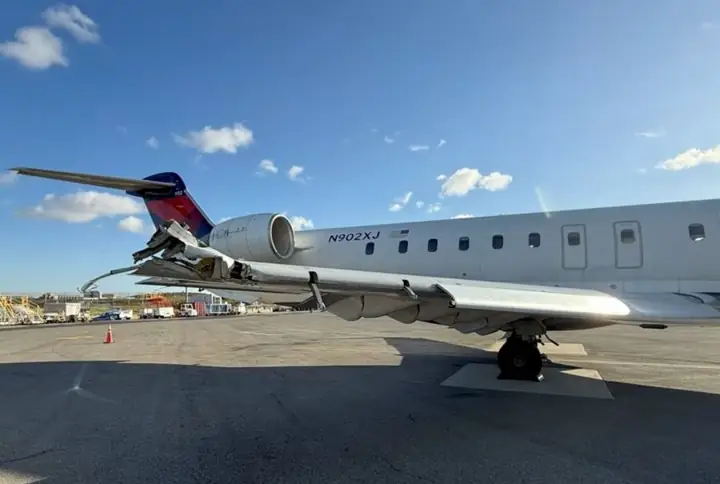
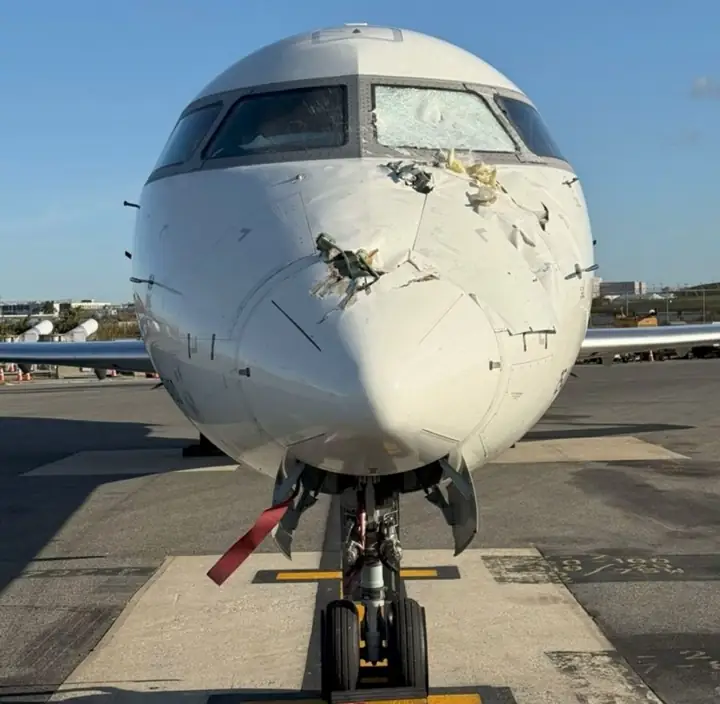
| Airline / operator | Rossiya |
|---|---|
| Aircraft (type, registration) | Rossiya Sukhoi Superjet 100-95B (RA-89112) |
| Category (my classification) | Human factors / Taxi crew (flight or maintenance) |
| What happened | Rossiya flight FV 6097, a Sukhoi Superjet (RA-89112) and a Hainan Airlines Airbus A330-343 (B-1098) were involved in a ground contact incident at Moscow-Sheremetyevo International Airport. The rudder of the Superjet sustained a tear. There were no personal injuries. |
| Injuries | ASN lists 0 fatalities. There were no personal injuries. |
| Damage | Not stated |
| Official investigation | No investigation details on the ASN entry. |
| Source | Aviation Safety Network (ASN) entry: https://aviation-safety.net/wikibase/546758 Further sources listed on that page / found: https://www.reuters.com/business/aerospace-defense/russian-aircraft-damaged-after-contact-with-second-plane… https://www.aerotime.aero/articles/two-aircraft-collide-moscow-sheremetyevo-airport |
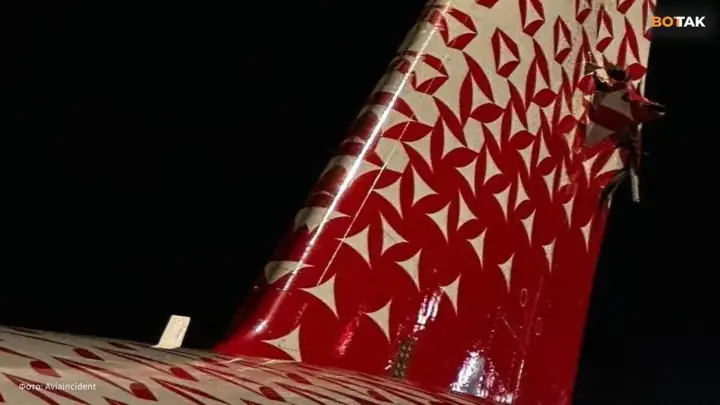
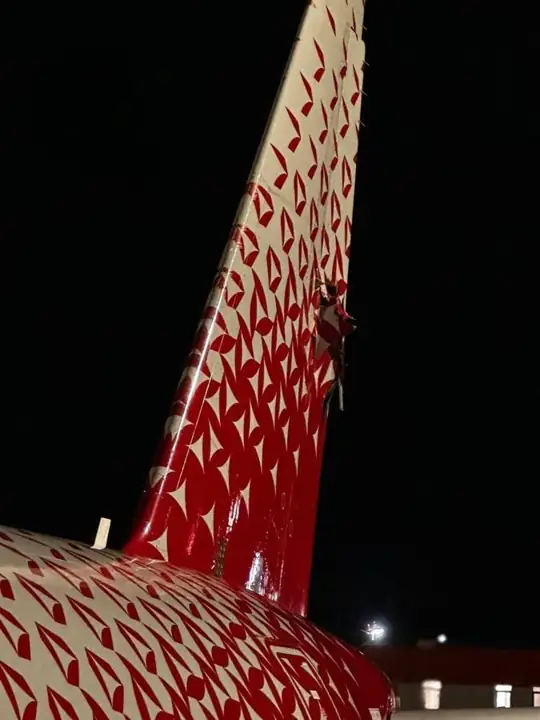
| Airline / operator | Juneyao Airlines |
|---|---|
| Aircraft (type, registration) | Juneyao Airlines Boeing 787-9 Dreamliner (B-20D1) |
| Category (my classification) | Human factors / Taxi crew (flight or maintenance) |
| What happened | Juneyao Air flight DKH1606 , Boeing 787-9, struck a mobile stair car with the leading edge of the left-hand wing tip at Helsinki-Vantaa Airport. There were no injuries in the collision. The aircraft was taxiing into the arrival gate at the time of the incident. The incident aircraft was ferried to Shanghai (PVG) on 3 September 2025 and resumed regular service three days later. CONCLUSIONS 1. Ground handling at Helsinki airport is not possible in accordance with instructions in all situations. Ground support equipment is repeatedly parked in equipment restraint areas and no-parking zones. Conclusion: Apron arrangements and resulting work practices are not conducive to safe operation. 2. Although Helsinki airport can be regarded as a common workplace or a workplace of mutual hazards it does not have a coordinating body. The airport operator is not receptive to assuming this role. Conclusion: Improving safety in a common workplace or in a workplace of mutual hazards requires negotiations and agreements between different stakeholders and a coordinating body. 3. A common occurrence reporting system or a hazard log is not maintained for groundhandling at the airport. Conclusion: A common occurrence reporting system that is open to all stakeholders promotes learning of lessons from occurrences and close calls across organizational boundaries. Common and continuous risk assessment enhance safety. 4. Air transport is susceptible to delays and cancellations, and the staffing of ground handlingservice providers varies daily. Conclusion: Both organizations and individual employees are required to apply instructions and regulations due to the emergence of sudden and unexpected situations, which in turn increases the probability of operational errors. 5. Foreign object debris inspections do not always pay attention to ground support equipment parked in equipment restraint areas. Conclusion: Risks caused by large equipment are not necessarily recognized because the focus of a foreign object debris inspections is typically on detecting smaller items. 6. The visual docking guidance system display activates regardless of the status of a foreign object debris inspection. Conclusion: Visual docking guidance system activation is independent of the statusof the foreign object debris inspection. An aircraft can arrive on an apron that has not been inspected for foreign object debris. |
| Injuries | ASN lists 0 fatalities. There were no injuries in the collision. |
| Damage | Minor, repaired |
| Time out of service | B-20D1: 9 days (ferried PVG 3 Sep, service 3 days later), ≈ 25 missed flights (ASN) |
| Official investigation | Investigating agency: SIAF Report number: L2025-03 Status: Investigation completed Duration: 10 months Final report Report / investigator link(s): https://www.turvallisuustutkinta.fi/app/uploads/sites/8/2026/07/L2025-03-Investigation-Report.pdf |
| Source | Aviation Safety Network (ASN) entry: https://aviation-safety.net/wikibase/541011 Further sources listed on that page / found: https://www.turvallisuustutkinta.fi/app/uploads/sites/8/2026/07/L2025-03-Investigation-Report.pdf https://www.hs.fi/pkseutu/art-2000011457879.html https://www.iltalehti.fi/kotimaa/a/846e8736-6104-4f01-bce4-6c1609c5e025 https://www.is.fi/kotimaa/art-2000011457786.html https://www.tilannehuone.fi/tehtava.php?hash=9cc426ae38ac390827fd04dcde40d3b3 |
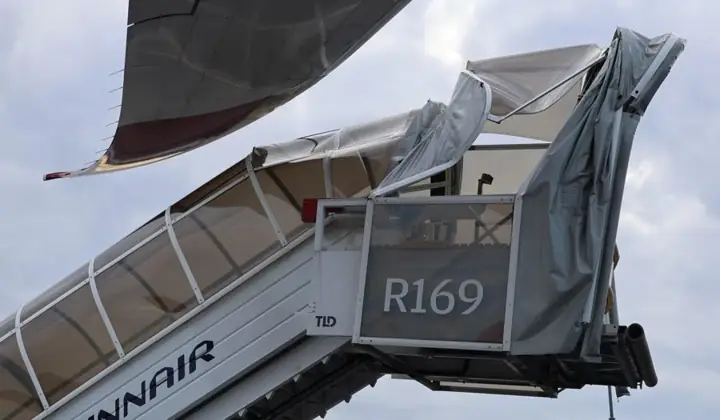
| Airline / operator | easyJet |
|---|---|
| Aircraft (type, registration) | easyJet Airbus A320-214 (G-EZUN); easyJet Airbus A320-214 (WL) (G-EZWH) |
| Category (my classification) | Human factors / Taxi crew (flight or maintenance) |
| What happened | EasyJet flight U22267, an Airbus A320 (G-EZUN), and EasyJet flight flight U22117, an Airbus A320 (G-EZWH) were involved in a ground contact incident at MAN. Both aircraft were taxiing to runway 23L for departure when G-EZUN turned from taxiway V7 onto taxiway VC2. G-EZWH meanwhile followed behind on V7 and continued until the left- hand wing tip struck the right-hand wing tip fence of G-EZUN. METAR: EGCC 150520Z 26003KT 3000 BR FEW003 16/16 Q1025 BECMG 9999 NSW |
| Injuries | ASN lists 0 fatalities. No injury statement in the ASN narrative. |
| Damage | Minor Location: Manchester International Airport (MAN/EGCC) - United Kingdom Phase: Taxi Nature: Passenger - Scheduled Departure airport: Manchester International Airport (MAN/EGCC) Destination airport: Gibraltar-North Front Airport (GIB/LXGB) Confidence Rating: Information is only available from news, social media or unofficial sources Narrative: EasyJet flight U22267, an Airbus A320 (G-EZUN), and EasyJet flight flight U22117, an Airbus A320 (G-EZWH) were involved in a ground contact incident at MAN. Both aircraft were taxiing to runway 23L for departure when G-EZUN turned from taxiway V7 onto taxiway VC2. G-EZWH meanwhile followed behind on V7 and continued until the left-hand wing tip struck the right-hand wing tip fence of G-EZUN. METAR: EGCC 150520Z 26003KT 3000 BR FEW003 16/16 Q1025 BECMG 9999 NSW ICAO Occurrence |
| Time out of service | G-EZWH: about 3.3 days, ≈ 15 missed flights (ADS-B flight data) G-EZUN: about 1.7 days, ≈ 8 missed flights (ADS-B flight data) |
| Official investigation | No investigation details on the ASN entry. Report / investigator link(s): https://www.aurora.nats.co.uk/htmlAIP/Publications/2024-12-26-AIRAC/graphics/402265.pdf |
| Source | Aviation Safety Network (ASN) entry: https://aviation-safety.net/wikibase/537945 Further sources listed on that page / found: https://www.manchestereveningnews.co.uk/news/greater-manchester-news/live-manchester-airport-flights-stoppe… https://www.aurora.nats.co.uk/htmlAIP/Publications/2024-12-26-AIRAC/graphics/402265.pdf https://t.co/NE1YlYP9iB https://t.co/DIxuuAvICW |
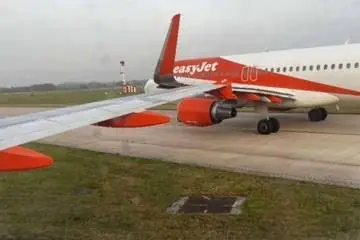
| Airline / operator | Xiamen Airlines |
|---|---|
| Aircraft (type, registration) | Xiamen Airlines Boeing 787-8 Dreamliner (B-2763) |
| Category (my classification) | Human factors / Taxi crew (flight or maintenance) |
| What happened | A Xiamen Airlines Boeing 787-8 Dreamliner B-2763, performing flight MF802 from Sydney, (Australia) to Xiamen, (China). The left engine struck and airbridge whilst arriving on stand, causing minor damage. The scheduled departure time was 11:25 local time, but the actual departure time was 15:05, a delay of more than four hours. |
| Injuries | ASN lists 0 fatalities. No injury statement in the ASN narrative. |
| Damage | Not stated |
| Time out of service | B-2763: less than 1 day, ≈ 1 missed flights (ADS-B flight data) |
| Official investigation | No investigation details on the ASN entry. |
| Source | Aviation Safety Network (ASN) entry: https://aviation-safety.net/wikibase/571913 Further sources listed on that page / found: https://c.m.163.com/news/a/K7FL7FL20511CCIF.html |
| Airline / operator | Breeze Airways / All Nippon Airways - ANA |
|---|---|
| Aircraft (type, registration) | Breeze Airways Airbus A220-300 (N247BZ); All Nippon Airways - ANA Boeing 787-10 Dreamliner (JA986A) |
| Category (my classification) | Human factors / Taxi crew (flight or maintenance) |
| What happened | A Boeing 787-10 Dreamliner, JA986A, struck Breeze Airways flight MX509, an Airbus A220-300, on the apron at Charleston International Airport, SC (CHS). MX509 had diverted to CHS because of thunderstorms at the intended destination, Norfolk International Airport, VA (ORF). The aircraft was parked on the apron, waiting to be fueled. At that time, the B787 taxied past and the wing tip struck the vertical stabilizer and rudder of the A220. Two people on board the A220 sustained minor injuries. Probable Cause and Findings The ground crews improper parking of N247BZ, which left its tail protruding into the taxiway, and the JA986A flight crew’s failure to maintain adequate clearance while taxiing. |
| Injuries | ASN lists 0 fatalities. Two people on board the A220 sustained minor injuries. |
| Damage | Substantial, repaired |
| Official investigation | Investigating agency: NTSB Report number: DCA25LA267 Status: Investigation completed Duration: 12 months Final report Report / investigator link(s): https://data.ntsb.gov/carol-repgen/api/Aviation/ReportMain/GenerateFinalReport/200574/pdf https://data.ntsb.gov/carol-repgen/api/Aviation/ReportMain/GenerateNewestReport/200574/pdf |
| Source | Aviation Safety Network (ASN) entry: https://aviation-safety.net/wikibase/528271 Further sources listed on that page / found: https://data.ntsb.gov/carol-repgen/api/Aviation/ReportMain/GenerateFinalReport/200574/pdf https://people.com/planes-collide-south-carolina-airport-11775494 https://www.wccbcharlotte.com/2025/07/20/faa-investigating-after-planes-collide/ https://data.ntsb.gov/carol-repgen/api/Aviation/ReportMain/GenerateNewestReport/200574/pdf https://www.aviationwire.jp/archives/327669 |
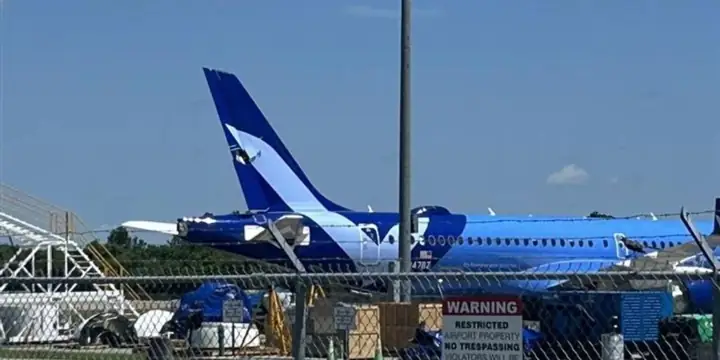
| Airline / operator | Vietnam Airlines |
|---|---|
| Aircraft (type, registration) | Vietnam Airlines Boeing 787-9 Dreamliner (VN-A863) |
| Category (my classification) | Human factors / Taxi crew (flight or maintenance) |
| What happened | Vietnam Airlines, flight VN7205, a Boeing 787-9 (VN-A863) and Vietnam Airlines flight flight VN1804, an Airbus A321 (VN-A338) were involved in a ground contact incident at Hanoi-Noi Bai International Airport (HAN). The B787 was taxiing on taxiway S to the holding point for runway 11R for departure. The preceding A321 had turned onto taxiway S3 and was stationary. At that point, the right hand wing of the B787 contacted and sliced through the rudder of the A321. No injuries were reported. |
| Injuries | ASN lists 0 fatalities. No injuries were reported. |
| Damage | Not stated |
| Official investigation | No investigation details on the ASN entry. |
| Source | Aviation Safety Network (ASN) entry: https://aviation-safety.net/wikibase/522881 Further sources listed on that page / found: https://vnexpress.net/hai-may-bay-va-cham-tai-san-bay-noi-bai-4907232.html https://e.vnexpress.net/news/news/traffic/vietnam-airlines-planes-collide-at-hanoi-airport-canceling-flight… https://www.vnaic.vn/images/stories/vnaic.vn/SanPhamDichVu/AIPVietNam/Related%20Links/2023-01-AMDT/graphics… https://www.jetphotos.com/photo/11718982 https://www.aerotime.aero/articles/vietnam-airlines-suspends-pilots-after-b787-slices-through-a321-tail-video |
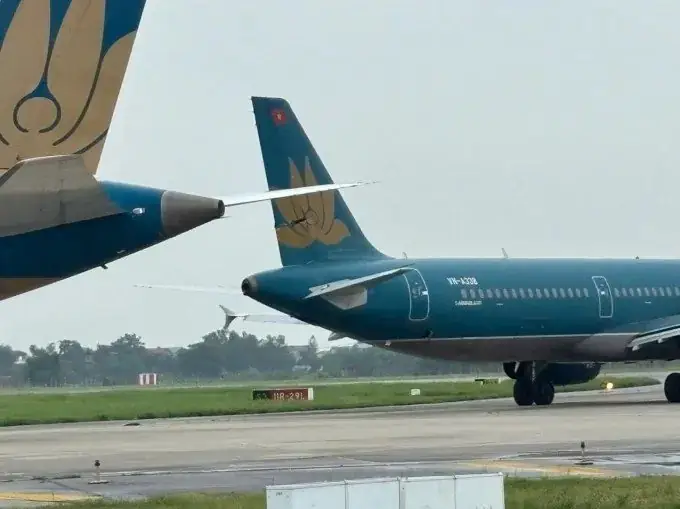
| Airline / operator | UTair Airlines |
|---|---|
| Aircraft (type, registration) | UTair Airlines Boeing 737-85R (WL) (RA-73498) |
| Category (my classification) | Human factors / Taxi crew (flight or maintenance) |
| What happened | UTair flight UT514 to Tyumen, Boeing 737-800 RA-73498, was taxiing toward the runway when its left wingtip struck the right elevator of Nordstar flight Y7412, Boeing 737-800 RA-73256, which had arrived from Norilsk and stopped before reaching its stand (KrasnodarMedia). UT514's left winglet was torn off and lodged in the Nordstar 737's elevator trim area. Rosaviatsia classified the event as an incident on a taxiway at Sochi; no one was hurt. Both airlines sent reserve aircraft. |
| Injuries | ASN lists 0 fatalities. No injury statement in the ASN narrative. |
| Damage | Not stated |
| Official investigation | Rosaviatsia (Southern MTU) investigating; Southern Transport Prosecutor's Office opened a safety-law check. No report published as of 29 Oct 2026. |
| Source | Aviation Safety Network (ASN) entry: https://aviation-safety.net/wikibase/522972 Further sources listed on that page / found: https://t.me/aviatorshina/6475 https://t.me/prokutp/4728 https://t.me/zmsutskr/4859 https://www.kommersant.ru/doc/7851036 https://expertsouth.ru/news/rosaviatsiya-nachala-rassledovanie-stolknoveniya-dvukh-samoletov-v-sochi/ https://krasnodarmedia.su/news/2133240/ https://www.interfax.ru/russia/1033458 |
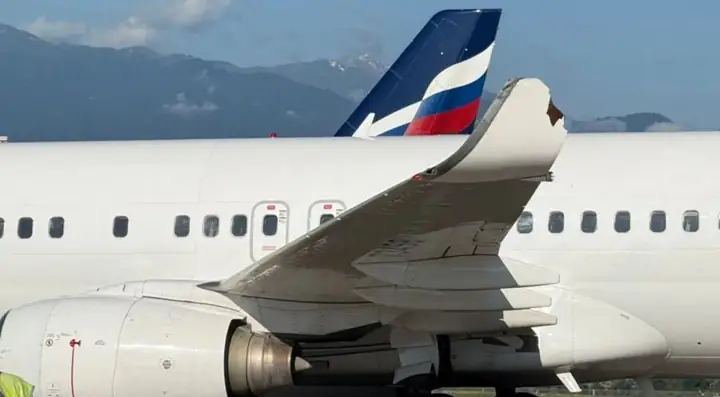
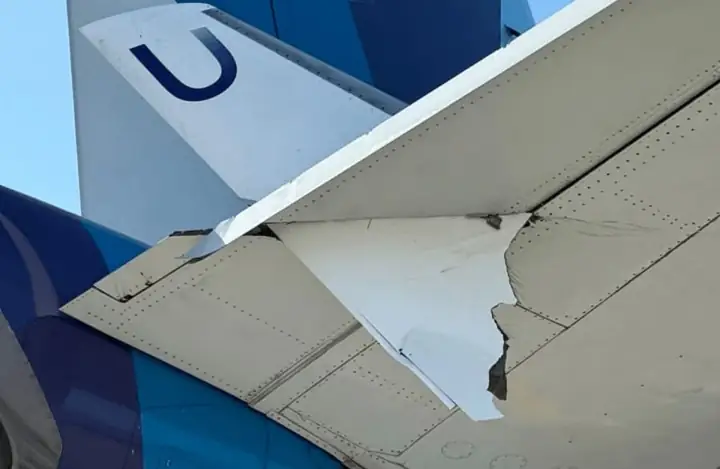
| Airline / operator | Ryanair |
|---|---|
| Aircraft (type, registration) | Ryanair Boeing 737 MAX 8-200 (EI-HMZ) |
| Category (my classification) | Human factors / Taxi crew (flight or maintenance) |
| What happened | Ryanair flight FR6080, a Boeing 737 MAX 8-200, contacted with a fence while taxiing at Kalamata International Airport in Greece. The right-hand lower AT winglet broke. |
| Injuries | ASN lists 0 fatalities. No injury statement in the ASN narrative. |
| Damage | Not stated |
| Official investigation | No investigation details on the ASN entry. |
| Source | Aviation Safety Network (ASN) entry: https://aviation-safety.net/wikibase/520669 Further sources listed on that page / found: https://www.goklerdeyiz.net/yolcu-ucagi-citlere-carpti/ https://www.aerotime.aero/articles/ryanair-737-winglet-damage-kalamata-greece |
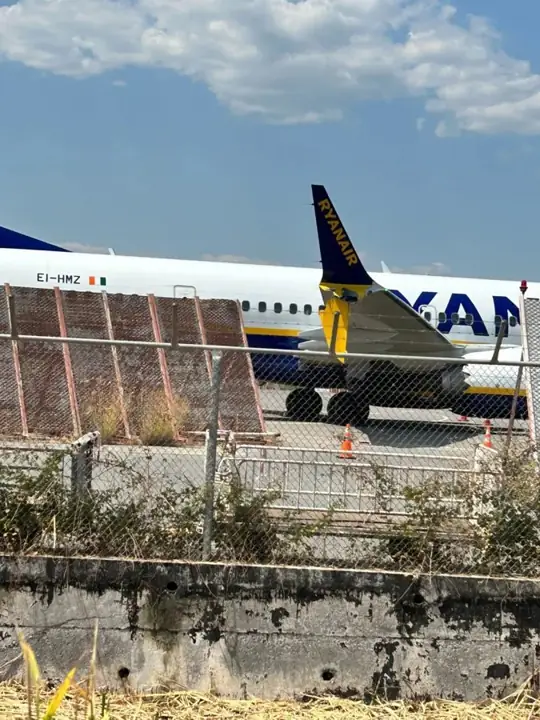
| Airline / operator | United Airlines |
|---|---|
| Aircraft (type, registration) | United Airlines Boeing 737 MAX 8 (N27266) |
| Category (my classification) | Human factors / Taxi crew (flight or maintenance) |
| What happened | United Airlines flight UA716, a Boeing 737 MAX 8, came to a sudden stop while taxiing out of the gate area and trying to make a turn onto taxiway C at Phoenix Sky Harbor International Airport (PHX), Arizona. As a result of the abrupt stop, one flight attendant (FA) sustained a serious injury. The event flight returned to the gate. According to the flight crew, there were no operational pressures, and following a normal pushback and engine start-up, the airplane was positioned on Taxiway Z facing north, holding short of Taxiway C, where they contacted Airport Traffic Control Tower (ATCT) ground control for taxi clearance. Ground control issued the standard southbound taxi route, which they had reviewed during the pilot briefing. The captain confirmed the instructions with the FO that they would turn right on Taxiway C, then right on Taxiway S, holding short of Taxiway D. According to the flight crew, while taxiing at a speed below 10 knots, the FO noticed they were beginning to pass Taxiway C. The FO alerted the captain that they needed to turn right to enter Taxiway C. The captain applied the brakes to assist with the turning maneuver, using what he recalled felt like normal pressure. Initially, everything seemed normal, but shortly afterward, the flight crew indicated that they felt that the brakes responded more aggressively than expected, causing the airplane to come to an abrupt stop. Both crew members confirmed there was sufficient space to complete the turn safely. According to the forward FA’s, after the airplane had departed from the gate and was taxiing out to the runway, they had started showing the safety demonstration video. Shortly after that, the airplane came to an abrupt stop. Both FAs were in the forward galley at the time and were thrown into the metal counter and safety latches. Each reported experiencing sharp pain in the neck, back, and legs as a result of the sudden jolt. As the airplane entered Taxiway C, the flight crew received a call from one of the forward FA’s indicating that the other forward FA was injured and she needed to go back to the gate. The flight crew coordinated with PHX operations, ramp, and ground control to return to the gate. Paramedics met the airplane at the gate and transported the injured FA to the hospital where they were diagnosed with a serious injury. According to United Airlines, their maintenance personnel conducted a post- accident general visual inspection of the airplane’s brake system and reported no anomalies were found. The airplane was subsequently placed on jacks, and the wheels were manually rotated. No evidence of brake dragging or grabbing was observed during this procedure. The brake system was cycled multiple times while the wheels were spun, and no faults or irregularities were identified. A review of maintenance history for this airplane showed that there were two maintenance entries for the braking system in the previous 90 days. Both entries were due to broken clips and were not related to braking actions. Probable Cause and Findings The abrupt application of brakes during taxi, which resulted in a sudden stop and caused a flight attendant to sustain a serious injury. |
| Injuries | ASN lists 0 fatalities. As a result of the abrupt stop, one flight attendant (FA) sustained a serious injury.; As the airplane entered Taxiway C, the flight crew received a call from one of the forward FA’s indicating that the other forward FA was injured and she needed to go back to the gate. |
| Damage | None |
| Official investigation | Investigating agency: NTSB Report number: ANC25LA048 Status: Investigation completed Duration: 4 months Final report Report / investigator link(s): https://data.ntsb.gov/carol-repgen/api/Aviation/ReportMain/GenerateNewestReport/200304/pdf |
| Source | Aviation Safety Network (ASN) entry: https://aviation-safety.net/wikibase/518978 Further sources listed on that page / found: https://data.ntsb.gov/carol-repgen/api/Aviation/ReportMain/GenerateNewestReport/200304/pdf |
| Airline / operator | Air New Zealand |
|---|---|
| Aircraft (type, registration) | Air New Zealand Boeing 777-319ER (ZK-OKN) |
| Category (my classification) | Human factors / Taxi crew (flight or maintenance) |
| What happened | Air New Zealand flight NZ145 collided with an airbridge at Brisbane Airport, puncturing the fuselage. It returned to Auckland on 25 May 2025 as flight NZ6000 unpressurised and without passengers. |
| Injuries | ASN lists 0 fatalities. No injury statement in the ASN narrative. |
| Damage | Minor Location: Brisbane International Airport, QLD (BNE/YBBN) - Australia Phase: Taxi Nature: Passenger - Scheduled Departure airport: Auckland International Airport (AKL/NZAA) Destination airport: Brisbane International Airport, QLD (BNE/YBBN) Confidence Rating: Information is only available from news, social media or unofficial sources Narrative: Air New Zealand flight NZ145 collided with an airbridge at Brisbane Airport, puncturing the fuselage. It returned to Auckland on 25 May 2025 as flight NZ6000 unpressurised and without passengers. ICAO Occurrence |
| Official investigation | No investigation details on the ASN entry. |
| Source | Aviation Safety Network (ASN) entry: https://aviation-safety.net/wikibase/514379 Further sources listed on that page / found: https://www.nzherald.co.nz/business/air-nz-boeing-777s-fuselage-punctured-after-hitting-airbridge-plane-to-… |
| Airline / operator | Libyan Airlines |
|---|---|
| Aircraft (type, registration) | Libyan Airlines Airbus A330-202 (5A-LAR) |
| Category (my classification) | Human factors / Taxi crew (flight or maintenance) |
| What happened | While taxiing to the stand the plane collided with a lamppost causing damage to the left wing tip. |
| Injuries | ASN lists 0 fatalities. No injury statement in the ASN narrative. |
| Damage | Not stated |
| Official investigation | No investigation details on the ASN entry. |
| Source | Aviation Safety Network (ASN) entry: https://aviation-safety.net/wikibase/499564 |
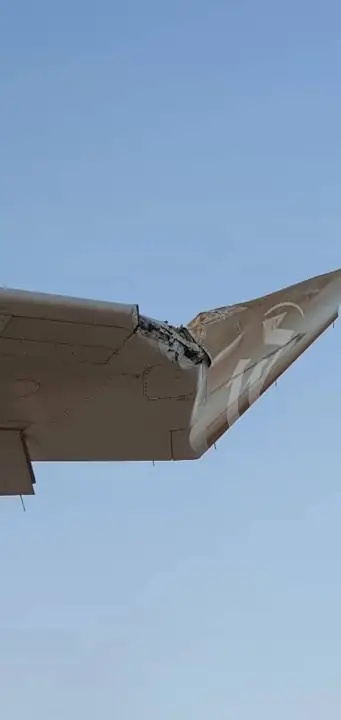
| Airline / operator | American Eagle, opb PSA Airlines and Republic Airways |
|---|---|
| Aircraft (type, registration) | Bombardier CRJ700 (AA5490); Embraer E175 (AA4522) |
| Category (my classification) | Human factors / Taxi crew (flight or maintenance) |
| What happened | The wingtip of AA5490, a PSA CRJ700, struck AA4522, a Republic E175 that was carrying members of Congress. |
| Injuries | No injuries reported. |
| Damage | Wingtip damage |
| Official investigation | No public investigation found. |
| Source | AviationPros: https://www.aviationpros.com/airport-business/airside-operations-area/news/55282461/plane-carrying-members-of-congress-bumped-in-wing-by-another-at-washington-airport |
| Airline / operator | Bighorn Airways |
|---|---|
| Aircraft (type, registration) | Bighorn Airways de Havilland Canada DHC-8-103 (N990BH) |
| Category (my classification) | Human factors / Taxi crew (flight or maintenance) |
| What happened | A DHC-8-103, N990BH, struck a building with the right wing during taxi. |
| Injuries | ASN lists 0 fatalities. No injury statement in the ASN narrative. |
| Damage | Substantial, repaired |
| Official investigation | Investigating agency: NTSB Report number: Status: Preliminary report Duration: Preliminary report Report / investigator link(s): https://data.ntsb.gov/carol-repgen/api/Aviation/ReportMain/GenerateNewestReport/199899/pdf |
| Source | Aviation Safety Network (ASN) entry: https://aviation-safety.net/wikibase/487482 Further sources listed on that page / found: https://data.ntsb.gov/carol-repgen/api/Aviation/ReportMain/GenerateNewestReport/199899/pdf |
| Airline / operator | Ryanair |
|---|---|
| Aircraft (type, registration) | Ryanair Boeing 737 MAX 8-200 (EI-IJR) |
| Category (my classification) | Human factors / Taxi crew (flight or maintenance) |
| What happened | Ryanair flight FR9914, a Boeing 737 MAX 8-200, sustained damage after the wingtip touched the roof of a container next to a lighting and communications mast during taxiing. The lower part of the split scimitar winglet on the left wing was damaged. The aircraft resumed service on 19.02.2025 with the damaged winglet removed from the left wing. |
| Injuries | ASN lists 0 fatalities. No injury statement in the ASN narrative. |
| Damage | Minor Location: Tallinn-Lennart Meri Airport (TLL/EETN) - Estonia Phase: Taxi Nature: Passenger - Scheduled Departure airport: Tallinn-Lennart Meri Airport (TLL/EETN) Destination airport: Barcelona-El Prat Josep Tarradellas Airport (BCN/LEBL) Confidence Rating: Information verified through data from accident investigation authorities Narrative: Ryanair flight FR9914, a Boeing 737 MAX 8-200, sustained damage after the wingtip touched the roof of a container next to a lighting and communications mast during taxiing. The lower part of the split scimitar winglet on the left wing was damaged. The aircraft resumed service on 19.02.2025 with the damaged winglet removed from the left wing. ICAO Occurrence |
| Time out of service | EI-IJR: 1 day (ASN) |
| Official investigation | No investigation details on the ASN entry. |
| Source | Aviation Safety Network (ASN) entry: https://aviation-safety.net/wikibase/478746 Further sources listed on that page / found: https://www.delfi.ee/artikkel/120357985/ryanairi-lennuk-soitis-tallinna-lennujaamas-vastu-konteineri-katust… https://scontent.ftll3-2.fna.fbcdn.net/v/t39.30808-6/479729416_606000372423762_8027725339840931405_n.jpg?_n… |
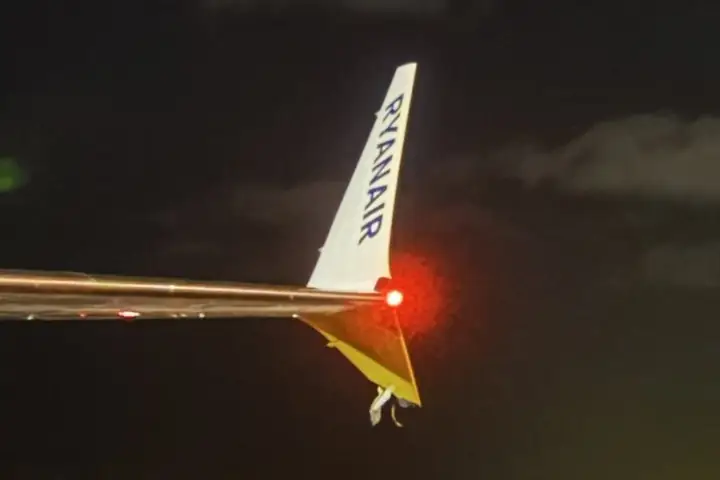
| Airline / operator | Delta Air Lines / Japan Airlines (JAL) |
|---|---|
| Aircraft (type, registration) | Delta Air Lines Boeing 737-832 (WL) (N3737C); Japan Airlines (JAL) Boeing 787-9 Dreamliner (JA868J) |
| Category (my classification) | Human factors / Taxi crew (flight or maintenance) Secondary: ATC / marshalling involved |
| What happened | The accident occurred when the right wingtip of Japan Airlines flight 68 (JAL68), a Boeing 787-9 collided with the vertical stabilizer of Delta Air Lines flight 1921 (DL1921), a Boeing 737-832 while taxiing to the gate after landing at the Seattle-Tacoma International Airport (SEA), Seattle, Washington. There were no injuries to passengers or crew on either airplane and DL1921 sustained substantial damage to its empennage. The DL1921 flight crew reported that after pushback from gate A11 and taxiing via taxiway W, they were instructed to hold short of spot 99 and sequence for the south deice pad. DL1921 was stopped with the parking brake set abeam deice spot 1, waiting for marshalling and further clearance. According to the captain, the uncontrolled deice ramp was congested, slippery due to light snow and deicing fluid, and lacked defined hold points and marshalling guidance. The DL1921 flight crew stated that they were parked in position behind an Airbus A220 awaiting deice when they were struck from behind by a taxiing aircraft. The captain of DL1921 reported no prior indication that another aircraft was approaching from the rear and stated that he believed his aircraft was safely parked awaiting ground guidance. The first officer of DL1921 stated that he observed the approaching JAL68 aircraft’s wing moving uncomfortably close and alerted the captain, but the Delta aircraft could not move forward due to deice truck traffic and lack of a ground marshal. Moments later, the JAL68 aircraft’s right wingtip contacted the tail section of DL1921. According to statements from the JAL68 flight crew, they were taxiing toward gate S8 after landing on runway 16L. Due to congestion, the crew received multiple routing changes via ramp control, including taxi to spot 88 and subsequently back to spot 99 before re-entering the ramp toward S8. While maneuvering in the congested ramp near stands S15 and S16, the JAL68 captain (pilot flying) offset slightly left of centerline to maintain spacing with DL1921. The captain reported confirming with the first officer (pilot monitoring) whether the right wingtip was clear. The first officer responded that it appeared clear, but later recognized this was a misjudgment. The Japan Airlines crew estimated taxi speed at about 2 knots prior to contact. Both the captain and the observer crewmember reported they were aware of the proximity of the Delta aircraft but believed clearance would be maintained. The right wingtip of JAL68’s B-787 subsequently struck the tail of the parked DL1921. Following the collision, both crews initiated standard checklists. The Delta crew reported no injuries, secured the aircraft, and coordinated with Aircraft Rescue and Fire Fighting (ARFF) and airport operations for passenger deplaning via buses. The Japan Airlines crew stopped engines after receiving signals from Delta ground staff and reported the occurrence to ATC and company dispatch. Probable Cause: The Japan Airlines flight crew’s failure to maintain adequate clearance from the parked Delta Air Lines aircraft while taxiing in congested ramp conditions. |
| Injuries | ASN lists 0 fatalities. There were no injuries to passengers or crew on either airplane and DL1921 sustained substantial damage to its empennage.; The Delta crew reported no injuries, secured the aircraft, and coordinated with Aircraft Rescue and Fire Fighting (ARFF) and airport operations for passenger deplaning via buses. |
| Damage | Substantial, repaired |
| Official investigation | Investigating agency: NTSB Report number: DCA25LA117 Status: Investigation completed Duration: 8 months Final report Report / investigator link(s): https://data.ntsb.gov/carol-repgen/api/Aviation/ReportMain/GenerateNewestReport/199653/pdf https://data.ntsb.gov/Docket?ProjectID=199653 |
| Source | Aviation Safety Network (ASN) entry: https://aviation-safety.net/wikibase/475296 Further sources listed on that page / found: https://data.ntsb.gov/carol-repgen/api/Aviation/ReportMain/GenerateNewestReport/199653/pdf https://www.seattletimes.com/seattle-news/japan-airlines-plane-strikes-parked-delta-plane-at-seatac-airport/ https://www.vallartadaily.com/japan-airlines-plane-collides-with-puerto-vallarta-bound-delta-plane-at-seatt… https://www.nytimes.com/2025/02/05/us/delta-japan-airlines-collision-seattle-airport.html https://data.ntsb.gov/Docket?ProjectID=199653 https://nypost.com/2025/02/05/us-news/delta-and-japan-airlines-planes-collide-at-seattle-tacoma-internation… |
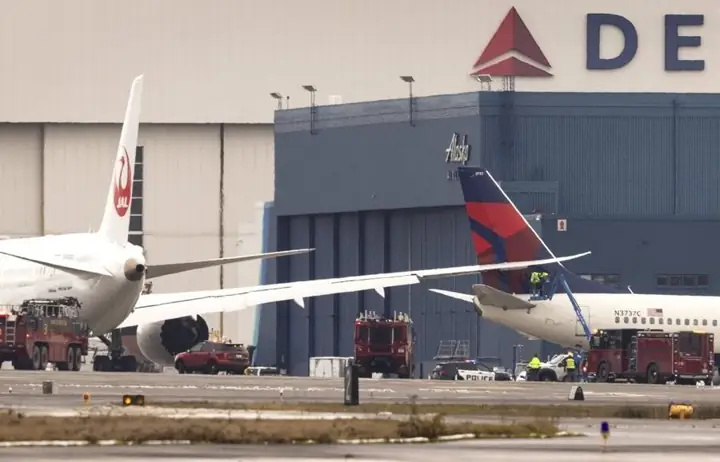
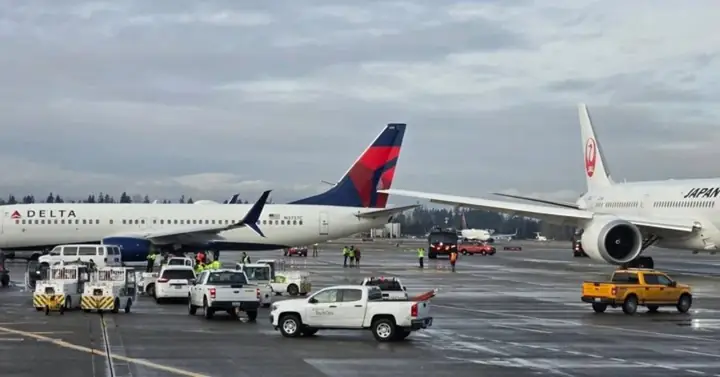
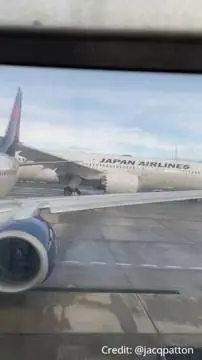 ▶ VIDEO
Still: X video preview frame, @BNONews on X
| Airline / operator | All Nippon Airways - ANA |
|---|---|
| Aircraft (type, registration) | All Nippon Airways - ANA de Havilland Canada DHC-8-402Q Dash 8 (JA465A) |
| Category (my classification) | Human factors / Taxi crew (flight or maintenance) |
| What happened | An ANA Wings DHC-8 aircraft operating All Nippon Airways flight NH1695 hit the jet bridge when its left wing collided with it upon arrival at spot 3 of Fukushima. Four crew members and 24 passengers were uninjured, but three flights were cancelled and around 100 people are expected to be affected. |
| Injuries | ASN lists 0 fatalities. Four crew members and 24 passengers were uninjured, but three flights were cancelled and around 100 people are expected to be affected. |
| Damage | Not stated |
| Official investigation | No investigation details on the ASN entry. |
| Source | Aviation Safety Network (ASN) entry: https://aviation-safety.net/wikibase/474946 Further sources listed on that page / found: https://www3.nhk.or.jp/news/html/20250202/k10014710191000.html https://www.yomiuri.co.jp/national/20250202-OYT1T50041/ https://news.ntv.co.jp/n/fct/category/society/fcea18e57635bf49dc9d0888d602858541 https://www.kfb.co.jp/news/fukushima/index.php?id=202502021772 https://news.tv-asahi.co.jp/news_society/articles/000401957.html |
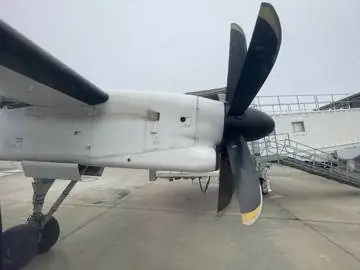
| Airline / operator | KLM Royal Dutch Airlines |
|---|---|
| Aircraft (type, registration) | KLM Royal Dutch Airlines Boeing 787-9 Dreamliner (PH-BHO) |
| Category (my classification) | Human factors / Taxi crew (flight or maintenance) |
| What happened | KLM flight KL702, a Boeing 787-9 Dreamliner, suffered an incident during pushback for departure at Santiago-Arturo Merino Benitez Airport (SCL). After pushback from the gate, and when the tow truck was about the be disconnected, engine no.2 inadvertently accelerated, causing the aircraft to slide to the left side. This incident caused damage to the tow bar. The aircraft itself was not damaged. |
| Injuries | ASN lists 0 fatalities. No injury statement in the ASN narrative. |
| Damage | None |
| Official investigation | Investigating agency: DGAC Chile Report number: 2090-25 Status: Preliminary report Duration: Preliminary report Report / investigator link(s): https://www.dgac.gob.cl/wp-content/uploads/2025/03/Informe-Preliminar-30-dias-2090-25.pdf |
| Source | Aviation Safety Network (ASN) entry: https://aviation-safety.net/wikibase/472545 Further sources listed on that page / found: https://www.dgac.gob.cl/wp-content/uploads/2025/03/Informe-Preliminar-30-dias-2090-25.pdf |
| Airline / operator | TUI Airways |
|---|---|
| Aircraft (type, registration) | Boeing 737-800 (G-TAWH), flight BY1519 |
| Category (my classification) | Human factors / Taxi crew (flight or maintenance) |
| What happened | The 737 clipped a catering van while taxiing in. |
| Injuries | Not stated in the source. |
| Damage | Not stated in the source. |
| Official investigation | No investigation details on the ASN entry. |
| Source | Aviation Safety Network (ASN) entry: https://aviation-safety.net/wikibase/471831 |
| Airline / operator | Norwegian Air International |
|---|---|
| Aircraft (type, registration) | Norwegian Air International Boeing 737-8JP (WL) (SE-RPU) |
| Category (my classification) | Human factors / Taxi crew (flight or maintenance) Secondary: ATC / marshalling involved |
| What happened | Norwegian Air International flight D83671, a Boeing 737-800, was involved in a ground collision at Copenhagen Kastrup Airport (CPH), Denmark. The aircraft landed and taxied towards parking stand A27. As the aircraft approached its final parking position at the stand, using the Docking Guidance System (DGS), the left-hand (LH) wing outer leading edge collided with a movable passenger boarding stair, which had been left in a red hatched prohibited parking area. The impact caused the passenger stair to overturn, as the aircraft continued to its designated parking position at parking stand A27. The incident aircraft resumed regular service on 12 January 2025. |
| Injuries | ASN lists 0 fatalities. No injury statement in the ASN narrative. |
| Damage | Substantial, repaired |
| Time out of service | SE-RPU: 3 days (ASN) |
| Official investigation | Investigating agency: HCLJ Report number: 2025-42 Status: Investigation completed Duration: 4 months Final report |
| Source | Aviation Safety Network (ASN) entry: https://aviation-safety.net/wikibase/471306 Further sources listed on that page / found: https://t.co/GXhReIXALv https://t.co/zIS1y6jVLH |
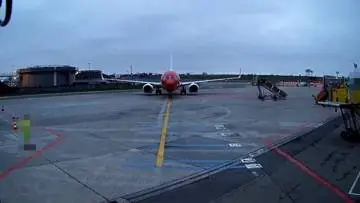 ▶ VIDEO
Still: X video preview frame, @Aerossurance on X
| Airline / operator | United Airlines / American Airlines |
|---|---|
| Aircraft (type, registration) | United Airlines Boeing 787-10 Dreamliner (N14016); American Airlines Boeing 737-823 (WL) (N988NN) |
| Category (my classification) | Human factors / Taxi crew (flight or maintenance) |
| What happened | American Airlines flight AA1979, a Boeing 737-800 (N988NN), hit the tail of United Airlines flight UA219, a Boeing 787-10 Dreamliner (N14016), during taxi at Chicago-O'Hare International Airport , IL (ORD). |
| Injuries | ASN lists 0 fatalities. No injury statement in the ASN narrative. |
| Damage | Not stated |
| Official investigation | No investigation details on the ASN entry. |
| Source | Aviation Safety Network (ASN) entry: https://aviation-safety.net/wikibase/470508 Further sources listed on that page / found: https://abc7chicago.com/post/united-american-airlines-planes-collide-taxiway-chicago-ohare-airport-faa/1577… |
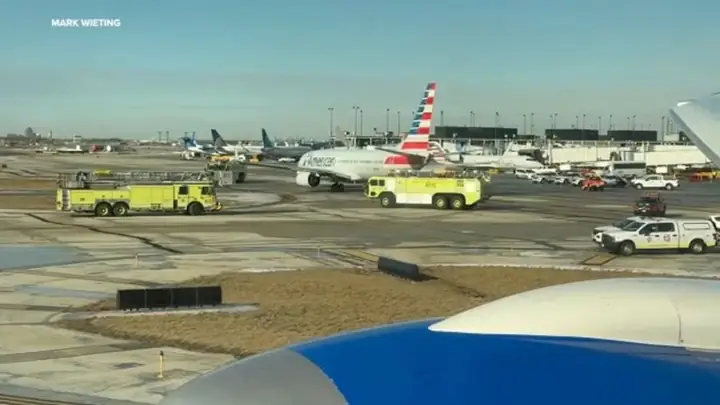
| Airline / operator | Air Arabia |
|---|---|
| Aircraft (type, registration) | Air Arabia Airbus A321-211 (A6-ATG) |
| Category (my classification) | Human factors / Taxi crew (flight or maintenance) |
| What happened | Air Arabia flight G9618, an Airbus A321-211, taxied to the right into the apron area, not following the yellow line, colliding with baggage loaders parked on stand no. 3 and dragging them for a few meters. The aircraft continued taxiing toward the departure runway without noticing the collision with the baggage loaders. ATC informed the crew prior to takeoff that the aircraft had collided with the baggage loader, and the captain decided to return to the parking stand for inspection. Aircraft engine no. 2 was substantially damaged, and one of the two baggage loaders sustained minor damage. The probable cause was non-adherence of the flight crew to the airport charted taxi lane. Contributing factor: ATC did not instruct the aircraft when it deviated from its designated taxi lane. |
| Injuries | ASN lists 0 fatalities. No injury statement in the ASN narrative. |
| Damage | Minor, repaired |
| Official investigation | Investigating agency: EAAID Report number: Status: Investigation completed Duration: Final report Report / investigator link(s): https://www.civilaviation.gov.eg/Accident_GenDownloadRes?id=876fab22-307b-428b-b72d-79322d1c6d38%5C20251228_125830636_1090.pdf&name=Accident_Report&fileName=%D9%88%D8%A7%D9%82%D8%B9%D8%A9%20%D8%AE%D8%B7%D8%B1%D8%A9_2024-12-27_A321%20-%20AIRBUS |
| Source | Aviation Safety Network (ASN) entry: https://aviation-safety.net/wikibase/568066 Further sources listed on that page / found: https://www.civilaviation.gov.eg/Accident_GenDownloadRes?id=876fab22-307b-428b-b72d-79322d1c6d38%5C20251228… |
| Airline / operator | LATAM Airlines Brasil |
|---|---|
| Aircraft (type, registration) | LATAM Airlines Brasil Airbus A320-271N (PR-XBG) |
| Category (my classification) | Human factors / Taxi crew (flight or maintenance) |
| What happened | An Airbus A319-132 (reg. PT-TMA, msn 4000, opby. LATAM Airlines Brasil, with 86 passengers and 5 crew), due to perform flight LA3176, was cleared for pushback from parking position 11. Right after, an Airbus A320-271N (reg. PR-XBG, msn 11725, opby. LATAM Airlines Brasil, with 78 passengers and 5 crew), due to perform flight LA3004, was cleared for taxi (after pushing back from parking position 8) via taxiways Mike and Lima to the holding point for runway 35L, but requested taxiing via twy. November instead to avoid manoeuvring around maintenance work on twy. Mike, which it was cleared for. While taxiing, PR-XBG's right wingtip collided against the tail cone and horizontal stabiliser of PT-TMA abeam parking position 11 during the latter's pushback, causing minor damage to both aircraft. The aircraft were sent to maintenance and the damage has since been fixed. |
| Injuries | ASN lists 0 fatalities. No injury statement in the ASN narrative. |
| Damage | Minor |
| Official investigation | No investigation details on the ASN entry. |
| Source | Aviation Safety Network (ASN) entry: https://aviation-safety.net/wikibase/464166 Further sources listed on that page / found: https://dedalo.sti.fab.mil.br/ocorrencia/86205 https://sistemas.anac.gov.br/aeronaves/cons_rab_resposta.asp?textMarca=PRXBG https://sistemas.anac.gov.br/aeronaves/cons_rab_resposta.asp?textMarca=PTTMA https://aisweb.decea.mil.br/?i=notam&view=single&%6Eotam_id=9419224 https://g1.globo.com/sp/sao-paulo/noticia/2024/12/03/dois-avioes-da-latam-se-envolvem-em-acidente-no-patio-… |
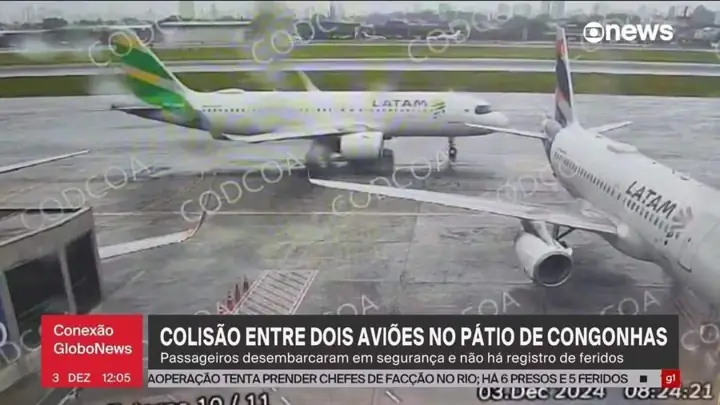
 ▶ VIDEO
Still: YouTube thumbnail, Golf Oscar Romeo® Aviação
| Airline / operator | American Airlines |
|---|---|
| Aircraft (type, registration) | American Airlines Boeing 777-223ER (N772AN) |
| Category (my classification) | Human factors / Taxi crew (flight or maintenance) |
| What happened | American Airlines flight AA109, a Boeing 777-223ER, was pulling into the gate at Boston-Logan International Airport, MA (BOS) when the right-hand wing struck the left-hand winglet a parked Frontier Airlines Airbus A321-271NX (N655FR). The A321neo was preparing for departure as Flight 3601 heading to Dallas-Fort Worth. |
| Injuries | ASN lists 0 fatalities. No injury statement in the ASN narrative. |
| Damage | Not stated |
| Official investigation | No investigation details on the ASN entry. |
| Source | Aviation Safety Network (ASN) entry: https://aviation-safety.net/wikibase/462941 Further sources listed on that page / found: https://www.bostonherald.com/2024/11/25/american-airlines-plane-strikes-frontier-airlines-aircrafts-wing-at… https://www.cbsnews.com/texas/news/logan-airport-planes-clip-wings-boston/?intcid=CNR-02-0623 https://www.aerotime.aero/articles/two-aircraft-clip-wings-at-boston-airport |
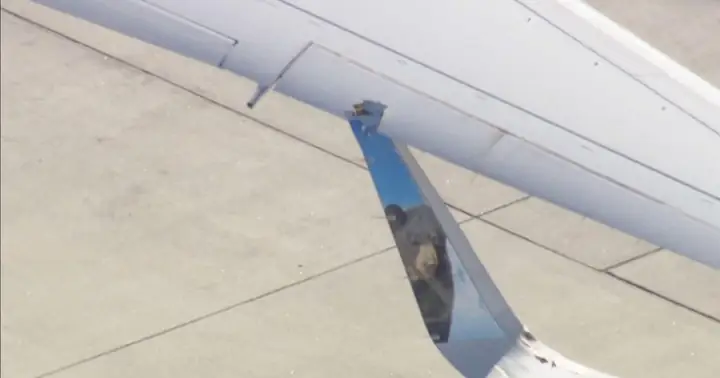
| Airline / operator | Delta Air Lines |
|---|---|
| Aircraft (type, registration) | Delta Air Lines Boeing 767-332ER (WL) (N1605) |
| Category (my classification) | Human factors / Taxi crew (flight or maintenance) |
| What happened | Delta Air Lines flight DL125, a Boeing 767-332ER, was parking at gate E7 at Boston-Logan International Airport, MA (BOS) when the left wing struck a jet bridge. |
| Injuries | ASN lists 0 fatalities. No injury statement in the ASN narrative. |
| Damage | Not stated |
| Official investigation | No investigation details on the ASN entry. |
| Source | Aviation Safety Network (ASN) entry: https://aviation-safety.net/wikibase/458615 |
| Airline / operator | Frontier Airlines |
|---|---|
| Aircraft (type, registration) | Frontier Airlines Airbus A320-251N (N338FR) |
| Category (my classification) | Human factors / Taxi crew (flight or maintenance) |
| What happened | Frontier Airlines flight F91162, an Airbus A320neo, was taxiing to the gate when the left engine cowling made contact with the jet bridge at Houston-William P. Hobby Airport, TX (HOU). |
| Injuries | ASN lists 0 fatalities. No injury statement in the ASN narrative. |
| Damage | Minor |
| Official investigation | No investigation details on the ASN entry. |
| Source | Aviation Safety Network (ASN) entry: https://aviation-safety.net/wikibase/455227 |
| Airline / operator | Sunwing Airlines |
|---|---|
| Aircraft (type, registration) | Sunwing Airlines Boeing 737 MAX 8 (C-FMXG) |
| Category (my classification) | Human factors / Taxi crew (flight or maintenance) |
| What happened | Sunwing Airlines flight WG349, a Boeing 737 MAX 8, was approaching the gate when the left wing tip collided with a parked service vehicle. The crew completed the stop procedure and the passengers disembarked at this point. There were no injuries. |
| Injuries | ASN lists 0 fatalities. There were no injuries. |
| Damage | Minor, repaired |
| Official investigation | No investigation details on the ASN entry. |
| Source | Aviation Safety Network (ASN) entry: https://aviation-safety.net/wikibase/447982 |
| Airline / operator | JetBlue Airways |
|---|---|
| Aircraft (type, registration) | JetBlue Airways Airbus A320-232 (N591JB) |
| Category (my classification) | Human factors / Taxi crew (flight or maintenance) |
| What happened | JetBlue Airways flight B696, an Airbus A320-232, was taxiing to the gate when the no.1 engine struck the jet bridge. The aircraft was repaired and resumed regular service 31 hours after the incident. |
| Injuries | ASN lists 0 fatalities. No injury statement in the ASN narrative. |
| Damage | Minor, repaired |
| Time out of service | N591JB: 31 hours (ASN) |
| Official investigation | No investigation details on the ASN entry. |
| Source | Aviation Safety Network (ASN) entry: https://aviation-safety.net/wikibase/424490 |
| Airline / operator | Corsair / Air Transat |
|---|---|
| Aircraft (type, registration) | Corsair Airbus A330-941 (F-HHUG); Air Transat Airbus A330-243 (C- GTSJ) |
| Category (my classification) | Human factors / Taxi crew (flight or maintenance) |
| What happened | Air Transat flight TS110, an Airbus A330-243 (C-GTSJ), and flight SS13, an Airbus A330-941 (F-HHUG), were involved in a ground collision at Paris-Charles de Gaulle Airport (CDG). F-HHUG landed on runway 27R at 08:22 UTC and took the high speed exit Z3. The controller asked them to hold at holding point K3. C-GTSJ landed on the same runway at 08:24 and also vacated via Z3. The controller instructed them to hold at stop point K2. While taxiing, the left wing winglet strikes the PHR of F-HHUG. METAR: LFPG 110800Z 28006KT CAVOK 13/09 Q1011 NOSIG LFPG 110900Z 27007KT CAVOK 14/08 Q1011 NOSIG |
| Injuries | ASN lists 0 fatalities. No injury statement in the ASN narrative. |
| Damage | Substantial |
| Official investigation | Investigating agency: BEA Report number: BEA2024-0386 Status: Preliminary report Report / investigator link(s): https://bea.aero/en/investigation-reports/notified-events/detail/accident-to-the-airbus-a330-registered-c-gtsj-operated-by-air-canada-and-the-airbus-a330-registered-f-hhug-operated-by-corsair-on-11-09-2024-at-paris-charles-de-gaulle/ |
| Source | Aviation Safety Network (ASN) entry: https://aviation-safety.net/wikibase/430251 Further sources listed on that page / found: https://bea.aero/en/investigation-reports/notified-events/detail/accident-to-the-airbus-a330-registered-c-g… |
| Airline / operator | Delta Connection, opb Endeavor Air / Delta Air Lines |
|---|---|
| Aircraft (type, registration) | Delta Connection, opb Endeavor Air Bombardier CRJ-900LR (N302PQ); Delta Air Lines Airbus A350-941 (N503DN) |
| Category (my classification) | Human factors / Taxi crew (flight or maintenance) |
| What happened | On September 10, 2024, about 1007 eastern daylight time, Delta Air Lines flight 295, an Airbus A350-941, N503DN, collided with Endeavor Air flight 5526 (dba Delta Air Lines), a Mitsubishi Heavy Industries (MHI) CRJ-900, N302PQ, while taxiing for departure at Hartsfield-Jackson Atlanta International Airport (ATL), Atlanta, Georgia. (In this report, flight 295 is referred to as the A350 airplane, and flight 5526 is referred to as the CRJ airplane.) The CRJ was holding short of runway 8R on taxiway H waiting for takeoff clearance, and the A350 was taxiing along intersecting taxiway E. As the A350 passed behind the CRJ, where the taxiways intersected, the right wingtip of the A350 impacted the vertical stabilizer of the CRJ, which resulted in substantial damage to the empennage of the CRJ and minor damage to the A350. The passengers and crew aboard both airplanes were not injured except for a flight attendant aboard the CRJ, who sustained a minor injury. The A350 was operating under the provisions of Title 14 Code of Federal Regulations Part 121 as a scheduled international passenger flight from ATL to Tokyo Haneda International Airport (HND), Tokyo, Japan. The CRJ was operating under Part 121 as a regularly scheduled domestic passenger flight from ATL to Lafayette Regional Airport (LFT), Lafayette Parish, Louisiana. The FDR and CVR were retrieved from both airplanes between September 10 and 11, 2024, by aircraft maintenance technicians (AMT) and NTSB personnel. Both CVRs were sent to the NTSB Vehicle Recorder Laboratory on September 13, 2024. The data from both FDRs were downloaded on-site by Delta Air Lines in the presence of NTSB personnel. Four flight crew members consisting of a captain and first officer (FO), a relief captain, and a relief FO were on the flight deck of the A350. The captain was the pilot flying and the FO was the pilot monitoring. According to statements from the flight crew members, the pilot flying briefed the long runway (09L) normally used for heavy aircraft was closed for construction. Therefore, they would be taxiing to, and departing from, runway 8R. After pushback from the gate, the flight crew received taxi instructions to proceed north on taxiway D, and hold short of taxiway G. They taxied the airplane as instructed and received further instructions to taxi on taxiway G and hold short of taxiway F. They were then cleared to taxi on taxiway F and transition to taxiway E. After the A350 turned onto taxiway E, ground control instructed the flight crew to have the airplane follow the CRJ on taxiway E and switch to tower frequency. As the A350 continued to taxi on taxiway E, the flight crew observed the navigational alert message, “NAV GNSS-2,” on the lower electronic centralized aircraft monitor (ECAM). The FO informed the tower that they would need to stop to coordinate with maintenance before departure. ATC instructed the crew to continue straight ahead on taxiway E as able and hold short of taxiway V to work on the problem. The captain indicated that, as the airplane approached the intersection with taxiway V, he was looking straight ahead and to the left to avoid the left wingtip from impinging on opposite direction traffic coming off taxiway V. At that time, the right wingtip of the A350 impacted the vertical stabilizer of the CRJ, which was holding short of runway 8R at taxiway H. Following the collision, the captain stopped the A350 and set the parking brake. After airport rescue and firefighting (ARFF) examined the exterior of the A350, the crew was given clearance for the airplane to return to the gate. The captain was the pilot flying, and the FO was the pilot monitoring for the CRJ. The flight crew indicated that the airplane pushed back from the gate and that ground control instructed them to taxi to runway 8R via taxiway E. The crew completed the before takeoff checks while on taxiway E, and ATC advised the crew that the A350 would wait for them and monitor the tower frequency for takeoff. The crew reported that they complied with the instructions. The captain indicated that she maneuvered the CRJ to the hold-short line on taxiway H, set the parking brake, and awaited further instruction from ATC. The FAA provided the NTSB with certified ADS-B latitude and longitude data. Analysis of the ADS-B and preliminary FDR data showed the airplanes collided at 10:07:46. The CRJ was stationary, and the A350 was taxiing at a groundspeed of about 12 knots. The CRJ sustained lateral accelerations of 0.5 G left followed by 0.55 G right, and the CRJ’s heading was rotated about 9° clockwise. On September 13, the operations group met at the Delta Air Lines general offices in ATL to interview the flight crews. The airworthiness group examined the accident airplane from September 11 to 13, 2024, in ATL. According to Endeavor, the distance from the hold short line to the nose landing gear of the CRJ was approximately 56 feet. The A350 was examined at the Delta Tech Ops facility, and the CRJ was examined at the Endeavor Air facility. The investigation continues. |
| Injuries | ASN lists 0 fatalities. The passengers and crew aboard both airplanes were not injured except for a flight attendant aboard the CRJ, who sustained a minor injury. |
| Damage | Substantial, repaired |
| Time out of service | N503DN: about 4 months (returned January 2025; the source also says "roughly six months", which conflicts) (AirlineGeeks) N302PQ: about 13 months (test flight 20 Sep 2025 = 375 days; revenue service resumed early Oct 2025) (AeroTime; AirlineGeeks) |
| Official investigation | Investigating agency: NTSB Report number: DCA24FA299 Status: Preliminary report Duration: Preliminary report Report / investigator link(s): https://data.ntsb.gov/carol-repgen/api/Aviation/ReportMain/GenerateNewestReport/195092/pdf https://aeronav.faa.gov/d-tpp/2409/00026ad.pdf https://aviation-safety.net/wikibase/421543 |
| Source | Aviation Safety Network (ASN) entry: https://aviation-safety.net/wikibase/421543 Further sources listed on that page / found: https://data.ntsb.gov/carol-repgen/api/Aviation/ReportMain/GenerateNewestReport/195092/pdf https://www.fox13seattle.com/news/passengers-report-ground-collision-between-2-delta-planes-atlantas-airport https://aeronav.faa.gov/d-tpp/2409/00026ad.pdf https://t.co/UiqIoe28at https://t.co/7es7KpzZzk |
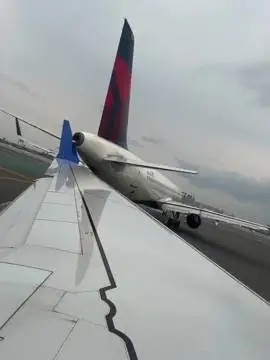
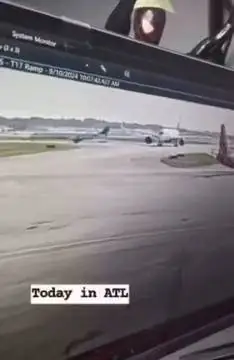 ▶ VIDEO
Still: X video preview frame, @KarlenePetitt on X
| Airline / operator | Virgin Atlantic Airways / Delta Air Lines |
|---|---|
| Aircraft (type, registration) | Virgin Atlantic Airways Airbus A350-1041 (G-VPRD); Delta Air Lines Airbus A330-323 (N808NW) |
| Category (my classification) | Human factors / Taxi crew (flight or maintenance) |
| What happened | Delta Air Lines flight DL105, an Airbus A330-323 (N808NW), was involved in a ground contact incident with Virgin Atlantic flight VS104, an Airbus A350-1041 (G-VPRD). Both aircraft were taxiing down taxiway L for a departure from runway 27R at ATL. DL105 turned onto taxiway LC, while VS104 continued straight ahead to taxiway LA. During the turn, the left-hand winglet of DL105 struck the stabilizer of VS104. Both flights continued to their respective destinations. After arriving at London-Heathrow Airport, G-VPRD was grounded. N808NW returned to ATL from Sao Paulo (GRU) but then remained on the ground at ATL for just over 24 hours before resuming service. |
| Injuries | ASN lists 0 fatalities. No injury statement in the ASN narrative. |
| Damage | Substantial |
| Time out of service | N808NW: about 1 day (completed trip ATL-GRU-ATL first, then grounded just over 24 h) (ASN) |
| Official investigation | Investigating agency: NTSB Report number: DCA24LA295 Status: Investigation completed Duration: Final report Report / investigator link(s): https://data.ntsb.gov/carol-repgen/api/Aviation/ReportMain/GenerateFinalReport/195036/pdf https://aeronav.faa.gov/d-tpp/2408/00026ad.pdf#nameddest= |
| Source | Aviation Safety Network (ASN) entry: https://aviation-safety.net/wikibase/420017 Further sources listed on that page / found: https://data.ntsb.gov/carol-repgen/api/Aviation/ReportMain/GenerateFinalReport/195036/pdf https://aeronav.faa.gov/d-tpp/2408/00026ad.pdf#nameddest= |
| Airline / operator | Egyptair |
|---|---|
| Aircraft (type, registration) | Egyptair Boeing 737-866 (WL) (SU-GEB) |
| Category (my classification) | Human factors / Taxi crew (flight or maintenance) |
| What happened | Egyptair flight MSR257, a Boeing 737-800, SU-GEB, collided with cargo loading equipment while parking on stand G5B. The aircraft suffered minor damage to its right winglet. Nobody onboard was injured. The aircraft was scheduled to fly from Hurghada to Cairo on a regularly scheduled flight. The aircraft took off at around 18:50 LT and would land safely at Cairo at around 22:11 LT. The aircraft would be instructed to taxi and park at stand G5B. The crew would make it to G5B. The aircraft would be parked with the help of the Visual Docking Guidance System (VDGS). The ground handling crew would select the “737” type on VDGS and would allow the aircraft to continue to park. While this was happening the flight crew had failed to notice a Cargo Loading Vehicle that was still in the path of the aircraft. Due to this the VDGS was not seen and thus unable to alert the crew of the danger using its programmed warning systems. The ground crew likely did notice the equipment but flight crew did not until the right winglet contacted the equipment. The aircraft was safely brought to a stop and all passengers disembarked normally. Probable Cause: The ECAA was able to determine that the most likely cause of the incident involving MSR257 was due to the distraction of the the flight crew due to an unorganized and non-sterile cockpit of MSR257. |
| Injuries | ASN lists 0 fatalities. Nobody onboard was injured. |
| Damage | Minor |
| Official investigation | Investigating agency: ECAA Report number: EGAI2024-001 Status: Investigation completed Duration: 8 months Final report Report / investigator link(s): https://www.civilaviation.gov.eg/Accident_GenDownloadRes?id=7e9c85c5-f8f0-4adf-b0cd-d20e64e3534b%5C20250514_142921581_1082.pdf&name=Accident_Report&fileName=%D9%88%D8%A7%D9%82%D8%B9%D8%A9_2024-08-24_B737-800 https://www.civilaviation.gov.eg/Accident_GenDownloadRes?id=61302192-afff-4227-b68d-6b2f9871af36%5C20230111_135350761_0.pdf&name=Accident_Report&fileName=%D9%88%D8%A7%D9%82%D8%B9%D8%A9_2024-08-24_B737-800%20-%20Boeing |
| Source | Aviation Safety Network (ASN) entry: https://aviation-safety.net/wikibase/538288 Further sources listed on that page / found: https://www.civilaviation.gov.eg/Accident_GenDownloadRes?id=7e9c85c5-f8f0-4adf-b0cd-d20e64e3534b%5C20250514… https://www.civilaviation.gov.eg/Accident_GenDownloadRes?id=61302192-afff-4227-b68d-6b2f9871af36%5C20230111… https://www.jetphotos.com/photo/11448722 |
| Airline / operator | Maroomba Airlines |
|---|---|
| Aircraft (type, registration) | Maroomba Airlines Bombardier DHC-8-315Q Dash 8 (VH-QQP) |
| Category (my classification) | Human factors / Taxi crew (flight or maintenance) |
| What happened | A Maroomba Airlines DHC-8-315Q was arriving at Minderoo Aircraft Landing Area, WA (YMDR) to pick up passengers for Perth. The aircraft departed Onslow after a refuelling stop at approximately 14:02 local time for the 17-minute flight to Minderoo ALA. On approach to Minderoo, the captain made contact with another aircraft which was positioned on the taxiway near the threshold of runway 08, awaiting departure. The crew of this second aircraft instructed the captain to taxi into an open-ended hangar after landing to allow their aircraft to depart on runway 08, as the only other parking bay was occupied by a helicopter. The first officer, who was pilot flying, landed the aircraft on runway 26 and vacated at the first taxiway into a large hangar located on the south side of the runway. At approximately 14:46, the crew completed boarding of 24 passengers for the return leg to Perth inside the hangar. The captain assumed the role of pilot flying, started the engines and began to taxi following the taxi guideline markings painted on the ground through the hangar. During taxi, both pilots felt a slight drop, which they believed was the right main wheel moving off the taxiway onto the grass. The cabin crew member at the rear of the cabin thought the wing tip may have contacted the hangar as the jolt was greater in the rear of the aircraft. They inspected the wings out of the windows and noted nothing out of the ordinary. The captain continued to taxi towards the entry point of runway 08. After entering and backtracking on runway 26, the crew aligned the aircraft for departure and final pre-take-off checks. At this time, the captain received a phone call from the operator’s head of flying operations who informed them that a witness reported that the aircraft may have made contact with the hangar during the initial taxi. The crew shut down the aircraft on the runway and conducted an inspection. The inspection revealed damage to the aircraft’s left elevator. There were no reported injuries, the passengers were disembarked, and the aircraft was moved to the parking bay. |
| Injuries | ASN lists 0 fatalities. There were no reported injuries, the passengers were disembarked, and the aircraft was moved to the parking bay. |
| Damage | Substantial, repaired |
| Official investigation | Investigating agency: ATSB Report number: AB-2025-004 Status: Investigation completed Duration: 5 months Final report Report / investigator link(s): https://www.atsb.gov.au/publications/occurrence-briefs/2025/aviation/taxiing-collision-involving-bombardier-dhc-8-300-minderoo-aircraft-landing-area-western-australia-23-august-2024 |
| Source | Aviation Safety Network (ASN) entry: https://aviation-safety.net/wikibase/476535 Further sources listed on that page / found: https://www.atsb.gov.au/publications/occurrence-briefs/2025/aviation/taxiing-collision-involving-bombardier… |
| Airline / operator | United Airlines |
|---|---|
| Aircraft (type, registration) | United Airlines Boeing 737-924ER (WL) (N63899) |
| Category (my classification) | Human factors / Taxi crew (flight or maintenance) |
| What happened | United Airlines flight UA1298, a Boeing 737-924ER (N63899), and United Airlines flight UA2627, a Boeing 737-824 (N76288), were involved in a ground contact incident at Boston-Logan International Airport, MA (BOS). UA2627 had landed and parked at gate B28 at 04:45 UTC. At the same time UA1298 taxied to gate B29 after landing. While turning into B29, the left wingtip struck the right stabilizer of UA2627. METAR: KBOS 200354Z 29006KT 10SM FEW024 FEW060 22/18 A2966 RMK AO2 SLP044 T02220183 KBOS 200454Z 28008KT 10SM BKN025 OVC070 21/18 A2967 RMK AO2 SLP046 T02110183 402390183 |
| Injuries | ASN lists 0 fatalities. No injury statement in the ASN narrative. |
| Damage | Not stated |
| Official investigation | No investigation details on the ASN entry. |
| Source | Aviation Safety Network (ASN) entry: https://aviation-safety.net/wikibase/412478 |
| Airline / operator | Kalitta Air |
|---|---|
| Aircraft (type, registration) | Kalitta Air Boeing 747-446 (BCF) (N742CK) |
| Category (my classification) | Human factors / Taxi crew (flight or maintenance) |
| What happened | Kalitta Air flight K4615, a Boeing 747-446 (BCF), was starting engines, parking brake not set, and struck a maintenance vehicle. |
| Injuries | ASN lists 0 fatalities. No injury statement in the ASN narrative. |
| Damage | Minor |
| Official investigation | No investigation details on the ASN entry. |
| Source | Aviation Safety Network (ASN) entry: https://aviation-safety.net/wikibase/412485 |
| Airline / operator | Gol Linhas Aéreas |
|---|---|
| Aircraft (type, registration) | Gol Linhas Aéreas Boeing 737 MAX 8 (PR-XMU) |
| Category (my classification) | Human factors / Taxi crew (flight or maintenance) |
| What happened | A Gol Boeing 737 MAX 8 (PR-XMU), was being pushed back from gate 12 at São Paulo-Congonhas Airport, SP (CGH), when it was hit by a taxiing LATAM Airbus A319 (PT-TMT, flight LA3935). The the left wing fence of the A319 struck the APU compartment of the Boeing 737, causing minor damage to the A319's wing fence and moderate damage to the APU compartment. |
| Injuries | ASN lists 0 fatalities. No injury statement in the ASN narrative. |
| Damage | Minor |
| Official investigation | Investigating agency: CENIPA Report number: Status: Preliminary report Duration: Preliminary report |
| Source | Aviation Safety Network (ASN) entry: https://aviation-safety.net/wikibase/405645 Further sources listed on that page / found: https://dedalo.sti.fab.mil.br/ocorrencia/85215 https://aeroin.net/avioes-da-gol-e-latam-colidem-no-patio-do-aeroporto-de-congonhas/ https://noticias.uol.com.br/cotidiano/ultimas-noticias/2024/07/29/avioes-colidem-no-patio-do-aeroporto-de-c… https://t.co/G5m5z8atyG |
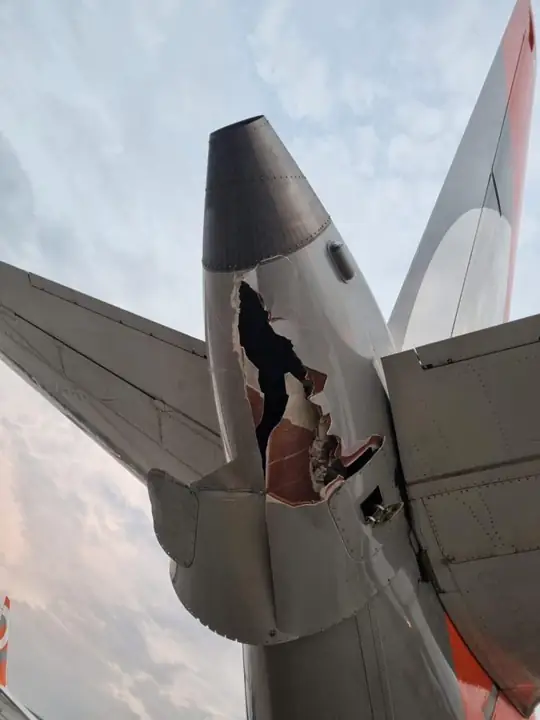
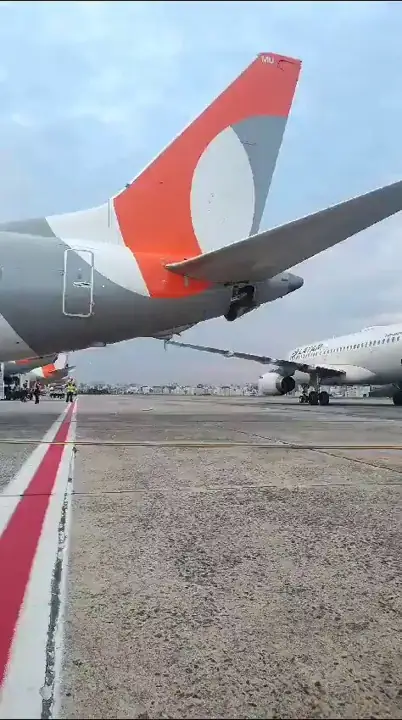
 ▶ VIDEO
Still: X video preview frame, @EBaviation on X
| Airline / operator | Delta Air Lines |
|---|---|
| Aircraft (type, registration) | Delta Air Lines Boeing 737-932ER (WL) (N853DN); Delta Air Lines Airbus A320-212 (N361NW) |
| Category (my classification) | Human factors / Taxi crew (flight or maintenance) |
| What happened | Delta Air Lines flight 2046, a Boeing 737-932ER, N853DN, collided with Delta Air Lines flight 2677, an Airbus A320-212, N361NW, while taxiing to runway 16L for takeoff during night visual meteorological conditions at Salt Lake City International Airport (SLC), Salt Lake City, Utah. There were no injuries to the passengers and crew onboard either airplane, and N361NW sustained substantial damage to the horizontal stabilizer and elevator. Both airplanes were operated under Title 14 Code of Federal Regulations Part 121 as regularly scheduled domestic passenger flights. Delta Air Lines flight 2677 was taxiing in line with other aircraft on taxiway H for takeoff from runway 16L at SLC, and all were stopped on taxiway H awaiting takeoff. The ground controller at the SLC air traffic control (ATC) tower advised all the airplanes that the current winds were 360 @ 5 knots. These conditions exceeded the tailwind limitation of their airplane and required the flight crew to recalculate takeoff performance parameters. The flight crew set the parking brake as the airplane was sitting between taxiways H12 and H13, and the flight crew recomputed takeoff performance calculations. They subsequently heard the crew of Delta Air Lines flight 2046 on the radio stating that they could take an intersection departure from taxiway H12 with the current winds. Delta Air Lines flight 2046 taxied to runway 16L on taxiway H and lined up behind DAL 2677. While awaiting takeoff, the updated winds were relayed to the flight crew. The captain of DAL 2046 requested new takeoff numbers from the company using the updated higher tailwind, and the updated performance numbers allowed their airplane to takeoff from runway 16L at taxiway H12 with a tailwind up to 9 knots. The flight crew contacted the tower and requested takeoff clearance from runway 16L via taxiway H12. The ATC ground controller queried if DAL 2046 had enough clearance to maneuver behind DAL 2677 onto taxiway H12. The flight crew responded affirmatively and received takeoff clearance from the ATC tower to depart on runway 16L from taxiway H12. The flight crew of DAL 2677 observed DAL 2046 starting to turn, recognized they were too close, and released the parking brake to move forward several feet. However, the movement forward was not enough to avoid a collision. As DAL 2046 was turning onto taxiway H12, the crew felt a bump, and quickly determined their left winglet had contacted the tail of DAL 2677. Both airplanes safely taxied back to the gate, discharged passengers, and there were no reported injuries on either airplane. Inspection at the gate revealed the left winglet of DAL 2046 struck the horizontal stabilizer of DAL 2677 and had substantially damaged the elevator. Probable Cause: Delta Air Lines flight 2046 flight crew's incorrect evaluation of the clearance between their airplane and Delta Air Lines flight 2046 as they turned onto a perpendicular taxiway. |
| Injuries | ASN lists 0 fatalities. There were no injuries to the passengers and crew onboard either airplane, and N361NW sustained substantial damage to the horizontal stabilizer and elevator.; Both airplanes safely taxied back to the gate, discharged passengers, and there were no reported injuries on either airplane. |
| Damage | Minor |
| Official investigation | Investigating agency: NTSB Report number: DCA24LA245A Status: Investigation completed Duration: 1 year Final report Report / investigator link(s): https://data.ntsb.gov/carol-repgen/api/Aviation/ReportMain/GenerateNewestReport/194782/pdf https://data.ntsb.gov/Docket?ProjectID=194782 |
| Source | Aviation Safety Network (ASN) entry: https://aviation-safety.net/wikibase/406170 Further sources listed on that page / found: https://data.ntsb.gov/carol-repgen/api/Aviation/ReportMain/GenerateNewestReport/194782/pdf https://data.ntsb.gov/Docket?ProjectID=194782 https://www.aerotime.aero/articles/two-delta-air-lines-aircraft-collided-on-taxiway |
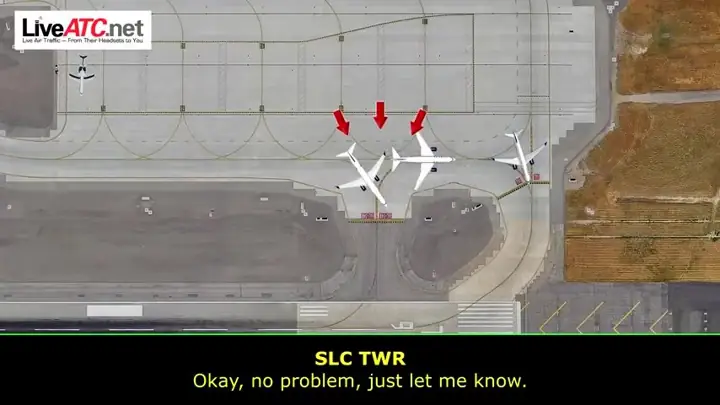 ▶ VIDEO
Still: frame at 1:30, VASAviation on YouTube
| Airline / operator | EVA Air |
|---|---|
| Aircraft (type, registration) | Boeing 777-300ER (B-16731), flight BR396 |
| Category (my classification) | Human factors / Taxi crew (flight or maintenance) |
| What happened | The 777-300ER's wing hit a light pole while taxiing. |
| Injuries | Not stated in the source. |
| Damage | Wing damaged |
| Official investigation | No investigation details on the ASN entry. |
| Source | Aviation Safety Network (ASN) entry: https://aviation-safety.net/wikibase/391261 Further sources listed on that page / found: https://x.com/aviationbrk/status/1808554578406736065 |
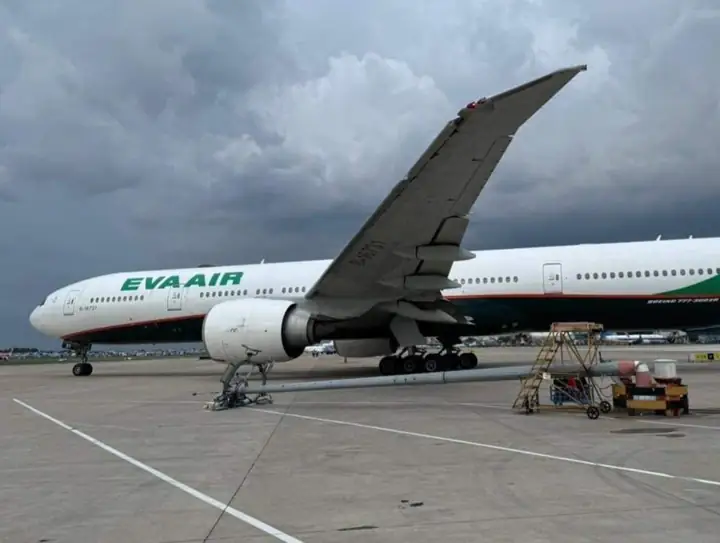
| Airline / operator | Flair Airlines |
|---|---|
| Aircraft (type, registration) | Flair Airlines Boeing 737 MAX 8 (C-FLKJ) |
| Category (my classification) | Human factors / Taxi crew (flight or maintenance) |
| What happened | Flair Airlines flight F8700, a Boeing 737 MAX 8, was being marshalled to gate 68 after landing at Edmonton International Airport, AB (YEG). The marshalling crew observed that the left wingtip of the aircraft was in close proximity to a parked fuel truck. While marshalling the aircraft in, the gate marshaller lost sight of the left-wing tip and wing tip marshaller. While the left wing was obscured by the aircraft fuselage, the gate marshaller had to rely on signals from the lead marshaller. It was during this time that the left lower winglet collided with the fuel truck. No additional signals to stop were given and the aircraft continued to be marshalled in until the final park signal was given. Company maintenance removed the lower winglet and installed a blanking plate. The aircraft was dispatched under configuration deviation list (CDL) for continued operations. |
| Injuries | ASN lists 0 fatalities. No injury statement in the ASN narrative. |
| Damage | Minor Location: Edmonton International Airport, AB (YEG/CYEG) - Canada Phase: Taxi Nature: Passenger - Scheduled Departure airport: Abbotsford Airport, BC (YXX/CYXX) Destination airport: Edmonton International Airport, AB (YEG/CYEG) Investigating agency: TSB Confidence Rating: Information verified through data from accident investigation authorities Narrative: Flair Airlines flight F8700, a Boeing 737 MAX 8, was being marshalled to gate 68 after landing at Edmonton International Airport, AB (YEG). The marshalling crew observed that the left wingtip of the aircraft was in close proximity to a parked fuel truck. While marshalling the aircraft in, the gate marshaller lost sight of the left-wing tip and wing tip marshaller. While the left wing was obscured by the aircraft fuselage, the gate marshaller had to rely on signals from the lead marshaller. It was during this time that the left lower winglet collided with the fuel truck. No additional signals to stop were given and the aircraft continued to be marshalled in until the final park signal was given. Company maintenance removed the lower winglet and installed a blanking plate. The aircraft was dispatched under configuration deviation list (CDL) for continued operations. ICAO Occurrence |
| Official investigation | No investigation details on the ASN entry. |
| Source | Aviation Safety Network (ASN) entry: https://aviation-safety.net/wikibase/391618 |
| Airline / operator | Bangkok Airways |
|---|---|
| Aircraft (type, registration) | Bangkok Airways Airbus A319-132 (HS-PGN) |
| Category (my classification) | Human factors / Taxi crew (flight or maintenance) |
| What happened | Bangkok Airways flight PG962, an Airbus A319-132, sustained damage to the radome area and fuselage frame 1 to 3 at Koh Samui Airport (USM). After successfully landing, the aircraft taxied to the parking bay. For unknown reason, aircraft moved from its position and made contact with the airport wall. |
| Injuries | ASN lists 0 fatalities. No injury statement in the ASN narrative. |
| Damage | Substantial, repaired |
| Official investigation | No investigation details on the ASN entry. Report / investigator link(s): https://bea.aero/en/investigation-reports/notified-events/detail/accident-to-the-airbus-a319-registered-hs-pgn-operated-by-bangkok-airways-on-04-06-2024-at-samui-thailand/ |
| Source | Aviation Safety Network (ASN) entry: https://aviation-safety.net/wikibase/389904 Further sources listed on that page / found: https://bea.aero/en/investigation-reports/notified-events/detail/accident-to-the-airbus-a319-registered-hs-… |
| Airline / operator | Iberia |
|---|---|
| Aircraft (type, registration) | Iberia Airbus A350-941 (EC-OCR) |
| Category (my classification) | Human factors / Taxi crew (flight or maintenance) |
| What happened | Iberia Airlines flight IB6659, an Airbus A350-941, knocked over a light pole while taxiing to the apron at Pisco Airport (SPSO). The flight was unable to land at the destination, Lima Airport (LIM) due to the closure of LIM after a failure of the runway lights. METAR: SPSO 030100Z VRB01KT 9999 OVC015 17/14 Q1015 RMK PP000 SPSO 030000Z 32003KT 290V360 9999 OVC017 17/14 Q1015 RMK PP000 |
| Injuries | ASN lists 0 fatalities. No injury statement in the ASN narrative. |
| Damage | Minor Location: Pisco Airport (SPSO) - Peru Phase: Taxi Nature: Passenger - Scheduled Departure airport: Madrid-Barajas Adolfo Suárez Airport (MAD/LEMD) Destination airport: Lima-Jorge Chávez International Airport (LIM/SPIM) Confidence Rating: Information is only available from news, social media or unofficial sources Narrative: Iberia Airlines flight IB6659, an Airbus A350-941, knocked over a light pole while taxiing to the apron at Pisco Airport (SPSO). The flight was unable to land at the destination, Lima Airport (LIM) due to the closure of LIM after a failure of the runway lights. METAR: SPSO 030100Z VRB01KT 9999 OVC015 17/14 Q1015 RMK PP000 SPSO 030000Z 32003KT 290V360 9999 OVC017 17/14 Q1015 RMK PP000 ICAO Occurrence |
| Official investigation | No investigation details on the ASN entry. |
| Source | Aviation Safety Network (ASN) entry: https://aviation-safety.net/wikibase/388751 Further sources listed on that page / found: https://www.goklerdeyiz.net/yolcu-ucagi-aydinlatma-diregine-carpti-5/ https://peru21.pe/peru/accidente-en-pisco-avion-impacta-contra-poste-de-luz-accidente-emergencia-iberia-not… https://t.co/yhZWcefPjb https://t.co/2dcuatjJ7H |
| Airline / operator | Atlas Air |
|---|---|
| Aircraft (type, registration) | Atlas Air Boeing 747-47UF (N496MC) |
| Category (my classification) | Human factors / Taxi crew (flight or maintenance) |
| What happened | Atlas Air flight 5Y9330, a Boeing 747-47UF, was taxiing when the right wingtip struck a hangar. The flight had diverted to FLL after being unable to land at Miami Airport due to the presence of a thunderstorm over the airport. |
| Injuries | ASN lists 0 fatalities. No injury statement in the ASN narrative. |
| Damage | Minor |
| Official investigation | No investigation details on the ASN entry. |
| Source | Aviation Safety Network (ASN) entry: https://aviation-safety.net/wikibase/388204 |
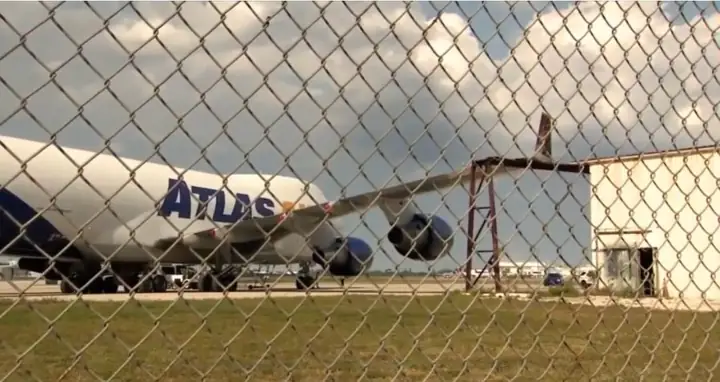
| Airline / operator | Donald Trump |
|---|---|
| Aircraft (type, registration) | Donald Trump Boeing 757-2J4 (WL) (N757AF) |
| Category (my classification) | Human factors / Taxi crew (flight or maintenance) |
| What happened | A privately owned Boeing 757, N757AF, landed safely at West Palm Beach International Airport around 1:20 a.m. local time. While taxiing, its winglet contacted the rear elevator of a parked VistaJet aircraft. |
| Injuries | ASN lists 0 fatalities. No injury statement in the ASN narrative. |
| Damage | Unknown Location: West Palm Beach International Airport, FL (PBI/KPBI) - United States of America Phase: Taxi Nature: Passenger - Non-Scheduled/charter/Air Taxi Departure airport: Atlantic City International Airport, NJ (ACY/KACY) Destination airport: Palm Beach AFB, FL (PBI/KPBI) Confidence Rating: Information is only available from news, social media or unofficial sources Narrative: A privately owned Boeing 757, N757AF, landed safely at West Palm Beach International Airport around 1:20 a.m. local time. While taxiing, its winglet contacted the rear elevator of a parked VistaJet aircraft. ICAO Occurrence |
| Official investigation | No investigation details on the ASN entry. |
| Source | Aviation Safety Network (ASN) entry: https://aviation-safety.net/wikibase/387945 Further sources listed on that page / found: https://www.reuters.com/world/us/wing-trumps-plane-hit-corporate-jet-west-palm-beach-airport-source-says-20… |
| Airline / operator | Delta Air Lines |
|---|---|
| Aircraft (type, registration) | Delta Air Lines Boeing 737-932ER (WL) (N831DN) |
| Category (my classification) | Human factors / Taxi crew (flight or maintenance) |
| What happened | Delta Air Lines flight DL2577, a Boeing 737-932ER (N831DN), contacted Spirit Airlines flight NK654, an Airbus A321-271NX (N703NK) at the gate at Cleveland Airport. DL2577 was turning into gate B2 when it impacted the A321neo which was parked at gate A1 and boarding passengers. |
| Injuries | ASN lists 0 fatalities. No injury statement in the ASN narrative. |
| Damage | Minor Location: Cleveland-Hopkins International Airport, OH (CLE/KCLE) - United States of America Phase: Taxi Nature: Passenger - Scheduled Departure airport: Atlanta Hartsfield-Jackson International Airport, GA (ATL/KATL) Destination airport: Cleveland- Hopkins International Airport, OH (CLE/KCLE) Confidence Rating: Information is only available from news, social media or unofficial sources Narrative: Delta Air Lines flight DL2577, a Boeing 737- 932ER (N831DN), contacted Spirit Airlines flight NK654, an Airbus A321-271NX (N703NK) at the gate at Cleveland Airport. DL2577 was turning into gate B2 when it impacted the A321neo which was parked at gate A1 and boarding passengers. ICAO Occurrence |
| Official investigation | No investigation details on the ASN entry. |
| Source | Aviation Safety Network (ASN) entry: https://aviation-safety.net/wikibase/387918 Further sources listed on that page / found: https://www.nbc4i.com/news/state-news/delta-spirit-planes-collide-at-cleveland-hopkins-airport-no-injuries/ |
| Airline / operator | Gol |
|---|---|
| Aircraft (type, registration) | Gol Boeing 737-76N (WL) (PR-GEH) |
| Category (my classification) | Human factors / Taxi crew (flight or maintenance) |
| What happened | GOL flight G32127, a Boeing 737-700, contacted an airport structure with the left-hand winglet while taxing for departure at Pelotas-Federal Airport, RS (PET). The flight was cancelled. |
| Injuries | ASN lists 0 fatalities. No injury statement in the ASN narrative. |
| Damage | Minor Location: Pelotas-Federal Airport, RS (PET/SBPK) - Brazil Phase: Taxi Nature: Passenger - Scheduled Departure airport: Pelotas-Federal Airport, RS (PET/SBPK) Destination airport: São Paulo-Guarulhos International Airport, SP (GRU/SBGR) Confidence Rating: Information is only available from news, social media or unofficial sources Narrative: GOL flight G32127, a Boeing 737-700, contacted an airport structure with the left-hand winglet while taxing for departure at Pelotas-Federal Airport, RS (PET). The flight was cancelled. ICAO Occurrence |
| Official investigation | No investigation details on the ASN entry. |
| Source | Aviation Safety Network (ASN) entry: https://aviation-safety.net/wikibase/387725 Further sources listed on that page / found: https://aeroin.net/aviao-boeing-737-da-gol-sofre-colisao-no-aeroporto-de-pelotas-no-rio-grande-do-sul/ |
| Airline / operator | Delta Air Lines |
|---|---|
| Aircraft (type, registration) | Delta Air Lines Airbus A320-212 (N344NW) |
| Category (my classification) | Human factors / Taxi crew (flight or maintenance) |
| What happened | Delta Air Lines flight DL1460 , an Airbus A320-212 (N344NW), was taxiing when its wingtip struck Delta Air Lines Flight 1104, an Airbus A320 (N345NW), which was pushing back from its gate at Minneapolis–Saint Paul International Airport. Both Airbus A320s returned to their gates. |
| Injuries | ASN lists 0 fatalities. No injury statement in the ASN narrative. |
| Damage | Unknown Location: Minneapolis-St. Paul International Airport, MN (MSP/KMSP) - United States of America Phase: Taxi Nature: Passenger - Scheduled Departure airport: Minneapolis-St. Paul International Airport, MN (MSP/KMSP) Destination airport: Palm Beach AFB, FL (PBI/KPBI) Confidence Rating: Information is only available from news, social media or unofficial sources Narrative: Delta Air Lines flight DL1460 , an Airbus A320-212 (N344NW), was taxiing when its wingtip struck Delta Air Lines Flight 1104, an Airbus A320 (N345NW), which was pushing back from its gate at Minneapolis–Saint Paul International Airport. Both Airbus A320s returned to their gates. ICAO Occurrence |
| Official investigation | No investigation details on the ASN entry. |
| Source | Aviation Safety Network (ASN) entry: https://aviation-safety.net/wikibase/375747 |
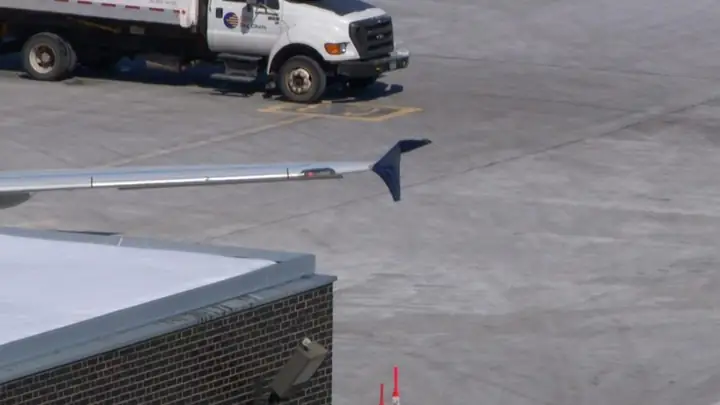
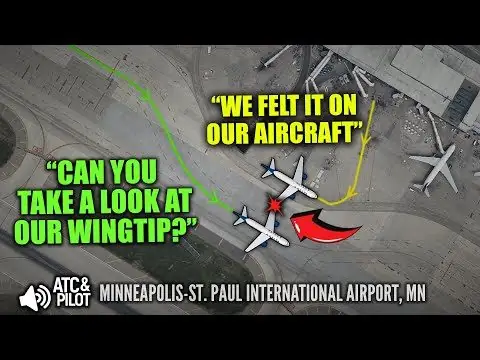 ▶ VIDEO
Still: YouTube thumbnail, Flight Records
| Airline / operator | Air India Express / IndiGo Airlines |
|---|---|
| Aircraft (type, registration) | Air India Express Boeing 737-8AL (WL) (VT-TGG); IndiGo Airlines Airbus A320-251N (VT-ISS) |
| Category (my classification) | Human factors / Taxi crew (flight or maintenance) |
| What happened | Air India Express flight IX1886, a Boeing 737-800 (VT-TGG) and IndiGo flight 6E6152, an Airbus A320-251N (VT- ISS) were involved in a ground contact incident while taxing for departure at Kolkata-Netaji Subhas Chandra Bose International Airport (CCU). The right-hand winglet of the A320neo struck the left-hand winglet of the Boeing 737, shearing off the top part of the 737's winglet. Both aircraft sustained damage and returned to the apron. Probable cause of the incident: The incident can be attributed to a chain of errors/oversight culminating in this ground incident of wingtip strike between the stationary Air India Express aircraft VT-TGG and the taxiing Indigo Aircraft VT-ISS at Kolkata airport on 27.03.2024. The probable cause of the incident is the error of judgement made by Crew of IGO6152 while taxiing regarding the availability of sufficient clearance from the stationary aircraft AXB1886 which was holding at A intersection RWY 19R. The contributory factors to this incident are listed below: i. SMC controller issuing taxi instructions to IGO6152 to taxi on N4 while AXB1886 was holding at holding point A RWY 19R was in contravention of their SOP for utilization of Parallel Taxiways N1, N2, N3 & N4 dated 21.08.2023. ii. VT-TGG (AXB1886), was holding much behind its assigned holding point A RWY 19R, which resulted in minimal clearance from VT-ISS (IGO6152) which was taxiing on N4 as per ATC instructions. iii. Deficient monitoring by Tower controller of AXB1886, as it was holding way behind its assigned holding point A RWY 19R. iv. Ambiguity in use of holding point A as defined in MATS II Kolkata Aerodrome and the SOP for utilization of Parallel Taxiways N1, N2, N3 & N4 dated 21.08.2023. This is also diagrammatically depicted by the Swiss Cheese Model4 in the figure below wherein the various imperfections in the defensive layers (SOPs and systems) aligned perfectly to culminate in the ground incident. The latent conditions in the form of SOP, procedures, decision making and oversight by key monitoring personnel are all contributory factors to the ground incident with the active failure of judgement error by flight crew of IGO6152 during taxiing being the probable cause of the incident |
| Injuries | ASN lists 0 fatalities. No injury statement in the ASN narrative. |
| Damage | Minor |
| Official investigation | Investigating agency: DGCA India Report number: Status: Investigation completed Duration: Final report Report / investigator link(s): https://www.dgca.gov.in/digigov-portal/Upload?flag=iframeAttachView&attachId=Detz%2FstjcQaY01BUYIxV%2Bg%3D%3D |
| Source | Aviation Safety Network (ASN) entry: https://aviation-safety.net/wikibase/373666 Further sources listed on that page / found: https://www.dgca.gov.in/digigov-portal/Upload?flag=iframeAttachView&attachId=Detz%2FstjcQaY01BUYIxV%2Bg%3D%3D https://www.goklerdeyiz.net/iki-ucak-yerde-carpisti-60/ https://t.co/gx05bf1zlr |
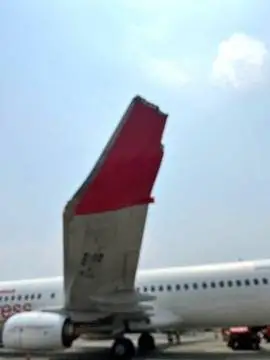
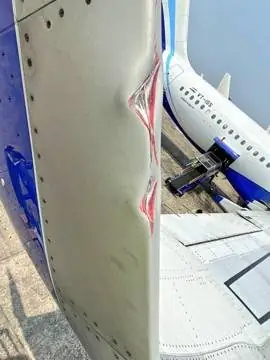
| Airline / operator | Qantas |
|---|---|
| Aircraft (type, registration) | Qantas Boeing 737-838 (WL) (VH-XZP) |
| Category (my classification) | Human factors / Taxi crew (flight or maintenance) |
| What happened | Qantas flight QF857, a Boeing 737-800 (VH-XZP), struck a parked Qantas Boeing 737-800 (VH-VZW) while arriving at the parking position at Perth Airport. The left-hand wing leading edge of VH-XZP struck the rear of the right-hand winglet of VH-VZW, which had arrived at gate 19R 5 minutes before. ADS-B data suggests that QF857 followed the markings to stand 18A (intended for A330 and B789 aircraft). Markings on the route to stand 18 suggest this stand was intended for B737 aircraft). |
| Injuries | ASN lists 0 fatalities. No injury statement in the ASN narrative. |
| Damage | Not stated |
| Official investigation | No investigation details on the ASN entry. Report / investigator link(s): https://www.airservicesaustralia.com/aip/current/dap/PPHAP01-174_30NOV2023.pdf https://www.airservicesaustralia.com/aip/current/dap/PPHAP06-172_30NOV2023.pdf |
| Source | Aviation Safety Network (ASN) entry: https://aviation-safety.net/wikibase/352201 Further sources listed on that page / found: https://www.skynews.com.au/australia-news/felt-a-jolt-alarming-photos-emerge-after-two-qantas-boeing-737800… https://www.airservicesaustralia.com/aip/current/dap/PPHAP01-174_30NOV2023.pdf https://www.airservicesaustralia.com/aip/current/dap/PPHAP06-172_30NOV2023.pdf |
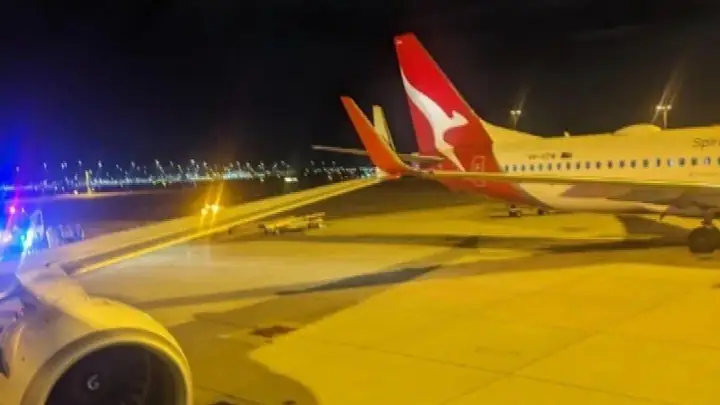
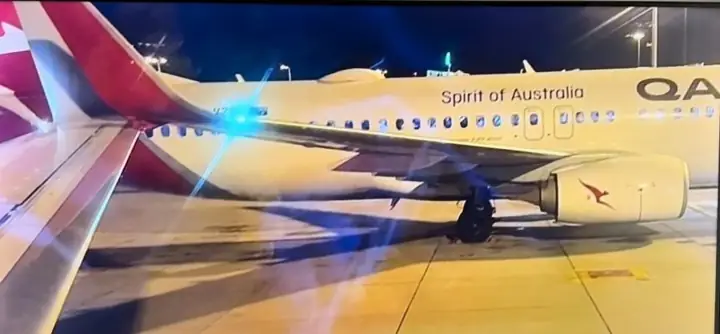
| Airline / operator | China Airlines |
|---|---|
| Aircraft (type, registration) | China Airlines Airbus A330-302 (B-18317) |
| Category (my classification) | Human factors / Taxi crew (flight or maintenance) |
| What happened | China Airlines flight CI701, an Airbus A330-302, was damaged when another aircraft clipped its wing. The aircraft suffered minor damage. It was ferried to Taipei Taoyuan International Airport (TPE) on February 28 for repairs. |
| Injuries | ASN lists 0 fatalities. No injury statement in the ASN narrative. |
| Damage | Not stated |
| Time out of service | B-18317: at least 1 day (ferried to TPE for repairs 28 Feb) (ASN) |
| Official investigation | No investigation details on the ASN entry. |
| Source | Aviation Safety Network (ASN) entry: https://aviation-safety.net/wikibase/352048 Further sources listed on that page / found: https://focustaiwan.tw/society/202402270019 |
| Airline / operator | Alrosa |
|---|---|
| Aircraft (type, registration) | Alrosa Boeing 737-86N (WL) (RA-73264) |
| Category (my classification) | Human factors / Taxi crew (flight or maintenance) |
| What happened | Alrosa Airlines flight 589, a Boeing 737-800 (RA-73264), contacted a refueling vehicle on the apron at Novosibirsk-Tolmachevo Airport (OVB). The lower fin of the left wing sharklet struck the vehicle. The plane was grounded to determine damage. |
| Injuries | ASN lists 0 fatalities. No injury statement in the ASN narrative. |
| Damage | Not stated |
| Official investigation | No investigation details on the ASN entry. |
| Source | Aviation Safety Network (ASN) entry: https://aviation-safety.net/wikibase/351762 Further sources listed on that page / found: https://t.me/aviatorshina/4232 https://t.me/vm_sut/3354 https://t.me/zstproc/2231 |
| Airline / operator | Air Inuit |
|---|---|
| Aircraft (type, registration) | Air Inuit de Havilland Canada DHC-8-314 Dash 8 (C-GXAI) |
| Category (my classification) | Human factors / Taxi crew (flight or maintenance) |
| What happened | Air Inuit flight AIE854, a DHC-8-314, contacted a parked DHC-8-102 (C-FDAO) at Tasiujaq Airport (CYTQ), QC As the aircraft left the boarding gate, the pilot slowly turned the aircraft to the left, guided by ground staff. The first officer then saw the ground guide pointing to the right wing tip, indicating contact between the wing tip of C- GXAI and the rudder of C-FDAO, which was nearby and undergoing maintenance. C-GXAI's right aileron tip suffered an abrasion and a crack and C-FDAO's rudder suffered a dent on its trailing edge. |
| Injuries | ASN lists 0 fatalities. No injury statement in the ASN narrative. |
| Damage | Minor, repaired Location: Tasiujuaq Airport, QC (YTQ/CYTQ) - Canada Phase: Taxi Nature: Passenger - Scheduled Departure airport: Tasiujuaq Airport, QC (YTQ/CYTQ) Destination airport: Kuujjuaq-Fort Chimo Airport, QC (YVP/CYVP) Investigating agency: TSB Confidence Rating: Information verified through data from accident investigation authorities Narrative: Air Inuit flight AIE854, a DHC-8-314, contacted a parked DHC-8-102 (C-FDAO) at Tasiujaq Airport (CYTQ), QC As the aircraft left the boarding gate, the pilot slowly turned the aircraft to the left, guided by ground staff. The first officer then saw the ground guide pointing to the right wing tip, indicating contact between the wing tip of C-GXAI and the rudder of C-FDAO, which was nearby and undergoing maintenance. C-GXAI's right aileron tip suffered an abrasion and a crack and C- FDAO's rudder suffered a dent on its trailing edge. ICAO Occurrence |
| Official investigation | No investigation details on the ASN entry. |
| Source | Aviation Safety Network (ASN) entry: https://aviation-safety.net/wikibase/352001 |
| Airline / operator | Delta Air Lines |
|---|---|
| Aircraft (type, registration) | Delta Air Lines Boeing 737-932ER (WL) (N830DN) |
| Category (my classification) | Human factors / Taxi crew (flight or maintenance) |
| What happened | A Delta Airlines Boeing 737-900 struck a stairs truck at Owen Roberts International Airport. There were no personal injuries. |
| Injuries | ASN lists 0 fatalities. There were no personal injuries. |
| Damage | Minor Location: Grand Cayman Island-Owen Roberts International Airport (GCM/MWCR) - Cayman Islands Phase: Taxi Nature: Passenger - Scheduled Departure airport: Atlanta Hartsfield-Jackson International Airport, GA (ATL/KATL) Destination airport: Grand Cayman Island-Owen Roberts International Airport (GCM/MWCR) Confidence Rating: Information is only available from news, social media or unofficial sources Narrative: A Delta Airlines Boeing 737- 900 struck a stairs truck at Owen Roberts International Airport. There were no personal injuries. ICAO Occurrence |
| Official investigation | No investigation details on the ASN entry. |
| Source | Aviation Safety Network (ASN) entry: https://aviation-safety.net/wikibase/351603 Further sources listed on that page / found: https://caymanmarlroad.com/2024/02/09/delta-aircraft-wing-damaged-in-airside-incident/ |
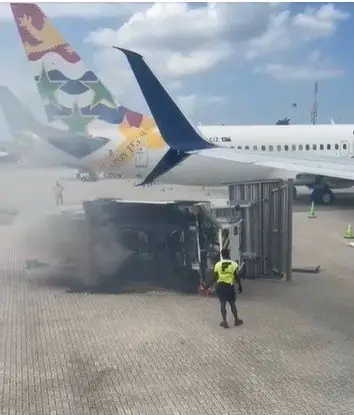
| Airline / operator | Jetblue Airways / JetBlue Airways |
|---|---|
| Aircraft (type, registration) | Jetblue Airways Airbus A321-231 (WL) (N956JT); JetBlue Airways Airbus A321-271NX (N2157J) |
| Category (my classification) | Human factors / Taxi crew (flight or maintenance) |
| What happened | JetBlue flight B6777, an Airbus A321-271NX (N2157J) and JetBlue flight B6551, an Airbus A321 (N956JT), were involved in a ground contact incident at Boston Logan International Airport during taxi. While taxiing within the Amelia Earhart de-icing pad area, the left winglet of JetBlue Airways flight 777 collided with the right horizontal stabilizer and elevator of JetBlue Airways flight 551. There were no injuries to the 210 passengers and crew on flight 551 or the 154 passengers and crew on flight 777. The flight crew of flight 551 stated that, following a normal preflight and uneventful taxi from the gate to the de-icing pad, they were guided by a 'follow me' vehicle. The flight crew proceeded to follow the vehicle to the D2 parking spot. A yellow painted 'T' inside a black square marked the proper stopping point location for the airplane's nose tires when parked. Nearing the stopping point, the 'follow me' vehicle turned to the right and stopped with its headlights facing toward the back of the airplane. The driver of the 'follow me' vehicle communicated with the flight crew via radio and began a 'countdown' for when the captain should stop the airplane. Upon the verbal stop command, the captain stopped the airplane and set the parking brake. After the de-ice procedure was complete, the flight crew received instructions to taxi the airplane to runway 9 for departure. Immediately after releasing the airplane's parking brake, the flight crew felt jolts and vibrations and the airplane swayed back and forth. The captain set the parking brake and the first officer (FO) contacted air traffic control (ATC) and was informed they had been struck by another aircraft. In a post-accident statement, the driver of the 'follow me' vehicle indicated that he stopped the airplane (flight 551) at what he thought was the normal stopping point. He had difficulty seeing the yellow 'T' -bar due to the dark night conditions and the de-icing fluid that was present on the ground. A post-accident inspection found that the airplane was about 35 ft short of the normal stopping point. The flight crew of flight 777 indicated that after a normal preflight and uneventful taxi from the gate to the de-icing pad they were guided to the D1 spot by a 'follow me' vehicle. The captain stated spacing appeared to be tight and he focused on the yellow taxi line to ensure proper clearance from other airplanes in the area. Shortly thereafter, while taxiing, the flight crew heard a grinding noise and felt a vibration. While still moving forward, they heard another aircraft on the radio frequency ask if something had struck their airplane. The flight crew of flight 777 stopped their airplane and set the parking brake. The captain had difficulty seeing the left winglet due to the dark night conditions but noted that it was intact. In addition, he was unable to see the empennage of flight 551 parked at the D2 location as it was behind them. Flight 551 (N956JT) sustained substantial damage to the left horizontal stabilizer and the left elevator. As a result of this event, Aeromag investigated and produced a February 12, 2024, memo to their BOS-JBU [JetBlue] operations staff discussing an amendment to the Coordinator of Traffic and Movement (CTM) phraseology and aircraft stopping procedures. The memo outlined the updated procedures and phraseology as: • “Follow me” truck is now required to verbally confirm with the flight crew that the aircraft is correctly stopped on the deicing “T”-Bar. • JetBlue will add to the Airport Briefing Guide (ABG) that the pilot will not configure the aircraft until confirmation that the aircraft is correctly stopped on the deicing “T”-Bar. • The “follow me” truck is required to check the rear of the aircraft to ensure that it is within the bay and clear of the zipper line before confirming brake set. • Safety Lead will perform a secondary check, reconfirming with the CTM that the aircraft has stopped on the deicing “T”-Bar. Safety Lead will also verify that the rear of the aircraft is clear of the zipper line and within the bay. • Truck positioning and aircraft deicing will commence after these checks have been completed. Additionally, once CTM has confirmed with the flight crew that they have a visual on the “follow me” truck, the “follow me” truck operator will follow these steps: 1. Guide the aircraft into the assigned bay. 2. Ensure the aircraft is properly stopped on the deicing “T”- Bar. 3. Confirm that the rear of the aircraft is within the bay, clear of the zipper line, before bringing any other aircraft in. Finally, the Safety Lead will: 1. Inspect and confirm with CTM that the aircraft is properly stopped on the deicing “T”-Bar. 2. Inspect that the rear of the aircraft is well within the bay and clear of the zipper line. Aeromag also increased its daily roster to include sufficient qualified staff to allocate a Safety Lead dedicated to each operational bay regardless of operating conditions. Long term prevention strategies identified were: • Repainting and reviewing the color format of the delineated markings using high-visibility paint and/or reflective inset markers. • Investigating the feasibility of adding high mast lighting for the Earhart facility. • Operational audits to focus on the correct positioning of aircraft while maintaining the safety buffer zones. • Explore opportunities to locate Aeromag tower personnel in elevated positions. Probable Cause: The 'follow me' driver stopping the airplane (flight 551) about 35 feet from the normal stopping point due to a difficulty in seeing the yellow 'T'-bar because of the dark night conditions and the presence of de-icing fluid on the ground. METAR: Weather about the time of the incident: KBOS 081054Z 13003KT 10SM FEW070 FEW250 M02/M03 A3032 RMK AO2 SLP265 T10171028 KBOS 081154Z 00000KT 10SM FEW040 SCT070 M02/M03 A3032 RMK AO2 SLP267 T10171028 10006 21022 53002 KBOS 081254Z 00000KT 10SM BKN055 01/M02 A3034 RMK AO2 SLP274 T00111017 |
| Injuries | ASN lists 0 fatalities. There were no injuries to the 210 passengers and crew on flight 551 or the 154 passengers and crew on flight 777. |
| Damage | Substantial, repaired |
| Official investigation | Investigating agency: NTSB Report number: DCA24LA092 Status: Investigation completed Duration: 5 months Final report Report / investigator link(s): https://data.ntsb.gov/carol-repgen/api/Aviation/ReportMain/GenerateNewestReport/193765/pdf https://data.ntsb.gov/Docket?ProjectID=193765 |
| Source | Aviation Safety Network (ASN) entry: https://aviation-safety.net/wikibase/351561 Further sources listed on that page / found: https://data.ntsb.gov/carol-repgen/api/Aviation/ReportMain/GenerateNewestReport/193765/pdf https://data.ntsb.gov/Docket?ProjectID=193765 https://t.co/BNaicCKSgY https://t.co/sskdKm9znX https://t.co/LKtj938xFB |
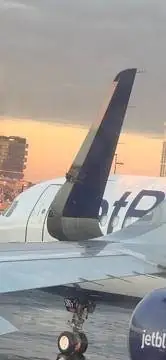
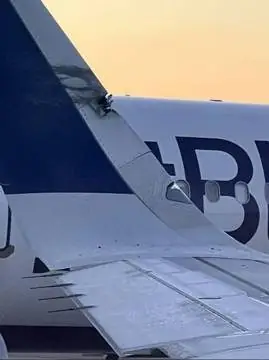
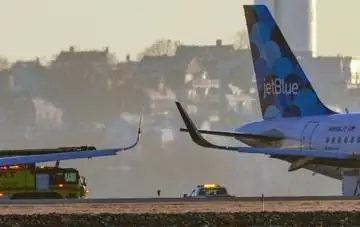
| Airline / operator | Pegasus Airlines |
|---|---|
| Aircraft (type, registration) | Airbus A321 (TC-RBG); Airbus A320 |
| Category (my classification) | Human factors / Taxi crew (flight or maintenance) Secondary: ATC / marshalling involved |
| What happened | Pegasus A321 TC-RBG and an A320 collided during parking after misdirection by ground handling staff. |
| Injuries | Not stated in the source. |
| Damage | Not stated in the source. |
| Official investigation | No investigation details on the ASN entry. |
| Source | Aviation Safety Network (ASN) entry: https://aviation-safety.net/wikibase/351555 Further sources listed on that page / found: https://x.com/HavaSosyalMedya/status/1755154835568046427 |
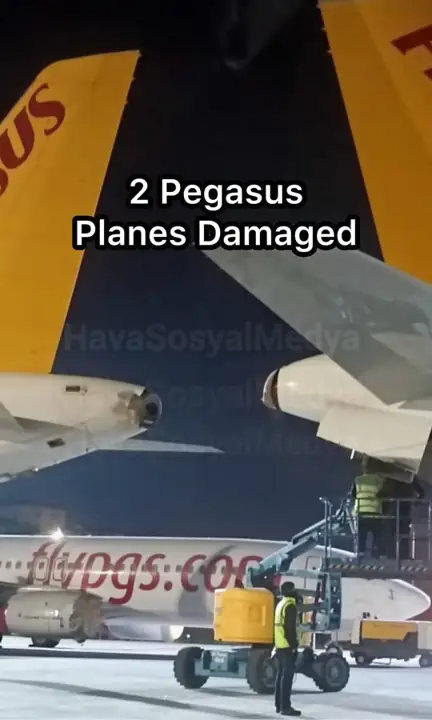
| Airline / operator | All Nippon Airways - ANA |
|---|---|
| Aircraft (type, registration) | All Nippon Airways - ANA Bombardier DHC-8-402Q Dash 8 (JA850A); All Nippon Airways - ANA Bombardier DHC-8-402Q Dash 8 (JA855A) |
| Category (my classification) | Human factors / Taxi crew (flight or maintenance) |
| What happened | Two DHC-8-402Q of All Nippon Airways ANA suffered ground collision incident at the apron (probably No. 1) of Osaka/Itami airport. ANA/NH422 from Fukuoka was taxiing to the gate after landing when its right wing contacted with the right wing of ANA/NH1637 bound to Matsuyama which was staying after turning left from the spot. There were no injuries among occupants of the both aircraft. NH1637 was continued by a replaced aircraft (JA841A) with a delay of one and a half hour. Ten other flights of ANA were cancelled due to ship arrangement. |
| Injuries | ASN lists 0 fatalities. There were no injuries among occupants of the both aircraft. |
| Damage | Minor Location: Osaka International Airport/Itami (ITM/RJOO) - Japan Phase: Standing Nature: Passenger - Scheduled Departure airport: Osaka-Itami Airport (ITM/RJOO) Destination airport: Matsuyama Airport (MYJ/RJOM) Confidence Rating: Information is only available from news, social media or unofficial sources Narrative: Two DHC-8-402Q of All Nippon Airways ANA suffered ground collision incident at the apron (probably No. 1) of Osaka/Itami airport. ANA/NH422 from Fukuoka was taxiing to the gate after landing when its right wing contacted with the right wing of ANA/NH1637 bound to Matsuyama which was staying after turning left from the spot. There were no injuries among occupants of the both aircraft. NH1637 was continued by a replaced aircraft (JA841A) with a delay of one and a half hour. Ten other flights of ANA were cancelled due to ship arrangement. ICAO Occurrence |
| Official investigation | No investigation details on the ASN entry. |
| Source | Aviation Safety Network (ASN) entry: https://aviation-safety.net/wikibase/351323 Further sources listed on that page / found: https://news.yahoo.co.jp/articles/1bb22a6afba8421112200ffec8bfccd745099726 https://news.yahoo.co.jp/articles/34c6ff7670726c63ff6a309b9821f585022aabf0 https://news.yahoo.co.jp/articles/3d183c4e3c021e0944ee3dcfc405674353225525 |
| Airline / operator | Delta Air Lines |
|---|---|
| Aircraft (type, registration) | Delta Air Lines Boeing 717-23S (N989AT) |
| Category (my classification) | Human factors / Taxi crew (flight or maintenance) |
| What happened | A Delta Air Lines Boeing 717, DAL/DL2122 from Detroit to Chicago, was clipped stabilizer by the left wing of All Nippon Airways Boeing 777-300ER(JA784A), ANA/NH11 from Chicago/O'Hare, USA to Tokyo/Narita, Japan, at O'Hare International Airport. There were no personal injuries. |
| Injuries | ASN lists 0 fatalities. There were no personal injuries. |
| Damage | Not stated |
| Official investigation | No investigation details on the ASN entry. |
| Source | Aviation Safety Network (ASN) entry: https://aviation-safety.net/wikibase/349929 Further sources listed on that page / found: https://www.cbsnews.com/chicago/news/planes-clip-wings-at-ohare-international-airport/ https://abcnews.go.com/US/wireStory/ground-collision-boeing-planes-chicago-sparks-faa-investigation-106388652 |
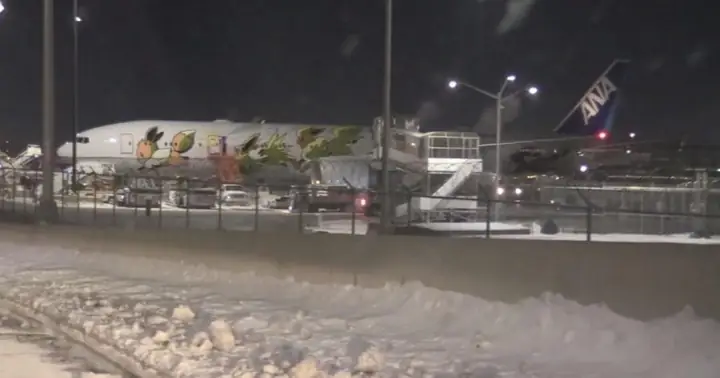
| Airline / operator | US-Bangla Airlines |
|---|---|
| Aircraft (type, registration) | US-Bangla Airlines Boeing 737-8Q8 (WL) (S2-AJA) |
| Category (my classification) | Human factors / Taxi crew (flight or maintenance) Secondary: ATC / marshalling involved |
| What happened | US Bangla Airlines flight BS326, a Boeing 737-8Q8, diverted to Sylhet and landed safely at 02:07 UTC. After landing, as per the instruction of the air traffic controller, the pilot followed Taxiway A to the Bay-2 parking area. In Bay-1 (West of Bay-2), another Boeing 737 of US Bangla was parked. During taxing in, as aircraft turned left for its parking area Bay-2, the right winglet hit the right aft edge corner of the horizontal stabilizer of the parked Boeing S2- AJG. Conclusions 1. The aircraft was airworthy and certified; 2. Both flight crew had valid License and fit for flying duties 3. The weather at the diversion airfield was uneventful; 4. Incorrect parking of the stationary aircraft (S2 AJG); 5. The marshaller's physical position at Bay-1 and the yellow line marked leading to Bay-1, were not visible from the control tower; 6. Both flight crew (PIC and FO) misjudged the lateral distance between their taxiing aircraft and the stationary aircraft parked at Bay-1; 7. The marshaller did not give timely and appropriate signal to either stop or signal the marshaller. |
| Injuries | ASN lists 0 fatalities. No injury statement in the ASN narrative. |
| Damage | Minor, repaired |
| Official investigation | Investigating agency: AAIG-BD Report number: Status: Investigation completed Duration: 1 year Final report Report / investigator link(s): http://www.caab.gov.bd/aaig/S2AJA.pdf |
| Source | Aviation Safety Network (ASN) entry: https://aviation-safety.net/wikibase/364525 Further sources listed on that page / found: http://www.caab.gov.bd/aaig/S2AJA.pdf |
| Airline / operator | Southwest Airlines |
|---|---|
| Aircraft (type, registration) | Southwest Airlines Boeing 737 MAX 8 (N8760L) |
| Category (my classification) | Human factors / Taxi crew (flight or maintenance) |
| What happened | The aircraft struck a de-icing vehicle while taxiing. Damage unknown, there were no injuries. |
| Injuries | ASN lists 0 fatalities. Damage unknown, there were no injuries. |
| Damage | Unknown Location: Chicago-Midway Airport, IL (MDW/KMDW) - United States of America Phase: Taxi Nature: Passenger - Scheduled Departure airport: Chicago-Midway Airport, IL (MDW/KMDW) Destination airport: Atlanta Hartsfield-Jackson International Airport, GA (ATL/KATL) Confidence Rating: Information is only available from news, social media or unofficial sources Narrative: The aircraft struck a de-icing vehicle while taxiing. Damage unknown, there were no injuries. ICAO Occurrence |
| Official investigation | No investigation details on the ASN entry. |
| Source | Aviation Safety Network (ASN) entry: https://aviation-safety.net/wikibase/349582 Further sources listed on that page / found: https://www.asias.faa.gov/apex/f?p=100:95:::NO::P95_EVENT_LCL_DATE,P95_LOC_CITY_NAME,P95_REGIST_NBR:01-JAN-… |
| Airline / operator | United Express, opb SkyWest Airlines and GoJet Airlines |
|---|---|
| Aircraft (type, registration) | Bombardier CRJ-700 (SkyWest 5433); Bombardier CRJ-700 (GoJet 4423) |
| Category (my classification) | Human factors / Taxi crew (flight or maintenance) |
| What happened | The wingtips of two CRJ-700s touched while they were waiting for gate space at Terminal 2. |
| Injuries | No injuries reported. |
| Damage | Wingtip damage |
| Official investigation | No public investigation found. |
| Source | AP News: https://apnews.com/article/planes-clip-wings-chicago-ohare-airport-69493a6b623bb054c195d708b5391eb1 Further sources listed on that page / found: https://www.aerotime.aero/articles/wingtips-of-gojet-and-skywest-planes-collide-at-ohare-chicago-airport |
| Airline / operator | Air France |
|---|---|
| Aircraft (type, registration) | Air France Boeing 787-9 Dreamliner (F-HRBE) |
| Category (my classification) | Human factors / Taxi crew (flight or maintenance) |
| What happened | Air France flight AF692, a Boeing 787-9, knocked over a light pole at Raleigh-Durham International Airport (RDU). The aircraft suffered damage to the left hand wing tip. |
| Injuries | ASN lists 0 fatalities. No injury statement in the ASN narrative. |
| Damage | Minor Location: Raleigh-Durham International Airport, NC (RDU/KRDU) - United States of America Phase: Taxi Nature: Passenger - Scheduled Departure airport: Paris-Charles de Gaulle Airport (CDG/LFPG) Destination airport: Raleigh/Durham Airport, NC (RDU/KRDU) Confidence Rating: Information is only available from news, social media or unofficial sources Narrative: Air France flight AF692, a Boeing 787-9, knocked over a light pole at Raleigh- Durham International Airport (RDU). The aircraft suffered damage to the left hand wing tip. ICAO Occurrence |
| Official investigation | No investigation details on the ASN entry. |
| Source | Aviation Safety Network (ASN) entry: https://aviation-safety.net/wikibase/348385 Further sources listed on that page / found: https://www.goklerdeyiz.net/yolcu-ucagi-aydinlatma-diregine-carpti-4/ https://www.wral.com/story/air-france-flight-canceled-after-plane-hits-light-pole-at-rdu/21167018/ |
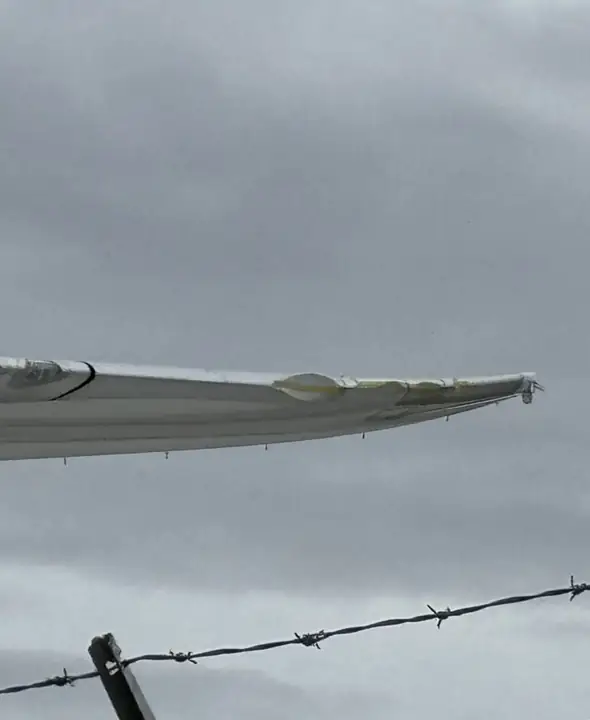
| Airline / operator | Air Europa / Malta Air, opf Ryanair |
|---|---|
| Aircraft (type, registration) | Air Europa Boeing 787-8 Dreamliner (EC-NXA); Malta Air, opf Ryanair Boeing 737-8AS (WL) (9H-QCI) |
| Category (my classification) | Human factors / Taxi crew (flight or maintenance) |
| What happened | Ryanair flight FR3814, a Boeing 737-800 (9H-QCI) operated by Malta Air, and Air Europa flight UX83, a Boeing 787-8 (EC-NXA) were involved in a ground contact incident at the holding point of runway 14R. The Boeing 737-800 was taxiing for departure to BLQ and struck with its right winglet the Boeing 787-8 that about to depart to SSA. Both aircraft returned to the apron. |
| Injuries | ASN lists 0 fatalities. No injury statement in the ASN narrative. |
| Damage | Unknown Location: Madrid-Barajas Adolfo Suárez Airport (MAD/LEMD) - Spain Phase: Taxi Nature: Passenger - Scheduled Departure airport: Madrid-Barajas Adolfo Suárez Airport (MAD/LEMD) Destination airport: Salvador-Deputado Luís Eduardo Magalhães International Airport, BA (SSA/SBSV) Confidence Rating: Information is only available from news, social media or unofficial sources Narrative: Ryanair flight FR3814, a Boeing 737-800 (9H-QCI) operated by Malta Air, and Air Europa flight UX83, a Boeing 787-8 (EC-NXA) were involved in a ground contact incident at the holding point of runway 14R. The Boeing 737- 800 was taxiing for departure to BLQ and struck with its right winglet the Boeing 787-8 that about to depart to SSA. Both aircraft returned to the apron. ICAO Occurrence |
| Official investigation | No investigation details on the ASN entry. |
| Source | Aviation Safety Network (ASN) entry: https://aviation-safety.net/wikibase/347508 Further sources listed on that page / found: https://t.co/kTK0pYKD25 |
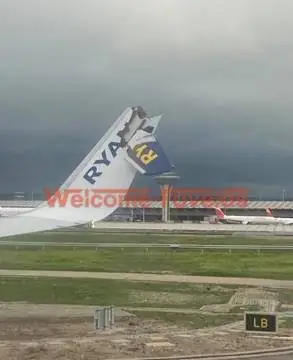
| Airline / operator | United Airlines |
|---|---|
| Aircraft (type, registration) | United Airlines Boeing 787-8 Dreamliner (N30913) |
| Category (my classification) | Human factors / Taxi crew (flight or maintenance) Secondary: ATC / marshalling involved |
| What happened | United Airlines (UAL) flight 3885, a Boeing 787, impacted a hangar with its right-wing tip while taxiing to parking at Chicago O’Hare International Airport (KORD), Chicago, Illinois. The flight was a maintenance ferry flight conducted under Title 14 Code of Federal Regulations Part 91 from Newark Liberty International Airport (KEWR), Newark, New Jersey. According to the flight crew, after landing on runway 10C at ORD they were cleared to taxi to a UAL maintenance facility via taxiways P to Z. After receiving an air traffic control (ATC) clearance, they crossed runway 10L, continued via taxiway Z crossing both runways 9R and 9C before making a right turn onto taxiway D. Ground control cleared them to enter the ramp at taxiway YY1 and to contact UAL’s Maintenance Ramp frequency. UAL maintenance subsequently instructed them to make a left on YY, which was incorrect, and proceed to the north side of the ramp, where a truck with marshallers would be waiting to guide them to parking. After completing the left turn on YY, the flight crew realized they were about to enter an American Eagle ramp area instead of their intended destination of the UAL ramp area. Unfamiliar with the area they stopped the airplane and queried UAL maintenance as to where they should park. UAL maintenance asked the flight crew to proceed onto the American Eagle ramp and make a 180° turn. The captain noted no wingspan restrictions on the airport charts and no obstacles other than hangars in the area. He stated that there were no taxiway lights; however, there was adequate overhead lighting on the ramp. The captain then asked the first officer (FO) if they were clear to the right, to which the FO responded “yes”. Shortly thereafter, while proceeding onto the ramp and on the associated taxiway line they heard a loud bang and the airplane veered to the right. The FO looked out his window and stated, “we hit the hangar”. The right-wing tip of the airplane struck a hanger resulting in minor damage to the wing. The damage to the hanger was estimated at about $236,000. A B787 has a wingspan of 197 feet 3 inches. The distance from the taxiway centerline to the hangar was about 98 ft accommodating a wingspan of about 196 ft. Had the marshallers met the airplane at American Eagle ramp and provided obstruction clearance guidance and/or the flight crew requested additional ground handling support before attempting to turn around in an unfamiliar area it is likely that the collision would not have occurred. Probable Cause: The flight crew’s misperception of the distance required to safely pass the hangar and failure to request additional ground handling support while taxiing, which resulted in a collision with a hangar. Contributing to the accident was United Airlines Maintenance Ramp personnel’s ambiguous taxi instructions and lack of obstruction clearance guidance. |
| Injuries | ASN lists 0 fatalities. No injury statement in the ASN narrative. |
| Damage | Minor |
| Official investigation | Investigating agency: NTSB Report number: Status: Investigation completed Duration: 4 months Final report Report / investigator link(s): https://data.ntsb.gov/carol-repgen/api/Aviation/ReportMain/GenerateNewestReport/193541/pdf https://data.ntsb.gov/Docket?ProjectID=193541 |
| Source | Aviation Safety Network (ASN) entry: https://aviation-safety.net/wikibase/356228 Further sources listed on that page / found: https://data.ntsb.gov/carol-repgen/api/Aviation/ReportMain/GenerateNewestReport/193541/pdf https://data.ntsb.gov/Docket?ProjectID=193541 |
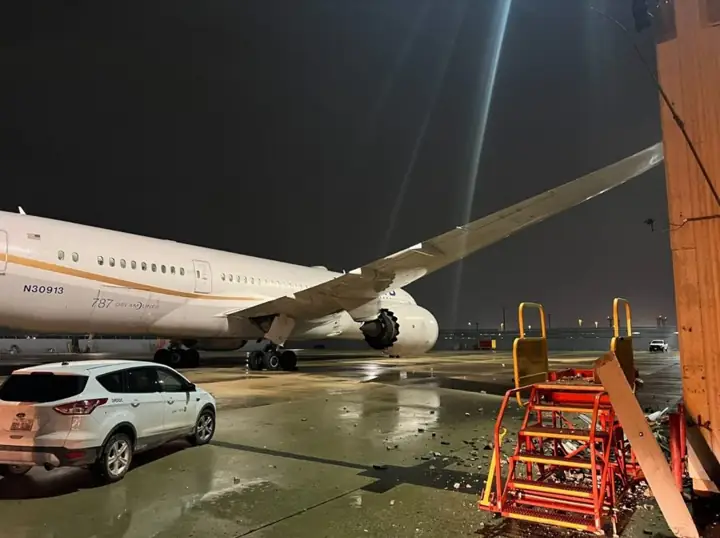
| Airline / operator | West Atlantic UK |
|---|---|
| Aircraft (type, registration) | West Atlantic UK Boeing 737-4K5 (SF) (G-JMCZ) |
| Category (my classification) | Human factors / Taxi crew (flight or maintenance) |
| What happened | The Boeing 737-4K5 (SF), landed at Belfast International Airport after a flight from East Midlands Airport. ATC instructed the crew to hold at position L1 to allow another aircraft to taxi out of their planned parking position. The crew performed the after landing checks and started the APU as normal, in preparation for engine shut down. The aircraft was stationary at the L1 position when the APU became available to provide electrical power. The PM transferred the left bus to the APU generator and when the right side was selected on there was a loud ‘clunk and a flash’. The crew turned around and saw the CB panel behind the co-pilots seat was glowing orange. They reported a strong smell of burning. The co-pilot recalled that after a closer look, he could see what looked like flames coming from behind the CB panel. The commander transferred the electrical power back to the engines while the co-pilot left his seat, removed the fire extinguisher from its stowage position and discharged it behind the CB panel. The commander spoke to ATC and requested the fire service attended the aircraft. After the extinguisher was discharged, the co-pilot returned to his seat and the crew agreed there was no longer any evidence of fire or burning. They elected to continue to their parking position which was close by. The fire crew attended the aircraft after it was parked on stand and found no evidence of fire. Conclusion The R61, forward galley, contactor failed, likely as a result of a loose connector or loss of sealing of the contactor housing. The failure resulted in arcing of the 115 V AC system, emitting light and fumes. The crew acted quickly to extinguish the perceived fire with a handheld fire extinguisher. At this time the associated circuit breaker tripped isolating the R61 contactor. The protection systems operated normally on the aircraft. The use of the fire extinguisher by the crew was an appropriate response based on the information available to them at the time. |
| Injuries | ASN lists 0 fatalities. No injury statement in the ASN narrative. |
| Damage | Minor, repaired |
| Official investigation | Investigating agency: AAIB Report number: AAIB-29681 Status: Investigation completed Duration: 6 months Final report Report / investigator link(s): https://assets.publishing.service.gov.uk/media/6634f40c1c82a7597d4f314a/Boeing_737-4K5_G-JMCZ_05-24.pdf |
| Source | Aviation Safety Network (ASN) entry: https://aviation-safety.net/wikibase/387754 Further sources listed on that page / found: https://assets.publishing.service.gov.uk/media/6634f40c1c82a7597d4f314a/Boeing_737-4K5_G-JMCZ_05-24.pdf |
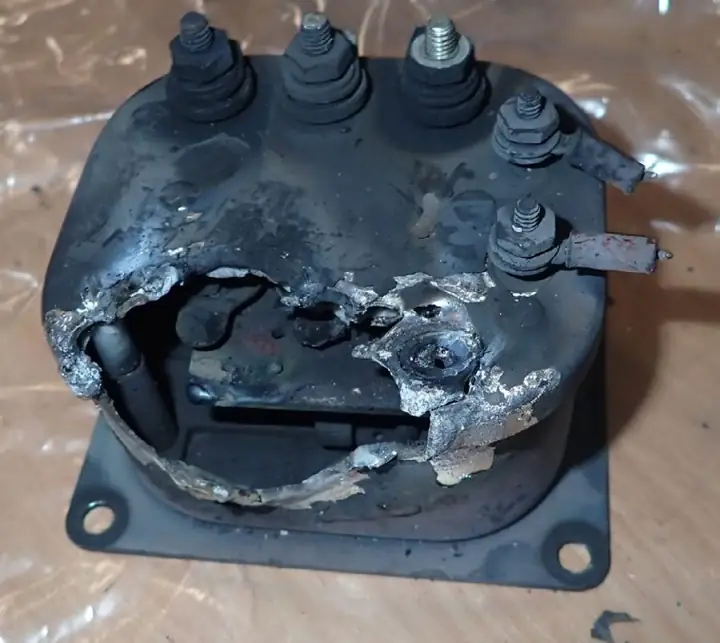
| Airline / operator | Condor Flugdienst / Air Europa |
|---|---|
| Aircraft (type, registration) | Condor Flugdienst Boeing 757-330 (WL) (D-ABOJ); Air Europa Boeing 737-85P (WL) (EC- MJU) |
| Category (my classification) | Human factors / Taxi crew (flight or maintenance) |
| What happened | Air Europa flight UX6007, a Boeing 737-800 (EC-MJU) and Condor flight DE1773, a Boeing 757-300 (D-ABOJ) were damaged in a ground collision at Palma de Mallorca Airport (PMI). At the time of the accident UX6007 was taxiing to the terminal after landing on runway 06L. At the same time, DE1773 was taxiing to the holding point on runway 06R for departure. At one point during the taxi, both aircraft coincided at intersection P, with the Condor aircraft stopped and the Air Europa aircraft moving. The left-hand winglet of UX6007 impacted the right-hand elevator of DE1773. Causes/contributing factors The probable cause of the accident involving the EC-MJU and D-ABOJ aircraft was a lack of adherence to the taxi procedures, specifically, the crew's failure to correctly assess the available space at Gate P, which led the EC-MJU aircraft to attempt to enter while the gate was blocked. METAR: LEPA 190700Z 04007KT 9999 FEW020 22/18 Q1017 NOSIG LEPA 190800Z 06009KT 020V080 9999 FEW020 SCT069 24/20 Q1017 NOSIG |
| Injuries | ASN lists 0 fatalities. No injury statement in the ASN narrative. |
| Damage | Substantial, repaired |
| Official investigation | Investigating agency: CIAIAC Report number: A-028/2023 Status: Investigation completed Duration: Final report Report / investigator link(s): https://www.transportes.gob.es/recursos_mfom/comodin/recursos/a-028-2023_final-report_nm.pdf https://www.transportes.gob.es/organos-colegiados/ciaiac/investigacion/2023/a-028-2023 |
| Source | Aviation Safety Network (ASN) entry: https://aviation-safety.net/wikibase/345731 Further sources listed on that page / found: https://www.transportes.gob.es/recursos_mfom/comodin/recursos/a-028-2023_final-report_nm.pdf https://www.ultimahora.es/sucesos/ultimas/2023/09/19/2014865/aeropuerto-palma-dos-aviones-chocan-tierra.html https://www.transportes.gob.es/organos-colegiados/ciaiac/investigacion/2023/a-028-2023 https://www.diariodemallorca.es/mallorca/2023/09/19/aviones-chocan-pista-aeropuerto-palma-mallorca-92271184… |
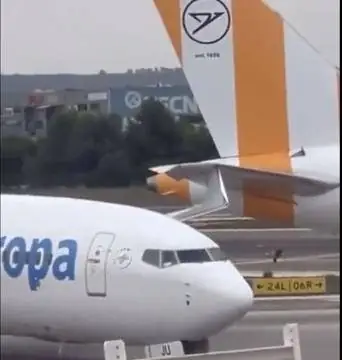
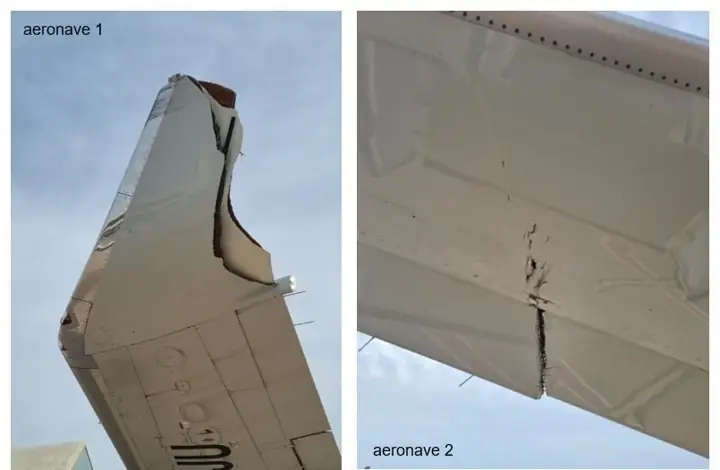
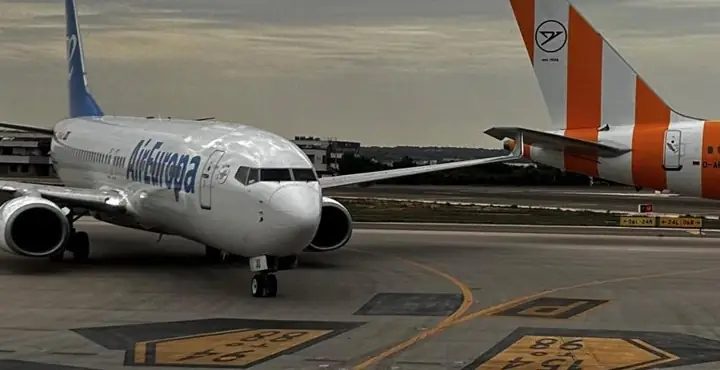
| Airline / operator | Air France Delta Air Lines / Delta Air Lines Air France |
|---|---|
| Aircraft (type, registration) | Air France Delta Air Lines Boeing 777-328ER Airbus A330-941 (F-GSQT N411DX); Delta Air Lines Air France Airbus A330- 941 Boeing 777-328ER (N411DX F-GSQT) |
| Category (my classification) | Human factors / Taxi crew (flight or maintenance) |
| What happened | Air France flight AF483, a Boeing 777-328ER (F-GSQT), and Delta Air Lines flight DL80, an Airbus A330-941 (N411DX), were involved in a ground collision accident at Paris-Charles de Gaulle Airport (CDG). The Air France Boeing 777-300 from Lima (Peru), landed on runway 26L at around 13:15. The aeroplane vacated the runway via ramp V3, crossed runway 26R via taxiway S3 and then taxied on taxiway T6. At the junction with taxiway T, the controller asked the crew to turn left onto T and then right onto UT3 in order to hold on the deicing pads. She told the crew that there would be a 20 to 30 minute hold before the terminal parking stand was free. The Boeing 777-300 taxied on taxiway T at a ground speed of roughly 8 kt and passed behind an Air France Boeing 777-200 which had arrived from New York JFK (USA) and was holding on UT4. At roughly 13:22, the crew of the Boeing 777-300 informed the controller that they had shut down the engines and that they wanted to be given a five minute warning before the clearance to continue to the terminal parking stand. The Delta Air Lines Airbus A330-900 from Seattle (USA), landed on runway 26L at around 13:25. The aeroplane vacated the runway via ramp V2, crossed runway 26R via taxiway S3 and then taxied on taxiway T6. At the junction with taxiway T, the controller asked the crew to turn left onto T and then right onto UT2 in order to hold on the de-icing pads, as their terminal parking stand was also busy. The Airbus A330-900 taxied on taxiway T at a ground speed of around 12 kt, passed behind the Boeing 777-200 holding at UT4, slowed down to around 8 kt and passed behind the Boeing 777-300 holding at UT3. At 13:31:30, the tip of the right wing of the Airbus A330-900 stuck the tail of the Boeing 777-300. The Airbus A330- 900 came to a halt a few metres further on. Contributing factors The following factors may have contributed to the ground collision: • aeroplanes with a wingspan of more than 60 m taxiing on taxiway T limited to aeroplanes with a wingspan of less than 36 m when an aeroplane was already holding on taxiways UT; • the crew not stopping and confirming that there was no risk of collision while taxiing on a taxiway where the margins in relation to obstacles seemed to them to be small; • ambiguities in the wording used in the various documents, which meant that it could be understood that the wingspan limitation on taxiway T was linked to de-icing and not to the distance between taxiways; • the lack of signs/markings, framework and methodology for using taxiways UT1 to UT4 to hold inbound aircraft |
| Injuries | ASN lists 0 fatalities. No injury statement in the ASN narrative. |
| Damage | Substantial, repaired Unknown Location: Paris-Charles de Gaulle Airport (CDG/LFPG) - France Phase: Taxi Taxi Nature: Passenger - Scheduled Passenger - Scheduled Departure airport: Lima-Callao International Airport (LIM/SPIM) Seattle/Tacoma International Airport, WA (SEA/KSEA) Destination airport: Paris-Charles de Gaulle Airport (CDG/LFPG) Paris- Charles de Gaulle Airport (CDG/LFPG) |
| Official investigation | Investigating agency: BEA Report number: BEA2023-0385 Status: Investigation completed Duration: 8 months Final report Report / investigator link(s): https://bea.aero/fileadmin/user_upload/F-GSQT_EN.pdf https://bea.aero/en/investigation-reports/notified-events/detail/accident-to-the-boeing-777-registered-f-gsqt-operated-by-air-france-and-the-lairbus-a330-registered-n411dx-operated-by-delta-airlines-on-30-08-2023-at-paris-charles-de-gaulle/ |
| Source | Aviation Safety Network (ASN) entry: https://aviation-safety.net/wikibase/345112 Further sources listed on that page / found: https://bea.aero/fileadmin/user_upload/F-GSQT_EN.pdf https://bea.aero/en/investigation-reports/notified-events/detail/accident-to-the-boeing-777-registered-f-gs… |
| Airline / operator | Calm Air International |
|---|---|
| Aircraft (type, registration) | Calm Air International ATR 72-202 (F) (C-FULE) |
| Category (my classification) | Human factors / Taxi crew (flight or maintenance) |
| What happened | The ATR 72-202 aircraft operated by Calm Air International, conducted a flight from Resolute Bay (CYRB), NU to Eureka (CYEU), NU. While taxiing on the ramp in CYEU, the aircraft's left wing came into contact with a parked semi-truck located on the apron. The aircraft's left wing scraped a semi-trucks exhaust stack, resulting in scratches to the wing and damage to the de-ice boot. There were no injuries. The aircraft sustained minor damage. |
| Injuries | ASN lists 0 fatalities. There were no injuries. |
| Damage | Minor Location: Eureka (CYEU), NU - Canada Phase: Taxi Nature: Cargo Departure airport: Resolute Airport, NU (YRB/CYRB) Destination airport: Eureka Airport, NU (YEU/CYEU) Confidence Rating: Information verified through data from accident investigation authorities Narrative: The ATR 72-202 aircraft operated by Calm Air International, conducted a flight from Resolute Bay (CYRB), NU to Eureka (CYEU), NU. While taxiing on the ramp in CYEU, the aircraft's left wing came into contact with a parked semi-truck located on the apron. The aircraft's left wing scraped a semi-trucks exhaust stack, resulting in scratches to the wing and damage to the de-ice boot. There were no injuries. The aircraft sustained minor damage. ICAO Occurrence |
| Official investigation | No investigation details on the ASN entry. |
| Source | Aviation Safety Network (ASN) entry: https://aviation-safety.net/wikibase/345673 |
| Airline / operator | Aeroméxico |
|---|---|
| Aircraft (type, registration) | XA-AMB, flight AM669 |
| Category (my classification) | Human factors / Taxi crew (flight or maintenance) |
| What happened | The aircraft's wingtip hit a catering truck while taxiing into stand 70. |
| Injuries | Not stated in the source. |
| Damage | Not stated in the source. |
| Official investigation | No public investigation found. |
| Source | JACDEC on X: https://x.com/JacdecNew/status/1692651192864612590 |
| Note | Date is the JACDEC post date. |
| Airline / operator | WestJet |
|---|---|
| Aircraft (type, registration) | WestJet Boeing 737-7CT (WL) (C-FWSI) |
| Category (my classification) | Human factors / Taxi crew (flight or maintenance) |
| What happened | WestJet Airlines flight WS346, a Boeing 737-7CT, struck a parked RCAF Lockheed CC-130H Hercules (130337) as it was taxiing for departure at Comox Valley Airport (YYQ), British Columbia. There were no injuries. |
| Injuries | ASN lists 0 fatalities. There were no injuries. |
| Damage | Substantial, repaired |
| Official investigation | No investigation details on the ASN entry. |
| Source | Aviation Safety Network (ASN) entry: https://aviation-safety.net/wikibase/343378 Further sources listed on that page / found: https://bc.ctvnews.ca/westjet-flight-cancelled-after-making-contact-with-military-aircraft-on-vancouver-isl… https://www.cheknews.ca/westjet-plane-hits-military-aircraft-in-comox-airport-crash-1163753/ https://cdn.jetphotos.com/full/5/996319_1679774562.jpg https://t.co/VQbWgMl4fg |
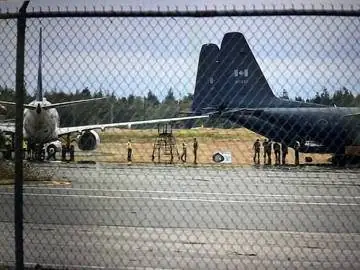
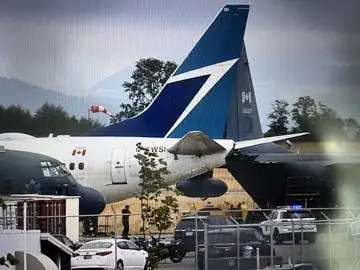
| Airline / operator | Air Algerie |
|---|---|
| Aircraft (type, registration) | Air Algerie Boeing 737-8D6 (7T-VKJ) |
| Category (my classification) | Human factors / Taxi crew (flight or maintenance) |
| What happened | Air Algérie flight AH1087, a Boeing 737-8D6 aircraft (7T-VKJ) hit a light pole, severing the right winglet at Tlemcen Zenata Airport, (TLM/DAON), Algeria. |
| Injuries | ASN lists 0 fatalities. No injury statement in the ASN narrative. |
| Damage | Not stated |
| Official investigation | No investigation details on the ASN entry. |
| Source | Aviation Safety Network (ASN) entry: https://aviation-safety.net/wikibase/343243 |
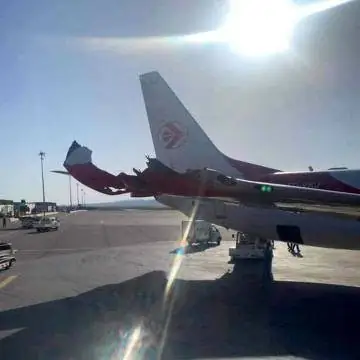
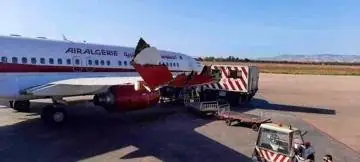
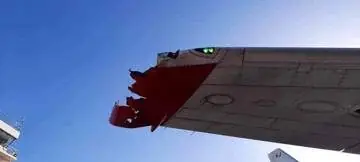
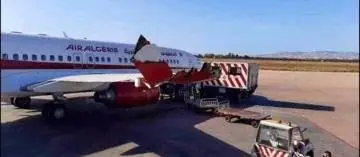
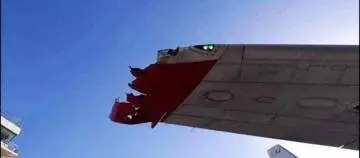
| Airline / operator | STP Airways, lsf EuroAtlantic Airways |
|---|---|
| Aircraft (type, registration) | STP Airways, lsf EuroAtlantic Airways Boeing 767-34PER (CS-TST) |
| Category (my classification) | Human factors / Taxi crew (flight or maintenance) |
| What happened | STP Airways flight 8F507, a Boeing 767-34PER, struck a lamp post during taxi after landing at TMS. When leaving taxiway, the aircraft started the parking manoeuvre as instructed by two marshals. The first turn was made to the left and next two successive ones were made to the right and the pilot steered towards a landmark beyond the apron before executing what would be the fourth turn (last) to the final position. Unexpectedly after the third turn, the aircraft left wing tip hit the lamp pole causing serious damage to the wing tip assembly, affecting the anti-collision light and the left outboard aileron as well. There was also damage to the light pole without affecting its functionality. The aircraft resumed regular operations on 25 August 2023. CAUSAL FACTORS • The pilot did not complete 90º as part of procedure and went out of safety margin • Lack of marshal in front of the aircraft CONTRIBUTORY FACTORS • Pilot ‘s disorientation • Pilot steering the aircraft towards an unfamiliar and not accurate landmark beyond the apron |
| Injuries | ASN lists 0 fatalities. No injury statement in the ASN narrative. |
| Damage | Minor, repaired |
| Time out of service | CS-TST: 27 days (ASN) |
| Official investigation | Investigating agency: CNIPAIA Report number: EA /29/07/2023/RF Status: Investigation completed Duration: 6 months Final report |
| Source | Aviation Safety Network (ASN) entry: https://aviation-safety.net/wikibase/391912 |
| Airline / operator | Norse Atlantic Airways |
|---|---|
| Aircraft (type, registration) | Norse Atlantic Airways Boeing 787-9 (LN-FNB) |
| Category (my classification) | Human factors / Taxi crew (flight or maintenance) |
| What happened | Norse Atlantic flight N022 taxied for departure when a wingtip hit an obstacle at a construction site. The incident caused minor damage and the flight was subsequently canceled. |
| Injuries | ASN lists 0 fatalities. No injury statement in the ASN narrative. |
| Damage | Not stated |
| Official investigation | No investigation details on the ASN entry. |
| Source | Aviation Safety Network (ASN) entry: https://aviation-safety.net/wikibase/318532 Further sources listed on that page / found: https://www.vg.no/nyheter/utenriks/i/2Bl1JB/flyet-kolliderte-har-sittet-fast-i-usa-i-52-timer |
| Airline / operator | Royal Canadian Air Force - RCAF |
|---|---|
| Aircraft (type, registration) | Royal Canadian Air Force - RCAF Airbus CC-150 Polaris (A310-300) (15003) |
| Category (my classification) | Human factors / Taxi crew (flight or maintenance) Secondary: ATC / marshalling involved |
| What happened | An RCAF Airbus CC-150 Polaris (A310-300) sustained serious damage to the vertical stabilizer after colliding with a parked Airbus A400M of the French Air Force. The aircraft had landed in Guam, taxied to position behind a “Follow Me” truck and was marshalled into parking spot N24 by Exercise Mobility Guardian ground crew, stopping at approximately 21:45 local time. The aircraft was loaded with equipment and baggage in preparation for departure the following day. The aircraft was partially secured (without chocks), and the crew departed the airfield for rest. At approximately 10:30 local the following morning the aircraft began to roll backwards, nose veering to the left, and continued to roll until the right horizontal and vertical stabilizer contacted the empennage of a French Air Force A400M parked on spot N22. Following contact the CC150 rebounded forward coming to rest approximately 8 meters from the point of impact. Both aircraft sustained serious damage. No personnel were injured during the occurrence. While the serial of the A400M is not officially known yet, based on the A400s present at Guam and the ones that have left according to online tracking sites, it seems likely that 0031/RBAH was the unlucky one. The RCAF announced on 30-Nov-2023 that it will scrap CC-150 Polaris 15003 at Guam. The estimated repair cost of up to $28 million was not considered economical. The decision to scrap 15003 came just one day before the plane was scheduled to be decommissioned. The first of nine Airbus-built CC-330 Husky Multi-Role Tanker Transport (MRTT) planes entered service in November and will take over duties of the Polaris fleet. |
| Injuries | ASN lists 0 fatalities. No personnel were injured during the occurrence. |
| Damage | Not stated |
| Time out of service | 15003: Written off (ASN) |
| Official investigation | No investigation details on the ASN entry. |
| Source | Aviation Safety Network (ASN) entry: https://aviation-safety.net/wikibase/345480 Further sources listed on that page / found: https://www.canada.ca/en/air-force/corporate/reports-publications/flight-safety-investigation-reports/cc150… https://www.ledevoir.com/monde/795126/un-avion-militaire-canadien-emboutit-un-a400m-de-l-armee-francaise-a-… https://nationalpost.com/news/rcaf-plane-collision-guam-scrapped https://t.co/oODll3yXKf |
| Flag | Business jet / non-airliner: shows the risk type, not a direct WheelTug market case. |
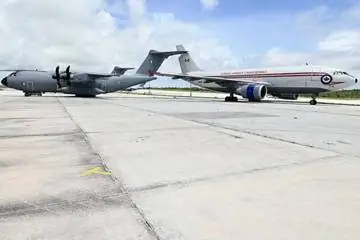
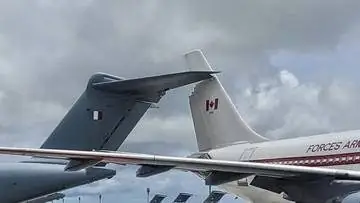
| Airline / operator | Air France |
|---|---|
| Aircraft (type, registration) | Air France Airbus A330-203 (F-GZCB) |
| Category (my classification) | Human factors / Taxi crew (flight or maintenance) |
| What happened | Air France flight AF306, an Airbus A330-203, was arriving at the parking area, when the aircraft ran over the holding point. Engine 1 hit the jetway. Cause The investigation team determined that the cause of the incident was human factors, resulting in incomplete application of the "Parking Arrival" procedure. |
| Injuries | ASN lists 0 fatalities. No injury statement in the ASN narrative. |
| Damage | Minor |
| Official investigation | Investigating agency: BTEA Report number: Status: Investigation completed Duration: 1 year and 3 months Final report Report / investigator link(s): https://btea.gouv.tg/storage/2024/11/rapport-INCIDENT-AF-du-20-juillet2023-FIN.pdf https://bea.aero/en/investigation-reports/notified-events/detail/incident-to-the-airbus-a330-registered-f-gzcb-operated-by-air-france-on-20-07-2023-at-lome/ |
| Source | Aviation Safety Network (ASN) entry: https://aviation-safety.net/wikibase/343216 Further sources listed on that page / found: https://btea.gouv.tg/storage/2024/11/rapport-INCIDENT-AF-du-20-juillet2023-FIN.pdf https://bea.aero/en/investigation-reports/notified-events/detail/incident-to-the-airbus-a330-registered-f-g… |
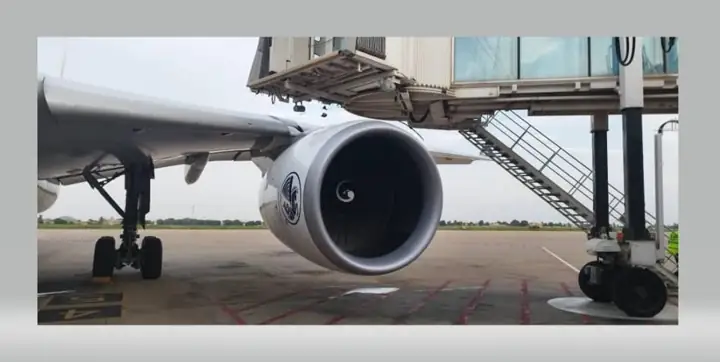
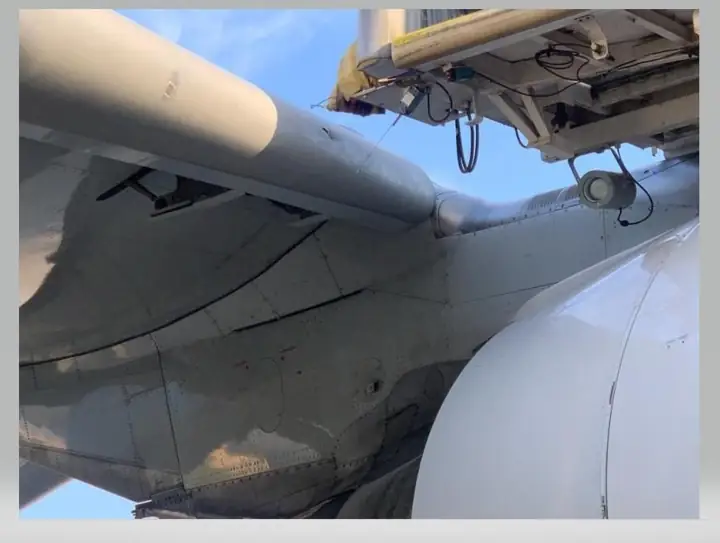
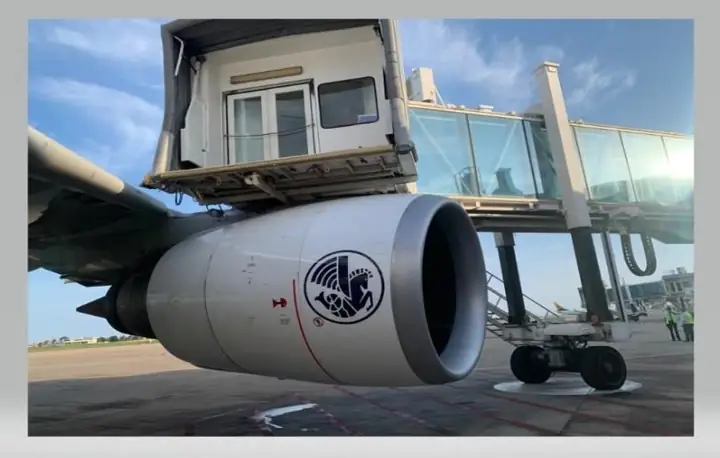
| Airline / operator | Southwest Airlines |
|---|---|
| Aircraft (type, registration) | Southwest Airlines Boeing 737-8H4 (WL) (N8671D) |
| Category (my classification) | Human factors / Taxi crew (flight or maintenance) |
| What happened | Southwest Airlines flight WN5122, a Boeing 737-8H4, entered an uncontrolled, non-movement area after landing at JAX. The aircraft struck a high mast light pole resulting in unspecified damage to the left wing. The aircraft was then towed to the gate. Note: The FAA reported the incident aircraft to be N8839Q, however this aircraft did not land at JAX on the incident date, according to ADS-B data. |
| Injuries | ASN lists 0 fatalities. No injury statement in the ASN narrative. |
| Damage | Not stated |
| Official investigation | No investigation details on the ASN entry. |
| Source | Aviation Safety Network (ASN) entry: https://aviation-safety.net/wikibase/316520 |
| Airline / operator | Eastern Airlines |
|---|---|
| Aircraft (type, registration) | Eastern Airlines Boeing 767-336ER (N706KW) |
| Category (my classification) | Human factors / Taxi crew (flight or maintenance) |
| What happened | Eastern Airlines flight 2D9073, a Boeing 767-336ER, hit a taxiway sign and taxiway lights during taxi after landing. |
| Injuries | ASN lists 0 fatalities. No injury statement in the ASN narrative. |
| Damage | Not stated |
| Official investigation | No investigation details on the ASN entry. |
| Source | Aviation Safety Network (ASN) entry: https://aviation-safety.net/wikibase/316201 |
| Airline / operator | Aviastar-TU |
|---|---|
| Aircraft (type, registration) | Tupolev Tu-204-100C (RA-64024), flight 4B6844 / Boeing 757-223F (RA-73355, parked) |
| Category (my classification) | Human factors / Taxi crew (flight or maintenance) Secondary: ATC / marshalling involved |
| What happened | Taxiing behind the escort vehicle, the Tu-204 struck the elevator of the parked Aviastar-TU Boeing 757 with its left wingtip. |
| Injuries | None reported. |
| Damage | Wingtip and elevator damaged. |
| Official investigation | Not stated. |
| Source | Aviation Safety Network (ASN) entry: https://aviation-safety.net/wikibase/315975 |
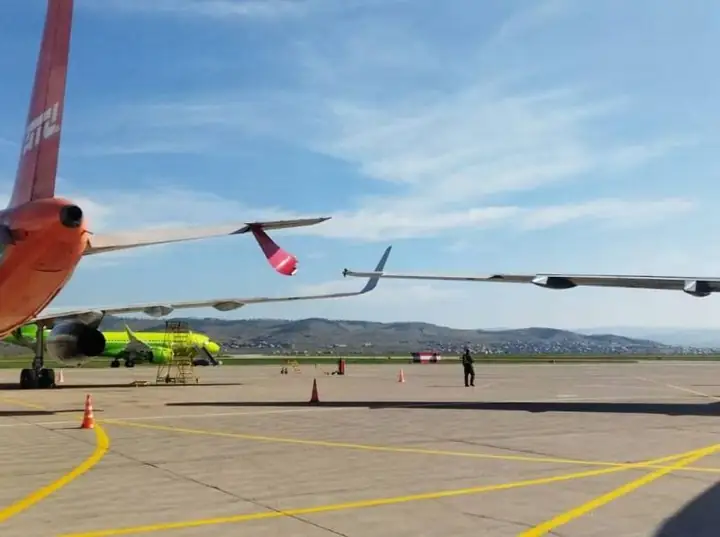
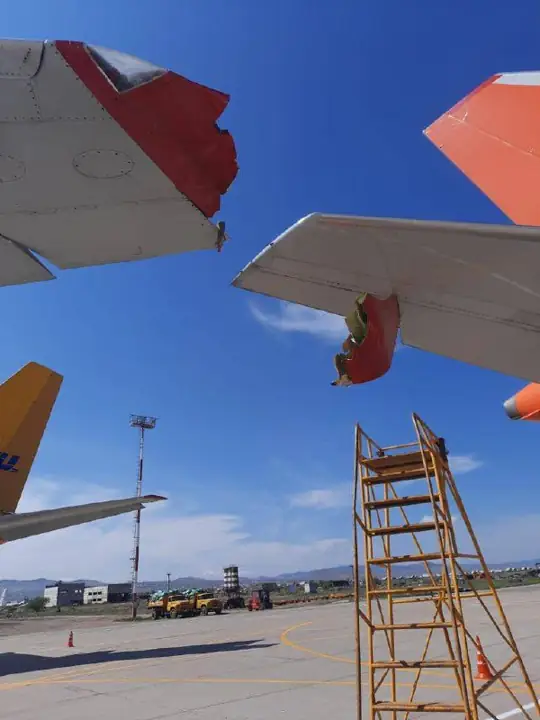
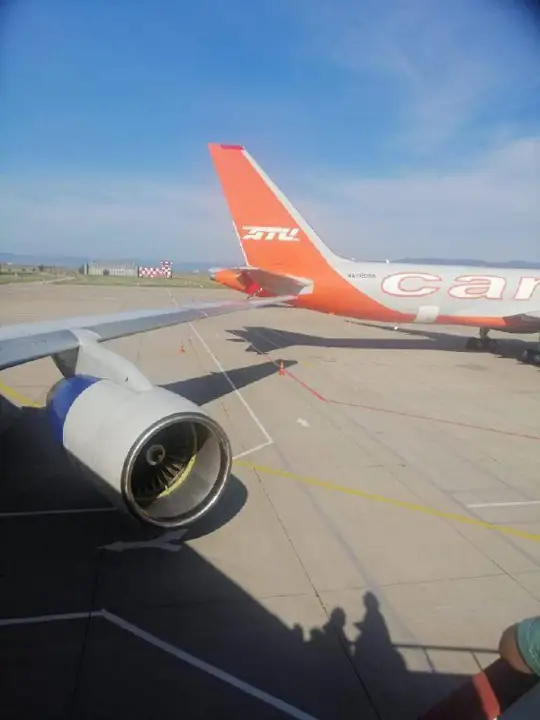
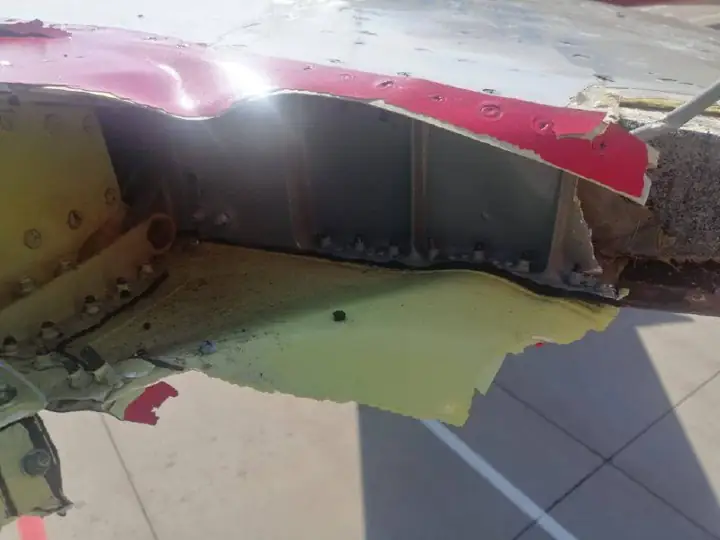
| Airline / operator | WestJet |
|---|---|
| Aircraft (type, registration) | WestJet Boeing 737 MAX 8 (C-GIWJ) |
| Category (my classification) | Human factors / Taxi crew (flight or maintenance) |
| What happened | WestJet flight WS734, a Boeing 737 MAX 8, collided with a fuel truck while being marshalled to the gate. The aircraft approached bridge 6 on apron 5 where a fuel truck was actively fuelling another aircraft at the adjacent gate. The wing walker noticed that the wingtip would come close to the fuel truck and signaled the marshaller to stop. The marshaller, in turn, signaled to the aircrew to stop. As the aircraft was slowing, the left-wing tip collided with the fuel truck. The winglet of the wing was then caught in the safety rails on the top of the truck. The aircraft was shut down, passengers were deplaned, and baggage was removed before the aircraft was pushed back from the truck. There was no fire, and no injuries were reported. The incident aircraft resumed service on 23 June 2023. |
| Injuries | ASN lists 0 fatalities. There was no fire, and no injuries were reported. |
| Damage | Not stated |
| Time out of service | C-GIWJ: 3 days (ASN) |
| Official investigation | No investigation details on the ASN entry. |
| Source | Aviation Safety Network (ASN) entry: https://aviation-safety.net/wikibase/316255 |
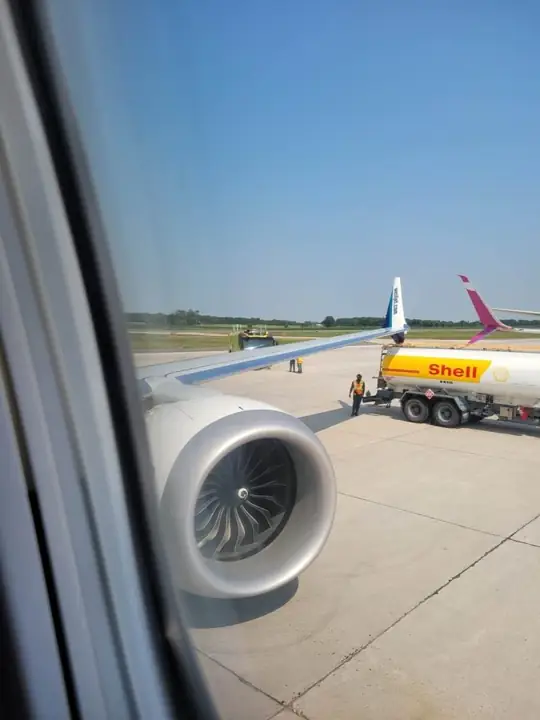
| Airline / operator | United Airlines |
|---|---|
| Aircraft (type, registration) | United Airlines Boeing 737 MAX 9 (N37545) |
| Category (my classification) | Human factors / Taxi crew (flight or maintenance) |
| What happened | United flight UA369, a 737 MAX, contacted a Delta A321 at Boston- Logan Airport. The Delta A321 was parked at the time and the United 737 was traveling at low speed resulting in only minor damage. |
| Injuries | ASN lists 0 fatalities. No injury statement in the ASN narrative. |
| Damage | Not stated |
| Official investigation | No investigation details on the ASN entry. |
| Source | Aviation Safety Network (ASN) entry: https://aviation-safety.net/wikibase/315534 Further sources listed on that page / found: https://www.goklerdeyiz.net/iki-ucak-yerde-carpisti-53/ |
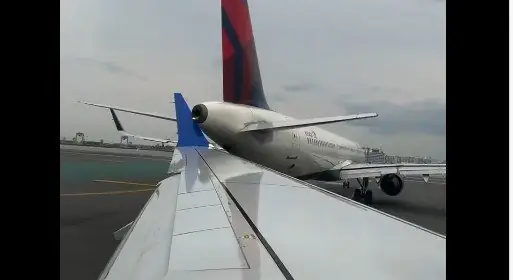
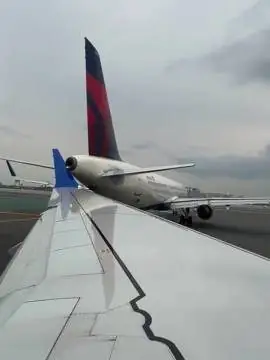 ▶ VIDEO
Still: frame from the video in the linked post (same footage).
Video: https://wheeltug-collisions.netlify.app/videos/GC-0327_2.mp4
Video and still: Supplied by WheelTug; original: Vimeo; matches the 35-second passenger video described by NBC, CBS Boston and CNN.
| Airline / operator | Thai Airways International |
|---|---|
| Aircraft (type, registration) | Thai Airways International Airbus A330-343 (HS-TEO) |
| Category (my classification) | Human factors / Taxi crew (flight or maintenance) |
| What happened | Two A330-300 of Thai Airways International and EVA Air suffered ground collision at Tokyo/Haneda. EVA/BR189 for Taipei/Songshan held short of runway 16R when THA/TG683 for Bangkok hit EVA by its right winglet while passing (possibly near at HOT SOPT 1). The right winglet of Thai and left horizontal stabilizer of EVA were damaged. There were no personal injuries among occupants of both planes. The runway 16R was closed, as well as 22 for short period. |
| Injuries | ASN lists 0 fatalities. There were no personal injuries among occupants of both planes. |
| Damage | Not stated |
| Official investigation | No investigation details on the ASN entry. |
| Source | Aviation Safety Network (ASN) entry: https://aviation-safety.net/wikibase/315066 Further sources listed on that page / found: https://news.yahoo.co.jp/articles/a2ec1709d4020ef009f8bab4998fc4713db0ccbb https://news.yahoo.co.jp/articles/7020cf00bc266dc6c1872f5933888c472fffa9bf https://news.yahoo.co.jp/articles/6e55abc5fae9ee21f2516553c1bcf45c0fac0d0f https://news.yahoo.co.jp/articles/14a25579e31f30181a97428dfd856c681ca4157e https://news.yahoo.co.jp/articles/4653055daf63a5bacdcbab559687647c1c09b065 |
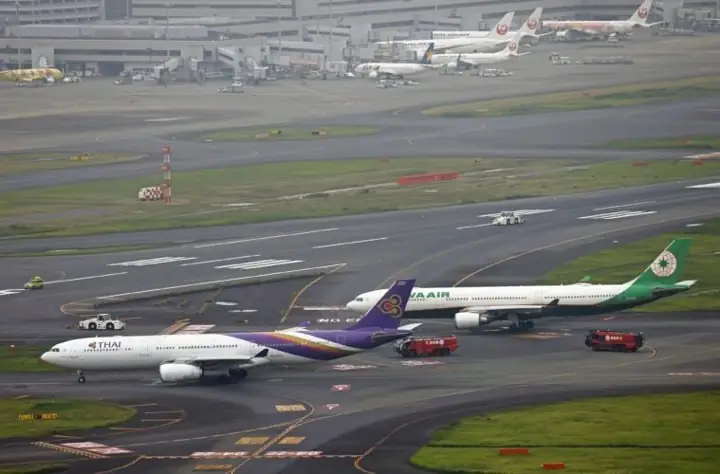
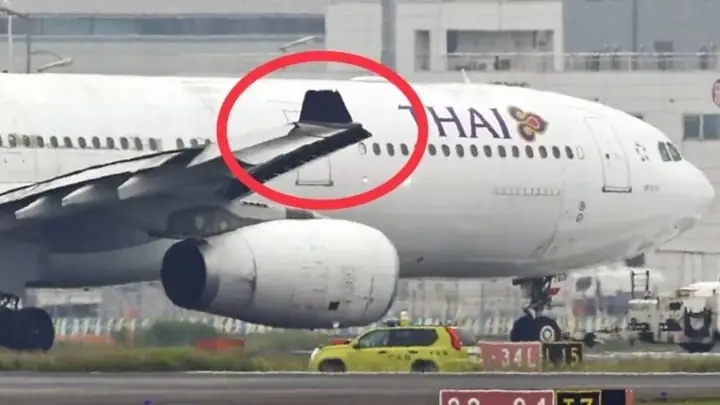
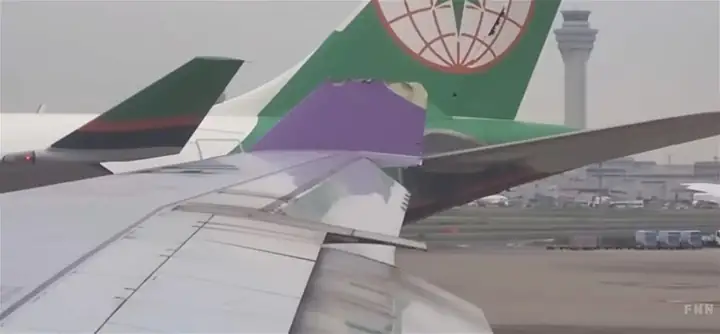
| Airline / operator | Corendon Airlines Europe; SunExpress |
|---|---|
| Aircraft (type, registration) | Boeing 737-800 (9H-CXD); Boeing 737-800 (TC-SOH) |
| Category (my classification) | Human factors / Taxi crew (flight or maintenance) |
| What happened | Corendon 9H-CXD and SunExpress TC-SOH collided while taxiing to parking. |
| Injuries | Not stated in the source. |
| Damage | Not stated in the source. |
| Official investigation | No public investigation found. |
| Source | JACDEC on X: https://x.com/JacdecNew/status/1653343527550500866 |
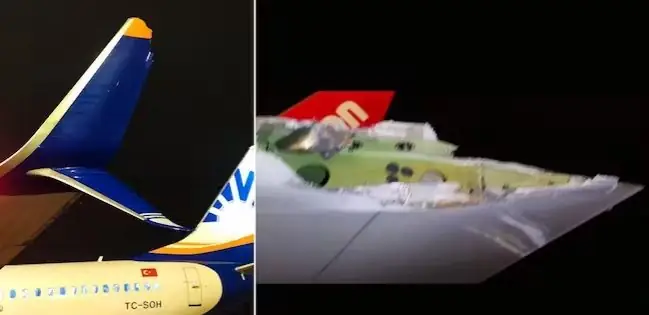
| Airline / operator | Aeromexico / Delta Air Lines |
|---|---|
| Aircraft (type, registration) | Aeromexico Boeing 737-852 (XA-AMO); Delta Air Lines Boeing 757- 232 (WL) (N694DL) |
| Category (my classification) | Human factors / Taxi crew (flight or maintenance) |
| What happened | Aeroméxico flight AMX117, a Boeing 737-800 (XA-AMO) and Delta Air Lines flight DL624, a Boeing 757-200 (N694DL) were involved in a ground contact incident at Mexico City International Airport (MEX). AMX117 was taxiing on taxiway D near the intersection of taxiways C and H. Meanwhile, the Boeing 757 was stationary (holding on taxiway H) before crossing the intermediate holding position sign 05R/23L. As XA-AMO passed behind N694DL, the left winglet of its wing struck the elevator and horizontal stabilizer of the Delta aircraft. At the time of the incident, visual meteorological conditions prevailed; during this event, there was an ongoing runway assignment change, and the runways in use were 05 and 23. During their taxiing, both aircraft were given instructions for the runway change to 23, and at that time, the two aircraft were the only ones heading towards the thresholds of runways 23. The passengers and pilots of both flights were unharmed, and the aircraft sustained minor damage. Probable Cause: Aircraft N964DL struck by aircraft XA-AMO as the former obstructed a taxiway by not recognizing the horizontal markings and the latter performed a movement with poor judgment, risking the safety of the assets in its charge. CONTRIBUTING FACTORS: - Inadequate decision by the Aeroméxico crew in not expecting the N964DL aircraft to begin moving. - Failure to recognize the horizontal markings. - Lack of adherence to sterile cockpit procedures. |
| Injuries | ASN lists 0 fatalities. No injury statement in the ASN narrative. |
| Damage | Minor, repaired |
| Official investigation | Investigating agency: DAAIA Mexico Report number: Status: Investigation completed Duration: Final report |
| Source | Aviation Safety Network (ASN) entry: https://aviation-safety.net/wikibase/311192 Further sources listed on that page / found: https://www.paddleyourownkanoo.com/2023/04/18/delta-air-jet-badly-damaged-after-it-was-hit-by-aeromexico-pl… |
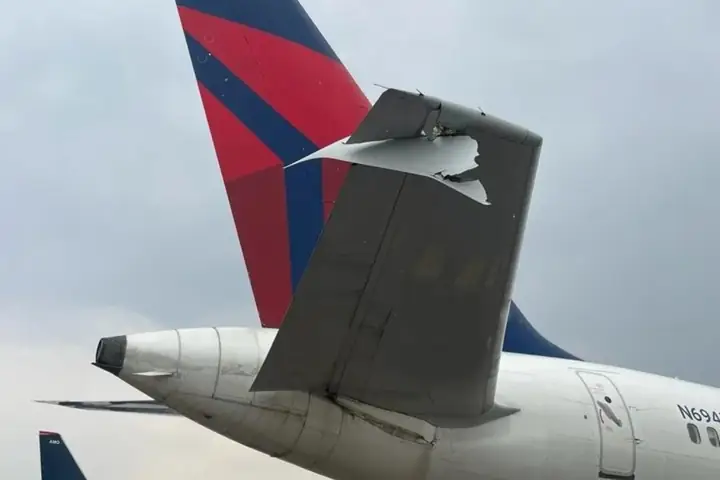
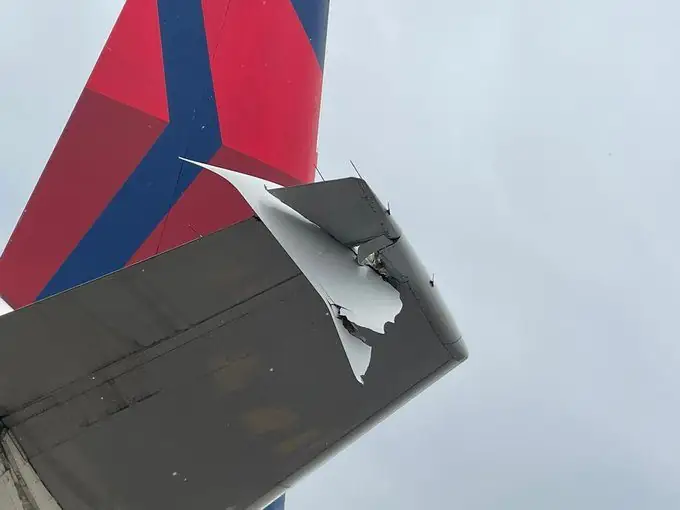
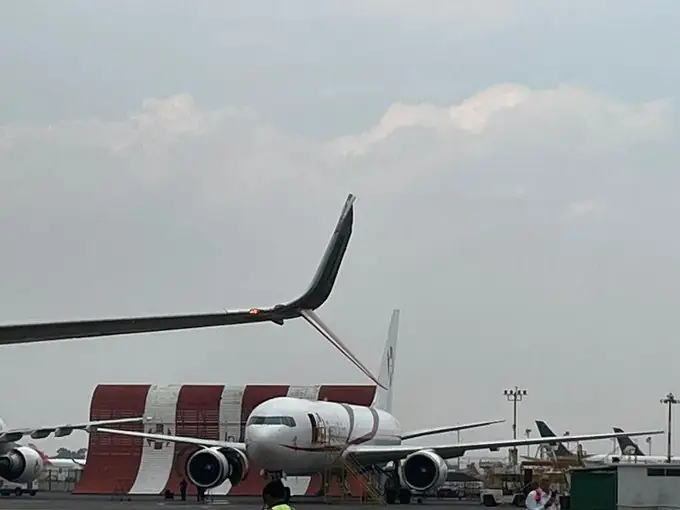
| Airline / operator | Emirates / Air Transat |
|---|---|
| Aircraft (type, registration) | Emirates Boeing 777-31HER (A6-EGH); Air Transat Airbus A330-243 (C-GUBL) |
| Category (my classification) | Human factors / Taxi crew (flight or maintenance) |
| What happened | Air Transat flight TS948, an Airbus A330-243 (C-GUBL), clipped the right wing of a parked Emirates Boeing 777-31HER (A6-EGH) at Miami International Airport, FL (MIA). TS948 had just arrived from Toronto Pearson International Airport (YYZ/CYYZ), Ontario, Canada. The aircraft was taxiing to the gate when the left-hand winglet struck the right-hand aileron of the Boeing 777. The winglet broke off and remained embedded in the aileron. There were no injuries. The aircraft was repaired and ferried to Dubau on 11 July 2023. It resumed regular service on 16 July 2023 . |
| Injuries | ASN lists 0 fatalities. There were no injuries. |
| Damage | Substantial, repaired |
| Time out of service | A6-EGH: 94 days (repaired, ferried to DXB 11 Jul, service 16 Jul) (ASN) |
| Official investigation | No investigation details on the ASN entry. |
| Source | Aviation Safety Network (ASN) entry: https://aviation-safety.net/wikibase/318685 Further sources listed on that page / found: https://www.nbcmiami.com/news/local/two-planes-clip-wings-at-miami-international-airport/3014667/ |
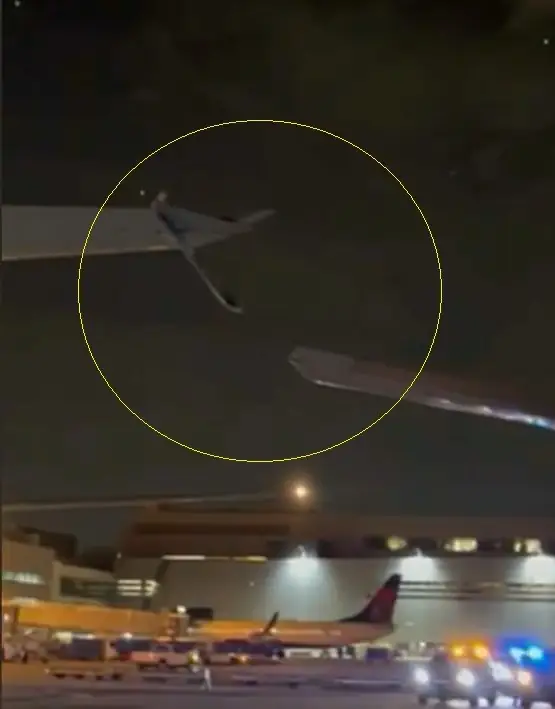
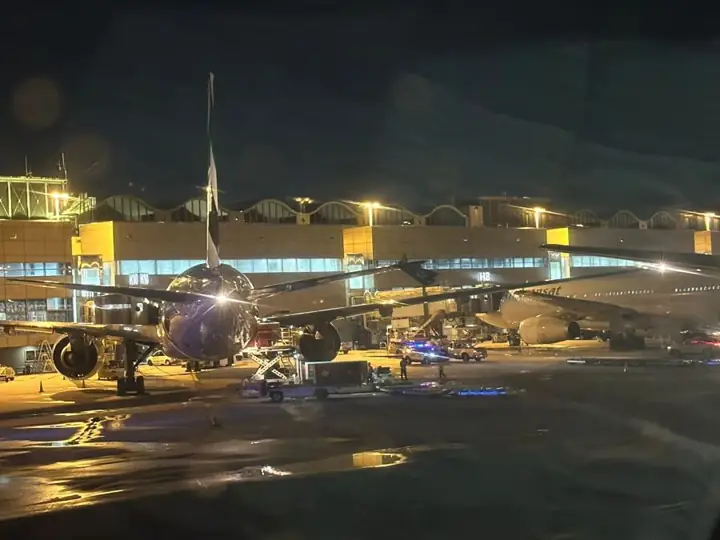
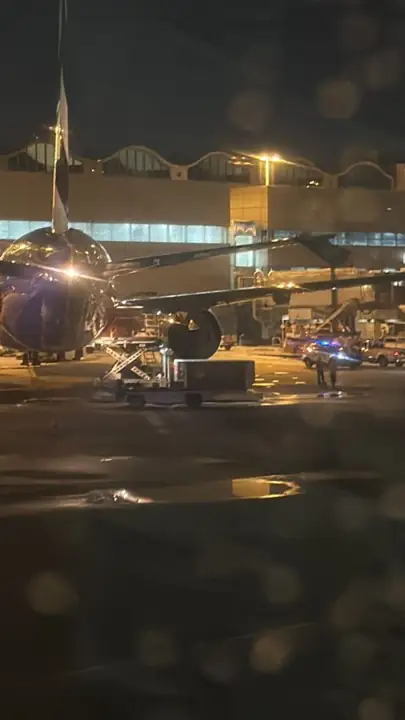
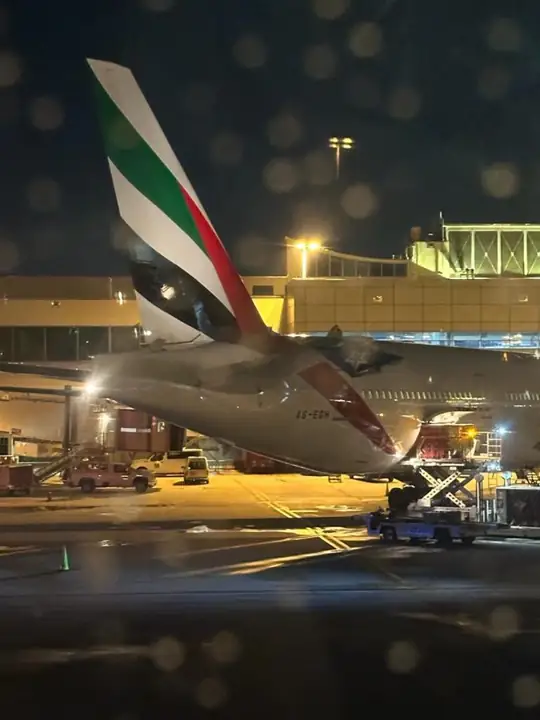
| Airline / operator | Polar Airlines |
|---|---|
| Aircraft (type, registration) | Antonov An-24 (RA-46834) |
| Category (my classification) | Human factors / Taxi crew (flight or maintenance) |
| What happened | After landing, the An-24's wing hit a ground power unit pole while taxiing. |
| Injuries | Not stated in the source. |
| Damage | Wing damaged |
| Official investigation | No public investigation found. |
| Source | JACDEC on X: https://x.com/JacdecNew/status/1637414128166875136 |
| Note | Date is the JACDEC post date. |
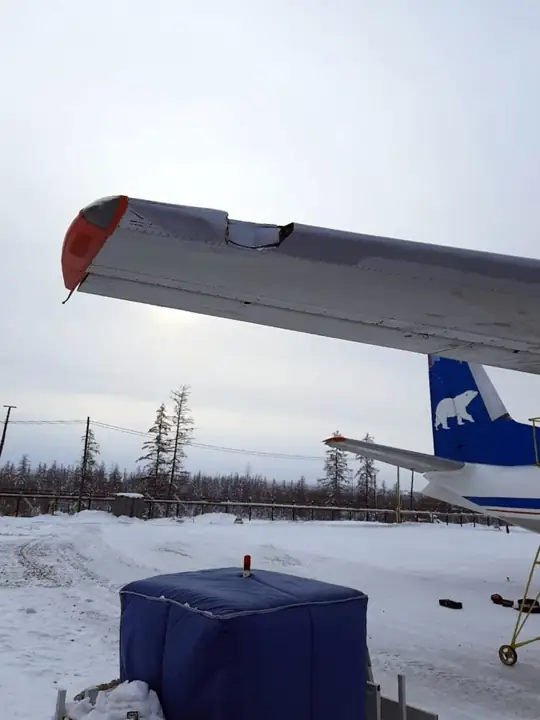
| Airline / operator | Wizz Air |
|---|---|
| Aircraft (type, registration) | Wizz Air Airbus A320-232 (WL) (HA-LWZ); Wizz Air Airbus A320-232 (WL) (9H-WBV) |
| Category (my classification) | Human factors / Taxi crew (flight or maintenance) |
| What happened | Wizz Air flight W64692, an Airbus A320-232 (9H-WBV), contacted a parked Wizz Air Airbus A320-232 (HA-LWZ) when it was attempting to taxi to the runway at Suceava Airport (SCV), Romania. The left-hand winglet of 9H- WBV struck the right-hand elevator of HA-LWZ. Cause of accident The occurrence of the event was the result of several contributing factors: - parking of the two aircraft in positions not intended for their type; - lack of towing means for Airbus A320 aircraft; - taxi-out maneuvers performed by the co-pilot, who did not have the ground dispatcher in his sight; - verbal forwarding of the main dispatcher's instructions by the pilot-in-command to the co-pilot who was performing the taxi-out. |
| Injuries | ASN lists 0 fatalities. No injury statement in the ASN narrative. |
| Damage | Minor, repaired |
| Official investigation | Investigating agency: AIAS Report number: I25-03 Status: Investigation completed Duration: 2 years 1 month Final report Report / investigator link(s): https://aias.gov.ro/wp-content/uploads/2025/04/20230314_RF_9H-WBV_EN.pdf |
| Source | Aviation Safety Network (ASN) entry: https://aviation-safety.net/wikibase/309213 Further sources listed on that page / found: https://aias.gov.ro/wp-content/uploads/2025/04/20230314_RF_9H-WBV_EN.pdf https://www.digi24.ro/stiri/actualitate/doua-avioane-s-au-ciocnit-pe-aeroportul-din-suceava-2282203 https://boardingpass.ro/doua-avioane-wizz-air-s-au-ciocnit-la-sol-la-suceava/ |
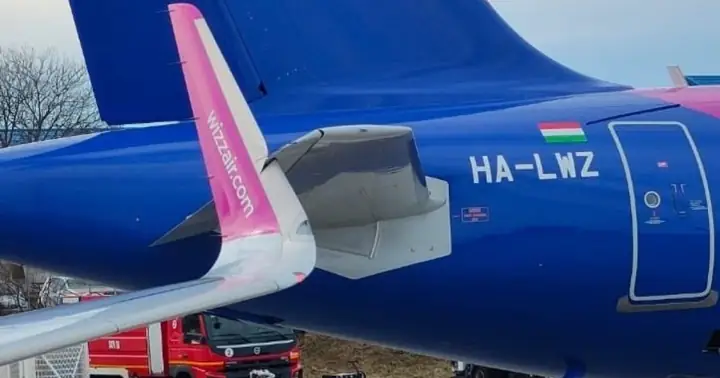
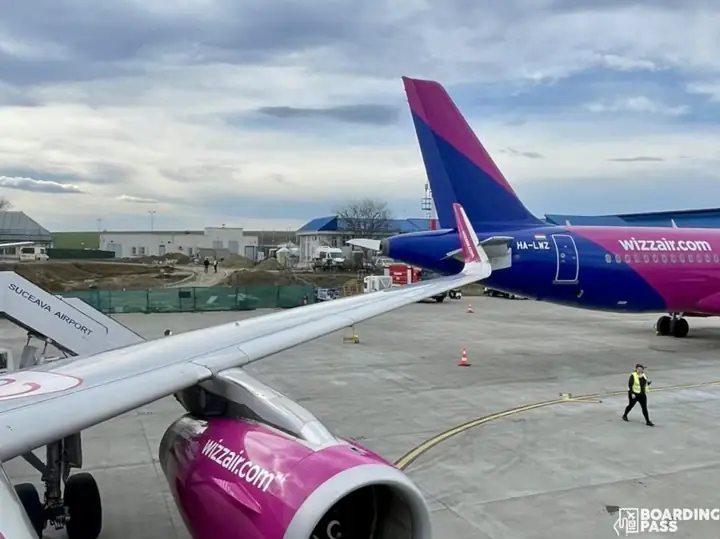
Video: https://wheeltug-collisions.netlify.app/videos/GC-0314_1.mp4
Original: https://vimeo.com/808191160/7756860f16
Video and still: Supplied by WheelTug; original: Vimeo.
| Airline / operator | Kenya Airways |
|---|---|
| Aircraft (type, registration) | Kenya Airways Embraer ERJ-190AR (5Y-KYT) |
| Category (my classification) | Human factors / Taxi crew (flight or maintenance) Secondary: ATC / marshalling involved |
| What happened | Kenya Airways flight KQ625, an Embraer ERJ-190AR, was in the process of parking to the left abeam J2 bay under guidance of a Kenya Airports Authority marshaller when its right-wing tip came into contact with the left wing tip of a parked (non-operational) Kenya Airways Embraer ERJ-190 aircraft (5Y-KYQ). Both aircraft sustained minor damage to both wing tips. There was no pre- or post-incident fire or fuel leak. The probable cause of the ground collision incident was identified as: 1) The ground crew’s failure to allow sufficient clearance between the two aircraft resulted in a wingtip collision and subsequent minor damage to the two aircraft’s wingtips. The contributing factors were: 1) Lack of proper coordination between the ground crew; 2) Constrained parking space at HKJK; 3) The absence of wing walker/s; 4) The lack of a functional dedicated apron radio frequency; and 5) The lack of effective Aeronautical Fixed Telecommunications Network (AFTN) coordination procedures between apron control and the tower. |
| Injuries | ASN lists 0 fatalities. No injury statement in the ASN narrative. |
| Damage | Minor, repaired |
| Official investigation | Investigating agency: AAID Kenya Report number: 01/02/2023 Status: Investigation completed Duration: 3 years and 6 months Final report Report / investigator link(s): https://aaid.transport.go.ke/sites/default/files/2026-09/Final%20Report-5Y-KYT%20%26%205Y-KYQ.pdf |
| Source | Aviation Safety Network (ASN) entry: https://aviation-safety.net/wikibase/579829 Further sources listed on that page / found: https://aaid.transport.go.ke/sites/default/files/2026-09/Final%20Report-5Y-KYT%20%26%205Y-KYQ.pdf |
| Airline / operator | Korean Air |
|---|---|
| Aircraft (type, registration) | Korean Air Boeing 787-9 Dreamliner (HL7209) |
| Category (my classification) | Human factors / Taxi crew (flight or maintenance) |
| What happened | Korean Air flight KE647, a Boeing 787-9 Dreamliner, was scheduled for departure from runway 02R of Changi Airport, Singapore. While taxiing to Runway 02R, the aircraft taxied into a closed section of a taxiway. The aircraft’s nose landing gear tyres hit and damaged a marker board of about 3m in length that demarcated the boundary of the taxiway closure area and came to a stop about 100m beyond the marker board. There was no injury and no damage to the aircraft other than some scuff marks on the nose landing gear tyres. CONCLUSIONS 1 Both the PF and the PM misread the effectivity end time of NOTAM A0445/23. This had resulted in the flight crew missing information regarding the closure area along Taxiway T and expected a relatively straightforward taxi route from Taxiway T to Taxiway K. 2 The expectation of a straightforward taxi route had likely resulted in the flight crew not getting themselves to be familiar with other taxiways along Taxiway T. The PM was expecting Taxiway P1 to be perpendicular to Taxiway T (which was parallel to Taxiway T) and had difficulty in locating Taxiway P1. 3 Although the PM had read back correctly GMC1’s taxi instruction of using Taxiways P3 and P1 to reach Taxiway K, the PM seemed to have missed the part on Taxiway P3 for the taxi instruction. 4 The PF had mistaken the red and white stripes of a marker board as a ground marking and did not recognise the significance of the red and white marking. This could be due to his preconceived belief that the taxi instruction was straightforward from Taxiway T to Taxiway K and thus missed recognising the marker board. 5 The PM had likely missed the marker board due to the distraction in locating Taxiway P1. 6 The flight crew’s performance in term of crew resource management had not been optimal. |
| Injuries | ASN lists 0 fatalities. There was no injury and no damage to the aircraft other than some scuff marks on the nose landing gear tyres. |
| Damage | None |
| Official investigation | Investigating agency: TSIB Singapore Report number: Status: Investigation completed Duration: 7 months Final report |
| Source | Aviation Safety Network (ASN) entry: https://aviation-safety.net/wikibase/346005 |
| Airline / operator | Air Canada |
|---|---|
| Aircraft (type, registration) | Air Canada Boeing 737 MAX 8 (C-GEHY) |
| Category (my classification) | Human factors / Taxi crew (flight or maintenance) |
| What happened | A Boeing 737 MAX 8 aircraft operated by Air Canada as AC607, was on a planned flight from Halifax/Robert L Stanfield International Airport, NS (CYHZ) to Lester B. Pearson International Airport, ON (CYYZ). During push back the crew started engine no.2 uneventfully and then proceed to start engine no.1. During no.1 engine start the crew noted a fault and contacted company Maintenance Operational Control (MOC) to discuss. During the sequence a miscommunication occurred between the aircraft crew and the ground crew as to the status of tug connection to the aircraft. The aircraft crew requested that the aircraft be towed back to the gate and subsequently released the brakes thinking that the aircraft was still physically connected to the tug. The aircraft then rolled a short distance forward under idle power and collided with the roof of tug. Both the aircraft and tug were disabled on the taxi line of Apron 1 which resulted in delays to multiple aircraft proceeding to/from gates and the deice pads. The aircraft to tug contact resulted in minor damage with no injuries to persons. |
| Injuries | ASN lists 0 fatalities. The aircraft to tug contact resulted in minor damage with no injuries to persons. |
| Damage | Minor Location: Halifax/Robert L Stanfield International Airport, NS (CYHZ) - Canada Phase: Pushback / towing Nature: Passenger - Scheduled Departure airport: Halifax-Stanfield International Airport, NS (YHZ/CYHZ) Destination airport: Toronto-Pearson International Airport, ON (YYZ/CYYZ) Confidence Rating: Information verified through data from accident investigation authorities Narrative: A Boeing 737 MAX 8 aircraft operated by Air Canada as AC607, was on a planned flight from Halifax/Robert L Stanfield International Airport, NS (CYHZ) to Lester B. Pearson International Airport, ON (CYYZ). During push back the crew started engine no.2 uneventfully and then proceed to start engine no.1. During no.1 engine start the crew noted a fault and contacted company Maintenance Operational Control (MOC) to discuss. During the sequence a miscommunication occurred between the aircraft crew and the ground crew as to the status of tug connection to the aircraft. The aircraft crew requested that the aircraft be towed back to the gate and subsequently released the brakes thinking that the aircraft was still physically connected to the tug. The aircraft then rolled a short distance forward under idle power and collided with the roof of tug. Both the aircraft and tug were disabled on the taxi line of Apron 1 which resulted in delays to multiple aircraft proceeding to/from gates and the deice pads. The aircraft to tug contact resulted in minor damage with no injuries to persons. ICAO Occurrence |
| Official investigation | No investigation details on the ASN entry. |
| Source | Aviation Safety Network (ASN) entry: https://aviation-safety.net/wikibase/308281 |
| Airline / operator | United Airlines |
|---|---|
| Aircraft (type, registration) | United Airlines Boeing 787-9 Dreamliner (N29981); United Airlines Boeing 757-224 (WL) (N17133) |
| Category (my classification) | Human factors / Taxi crew (flight or maintenance) |
| What happened | United Airlines flight UA187, a Boeing 787-9 Dreamliner, was involved in a ground contact incident at Newark. The left-hand winglet of a United Boeing 757-200 was partially severed in contact with the right-hand wing of UA187. |
| Injuries | ASN lists 0 fatalities. No injury statement in the ASN narrative. |
| Damage | Not stated |
| Official investigation | No investigation details on the ASN entry. |
| Source | Aviation Safety Network (ASN) entry: https://aviation-safety.net/wikibase/307426 Further sources listed on that page / found: https://t.co/KbNbZLINot |
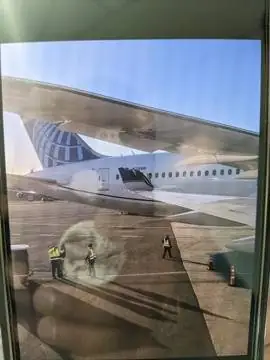
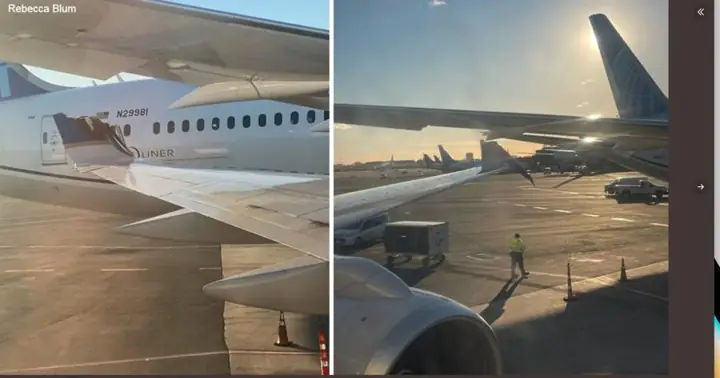
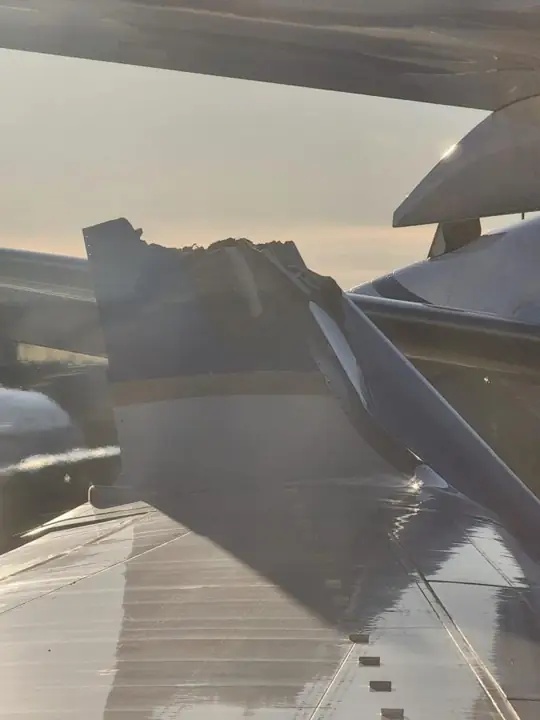
| Airline / operator | Lion Air |
|---|---|
| Aircraft (type, registration) | Lion Air Boeing 737-9GPER (WL) (PK-LFO) |
| Category (my classification) | Human factors / Taxi crew (flight or maintenance) |
| What happened | Lion Air flight JT797, a Boeing 737-9GPER, struck the departure gate as it was turning away from stand no.5 to taxi to the runway. The right hand winglet was damaged. The aircraft subsequently taxied back to the apron. |
| Injuries | ASN lists 0 fatalities. No injury statement in the ASN narrative. |
| Damage | Minor |
| Official investigation | Investigating agency: NTSC Report number: Status: Preliminary report Duration: Preliminary report Report / investigator link(s): https://knkt.go.id/Repo/Files/Laporan/Penerbangan/2023/KNKT.23.01.02.04-Preliminary-Report.pdf |
| Source | Aviation Safety Network (ASN) entry: https://aviation-safety.net/wikibase/307260 Further sources listed on that page / found: https://knkt.go.id/Repo/Files/Laporan/Penerbangan/2023/KNKT.23.01.02.04-Preliminary-Report.pdf https://indoaviation.asia/tabrak-gerbang-penumpang-lion-air-batal-terbang/ https://t.co/7DCTJmsxR7 https://t.co/HmCkP7m2gN https://t.co/7W9laoQcyK |
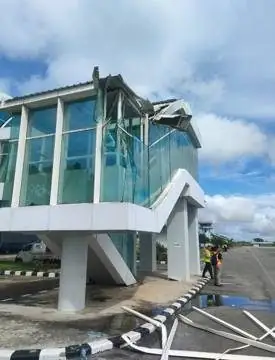
 ▶ VIDEO
Still: X video preview frame, @antaranews on X
| Airline / operator | All Nippon Airways - ANA |
|---|---|
| Aircraft (type, registration) | All Nippon Airways - ANA Boeing 767-381ER (BCF) (JA603A) |
| Category (my classification) | Human factors / Taxi crew (flight or maintenance) |
| What happened | ANA Cargo flight ANA/NH8512 from Hong Kong/Chek Lap Kok to Tokyo/Narita had slipped on the cargo ramp while turning just before arrival and failed to stop at the assigned spot 222. The Boeing faced sideways and made a contact with a parked main deck loader, causing a 15 cm hole in the fuselage skin between the radome and a nose landing gear door. No personal injuries were reported. JTSB launched an investigation as an accident. The airport was partially covered with ice and was blown by strong gust of winds at the time of the accident. Probable Cause: The JTSB concludes that it is certain that the probable cause of this accident was that while turning toward the Spot, the aircraft slid on the icy surface on the Spot and the PIC became unable to control the taxiing of the aircraft, thus the aircraft collided with a ground service equipment parking around the Spot, resulting in damage to the airframe. The aircraft slid on the icy surface probably because the surface conditions on the Spot had not been fully improved for the taxing of the aircraft, and its taxiing speed was not the one to cope with the surface conditions on the Spot. The surface conditions on the Spot had not been fully improved because the spray range and amount of the anti-icing agents were inappropriate, which probably contributed to it. In addition, the aircraft’s taxiing speed was not the one to cope with the surface conditions on the Spot probably because the information that would affect the taxiing of aircraft was not provided to the flight crewmembers of the aircraft from the ground. METAR: METAR (accident time 24/2245Z): RJAA 242230Z 28015G25KT 250V320 9999 FEW030 M03/M18 Q1012 NOSIG RMK 1CU030 A2991= RJAA 242330Z 29015KT 250V310 9999 FEW030 M02/M18 Q1013 TEMPO 29020G32KT RMK 1CU030 A2994= |
| Injuries | ASN lists 0 fatalities. No personal injuries were reported. |
| Damage | Substantial, repaired |
| Official investigation | Investigating agency: JTSB Report number: Status: Investigation completed Duration: 1 year and 7 months Final report Report / investigator link(s): https://jtsb.mlit.go.jp/eng-air_report/JA603A.pdf https://jtsb.mlit.go.jp/jtsb/aircraft/detail2.php?id=2347 |
| Source | Aviation Safety Network (ASN) entry: https://aviation-safety.net/wikibase/306194 Further sources listed on that page / found: https://jtsb.mlit.go.jp/eng-air_report/JA603A.pdf https://www.yomiuri.co.jp/national/20230125-OYT1T50093/ https://www3.nhk.or.jp/news/html/20230125/k10013959941000.html https://news.yahoo.co.jp/articles/652983b31ac5615358f6d0831edb9b207527e746 https://news.yahoo.co.jp/articles/4602eb16ea69dca94884384659cd9cbf3e7fc139 |
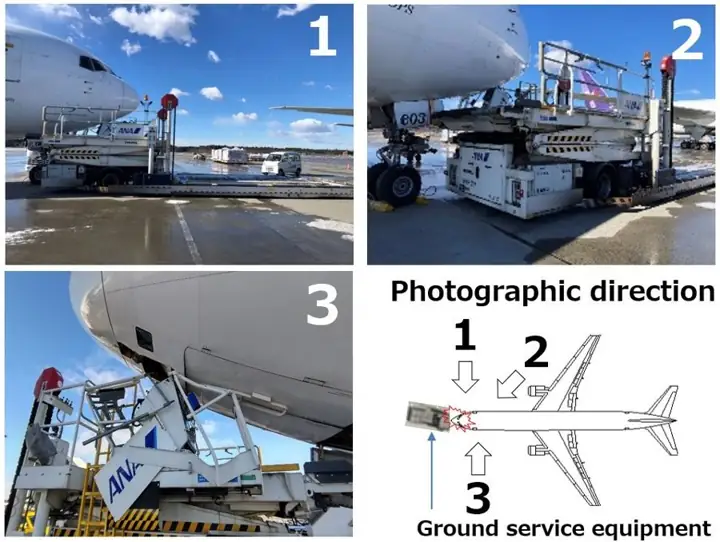
| Airline / operator | Calm Air International |
|---|---|
| Aircraft (type, registration) | Calm Air International ATR 72-500 (F) (72-212A) (C-GREJ) |
| Category (my classification) | Human factors / Taxi crew (flight or maintenance) |
| What happened | An ATR 72-500F operated by Calm Air, was conducting flight CAV788 from Big Trout Lake (CYTL), ON to Red Lake (CYRL), ON. While the aircraft was on the ramp at CYRL after the flight, the crew elected to back up the aircraft under its own power. While backing up, C-GREJ tail struck a privately registered Piper PA-23-160 aircraft that was parked on the ramp. Both aircraft sustained minor damage. C-GREJ was grounded in CYRL until the applicable repairs were completed and returned to service on 22 December 2022. |
| Injuries | ASN lists 0 fatalities. No injury statement in the ASN narrative. |
| Damage | Not stated |
| Time out of service | C-GREJ: 3 days (ASN) |
| Official investigation | No investigation details on the ASN entry. |
| Source | Aviation Safety Network (ASN) entry: https://aviation-safety.net/wikibase/303080 |
| Airline / operator | Air Premia / Lao Airlines |
|---|---|
| Aircraft (type, registration) | Air Premia Boeing 787-9 Dreamliner (HL8517); Lao Airlines Airbus A320-214 (RDPL-34199) |
| Category (my classification) | Human factors / Taxi crew (flight or maintenance) |
| What happened | Lao Airlines flight QV924, a Airbus A320-214 (RDPL-34199), was damaged after being struck by an Air Premia Boeing 787-9 Dreamliner (HL8517). Flight QV924 had been pushed back from the gate and was taxiing to the departure runway at Seoul-Incheon International Airport (ICN) when the rudder was struck by the right- hand wing tip of HL8517, which was being towed. |
| Injuries | ASN lists 0 fatalities. No injury statement in the ASN narrative. |
| Damage | Not stated |
| Official investigation | No investigation details on the ASN entry. |
| Source | Aviation Safety Network (ASN) entry: https://aviation-safety.net/wikibase/302881 Further sources listed on that page / found: http://www.ichannela.com/news/main/news_detailPage.do?publishId=000000327280 |
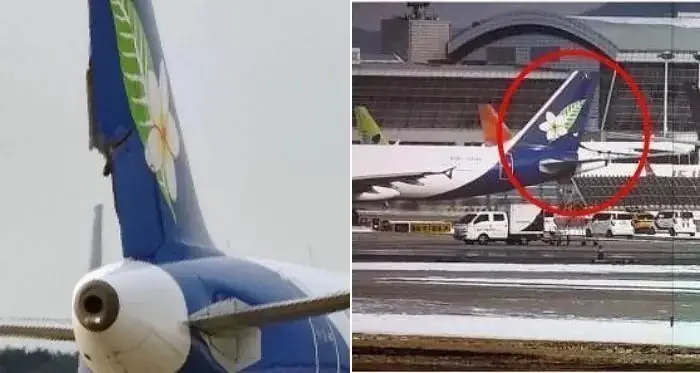
| Airline / operator | Bluebird Cargo, opf ASL Airlines Belgium |
|---|---|
| Aircraft (type, registration) | Bluebird Cargo, opf ASL Airlines Belgium Boeing 737-4Q8 (SF) (TF-BBM) |
| Category (my classification) | Human factors / Taxi crew (flight or maintenance) |
| What happened | ASL Airlines Belgium flight 4437, a Boeing 737-400 cargo plane operated by Bluebird Cargo, collided with airport infrastructure during taxi at Paris-Charles de Gaulle Airport (CDG). The conditions on the day of the accident were the following: - push-back operation with the nose gear steering lockout pin installed. Hydraulic system A was not pressurized (in accordance with operator's procedure); - engine No 1 was operating and engine No 2 was shut down. This meant that hydraulic system B was not pressurized by engine driven pump 2; - the standby accumulator was empty as discharged since the previous flight and would not be recharged until pressurization of system B. In these conditions, only the activation of electric motor pump 1, powered by engine No 1, could pressurize hydraulic system B and thus ensure the correct operation of the braking system (parking brake and pedal braking). Hydraulic system B was not pressurized during the occurrence as the crew had very probably not activated electric motor pump 1. However, the investigation was not able to exclude a possible intermittent fault on this pump. Hydraulic system A was not activated by the crew in accordance with the operator's normal procedures. In the absence of pressurization in hydraulic systems A and B and with the accumulator discharged since the previous flight, the braking system (parking brake and pedal braking) and the steering control system were not operational. At the end of the push-back and before disconnecting the towbar, the crew operated the parking brake lever and considered that the latter was operational on observing that the associated red light illuminated. Due to the design of the system, this light only indicates that the parking brake lever is correctly positioned for applying the brake, it does not guarantee that the braking system is pressurized. The crew explained that they did not check that the pressure of hydraulic system B was at a minimum value of 2,800 psi and did not pay attention to the indicator lights indicating low pressure in the various systems and in the accumulator. When the towbar was disconnected, the airplane moved and the crew tried to brake several times without understanding why the braking system was not operating although the red light was on. With the steering lockout pin and towbar still in place, the airplane's path was not controllable and it came to a halt after striking obstacles. Contributing factors The following factors contributed to the absence of hydraulic pressure in the braking systems when the towbar was disconnected from the tug: • the crew's erroneous understanding of the meaning of the red light next to the parking brake lever; • the crew not checking the pressure indicators of the hydraulic systems and the low-pressure indicator lights of the pumps; • the operator's choice to simplify the manufacturer's procedure by the systematic absence of pressurisation of system A, even when the steering lockout pin was in place, and by not asking the crews to check that system B was actually pressurised. |
| Injuries | ASN lists 0 fatalities. No injury statement in the ASN narrative. |
| Damage | Substantial |
| Official investigation | Investigating agency: BEA Report number: BEA2022-0571 Status: Investigation completed Duration: 11 months Final report Report / investigator link(s): https://bea.aero/fileadmin/user_upload/TF-BBM_EN.pdf https://bea.aero/en/investigation-reports/notified-events/detail/accident-to-the-boeing-737-registered-tf-bbm-operatd-by-bluebird-on-20-11-2022-at-roissy/ |
| Source | Aviation Safety Network (ASN) entry: https://aviation-safety.net/wikibase/318722 Further sources listed on that page / found: https://bea.aero/fileadmin/user_upload/TF-BBM_EN.pdf https://bea.aero/en/investigation-reports/notified-events/detail/accident-to-the-boeing-737-registered-tf-b… |
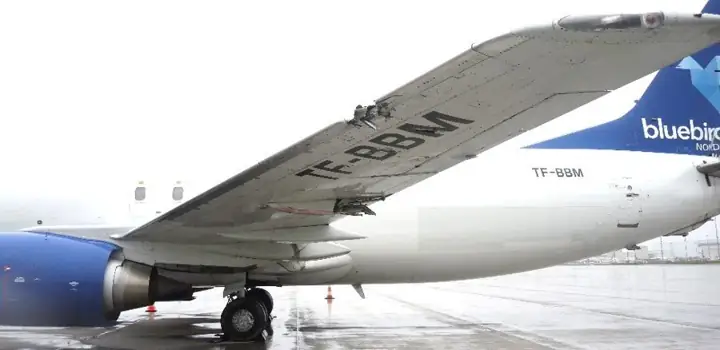
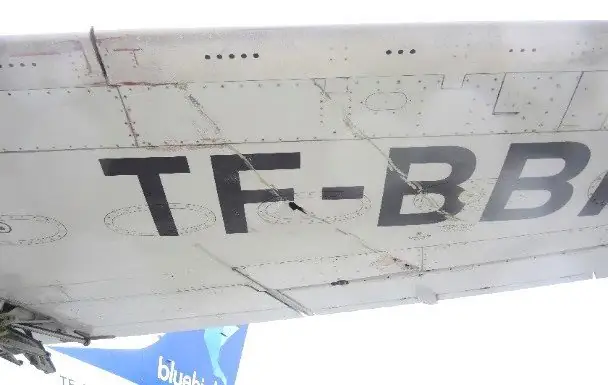
| Airline / operator | Rex Airlines |
|---|---|
| Aircraft (type, registration) | Rex Airlines Saab 340B+ (VH-ZLJ) |
| Category (my classification) | Human factors / Taxi crew (flight or maintenance) |
| What happened | Regional Express flight ZL5538, a Saab 340B+, was prepared for a scheduled air transport flight from Cairns Airport, Queensland, to Bamaga, Queensland. As the crew taxied the aircraft to the runway, an engineer on a nearby parking bay noticed something hanging from the aircraft and contacted the tower. The air traffic controller visually confirmed the engineer’s observations and alerted the crew, who returned the aircraft to the bay. Aircraft parked overnight at Cairns were required to be fitted with an operator-designed bung installed in the horizontal stabiliser trim actuator cove to prevent bird nesting. The inspection revealed the horizontal stabiliser bungs had not been removed and were still installed in the left trim actuator cove. The investigation found that the horizontal stabiliser bung was not detected during pre-flight preparations, resulting in the aircraft being dispatched with the bung still installed. The ATSB also found that there was no procedure for the storage and accountability of the bungs after they had been removed, which differed from other bungs and covers used on Rex aircraft. Additionally, the operator did not consider aspects that would ensure the identification of an installed bung, or the safe operation of the aircraft if the bungs were not removed prior to flight. |
| Injuries | ASN lists 0 fatalities. No injury statement in the ASN narrative. |
| Damage | None |
| Official investigation | Investigating agency: ATSB Report number: Status: Investigation completed Duration: 11 months Final report Report / investigator link(s): https://www.atsb.gov.au/sites/default/files/2023-10/AO-2022-058-Final.pdf https://www.atsb.gov.au/publications/investigation_reports/2023/report/ao-2022-058 |
| Source | Aviation Safety Network (ASN) entry: https://aviation-safety.net/wikibase/347275 Further sources listed on that page / found: https://www.atsb.gov.au/sites/default/files/2023-10/AO-2022-058-Final.pdf https://www.atsb.gov.au/publications/investigation_reports/2023/report/ao-2022-058 |
| Airline / operator | American Airlines / Air Canada Express, opb Jazz Aviation |
|---|---|
| Aircraft (type, registration) | American Airlines Airbus A319-112 (N774XF); Air Canada Express, opb Jazz Aviation Embraer ERJ-175SU (C-FRQN) |
| Category (my classification) | Human factors / Taxi crew (flight or maintenance) Secondary: ATC / marshalling involved |
| What happened | An Embraer ERJ-175 (C-FRQN) operated by Jazz, was on an instrument flight rules flight JZA8642 from Montreal/Pierre Elliott Trudeau Airport, Quebec (CYUL) to New York-LaGuardia Airport, NY (KLGA). Shortly after the pushback, the crew was instructed by the apron control to move forward, straight ahead, approximately 10 meters. The right winglet of C-FRQN contacted the underside of the wing tip of N774XF, an American Airlines Airbus A319 that was stationary after completing its pushback in preparation for a flight to Charlotte Douglas International Airport, NC (KCLT) as flight AA1350. Both aircraft returned to a gate and the passengers were deplaned. The right wing of C-FRQN was slightly damaged. The trailing edge of the left wing of N774XF was damaged and a static unloader on the left wing separated. |
| Injuries | ASN lists 0 fatalities. No injury statement in the ASN narrative. |
| Damage | Minor |
| Official investigation | No investigation details on the ASN entry. |
| Source | Aviation Safety Network (ASN) entry: https://aviation-safety.net/wikibase/301911 |
| Airline / operator | American Airlines / Southwest Airlines |
|---|---|
| Aircraft (type, registration) | American Airlines Boeing 737-823 (WL) (N909NN); Southwest Airlines Boeing 737-7H4 (WL) (N963WN) |
| Category (my classification) | Human factors / Taxi crew (flight or maintenance) |
| What happened | Southwest Airlines flight 2659, a Boeing 737-700 (N963WN) and American Airlines flight 1121, a Boeing 737-800 (N909NN) were involved in a ground collision accident at Chicago-O'Hare International Airport, IL (ORD). N963WN was taxing out for departure when the wing of the aircraft struck the tail of the Boeing 737-800, which was maneuvering on taxiway A after arrival from Orlando Airport, FL. |
| Injuries | ASN lists 0 fatalities. No injury statement in the ASN narrative. |
| Damage | Substantial, repaired |
| Official investigation | No investigation details on the ASN entry. |
| Source | Aviation Safety Network (ASN) entry: https://aviation-safety.net/wikibase/318729 Further sources listed on that page / found: https://www.foxbusiness.com/lifestyle/chicago-flights-delayed-minor-accident-two-planes |
| Airline / operator | Ethiopian Airlines |
|---|---|
| Aircraft (type, registration) | Ethiopian Airlines Boeing 777-260LR (ET-ANN) |
| Category (my classification) | Human factors / Taxi crew (flight or maintenance) Secondary: ATC / marshalling involved |
| What happened | Ethiopian Airlines flight ET847, a Boeing 777-260LR, was damaged after contacting the airbridge at Cape Town International Airport (CPT/FACT). Flight ET847 was variously flown using an Airbus A350- 900, a Boeing 777-200LR or a Boeing 787-9. On the morning of 19 October 2022 ACSA was informed that the aircraft type was changed from a Boeing 777-200LR to a Boeing 787-900. After the aircraft landed the ACSA Ramp office was informed that it was a Boeing 777. This information was forward to the marshaller. After landing the crew was instructed by ACSA ground control to taxi to parking bay A3. The airbridge was stationed at the correct position as per the ground markings. The aircraft was marshallad to the nose wheel marking on the apron area of a Boeing 777-300 and not that of the 777-200. With the 777-300 being 10m longer than the 777-200 the No. 1 engine (left side) collided with the airbridge lower section, which caused damage to the engine cowling. The airbridge was also taken out of service as several of the motion sensors were damage on impact. |
| Injuries | ASN lists 0 fatalities. No injury statement in the ASN narrative. |
| Damage | Not stated |
| Official investigation | No investigation details on the ASN entry. |
| Source | Aviation Safety Network (ASN) entry: https://aviation-safety.net/wikibase/302939 |
| Airline / operator | Sky Express |
|---|---|
| Aircraft (type, registration) | Sky Express ATR 42-500 (SX-EIT) |
| Category (my classification) | Human factors / Taxi crew (flight or maintenance) |
| What happened | Sky Express flight 30, an ATR 42-500, was taxing from parking position F04A when the left-hand wing collided with ground ladder equipment. The aircraft sustained serious damage on the left-hand aileron and wingtip. |
| Injuries | ASN lists 0 fatalities. No injury statement in the ASN narrative. |
| Damage | Substantial, repaired |
| Official investigation | No investigation details on the ASN entry. |
| Source | Aviation Safety Network (ASN) entry: https://aviation-safety.net/wikibase/318741 |
| Airline / operator | Icelandair Flugfélag Islands / Korean Air |
|---|---|
| Aircraft (type, registration) | Icelandair Flugfélag Islands Boeing 757-256 (WL) (TF-FIK); Korean Air Boeing 777-3B5ER (HL7782) |
| Category (my classification) | Human factors / Taxi crew (flight or maintenance) Secondary: ATC / marshalling involved |
| What happened | Korean Air flight KE908, a Boeing 777-3B5ER (HL7782) and Icelandair flight FI454, a Boeing 757-256 (TF-FIK), suffered a ground contact accident at London-Heathrow Airport (LHR). Whilst taxing for takeoff the wingtip of KE908 collided with the rudder of FI454 which was not fully parked on its stand. The commander of the B757 turned onto the stand centreline at Stand 241 at Terminal 2B without stand guidance and did not inform the ATC ground controller that they were not fully parked, contrary to Heathrow Aeronautical Information Publication (AIP) instructions. The commander of the B777 taxied past the protruding B757 believing it to be fully parked and that the ATC clearance and green taxiway lights implied the route was clear. Previous similar incidents have occurred at Heathrow. Conclusion The collision occurred because the commander of the B777 continued to taxi past the protruding B757, believing it was fully parked and that the ATC clearance and green taxiway lights implied the route was clear. The commander of the B757 did not follow the Heathrow AIP instruction to remain on the centreline if no stand guidance is available, because his normal practice was to look for guidance after he had turned onto the stand. The initiating event was a lack of stand guidance when the B757 arrived on stand, caused by ground staff shortages. Lack of stand guidance is a common occurrence at Heathrow that all parties should continue to work together to address. |
| Injuries | ASN lists 0 fatalities. No injury statement in the ASN narrative. |
| Damage | Substantial, repaired |
| Official investigation | Investigating agency: AAIB Report number: AAIB-28692 Status: Investigation completed Duration: 8 months Final report Report / investigator link(s): https://assets.publishing.service.gov.uk/media/6464dc75e14070000cb6e10a/Boeing_777-300_ER__HL-7782_and_Boeing_757-256_TF-FIK_06-23.pdf |
| Source | Aviation Safety Network (ASN) entry: https://aviation-safety.net/wikibase/318745 Further sources listed on that page / found: https://assets.publishing.service.gov.uk/media/6464dc75e14070000cb6e10a/Boeing_777-300_ER__HL-7782_and_Boei… |
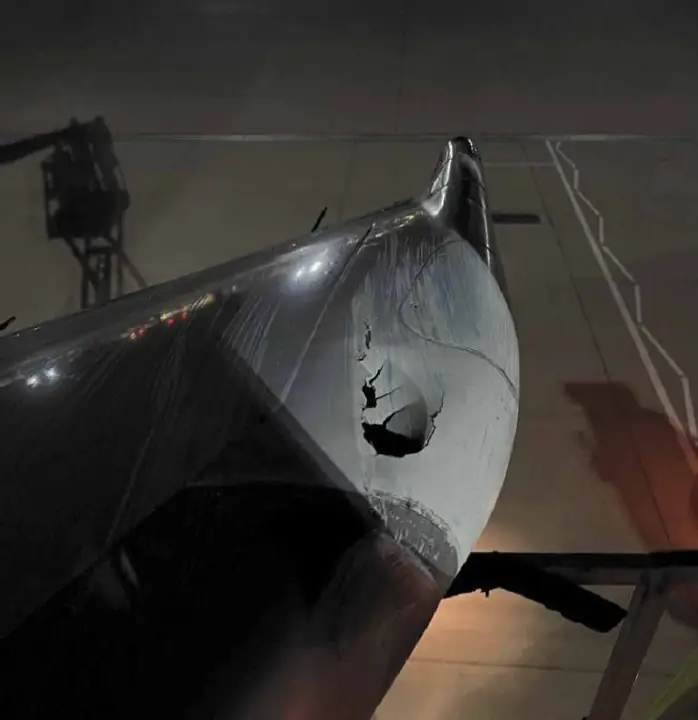
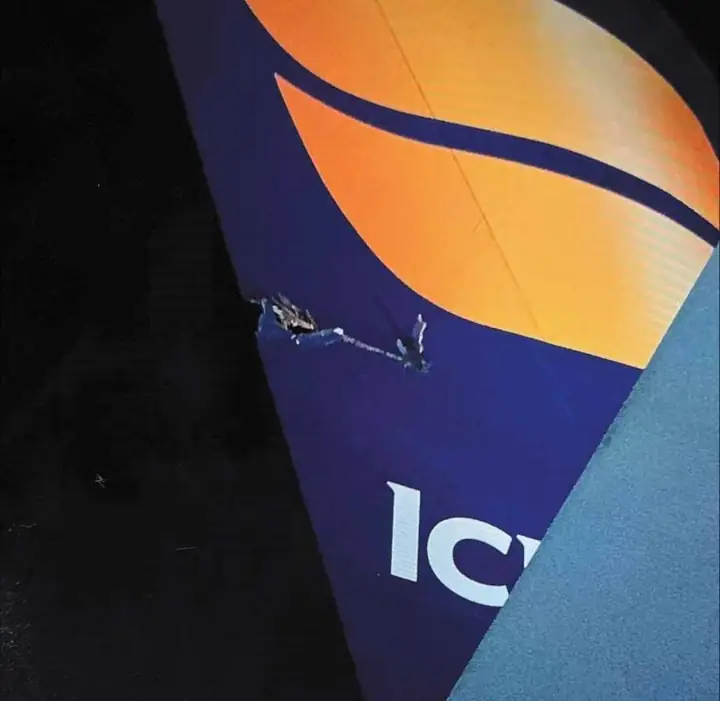
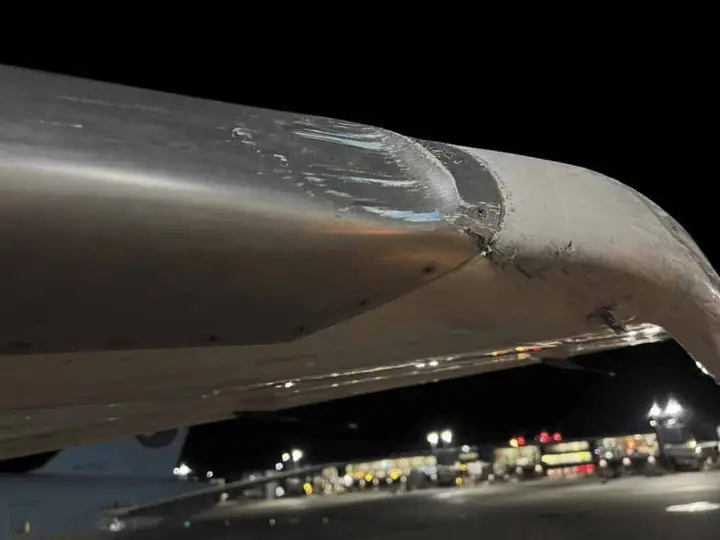
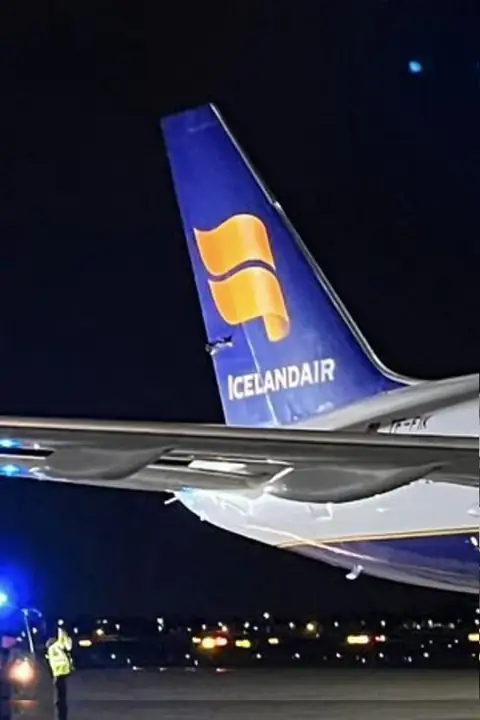
| Airline / operator | Freedom Airline Express |
|---|---|
| Aircraft (type, registration) | Freedom Airline Express Fokker 50 (5Y-FAI) |
| Category (my classification) | Human factors / Taxi crew (flight or maintenance) |
| What happened | A Freedom Airline Fokker 50 sustained substantial damage in an accident on the apron at Nairobi-Jomo Kenyatta International Airport (NBO/HKJK). The crew ferried the aircraft from Nairobi-Wilson to NBO and on arrival, the aircraft was taxied to terminal 2-M22 where the chocks were placed and the Ground Power Unit connected. The captain reported that the crew then disembarked to perform walk rounds as per the relevant checklist from which no anomalies were reported. The flight crew then proceeded to do their briefing with the ground handling personnel and gave the boarding clearance. On completion, the captain reported, having obtained the engine start clearance and requested the ground handlers to remove the GPU and the chocks. The GPU was, however, not clear at the time the aircraft began taxiing and consequently, the aircraft engine no.2 propeller impacted the GPU, causing the separation of two propeller blades and damage to the remaining four blades. Shrapnel penetrated the fuselage above RH window number 5. The Captain immediately shut down the engines and commanded the cabin crew to evacuate the passengers to the terminal building as per emergency evacuation procedures. The aircraft sustained substantial damage to its RH Engine and shrapnel penetrated the upper part of the fuselage above the RH window NUMBER 5. The GPU was damaged and no injuries were reported . |
| Injuries | ASN lists 0 fatalities. The GPU was damaged and no injuries were reported . |
| Damage | Substantial |
| Official investigation | Investigating agency: AAID Kenya Report number: Status: Preliminary report Duration: Preliminary report Report / investigator link(s): https://www.transport.go.ke/sites/default/files/preliminary-reports/Preliminary%20Repoer5Y-FAI%20F50%2025.09.2022.pdf |
| Source | Aviation Safety Network (ASN) entry: https://aviation-safety.net/wikibase/318749 Further sources listed on that page / found: https://www.transport.go.ke/sites/default/files/preliminary-reports/Preliminary%20Repoer5Y-FAI%20F50%2025.0… |
| Airline / operator | Volaris / Aeroméxico |
|---|---|
| Aircraft (type, registration) | Volaris Airbus A321-231 (XA-VLV); Aeroméxico Boeing 737 MAX 8 (XA-MAG) |
| Category (my classification) | Human factors / Taxi crew (flight or maintenance) |
| What happened | An Aeromexico Boeing 737 MAX 8 (XA-MAG) contacted a Volaris Airbus A321 (XA-VLV) at Monterrey İnternational Airport, Mexico. The Boeing 737 was taxiing when the sharklet struck and damaged the APU exhaust of of the A321. |
| Injuries | ASN lists 0 fatalities. No injury statement in the ASN narrative. |
| Damage | Not stated |
| Official investigation | No investigation details on the ASN entry. |
| Source | Aviation Safety Network (ASN) entry: https://aviation-safety.net/wikibase/282834 Further sources listed on that page / found: https://www.goklerdeyiz.net/iki-ucak-yerde-carpisti-43/ |
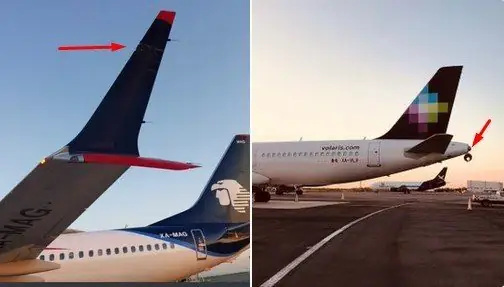
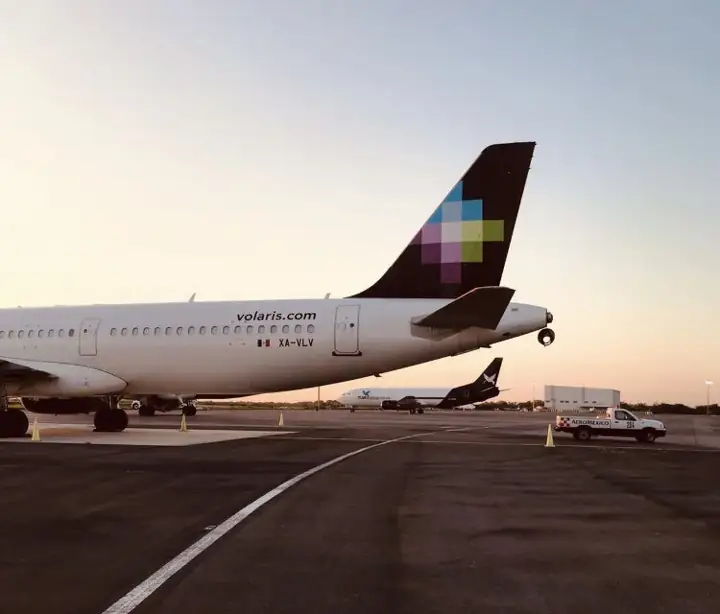
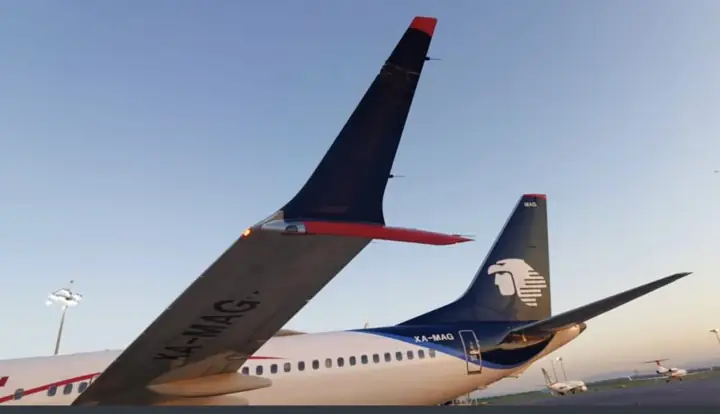
| Airline / operator | Qatar Airways Cargo |
|---|---|
| Aircraft (type, registration) | Qatar Airways Cargo Boeing 777-FDZ (A7-BFH) |
| Category (my classification) | Human factors / Taxi crew (flight or maintenance) |
| What happened | A Qatar Airways Cargo Boeing 777 struck a lighting pole during taxi at Chicago- O'Hare International Airport, IL (ORD). The right-hand wing leading edge suffered a serious dent. The flight crew had been instructed to taxi to the northeast cargo ramp via taxiway K, BB and Z and to hold short of runway 09R. The controller then instructed the flight to go via taxiway BB2. However, about 28 m to the right of the centreline of this taxiway there was a lighting pole. The B777 wing span was 64,80 (32,40 m from centre to wing tip). Probable Cause: The ground controller's inappropriate routing of the B777 through a non-movement area, resulting in the airplane’s right wingtip contacting a light pole. Contributing to the accident was the lack of an appropriate display of taxiway BB2 as a restricted movement area on the ASDE-X and the flight crew’s acceptance of ATC instruction that was contrary to NOTAM information." |
| Injuries | ASN lists 0 fatalities. No injury statement in the ASN narrative. |
| Damage | Substantial, repaired |
| Official investigation | Investigating agency: NTSB Report number: DCA22LA175 Status: Investigation completed Duration: 8 months Final report Report / investigator link(s): https://data.ntsb.gov/carol-repgen/api/Aviation/ReportMain/GenerateNewestReport/105684/pdf |
| Source | Aviation Safety Network (ASN) entry: https://aviation-safety.net/wikibase/318777 Further sources listed on that page / found: https://www.aerotime.aero/articles/31837-qatar-airways-cargo-boeing-777-collision-chicago https://data.ntsb.gov/carol-repgen/api/Aviation/ReportMain/GenerateNewestReport/105684/pdf |
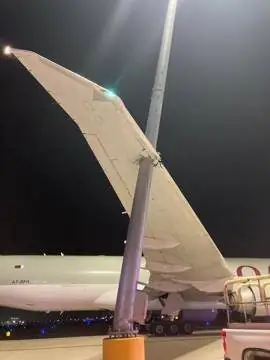
| Airline / operator | Wasaya Airways |
|---|---|
| Aircraft (type, registration) | Wasaya Airways de Havilland Canada DHC-8-102 (C-GOKN) |
| Category (my classification) | Human factors / Taxi crew (flight or maintenance) |
| What happened | A DHC-8-102 operated by Wasaya Airways, was conducting flight WSG8161 from Sioux Lookout (CYXL), ON to Muskrat Dam (CZMD), ON. During the taxi on the ramp after landing at CZMD, the aircraft's left wing tip came into to contact with a de-ice ladder. The aircraft received minor damage to the left hand aileron. The operator's maintenance replaced the left aileron and the aircraft was returned to service. |
| Injuries | ASN lists 0 fatalities. No injury statement in the ASN narrative. |
| Damage | Not stated |
| Official investigation | No investigation details on the ASN entry. |
| Source | Aviation Safety Network (ASN) entry: https://aviation-safety.net/wikibase/282521 |
| Airline / operator | Royal Jet |
|---|---|
| Aircraft (type, registration) | Royal Jet Boeing 737-77W (WL) BBJ (A6-RJV); Royal Jet Boeing 737-7Z5 (WL) BBJ (A6-AIN) |
| Category (my classification) | Human factors / Taxi crew (flight or maintenance) Secondary: ATC / marshalling involved |
| What happened | On 12 July 2022, at 2238 UTC (13 July 2022 at 0238 local time), a BBJ 737-700 Aircraft, registration marks A6-AIN, operated by Royal Jet, landed on runway (RWY) 13R at Abu Dhabi International Airport (OMAA) arriving from Grozny Airport (UMRG), Russia. There were seven persons on board, consisting of two flight crew members, four cabin crew members, and one engineer. The flight crew of the Aircraft initiated communication with Abu Dhabi Tower at 2235:11 on frequency 119.200 MHz, while the Aircraft was approaching for RWY 13R, about eight nautical miles from the threshold. At 2235:18, the Tower controller provided the flight crew with the current QNH and instructed the crew to continue approach RWY 13R. The crew read back correctly. At 2236:51, the Tower controller gave the flight crew the clearance to land stating, "Royal Jet zero zero three, surface wind one eight zero degrees, five knots, runway one three right cleared to land.” The flight crew read back the clearance correctly and requested to vacate the runway via taxiway Echo 15, and the controller granted the request. At 2239:41, upon vacating the runway, the Tower controller instructed the flight crew to follow the green lights to the General Aviation Apron, which was acknowledged by the crew. At 2240:16, the Tower controller cleared the Aircraft to vacate RWY 13R via taxiway Echo 15, and to follow the green lights for taxiing to General Aviation Apron, designated as Abu Dhabi Aviation (ADA) Apron. The Aircraft vacated the runway via taxiway Echo 15 at a speed of 15 knots. At 2241:53, the Aircraft entered taxiway Foxtrot 5 towards ADA Apron at a speed of 9 knots. At 2243:14, the Aircraft made a right turn at the end of taxiway Foxtrot 5, and entered ADA Apron at a speed of 5 knots (figures 1 and 2). At that time, another Royal Jet aircraft, BBJ 737-700, registration marks A6-RJV, was parked at ADA Apron, VIP stand, temporarily for immediate maintenance, and was scheduled for repositioning to another apron near RWY 13R for a scheduled morning departure. According to the statement of the ground personnel who parked the A6-RJV, it was positioned approximately two meters behind the stop mark (figure 3), which moved its tail two meters further back into the taxilane 3 area. According to him, these parking stands are designed to accommodate Dash 8 aircraft and if the nose gear of BBJ 737-700 is parked on the designated nose wheel stop line, it might have hit another aircraft moving in front. According to the CCTV footage, at 2244:10, the Aircraft reached behind the parked aircraft, and the Aircraft right wingtip hit the left-hand horizontal stabilizer tip of the parked aircraft. According the flight crew and the ground staff’s statements, the Aircraft was following the taxilane center line. The Commander reduced the speed, stopped for a brief time, and asked the Copilot to check wing clearance. However, collision has already occurred. The Commander was not aware of the collision as per his statement. The Copilot stated the same. There were two ground personnel: − A ground support equipment operator waiting for the Aircraft at the designated parking position as a signalman to assist the commander using illuminated wands since it was night time as per the Operator’s Ground Operations Manual (GOPS), Chapter 7 — Safety Rules During Aircraft Handling, and − A wingman, assigned to assist the signalman in judging the safe distance between the Aircraft and obstacles. The CCTV footage showed that as the Aircraft's nose reached behind the parked aircraft, the wingman ran towards it, positioning himself to the right side of the Aircraft and behind the parked aircraft. He then began providing hand signals to the copilot, but the collision had already occurred. According to Operator’s (GOPS) Manual, if used, the wingman shall be in a position so that he can be seen by the signalman and clearly can observe the distance between aircraft and obstacles. The signalman left his original position, walked in front of the Aircraft, and then started providing marshaling guidance. At 2245:40, the Aircraft resumed moving with the guidance of the signalman at a taxi speed between 3-5 knots, turned right and stopped at its final position. The flight crew shut down the engines and performed the parking procedure in accordance with the checklist. The flight crew was notified about the damage of the Aircraft afterwards. The AAIS notified the air navigation service provider and Abu Dhabi Airports after receiving the occurrence notification from the Operator. |
| Injuries | ASN lists 0 fatalities. No injury statement in the ASN narrative. |
| Damage | Minor |
| Official investigation | Investigating agency: GCAA Report number: Status: Investigation completed Duration: 2 years and 9 months Final report Report / investigator link(s): https://www.gcaa.gov.ae/en/departments/airaccidentinvestigation/Lists/Incidents%20Investigation%20Reports/Attachments/165/AIFN00072022-%20Summary%20Report.pdf |
| Source | Aviation Safety Network (ASN) entry: https://aviation-safety.net/wikibase/527732 Further sources listed on that page / found: https://www.gcaa.gov.ae/en/departments/airaccidentinvestigation/Lists/Incidents%20Investigation%20Reports/A… https://www.jetphotos.com/photo/10634915 https://www.jetphotos.com/photo/10650212 |
| Flag | Non-airline (military / government / private / special-mission) operator: shows the risk type, not a direct WheelTug airline market case. |
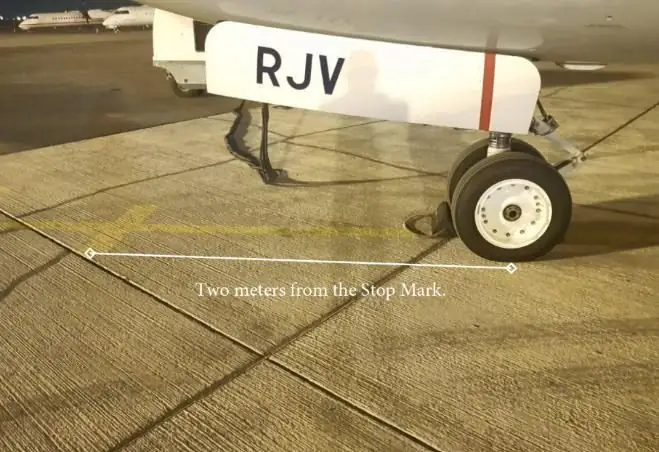
| Airline / operator | Air Canada |
|---|---|
| Aircraft (type, registration) | Air Canada Boeing 737 MAX 8 (C-FSDB) |
| Category (my classification) | Human factors / Taxi crew (flight or maintenance) |
| What happened | an Air Canada Boeing 737 MAX 8 completed flight AC991 from Toronto Pearson International Airport (CYYZ), ON to Mexico City International Airport (MMMX), Mexico and was taxing to the gate when the aircraft struck a portable air stairs, which was not entirely in the safe zone. The flight crew followed the lead in line and the aircraft had wing walkers. The crew was unaware of the strike until they deplaned the aircraft. The stairs caused damage to the leading edge of the right hand lower winglet (Sharklet). The aircraft was ferried back to Toronto on July 9. |
| Injuries | ASN lists 0 fatalities. No injury statement in the ASN narrative. |
| Damage | Minor Location: Mexico City-Benito Juárez International Airport (MEX/MMMX) - Mexico Phase: Taxi Nature: Passenger - Scheduled Departure airport: Toronto-Pearson International Airport, ON (YYZ/CYYZ) Destination airport: Mexico City-Benito Juárez International Airport (MEX/MMMX) Confidence Rating: Information verified through data from accident investigation authorities Narrative: an Air Canada Boeing 737 MAX 8 completed flight AC991 from Toronto Pearson International Airport (CYYZ), ON to Mexico City International Airport (MMMX), Mexico and was taxing to the gate when the aircraft struck a portable air stairs, which was not entirely in the safe zone. The flight crew followed the lead in line and the aircraft had wing walkers. The crew was unaware of the strike until they deplaned the aircraft. The stairs caused damage to the leading edge of the right hand lower winglet (Sharklet). The aircraft was ferried back to Toronto on July 9. ICAO Occurrence |
| Time out of service | C-FSDB: at least 2 days (ferried to Toronto 9 Jul) (ASN) |
| Official investigation | No investigation details on the ASN entry. |
| Source | Aviation Safety Network (ASN) entry: https://aviation-safety.net/wikibase/280631 |
| Airline / operator | ITA Airways / Air France |
|---|---|
| Aircraft (type, registration) | ITA Airways Airbus A330-202 (EI-EJL); Air France Boeing 777-228ER (F-GSPQ) |
| Category (my classification) | Human factors / Taxi crew (flight or maintenance) Secondary: ATC / marshalling involved |
| What happened | ITA Airways flight AZ611, a Airbus A330-202 (EI-EJL), contacted Air France flight AF008, a Boeing 777-228ER (F-GSPQ) during taxi for takeoff at New York-JFK International Airport, NY. At the time the flight crew of AF008 had stopped with the parking brake set while waiting for the gate personnel to finish preparing gate 9 to receive their flight at Terminal 1, The Air France crew said that their company procedure to enter gate 9 is to stop and wait for a tow. There were no ground marshalling crew present when they arrived, so they stopped, shut down the engines, and waited about 10 to 15 minutes for a tow to arrive. About the time the tug arrived, the crew said they felt the airplane move due to a "hard connection", but they were unaware of an airplane passing behind at that time. After the airplane was parked at the gate and passengers had disembarked, maintenance informed the flight crew of damage to the elevator, and it was determined to be from the ITA Airways A330 that had passed behind. The Air France flight crew said they tried to contact the Air Traffic Control Tower to stop the ITA Airways flight, but the conversation was lengthy, and the ITA Airways flight 611 took off without receiving timely notification of the collision. A controller then contacted AZ611, reporting: "Another aircraft on the ground currently, Air France, said you hit them or something of that nature while you were taxiing. Did you experience any damage to the aircraft?" The ITA Airways pilot responded: "Negative, sir." The flight continued to Rome, Italy, and landed normally. EI-EJL resumed service after two days while F-GSPQ was ferried to Paris on July 12. Probable Cause: The ITA Airways flightcrew’s misperception of the distance to maintain separation and safely pass the stopped Air France airplane. |
| Injuries | ASN lists 0 fatalities. No injury statement in the ASN narrative. |
| Damage | Minor, repaired |
| Time out of service | F-GSPQ: at least 25 days (ferried to Paris 12 Jul) (ASN) EI-EJL: 2 days (ASN) |
| Official investigation | Investigating agency: NTSB Report number: DCA22LA135A Status: Investigation completed Duration: 10 months Final report Report / investigator link(s): https://data.ntsb.gov/carol-repgen/api/Aviation/ReportMain/GenerateNewestReport/105317/pdf |
| Source | Aviation Safety Network (ASN) entry: https://aviation-safety.net/wikibase/318801 Further sources listed on that page / found: https://data.ntsb.gov/carol-repgen/api/Aviation/ReportMain/GenerateNewestReport/105317/pdf https://www.lepoint.fr/societe/un-airbus-d-ita-heurte-un-boeing-d-air-france-au-sol-puis-s-envole-28-06-202… |
| Airline / operator | Wings Air |
|---|---|
| Aircraft (type, registration) | Wings Air ATR 72-500 (72-212A) (PK-WGF) |
| Category (my classification) | Human factors / Taxi crew (flight or maintenance) |
| What happened | An ATR 72-500 aircraft, registered as PK-WGF, landed at Denpasar Ngurah Rai İnternational Airport after an uneventful flight. After touchdown, the aircraft was instructed by the tower controller to exit the runway via Taxiway N4. While the aircraft was on Taxiway N4, the pilot was instructed by the tower controller to contact ground controller. The ground controller instructed the aircraft to continue the taxi by following the aircraft that was pushing back from parking stand A22 to runway 09 for departure. After the aircraft exited Taxiway N4 and taxied on the apron taxiway, the SIC asked the assigned parking stand to the ground controller and was informed to park on Parking Stand A41. The aircraft continued taxiing and turned toward Taxiway NW6. The SIC realized that the aircraft had turned toward the wrong taxiway and informed to the PIC. The SIC then confirmed to the ground controller whether the assigned parking stand was A41. The ground controller affirmed and instructed the pilot to continue taxi via Taxiway NW7. While the SIC communicating with the ground controller, the PIC turned the aircraft to the left toward taxiway NW7. The aircraft main wheels stuck in the apron’s ditch. The aircraft was substantially damaged and no one was injured in this incident. |
| Injuries | ASN lists 0 fatalities. The aircraft was substantially damaged and no one was injured in this incident. |
| Damage | Substantial, written off |
| Time out of service | PK-WGF: Written off (ASN) |
| Official investigation | Investigating agency: NTSC Report number: KNKT.22.05.06.04 Status: Preliminary report Duration: Preliminary report Report / investigator link(s): https://knkt.go.id/Repo/Files/Laporan/Penerbangan/2022/KNKT.22.05.06.04-Preliminary-Report.pdf |
| Source | Aviation Safety Network (ASN) entry: https://aviation-safety.net/wikibase/278567 Further sources listed on that page / found: https://knkt.go.id/Repo/Files/Laporan/Penerbangan/2022/KNKT.22.05.06.04-Preliminary-Report.pdf |
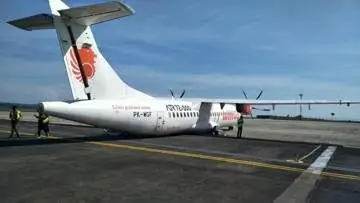
| Airline / operator | Gol / Azul |
|---|---|
| Aircraft (type, registration) | Boeing 737-8 MAX (PR-GUQ); Embraer ERJ-195 (PR-AYN) |
| Category (my classification) | Human factors / Taxi crew (flight or maintenance) |
| What happened | While taxiing at night (21:21 local), the left winglet of Gol's 737-8 PR-GUQ struck the APU/horizontal-stabilizer area of Azul ERJ-195 PR-AYN, which was parked. CENIPA found the crew followed the wrong route at the TWY G/K1 hotspot. |
| Injuries | Not stated in the source. |
| Damage | Damage to both aircraft (CENIPA) |
| Official investigation | CENIPA I-059/CENIPA/2022 Report / investigator link(s): https://sistema.cenipa.fab.mil.br/cenipa/paginas/relatorios/rf/pt/PR-AYN_PR-GUQ_MOO-30-04-2022-PUB..pdf |
| Source | Aviation Safety Network (ASN) entry: https://aviation-safety.net/wikibase/277772 |
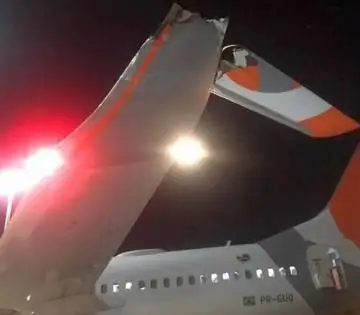
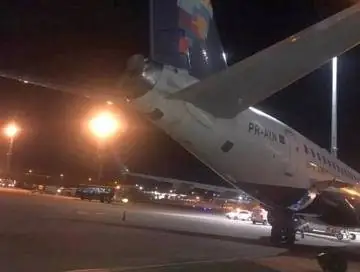
| Airline / operator | China Airlines Cargo |
|---|---|
| Aircraft (type, registration) | China Airlines Cargo Boeing 747-409F (B-18715) |
| Category (my classification) | Human factors / Taxi crew (flight or maintenance) |
| What happened | China Airlines Cargo flight CI5240 (call sign "Dynasty 5240"), a Boeing 747-400F, struck a baggage cart while taxiing on taxiway S2 entering the southeast cargo ramp area at Chicago's O'Hare Airport. The no.2 engine nacelle was damaged. At this time, it is unknown if further damage was incurred due to the impact. No injuries reported. |
| Injuries | ASN lists 0 fatalities. No injuries reported. |
| Damage | Minor |
| Official investigation | No investigation details on the ASN entry. |
| Source | Aviation Safety Network (ASN) entry: https://aviation-safety.net/wikibase/274802 Further sources listed on that page / found: https://www.goklerdeyiz.net/kargo-ucaginin-motoru-yer-aracina-carpti/ https://flightaware.com/live/flight/B18715 https://t.co/fBXWJhF54f |
| Note | Some sources give 29 Jan 2022, which is probably the UTC date; Taiwan's TTSB and FOX 32 give 28 Jan local. |
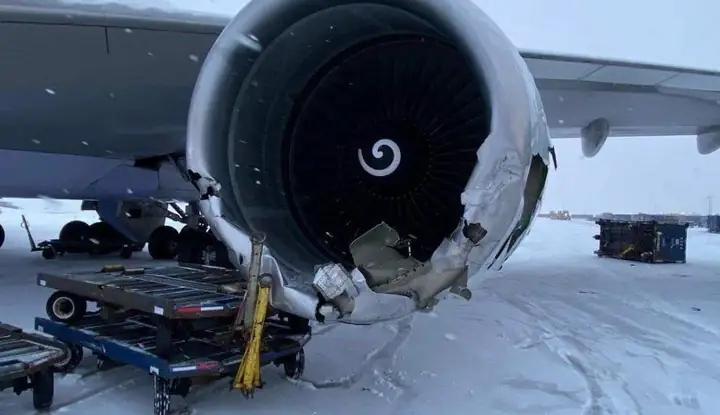
Video: https://wheeltug-collisions.netlify.app/videos/GC-0260_1.mp4
Original: https://x.com/i/status/1487395275505340421
Video and still: Supplied by WheelTug; original: X post.
Video: https://wheeltug-collisions.netlify.app/videos/GC-0260_2.mp4
Original: https://x.com/i/status/1487517491576602626
Video and still: Supplied by WheelTug; original: X post.
| Airline / operator | United Express, opb Republic Airways / THY Turkish Airlines |
|---|---|
| Aircraft (type, registration) | United Express, opb Republic Airways Embraer ERJ-170SE (N633RW); THY Turkish Airlines Airbus A330-303 (TC-JOK) |
| Category (my classification) | Human factors / Taxi crew (flight or maintenance) |
| What happened | Turkish Airlines flight TK29, an Airbus A330-303 (TC-JOK), and United Express flight 3593, an Embraer ERJ-170 (N633RW) where involved in a ground contact accident at Newark-Liberty International Airport, NJ (EWR). The flight crew of the ERJ-170 said they had stopped their airplane and set the parking brake while waiting for gate personnel to finish preparing gate 88 to receive their flight, when their airplane was struck by the Turkish Airlines Airbus A330 that was taxiing past. The Embraer airplane received substantial damage to the rudder and vertical stabilizer. The captain of Turkish Airlines flight TK29, said that after landing they were cleared to taxi to gate 63, and while taxiing on Taxiway A, there was an airplane stopped on the right-side apron. The captain said that no information had been relayed that an airplane had stopped short of the parking area, and he slowed his taxi speed, but did not realize that the stopped airplane had not fully pulled into and parked at the gate. He perceived that there was sufficient clearance, so he decided to pass. After reaching gate 63 and parking he said that he was informed of the collision. An inspection of the A330 airplane revealed paint transfer on the right winglet. Probable Cause: Turkish Airlines flightcrew' s misperception of the distance to safely pass the stopped Republic Airways airplane. |
| Injuries | ASN lists 0 fatalities. No injury statement in the ASN narrative. |
| Damage | Substantial, repaired |
| Official investigation | Investigating agency: NTSB Report number: DCA22LA053B Status: Investigation completed Duration: 6 months Final report Report / investigator link(s): https://data.ntsb.gov/carol-repgen/api/Aviation/ReportMain/GenerateNewestReport/104463/pdf |
| Source | Aviation Safety Network (ASN) entry: https://aviation-safety.net/wikibase/318882 Further sources listed on that page / found: https://data.ntsb.gov/carol-repgen/api/Aviation/ReportMain/GenerateNewestReport/104463/pdf |
| Airline / operator | Max Air / Air Peace |
|---|---|
| Aircraft (type, registration) | Max Air Boeing 737-36Q (WL) (5N-ADB); Air Peace Boeing 737-33A (5N-BUQ) |
| Category (my classification) | Human factors / Taxi crew (flight or maintenance) |
| What happened | While taxiing, a Max Air Boeing 737-36Q (WL) hit a parked Air Peace Boeing 737-33A at Benin Airport (BNI/DNBE). The left elevator of the Air Peace Boeing was damaged and the aircraft was grounded. |
| Injuries | ASN lists 0 fatalities. No injury statement in the ASN narrative. |
| Damage | Not stated |
| Official investigation | No investigation details on the ASN entry. |
| Source | Aviation Safety Network (ASN) entry: https://aviation-safety.net/wikibase/270534 Further sources listed on that page / found: https://simpleflying.com/air-peace-benin-ground-collision/ https://businessday.ng/news/article/passengers-disembark-as-max-air-plane-ram-into-air-peaces-aircraft/ https://radionigeriaibadan.gov.ng/2021/12/12/max-air-aircraft-rams-into-air-peace-plane-at-benin-airport/ https://cdn.jetphotos.com/full/6/34826_1497674570.jpg |
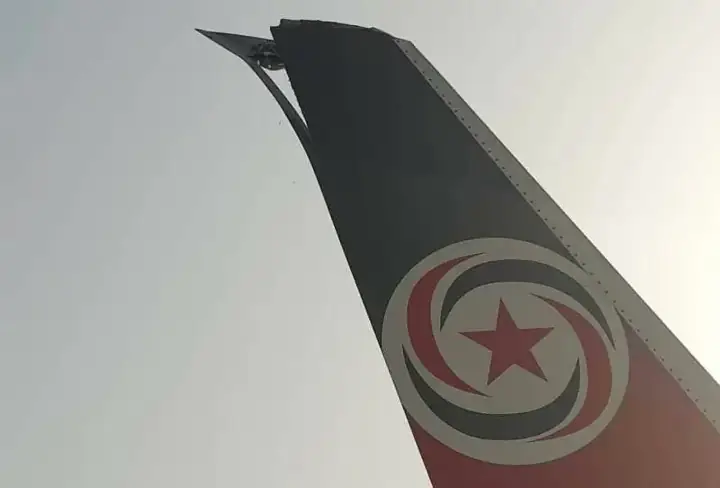
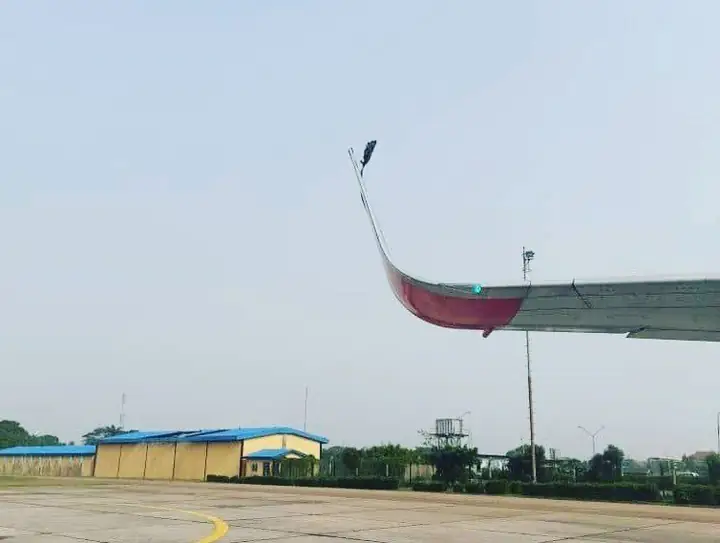
| Airline / operator | Iberia |
|---|---|
| Aircraft (type, registration) | Iberia Airbus A330-202 (EC-MKI) |
| Category (my classification) | Human factors / Taxi crew (flight or maintenance) |
| What happened | Iberia Airlines flight IB6342, an Airbus A330-202, suffered minor damage after coming in contact with a jet bridge at Madrid-Barajas Adolfo Suárez Airport, Spain. |
| Injuries | ASN lists 0 fatalities. No injury statement in the ASN narrative. |
| Damage | Not stated |
| Official investigation | No investigation details on the ASN entry. |
| Source | Aviation Safety Network (ASN) entry: https://aviation-safety.net/wikibase/270177 Further sources listed on that page / found: https://t.co/nKwMIPWeUN |
| Airline / operator | VietJet Air |
|---|---|
| Aircraft (type, registration) | VietJet Air Airbus A321-211 (WL) (VN-A544) |
| Category (my classification) | Human factors / Taxi crew (flight or maintenance) |
| What happened | Vietjet flight VJ404, an Airbus A321-211 (VN-A544), suffered a ground contact incident with a parked Vietjet Airbus A321-211 (VN- A636) at Hanoi-Noi Bai International Airport, Vietnam. Flight VJ404 was turning into parking bay 52C when the right-hand winglet struck the left-hand winglet of VN-A636, severing the winget tip of the latter. There no personal injuries. |
| Injuries | ASN lists 0 fatalities. There no personal injuries. |
| Damage | Not stated |
| Official investigation | No investigation details on the ASN entry. |
| Source | Aviation Safety Network (ASN) entry: https://aviation-safety.net/wikibase/270007 Further sources listed on that page / found: https://e.vnexpress.net/news/news/plane-wings-another-on-hanoi-airport-apron-4395550.html http://www.xaluan.com/modules.php?name=News&file=article&sid=3329923 http://www.goklerdeyiz.net/iki-ucak-yerde-carpisti-36/ |
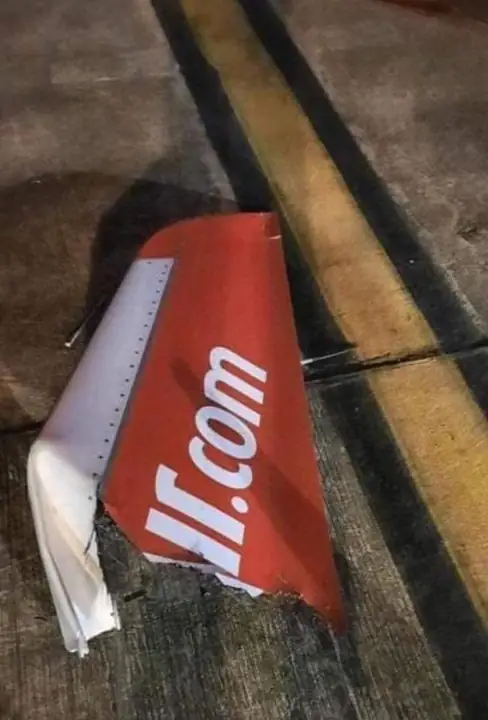
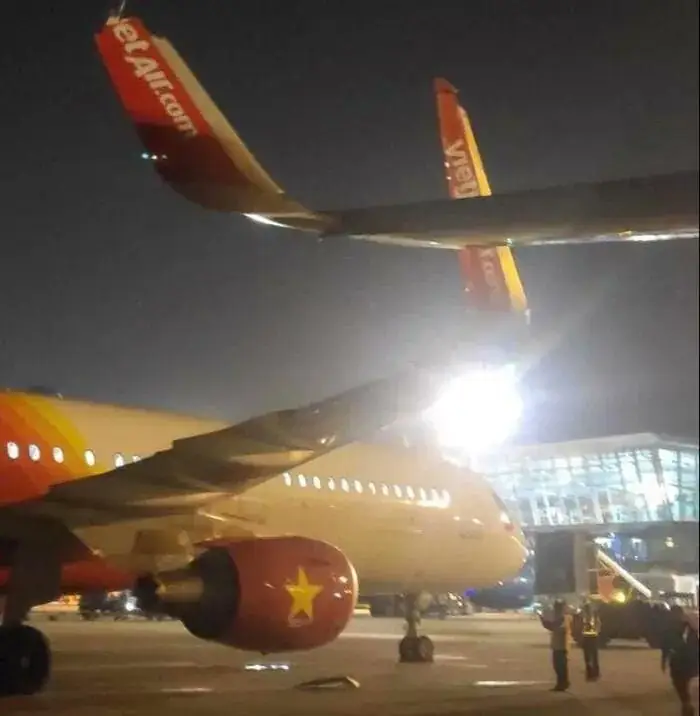
| Airline / operator | United Airlines / Singapore Airlines |
|---|---|
| Aircraft (type, registration) | United Airlines Boeing 787-9 Dreamliner (N29984); Singapore Airlines Airbus A350-941 (9V-SGC) |
| Category (my classification) | Human factors / Taxi crew (flight or maintenance) |
| What happened | Singapore Airlines flight SQ33, an Airbus A350-941, was taxiing along taxiway A when the right-hand wing struck the rudder of a United Airlines Boeing 787-9 (N29984) that had just arrived from Chicago-O'Hare Airport as flight UA1608. |
| Injuries | ASN lists 0 fatalities. No injury statement in the ASN narrative. |
| Damage | Minor |
| Official investigation | No investigation details on the ASN entry. |
| Source | Aviation Safety Network (ASN) entry: https://aviation-safety.net/wikibase/269358 |
| Airline / operator | Linhas Aéreas de Moçambique - LAM |
|---|---|
| Aircraft (type, registration) | Linhas Aéreas de Moçambique - LAM Boeing 737-7Q8 (WL) (C9- BAR) |
| Category (my classification) | Human factors / Taxi crew (flight or maintenance) |
| What happened | LAM flight TM315, a Boeing 737-7Q8 C9-BAR, contacted a parked Lockheed C-130 of the Botswana Defence Force (OM3) while maneuvering on the apron at Pemba Airport, Mozambique. |
| Injuries | ASN lists 0 fatalities. No injury statement in the ASN narrative. |
| Damage | Not stated |
| Official investigation | No investigation details on the ASN entry. |
| Source | Aviation Safety Network (ASN) entry: https://aviation-safety.net/wikibase/269249 Further sources listed on that page / found: https://www.defenceweb.co.za/aerospace/aerospace-aerospace/botswana-defence-force-c-130-damaged-by-lam-airc… https://t.co/h6ltTZZRSe |
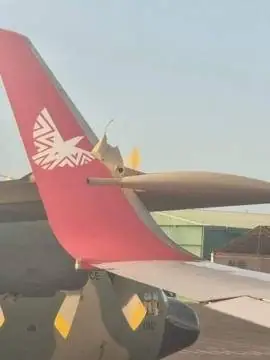
| Airline / operator | Fly Jet KZ |
|---|---|
| Aircraft (type, registration) | Fly Jet KZ Canadair CRJ-200ER (UP-CJ014) |
| Category (my classification) | Human factors / Taxi crew (flight or maintenance) |
| What happened | FlyJet KZ flight FJK1256, a CRJ-200ER, struck a car at on taxiway K near parking spot 14. |
| Injuries | ASN lists 0 fatalities. No injury statement in the ASN narrative. |
| Damage | Not stated |
| Official investigation | No investigation details on the ASN entry. |
| Source | Aviation Safety Network (ASN) entry: https://aviation-safety.net/wikibase/269105 Further sources listed on that page / found: https://www.nur.kz/incident/road-accident/1938393-samolet-stolknulsya-s-mashinoy-v-aeroportu-almaty-video/ https://kaztag.kz/ru/news/samolet-i-avtomobil-stolknulis-v-aeroportu-almaty |
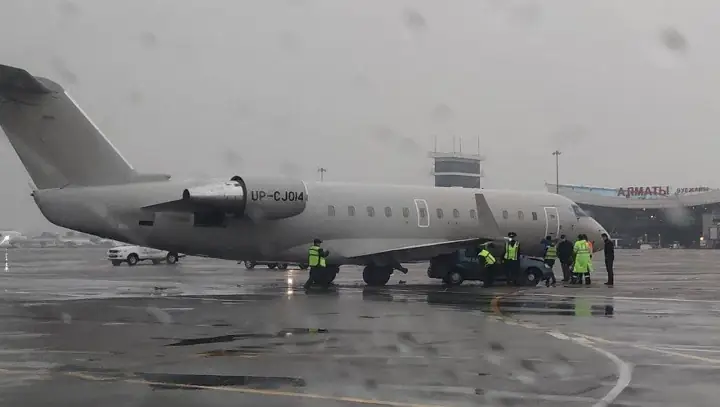
| Airline / operator | United Express, opb SkyWest Airlines / United Express, opb Republic Airways |
|---|---|
| Aircraft (type, registration) | United Express, opb SkyWest Airlines Embraer ERJ-175LR (N142SY); United Express, opb Republic Airways Embraer ERJ-175LR (N730YX); United Express, opb Republic Airways Embraer ERJ-175LR (N731YX) |
| Category (my classification) | Human factors / Taxi crew (flight or maintenance) |
| What happened | SkyWest flight 5845, an Embraer ERJ-175LR (N142SY) and Republic Airlines flight 3594, an Embraer ERJ-175LR (N730YX) were involved in a ground contact accident at Chicago-O'Hare International Airport, IL (ORD). After landing at Chicago O'Hare International Airport, flight 5845 taxied to Gate B21 but had to wait because the gate was occupied. After Gate B21 was cleared, and as the aircraft entered to park, the left winglet impacted the right elevator of Republic Airways flight 3594, which had just pushed back from gate B22. Gate B21 was equipped with a self-park (APIS) guidance system that illuminated green, and the SkyWest flight crew said they thought it indicated that Gate B21's Safety Zone was clear of obstacles. SkyWest Airlines did not use ground crew to ensure obstacle clearance. The flight crew of Republic flight 3594 stated that they had just pushed back from Gate B22. The tug had disconnected, the parking brake was set, and they had started both engines, and were awaiting taxi instructions, when their airplane was impacted by SkyWest flight 5845. Probable Cause: A ground collision by SkyWest flight 5845 that resulted in substantial damage to Republic Airlines flight 3594. |
| Injuries | ASN lists 0 fatalities. No injury statement in the ASN narrative. |
| Damage | Minor, repaired |
| Official investigation | Investigating agency: NTSB Report number: DCA22LA005A Status: Investigation completed Duration: 9 months Final report Report / investigator link(s): https://data.ntsb.gov/carol-repgen/api/Aviation/ReportMain/GenerateNewestReport/104064/pdf |
| Source | Aviation Safety Network (ASN) entry: https://aviation-safety.net/wikibase/318929 Further sources listed on that page / found: https://data.ntsb.gov/carol-repgen/api/Aviation/ReportMain/GenerateNewestReport/104064/pdf |
| Airline / operator | Gol Linhas Aéreas / Azul Linhas Aéreas Brasileiras |
|---|---|
| Aircraft (type, registration) | Gol Linhas Aéreas Boeing 737-8EH (WL) (PR-GUC); Azul Linhas Aéreas Brasileiras Embraer ERJ-195AR (PR-AXJ) |
| Category (my classification) | Human factors / Taxi crew (flight or maintenance) |
| What happened | A Gol Boeing 737-800 (PR-GUC) and an Azul Embraer E195 (PR-AXJ) were involved in a ground contact incident at Ilhéus-Jorge Amado Airport. The left-hand winglet of the Boeing 737 suffered a tear. The right hand horizontal stabilizer tip had contacted the 737's winglet but did not appear to have sustained any meaningful damage. The Boeing 737 resumed service on August 8, 2021. |
| Injuries | ASN lists 0 fatalities. No injury statement in the ASN narrative. |
| Damage | Not stated |
| Time out of service | PR-GUC: 2 days (ASN) |
| Official investigation | No investigation details on the ASN entry. |
| Source | Aviation Safety Network (ASN) entry: https://aviation-safety.net/wikibase/266895 Further sources listed on that page / found: https://www.aeroin.net/aviao-da-gol-tem-asa-danificada-apos-colidir-com-embraer-da-azul-em-ilheus/ |
| Airline / operator | Delta Air Lines |
|---|---|
| Aircraft (type, registration) | Delta Air Lines Airbus A321-211 (N376DN) |
| Category (my classification) | Human factors / Taxi crew (flight or maintenance) |
| What happened | According to the flight crew, just after they began to taxi, they observed a bus passing in front of the airplane requiring the captain to suddenly apply the brakes to avoid colliding with the bus. The captain immediately called the flight attendants (FA), who were conducting their safety demonstration, to check on their condition and the condition of the passengers. The forward FA indicated that he had been thrown backwards into the flight deck door but was alright to continue with the flight. While enroute to Denver, the forward FA informed the flight crew that he was a little sore, but he and the rest of the FAs were fine to continue their return flight to Detroit. However, after arriving in Detroit, the forward flight attendant sought medical treatment and was diagnosed with a broken rib. According to the operator, the Delta employee bus was in the process of training new drivers. There are four roadways that cross the taxi lanes between the two terminals. At the time of the accident, the only policy was to stop at the stop sign and visually confirm it was safe to cross the taxi lanes. A review of video from the bus showed that it stopped at the stop sign and then proceeded to cross the taxi lanes. The video shows that from the perspective of the bus driver, it is difficult to see the area in which the airplane was parked from the roadway and the 45-degree pushback made it difficult to observe the airplane moving towards the roadway. As a result of this event, Delta implemented a restriction on vehicle crossing the taxi lanes when there are airplanes in the vicinity of the roadway. Probable Cause: While conducting the safety briefing, the forward flight attendant was thrown backwards into the flight deck door due to the sudden stopping of the airplane by the flight crew to prevent a collision with a bus. Contributing to this accident was the bus drivers difficultly in observing the airplane moving towards the roadway. |
| Injuries | ASN lists 0 fatalities. No injury statement in the ASN narrative. |
| Damage | None |
| Official investigation | Investigating agency: NTSB Report number: DCA21LA184 Status: Investigation completed Duration: 12 months Final report Report / investigator link(s): https://data.ntsb.gov/carol-repgen/api/Aviation/ReportMain/GenerateNewestReport/103537/pdf |
| Source | Aviation Safety Network (ASN) entry: https://aviation-safety.net/wikibase/302349 Further sources listed on that page / found: https://data.ntsb.gov/carol-repgen/api/Aviation/ReportMain/GenerateNewestReport/103537/pdf |
| Airline / operator | Flydubai / Gulf Air |
|---|---|
| Aircraft (type, registration) | Flydubai Boeing 737-8KN (WL) (A6-FER); Gulf Air Airbus A321-253NX (A9C-NC) |
| Category (my classification) | Human factors / Taxi crew (flight or maintenance) |
| What happened | Flydubai flight number FZ1461, a Boeing 737-800 (A6-FER), was involved in a ground collision incident with Gulf Air flight GFA513, an Airbus A321neo (A9C-NC) at Dubai Airport. At 19:34:32, the A321 flight crew requested taxi clearance, and the Ground controller cleared by instructing them to taxi left on Lima, right on Mike and hold at Mike Charlie. The flight crew read back the taxi clearance correctly. Thereafter, the flight crew requested an alternative taxi route. The Ground controller replied and redirected them at 19:35:27. The crew read back the taxi clearance stating: "Thank you, zulu lima one mike hold at mike charlie gulf air five one three." At 19:37:40, the B737 flight crew requested taxi clearance and the Ground controller cleared by instructing "Skydubai one four six one left at mike one right on mike hold at mike charlie." The crew read back the taxi clearance correctly. At 19:38:04, the Ground controller advised the A321 flight crew stating, "Gulf air five one three behind flydubai seven three seven from the right side continue to holding point mike one three." The flight crew read back the clearance correctly. At 19:39:53, the A321 flight crew advised the Ground controller that they will be ready for departure by Mike 10 Alpha by stating: "Gulf air five one three we will be ready by mike ten alpha." The Ground controller affirmed the request. at 19:40:21, the Ground controller instructed the B737 flight crew to continue taxiing to holding point Mike 13, and the crew read back the clearance correctly. At 19:41:07, the Ground controller called the A321 flight crew advising them to monitor frequency 118.75 upon reaching holding point Mike 10 Alpha. The crew acknowledged the instruction to monitor Tower frequency and read back the frequency correctly. Subsequently, similar instructions were given to B737 flight crew to monitor the same Tower and acknowledged Tower frequency and read back the frequency correctly. At 19:44:15, the A321 flight crew established communication for the first time with the Tower controller and the controller requested confirmation if they are ready for departure by asking" Gulf Air five one three, ready[?]." The Commander replied, "No sir I think this flydubai behind us hit us here on mike ten mike thirteen alpha, request to return to the gate." Consequently, the Tower controller asked, "Confirm that the flydubai hit you.", and the crew replied, "Think so because we received a very [unreadable] hit in the back the aircraft shaking and he is passing behind us." The Tower controller contacted the B737 flight crew to inquire about the concern of the collision. The flight crew replied, "Skydubai one four six one we hit the gulf air my apologies." Causes The Air Accident Investigation Sector determines that the causes of the ground collision of the B737 wingtip and A321 tail were: (a) inadequate adherence of Ground controller to the procedures that restrict any aircraft to taxi behind another aircraft holding at taxiway Mike 10 Alpha. (b) B737 commander misjudged the distance from the A321 tail because of the fact that the A321 was holding 10 meters before the stop bar lights. Contributing Factors The Air Accident Investigation Sector determines that a contributing factor to this Incident is the instructions given by Ground controller to ‘Monitor’ frequency instead of ‘Contact’ Tower. |
| Injuries | ASN lists 0 fatalities. No injury statement in the ASN narrative. |
| Damage | Minor |
| Official investigation | Investigating agency: GCAA Report number: Status: Investigation completed Duration: 1 year and 5 months Final report Report / investigator link(s): https://www.gcaa.gov.ae/en/departments/airaccidentinvestigation/Lists/Incidents%20Investigation%20Reports/Attachments/137/AIFN00092021-%20Ground%20Collision%20Gulf%20Air-flydubai%20-%20Summary%20Report.pdf |
| Source | Aviation Safety Network (ASN) entry: https://aviation-safety.net/wikibase/309561 Further sources listed on that page / found: https://www.gcaa.gov.ae/en/departments/airaccidentinvestigation/Lists/Incidents%20Investigation%20Reports/A… |
| Airline / operator | JetSMART Argentina |
|---|---|
| Aircraft (type, registration) | JetSMART Argentina Airbus A320-232 (WL) (LV-IVO) |
| Category (my classification) | Human factors / Taxi crew (flight or maintenance) |
| What happened | The wingtip of JetSMART Argentina flight WJ3268 collided with a jet bridge, causing minor damage. |
| Injuries | ASN lists 0 fatalities. No injury statement in the ASN narrative. |
| Damage | Not stated |
| Official investigation | No investigation details on the ASN entry. |
| Source | Aviation Safety Network (ASN) entry: https://aviation-safety.net/wikibase/265495 Further sources listed on that page / found: https://t.co/firWFamNZ2 |
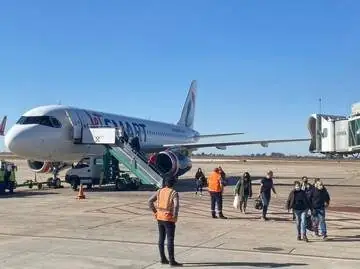
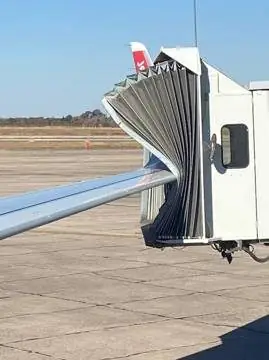
| Airline / operator | JetBlue Airways |
|---|---|
| Aircraft (type, registration) | JetBlue Airways Airbus A320-232 (N703JB) |
| Category (my classification) | Human factors / Taxi crew (flight or maintenance) Secondary: ATC / marshalling involved |
| What happened | JetBlue Airways flight B61194, an Airbus A320-232, was being marshalled into the gate when the left engine made contact with the jet bridge. |
| Injuries | ASN lists 0 fatalities. No injury statement in the ASN narrative. |
| Damage | Not stated |
| Official investigation | No investigation details on the ASN entry. |
| Source | Aviation Safety Network (ASN) entry: https://aviation-safety.net/wikibase/265191 |
| Airline / operator | Southwest Airlines / Cargolux |
|---|---|
| Aircraft (type, registration) | Southwest Airlines Boeing 737-7H4 (WL) (N218WN); Cargolux Boeing 747-8R7(F) (LX-VCE) |
| Category (my classification) | Human factors / Taxi crew (flight or maintenance) |
| What happened | Southwest Airlines flight WN2750, a Boeing 737-700 (N218WN) suffered a damaged winglet after being hit by Cargolux flight CV9796, a Boeing 747-8F (LX-VCE) at Chicago-O'Hare International Airport, IL (ORD/KORD). WN2750 had landed at 19:58 UTC and taxied to the A pad along taxiway TT to wait for its gate to open up. At 20:23 the Boeing 747-8F taxied past, on its way to the runway for departure. In the process the right-hand wingtip of the Boeing 747 struck the left-hand winglet of the Boeing 737. Both flights were cancelled. |
| Injuries | ASN lists 0 fatalities. No injury statement in the ASN narrative. |
| Damage | Not stated |
| Official investigation | No investigation details on the ASN entry. |
| Source | Aviation Safety Network (ASN) entry: https://aviation-safety.net/wikibase/264265 Further sources listed on that page / found: http://www.goklerdeyiz.net/kargo-ucagi-yerde-yolcu-ucagina-carpti/ https://flightaware.com/resources/airport/ORD/APD/AIRPORT+DIAGRAM/pdf |
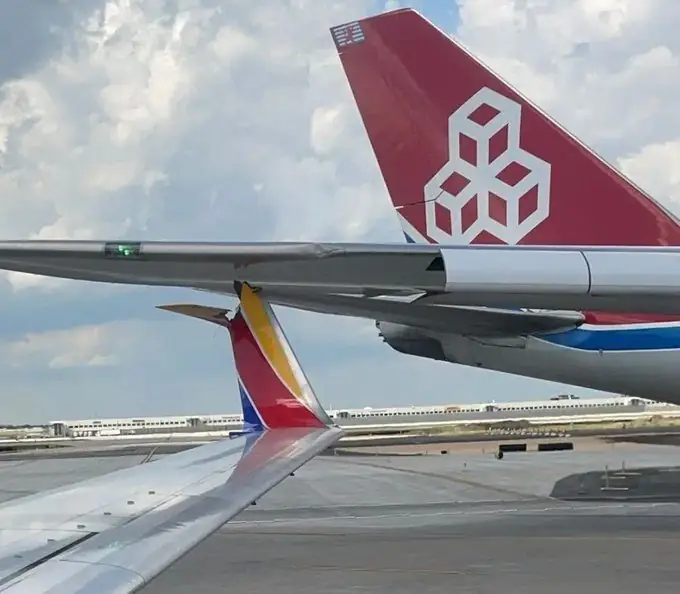
| Airline / operator | Air Astana |
|---|---|
| Aircraft (type, registration) | Air Astana Boeing 767-300ER (reg n/a); Air Astana Airbus A320- 271N (reg n/a) |
| Category (my classification) | Human factors / Taxi crew (flight or maintenance) |
| What happened | An Airbus A320 and a Boeing 767 of Air Astana collided at Almaty International Airport during taxi. |
| Injuries | ASN lists 0 fatalities. No injury statement in the ASN narrative. |
| Damage | Not stated |
| Official investigation | No investigation details on the ASN entry. |
| Source | Aviation Safety Network (ASN) entry: https://aviation-safety.net/wikibase/263530 Further sources listed on that page / found: https://tengrinews.kz/kazakhstan_news/odin-samolet-zadel-drugoy-v-aeroportu-almatyi-438983/ |
| Airline / operator | American Airlines |
|---|---|
| Aircraft (type, registration) | American Airlines Boeing 737-823 (WL) (N834NN) |
| Category (my classification) | Human factors / Taxi crew (flight or maintenance) |
| What happened | American Airlines flight 1005, a Boeing 737-800, N834NN, struck a light pole while taxing for takeoff at Dallas/Fort Worth International Airport, Texas, USA. According to the flight crew, this was the captain’s first flight of the month after being on vacation, and it was the first officer’s (FO) first day back flying since September 2020 due to furlough. The flight crew indicated that prior to pushback, they had setup the airplane for a south departure from DFW. However, after being pushed back, they completed the After Start Checklist and then noticed that the other traffic was departing to the north. After confirming this by tuning in the Automated Terminal Information System (ATIS), they updated their departure clearance before calling the ramp for taxi clearance. The captain stated that the airplane must have veered left of centerline as he and the FO’s attention was focused inside the cockpit as they were reconfiguring the instruments. The captain indicated that the left wing struck a light pole, as he was adjusting the course and heading knobs. The captain stopped the airplane, called ground control, and the airplane was subsequently towed back to the gate. Post-flight inspection revealed substantial damage to the left wing, including damage to the number 1 leading edge slat, wing skin, front spar, and track ribs. Probable cause: The captain’s decision to adjust his flight instruments while taxiing the airplane. |
| Injuries | ASN lists 0 fatalities. No injury statement in the ASN narrative. |
| Damage | Substantial, repaired |
| Official investigation | Investigating agency: NTSB Report number: DCA21LA137 Status: Investigation completed Duration: 8 months Final report Report / investigator link(s): https://data.ntsb.gov/carol-repgen/api/Aviation/ReportMain/GenerateNewestReport/103164/pdf |
| Source | Aviation Safety Network (ASN) entry: https://aviation-safety.net/wikibase/318999 Further sources listed on that page / found: https://data.ntsb.gov/carol-repgen/api/Aviation/ReportMain/GenerateNewestReport/103164/pdf |
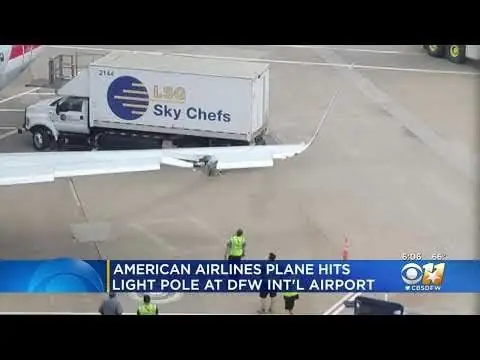
| Airline / operator | Southwest Airlines |
|---|---|
| Aircraft (type, registration) | Southwest Airlines Boeing 737-8H4 (WL) (N8686A); Southwest Airlines Boeing 737-7H4 (N289CT) |
| Category (my classification) | Human factors / Taxi crew (flight or maintenance) |
| What happened | On May 21, 2021, at about 1230 central daylight time, two Southwest B737's collided while taxiing near the gate area at Chicago Midway International Airport (MDW), Chicago, Illinois. There were no injuries to the passengers and crew onboard either airplane. One airplane was substantially damaged and the other received minor damage. According to the operator, after landing, N289CT taxied to the assigned gate B-15 and was awaiting the ground marshalling crew. The flight crew of N289CT reported that they positioned the airplane on the J-line leading to the gate parking spot and set the brake while awaiting the ground crew. The marshallers arrived and began to signal the crew into the gate. Shortly after releasing the parking brake, the flight crew reported feeling the airplane shudder. The captain looked out the left window and noticed the N8686A taxiing behind with damage to its right winglet. N289CT then proceeded to the gate and deplaned with no further incident. Post accident inspection of the airplane revealed substantial damage to both elevators. N8686A was cleared to taxi from gate B14 to runway 22L via taxiways T and Y. While taxiing NE on taxiway Y, the aircraft's right winglet struck the aft portion of N289CT's horizontal stabilizer. N8686A taxied back to the gate. Post accident inspection of the airplane revealed minor damage to the right winglet. Probable Cause: the failure of the flight crew of N8686A to provide sufficient clearance while taxiing past N289CT, which was stopped. |
| Injuries | ASN lists 0 fatalities. There were no injuries to the passengers and crew onboard either airplane. |
| Damage | Minor |
| Official investigation | Investigating agency: NTSB Report number: DCA21LA133 Status: Investigation completed Duration: 7 months Final report Report / investigator link(s): https://data.ntsb.gov/carol-repgen/api/Aviation/ReportMain/GenerateNewestReport/103134/pdf |
| Source | Aviation Safety Network (ASN) entry: https://aviation-safety.net/wikibase/262227 Further sources listed on that page / found: https://www.foxnews.com/us/southwest-damaged-airplane-wing https://flightaware.com/live/flight/N8686A https://t.co/LoYWT5XGG7 https://data.ntsb.gov/carol-repgen/api/Aviation/ReportMain/GenerateNewestReport/103134/pdf |
| Note | ASN logged this event twice (262227 and 278760, the second under O'Hare); merged here. The NTSB narrative places it at Midway. |
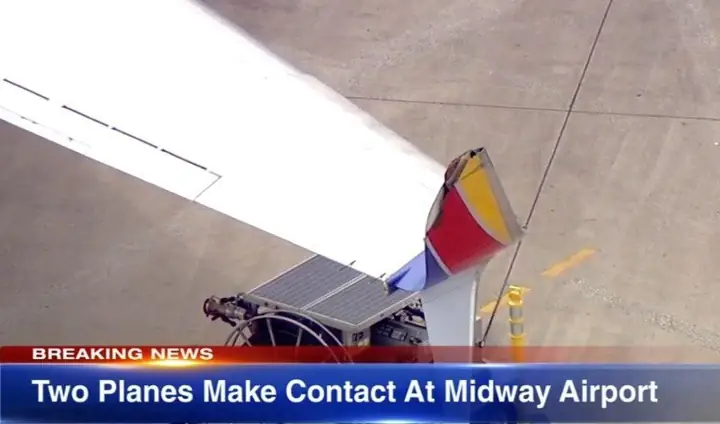
| Airline / operator | TAP Air Portugal |
|---|---|
| Aircraft (type, registration) | TAP Air Portugal Airbus A330-941 (CS-TUJ) |
| Category (my classification) | Human factors / Taxi crew (flight or maintenance) |
| What happened | During taxi at Guinea-Bissau International Airport, the airplane struck a lamppost. None of the occupants of the airplane was injured. |
| Injuries | ASN lists 0 fatalities. None of the occupants of the airplane was injured. |
| Damage | Not stated |
| Official investigation | No investigation details on the ASN entry. |
| Source | Aviation Safety Network (ASN) entry: https://aviation-safety.net/wikibase/255256 Further sources listed on that page / found: https://www.jn.pt/economia/aviao-da-tap-retido-em-bissau-devido-a-dano-na-ponta-da-asa-13642183.html https://t.co/brhREmyiPh |
| Airline / operator | Congo Airways |
|---|---|
| Aircraft (type, registration) | Congo Airways Airbus A320-216 (9S-ALU) |
| Category (my classification) | Human factors / Taxi crew (flight or maintenance) |
| What happened | Congo Airways flight 8Z111, an Airbus A320-216, struck a hangar post at Goma Airport, resulting in minor damage. |
| Injuries | ASN lists 0 fatalities. No injury statement in the ASN narrative. |
| Damage | Minor |
| Official investigation | No investigation details on the ASN entry. Report / investigator link(s): https://www.bea.aero/en/investigation-reports/notified-events/detail/incident-to-the-airbus-a320-registered-9s-alu-operated-by-congo-airways-on-14-03-2021-at-goma/ |
| Source | Aviation Safety Network (ASN) entry: https://aviation-safety.net/wikibase/249146 Further sources listed on that page / found: https://www.bea.aero/en/investigation-reports/notified-events/detail/incident-to-the-airbus-a320-registered… |
| Airline / operator | Finnair |
|---|---|
| Aircraft (type, registration) | Finnair Airbus A350-941 (OH-LWE) |
| Category (my classification) | Human factors / Taxi crew (flight or maintenance) |
| What happened | A Finnair Airbus A350 departing on a cargo flight to Tokyo slid partially off a slippery taxiway at Helsinki-Vantaa Airport, Finland. The aircraft's no.1 engine knocked over a taxiway sign, causing superficial damage to the engine intake lip. A factor in the incident was the cutting of airport winter maintenance staff by around fifty percent in late 2020 due to Covid 19 pandemic and decline in traffic, which affected ice control and led to non-compliances. Even during periods of major changes, such as those caused by the pandemic, an airport operator must ensure the safety of aircraft operations in the movement area or close portions of the movement area if necessary. Operational safety under difficult weather conditions must not be delegated exclusively to aircraft crews. The airport operator had carried out a major organizational change to counter the impact of the pandemic. The management and assessment of this change had rested almost entirely with the operator. The operator had not initiated adequate actions in order to manage the risks it had identified, and its reactions to observed non-compliances had been inadequate. Any major change in an operational environment also brings to the fore the role of oversight executed by the aviation authority, which should proactively address any issues noted in operators’ risk management. Different maintenance requirements and practices were in effect for the aprons, taxiways, and runways, and the method for reporting taxiway friction and condition was less accurate than the runway condition reporting method in use at the time of the incident. Even though aircraft speeds on taxiways and aprons are low, accidents can happen under difficult weather conditions, and the usability criteria of these portions of the movement area should therefore be reassessed. Airport maintenance had set a high threshold on limiting aircraft operations on the primary movement areas, where sufficient maintenance could have been guaranteed. There were no clear guidelines for the closure of portions of the movement area under extreme weather conditions or in other contingencies. A sophisticated safety management system shall prescribe procedures for the management of abnormal and challenging situations. Aviation stakeholders have had difficulties in recognizing the fact that loss of aircraft control in the movement area is a serious incident. This has led to failures to initiate prescribed procedures, to application of non-standard practices, and to failures to ensure adequate communication. Published procedures should help operators to recognize the real nature of incidents and provide guidance for situations where the classification of an incident is changed. Because the seriousness of the incident was not understood initially, the aircraft’s flight recorders were not secured appropriately after the event, and no instructions for securing the cockpit voice recorder were available to the crew members. Securing of the voice recorder is essential for determining the causes of an event and for implementing subsequent safety actions. |
| Injuries | ASN lists 0 fatalities. No injury statement in the ASN narrative. |
| Damage | Minor |
| Official investigation | Investigating agency: SIAF Report number: L2021-02 Status: Investigation completed Duration: 8 months Final report Report / investigator link(s): https://www.turvallisuustutkinta.fi/material/collections/20211109141216/7UgnHdTpp/L2021-02_Tutkintaselostus.pdf https://www.turvallisuustutkinta.fi/en/index/tutkintaselostukset/ilmailuonnettomuuksientutkinta/tutkintaselostuksetvuosittain/2021investigations/l2021-02lossofcontrolofairfreighterduringtaxiingathelsinki-vantaaairporton21february2021.html |
| Source | Aviation Safety Network (ASN) entry: https://aviation-safety.net/wikibase/248135 Further sources listed on that page / found: https://www.turvallisuustutkinta.fi/material/collections/20211109141216/7UgnHdTpp/L2021-02_Tutkintaselostus… http://www.lentoposti.fi/uutiset/finnairin_airbus_a350_900_t_rm_si_rullaustieopasteeseen_helsinki_vantaan_l… https://www.lentoposti.fi/uutiset/puutteellinen_liikennealueen_kunnossapito_johti_finnairin_a350_koneen_lui… https://www.turvallisuustutkinta.fi/en/index/tutkintaselostukset/ilmailuonnettomuuksientutkinta/tutkintasel… |
| Airline / operator | Air India Express |
|---|---|
| Aircraft (type, registration) | Air India Express Boeing 737-86N (WL) (VT-GHE) |
| Category (my classification) | Human factors / Taxi crew (flight or maintenance) |
| What happened | Air India Express flight IX1676, a Boeing 737-800, hit a light pole during taxi at Vijayawada Airport (VGA), India. The aircraft had landed on runway 08 at 07:11 UTC and was cleared to back track on runway 08, vacate via taxiway A and park at bay No. 04. After entering taxiway A, the Pilot Flying appeared confused and asked the Pilot Monitoring about the assigned right turn for the parking bay. At that moment the PM was also confused. The markings on the apron were faded. However, the PF had turned the aircraft to the right and the aircraft was taxing slowly. Subsequently, the right wing hit one of the flood light mast on the apron. The right-hand wing leading edge slats no 7 & 8 were damaged. Probable cause`: The probable cause of accident was due to crew not following correct taxi marking. Contributory Factor i. Aeronautical charts published by AAI were not updated. ii. Non-standard taxiway and apron marking. iii. As PM was busy in head down duty, the outside situation was not being monitored while taxing. iv. Lack of surveillance by ATC. v. No action taken by aerodrome operator on repetitive observation by regulator on aerodrome marking. |
| Injuries | ASN lists 0 fatalities. No injury statement in the ASN narrative. |
| Damage | Substantial, repaired |
| Official investigation | Investigating agency: AAIB India Report number: final report Status: Investigation completed Duration: 6 months Final report Report / investigator link(s): https://aaib.gov.in/Reports/2021/INCIDENT/Final%20Report%20VT-GHE.pdf |
| Source | Aviation Safety Network (ASN) entry: https://aviation-safety.net/wikibase/319040 Further sources listed on that page / found: https://aaib.gov.in/Reports/2021/INCIDENT/Final%20Report%20VT-GHE.pdf |
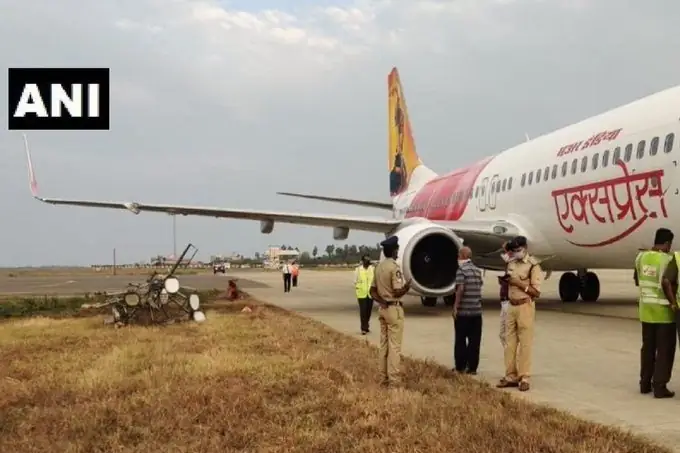
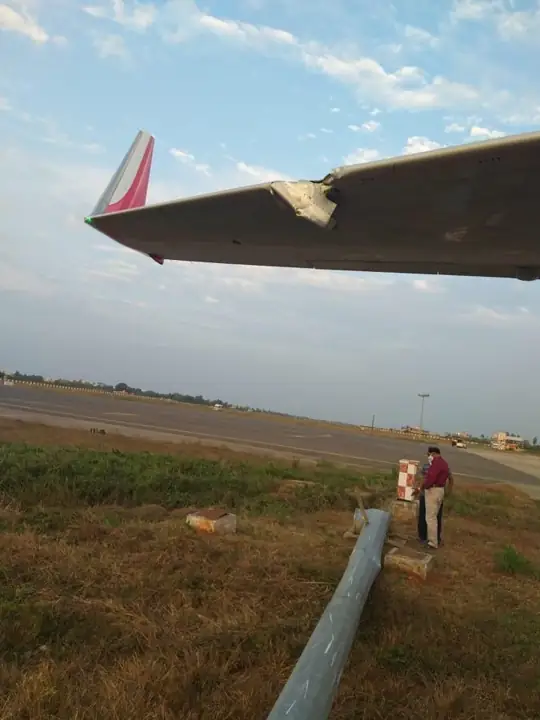
| Airline / operator | Shandong Airlines |
|---|---|
| Aircraft (type, registration) | Shandong Airlines Boeing 737-85N (WL) (B-7976) |
| Category (my classification) | Human factors / Taxi crew (flight or maintenance) |
| What happened | A Shandong Airlines Boeing 737-805N (WL), performing flight CDG4852, was hit by a de-icing truck when taxiing to the stand at Yantai Penglai International Airport (YNT/ZSYT). This resulted in substantial damage to a wing of the airplane. |
| Injuries | ASN lists 0 fatalities. No injury statement in the ASN narrative. |
| Damage | Minor |
| Official investigation | No investigation details on the ASN entry. |
| Source | Aviation Safety Network (ASN) entry: https://aviation-safety.net/wikibase/246612 Further sources listed on that page / found: http://news.shm.com.cn/2021-01/08/content_5187426.htm http://china.qianlong.com/2021/0109/5257507.shtml https://cdn.jetphotos.com/full/6/47660_1513985684.jpg |
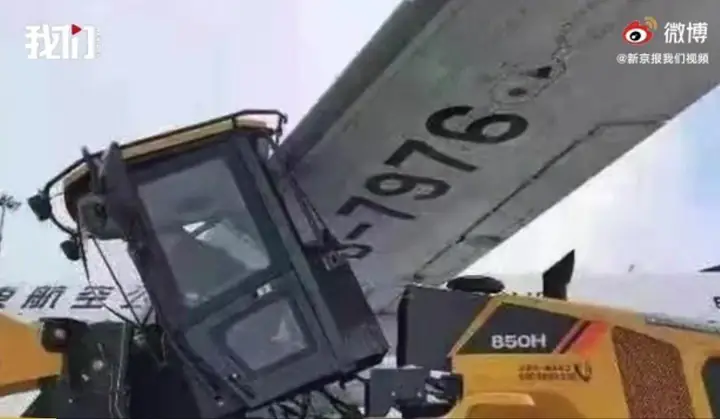
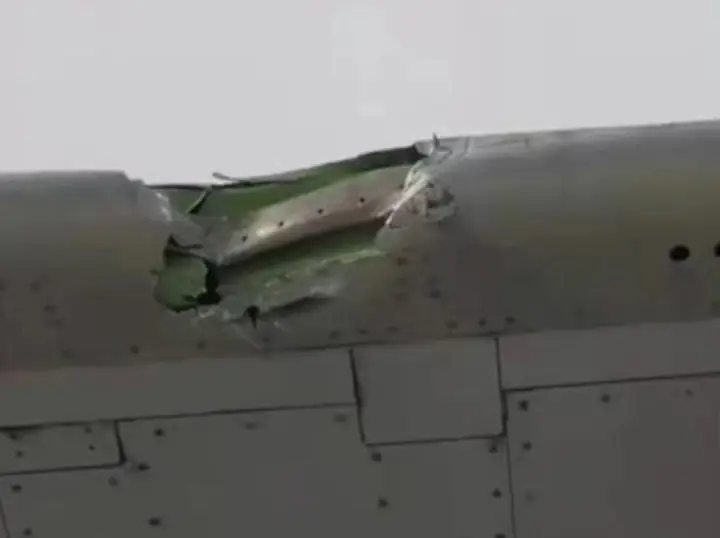
| Airline / operator | Western Global Airlines |
|---|---|
| Aircraft (type, registration) | Western Global Airlines Boeing 747-446 (BCF) (N356KD) |
| Category (my classification) | Human factors / Taxi crew (flight or maintenance) |
| What happened | The right wingtip hit a light post while taxiing at Columbia Airport, South Carolina. |
| Injuries | ASN lists 0 fatalities. No injury statement in the ASN narrative. |
| Damage | Minor |
| Official investigation | No investigation details on the ASN entry. |
| Source | Aviation Safety Network (ASN) entry: https://aviation-safety.net/wikibase/245877 Further sources listed on that page / found: https://airwaysmag.com/airlines/western-global-boeing-747-loses-wingtip/?fbclid=IwAR3DzadtAAClnLkL3jdImlXmW… |
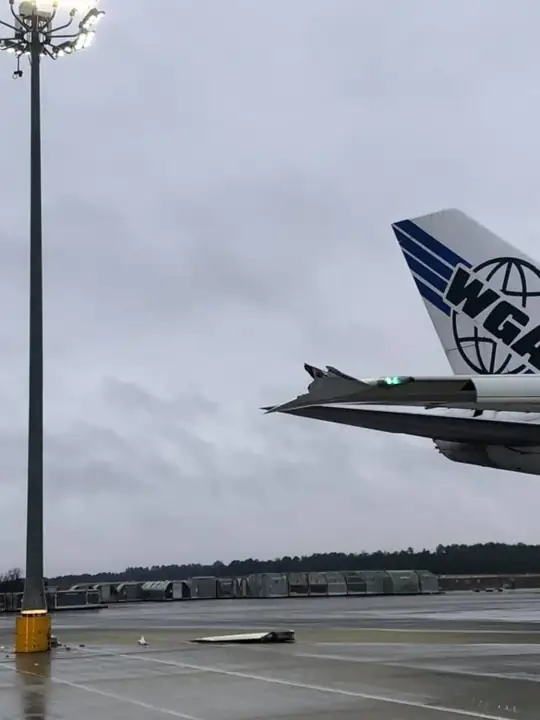
| Airline / operator | Spirit Airlines |
|---|---|
| Aircraft (type, registration) | Spirit Airlines Airbus A321-231 (WL) (N684NK) |
| Category (my classification) | Human factors / Taxi crew (flight or maintenance) |
| What happened | Spirit Airlines flight NK972 struck a jetbridge while taxiing to the gate at Fort Lauderdale International Airport, Florida. The engine nacelle was damaged. |
| Injuries | ASN lists 0 fatalities. No injury statement in the ASN narrative. |
| Damage | Minor |
| Official investigation | No investigation details on the ASN entry. |
| Source | Aviation Safety Network (ASN) entry: https://aviation-safety.net/wikibase/244277 |
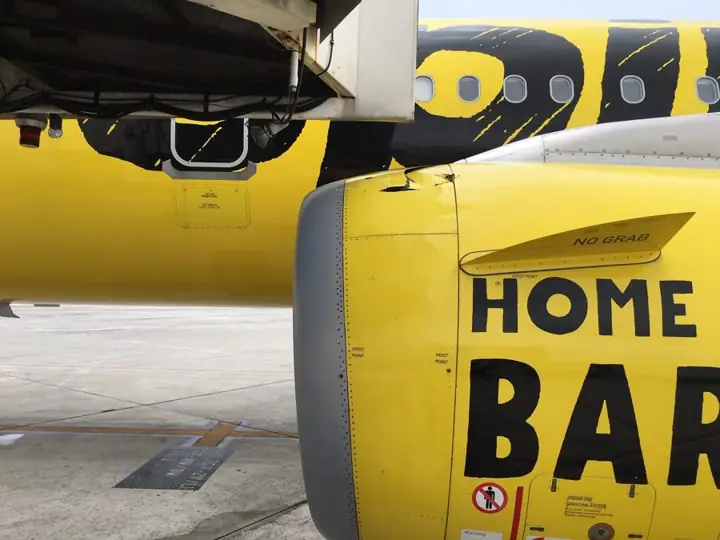
| Airline / operator | EasyFly |
|---|---|
| Aircraft (type, registration) | EasyFly ATR 42-600 (HK-5310) |
| Category (my classification) | Human factors / Taxi crew (flight or maintenance) Secondary: ATC / marshalling involved |
| What happened | EasyFLY flight VE9069, an ATR 42-600, struck an air bridge while taxiing to the parking position at Bucaramanga-Palo Negro Airport, Colombia. After landing, the aircraft exited the runway via taxiway Bravo, entered the ramp via taxiway Charlie 2, and proceeded toward position 5 as instructed by the Control Tower. During taxiing, the crew feathered the left engine propeller, following the company’s operational procedures. As the aircraft approached the assigned position, the pilot began braking per the instructions of the marshaller, but the brakes were not effective. The pilot instructed the copilot to brake, but these also did not respond effectively. The aircraft was very close to the boarding bridge structure at position No. 5, and without braking ability, the left wing struck the structure, stopping the aircraft. The crew shut down the engines and completed the procedures to secure the aircraft. The occupants exited the aircraft normally and without injury. The aircraft sustained significant damage. Additionally, boarding bridge No. 5 was damaged in its structure, motor, and movement system. No ground personnel were injured. The investigation determined that the Serious Incident was caused by the following probable cause: - Effective hydraulic pressure loss in the aircraft's braking system as it approached the parking position, a failure originating from abnormal operation of the ACW GEN, recorded in the GCU SN 1693, a unit responsible for regulating DC and AC voltage spikes and activating the hydraulic system for braking. The following contributing factors were also identified: - Inadequate practices by personnel responsible for aircraft maintenance, who did not provide adequate attention or follow-up to prior brake system failures reported by the crew. - Absence of alerts and/or procedures in the operator’s and aircraft manufacturer’s manuals to prevent the recurrence of brake system failures during taxiing, especially in confined taxiing areas. - Insufficient control and verification by the aircraft manufacturer in response to repeated reports by operators of ATR 42-500 aircraft of failures in the brake system’s electrical system. |
| Injuries | ASN lists 0 fatalities. The occupants exited the aircraft normally and without injury.; No ground personnel were injured. |
| Damage | Minor, repaired |
| Official investigation | Investigating agency: Aerocivil Report number: COL-20-34-GIA Status: Investigation completed Duration: Final report Report / investigator link(s): https://www.aerocivil.gov.co/info/aeronautica_civil/media/1740586766_COL-20-34-GIA |
| Source | Aviation Safety Network (ASN) entry: https://aviation-safety.net/wikibase/243888 Further sources listed on that page / found: https://www.aerocivil.gov.co/info/aeronautica_civil/media/1740586766_COL-20-34-GIA https://t.co/iUVfEoRZOm |
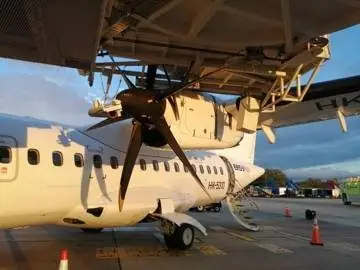
| Airline / operator | Aeroflot |
|---|---|
| Aircraft (type, registration) | Aeroflot Boeing 737-8LJ (WL) (VP-BCD) |
| Category (my classification) | Human factors / Taxi crew (flight or maintenance) |
| What happened | Aeroflot flight SU1501, a Boeing 737-800, suffered minor damage to the left-hand winglet after the aircraft contacted mobile air stairs while arriving at the stand after landing at Moscow's Sheremetyevo Airport. |
| Injuries | ASN lists 0 fatalities. No injury statement in the ASN narrative. |
| Damage | Not stated |
| Official investigation | No investigation details on the ASN entry. |
| Source | Aviation Safety Network (ASN) entry: https://aviation-safety.net/wikibase/243332 Further sources listed on that page / found: https://www.interfax.ru/moscow/728469 https://aviaforum.ru/threads/melkie-proisshestvija.17797/page-744 |
| Airline / operator | THY Turkish Airlines / Middle East Airlines - MEA |
|---|---|
| Aircraft (type, registration) | THY Turkish Airlines Boeing 777-3F2ER (TC-LJC); Middle East Airlines - MEA Airbus A330-243 (OD-MEA) |
| Category (my classification) | Human factors / Taxi crew (flight or maintenance) |
| What happened | A Middle East Airlines Airbus A330-243 (OD-MEA) struck the APU of a Turkish Airlines Boeing 777-300ER (TC-LJC) at Lagos Murtala Mohammed International Airport in Nigeria. The Boeing 777 had arrived at Lagos at 14:22 UTC as flight TK6108 from Istanbul, Turkey. The A330 landed at 14:59 as flight ME571 from Beirut. The B777 was parked at gate E55 as the A330 was taxiing past on taxiway F3. The left-hand winglet cut through the underside of the APU section of the B777. Causal factor The action of the Middle East Airline crew in deviating from the yellow marking of the lead out taxi lane of ITZ Apron in an attempt to avoid collision with the stationary TC-LJC at bay E55. Contributory factor 1. Turkish airline TC-LJC was parked short of the B777 designated stop line marking point on the apron by about 13.5m. 2. Inadequate safety oversight on NAHCO apron operations by FAAN |
| Injuries | ASN lists 0 fatalities. No injury statement in the ASN narrative. |
| Damage | Minor |
| Official investigation | Investigating agency: AIB Nigeria Report number: Status: Investigation completed Duration: Final report |
| Source | Aviation Safety Network (ASN) entry: https://aviation-safety.net/wikibase/238817 Further sources listed on that page / found: http://www.goklerdeyiz.net/thy-ucagina-ucak-carpti/ https://t.co/hSsVtLLzhr |
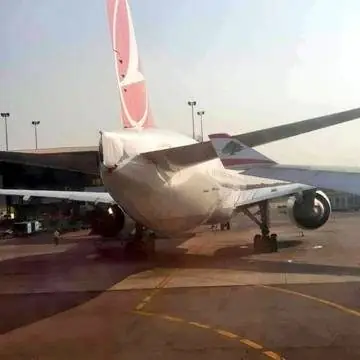
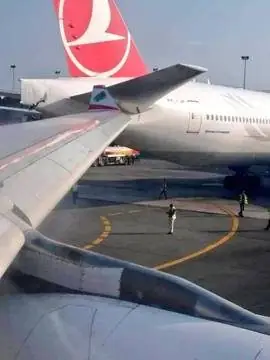
| Airline / operator | Loganair / Nordic Aviation Capital |
|---|---|
| Aircraft (type, registration) | Loganair Embraer ERJ-145EP (G-SAJS); Nordic Aviation Capital de Havilland Canada DHC-8-402Q Dash 8 (G-JECK) |
| Category (my classification) | Human factors / Taxi crew (flight or maintenance) |
| What happened | DHC-8-402Q G-JECK had been stored at Aberdeen Airport (Aberdeen) since mid-March 2020, following the previous operator (Flybe) ceasing trading. On 16 June 2020, the aircraft was to be flown empty to Weeze Airport, Germany where it was to be placed back into storage. Prior to boarding the aircraft, the pilots had checked that wheel chocks were fitted to the mainwheels and nosewheels. In the cockpit, the parking brake lever was confirmed as being set to the park position and whilst the commander reviewed the aircraft technical log, the co-pilot started the APU. The pilots checked the cockpit multi- function display (MFD) and noted that the fluid quantities of the hydraulic systems were adequate. Neither pilot noticed what the park brake hydraulic system pressure was indicating on the MFD, but this was not required to be checked until the end of the aircraft power-on checks and prior to starting the first engine. The representative of the aircraft’s owner and the dispatcher then proceeded to remove the chocks from all wheels. The pilots, onboard the aircraft, had not seen the chocks being removed. About 15 minutes after the chocks had been removed, the commander exited the aircraft to start his walkaround inspection. This included visual checks of the nosewheel tyres and the park brake accumulator pressure gauge, which indicated about 500 psi. Whilst the commander spoke with the engineers, the co-pilot then carried out a walkaround inspection. Neither pilot had authorised the removal of any wheel chocks, and neither noticed that all the wheel chocks had been removed during the walkaround. As the pilots completed the load sheet, the dispatcher boarded the aircraft via the forward left cabin door and stood near the cockpit entrance. The owner representative then noticed that the aircraft was starting to move forward and shouted to the dispatcher who alerted the pilots. Both pilots applied the toe brakes and the commander moved the park brake lever off and back to park twice, but the aircraft continued to roll forward. The commander recalled that, as the aircraft had started to move, he had noticed that the park brake hydraulic system pressure on the MFD was 0 psi. The commander also tried to steer using the tiller, but the aircraft did not respond. Having seen the aircraft start to move, the three engineers left their vehicle and ran to the adjacent right landing gear, where they tried to stop the aircraft by pushing and pulling against its main strut. As the representative ran to the vehicle to get some chocks, the dispatcher jumped from the cabin door and moved to the left gear where he pushed against its strut. However, the aircraft continued to gather speed as it crossed Taxiway D whilst heading towards the parked and empty aircraft, Embraer ERJ-145EP G-SAJS. The dispatcher then ran to the front of the aircraft, where he was joined by one of the engineers, who tried to slow the aircraft by pushing against the aircraft nose. A few second later, the engineers and dispatcher ran clear of G-JECK as it approached G-SAJS. At a ground speed of about 5 kt, G-JECK struck the underside of G-SAJS's No 2 engine, causing its right landing gear to be lifted clear of the ground. G-JECK came to a stop with the No 2 engine of G-SAJS resting on top of its forward fuselage. There were no injuries. =AAIB Conclusion: = G-JECK rolled across Taxiway D from its parking position and struck G-SAJS because the nosewheel chocks had been inadvertently removed, and the hydraulic pressure in the park brake accumulator had depleted over several days to the point where it was unable to prevent the aircraft from moving on the 1° slope. |
| Injuries | ASN lists 0 fatalities. There were no injuries. |
| Damage | Minor |
| Official investigation | Investigating agency: AAIB Report number: AAIB-26743 Status: Investigation completed Duration: Final report Report / investigator link(s): https://assets.publishing.service.gov.uk/media/5f5a02b68fa8f5106910056b/DHC-8-402_G-JECK_and_EMB-145EP_G-SAJS_10-20.pdf |
| Source | Aviation Safety Network (ASN) entry: https://aviation-safety.net/wikibase/237056 Further sources listed on that page / found: https://assets.publishing.service.gov.uk/media/5f5a02b68fa8f5106910056b/DHC-8-402_G-JECK_and_EMB-145EP_G-SA… https://www.pressandjournal.co.uk/fp/news/aberdeen/2265992/planes-collide-on-the-tarmac-of-aberdeen-interna… http://aerossurance.com/safety-management/runaway-aberdeen-dash8/ https://t.co/WqEqNj4fFc https://t.co/NxqZklxaWg |
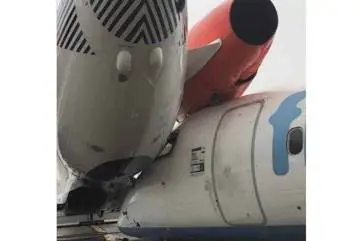
| Airline / operator | Ural Airlines / S7 Airlines |
|---|---|
| Aircraft (type, registration) | Ural Airlines Airbus A320-232 (VP-BDL); S7 Airlines Airbus A320- 271N (VP-BWC) |
| Category (my classification) | Human factors / Taxi crew (flight or maintenance) |
| What happened | S7 Airlines flight S76378, an Airbus A320neo (VP-BWC), struck an Ural Airlines Airbus A320-232 (VP-BDL) while taxiing for takeoff at Saint Petersburg-Pulkovo Airport, Russia. The A320neo was following main taxiway A to the beginning of runway 10R. As is passed taxiway A4, the left-hand winglet struck the APU of the Ural Airlines A320 which was standing on taxiway A4. The APU separated and fell to the ground. The winglet subsequently sliced into the right-hand elevator, which was when the A320neo stopped. |
| Injuries | ASN lists 0 fatalities. No injury statement in the ASN narrative. |
| Damage | Substantial |
| Official investigation | No investigation details on the ASN entry. |
| Source | Aviation Safety Network (ASN) entry: https://aviation-safety.net/wikibase/319164 Further sources listed on that page / found: https://t.me/aviaincident/4671 |
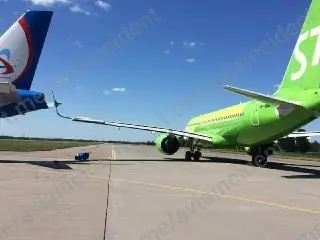
| Aircraft (type, registration) | ATR 42-300 (reg n/a) |
|---|---|
| Category (my classification) | Human factors / Taxi crew (flight or maintenance) |
| What happened | Whilst taxiing to park on the apron, the aircraft's right wingtip contacted a frangible flood light pole situated on the perimeter of the apron. The light pole gave way as designed. Initial contact was with the aircraft's right navigation light's perspex cover which cracked and became dislodged. Upon further inspection, a small dent was also identified on the leading edge of the right aileron control horn. |
| Injuries | ASN lists 0 fatalities. No injury statement in the ASN narrative. |
| Damage | Not stated |
| Official investigation | No investigation details on the ASN entry. Report / investigator link(s): https://www.atsb.gov.au/publications/occurrence-briefs/2020/aviation/ab-2020-013/ |
| Source | Aviation Safety Network (ASN) entry: https://aviation-safety.net/wikibase/236128 Further sources listed on that page / found: https://www.atsb.gov.au/publications/occurrence-briefs/2020/aviation/ab-2020-013/ |
| Airline / operator | Thai Airways International |
|---|---|
| Aircraft (type, registration) | Thai Airways International Airbus A330-343 (HS-TEU) |
| Category (my classification) | Human factors / Taxi crew (flight or maintenance) |
| What happened | A Thai Airways flight 575, an Airbus A330-343 (HS-TEU), struck a parked Gulfstream G-IVSP business jet (M-YWAY) at Vientiane- Wattay Airport in Laos. |
| Injuries | ASN lists 0 fatalities. No injury statement in the ASN narrative. |
| Damage | Substantial, repaired |
| Official investigation | No investigation details on the ASN entry. |
| Source | Aviation Safety Network (ASN) entry: https://aviation-safety.net/wikibase/319204 Further sources listed on that page / found: https://metro.co.uk/2020/03/10/private-jets-tail-snaps-off-embarrassing-runway-crash-12375013/?ITO=squid |
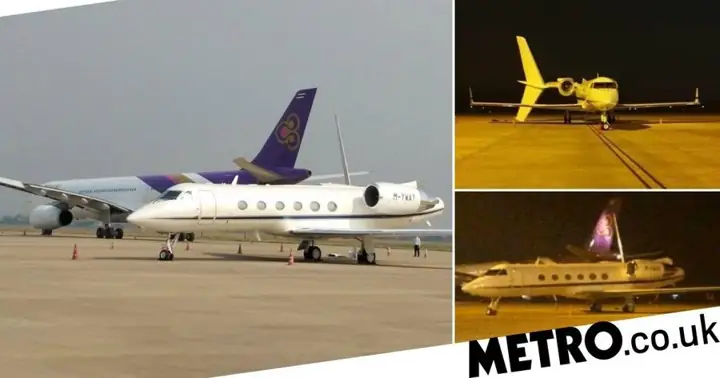
| Airline / operator | WestJet |
|---|---|
| Aircraft (type, registration) | WestJet Boeing 737-6CT (C-GWJU); WestJet Boeing 737-76N (WL) (C-FZWS) |
| Category (my classification) | Human factors / Taxi crew (flight or maintenance) |
| What happened | WestJet flight WJA141, a Boeing 737-600 (C-GWJU) and WestJet flight WJA717, a Boeing 737-700 (C-FZWS) were involved in a ground contact accident at Vancouver International Airport, BC (YVR/CYVR). WJA141 stopped short of the lead-in line for gate B15, with engines running, awaiting ground crew to marshal the aircraft to the gate. Meanwhile, WJA717 was taxing eastbound on the apron towards the lead-in line for gate B13. The left winglet of C-FZWS contacted the right-hand horizontal stabilizer of C-GWJU. There were no injuries. Both aircraft sustained substantial damage. |
| Injuries | ASN lists 0 fatalities. There were no injuries. |
| Damage | Substantial, repaired |
| Official investigation | No investigation details on the ASN entry. |
| Source | Aviation Safety Network (ASN) entry: https://aviation-safety.net/wikibase/315112 |
| Airline / operator | British Airways |
|---|---|
| Aircraft (type, registration) | British Airways Boeing 747-436 (G-CIVU) |
| Category (my classification) | Human factors / Taxi crew (flight or maintenance) |
| What happened | A Boeing 747 collided with a fuel transfer vehicle (FTV) as it was approaching its final parking position on stand at Heathrow. The FTV had remained on stand after refuelling the previous aircraft. Neither the flight crew nor the ground staff responsible for the arrival saw the FTV before the collision. G-CIVU landed on Runway 27R at London Heathrow at 1537 hrs and taxied towards Stand 331 on Terminal 3. The stand was occupied by an Airbus 320, operated by the same company, which was running behind schedule. The Airbus commenced push back at 1539 hrs, pushing back far enough to allow the 747 onto the stand. It was dark and raining heavily. The commander of the Boeing 747 saw the stand guidance system illuminate with the correct aircraft type and started to taxi onto stand. He reported that his initial focus was to the right of the aircraft to ensure its wingtip was clear of the Airbus. He did not see any vehicles on the stand although he recalled it was difficult to see the white stand markings due to the standing water, heavy rain and the glare of the terminal lights. The aircraft continued onto the stand, parked in the normal position and shutdown. After the passengers had disembarked the flight crew were informed that the No 1 engine had collided with a fuel transfer vehicle (FTV) which had been parked on the stand. The FTV driver had been in the cab but had not been injured. The stand guidance system had been switched on by one of the operator’s ground staff who was responsible for supervising the arrival. The supervisor was required to check that the stand was clear of obstructions prior to switching on the guidance system. On this occasion two supervisors had been assigned to the arrival. On arrival at the stand one of the supervisors walked out along the stand centreline as the Airbus pushed back, to check for FOD (Foreign Object Damage) . He had his hood up due to the rain. As he reached the middle of the stand he turned to the left (away from the FTV) and proceeded to the jetty in preparation from the arrival of the 747. He reported that his intention was to check for FOD; he did not confirm that the stand was clear and did not see the FTV. On arrival the other supervisor went to the stand guidance control panel. He saw his colleague walking the centreline and assumed he had checked the stand was clear so switched on the guidance. He then waited by the stand guidance emergency stop button. However, due to the position of the jetty, ground equipment and parked vehicles it was not possible to see the right side of the stand (where the FTV was parked) from this position. He did not see the FTV and was not aware of the collision, so did not activate the emergency stop button. The driver of the FTV had been assigned to refuel the Airbus. He reported that having refuelled the Airbus he moved his vehicle forward a few meters but remained on the stand to complete his paperwork and to await confirmation that fuelling was complete from the flight crew. He reported that his tablet computer had frozen and he was trying to fix it when the collision occurred. The vehicle was positioned facing the terminal and the driver was wearing ear defenders so was not aware of the 747 approaching the stand. When the 747’s engine collided with the back of the FTV, the vehicle was pushed forward. The driver immediately drove forward a few meters to move away from the aircraft then stopped to report the accident". =Damage to airframe = Damage to the No 1 engine cowl and to the rear of a fuel transfer vehicle =Safety actions taken by the operator and airport authority = The operator is taking the following safety action to resolve these issues: ● The operator will conduct an independent review of the available standard operating procedures and associated documentation to ensure they are; ○ clear and workable, ○ the accountabilities and responsibilities are detailed and, ○ there is a single source of information. The operator will take the following safety action: ● The operator will establish a procedure to ensure all visually restricted stands have a ‘mid-man’, in the line of sight, to act as an additional pair of eyes for the colleague manning the emergency stop button at the head of the stand. The airport authority is taking the following safety action: ● The airport authority has changed the parking arrangement on Stand 331 to prevent vehicles obscuring the view from the head of stand. The airport authority is undertaking a review of the emergency stop button locations on all stands |
| Injuries | ASN lists 0 fatalities. The FTV driver had been in the cab but had not been injured. |
| Damage | Minor |
| Official investigation | Investigating agency: AAIB Report number: EW/G2019/12/16 Status: Investigation completed Duration: Final report Report / investigator link(s): https://assets.publishing.service.gov.uk/media/5f3bf6ee8fa8f5173e55c85c/Boeing_747-436_G-CIVU_05-20.pdf https://assets.publishing.service.gov.uk/media/60d2e72ed3bf7f4bd4662d67/Annual_Safety_Review_2020.pdf |
| Source | Aviation Safety Network (ASN) entry: https://aviation-safety.net/wikibase/264639 Further sources listed on that page / found: https://assets.publishing.service.gov.uk/media/5f3bf6ee8fa8f5173e55c85c/Boeing_747-436_G-CIVU_05-20.pdf https://assets.publishing.service.gov.uk/media/60d2e72ed3bf7f4bd4662d67/Annual_Safety_Review_2020.pdf |
| Airline / operator | United Airlines |
|---|---|
| Aircraft (type, registration) | United Airlines Boeing 737-924ER (WL) (N68802) |
| Category (my classification) | Human factors / Taxi crew (flight or maintenance) Secondary: ATC / marshalling involved |
| What happened | On December 19, 2019, at approximately 1020 central standard time, United Airlines flight 2390, a B737-900ER, N68802, made an abrupt stop on the taxiway to avoid ground traffic at Chicago O'Hare International Airport (KORD), Chicago, Illinois. One flight attendant suffered a serious injury, and there were no injuries to the remaining 5 crewmembers and 179 passengers onboard. There was no damage to the airplane. The flight was operating under 14 Code of Federal Regulations Part 121 as a regularly scheduled passenger flight from KORD to Portland International Airport, Portland, Oregon. According to the operator, the airplane was pushed back from the gate and was given instructions from Outbound Ground Control (OGC) to taxi to runway 28R by joining taxiway A. As UAL 2390 was proceeding to taxiway A, an Embraer 175 had landed and was in communication with the Inbound Ground Control (IGC), and was also instructed to proceed to taxiway A. The UAL 2390 flight crew stated they were given no instructions to follow or give way to other airplane. As UAL 2390 approached taxiway A, the flight crew noticed the E175 approaching from behind and to the left and stopped abruptly to avoid it. During the abrupt stop, a flight attendant preparing the cabin for departure fell and sustained a serious injury. UAL 2390 returned to the gate and medical personnel met the airplane to treat the injured flight attendant. Probable Cause: an abrupt stop during taxi to avoid a collision with another airplane, causing a flight attendant to fall. |
| Injuries | ASN lists 0 fatalities. One flight attendant suffered a serious injury, and there were no injuries to the remaining 5 crewmembers and 179 passengers onboard.; During the abrupt stop, a flight attendant preparing the cabin for departure fell and sustained a serious injury. |
| Damage | None |
| Official investigation | Investigating agency: NTSB Report number: DCA20CA046 Status: Investigation completed Duration: 2 years and 4 months Final report Report / investigator link(s): https://data.ntsb.gov/carol-repgen/api/Aviation/ReportMain/GenerateNewestReport/100734/pdf |
| Source | Aviation Safety Network (ASN) entry: https://aviation-safety.net/wikibase/302369 Further sources listed on that page / found: https://data.ntsb.gov/carol-repgen/api/Aviation/ReportMain/GenerateNewestReport/100734/pdf |
| Airline / operator | KLM Royal Dutch Airlines |
|---|---|
| Aircraft (type, registration) | KLM Royal Dutch Airlines Boeing 747-406M (PH-BFH) |
| Category (my classification) | Human factors / Taxi crew (flight or maintenance) |
| What happened | A Boeing 747-406M of KLM Royal Dutch Airlines, performing flight KL691, hit a pick-up truck with engine #1 when taxiing to parking position of gate C31 at Toronto-Pierson international Airport (YYZ/CYYZ), Ontario. The return flight was cancelled due to minor damage of the engine. |
| Injuries | ASN lists 0 fatalities. No injury statement in the ASN narrative. |
| Damage | Not stated |
| Official investigation | No investigation details on the ASN entry. |
| Source | Aviation Safety Network (ASN) entry: https://aviation-safety.net/wikibase/231194 Further sources listed on that page / found: https://www.luchtvaartnieuws.nl/node/157198 https://t.co/TS9ceLrj2L |
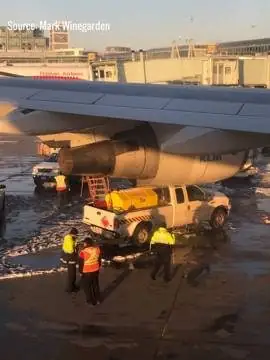
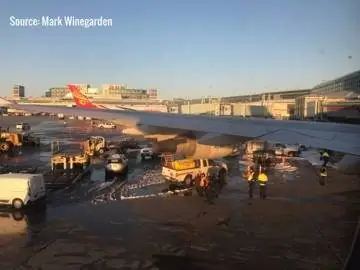
| Airline / operator | Turkish Cargo / Ethiopian Airlines |
|---|---|
| Aircraft (type, registration) | Turkish Cargo Airbus A330-243F (TC-JOV); Ethiopian Airlines Airbus A350-941 (ET-AWO) |
| Category (my classification) | Human factors / Taxi crew (flight or maintenance) |
| What happened | Turkish Cargo flight TK6512, an Airbus A330-200F (TC-JOV) collided with a parked Ethiopian Airlines A350-900 (ET-AWO, flight ET841) while taxiing at Kinshasa-N'Djili Airport, DR Congo. The right-hand winglet of the A330 contacted the rear of the right-hand elevator of the A350. |
| Injuries | ASN lists 0 fatalities. No injury statement in the ASN narrative. |
| Damage | Minor |
| Official investigation | Investigating agency: BPEA Report number: Status: Investigation completed Duration: 11 months Final report |
| Source | Aviation Safety Network (ASN) entry: https://aviation-safety.net/wikibase/230945 Further sources listed on that page / found: http://www.goklerdeyiz.net/thy-ucagina-ethiopian-ucagi-carpti/ https://t.co/mIC2anT4Fl |
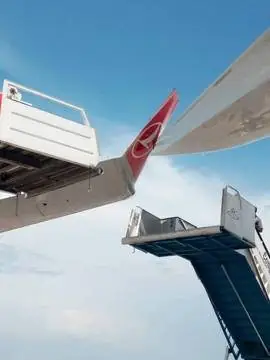
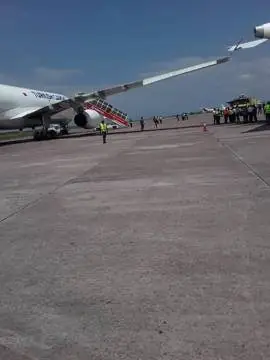
| Airline / operator | Air Namibia / Korean Air |
|---|---|
| Aircraft (type, registration) | Air Namibia Airbus A330-243 (V5-ANO); Korean Air Boeing 777- 3B5ER (HL7204) |
| Category (my classification) | Human factors / Taxi crew (flight or maintenance) |
| What happened | Air Namibia flight 283, an Airbus A330-243 (V5-ANO), struck Korean Air flight 905, a Boeing 777-3B5ER (HL7204) on a taxiway at Frankfurt Airport, Germany. Flight KE905 had landed on runway 25L at 17:37 hours local time. It then followed the parallel taxiway M and held short of runway 25C on taxiway M8, as instructed by the Tower controller. Flight SW283 landed two minutes later and followed the same taxiway. It attempted to pass the Boeing 777 but the A330's left-hand wing tip impacted the right hand horizontal stabilizer of the B777. The Boeing 777 was repaired and resumed service on 23 November 2019. The A330 resumed service 28 hours after the accident. The BFU summary report did not include a Probable Cause statement. |
| Injuries | ASN lists 0 fatalities. No injury statement in the ASN narrative. |
| Damage | Minor, repaired |
| Time out of service | V5-ANO: 28 hours (ASN) HL7204: 7 days (ASN) |
| Official investigation | Investigating agency: BFU Report number: BFU19-1564-AX Status: Investigation completed Duration: 2 months Final report Report / investigator link(s): https://www.bfu-web.de/EN/Publications/Investigation%20Report/2019/FReport_19-1564-AX_GCOL_EDDF.pdf?__blob=publicationFile |
| Source | Aviation Safety Network (ASN) entry: https://aviation-safety.net/wikibase/319298 Further sources listed on that page / found: https://www.bfu-web.de/EN/Publications/Investigation%20Report/2019/FReport_19-1564-AX_GCOL_EDDF.pdf?__blob=… http://www.koreaherald.com/view.php?ud=20191117000044 |
| Airline / operator | Aeroflot |
|---|---|
| Aircraft (type, registration) | Aeroflot Airbus A320-214 (WL) (reg n/a); Aeroflot Airbus A320-214 (WL) (VP-BFE) |
| Category (my classification) | Human factors / Taxi crew (flight or maintenance) |
| What happened | Aeroflot flight SU1835, an Airbus A320-200 (VP-BFE) contacted a parked A320 on the apron at Moscow's Sheremetyevo Airport in Russia. SU1835 had just landed after a flight from Minsk and was taxiing to a parking spot when the left-hand winglet contacted the right-hand winglet of another Aeroflot A320. |
| Injuries | ASN lists 0 fatalities. No injury statement in the ASN narrative. |
| Damage | Minor |
| Official investigation | No investigation details on the ASN entry. |
| Source | Aviation Safety Network (ASN) entry: https://aviation-safety.net/wikibase/230732 Further sources listed on that page / found: https://iz.ru/export/google/amp/943454 https://t.co/dyr400ZDhp |
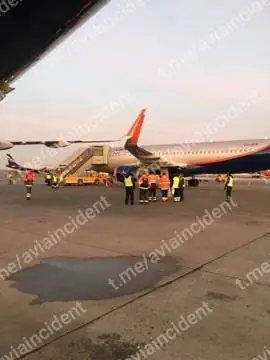
| Airline / operator | Shree Airlines |
|---|---|
| Aircraft (type, registration) | Shree Airlines Canadair CRJ-200ER (CL-600-2B19) (9N-AMC) |
| Category (my classification) | Human factors / Taxi crew (flight or maintenance) |
| What happened | A Shree Airlines Canadair CRJ-200ER (9N-AMC) contacted the tail of a Yeti Airlines ATR 72 with the right hand wing tip. |
| Injuries | ASN lists 0 fatalities. No injury statement in the ASN narrative. |
| Damage | Not stated |
| Official investigation | No investigation details on the ASN entry. |
| Source | Aviation Safety Network (ASN) entry: https://aviation-safety.net/wikibase/230481 Further sources listed on that page / found: https://www.aninews.in/news/world/asia/two-airplanes-collide-at-airport-in-nepal-no-casualties20191108184210/ https://aarthiknews.com/news/8990 |
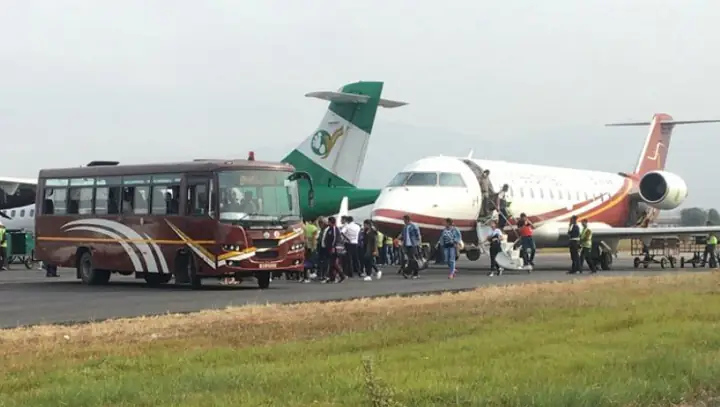
| Airline / operator | Silverstone Air Services |
|---|---|
| Aircraft (type, registration) | Silverstone Air Services Fokker 50 (5Y-SMT) |
| Category (my classification) | Human factors / Taxi crew (flight or maintenance) |
| What happened | A Fokker 50 of Silverstone Air (5Y-SMT) was taxiing from the ramp to the runway when the left-hand wingtip struck the rudder of a parked East African Air Beech Super King Air (5Y-SSB). |
| Injuries | ASN lists 0 fatalities. No injury statement in the ASN narrative. |
| Damage | Not stated |
| Official investigation | No investigation details on the ASN entry. |
| Source | Aviation Safety Network (ASN) entry: https://aviation-safety.net/wikibase/230239 Further sources listed on that page / found: https://www.kahawatungu.com/2019/10/27/silverstone-aircraft-collides-east-african-plane/ |
| Airline / operator | FlyBosnia |
|---|---|
| Aircraft (type, registration) | FlyBosnia Airbus A319-112 (E7-FBB) |
| Category (my classification) | Human factors / Taxi crew (flight or maintenance) |
| What happened | On approaching its parking, the airplane, operarting flight 6W108, hit a air stairs vehicle with its left wingtip. The winglet suffered some damage. Three days later the plane was still parked under repair. Causes of serious incident (translated from Bosnian) Based on the conducted investigation and analysis of the collected evidence and available information on the serious incident of aircraft A319, registration mark E7-FBB, the Commission concluded: The root cause of the serious incident is the incomplete monitoring of the movement of the vehicle “Follow me” by the crew of the aircraft in the process of leading the aircraft to the parking position, as well as the wrong and incorrect position of the passenger stairs on the apron. The serious incident was affected by: 1. Lack of information to the flight crew (NOTAM) about moving places of parking position. 2. Lack of clear and visible horisntal marks for “displaced parking position” number 5, as well as non-removal of the guiding lines to the parking position used before moving the parking position number 5. 3. Inadequate procedure of the flight crew when losing the vehicle “Follow me” from the field of view. 4. Inadequate procedure of the vehicle “Follow me” when taking the aircraft, after turning in the direction of the parking position (loss from the field of view of the flight crew while driving). 5. Late spotting of the parker signaliste position on the relocated position and delayed reactions. 6. Inadequate instruction parker signalists in the final lead aircraft to the parking position (instructions were in accordance with the rulebook but not the situation) |
| Injuries | ASN lists 0 fatalities. No injury statement in the ASN narrative. |
| Damage | Minor |
| Official investigation | Report number: Status: Investigation completed Duration: Final report |
| Source | Aviation Safety Network (ASN) entry: https://aviation-safety.net/wikibase/230094 Further sources listed on that page / found: http://mkt.gov.ba/Aktuelno/?id=8127 |
| Airline / operator | Air Serbia |
|---|---|
| Aircraft (type, registration) | Air Serbia Airbus A319-132 (YU-APF) |
| Category (my classification) | Human factors / Taxi crew (flight or maintenance) |
| What happened | Air Serbia flight JU517, an Airbus A319, struck the air bridge while parking at gate C5 at Belgrade (LYBE). Engine No.1 was damaged. Immediate cause The immediate cause is the impact of the aircraft with engine number 1 on the air bridge. Indirect causes - Insufficiently defined duties of the crew members after activating the parking brake and in case of continued movement of the aircraft in the procedure (FCOM PRO-NOR-SOP-22-A- 00011853.0003001 / 20 JUL 15) - Inadequate application by the crew Procedures for activating the parking brake (B02-PRO-NOR- SOP-22) Ed.04 Rev.03 from 08.03.2019. from the Operation Manual "Air Serbia" (Operation Manual OM Part-B A319/320 B02-PRO-NOR- SOP22) Ed.04 Rev.07 from 27.08.2019 |
| Injuries | ASN lists 0 fatalities. No injury statement in the ASN narrative. |
| Damage | Substantial, repaired |
| Official investigation | Investigating agency: CINS Report number: 03-19 Status: Investigation completed Duration: 2 years 1 month Final report Report / investigator link(s): https://www.cins.gov.rs/doc/vazdusni-saobracaj/2019/03-19ki.pdf https://bea.aero/en/investigation-reports/notified-events/detail/accident-to-the-airbus-a319-registered-yu-apf-operated-by-air-serbia-on-12-09-2019-at-belgrade/ |
| Source | Aviation Safety Network (ASN) entry: https://aviation-safety.net/wikibase/352150 Further sources listed on that page / found: https://www.cins.gov.rs/doc/vazdusni-saobracaj/2019/03-19ki.pdf https://bea.aero/en/investigation-reports/notified-events/detail/accident-to-the-airbus-a319-registered-yu-… |
| Aircraft (type, registration) | Boeing 747-428 (reg n/a) |
|---|---|
| Category (my classification) | Human factors / Taxi crew (flight or maintenance) Secondary: ATC / marshalling involved |
| What happened | Flight FRV214 struck a light pole while being marshalled on ramp. |
| Injuries | ASN lists 0 fatalities. No injury statement in the ASN narrative. |
| Damage | Not stated |
| Official investigation | No investigation details on the ASN entry. |
| Source | Aviation Safety Network (ASN) entry: https://aviation-safety.net/wikibase/228983 |
| Airline / operator | United Airlines |
|---|---|
| Aircraft (type, registration) | United Airlines Boeing 737-924ER (N37437); United Airlines Airbus A320-232 (N432UA) |
| Category (my classification) | Human factors / Taxi crew (flight or maintenance) |
| What happened | On August 5, 2019, at about 2315 PDT, United (UA) flight 435, a Boeing B737-924ER, N37437, collided with UA flight 2201, an Airbus A320-232, N432UA, while taxiing to the gate after landing at San Francisco International Airport (SFO), San Francisco, California. There were no injuries to the passengers or crew on either airplane. The B737 sustained minor damage and the A320 sustained substantial damage. Both flights were operating as 14 Code of Federal Regulations Part 121 scheduled passenger flights. Flight 435 had arrived from Ellison Onizuka Kona International Airport at Keahole (KOA), Kailua-Kona, Hawaii, and flight 2201 arrived from Los Angeles International Airport (LAX), Los Angeles, California. The captain of UA 435 stated that after landing, they were instructed by United G Ramp Tower (Ramp Tower) to hold at Plot 9, spot 11-1 to await a gate. When they arrived at the spot, UA 2201 was parked at spot 11-2 and another Airbus A320 was parked at spot 11-3. When UA 435 was cleared to taxi from spot 11-1, the captain noted that they were centered on their taxi line (11-1) and that UA flight 2201 was centered on their line (11-2). The captain ensured his left wingtip was clear of UA 2201 as he began to taxi and then turned his attention back forward to continue the taxi. A few seconds later, he felt a moderate bump and the nose pulled to the left. The captain stopped the airplane and set the parking brake and observed that their left winglet had struck UA 2201's right wing. The Federal Aviation Administration (FAA) Principal Avionics Inspector (PAI) for United stated the distance between Spot 11-1 and Spot 11-2 was 100 feet. SFO airport operations marked the nose landing gear tire locations of both aircraft after the event and found that UA 2201 was parked 4 feet off the centerline, closer to spot 11-3, resulting in an effective distance between spot 11-1 and 11-2 of 104 feet. The wingspan of UA 2201's A320 was 117 feet and UA 435's B737 was 117 feet, so the provided spacing should have been over 117 feet to keep the wingtips from touching. The spacing between the centerlines for spot 11-1 and 11-2 was inadequate for UA flight 435 to have cleared the wing of UA 2201. Examination of the pilot charts and Ramp Tower maps found differences for parking spots 11-1 through 11-3. The pilot chart depicted taxi lines that existed prior to restriping that occurred in March 2015. The old taxi lines, before restriping, had the centerlines of spot 11-1 and 11-2 further away from each other and would have given sufficient spacing for a B737 and an A320. The Ramp Tower's Procedures Manual identified the largest airplane allowed for parking Spot 11-1 was a "CRJ", which has a wingspan of about 76 feet. For Spots 11-2 and 11-3 the largest airplane indicated is a Boeing B757- 300W. However, United Ramp Tower directed UA flight 435, a Boeing 737, to park on Spot 11-1. Subsequent to the accident, the operator published a revised chart and sent an alert to pilots of the changes. Probable Cause: the ramp controller directing a Boeing 737 to hold in a location that was marked for a regional jet. |
| Injuries | ASN lists 0 fatalities. There were no injuries to the passengers or crew on either airplane. |
| Damage | Minor, repaired Location: San Francisco International Airport, CA (SFO/KSFO) - United States of America Phase: Taxi Nature: Passenger - Scheduled Departure airport: Kona-Keahole Airport, HI (KOA/PHKO) Destination airport: San Francisco International Airport, CA (SFO/KSFO) Investigating agency: NTSB Confidence Rating: Accident investigation report completed and information captured Narrative: On August 5, 2019, at about 2315 PDT, United (UA) flight 435, a Boeing B737-924ER, N37437, collided with UA flight 2201, an Airbus A320-232, N432UA, while taxiing to the gate after landing at San Francisco International Airport (SFO), San Francisco, California. There were no injuries to the passengers or crew on either airplane. The B737 sustained minor damage and the A320 sustained substantial damage. Both flights were operating as 14 Code of Federal Regulations Part 121 scheduled passenger flights. Flight 435 had arrived from Ellison Onizuka Kona International Airport at Keahole (KOA), Kailua-Kona, Hawaii, and flight 2201 arrived from Los Angeles International Airport (LAX), Los Angeles, California. The captain of UA 435 stated that after landing, they were instructed by United G Ramp Tower (Ramp Tower) to hold at Plot 9, spot 11-1 to await a gate. When they arrived at the spot, UA 2201 was parked at spot 11-2 and another Airbus A320 was parked at spot 11-3. When UA 435 was cleared to taxi from spot 11-1, the captain noted that they were centered on their taxi line (11-1) and that UA flight 2201 was centered on their line (11-2). The captain ensured his left wingtip was clear of UA 2201 as he began to taxi and then turned his attention back forward to continue the taxi. A few seconds later, he felt a moderate bump and the nose pulled to the left. The captain stopped the airplane and set the parking brake and observed that their left winglet had struck UA 2201's right wing. The Federal Aviation Administration (FAA) Principal Avionics Inspector (PAI) for United stated the distance between Spot 11-1 and Spot 11-2 was 100 feet. SFO airport operations marked the nose landing gear tire locations of both aircraft after the event and found that UA 2201 was parked 4 feet off the centerline, closer to spot 11-3, resulting in an effective distance between spot 11-1 and 11-2 of 104 feet. The wingspan of UA 2201's A320 was 117 feet and UA 435's B737 was 117 feet, so the provided spacing should have been over 117 feet to keep the wingtips from touching. The spacing between the centerlines for spot 11-1 and 11-2 was inadequate for UA flight 435 to have cleared the wing of UA 2201. Examination of the pilot charts and Ramp Tower maps found differences for parking spots 11-1 through 11-3. The pilot chart depicted taxi lines that existed prior to restriping that occurred in March 2015. The old taxi lines, before restriping, had the centerlines of spot 11-1 and 11-2 further away from each other and would have given sufficient spacing for a B737 and an A320. The Ramp Tower's Procedures Manual identified the largest airplane allowed for parking Spot 11-1 was a "CRJ", which has a wingspan of about 76 feet. For Spots 11-2 and 11-3 the largest airplane indicated is a Boeing B757- 300W. However, United Ramp Tower directed UA flight 435, a Boeing 737, to park on Spot 11-1. Subsequent to the accident, the operator published a revised chart and sent an alert to pilots of the changes. Probable Cause: the ramp controller directing a Boeing 737 to hold in a location that was marked for a regional jet. ICAO Occurrence |
| Official investigation | Investigating agency: NTSB Report number: DCA19CA192 Status: Investigation completed Duration: 2 years and 6 months Final report Report / investigator link(s): https://data.ntsb.gov/carol-repgen/api/Aviation/ReportMain/GenerateNewestReport/100018/pdf |
| Source | Aviation Safety Network (ASN) entry: https://aviation-safety.net/wikibase/278916 Further sources listed on that page / found: https://data.ntsb.gov/carol-repgen/api/Aviation/ReportMain/GenerateNewestReport/100018/pdf |
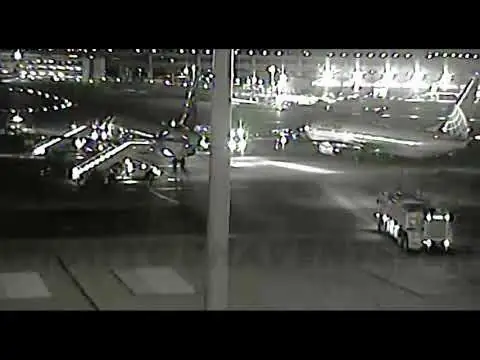
| Airline / operator | Air Canada / Edelweiss Air |
|---|---|
| Aircraft (type, registration) | Air Canada Boeing 787-8 Dreamliner (C-GHPU); Edelweiss Air Airbus A340-313 (HB-JMF) |
| Category (my classification) | Human factors / Taxi crew (flight or maintenance) Secondary: ATC / marshalling involved |
| What happened | An Airbus A340-300 aircraft (HB-JMF) operated by Edelweiss Air, conducted flight 11 from Zurich, Switzerland to Vancouver, Canada. Upon arrival at gate 64, the aircraft was marshalled into the gate area, signaled to stop and set the parking brake. The engines were shut down. The ground personnel connected a tug and were preparing to tow the aircraft to the final gate parking position. Meanwhile, C-GHPU, an Air Canada Boeing 787-8 aircraft operating flight AC566 from Vancouver to San Francisco, California, USA, was taxiing westbound on JA taxiway, abeam gate 64, when the left wing tip contacted the tail section of HB-JMF. There were no injuries. |
| Injuries | ASN lists 0 fatalities. There were no injuries. |
| Damage | Minor, repaired |
| Official investigation | No investigation details on the ASN entry. |
| Source | Aviation Safety Network (ASN) entry: https://aviation-safety.net/wikibase/319378 |
| Airline / operator | Cobham Aviation Services |
|---|---|
| Aircraft (type, registration) | Cobham Aviation Services Avro RJ85 (VH-NJW) |
| Category (my classification) | Human factors / Taxi crew (flight or maintenance) |
| What happened | The RJ85 aircraft was being prepared for a charter flight from Perth Airport to Granny Smith, Australia. During the pre-flight checks, the flight crew did not identify that there was no pressure in the braking system and did not pressurise this system prior to engine start. Around the time of the start of the final engine in the starting sequence, the aircraft began to roll forward. The dispatcher noticed the aircraft rolling and alerted the crew. The crew attempted to use their foot brakes and the park-brake, however, there was no brake pressure. Around 18 seconds after the aircraft started to roll, it collided with movable aircraft stairs, which were in front of the Cobham terminal. The stairs struck the front of the aircraft, beneath the right pilot seat. Shortly after, NJW collided with a bollard in front of a light pole, then with the light pole itself. Findings - The crew did not effectively check the brake system pressure during either the originating checklist or the starting checklist. As a result, the crew did not identify that there was no brake pressure prior to engine start. - After engine start, the aircraft inadvertently rolled forward and collided with objects at the edge of the apron. The absence of brake pressure, the slope of the apron and the absence of a nose-wheel chock were contributory to the aircraft rolling forward. - The operator's dispatch practices did not involve placing chocks on the nose-wheel for engine start. Although some ground handling procedures indicated nose-wheel chocks should be used, the operator’s training did not involve a step to place chocks on aircraft nose-wheels. The absence of a nose-wheel chock fore of the aircraft reduced the defences against the aircraft rolling forward. - The crew had a very limited opportunity to take corrective action before the aircraft collided with objects at the edge of the apron. It is likely that the short distance to the edge of the apron and the influence of surprise combined to reduce the crew’s ability to respond. |
| Injuries | ASN lists 0 fatalities. No injury statement in the ASN narrative. |
| Damage | Substantial, written off |
| Time out of service | VH-NJW: Written off (ASN) |
| Official investigation | Investigating agency: ATSB Report number: AO-2019-038 Status: Investigation completed Duration: 6 months Final report Report / investigator link(s): https://www.atsb.gov.au/sites/default/files/media/5777270/ao-2019-038_final.pdf |
| Source | Aviation Safety Network (ASN) entry: https://aviation-safety.net/wikibase/319382 Further sources listed on that page / found: https://www.atsb.gov.au/sites/default/files/media/5777270/ao-2019-038_final.pdf |
| Airline / operator | Kuwait Airways |
|---|---|
| Aircraft (type, registration) | Kuwait Airways Boeing 777-369(ER) (9K-AOJ) |
| Category (my classification) | Human factors / Taxi crew (flight or maintenance) |
| What happened | ” The wingtip of a Boeing 777-300ER Kuwait Airways has hit a boarding bridge at Nice (NCE) airport earlier today. Return flight to KWI cancelled.” |
| Injuries | ASN lists 0 fatalities. No injury statement in the ASN narrative. |
| Damage | Not stated |
| Official investigation | No investigation details on the ASN entry. |
| Source | Aviation Safety Network (ASN) entry: https://aviation-safety.net/wikibase/226534 Further sources listed on that page / found: http://www.goklerdeyiz.net/boeing-777nin-kanadi-yolcu-koprusune-carpti/ https://www.aviation24.be/airlines/kuwait-airways/boeing-777-hits-boarding-bridge-at-nice-airport-france/ https://t.co/21Fn0pgpzx https://t.co/SqP1I00LX5 |
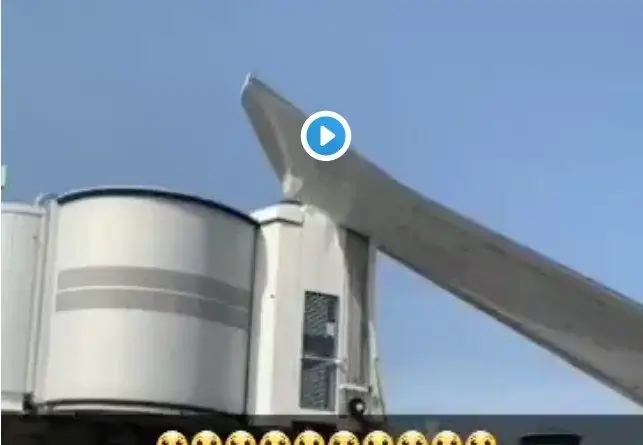
| Airline / operator | Ethiopian Airlines |
|---|---|
| Aircraft (type, registration) | Ethiopian Airlines Boeing 787-8 Dreamliner (ET-ATH) |
| Category (my classification) | Human factors / Taxi crew (flight or maintenance) |
| What happened | Ethiopian Airlines flight ET864, a Boeing 787-8 Dreamliner hit a parked KLM Boeing 747-400F (PH-CKA) on the apron at Dar-es- Salaam, Tanzania. The left-hand wing tip hit the rear fuselage of the B747 just below the APU. |
| Injuries | ASN lists 0 fatalities. No injury statement in the ASN narrative. |
| Damage | Not stated |
| Official investigation | No investigation details on the ASN entry. |
| Source | Aviation Safety Network (ASN) entry: https://aviation-safety.net/wikibase/226266 Further sources listed on that page / found: https://t.co/4JhAgADr1P |
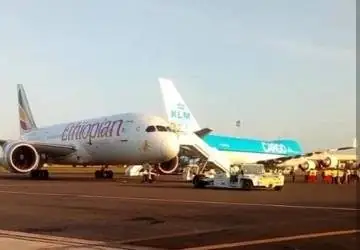
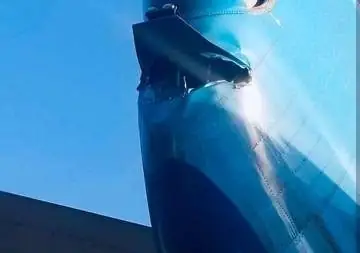
| Airline / operator | AirBridgeCargo Airlines |
|---|---|
| Aircraft (type, registration) | AirBridgeCargo Airlines Boeing 747-8HVF (VQ-BRH) |
| Category (my classification) | Human factors / Taxi crew (flight or maintenance) |
| What happened | While taxiing to the runway the left-hand wing tip of the Boeing 747-8HVF cargo plane contacted a light pole. Flight RU9628 was postponed for repairs. The aircraft was back in service 18 hours later. The incident aircraft, VQ-BRH, suffered a similar incident at Sheremetyevo Airport on March 12, 2019. |
| Injuries | ASN lists 0 fatalities. No injury statement in the ASN narrative. |
| Damage | Not stated |
| Time out of service | VQ-BRH: 18 hours (ASN) |
| Official investigation | No investigation details on the ASN entry. |
| Source | Aviation Safety Network (ASN) entry: https://aviation-safety.net/wikibase/225813 |
| Airline / operator | Smartwings, lsf Swift Air / Smartwings |
|---|---|
| Aircraft (type, registration) | Smartwings, lsf Swift Air Boeing 737-8CX (WL) (N277EA); Smartwings Boeing 737-86Q (WL) (OK-TVW) |
| Category (my classification) | Human factors / Taxi crew (flight or maintenance) |
| What happened | Two Boeing 737-800 aircraft of Smartwings (OK-TVW and N277EA) were involved in a ground contact incident at Prague-Ruzyne Airport, Czech Republic. While taxiing on taxiway F to the take-off point from runway 06, OK-TVW, collided with N277EA, waiting as number two on taxiway E. The right-hand winglet of OK-TVW hit the left-hand horizontal stabilizer of N277EA. Both flights were cancelled. OK-TVW resumed service later the same day. The cause of the serious incident was the failure of the crew of the taxiing aeroplane to keep sufficient distance from the stationary aeroplane. A contributory factor was the faulty implementation of the CRM. |
| Injuries | ASN lists 0 fatalities. No injury statement in the ASN narrative. |
| Damage | Minor, repaired |
| Time out of service | OK-TVW: Same day (ASN) |
| Official investigation | Investigating agency: UZPLN Report number: Status: Investigation completed Duration: 1 year Final report Report / investigator link(s): https://uzpln.cz/pdf/20200615072122.pdf |
| Source | Aviation Safety Network (ASN) entry: https://aviation-safety.net/wikibase/225209 Further sources listed on that page / found: https://uzpln.cz/pdf/20200615072122.pdf https://www1.pluska.sk/gal/spravy/zo-zahranicia/mimoriadne-prahe-zrazili-dve-lietadla-mieste-zasahuju-zachr… https://zdopravy.cz/dalsi-komplikace-pro-smartwings-dve-jejich-letadla-o-sebe-skrtla-na-ruzyni-28335/ https://sputniknews.com/europe/201905181075121353-two-boeing-planes-collide/ |
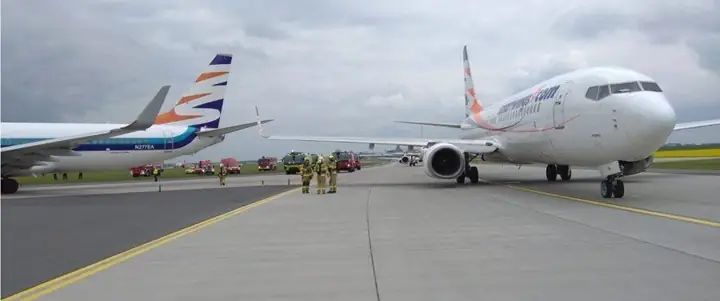
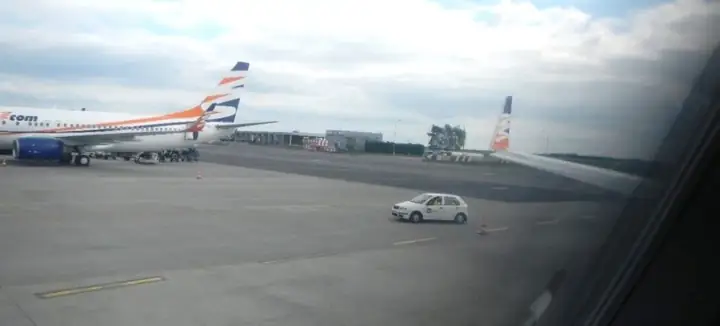
| Airline / operator | Comair / Mango |
|---|---|
| Aircraft (type, registration) | Comair Boeing 737-8K5 (WL) (ZS-ZWV); Mango Boeing 737-8BG (WL) (ZS-SJH) |
| Category (my classification) | Human factors / Taxi crew (flight or maintenance) |
| What happened | A Mango Boeing 737-800 (Flight 149, ZS-SJH) and a Comair Boeing 737-800 (Flight 219, ZS-ZWV) were preparing for departure from Johannesburg, South Africa. At about 14:27 UTC, ZS-ZWV was instructed by the tower controller to taxi on taxiway Lima, Alpha and hold short of Echo to make way for ZS-SJH which was taxiing from parking bay A12 and had requested for a full-length departure. While reading back, ZS-ZWV requested intersection November for take-off. The ground controller instructed ZS-SJH to taxi taxiway Echo, Alpha holding at runway 21R and ZS-ZWV was instructed to give way to ZS-SJH which was acknowledged by both pilots. However, ZS-SJH was observed turning out on taxiway Foxtrot. The tower controller then advised ZS-ZWV to continue on taxiway Alpha and turn right on intersection November because ZS-SJH was now behind him on taxiway Alpha. ZS-SJH was then given an option by the ground controller to turn in to Golf 10 into Delta ramp, Golf 9, Alpha to holding point 21R which ZS-SJH read back. At 14:36, ZS-ZWV contacted Tower and stated that when ZS-SJH was passing behind them, they felt a bit of a ‘bang’ but they were not sure if ZS- SJH had touched them. ZS-ZWV asked the tower controller to check with ZS-SJH if they felt anything. ZS-SJH was contacted by the ground controller to ask them if they felt anything that is like a ‘bump’ when they were taxiing behind ZS-ZWV because ZS-ZWV felt something. ZS-SJH replied to GND that they had not collided with ZS-ZWV. The pilots of ZS-SJH indicated that the only thing they had felt was the normal bumps when taxiing over taxiway lights. Ground then asked ZS-SJH to confirm that they went to Delta ramp to the holding point and they replied that they did not. They said they taxied behind ZS-ZWV. The pilot of ZS-ZWV reported that after a while the tower came back to them and said twice, that the crew of ZS-SJH was sure that they were clear. The pilot of ZS-ZWV stated that since ZS-SJH crew were certain they were clear, he presumed the wobble came from the ZS-SJH jet blast that was blown over the tail of ZS-ZWV. At 14:41, ZS-SJH contacted Ground that they wanted to turn back to bay to inspect the aircraft since they were not certain that they did not touch ZS- ZWV. ZS-ZWV had already departed at 14:41:53 without going back to the bay. The pilot of ZS-SJH stated that in the interest of safety, they decided to return to the bay to have engineering check the aircraft. During a walk around with the ground engineer, it was discovered that ZS-SJH had indeed clipped ZS-ZWV aircraft and that the skin on the outer side of the right hand winglet of ZS-SJH was damaged. When airborne, ZS-ZWV operated normally. On approach into Durban, ATC informed ZS-ZWV that the ZS-SJH aircraft returned to the bay and the ground engineers had found a scratch on the aircraft’s winglet. ZS-ZWV was also inspected at Durban and the ground engineers found that one static wick on the left elevator was bent as well as the left aft tip of the horizontal stabilizer. |
| Injuries | ASN lists 0 fatalities. No injury statement in the ASN narrative. |
| Damage | Minor |
| Official investigation | No investigation details on the ASN entry. Report / investigator link(s): http://www.caa.co.za/Accidents%20and%20Incidents%20Reports/ZS-SJH%20and%20ZS-ZWV.pdf |
| Source | Aviation Safety Network (ASN) entry: https://aviation-safety.net/wikibase/228383 Further sources listed on that page / found: http://www.caa.co.za/Accidents%20and%20Incidents%20Reports/ZS-SJH%20and%20ZS-ZWV.pdf http://www.goklerdeyiz.net/iki-ucak-yerde-carpisti-21/ |
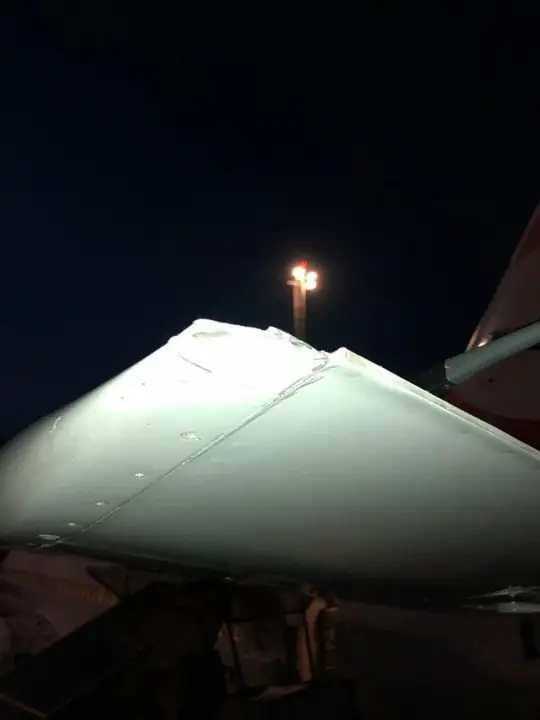
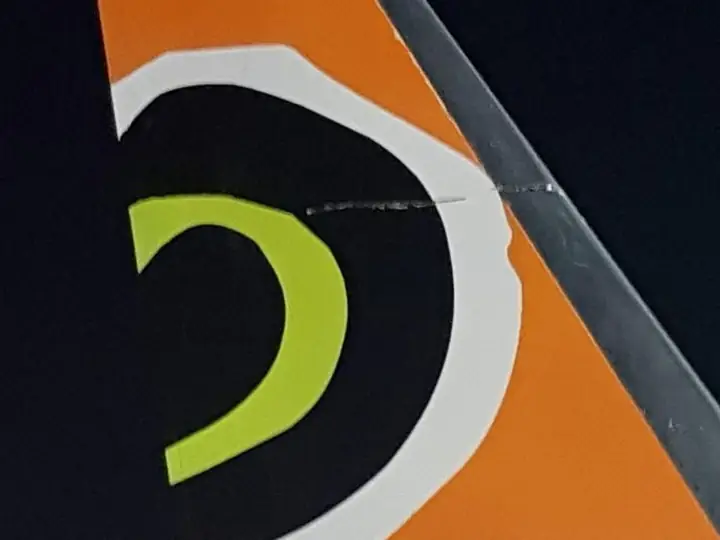
| Airline / operator | Pakistan International Airlines - PIA |
|---|---|
| Aircraft (type, registration) | Pakistan International Airlines - PIA Boeing 777-240LR (AP-BGZ) |
| Category (my classification) | Human factors / Taxi crew (flight or maintenance) |
| What happened | The wing of a Boeing 777-200LR/F operating as Pakistan International Airlines Flight PIA789 from Allama Iqbal International Airport in Lahore, Punjab, contacted the passenger boarding bridge at its arrival gate at Toronto Pearson International Airport in Ontario. The aircraft sustained minor damage and there were no reported injuries to the crew and passengers onboard. |
| Injuries | ASN lists 0 fatalities. The aircraft sustained minor damage and there were no reported injuries to the crew and passengers onboard. |
| Damage | Not stated |
| Official investigation | No investigation details on the ASN entry. |
| Source | Aviation Safety Network (ASN) entry: https://aviation-safety.net/wikibase/222991 Further sources listed on that page / found: http://www.goklerdeyiz.net/ucak-yolcu-koprusune-carpti/ https://www.samaa.tv/news/2019/03/pia-plane-crashes-into-jetty-at-toronto-airport/ https://flightaware.com/live/flight/PIA789 |
| Airline / operator | Delta Air Lines |
|---|---|
| Aircraft (type, registration) | Delta Air Lines Boeing 737-832 (WL) (N3756) |
| Category (my classification) | Human factors / Taxi crew (flight or maintenance) |
| What happened | On March 10, 2019, at 2117 eastern daylight time, Delta Airlines flight 1068, a Boeing 737 (B737), N3756, collided with Delta Airlines flight 2777, a Boeing 757 (B757), N591NW while taxiing along taxiway B at the Hartsfield Jackson Atlanta International Airport (KATL), Atlanta, Georgia. There were no injuries to the passengers and crew onboard either airplane, and the B757 was substantially damaged. Both aircraft were operating under 14 Code of Federal Regulations Part 121 as regularly scheduled passenger flights. The B757 had landed on runway 26R and was holding short of runway 26L at taxiway B2, awaiting clearance to cross the runway and taxi to the ramp. The B737 had landed following the B757 and was cleared to taxi along taxiway B to the Victor Loop. When approaching B2 on B, the B737 crew reported taxiing to the right of centerline to provide clearance with the B757 tail on their left. The B737 left wingtip contacted the B757 tail resulting in a light shudder on both aircraft. The B757 crew reported on ground frequency that they had been hit and the B737 crew acknowledged they may have hit them when passing along taxiway B. The B757 remained on the taxiway until maintenance had evaluated the damage, then taxied to the gate and deplaned. The B737 continued taxiing to the gate and deplaned. Post- accident inspection revealed substantial damage to the right elevator of the B757 and minor damage to the left winglet of the B737. Probable Cause: failure of the B737 captain to maintain separation with the airplane stopped on the taxiway. |
| Injuries | ASN lists 0 fatalities. There were no injuries to the passengers and crew onboard either airplane, and the B757 was substantially damaged. |
| Damage | Substantial |
| Official investigation | Investigating agency: NTSB Report number: DCA19CA105 Status: Investigation completed Duration: 2 years and 11 months Final report Report / investigator link(s): https://data.ntsb.gov/carol-repgen/api/Aviation/ReportMain/GenerateNewestReport/99088/pdf |
| Source | Aviation Safety Network (ASN) entry: https://aviation-safety.net/wikibase/278968 Further sources listed on that page / found: https://data.ntsb.gov/carol-repgen/api/Aviation/ReportMain/GenerateNewestReport/99088/pdf |
| Airline / operator | Caribbean Airlines |
|---|---|
| Aircraft (type, registration) | Caribbean Airlines ATR 72-600 (72-212A) (9Y-TTA) |
| Category (my classification) | Human factors / Taxi crew (flight or maintenance) |
| What happened | A Caribbean Airlines ATR 72 impacted a wall while taxiing from the ramp to the maintenance area at Piarco International Airport, Trinidad and Tobago (POS/TTPP). According to first reports, the plane's break system malfunctioned. Damage to the plane is estimated at 1,000,000 US dollars. |
| Injuries | ASN lists 0 fatalities. No injury statement in the ASN narrative. |
| Damage | Not stated |
| Official investigation | No investigation details on the ASN entry. |
| Source | Aviation Safety Network (ASN) entry: https://aviation-safety.net/wikibase/222688 Further sources listed on that page / found: http://www.guardian.co.tt/news/cal-plane-crashes-into-airport-wall-6.2.795939.27fb14f8a9 http://www.guardian.co.tt/news/planes-brake-system-was-not-functional-6.2.797253.12bf8aa127 https://t.co/mePqCSDquh |
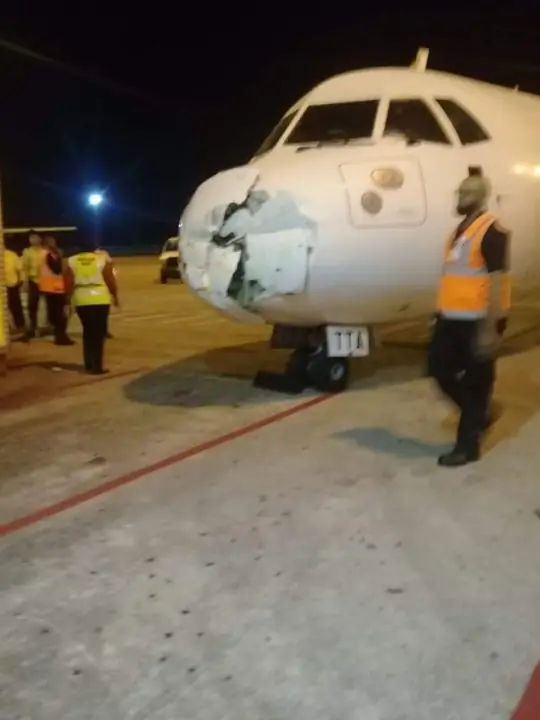
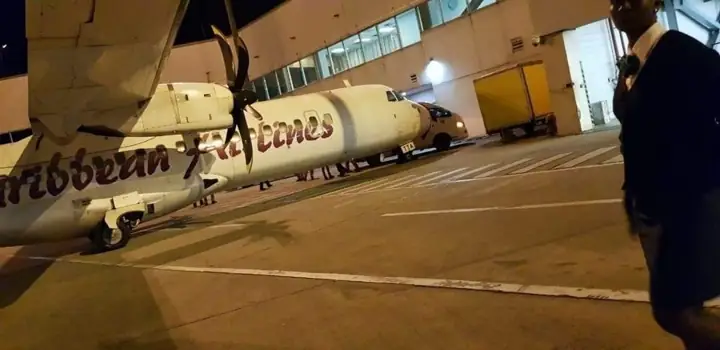
| Airline / operator | Southwest Airlines |
|---|---|
| Aircraft (type, registration) | Southwest Airlines Boeing 737-7H4 (WL) (N918WN); Southwest Airlines Boeing 737-7H4 (WL) (N493WN) |
| Category (my classification) | Human factors / Taxi crew (flight or maintenance) |
| What happened | A Southwest Airlines Boeing 737-7H4 (N918WN) was taxing at Newark's Liberty Airport, New Jersey, USA, when the left-hand winglet struck the right-hand horizontal stabilizer of a parked Southwest Airlines Boeing 737-7H4 (N493WN). |
| Injuries | ASN lists 0 fatalities. No injury statement in the ASN narrative. |
| Damage | Minor |
| Official investigation | No investigation details on the ASN entry. |
| Source | Aviation Safety Network (ASN) entry: https://aviation-safety.net/wikibase/222524 Further sources listed on that page / found: http://www.goklerdeyiz.net/iki-ucak-yerde-carpisti-16/ https://dfw.cbslocal.com/2019/03/02/southwest-planes-clip-wings-newark-airport/ https://t.co/7ecXJYZKKi https://t.co/ulBsZQACh0 |
| Airline / operator | Alaska Airlines |
|---|---|
| Aircraft (type, registration) | Alaska Airlines Boeing 737-790 (WL) (N644AS) |
| Category (my classification) | Human factors / Taxi crew (flight or maintenance) |
| What happened | Alaska Airlines Flight 155, a Boeing 737-700, was taxiing to the runway from the ramp in Kotzebue, Alaska, USA when it clipped the wing of a parked cargo aircraft. The left winglet of Flight 155 clipped the right wing of the parked plane. There were no injuries, but the aircraft was grounded for repairs. |
| Injuries | ASN lists 0 fatalities. There were no injuries, but the aircraft was grounded for repairs. |
| Damage | Minor |
| Official investigation | No investigation details on the ASN entry. |
| Source | Aviation Safety Network (ASN) entry: https://aviation-safety.net/wikibase/221827 Further sources listed on that page / found: https://www.adn.com/alaska-news/aviation/2019/02/13/alaska-airlines-flight-grounded-in-kotzebue-after-jet-c… |
| Airline / operator | Yamal Airlines |
|---|---|
| Aircraft (type, registration) | Yamal Airlines Sukhoi Superjet 100-95LR (RA-89073) |
| Category (my classification) | Human factors / Taxi crew (flight or maintenance) |
| What happened | Yamal Airlines flight YC243, a Sukhoi Superjet, hit a light tower during parking on the apron at Moscow Domodedovo Airport Russia. The aircraft was taxiing on taxiway A10 to parking spot M22 when it began to skid on the icy surface of the apron. Braking was ineffective, and the flight crew then attempted to use maximum reverse thrust to control the aircraft. The right hand wing then hit the light pole. |
| Injuries | ASN lists 0 fatalities. No injury statement in the ASN narrative. |
| Damage | Not stated |
| Official investigation | No investigation details on the ASN entry. Report / investigator link(s): http://vau.aero/navdb/chart/UUDD.pdf |
| Source | Aviation Safety Network (ASN) entry: https://aviation-safety.net/wikibase/221642 Further sources listed on that page / found: https://www.aerotime.aero/ina.hladyshava/22352-caution-slippery-plane-skids-runway-in-moscow-1 http://vau.aero/navdb/chart/UUDD.pdf |
| Airline / operator | easyJet / SAS Scandinavian Airlines |
|---|---|
| Aircraft (type, registration) | easyJet Airbus A320-214 (WL) (G-EZWY); SAS Scandinavian Airlines Airbus A320-251N (SE-DOY) |
| Category (my classification) | Human factors / Taxi crew (flight or maintenance) |
| What happened | Easyjet flight U28885 (Airbus A320-214 G-EZWY) from London-Gatwick Airport, U.K., landed on runway 18R at 18:30 UTC. It was then cleared to taxi via taxiway Z northbound to its stand at H1. Five minutes later SAS flight SK553 (Airbus A320neo SE-DOY) from Copenhagen, Denmark, landed on runway 18C. The ground controller then cleared the aircraft to taxi southbound via taxiway B to taxiway Q for gate C10. The controller foresaw that the two aircraft might be at the taxiway crossing between A26 and A27 at the same time. He instructed SE-DOY to give way to G- EZWY coming from the right from taxiway Z when turning to taxiway Q, and informed G-EZWY that the other aircraft would wait for them at the end of taxiway Z to pass. Because many ground movements were taking place in his areas of responsibility, the ground controller gave the instruction in advance, around 1:30 minutes before the two aircraft would meet each other. Both crews responded affirmatively, although the crew of SE-DOY did not mention the place where they had to give way and the direction where the aircraft would come from. The incomplete read-back was not challenged by the ground controller. No other communication took place between the ground controller and both crews. G- EZWY taxied in the direction of taxiway Q and the captain saw the other aircraft approaching them at an angle of about 45 degrees from the left. Between A26 and A27, both aircraft approached each other and the captain was of the opinion that the other aircraft was not slowing down. As a precaution, he reduced the speed to approximately 10 to 15 knots. When it became clear that the other aircraft would not stop, the captain made an emergency stop. He saw the wing tip of the right wing of the other aircraft moving past the nose of their aircraft from left to right. He estimated the distance between the wing and the nose at 3 to 4 metres. The first officer did not look outside at that time, as he was studying the map of Schiphol. At the moment of the emergency stop, he looked up and estimated that the right wing of the other aircraft was passing 5 to 10 metres in front of the nose of their aircraft. If the easyJet captain had not braked, both aircraft would have collided. CONCLUSION The near miss between the two aircraft during taxi occurred, because the crew of the aircraft that had to give priority did not notice the other aircraft. The factors below played a role: - The early instruction of the ground controller and the lack of later, additional instructions. - The crew did not hear or did not recall where to expect the other aircraft, neither did they challenge air traffic control. - The ground controller did not challenge the crew, when they gave an incomplete read back. - The darkness and background lighting in combination with the complexity of the location at Amsterdam Airport Schiphol where the incident occurred and other tasks of the flight crew. - The darkness and the distance between the control tower and both aircraft. - The limitations of visual observation during darkness in combination with the properties of the ground radar system. A collision between the two aircraft was prevented, because the pilot of the aircraft that had priority made a successful emergency stop. This location has not been designated a hotspot, but many taxiways are coming together there. Despite the designation signs, flight crews must be extra alert to distinguish the different intersections. This is especially the case in darkness due to the extensive background lighting and the illumination of multiple taxiways. Also the possibilities for visual monitoring during darkness at distances by the ground controller in combination with the properties of the ground radar, are not optimal. This makes it extra important for controllers to verify that clearances have been properly heard and fully and correctly read back. In addition, it is preferable to repeat stop instructions and regularly to monitor the aircraft, until they have a clear picture of the situation thereby reducing the possibility of errors. For flight crews it is important to verify an instruction in the case it creates ambiguity. |
| Injuries | ASN lists 0 fatalities. No injury statement in the ASN narrative. |
| Damage | None |
| Official investigation | Investigating agency: Dutch Safety Board Report number: Status: Investigation completed Duration: Final report Report / investigator link(s): https://www.havkom.se/en/investigations/civil-luftfart/kollisionstillbud-pa-amsterdams-internationella-flygplats https://www.onderzoeksraad.nl/en/page/14067/bijna-botsing-op-de-grond-airbus-a320-airbus-a320-amsterdam-airport |
| Source | Aviation Safety Network (ASN) entry: https://aviation-safety.net/wikibase/226486 Further sources listed on that page / found: https://www.havkom.se/en/investigations/civil-luftfart/kollisionstillbud-pa-amsterdams-internationella-flyg… https://www.onderzoeksraad.nl/en/page/14067/bijna-botsing-op-de-grond-airbus-a320-airbus-a320-amsterdam-air… |
| Airline / operator | Ryanair / THY Turkish Airlines |
|---|---|
| Aircraft (type, registration) | Ryanair Boeing 737-8AS (WL) (EI-DHW); THY Turkish Airlines Boeing 737-8F2 (WL) (TC-JHM) |
| Category (my classification) | Human factors / Taxi crew (flight or maintenance) |
| What happened | Turkish Airlines flight TK1372, a Boeing 737-800 (TC-JHM), and Ryanair flight FR9874, a Boeing 737-800 (EI-DHW) were damaged in a ground contact incident at Malta. TK1372 reported that while holding on taxiway D, the aircraft had been hit by another aircraft. At that time FR9874 had just taxied from behind through taxiway C towards Stand 6. The Bureau of Air Accidents Investigations (BAAI Malta) has determined the probable cause of this incident to be TC- JHM holding further back (22 meters) from the designated holding position on holding point “Delta”, and the EI-DHW proceeding to taxi on taxiway “Charlie” behind it after receiving clearance by ATC. |
| Injuries | ASN lists 0 fatalities. No injury statement in the ASN narrative. |
| Damage | Minor |
| Official investigation | Investigating agency: BAAI Report number: Status: Investigation completed Duration: 8 months Final report Report / investigator link(s): https://baai.gov.mt/en/Documents/Turkish%20Ryan%20Air%2017-09-2019.pdf |
| Source | Aviation Safety Network (ASN) entry: https://aviation-safety.net/wikibase/315107 Further sources listed on that page / found: https://baai.gov.mt/en/Documents/Turkish%20Ryan%20Air%2017-09-2019.pdf |
| Airline / operator | Ethiopian Airlines |
|---|---|
| Aircraft (type, registration) | Ethiopian Airlines Boeing 787-9 Dreamliner (ET-AUP) |
| Category (my classification) | Human factors / Taxi crew (flight or maintenance) |
| What happened | An Ethiopian Airlines Boeing 787-9, flight ET715, bound for Addis Ababa via Stockholm, hit a light pole with the right-hand wing at the de- icing area of Oslo-Gardermoen Airport, Norway. The de-icing coordinators at the airport agreed that the aircraft was to be de-iced at stand 992, which was suitable for larger category aircraft like the B787-9. When clearing the flight to to the stand, the coordinator inadvertently cleared the aircraft to stand 991. The captain taxied the aircraft. He saw the light mast and thought that clearance on the right-hand side was marginal. However, he was confident the airport had control of the situation. He did, however, ask the first officer, who was in the right- hand seat, if he could see the distance between the wing tip and the light mast. The first officer could not see the wing tip and had thus limited ability to estimate the distance from his seat. The captain reduced the taxiing speed even more the last few meters. Before ET715 was assigned de-icing stand 991, two old de-icing vehicles were parked at the front edge of de-icing stand 991. There was an operator in each of the vehicles. As opposed to the more modern de-icing vehicles, the old de-icing vehicles were not equipped with a VHF radio. This meant that the two operators could not communicate directly with the ET715 crew. The driver of de-icing vehicle No. 11 saw the Ethiopian aircraft taxiing on to de-icing stand 991, and he knew that this de-icing stand could not be used by aircraft the size of the Dreamliner. At 19:09:52 hours he called the de-icing coordinators over the internal radio and said that the Ethiopian aircraft had to be stopped. At 19:09:57 hours de-icing coordinator made a radio call: "Etian seven one five you are going to wrong ... stop stop Etian stop stop stop." At 19:10:05 hours the tip of the right-hand wing of ET-AUP collided with the light mast to the right of de-icing stand 991. After the collision, the aircraft continued to move forward for about another four seconds, coming to a halt approximately four meters further ahead. Due to right wing torque, the nose of the aircraft turned towards the right and the nosewheel stopped approximately 3/4 meters to the side of the center line. The captain noticed the nose of the aircraft pulling right but thought the aircraft had skidded slightly to the side and was not aware that the wing had hit the light mast. He stopped the aircraft and applied the parking brake. The crew again contacted the de-icing coordinator to inform them of the type of de-icing they required. They were then told that the right wing tip had struck the light mast. CONCLUSIONS: The AIBN’s investigation has revealed that the following key factors contributed to the accident: a) The de-icing coordinator had by a slip-up assigned ET-AUP a different de-icing stand than the one he and his colleague had previously planned. b) The de-icing coordinators did not have adequate technical aids to ensure that the correct de-icing stand was assigned, based on aircraft category. c) SGH has been unable to present work instructions for the de-icing coordinators relating to allocation of de-icing stand for each aircraft category. A "Coordinator procedure for allocation of de-icing stand at Oslo Airport Gardermoen" is now taken care of. d) The crew on ET-AUP did not have access to information about what de-icing stands were authorized for their type of aircraft at Oslo Airport Gardermoen. Information about what de- icing stand can be used by the various aircraft categories was not included in the Aeronautical Information Publication Norway, or in NOTAM. e) Some type of anti-collision aid, such as a wingtip camera, would have clearly indicated to the crew that there was insufficient clearance between the wing and the light mast, thus preventing a collision. f) As the ET-AUP turned into the "Bravo North" de-icing area, there were no markings, lights, signage or other technical barriers to indicate to the crew that they had been assigned the wrong de-icing stand. Thus, the crew was unable to stop the aircraft before it hit the light mast to the right. g) As the aircraft approached the light mast, the commander thought that clearance was marginal. The crew decided to rely on the given instructions to taxi to de-icing stand 991. |
| Injuries | ASN lists 0 fatalities. No injury statement in the ASN narrative. |
| Damage | Substantial, repaired |
| Official investigation | Investigating agency: AIBN Report number: SL 2020/1 Status: Investigation completed Duration: 1 year and 6 months Final report Report / investigator link(s): https://www.aibn.no/Aviation/Published-reports/2020-14-eng?pid=SHT-Report-ReportFile&attach=1 |
| Source | Aviation Safety Network (ASN) entry: https://aviation-safety.net/wikibase/319519 Further sources listed on that page / found: https://www.aibn.no/Aviation/Published-reports/2020-14-eng?pid=SHT-Report-ReportFile&attach=1 |
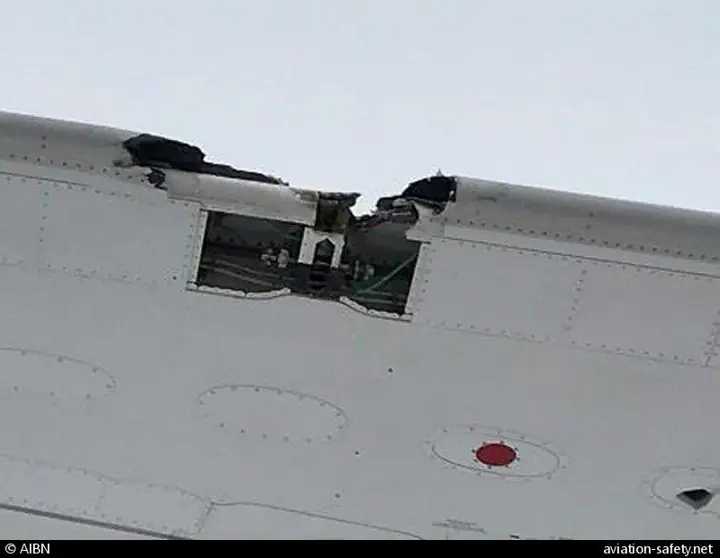
| Airline / operator | Ellinair |
|---|---|
| Aircraft (type, registration) | Ellinair Airbus A320-214 (SX-EMY) |
| Category (my classification) | Human factors / Taxi crew (flight or maintenance) |
| What happened | An Ellinair Airbus A320 sustained damage after colliding with a passenger jetway at Stand A39 at Athens-Elefthérios Venizélos International Airport in Greece. |
| Injuries | ASN lists 0 fatalities. No injury statement in the ASN narrative. |
| Damage | Substantial, repaired |
| Official investigation | No investigation details on the ASN entry. |
| Source | Aviation Safety Network (ASN) entry: https://aviation-safety.net/wikibase/319528 |
| Airline / operator | Cargojet Airways |
|---|---|
| Aircraft (type, registration) | Cargojet Airways Boeing 767-39HER (BCF) (WL) (C-FGSJ) |
| Category (my classification) | Human factors / Taxi crew (flight or maintenance) |
| What happened | A Cargojet Airways Boeing 767-39H (C-FGSJ) taxied to Apron 1 at from Edmonton International, AB (YEG) to perform a high speed engine test at the approved location on the uncontrolled main apron. While maneuvering, at the aircraft's discretion on the apron, the aircraft struck and knocked down a light standard. |
| Injuries | ASN lists 0 fatalities. No injury statement in the ASN narrative. |
| Damage | Minor, repaired Location: Edmonton International Airport, AB (YEG/CYEG) - Canada Phase: Taxi Nature: Cargo Departure airport: - Destination airport: - Confidence Rating: Information verified through data from accident investigation authorities Narrative: A Cargojet Airways Boeing 767-39H (C-FGSJ) taxied to Apron 1 at from Edmonton International, AB (YEG) to perform a high speed engine test at the approved location on the uncontrolled main apron. While maneuvering, at the aircraft's discretion on the apron, the aircraft struck and knocked down a light standard. ICAO Occurrence |
| Official investigation | No investigation details on the ASN entry. |
| Source | Aviation Safety Network (ASN) entry: https://aviation-safety.net/wikibase/568374 Further sources listed on that page / found: https://www.airliners.net/photo/Cargojet-Airways/Boeing-767-39H-ER/5305347 |
| Airline / operator | Air India |
|---|---|
| Aircraft (type, registration) | Air India Boeing 787-8 Dreamliner (VT-ANE) |
| Category (my classification) | Human factors / Taxi crew (flight or maintenance) |
| What happened | Air India flight AI167, a Boeing 787-8 Dreamliner, contacted a building with the left-hand wingtip on the ground at Stockholm Arlanda Airport. The aircraft was cleared for stand F28R at Terminal 5, however, it followed the F28L taxi line. After moving forward in the taxi lane of stand F28L, the aircraft was brought to a halt and clarification was taken from ATC, which reiterated the last clearance. Thereafter, after communication with the ATC which advised the crew to maneuver the aircraft with caution if possible, an attempt was made to realign the aircraft with F28R. In the process, the outboard portion of the left wing of the aircraft impacted the building in the vicinity of the parking stand F28L. The aircraft was stopped immediately and the passengers deplaned normally after taking clearance from the local authorities. The incident was caused as the crew maneuvered the aircraft for going to parking stand F28R from the lead line of Parking Stand F28L without checking the left wing tip clearance. The contributory factors were as follows: (a) Mental fatigue of the first officer and wrong inputs by him. (b) Lack of assertiveness of the PIC. (c) Reduced situational awareness of the ATCO. (d) Noncompliance of the procedures/instructions. |
| Injuries | ASN lists 0 fatalities. No injury statement in the ASN narrative. |
| Damage | Minor |
| Official investigation | Report number: Status: Investigation completed Duration: 10 months Final report |
| Source | Aviation Safety Network (ASN) entry: https://aviation-safety.net/wikibase/218710 Further sources listed on that page / found: https://economictimes.indiatimes.com/industry/transportation/airlines-/-aviation/air-india-plane-hits-build… https://www.aro.lfv.se/Editorial/View/5187/ES_AD_2_ESSA_2-5_en http://www.goklerdeyiz.net/air-india-ucagi-kanadini-binaya-carpti/ |
| Airline / operator | WOW Air / Southwest Airlines |
|---|---|
| Aircraft (type, registration) | WOW Air Airbus A321-253N (TF-DTR); Southwest Airlines Boeing 737-8H4 (WL) (N8635F) |
| Category (my classification) | Human factors / Taxi crew (flight or maintenance) |
| What happened | Southwest Airlines flight WN2095, a Boeing 737-800, struck the winglet of a WOW Air Airbus A321neo (TF-DTR) while taxiing to the gate at Saint Louis-Lambert International Airport, Missouri, USA. The Boeing 737 had just arrived after a flight from Kansas City, USA. The left-hand winglet of the aircraft impacted and cut into the rear side of the right-hand winglet of the WOW Air A320neo that was preparing for departure to Reykjavik-Keflavik Airport, Iceland as flight WW168. |
| Injuries | ASN lists 0 fatalities. No injury statement in the ASN narrative. |
| Damage | Not stated |
| Official investigation | No investigation details on the ASN entry. |
| Source | Aviation Safety Network (ASN) entry: https://aviation-safety.net/wikibase/217904 Further sources listed on that page / found: https://www.kshb.com/news/local-news/plane-from-kci-clips-wing-of-another-flight-after-landing-in-stl https://t.co/SBgTukVsdQ https://t.co/267s3rqDTV |
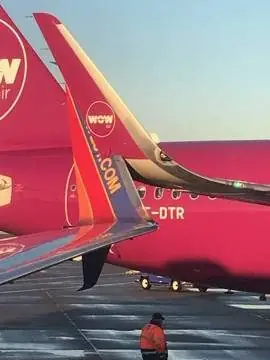
| Airline / operator | Lion Air |
|---|---|
| Aircraft (type, registration) | Lion Air Boeing 737-9GPER (WL) (PK-LGY) |
| Category (my classification) | Human factors / Taxi crew (flight or maintenance) |
| What happened | Lion Air JT633, a Boeing 737, struck a pole with its left-hand wing at Bengkulu-Fatmawati Soekarno Airport, Indonesia. The incident occurred in darkness as the aircraft was manoeuvering on the apron in front of the terminal builsing. The flight, heading to Jakarta, was subsequently carried out by a replacement aircraft. |
| Injuries | ASN lists 0 fatalities. No injury statement in the ASN narrative. |
| Damage | Minor |
| Official investigation | No investigation details on the ASN entry. |
| Source | Aviation Safety Network (ASN) entry: https://aviation-safety.net/wikibase/217370 Further sources listed on that page / found: https://www.channelnewsasia.com/news/asia/lion-air-plane-wing-torn-in-airport-runway-accident-10906496 http://jateng.tribunnews.com/2018/11/07/video-detik-detik-pesawat-lion-air-jt-633-bengkulu-jakarta-tabrak-t… https://t.co/fMqO643O0K |
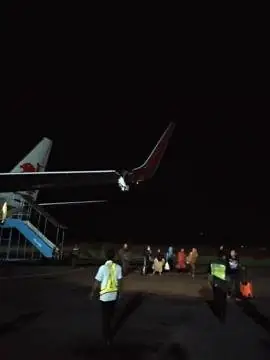
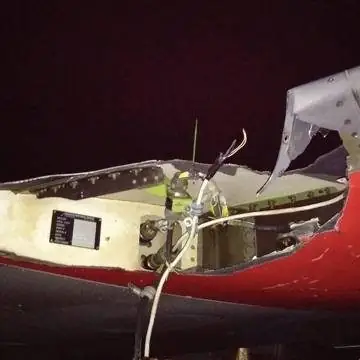
| Airline / operator | Delta Air Lines / Air France |
|---|---|
| Aircraft (type, registration) | Delta Air Lines Airbus A330-323 (N817NW); Air France Airbus A330-203 (F-GZCI) |
| Category (my classification) | Human factors / Taxi crew (flight or maintenance) |
| What happened | Delta Air Lines flight 97, an Airbus A330-323 (N817NW) hit Air France flight 498, an Airbus A330-203 (F-GZCI) on a taxiway at Paris-Charles de Gaulle Airport, France. F-GZCI was standing on taxiway RT1 behind an Airbus A320 at the holding point for runway 08L. N817NW taxied towards the parallel runways on the North side and attempted to pass behind on taxiway R. The captain of N817NW initially stopped behind flight F-GZCI, but judged that the margin was sufficient to pass. The left winglet of N817NW damaged the tail cone and horizontal stabilizer of F-GZCI. The Air France crew interpreted the jolt as a consequence of jet blast from the Airbus A320 in front of them. The aircraft taxied forward after the A320 had entered the runway. The first officer of the Delta flight contacted their operations department to inform them of a collision with another aircraft which had damaged their left wingtip and that they needed to return to the parking area. About three minutes after the collision, a towing agent radioed the SW ground controller that the Air France flight had damage on the underside of the tail. The Air France A330, still waiting for clearance to taxi onto runway 08L, was then warned by the Tower controller about the damage. Both flights were then cancelled. CONCLUSION: While taxiing, the crew of flight DAL97 identified a possible conflict with flight AFR498 at a standstill on a perpendicular taxiway. After stopping before the junction and considering that they had enough of a margin, the crew started taxiing again. The left wingtip of the Delta Air Lines aeroplane then came into contact with the tail of the Air France aeroplane. The crew of flight DAL97 were aware of the collision with the Air France aeroplane (impact, then information about the collision via a call from the cabin). The FO in charge of radiocommunications reported the collision with another aeroplane to Delta’s operations but simply confirmed the damage to his aeroplane to the air traffic controller, without mentioning the collision with the Air France aeroplane. This may be explained by the increased work load following the collision. The interpretation by the crew of flight AFR498, of the weak signals received (impact, then cabin call) meant that they did not realise that there had been a collision with another aeroplane. Only the intervention on the frequency of an agent towing another aeroplane, to advise of the damage to the Delta Air Lines aeroplane and then to the Air France aeroplane finally allowed the air traffic controller to identify the actors of the collision and to thus prevent flight AFR498 from taking off. When at least one of the crews involved in a collision between two aircraft is aware of the accident, its immediate declaration to the air traffic control service will ensure that the latter is aware of the complete situation, can rapidly identify the actors of the collision and prevent an additional accident. What’s more, this event is a reminder that precisely following the centre line of a taxiway does not protect an aircraft from colliding with other moving vehicles on taxiways which are not parallel to it. |
| Injuries | ASN lists 0 fatalities. No injury statement in the ASN narrative. |
| Damage | Substantial, repaired |
| Official investigation | Investigating agency: BEA Report number: BEA2018-0806 Status: Investigation completed Duration: 12 months Final report Report / investigator link(s): https://www.bea.aero/uploads/tx_elydbrapports/BEA2018-0806.en.pdf https://www.bea.aero/fr/les-enquetes/les-evenements-notifies/detail/event/collision-au-sol-entre-deux-avions-au-roulage-avant-le-decollage-1/ |
| Source | Aviation Safety Network (ASN) entry: https://aviation-safety.net/wikibase/319545 Further sources listed on that page / found: https://www.bea.aero/uploads/tx_elydbrapports/BEA2018-0806.en.pdf https://www.bea.aero/fr/les-enquetes/les-evenements-notifies/detail/event/collision-au-sol-entre-deux-avion… |
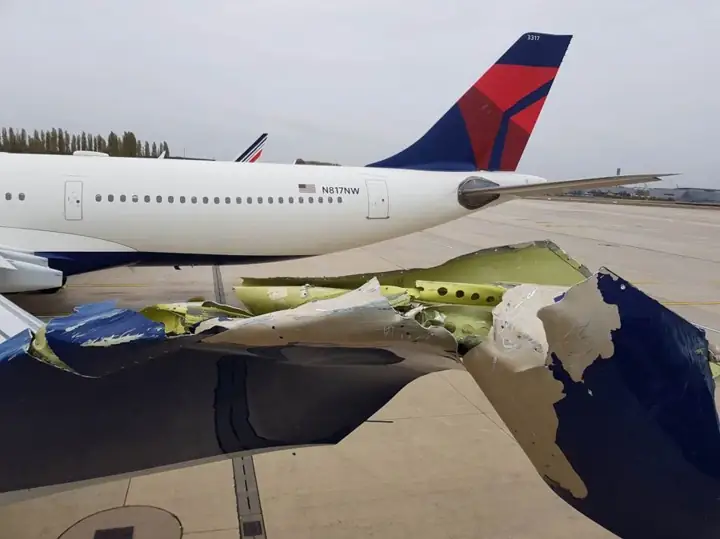
| Airline / operator | American Eagle, opb Republic Airways / Air Canada |
|---|---|
| Aircraft (type, registration) | American Eagle, opb Republic Airways Embraer ERJ-175LR (N432YX); Air Canada Airbus A320-211 (C-FKPT) |
| Category (my classification) | Human factors / Taxi crew (flight or maintenance) |
| What happened | An Airbus A320-200 (C-FKPT) was operated by Air Canada as flight AC716 from Toronto-Pearson International Airport, Canada to New York-La Guardia Airport, USA. After landing, C-FKPT was instructed by ATC to hold at Bravo and Gulf taxiways. N432YX, an Embraer ERJ- 175LR operated by Republic Airline as flight RPA4589, from St. Louis Lambert International Airport, USA to La Guardia Airport was instructed by ATC to hold at Romeo and Gulf when it clipped the left winglet of the stationary aircraft, C-FKPT. The Air Canada crew contacted ATC immediately and the Port Authority Operation, police and fire showed up to their gates (A7 and A5). There were no injuries; both aircraft sustained minor damage to their winglets. |
| Injuries | ASN lists 0 fatalities. There were no injuries; both aircraft sustained minor damage to their winglets. |
| Damage | Minor |
| Official investigation | No investigation details on the ASN entry. |
| Source | Aviation Safety Network (ASN) entry: https://aviation-safety.net/wikibase/216585 Further sources listed on that page / found: https://www.cbc.ca/news/canada/air-canada-wingtip-mishap-laguardia-1.4874017 https://t.co/3uZkDwLg3T https://t.co/Z1wqOLY4g3 |
| Airline / operator | Ural Airlines / Pegas Fly |
|---|---|
| Aircraft (type, registration) | Ural Airlines Airbus A321-231 (VQ-BGY); Pegas Fly Boeing 767- 3G5ER (VP-BOZ) |
| Category (my classification) | Human factors / Taxi crew (flight or maintenance) |
| What happened | Pegas Fly flight EO454, Boeing 767-300ER (VP-BOZ), contacted a parked Ural Airlines Airbus A321 (VQ-BGY) at Moscow's Zhukovsky Airport in Russia. The Boeing 767 had just landed after a flight from Guangzhou, China and was taxiing to Stand 18 when the left wing tip hit the Airbus A321, parked at Stand 19A. The Boeing 767 sustained damage to the left-hand slat and left-hand wingtip light. The aircraft was repaired resumed service within 24 hours. The Airbus A321 sustained damage to the right hand elevator. |
| Injuries | ASN lists 0 fatalities. No injury statement in the ASN narrative. |
| Damage | Minor, repaired |
| Time out of service | VQ-BGY: less than 1 day (ASN) |
| Official investigation | No investigation details on the ASN entry. |
| Source | Aviation Safety Network (ASN) entry: https://aviation-safety.net/wikibase/216133 Further sources listed on that page / found: http://mmtproc.ru/news/1/11866/ https://t.co/Ye3qT7FSH9 |
| Airline / operator | Pobeda Airlines |
|---|---|
| Aircraft (type, registration) | Pobeda Airlines Boeing 737-8AL (WL) (VP-BPJ) |
| Category (my classification) | Human factors / Taxi crew (flight or maintenance) |
| What happened | Pobeda flight DP205 was arriving at the stand at Saint Petersburg- Pulkovo Airport in Russia when the lower part of the left-hand split scimitar winglet hit a fire truck. The Boeing 737-800 had just arrived after a flight from Moscow. |
| Injuries | ASN lists 0 fatalities. No injury statement in the ASN narrative. |
| Damage | Minor |
| Official investigation | No investigation details on the ASN entry. |
| Source | Aviation Safety Network (ASN) entry: https://aviation-safety.net/wikibase/215363 Further sources listed on that page / found: https://www.fontanka.ru/2018/09/14/023/ https://regnum.ru/news/accidents/2482080.html |
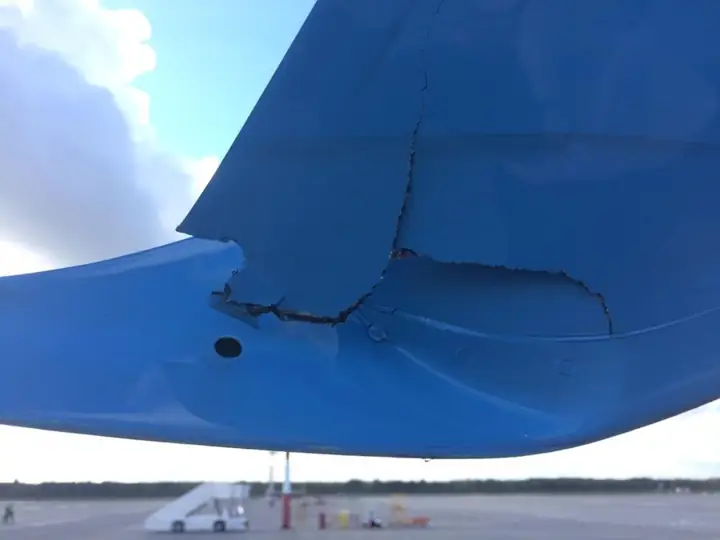
| Airline / operator | Capital Airlines |
|---|---|
| Aircraft (type, registration) | Capital Airlines Airbus A320-214 (B-6858) |
| Category (my classification) | Human factors / Taxi crew (flight or maintenance) |
| What happened | Upon taxiing, the plane collided with an Airbus A320 of China Eastern and sustained minor damage. |
| Injuries | ASN lists 0 fatalities. No injury statement in the ASN narrative. |
| Damage | Not stated |
| Official investigation | No investigation details on the ASN entry. |
| Source | Aviation Safety Network (ASN) entry: https://aviation-safety.net/wikibase/215112 Further sources listed on that page / found: https://actualidad.rt.com/actualidad/287598-chocarse-aviones-aeropuerto-chino |
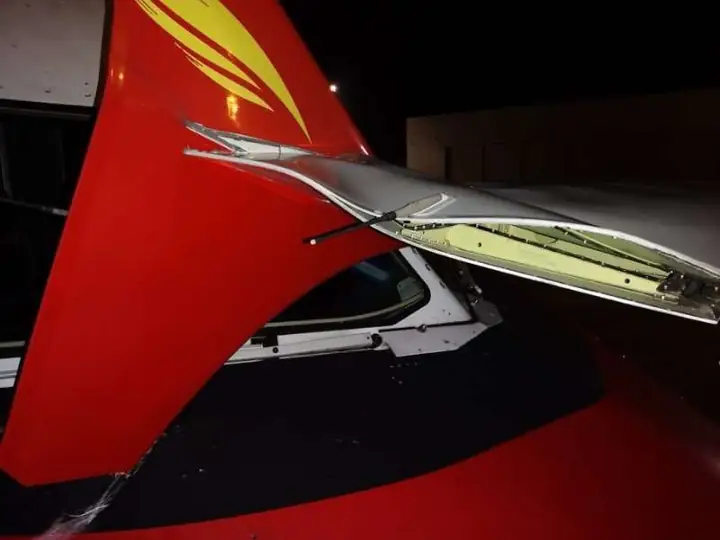
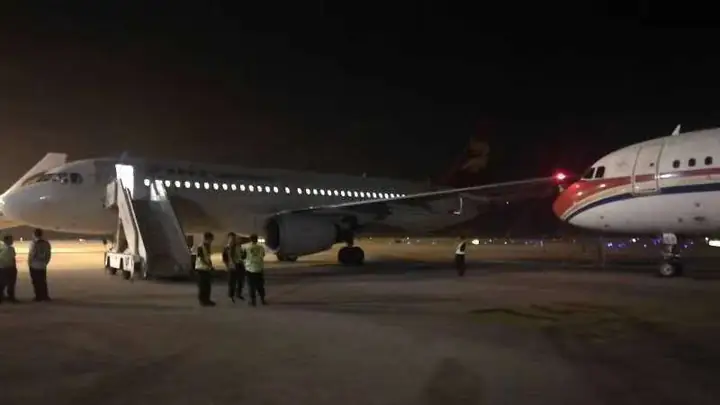
| Airline / operator | THY Turkish Airlines / Royal Air Maroc - RAM |
|---|---|
| Aircraft (type, registration) | THY Turkish Airlines Boeing 777-3F2ER (TC-JJZ); Royal Air Maroc - RAM Boeing 787-8 Dreamliner (CN-RGT) |
| Category (my classification) | Human factors / Taxi crew (flight or maintenance) |
| What happened | Royal Air Maroc flight 911, a Boeing 787-8 Dreamliner (CN-RGT), struck the tail section of a parked Turkish Airlines Boeing 777-300 (TC-JJZ) at Istanbul-Atatürk International Airport, Turkey. The Boeing 787-8 was pushed back from gate 226 at 17:37 and subsequently started taxiing on taxiway A towards the departure runway. The right hand wing tip of the aircraft impacted the underside of the tail section of the Boeing 777, ripping away the APU covers. The aircraft was parked at gate 218. The Boeing 777 had arrived from New York-JFK as flight TK12 and arrived at the gate at 17:18 hours. |
| Injuries | ASN lists 0 fatalities. No injury statement in the ASN narrative. |
| Damage | Substantial, repaired |
| Official investigation | No investigation details on the ASN entry. |
| Source | Aviation Safety Network (ASN) entry: https://aviation-safety.net/wikibase/319590 Further sources listed on that page / found: http://www.airporthaber.com/havacilik-haberleri/fas-havayollari-ucagi-thy-ucagina-carpti.html |
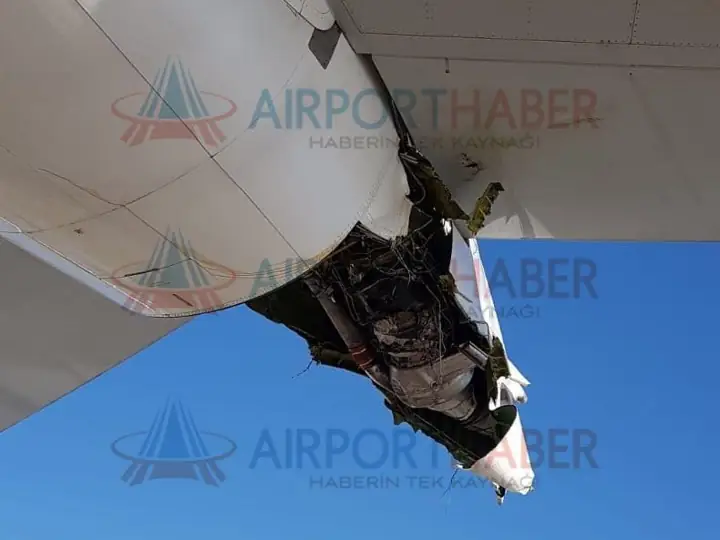
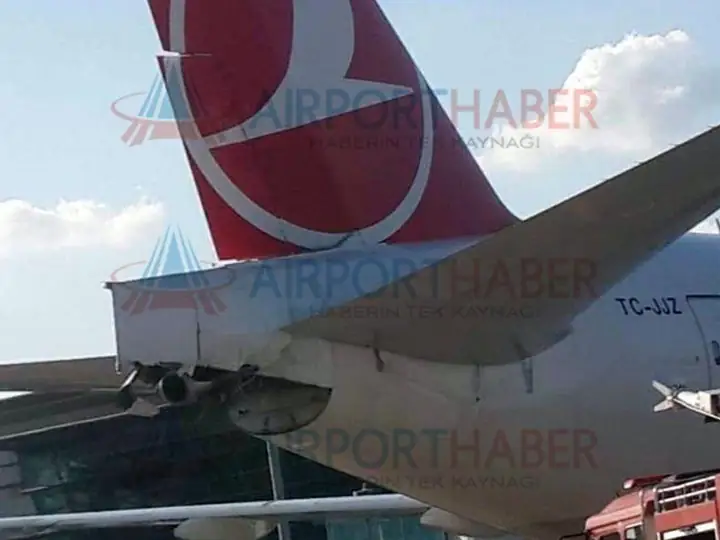
| Airline / operator | Allegiant Air |
|---|---|
| Aircraft (type, registration) | Allegiant Air Airbus A320-214 (WL) (N254NV) |
| Category (my classification) | Human factors / Taxi crew (flight or maintenance) |
| What happened | Allegiant Air flight G41913 hit parked Allgiant Air A320 while parking at gate |
| Injuries | ASN lists 0 fatalities. No injury statement in the ASN narrative. |
| Damage | Unknown |
| Official investigation | No investigation details on the ASN entry. |
| Source | Aviation Safety Network (ASN) entry: https://aviation-safety.net/wikibase/213099 Further sources listed on that page / found: https://www.asias.faa.gov/apex/f?p=100:96:13274971267108::::P96_ENTRY_DATE,P96_MAKE_NAME,P96_FATAL_FLG:09-J… |
| Airline / operator | Qatar Airways / AirAsia X |
|---|---|
| Aircraft (type, registration) | Qatar Airways Airbus A350-941 (A7-ALL); AirAsia X Airbus A330-343 (9M-XXC) |
| Category (my classification) | Human factors / Taxi crew (flight or maintenance) Secondary: ATC / marshalling involved |
| What happened | AirAsia X flight D7178, an Airbus A330-300, suffered a ground contact incident with a parked Qatar Airways Airbus A350 at Malé-Velana International Airport, Maldives. Qatar Airways flight QR672 had arrived at Malé at 03:52 UTC. It was parked on the apron in preparation for the flight back to Doha, Qatar at 05:15 UTC when flight D7178 arrived. The A330 was taxiing to the stand when the wing tip collided with A350's left elevator. Probable causes; 1. Congested condition of the apron and Marshalling. According to the parking plan generated for parking of AirAsia A330, it is evident that the apron was very congested. In this particular incident, only one marshaller and one wing-walker were found deployed to guide the taxiing aircraft into the allocated parking position as opposed to three required (one marshaller and two wing walkers) as per MACL Ramp Services SOP. Due to the limited available space to manoeuvre aircraft and the prevailing congestion on the apron, walking continuously with the wing of a moving aircraft was extremely difficult, though it is stated so in the MACL Ramp Services SOP. 2. Weak regulations and enforcement. ASC-139 and MCAR -139 documents published by MCAA do not explicitly mandate the airport operator to mark parking stands and lead-in lines on the apron and instead make recommendations. For the same reason, all regulations shall be clear, concise and consistent with the perceived objective(s) to be achieved.CAA records confirm that an exemption was granted to VIA on the provision of aircraft stand markings and apron safety lines from the requirements of MCAR-139 and ASC-139. The Exemption was expired at the time of the incident. |
| Injuries | ASN lists 0 fatalities. No injury statement in the ASN narrative. |
| Damage | Unknown |
| Official investigation | Investigating agency: AICC Maldives Report number: Status: Investigation completed Duration: Final report Report / investigator link(s): https://www.caa.gov.mv/attachments/dBkNf5G6LfCBjlk9qawXlFHLm2raO5f6SauH3lxg.pdf |
| Source | Aviation Safety Network (ASN) entry: https://aviation-safety.net/wikibase/212990 Further sources listed on that page / found: https://www.caa.gov.mv/attachments/dBkNf5G6LfCBjlk9qawXlFHLm2raO5f6SauH3lxg.pdf https://avas.mv/en/51141 https://www.facebook.com/mvaviationdaily/posts/2003666383297026 |
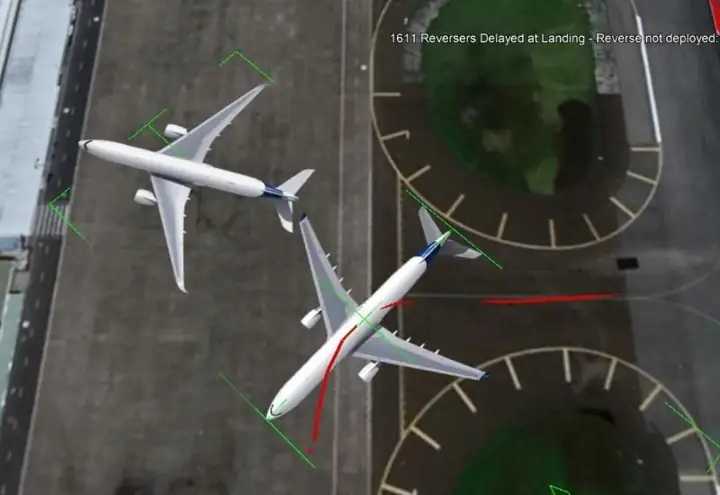
| Airline / operator | China Southern Airlines |
|---|---|
| Aircraft (type, registration) | China Southern Airlines Boeing 787-8 Dreamliner (B-2727) |
| Category (my classification) | Human factors / Taxi crew (flight or maintenance) |
| What happened | A Boeing 787-8, operated by China Southern Airlines as flight CZ645 from Wuhan, China, suffered minor damage when the no. 1 engine inlet cowling contacted the jet bridge. |
| Injuries | ASN lists 0 fatalities. No injury statement in the ASN narrative. |
| Damage | Minor |
| Official investigation | No investigation details on the ASN entry. |
| Source | Aviation Safety Network (ASN) entry: https://aviation-safety.net/wikibase/212360 |
| Airline / operator | Asiana Airlines / THY Turkish Airlines |
|---|---|
| Aircraft (type, registration) | Asiana Airlines Airbus A330-323 (HL7792); THY Turkish Airlines Airbus A321-231 (TC-JMM) |
| Category (my classification) | Human factors / Taxi crew (flight or maintenance) |
| What happened | An Asiana Airlines Airbus A330-323 (HL7792) and a THY Turkish Airlines Airbus A321-231 (TC-JMM) suffered substantial damage in a ground contact accident at Istanbul-Atatürk International Airport, Turkey. The Airbus A321 had arrived from Ercan as flight TK969 and turned towards Gate 217 at Terminal A at 14:47 UTC. The aircraft stopped meters before the intended parking position at the gate because the flight crew noticed a traffic cone was in the way. At the same time the Airbus A330 had commenced taxiing along taxiway G to the runway. Asiana flight 552 was returning to Seoul, South Korea. While taxiing past the A321, the right hand wing tip impacted the vertical stabilizer. The A321's vertical stabilizer was knocked over entirely and the A330's wing tip sustained serious damage. POSSIBLE CAUSE: As the probable cause of the accident that resulted in the wing tip of the Airbus 330-300 type aircraft with the registration mark HL7792 making the Istanbul-Seoul flight hitting the tail of the THY aircraft; - The TC-JMM cockpit crew, while focusing on foreign objects in the parking area and TGS personnel, lost situational awareness that the aircraft violated the G taxiway and did not report this situation to the ATC unit, - While the HL7792 crew should be performing taxi procedures, they cannot focus on the taxiway and make the wing separation, - TGS personnel not complying with the rules and regulations in the Ground Operations Manual (GOM), As a result of the joint evaluation of the above issues, it is thought that the accident occurred due to the human factor. |
| Injuries | ASN lists 0 fatalities. No injury statement in the ASN narrative. |
| Damage | Substantial, repaired |
| Official investigation | Investigating agency: UEIM Report number: final report Status: Investigation completed Duration: Final report Report / investigator link(s): https://ulasimemniyeti.uab.gov.tr/uploads/pages/hava-araci/tc-jmm-hl-7792-nihai-rapor.pdf |
| Source | Aviation Safety Network (ASN) entry: https://aviation-safety.net/wikibase/319654 Further sources listed on that page / found: https://ulasimemniyeti.uab.gov.tr/uploads/pages/hava-araci/tc-jmm-hl-7792-nihai-rapor.pdf |
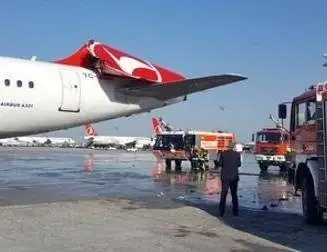
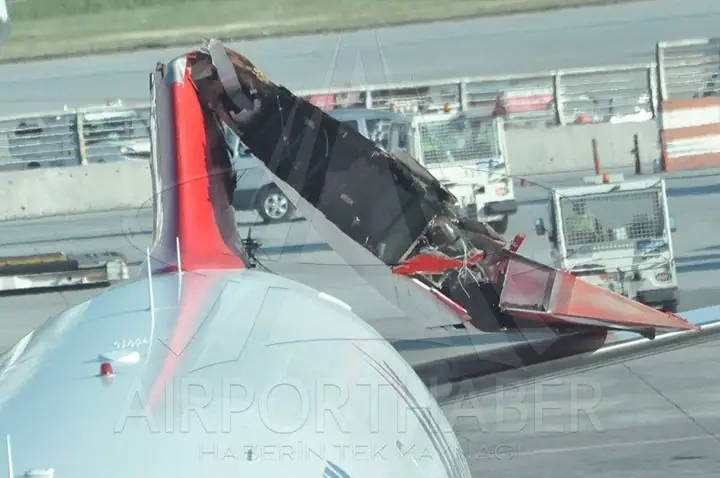
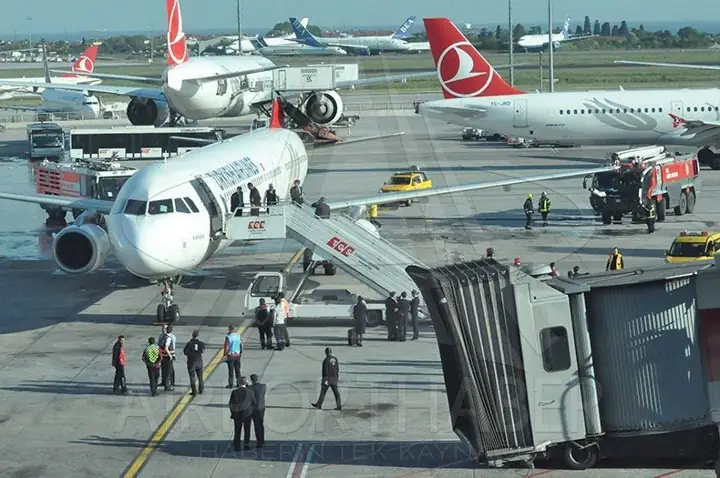
| Airline / operator | Air Niugini |
|---|---|
| Aircraft (type, registration) | Air Niugini Boeing 737-8BK (WL) (P2-PXE) |
| Category (my classification) | Human factors / Taxi crew (flight or maintenance) Secondary: ATC / marshalling involved |
| What happened | A Lockheed L-100 Hercules aircraft, registered N403LC, operated by Lynden Air Cargo for PNGAir, conducted a charter flight from Komo Airport to Jacksons International Airport in Papua New Guinea. The flight crew consisted of a pilot in command (PIC), copilot, load master, and two flight engineers. The Hercules landed on runway 14L at 15:10 local, turned right onto taxiway M and continued taxiing to Bay 23, crossing runway 14R and taxiway A. The adjacent bays, Bay 22 and Bay 24 were occupied by a Boeing 737-800, registered P2-PXE, operated by Air Niugini and a Canadian registered Basler BT-67 aircraft respectively. Marshalling guidance was provided at Bay 23 by the operator's ground personnel. At 15:15, as the PIC was manoeuvring the aircraft slightly to the left to prepare the aircraft to make a right turn and position its aft end to face the airport access gate to the cargo yard, the radius of turn took it past the wing tip of the Boeing 737. The Boeing 737 was stationary and unoccupied on the apron. The leading edge of the left wing of the Hercules impacted the right winglet of the Boeing 737 causing significant damage to both aircraft. |
| Injuries | ASN lists 0 fatalities. No injury statement in the ASN narrative. |
| Damage | Substantial, repaired |
| Official investigation | Investigating agency: AIC PNG Report number: AIC 18-1001 Status: Investigation completed Duration: Final report Report / investigator link(s): https://pub.flowpaper.com/docs/https:/aic.gov.pg/sites/default/files/2020-08/FINAL%20REPORT,%20issued%2019.10.2018.pdf |
| Source | Aviation Safety Network (ASN) entry: https://aviation-safety.net/wikibase/319656 Further sources listed on that page / found: https://pub.flowpaper.com/docs/https:/aic.gov.pg/sites/default/files/2020-08/FINAL%20REPORT,%20issued%2019.… |
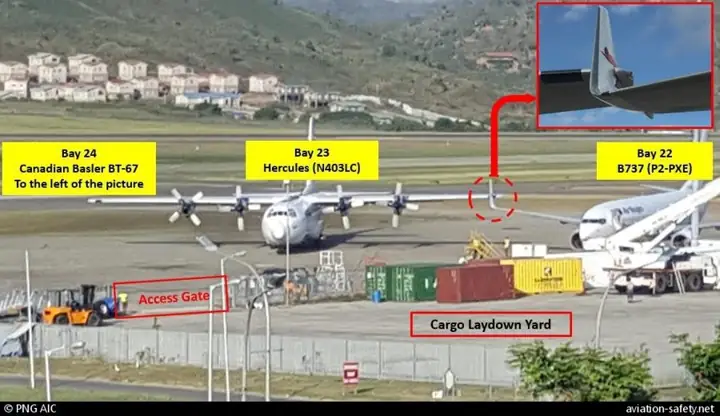
| Airline / operator | Lufthansa |
|---|---|
| Aircraft (type, registration) | Lufthansa Airbus A380-841 (D-AIMH) |
| Category (my classification) | Human factors / Taxi crew (flight or maintenance) |
| What happened | Lufthansa flight LH452 was taxiing to the gate after landing at Los Angeles International Airport, California, USA, when one of the engines hit a dolly with cargo. The aircraft was flown back to Munich, Germany, 30 hours after the incident. |
| Injuries | ASN lists 0 fatalities. No injury statement in the ASN narrative. |
| Damage | Not stated |
| Official investigation | No investigation details on the ASN entry. |
| Source | Aviation Safety Network (ASN) entry: https://aviation-safety.net/wikibase/210596 |
| Airline / operator | Delta Air Lines / Delta Connection, opb Endeavor Air |
|---|---|
| Aircraft (type, registration) | Delta Air Lines Boeing 767-332ER (WL) (N172DN); Delta Connection, opb Endeavor Air Bombardier CRJ-900LR (N606LR) |
| Category (my classification) | Human factors / Taxi crew (flight or maintenance) Secondary: ATC / marshalling involved |
| What happened | Endeavor Air flight 3413, CRJ900, N606LR, was struck by Delta Air Lines flight 212, a Boeing 767-300ER, N172DN, while awaiting to be marshalled into the gate at New York-John F. Kennedy International Airport (KJFK), USA. According to flight crew statements, both airplanes conducted normal landings and were cleared to taxi to their respective gates. Delta 212 was taxing to gate B30 and following behind Endeavor 3413 as it turned into gate B30. The captain of Endeavor 3413 stated that he had stopped short of the gate to await the ground crew. The captain of Delta 212 indicated that as they approached the airplane, he noticed that the wing walkers had stopped the Endeavor airplane prior to its gate, and so he stopped prior to entering the ramp area. When the Endeavor airplane started to move forward into the gate, he began to slowly taxi behind it, however, the captain indicated that he lost sight of airplane out the right window. He indicated that he turned slight to the left (away from Endeavor 3413) after his first officer advised him to provide additional clearance to ensure adequate separation. After he thought they would be safety clear of the airplane, he then turned back onto the taxiway centerline. As the airplane continued taxiing to the gate, the Delta flight crew heard over ramp control that they had struck Endeavor 3413. After parking, both airplanes were inspected and it was found that Delta 212's right winglet sustained minor damage and Endeavor 3413 sustained substantial damage to its horizontal and vertical stabilizer. Probable Cause: The failure of the captain of Delta 212 to ensure adequate clearance while taxiing behind Endeavor 3413. |
| Injuries | ASN lists 0 fatalities. No injury statement in the ASN narrative. |
| Damage | Minor, repaired |
| Official investigation | Investigating agency: NTSB Report number: DCA18CA165B Status: Investigation completed Duration: 2 years and 2 months Final report Report / investigator link(s): https://data.ntsb.gov/carol-repgen/api/Aviation/ReportMain/GenerateNewestReport/97158/pdf |
| Source | Aviation Safety Network (ASN) entry: https://aviation-safety.net/wikibase/319665 Further sources listed on that page / found: https://data.ntsb.gov/carol-repgen/api/Aviation/ReportMain/GenerateNewestReport/97158/pdf |
| Airline / operator | Ethiopian Airlines |
|---|---|
| Aircraft (type, registration) | Ethiopian Airlines Airbus A350-941 (ET-AUC) |
| Category (my classification) | Human factors / Taxi crew (flight or maintenance) |
| What happened | Ethiopian Airlines flight ET840, an Airbus A350-941, suffered minor damage after the right-hand winglet scraped the left-hand horizontal stabilizer of a Serve Air Boeing 727 (9S-AVN) at Kinshasa- N'Djili Airport, D.R. Congo. The flight eventually departed with a delay of almost eight hours. |
| Injuries | ASN lists 0 fatalities. No injury statement in the ASN narrative. |
| Damage | Not stated |
| Official investigation | No investigation details on the ASN entry. Report / investigator link(s): https://www.bea.aero/fileadmin/user_upload/ACCREP3UK.pdf |
| Source | Aviation Safety Network (ASN) entry: https://aviation-safety.net/wikibase/207699 Further sources listed on that page / found: https://www.bea.aero/fileadmin/user_upload/ACCREP3UK.pdf https://t.co/NXsZcVlaUL https://t.co/4sKvLCA6io |
| Airline / operator | Dana Air |
|---|---|
| Aircraft (type, registration) | Dana Air McDonnell Douglas MD-83 (5N-DEV) |
| Category (my classification) | Human factors / Taxi crew (flight or maintenance) |
| What happened | The plane sustained some damage to one of its wings when it hit a fence while trying to park. There were no personal injuries. |
| Injuries | ASN lists 0 fatalities. There were no personal injuries. |
| Damage | Not stated |
| Official investigation | No investigation details on the ASN entry. |
| Source | Aviation Safety Network (ASN) entry: https://aviation-safety.net/wikibase/205128 Further sources listed on that page / found: http://dailypost.ng/2018/01/27/dana-aircraft-loses-control-hits-fence-abuja-airport-passengers-board/ |
| Airline / operator | Privajet / Eastern Airways |
|---|---|
| Aircraft (type, registration) | Privajet Boeing 737-7BC (BBJ) (9H-BBJ); Eastern Airways Embraer ERJ-145LU (G-CISK) |
| Category (my classification) | Human factors / Taxi crew (flight or maintenance) Secondary: ATC / marshalling involved |
| What happened | A Boeing 737, registration 9H-BBJ, took off from Luton Airport at 1211 hrs for a positioning flight with six crew on board and no passengers; it landed at Bristol Airport approximately 30 minutes later. The aircraft commander was the handling pilot and the co-pilot was monitoring during the sector. After landing, the aircraft taxied towards the Southern parking area. The operator had subcontracted ground handling to an external company who provided a marshalling service. The commander reported that after crossing the Juliet X-Ray holding point, the aircraft was met by a wingman who stood on the left of the aircraft behind the tail of a parked Embraer 145 and a marshaller located just in front of the grass verge where the aircraft was to be parked. The marshaller then signalled to the flight crew to continue to move forward. The wingman suddenly signalled for the aircraft to stop; however, braking the aircraft to a standstill took a few seconds, by which time the left winglet of the aircraft had made contact with the rear strobe housing of the Embraer 145, registration G-CISK, which was parked nose-in to the hangers on the left of the taxiway. Following the impact, the marshaller in front signalled to the flight crew to resume taxiing until the aircraft was parked at the Southern parking area. Conclusion A number of factors, which individually may not have been significant, combined to position the taxiing Boeing 737 on a collision course with a parked Embraer 145 and prevented the lack of clearance between the aircraft from being identified early enough to avoid an accident. The organisations involved have identified where the process can be improved to help prevent reoccurrence. |
| Injuries | ASN lists 0 fatalities. No injury statement in the ASN narrative. |
| Damage | Minor |
| Official investigation | Investigating agency: AAIB Report number: EW/G2018/01/02 Status: Investigation completed Duration: 5 months Final report Report / investigator link(s): https://assets.publishing.service.gov.uk/media/5afac160e5274a25edd3276e/Boeing_737_9H-BBJ_and_Embraer_145LR_G-CISK_06-18.pdf |
| Source | Aviation Safety Network (ASN) entry: https://aviation-safety.net/wikibase/212125 Further sources listed on that page / found: https://assets.publishing.service.gov.uk/media/5afac160e5274a25edd3276e/Boeing_737_9H-BBJ_and_Embraer_145LR… |
| Flag | Non-airline (military / government / private / special-mission) operator: shows the risk type, not a direct WheelTug airline market case. |
| Airline / operator | China Southern Airlines / Kuwait Airways |
|---|---|
| Aircraft (type, registration) | China Southern Airlines Boeing 777-31BER (B-7185); Kuwait Airways Boeing 777-369ER (9K-AOC) |
| Category (my classification) | Human factors / Taxi crew (flight or maintenance) |
| What happened | Two Boeing 777-300 aircraft were damaged in a ground collision at New York-John F. Kennedy International Airport, USA. The right-hand wingtip of a Boeing 777-31BER (B-7185) operated by China Southern Airlines struck the APU in the tail of a Boeing 777-369ER (9K-AOC), operated by Kuwait Airways. There were no personal injuries. |
| Injuries | ASN lists 0 fatalities. There were no personal injuries. |
| Damage | Minor |
| Official investigation | No investigation details on the ASN entry. |
| Source | Aviation Safety Network (ASN) entry: https://aviation-safety.net/wikibase/203908 Further sources listed on that page / found: http://gulfnews.com/news/americas/usa/plane-bumps-into-kuwait-airways-flight-ready-for-take-off-at-jfk-inte… https://www.spa.gov.sa/viewfullstory.php?lang=en&newsid=1705945 https://t.co/1g2isyyHD4 |
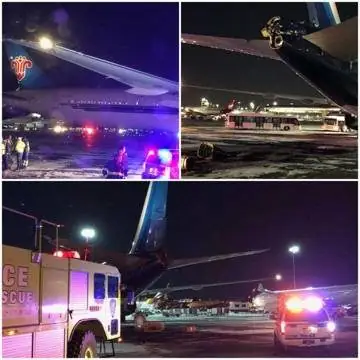
| Airline / operator | American Airlines |
|---|---|
| Aircraft (type, registration) | American Airlines Boeing 737-823 (WL) (N344PP); American Airlines Airbus A319-115 (WL) (N9011P) |
| Category (my classification) | Human factors / Taxi crew (flight or maintenance) |
| What happened | The right wing of American Airlines Flight 1531, an Airbus A319-115 (N9011P), contacted an American Airlines Boeing 737-823 (N344PP) on the ground at Miami International Airport, Florida, USA. According to flight crew statements, N344PP had landed on runway 09 from San Juan, Puerto Rico as flight 1613. The flight was instructed to turn onto taxiway N5 from taxiway M. The captain set the parking brake as they waited for preceding traffic to clear. N9011P was taxiing to the stand after arriving from Tegucigalpa, Honduras. The aircraft was following N344PP along taxiway M and observed N344PP stop on the taxiway N5 with its tail partially blocking taxiway M. After several minutes of waiting, N9011P requested permission to taxi past N344PP, which was granted. As the Captain of N9011P slowly taxied, the first officer attempted to visually monitor clearance between their airplanes wingtip and N344PPs horizontal stabilizer. The FO stated that he was temporarily blinded by the glare from the ramp lights and the airplanes collided. N9011P received minor damage to its right wingtip and the lower spar of N344PP's horizontal stabilizer was fractured. PROBABLE CAUSE: "The failure of the flight crew of N9011P to maintain an appropriate clearance from N344PP, which was stopped on the taxiway." |
| Injuries | ASN lists 0 fatalities. No injury statement in the ASN narrative. |
| Damage | Minor, repaired |
| Official investigation | Investigating agency: NTSB Report number: DCA18CA043B Status: Investigation completed Duration: 9 months Final report |
| Source | Aviation Safety Network (ASN) entry: https://aviation-safety.net/wikibase/319759 |
| Airline / operator | EgyptAir / Virgin Atlantic Airways |
|---|---|
| Aircraft (type, registration) | EgyptAir Boeing 777-36NER (SU-GDL); Virgin Atlantic Airways Airbus A330-343 (G-VRAY) |
| Category (my classification) | Human factors / Taxi crew (flight or maintenance) |
| What happened | An EgyptAir Boeing 777-300 (SU-GDL) was involved in a ground collision accident with a Virgin Atlantic Airways Airbus A330-343 (G- VRAY) at New York-John F. Kennedy International Airport, New York, USA. Both aircraft were taxiing for departure from runway 4L when Virgin flight 4 moved to the side on the runway 4L hold pad to let following aircraft pass. EgyptAir flight 986 to Cairo, Egypt, was passing the A330 when the right hand wing tip leading edge struck the left hand winglet of the A330. The winglet was ripped off and the Boeing 777's wing leading edge sustained damage. Probable cause: The air traffic controller's improper instruction to the Egypt Air airplane flight crew to pass in an area where passing is prohibited, which led to a ground collision. |
| Injuries | ASN lists 0 fatalities. No injury statement in the ASN narrative. |
| Damage | Substantial, repaired |
| Official investigation | Investigating agency: NTSB Report number: DCA18LA024A Status: Investigation completed Duration: 4 years and 5 months Final report Report / investigator link(s): https://data.ntsb.gov/carol-repgen/api/Aviation/ReportMain/GenerateNewestReport/96383/pdf |
| Source | Aviation Safety Network (ASN) entry: https://aviation-safety.net/wikibase/319764 Further sources listed on that page / found: https://data.ntsb.gov/carol-repgen/api/Aviation/ReportMain/GenerateNewestReport/96383/pdf |
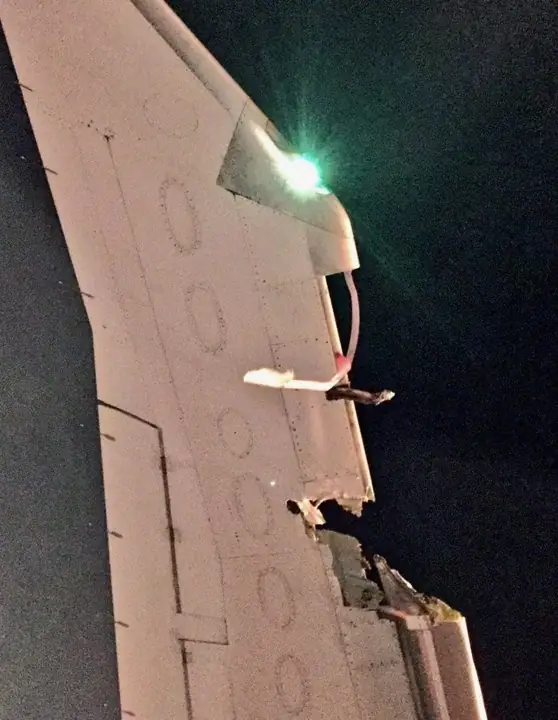
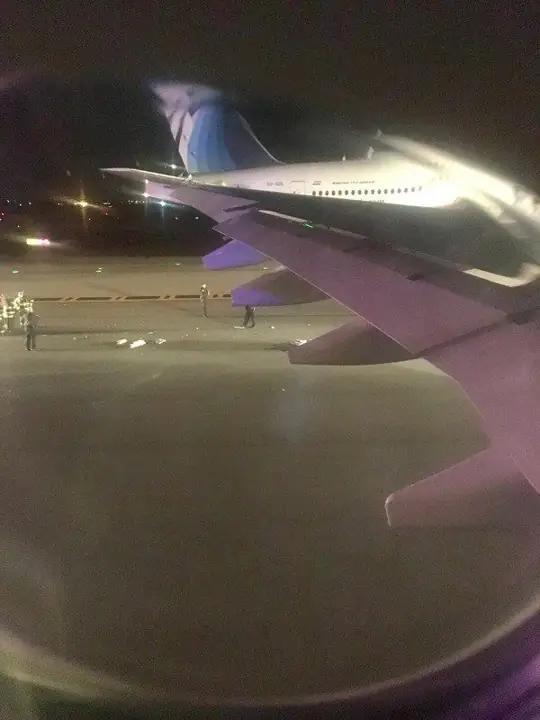
| Airline / operator | Ukraine International Airlines |
|---|---|
| Aircraft (type, registration) | Ukraine International Airlines Boeing 737-8AS (WL) (UR-PSV) |
| Category (my classification) | Human factors / Taxi crew (flight or maintenance) |
| What happened | Right wing hit a truck when taxiing from stand. Leading edge slat damaged. Passengers taken to destination on UR-PST. |
| Injuries | ASN lists 0 fatalities. No injury statement in the ASN narrative. |
| Damage | Not stated |
| Official investigation | No investigation details on the ASN entry. |
| Source | Aviation Safety Network (ASN) entry: https://aviation-safety.net/wikibase/200740 Further sources listed on that page / found: http://www.ad.nl/ https://www.facebook.com/Igubc/posts/1524327264312991 |
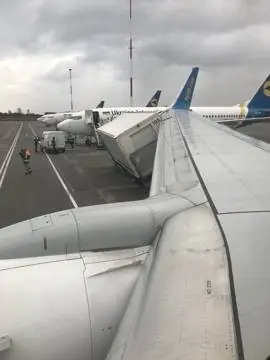
| Airline / operator | American Airlines |
|---|---|
| Aircraft (type, registration) | American Airlines Boeing 737-823 (WL) (N841NN); American Airlines Airbus A321-231 (N982VJ); American Airlines Boeing 737-823 (WL) (N841NN) |
| Category (my classification) | Human factors / Taxi crew (flight or maintenance) |
| What happened | American Airlines Flight 1533, a Boeing 737-823 (N841NN), contacted an American Airlines Airbus A321-231 (N982VJ) on the ground at Washington- Ronald Reagan National Airport, DC, USA. The aircraft was taxiing to the stand after arriving from Miami, Florida when the left hand winglet impacted the right hand horizontal stabilizer of the A321. The A321 had just arrived from Dallas-Fort Worth, Texas as flight 419. Probable Cause: The failure N841NNs captain to maintain appropriate clearance from N982VJ, which was stopped on the taxiway. |
| Injuries | ASN lists 0 fatalities. No injury statement in the ASN narrative. |
| Damage | Minor, repaired |
| Official investigation | Investigating agency: NTSB Report number: DCA17CA214A Status: Investigation completed Duration: 11 months Final report Report / investigator link(s): https://data.ntsb.gov/carol-repgen/api/Aviation/ReportMain/GenerateNewestReport/96122/pdf |
| Source | Aviation Safety Network (ASN) entry: https://aviation-safety.net/wikibase/319805 Further sources listed on that page / found: https://data.ntsb.gov/carol-repgen/api/Aviation/ReportMain/GenerateNewestReport/96122/pdf https://wtop.com/virginia/2017/09/2-planes-clips-reagan-national/ https://wsvn.com/news/us-world/passengers-evacuate-after-flight-from-miami-collides-with-another-plane/ https://flightaware.com/live/flight/N841NN https://t.co/v9WBsRFwnK |
 ▶ VIDEO
Still: X video preview frame, @waltermorris on X
| Airline / operator | PSA Airlines, opf American Eagle |
|---|---|
| Aircraft (type, registration) | PSA Airlines, opf American Eagle Canadair CL-600-2B19 Regional Jet CRJ-200ER (N261PS) |
| Category (my classification) | Human factors / Taxi crew (flight or maintenance) |
| What happened | PSA Airlines flight 5233, a CRJ-200, N261PS, collided with a TLD Jet-16 baggage tug operated by Piedmont Airlines while taxiing at Charlotte-Douglas International Airport (KCLT), North Carolina, USA. The airplane received substantial damage to the left wing and the tug canopy section was damaged. The tug driver was seriously injured and there were no injuries to the 53 passengers and crew onboard the CRJ-200. Weather was daytime visual meteorological conditions. After landing on runway 18R, the airplane was instructed to taxi to Gate E4. While taxiing in a narrow alleyway near the north end of concourse E, between the concourse and the baggage transfer point, the ground tug impacted the left wingtip. The tug was driving on non- movement area of the terminal ramp. The baggage tug was slightly in front of the aircraft at about a 10 o'clock position to the captain of the aircraft. A terminal road crosses the taxi alleyway from near Gate E38 to the beginning of area designated as the baggage transfer point. The transfer point is located outside the alleyway and is lined with concrete barriers. Airplane taxi within the alleyway and ground equipment travel perpendicular to aircraft movement when accessing the transfer point. As the tug turned onto the service road and began to cross the roadway he noticed the airplane taxing in the alley. The driver indicated that, in order to avoid a collision, he tightened his right turn in the opposite direction the airplane was traveling before colliding with the left hand wing. The canopy of the baggage tug was sheared off and the leading edge and winglet of the airplane was substantially damaged. The final resting place of the tug was just behind the trailing edge of the wing. There were skid marks from the airplane tires consistent with maximum braking starting when the airplane made contact with the baggage tug. According to airline ground movement procedures, an airplane on the non-movement area always has the right of way. Probable Cause: "The tug operator's initiation of a right turn onto the perpendicular terminal road in proximity to the airplane. " |
| Injuries | ASN lists 0 fatalities. The tug driver was seriously injured and there were no injuries to the 53 passengers and crew onboard the CRJ-200. |
| Damage | Substantial, repaired |
| Official investigation | Investigating agency: NTSB Report number: DCA17CA197 Status: Investigation completed Duration: 5 months Final report |
| Source | Aviation Safety Network (ASN) entry: https://aviation-safety.net/wikibase/319814 |
| Airline / operator | Air India Express |
|---|---|
| Aircraft (type, registration) | Boeing 737-800 (737-8HG), VT-AYB; flight IX 452 from Abu Dhabi |
| Category (my classification) | Human factors / Taxi crew (flight or maintenance) Secondary: Poor-visibility taxi |
| What happened | At 21:12 UTC on 4 Sep 2017 (02:42 IST, 5 Sep), after a night landing in heavy rain, the aircraft was taxiing on taxiway C when the captain turned left about 90 m short of taxiway F. The co-pilot had asked the captain to go slow because markings were not visible and to call a Follow Me jeep; there was no response. The aircraft entered an open rain-water drain (3 m wide, 1.7 m deep on the taxiway side). The nose landing gear collapsed, the main gear ended up suspended in the drain, and the engines and rear belly carried the weight. The captain applied thrust three times trying to get out; the engines were shut down 7 minutes after the accident. The AAIB gives the probable cause as incorrect judgement by the captain in starting the left turn short of the taxi link, at night, in rain and reduced visibility; a contributory factor was that the taxiway C centreline was barely visible. |
| Injuries | 3 passengers with minor injuries (102 passengers and 6 crew on board). |
| Damage | Major structural damage, including the nose landing gear, engine inlet and fan cowls, engine struts and lower skin. |
| Official investigation | AAIB India, final investigation report. Report / investigator link(s): https://aaib.gov.in/Reports/2017/Accident/Accepted%20Report%20VT-AYB.pdf |
| Source | Aviation Safety Network (ASN) entry: https://aviation-safety.net/wikibase/319823 Further sources listed on that page / found: https://www.thehindu.com/news/national/narrow-escape-for-108-as-air-india-express-aircraft-skids-off-taxiwa… |
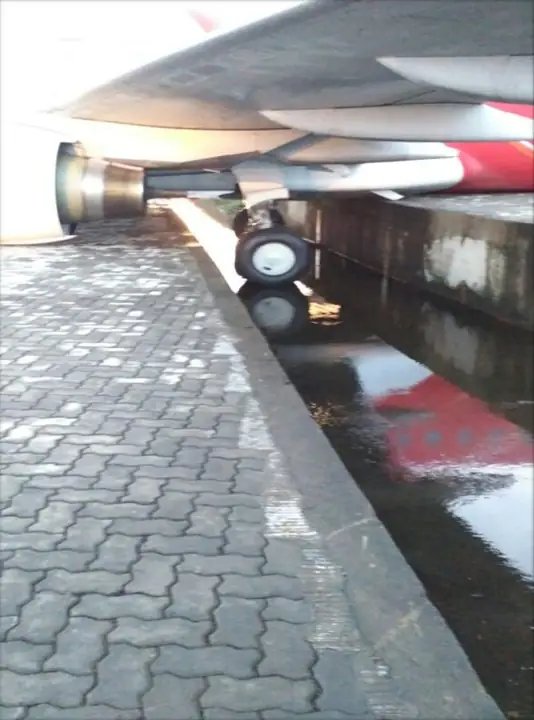
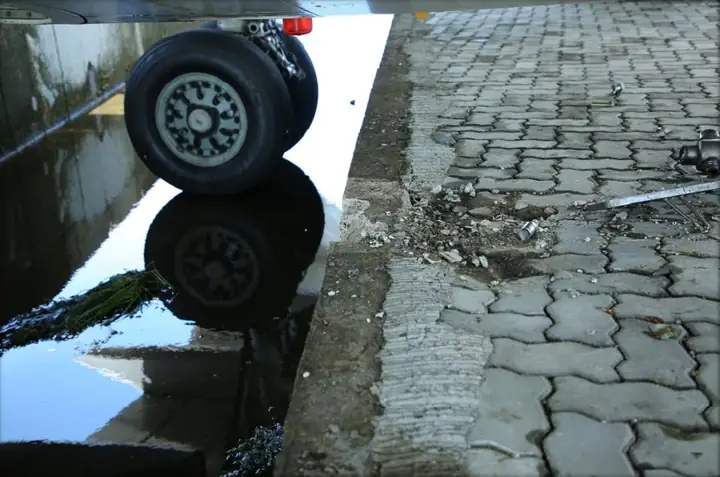
| Airline / operator | American Airlines / Delta Air Lines |
|---|---|
| Aircraft (type, registration) | American Airlines Boeing 757-223 (WL) (N175AN); Delta Air Lines Boeing 737- 832 (WL) (N377DA) |
| Category (my classification) | Human factors / Taxi crew (flight or maintenance) |
| What happened | American Airlines flight 290, a Boeing 757-200, N175AN, was stationary awaiting takeoff clearance when it was struck by Delta Air Lines flight 2503, a Boeing 737-800, N377DA, as it was taxiing at New York-John F. Kennedy International Airport (KJFK), USA. There were no injuries to the 129 passengers and crew onboard the B757, nor to the 166 passengers and crew onboard the B737. The American Airlines B757 sustained substantial damage and the Delta Air Lines B737 sustained minor damage. According to flight crew statements, the American Airlines B757 taxied down taxiway C and turned onto taxiway FB where it stopped short of runway 22R and was awaiting takeoff clearance. The Delta B737 followed the American B757 down taxiway C and was then instructed to taxi behind the American B757 and to continue to taxiway E. The Delta captain stated he steered slightly to the right of the taxiway centerline to keep clear of the stopped American B757. He then steered back towards the centerline once he thought his left winglet had cleared the American B757s tail when he felt a bump. After stopping, emergency personnel inspected both airplanes and indicated that Delta's left winglet had contacted the American B757 right horizontal stabilizer, resulting in substantial damage to the elevator. Both aircraft taxied back to their respective gates under their own power and passengers deplaned normally. Probable Cause: the Delta B737 captain's failure to maintain proper clearance between his airplane and the stopped American B757. |
| Injuries | ASN lists 0 fatalities. There were no injuries to the 129 passengers and crew onboard the B757, nor to the 166 passengers and crew onboard the B737. |
| Damage | Substantial, repaired |
| Official investigation | Investigating agency: NTSB Report number: DCA17CA181B Status: Investigation completed Duration: 2 years and 10 months Final report Report / investigator link(s): https://data.ntsb.gov/carol-repgen/api/Aviation/ReportMain/GenerateNewestReport/95831/pdf |
| Source | Aviation Safety Network (ASN) entry: https://aviation-safety.net/wikibase/319836 Further sources listed on that page / found: https://data.ntsb.gov/carol-repgen/api/Aviation/ReportMain/GenerateNewestReport/95831/pdf |
| Airline / operator | LOT Polskie Linie Lotnicze / Air Canada Rouge |
|---|---|
| Aircraft (type, registration) | LOT Polskie Linie Lotnicze Boeing 787-8 Dreamliner (SP-LRC); Air Canada Rouge Boeing 767-333ER (WL) (C- FMWP) |
| Category (my classification) | Human factors / Taxi crew (flight or maintenance) |
| What happened | Air Canada Rouge flight AC1713, a Boeing 767-300ER, (C-FMWP), suffered a ground contact incident when parking at spot 181 (Terminal 1) after landing at Toronto-Pearson International Airport, Canada. The left hand winglet cut into the right hand wing tip of a LOT Polish Airlines Boeing 787-8 Dreamliner (SP-LRC), that was positioned at parking spot 180 (Terminal 1). This aircraft was preparing for departure back to Warsaw, Poland as flight LO46. The Teamsters Union suggested in a Facebook page that the incident happened as LO46 was being pushed back by 'an untrained manager'. An official for Swissport, that was handling LO46, stated by quoting TSB that the incident occurred as the Boeing 767 was being parked. He further stated that LO46 was parked correctly at the gate and that the airplane was being loaded at the time. This was confirmed by a passenger who tweeted that the boarding process was ongoing as the incident occurred. It was noted after subsequent investigation that if a Boeing 787-8 was parked in spot 180, spot 181 cannot accommodate any widebody aircraft and the spot is only available to narrowbody aircraft such as Airbus A319, A320, A321. The Air Canada Rouge Boeing 767-300ER (C-FMWP) was returned to service on the morning of 7 August 2017 with the damage on the winglet patched. As of 19 August 2017, the LOT Polish Airlines Boeing 787-800 (SP-LRC) has not returned to service, and remains on the ground in Toronto. B787 resumed normal operation as LO46 from Toronto to Warsaw on August 22nd. |
| Injuries | ASN lists 0 fatalities. No injury statement in the ASN narrative. |
| Damage | Minor, repaired |
| Time out of service | SP-LRC: at least 14 days (not returned as of 19 Aug 2017) (ASN) C-FMWP: 2 days (ASN) |
| Official investigation | No investigation details on the ASN entry. |
| Source | Aviation Safety Network (ASN) entry: https://aviation-safety.net/wikibase/197150 Further sources listed on that page / found: https://t.co/GYCs1bNvdE |
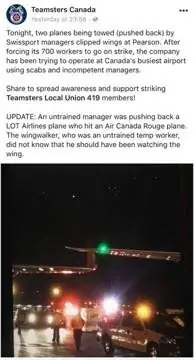
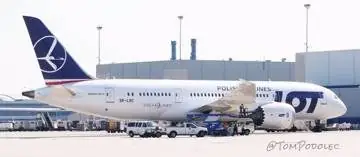
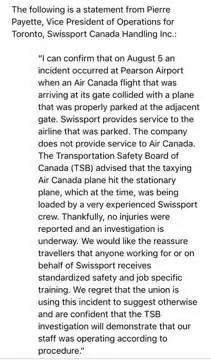
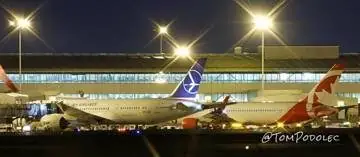
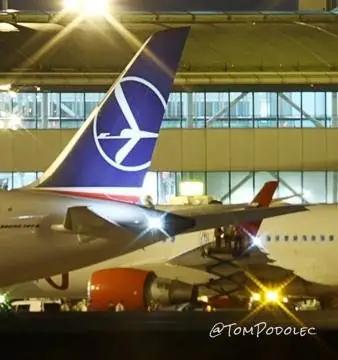
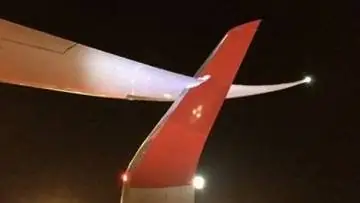
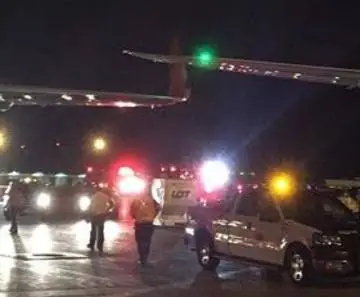
| Airline / operator | Wings Air |
|---|---|
| Aircraft (type, registration) | Wings Air ATR 72-500 (72-212A) (PK-WFF) |
| Category (my classification) | Human factors / Taxi crew (flight or maintenance) Secondary: ATC / marshalling involved |
| What happened | An ATR 72-500 operated by Wings Air as flight 1252 (PK-WFF) and a Boeing 737-900 operated by Lion Air as flight 197 (PK-LJZ) both sustained substantial damage in a ground collision accident on the active runway 23 at Medan-Kualanamu International Airport, Indonesia. The ATR 72-500 operated as scheduled passenger flight from Medan with intended destination of Meulaboh Airport. On board IW1252 were two pilots, one observer pilot, two flight attendants and 67 passengers. The pilot in command acted as Pilot Flying (PF) and the second in command acted as Pilot Monitoring (PM). At 10:54, the flight attendant of IW1252 advised the pilot that the boarding process was completed. The pilot then requested push back and engine start clearance from the Medan Ground controller , which was approved. At 10:56, IW1252 requested taxi clearance to the Medan Ground controller and was instructed to taxi to runway 23 following U2 taxi route, which was from apron V to holding point runway 23 on taxiway C, via taxiway U - T - and B. At 10:57, flight JT197 reported to the Medan Tower controller that the aircraft was established on the localizer of runway 23. The Medan Tower controller acknowledged this and issued a landing clearance with additional information regarding the wind conditions and barometric pressure. At 10:58, IW1252 contacted Medan Tower and was instructed to continue to taxi and hold on short of runway 23. Flight IW1252 requested to depart via the taxiway D intersection with the intention to expedite the departure. This was approved. Taxiway D was a Rapid Exit Taxiway (RET) for runway 05. At 10:59, IW1252 advised Medan Tower that the aircraft was close to reaching runway 23. Medan Tower then requested confirmation that IW1252 was ready for immediate departure. There was no reply and the Medan Tower controller repeated the request and received the reply that IW1252 was able for immediate departure. Medan Tower intended to let IW1252 depart immediately after flight JT197 had landed, since there was another arriving aircraft behind JT197. At 11:00:01, the Medan Tower controller radioed: "Wings Abadi one two five two behind traffic Lion short final landed passing line up behind runway two three from intersection delta additional clearance after departure direct Meulaboh". At 11:00:13, IW1252 read back: "after departure direct to Meulaboh Wings Abadi one two five two". Thereafter, IW1252 continued the taxi for line up on runway 23. At 11:00:32, IW1252 crossed the runway holding position marking (yellow line). At the same time, the Medan Tower controller was monitoring the distance of the second arriving aircraft on the radar display. As JT197 was on short final, the flight crew noted IW1252 ahead and assumed that the ATR aircraft would not enter the runway. Therefore, the PF decided to continue the landing approach and focused on handling the aircraft. At 11:00:50, JT197 touched down and the attention of the Medan Tower controller changed back from the radar display to the runway environment. IW1252 by then crossed the runway side marking (white line) and continued to enter the runway. The flight crew of JT197 saw that the ATR was entering the runway. At 11:00:56, the left wing of JT197 impacted with the right hand wing of IW1252. The flight crew of JT197 subsequently radioed the Medan Tower controller that there was another aircraft on the runway and this was acknowledged. The Medan Tower supervisor on duty noticed two aircraft on the runway and the Medan Tower controller panicked. Thereafter, the Medan Tower supervisor took over the communication of Medan Tower. At 11:01:47, the pilot of JT197 contacted the Medan Tower twice, and received a response at 11:02:01 by the Medan Tower supervisor, who then instructed them to vacate the runway via taxiway G. At 11:02:05, JT197 advised the Medan Tower that the aircraft had touched down and asked why there was another aircraft on runway 23. The Medan Tower supervisor requested the pilot to standby. At 11:02:30, the Medan Tower supervisor instructed the other arriving aircraft pilot to overshoot due to traffic. The other arriving aircraft pilot requested to make orbit to the left on final approach which was approved. While the Boeing 737-900 was taxiing to the parking bay, the Medan Tower supervisor issued takeoff clearance to IW1252, with additional clearance to turn left heading 315 after airborne. IW1252 responded that they were unable to depart. The Medan Tower supervisor then instructed the IW1252 pilot to hold on the runway. At 11:04:40, the Medan Tower supervisor again issued takeoff clearance IW1252, to which the pilot responded by requesting to return to the apron for inspection of any damage to the aircraft. The Medan Tower supervisor approved the request and instructed them to vacate the runway via taxiway E then to contact Medan Ground. As the ATR was taxiing back to the apron another departing aircraft was cleared to line up on runway 23, with takeoff clearance being issued at 11:07:21. At 11:08:55, JT197 advised the Medan Ground controller pf the possibility of aircraft debris on the runway that might become hazard to the other aircraft. The Medan Ground controller acknowledged and relayed the information to Medan Tower supervisor. At 11:10:26, the flight that had just departed advised Medan Tower that there was Foreign Object Debris (FOD) on the runway. Despite these reports, Medan Tower issued landing clearance to another arriving aircraft at 11:10:44. At 11:14, after landing on runway 23, the other arriving flight advised Medan Tower that there was FOD on the runway. It took until 11:31 for the runway to be closed. After all the debris were collected and runway cleaned, the runway was reopened and resumed to normal operation at 11:55. Contributing Factors: "The communication misunderstanding of the conditional clearance to enter runway while the IW1252 pilots did not aware of JT197 had received landing clearance and the unobserved IW1252 aircraft movement made the IW1252 aircraft entered the runway." METAR: 03:30 UTC / 10:30 local time: WIMM 030330Z 08005KT 030V120 9000 BKN018 30/26 Q1010 04:00 UTC / 11:00 local time: WIMM 030400Z 11007KT 040V140 9999 BKN018 30/25 Q1010 04:30 UTC / 11:30 local time: WIMM 030430Z 06007KT 040V100 9999 BKN018 31/26 Q1009 |
| Injuries | ASN lists 0 fatalities. No injury statement in the ASN narrative. |
| Damage | Substantial, written off |
| Time out of service | PK-WFF: Written off (ASN) |
| Official investigation | Investigating agency: NTSC Report number: KNKT.17.08.25.04 Status: Investigation completed Duration: 8 months Final report Report / investigator link(s): https://aviation-safety.net/wikibase/319842 |
| Source | Aviation Safety Network (ASN) entry: https://aviation-safety.net/wikibase/319842 |
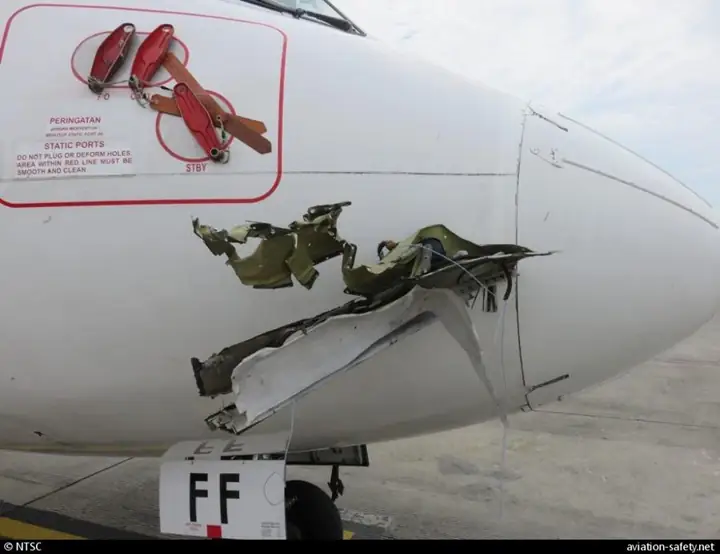
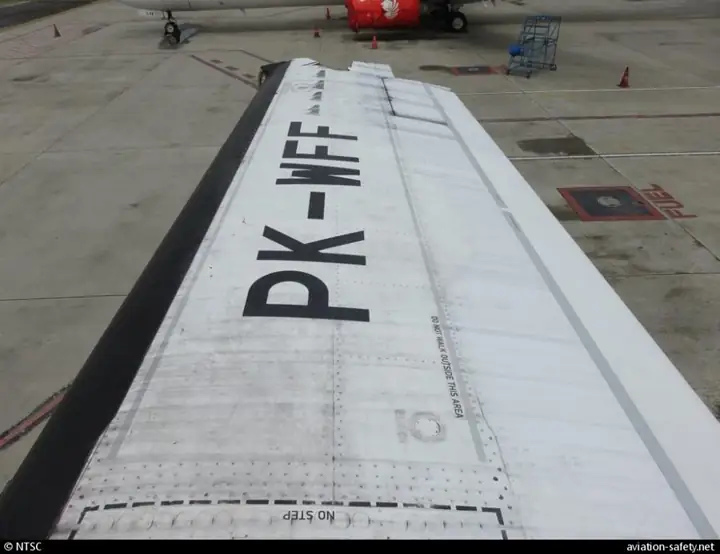
| Airline / operator | Qatar Airways |
|---|---|
| Aircraft (type, registration) | Qatar Airways Airbus A340-642 (A7-AGC) |
| Category (my classification) | Human factors / Taxi crew (flight or maintenance) |
| What happened | Qatar Airways flight QR145, an Airbus A340-600, was involved in a ground incident after landing at Barcelona Airport, Spain. The aircraft had landed normally and taxied to its assigned gate, No. 270. As it proceeded on the Q7 taxiway on the south platform, engine no. 1 hit a van. The van drove on the platform via VS405 ground vehicle movements to cross the taxiway from stand 410 to 260, in a direction roughly perpendicular to the plane's path. The crew did not see or notice the impact with the van, which was only identified at the aircraft inspection after stopping engines. There were no injuries to the occupants of the aircraft or to the driver of the vehicle. The aircraft has deformations and scrapes in the lower left of the fairing of engine no. 1. The van had deformations and cracks of the windshield, roof and front right door. The aircraft was ferried back to Doha on July 19 and re-entered service on July 21, 2017. |
| Injuries | ASN lists 0 fatalities. There were no injuries to the occupants of the aircraft or to the driver of the vehicle. |
| Damage | Minor |
| Time out of service | A7-AGC: 7 days (ASN) |
| Official investigation | Investigating agency: CIAIAC Report number: IN-012/2017 Status: Investigation completed Duration: 1 year and 7 months Final report |
| Source | Aviation Safety Network (ASN) entry: https://aviation-safety.net/wikibase/197374 |
| Airline / operator | SkyWest Airlines, opf American Eagle / American Airlines |
|---|---|
| Aircraft (type, registration) | SkyWest Airlines, opf American Eagle Canadair CL-600-2B19 Regional Jet CRJ-200ER (N862AS); American Airlines Airbus A321- 231 (WL) (N991AU) |
| Category (my classification) | Human factors / Taxi crew (flight or maintenance) |
| What happened | An American Airlines Airbus A321 (N991AU) was involved in a ground contact incident with a SkyWest Airlines/American Eagle CRJ-200 (N862AS) at Chicago-O'Hare International Airport, Illinois, USA. American Airlines flight 1162 was taxiing out for departure when the left hand winglet contacted the stabilizer of American Eagle flight 3047, that had arrived from Rochester International Airport, MN at 20:16 hours local time. PROBABLE CAUSE: "The A321 flight crew's incorrect evaluation of the clearance between the aircraft, leading to the inadvertent collision with the horizontal stabilizer of the CRJ200. Contributing to the accident was traffic congestion that resulted in the CRJ700 having to stop prior to fully clearing the perpendicular taxiway." |
| Injuries | ASN lists 0 fatalities. No injury statement in the ASN narrative. |
| Damage | Unknown, repaired |
| Official investigation | Investigating agency: NTSB Report number: DCA17CA147B Status: Investigation completed Duration: 8 months Final report |
| Source | Aviation Safety Network (ASN) entry: https://aviation-safety.net/wikibase/319857 |
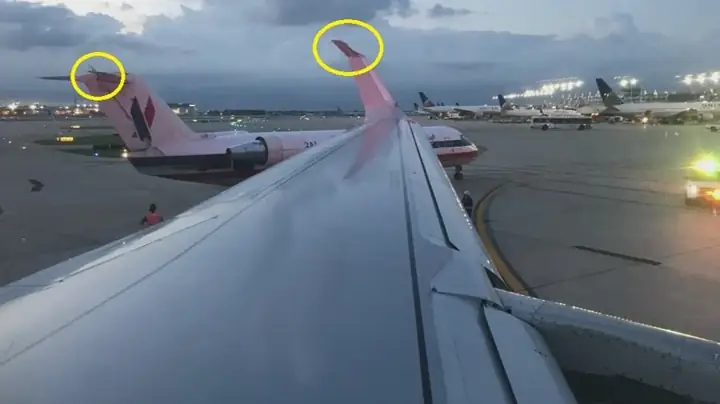
| Airline / operator | Air Canada |
|---|---|
| Aircraft (type, registration) | Air Canada Boeing 787-9 Dreamliner (C-FRSI); Air Canada Boeing 777-233LR (C-FIUA) |
| Category (my classification) | Human factors / Taxi crew (flight or maintenance) |
| What happened | A Boeing 777-200LR aircraft operated by Air Canada, was conducting flight AC101 from Toronto/Lester B. Pearson Intl, ON (CYYZ) to Vancouver Intl, BC (CYVR). When the aircraft was taxiing into gate C49A after the landing in CYVR, the right wing came in contact with the left wingtip of C-FRSI, a Boeing 787-9 aircraft parked at gate C48 and also operated by Air Canada, which was getting ready to operate flight AC300 to Montreal/Pierre Elliott Trudeau Intl, QC (CYUL). There were no injuries. Flight AC101 was usually being operated with a Boeing 787 that has a wingspan of approximately 4 meters shorter than the Boeing 777-200. |
| Injuries | ASN lists 0 fatalities. There were no injuries. |
| Damage | Substantial |
| Official investigation | No investigation details on the ASN entry. |
| Source | Aviation Safety Network (ASN) entry: https://aviation-safety.net/wikibase/315115 |
| Airline / operator | United Airlines / American Airlines |
|---|---|
| Aircraft (type, registration) | United Airlines Boeing 737-824 (WL) (N76504); American Airlines Boeing 737-823 (WL) (N962AN) |
| Category (my classification) | Human factors / Taxi crew (flight or maintenance) |
| What happened | A United Airlines Boeing 737-800 (N76504) contacted an American Airlines Boeing 737-800 (N962AN) winglet to winglet at Austin- Bergstrom International Airport. United flight UA898, from Austin to Houston, was taxiing to the runway from gate 19 and American flight AA2675 was taxiing into gate 21 after landing from New York- JFK Airport. The left hand top of the winglet of N76504 broke off. Damage to the American Airlines plane is unclear. |
| Injuries | ASN lists 0 fatalities. No injury statement in the ASN narrative. |
| Damage | Minor |
| Official investigation | No investigation details on the ASN entry. |
| Source | Aviation Safety Network (ASN) entry: https://aviation-safety.net/wikibase/195663 Further sources listed on that page / found: https://www.kvue.com/article/news/local/united-american-flights-bump-wings-at-abia/269-442768411 http://www.kxan.com/news/local/austin/united-american-airlines-planes-clip-wings-at-austin-airport/994822891 https://t.co/SZKarRmR6x |
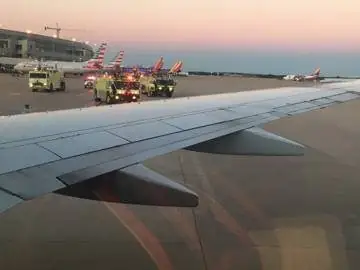
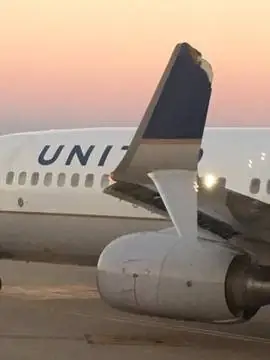
| Airline / operator | Jet Airways |
|---|---|
| Aircraft (type, registration) | Jet Airways Boeing 737-75R (WL) (VT-JGY) |
| Category (my classification) | Human factors / Taxi crew (flight or maintenance) |
| What happened | Jet Airways flight 9W730, a Boeing 737-700 (VT-JGY) was taxing on taxiway Z to the Z3 holding point for runway 29, when it contacted Jet Airways flight 9W603, a Boeing 737-700 (VT-JGX) which was on taxiway Z4 short of holding point runway 29. Both the aircrafts received minor damages. The right wing tip of VT-JGY and the left side elevator of VT-JGX sustained damages. Probable Cause: Non adherence of the ATC instructions and company SOPs while manoeuvring on the taxiway by the VT-JGY operating crew has resulted in the incident. |
| Injuries | ASN lists 0 fatalities. No injury statement in the ASN narrative. |
| Damage | Minor |
| Official investigation | Investigating agency: AAIB India Report number: Status: Investigation completed Duration: Final report Report / investigator link(s): https://www.dgca.gov.in/digigov-portal/Upload?flag=iframeAttachView&attachId=atR9ULi%2BgpWO%2BQ8WqDw5PQ%3D%3D |
| Source | Aviation Safety Network (ASN) entry: https://aviation-safety.net/wikibase/348984 Further sources listed on that page / found: https://www.dgca.gov.in/digigov-portal/Upload?flag=iframeAttachView&attachId=atR9ULi%2BgpWO%2BQ8WqDw5PQ%3D%3D |
| Airline / operator | Air Transat |
|---|---|
| Aircraft (type, registration) | Air Transat Boeing 737-8Q8 (WL) (C-GTQF) |
| Category (my classification) | Human factors / Taxi crew (flight or maintenance) Secondary: ATC / marshalling involved |
| What happened | C-GTQF, a Boeing 737-800 aircraft operated by Air Transat, was conducting flight TSC949 from Montego Bay/Sangster Intl, Jamaica (MKJS) to Havana/José Martí Intl, Cuba (MUHA). While the aircraft was being marshalled to Gate 13 at MUHA, the left winglet came in contact with the wing of a parked Airbus A330 at Gate 12. The operator’s maintenance removed the left winglet and the aircraft was flown back to Canada on a ferry permit on April 29. The winglet was replaced and the aircraft was returned to service on May 3. |
| Injuries | ASN lists 0 fatalities. No injury statement in the ASN narrative. |
| Damage | Minor |
| Time out of service | C-GTQF: 6 days (ASN) |
| Official investigation | No investigation details on the ASN entry. |
| Source | Aviation Safety Network (ASN) entry: https://aviation-safety.net/wikibase/195294 |
| Airline / operator | Air Peace |
|---|---|
| Aircraft (type, registration) | Air Peace Boeing 737-528 (WL) (5N-BQR) |
| Category (my classification) | Human factors / Taxi crew (flight or maintenance) Secondary: ATC / marshalling involved |
| What happened | Two aircraft, a Boeing 737-500 (5N-BQR) and Boeing 737-300 (5N-BQP) aircraft belonging to Air Peace Airlines Nigeria were involved in a ground collision at Lagos Airport, Nigeria. There were five crew members on board 5N-BQR. The crew arrived at 5N-BQR at about 06:00 hrs local time and the captain did a walk-around while the first officer carried out the pre-flight checks on-board the aircraft. The captain during walk-around, assessed the parking bay and observed that 5N-BQP was parked in an adjacent position which would reduce the maneuvering space available to 5N-BQR. 5N-BQR had been parked overnight between 5N-BQP and a B737-700 with registration 5N-MJJ belonging to Arik Airlines, parked at Bay 5 of the Domestic Terminal 1 apron. Also, there was repair work on Bay 4 of the apron and cautionary cones were placed around the patched areas. 5N-BQP and 5N-BQR were prepared as scheduled flights; flight 7154 LOS-QOW for departure at 06:30 hrs and flight 7750 LOS- ACC for departure at 07:20 hrs respectively. The crew after the assessment requested the assistance of their ground engineers for wing walking off the aircraft from the parking bay. 5N-BQR requested start-up and taxi clearance to reposition to the International Apron for a flight to Accra at the scheduled departure time of 07:20 hrs. While taxiing out of Bay 4 of the apron, the winglet of 5N-BQR collided with the horizontal stabilizer of 5N-BQP. 5N-BQP sustained damage to the left horizontal stabilizer leading edge and its skin while 5N-BQR sustained damage to its left winglet tip and strobe light. The incident occurred in day light conditions. It appeared that the flight crew did not use marshallers to taxi out of the stand but instead used company engineers as wing walkers. |
| Injuries | ASN lists 0 fatalities. No injury statement in the ASN narrative. |
| Damage | Minor |
| Official investigation | Investigating agency: AIB Nigeria Report number: Status: Investigation completed Duration: Final report |
| Source | Aviation Safety Network (ASN) entry: https://aviation-safety.net/wikibase/194957 Further sources listed on that page / found: https://www.dailytrust.com.ng/news/business/air-peace-grounds-two-aircrafts-over-collision/194355.html http://saharareporters.com/2017/04/20/two-air-peace-planes-grounded-after-making-contact-ramp |
| Airline / operator | Qatar Airways |
|---|---|
| Aircraft (type, registration) | Qatar Airways Airbus A330-302 (A7-AEI) |
| Category (my classification) | Human factors / Taxi crew (flight or maintenance) |
| What happened | Qatar Airways flight QR263 from Doha, Qatar, sustained damage in a ground incident at Warsaw's Frédéric Chopin Airport in Poland. The aircraft land at 06:07 LT and taxied to the terminal. Upon parking the left hand wing leading edge contacted a jet bridge, causing minor damage to the wing. |
| Injuries | ASN lists 0 fatalities. No injury statement in the ASN narrative. |
| Damage | Minor |
| Official investigation | No investigation details on the ASN entry. |
| Source | Aviation Safety Network (ASN) entry: https://aviation-safety.net/wikibase/194551 Further sources listed on that page / found: http://lotnictwo.net.pl/3-tematy_ogolne/15-wypadki_i_incydenty_lotnicze/84054-2017_04_04_qatar_z_doha_uderz… https://ibb.co/nKfpGF |
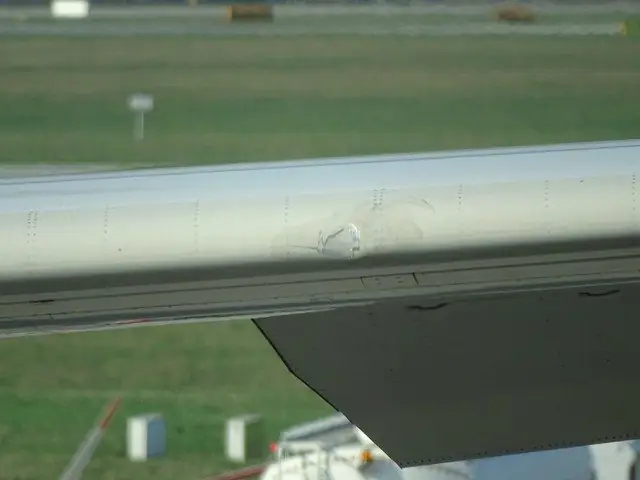
| Airline / operator | Emirates / Scoot |
|---|---|
| Aircraft (type, registration) | Emirates Airbus A380-861 (A6-EUB); Scoot Boeing 787-9 Dreamliner (9V-OJA) |
| Category (my classification) | Human factors / Taxi crew (flight or maintenance) Secondary: ATC / marshalling involved |
| What happened | The left wing of a Boeing 787-9, registered 9V-OJA, and right winglet of an Emirates Airbus A380, A6-EUB, came into contact at Singapore-Changi International Airport. At about 01:33 hours, the 787 aircraft had completed pushback from parking bay E28 in Terminal 2. The ATC trainee instructed the flight crew of the B787 to "taxi on greens" and hold short of Taxiway WA. The taxi route comprised Taxilane A6 and Taxiway NC3. The trainee did not verbalise the taxi route. At that time, the green taxiway centreline lights along A6, NC3 and WA towards the threshold of runway 02L were illuminated. The illuminated lights had been in that configuration as a few aircraft had taxied on WA in the past 30 minutes. According to the trainee, her plan was to have the B787 taxi on Taxiway WP after an arriving aircraft had landed and vacated Runway 02L via Rapid Exit Taxiway W5. She would then switch off the green taxiway centreline lights leading to WA and switch on the green taxiway centerline lights leading to WP (which was parallel to WA) to guide the B787 onto WP, and to hold short of it at Taxilane V6 towards the runway holding position of Runway 02L. The trainee determined that she would be able to reconfigure the green taxiway centreline lights before the B787 arrived at the intersection of WA and NC3. Hence, she did not see the need to switch on the red stop bar light on NC3 short of WA. The flight crew of the B787 read back to the trainee her instruction to "taxi on green" and hold short of WA, and proceeded to taxi. At about 01:34 hours, the trainee gave clearance to an A380 aircraft (A6-EUB) to commence pushback from parking bay C23 in Terminal 1. The pushback operation commenced at about 01:37 hours. The pushback involved pushing the aircraft tail-first and to the right onto Taxilane U1, with the aircraft ending up facing south. At 01:38 hours, the flight crew of the B787 informed Air Traffic Control (ATC) that they were approaching the intersection of WA and NC3. The trainee instructed the B787 to "…continue on the greens and hold short V6". After this, the trainee and trainer turned their attention away from the B787 to manage four departing aircraft near the holding position of Runway 02L. In the meantime, the B787 continued to taxi along NC3. As the aircraft approached the intersection of WA and NC3, the flight crew observed that there was a continuous path of green lights leading from NC3 to WA on the left. The flight crew also observed that, on the remaining section of NC3 beyond the intersection, there were no green taxiway centreline lights and there were illuminated red stop bar lights. Thus, the flight crew adhered to the instruction of "taxi on greens" and turned left onto WA. After turning onto WA, both the Pilot-in-command (PIC) and First Officer (FO) of the B787 saw the A380 on U1. The FO, who was taxiing the B787, slowed the aircraft significantly as the nose of the B787 came up abeam the A380’s vertical stabiliser. Both the PIC and FO visually judged that there was enough clearance between the two aircraft for them to continue taxiing along WA. Meanwhile, the A380 had been pushed out of C23 onto U1. The tow tug driver saw the B787 approaching. He stopped the tow tug as he was unsure if there was sufficient clearance. While passing the A380 at about 01:40 hours, the left wing of the B787 came into contact with the right winglet of the A380. The tow tug driver heard a scrapping sound. However, the flight crew of the B787 felt only a slight jerk and they thought the aircraft had taxied over some uneven ground on the taxiway and they continued the taxiing. After managing the four departing aircraft near Runway 02L, the trainee and trainer turned their attention back to the B787 at about 01:41 hours. They then realised that the B787 was taxiing on WA instead of WP. At that time, the B787 was approaching Taxilane VZ. The trainee was not aware of anything untoward, and instructed the B787 to taxi to WP via V6 for departure on Runway 02L. At about 01:42 hours, the flight crew of the A380 requested to return to the parking bay C23 after they had learnt from the towing crew that the A380’s right wing was damaged. ATC approved the request. The flight crew of the B787 overheard the transmission from the A380 and stopped taxiing on WA. The PIC instructed the cabin crew to visually inspect the left wing for any anomaly. After being informed that the navigational light on the left wing appeared to be detached and hanging freely, the flight crew requested to return to a parking bay. |
| Injuries | ASN lists 0 fatalities. No injury statement in the ASN narrative. |
| Damage | Minor |
| Official investigation | Investigating agency: TSIB Singapore Report number: Status: Investigation completed Duration: Final report Report / investigator link(s): https://www.bea.aero/en/investigation-reports/notified-events/detail/event/serious-incident-to-the-airbus-a380-registered-a6-eub-and-operated-by-emirates-and-the-boeing-787-re/ |
| Source | Aviation Safety Network (ASN) entry: https://aviation-safety.net/wikibase/209532 Further sources listed on that page / found: https://www.bea.aero/en/investigation-reports/notified-events/detail/event/serious-incident-to-the-airbus-a… https://www.channelnewsasia.com/news/singapore/scoot-emirates-aircraft-come-into-contact-at-changi-airport-… https://www.flightglobal.com/news/articles/scoot-787-and-emirates-a380-clip-wings-at-changi-435702/ |
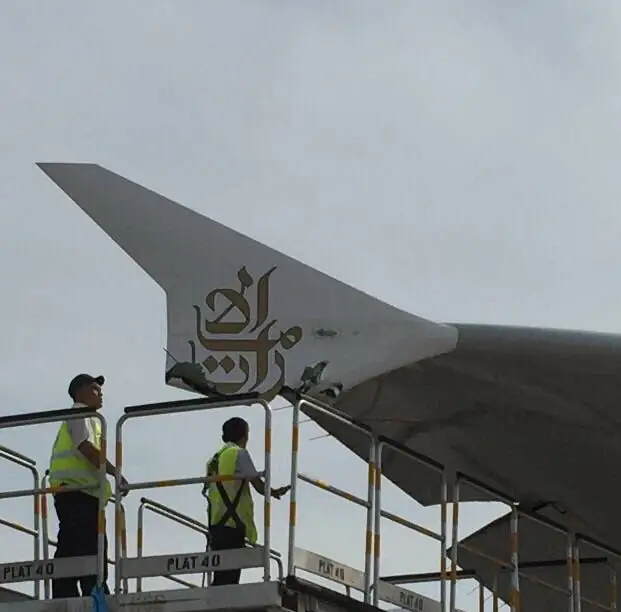
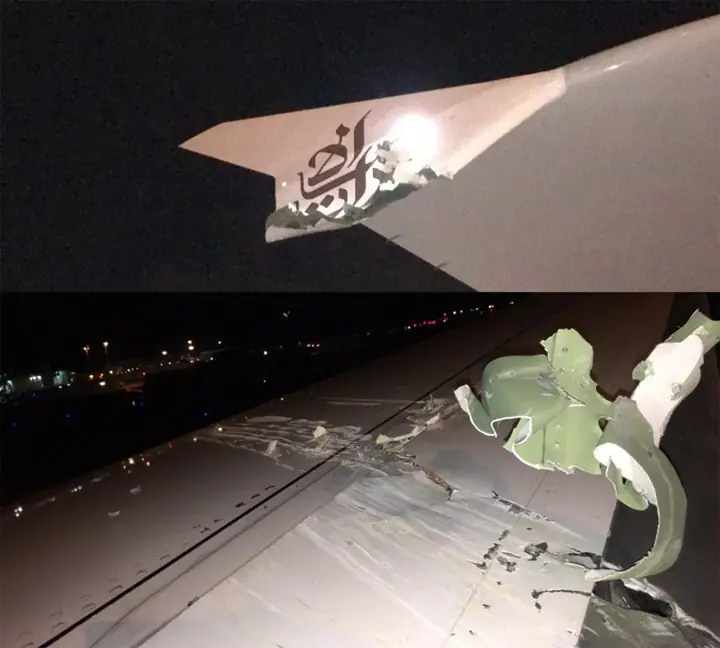
| Airline / operator | Jetstar Airways |
|---|---|
| Aircraft (type, registration) | Jetstar Airways Airbus A320-232 (VH-VGJ) |
| Category (my classification) | Human factors / Taxi crew (flight or maintenance) Secondary: Ramp worker exposure (near miss) |
| What happened | On 25 January 2017, a Jetstar Airways Airbus A320-232, registered VH-VGJ (VGJ), taxied for a scheduled passenger transport flight from Newcastle (Williamtown) Airport, New South Wales, to Brisbane Airport, Queensland. The aircraft parked at bay 4 at the Newcastle Airport terminal for passenger disembarkation and boarding. At about 1836, the crew received a clearance from the surface movement controller to pushback, which placed VGJ to the right rear quarter of an aircraft parked on bay 5. The aircraft dispatcher walked beside the aircraft and was connected to the nose of VGJ by a headset for communications with the flight crew. At about 1838, the crew of the aircraft on bay 5 requested a clearance to taxi for departure. At this stage, the crew on board VGJ interrupted their ‘after start flows’ to monitor the other aircraft, which they believed posed a collision risk. At about 1840, the crew on board VGJ requested and received a clearance to taxi for departure. The crew started to taxi VGJ with the aircraft dispatcher still connected to the aircraft. The dispatcher was waiting for their clearance from the crew to disconnect. When the dispatcher heard the engine noise increase, they immediately disconnected their headset from the aircraft and ran clear to the left of the aircraft towards the terminal with their headset and the nose wheel steering pin. There were no injuries and no damage. |
| Injuries | ASN lists 0 fatalities. There were no injuries and no damage. |
| Damage | None |
| Official investigation | Investigating agency: ATSB Report number: ATSB AO-2017-015 Status: Investigation completed Duration: 3 months Final report Report / investigator link(s): https://www.caa.co.uk/media/iu2hidoi/atsb-near-collision-a320-25-01-17.pdf |
| Source | Aviation Safety Network (ASN) entry: https://aviation-safety.net/wikibase/310357 Further sources listed on that page / found: https://www.caa.co.uk/media/iu2hidoi/atsb-near-collision-a320-25-01-17.pdf |
| Cross-reference | Moved from 'Ramp worker injury' to Human factors / Taxi crew (flight crew). |
| Note | Near miss: no contact, no injury and no damage. The flight crew began to taxi while the dispatcher was still connected at the nose. |
| Airline / operator | Saratov Airlines |
|---|---|
| Aircraft (type, registration) | Saratov Airlines Antonov An-148-100B (RA-61703) |
| Category (my classification) | Human factors / Taxi crew (flight or maintenance) |
| What happened | Saratov Airlines flight 6W765, an Antonov An-148, contacted a truck as it was taxiing for departure at Moscow's Domodedovo Airport. The incident happened in snowy weather conditions. The airplane sustained some damage. There were no personal injuries. All 61 passengers were rebooked onto the next flight. |
| Injuries | ASN lists 0 fatalities. There were no personal injuries. |
| Damage | Minor |
| Official investigation | No investigation details on the ASN entry. |
| Source | Aviation Safety Network (ASN) entry: https://aviation-safety.net/wikibase/192854 Further sources listed on that page / found: http://www.saratovairlines.ru/site_news/newslist.aspx |
| Airline / operator | Pakistan International Airlines - PIA / Air France |
|---|---|
| Aircraft (type, registration) | Pakistan International Airlines - PIA Boeing 777-240LR (AP-BGY); Air France Boeing 777-228ER (F-GSPP) |
| Category (my classification) | Human factors / Taxi crew (flight or maintenance) |
| What happened | Pakistan International Airlines flight PK789, a Boeing 777-200LR (AP-BGY), contacted a parked Air France Boeing 777-200ER (F- GSPP) while taxiing to Gate C33 at Toronto International Airport in Canada. The aircraft's right hand wing tip scraped the wing tip of the Air France aircraft, causing minor damage. Flight PK789 had just arrived after a flight from Karachi and Lahore, Pakistan. The Air Fance 777, flight AF356, had arrived an hour earlier after a flight from Paris-CDG. It was being prepared for the return leg to Paris as AF351. It was determined that PK789 was positioned on the incorrect lead in line while manoeuvering. |
| Injuries | ASN lists 0 fatalities. No injury statement in the ASN narrative. |
| Damage | Substantial, repaired |
| Official investigation | No investigation details on the ASN entry. |
| Source | Aviation Safety Network (ASN) entry: https://aviation-safety.net/wikibase/192550 Further sources listed on that page / found: http://www.cbc.ca/news/canada/toronto/pearson-airport-wings-collide-1.3920299 https://t.co/fGrhWrBFKc https://t.co/50E8mvd8UU |
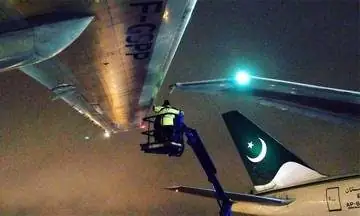
| Airline / operator | Virgin Australia Airlines |
|---|---|
| Aircraft (type, registration) | Virgin Australia Airlines Boeing 737-8FE (WL) (VH-VUP); Virgin Australia Airlines Boeing 737-8FE (WL) (VH-YFT) |
| Category (my classification) | Human factors / Taxi crew (flight or maintenance) Secondary: ATC / marshalling involved |
| What happened | A Boeing 737-8FE aircraft, registered VH-YFT (YFT) was parked on bay 3 at Hobart Airport, Tasmania, as the crew prepared to conduct Virgin Australia flight 1531 to Sydney, New South Wales. Another Virgin Australia Boeing 737-8FE aircraft, registered VH-VUP (VUP), was parked on bay 2, adjacent to YFT. Boarding had commenced for the flight (VA1321) to Melbourne. The bays required power-in and power-out taxiing, as there were no tug facilities available at Hobart Airport. At about 10:12, the first officer of YFT requested a clearance to taxi and was advised of an Airbus A320 aircraft on their left taxiing out (to the south) and to follow that aircraft. The captain commenced turning the aircraft to the right, out of the bay, with the nose wheels just inside the marked lead-out line. During the turn, another A320 aircraft was taxiing in towards the parking bays from the north and the captain became uncertain as to which A320 to follow, and stopped the aircraft to clarify their taxi clearance. After stopping, the captain removed their hand from the tiller, which caused the nose wheels of YFT to centre. After confirming the clearance, the captain recommenced taxiing. The dispatcher and ramp supervisor, both marshalling the aircraft, stood with their arms out and thumbs up to indicate YFT was clear of obstacles, particularly the wingtip of the parked aircraft (VUP). However, YFT then tracked towards the tail of VUP as it turned, and subsequently the left wingtip collided with the horizontal stabiliser of VUP. Both aircraft sustained substantial damage and no one was injured. The ATSB summary report did not contain an Annex 13 Probable Cause statement. |
| Injuries | ASN lists 0 fatalities. Both aircraft sustained substantial damage and no one was injured. |
| Damage | Minor, repaired |
| Official investigation | Investigating agency: ATSB Report number: AO-2016-167 Status: Investigation completed Duration: 5 months Final report |
| Source | Aviation Safety Network (ASN) entry: https://aviation-safety.net/wikibase/319965 |
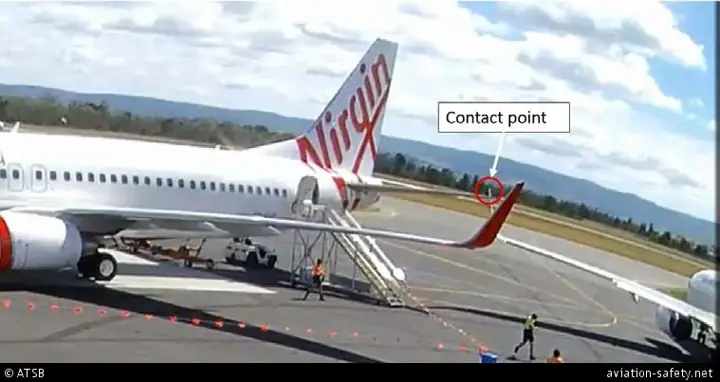
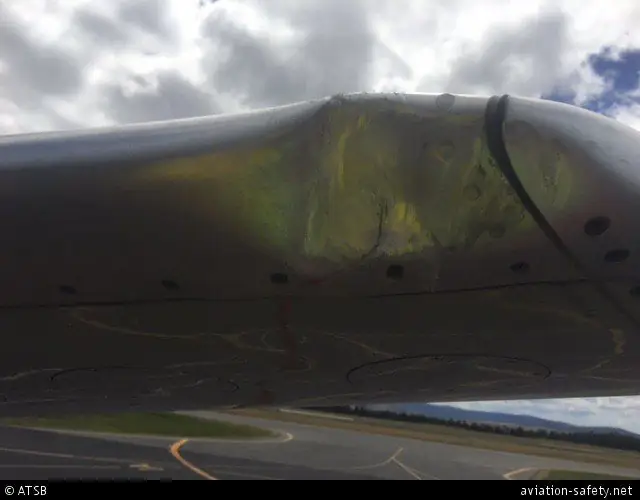
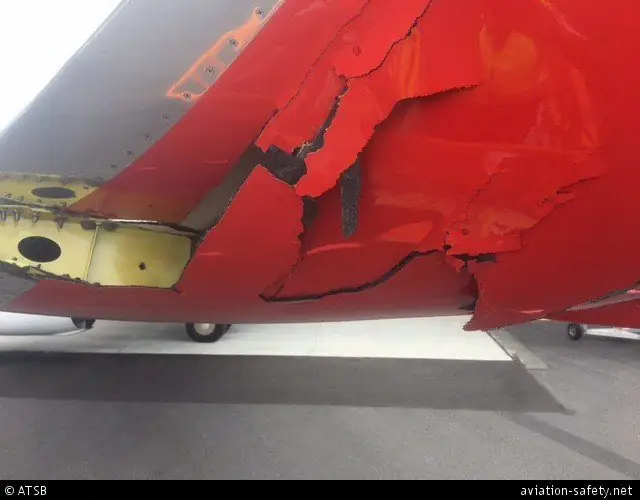
| Airline / operator | PAWA Dominicana |
|---|---|
| Aircraft (type, registration) | PAWA Dominicana McDonnell Douglas MD-83 (HI989) |
| Category (my classification) | Human factors / Taxi crew (flight or maintenance) |
| What happened | A PAWA Dominicana MD-83 jet sustained damage to a wing tip following a ground collision incident with an MD-83 operated by World Atlantic Airlines. There were no personal injuries. |
| Injuries | ASN lists 0 fatalities. There were no personal injuries. |
| Damage | Minor |
| Official investigation | No investigation details on the ASN entry. |
| Source | Aviation Safety Network (ASN) entry: https://aviation-safety.net/wikibase/191845 Further sources listed on that page / found: http://diariodigitaldominicano.com/site/avion-matricula-dominicana-choca-aeropuerto-internacional-miami/ http://www.7dias.com.do/portada/2016/12/04/i221616_avion-pawa-dominicana-roza-una-sus-alas-con-otro-aeropue… https://t.co/wLWHE2Bhbg https://t.co/zROBMnPs1r |
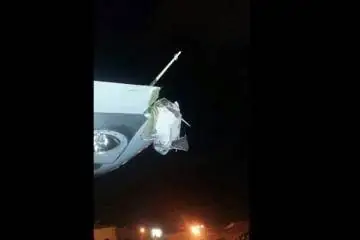
| Airline / operator | IndiGo Airlines / Kuwait Airways |
|---|---|
| Aircraft (type, registration) | IndiGo Airlines Airbus A320-232 (VT-IFP); Kuwait Airways Airbus A330- 243 (9K-APA) |
| Category (my classification) | Human factors / Taxi crew (flight or maintenance) |
| What happened | Kuwait Airways flight KU301 landed on runway 27 at Mumbai Airport, India and after vacating the runway it continued to taxi via taxiway N - W4 and held short of runway 14. Indigo flight IGO207 which was intended to operate on a flight from Mumbai to Jaipur, India, was taxiing via taxiway U-N-N1 for departure from runway 27. IGO207, while taxiing on the portion of taxiway N just behind KU301, which was holding on taxiway W4, had a wing tip strike on the outboard flap of KU301. VT-IFP was repaired and back in service on December 5, 2016. Probable Cause Following are the factors which resulted in the incident a) Non availability of any advice to the flight crew by dispatch (of operator) with regard to restrictions on taxiing on taxiway N. b) Clearing the aircraft 1, in violation to the existing regulations, to taxi on taxiway N when an aircraft is holding on Taxiway W4 c) Insufficient lighting on portion of W4/N. d) Assumption by the flight crew of aircraft 1 that they were clear of aircraft 2 and continuing taxing onto taxiway N, thereafter crossing runway 14 without realizing that left winglet had contacted the aircraft 2. e) Difficulty to accurately judge absolute distance or separation when the line of sight distance is more than 10m |
| Injuries | ASN lists 0 fatalities. No injury statement in the ASN narrative. |
| Damage | Unknown |
| Time out of service | VT-IFP: 5 days (ASN) |
| Official investigation | Investigating agency: AAIB India Report number: Status: Investigation completed Duration: 2 years and 2 months Final report Report / investigator link(s): https://www.bea.aero/en/investigation-reports/notified-events/detail/event/serious-incident-to-the-airbus-a320-registered-vt-ifp-and-operated-by-interglobe-aviation-and-to-the-airbus-a330-200-registered-9k-apa-operated-by-kuwait-airways-occured-on-30112016-at-mumbai-on-11302016/ |
| Source | Aviation Safety Network (ASN) entry: https://aviation-safety.net/wikibase/191923 Further sources listed on that page / found: https://www.bea.aero/en/investigation-reports/notified-events/detail/event/serious-incident-to-the-airbus-a… |
| Airline / operator | Caribbean Airlines / Fly Jamaica Airways |
|---|---|
| Aircraft (type, registration) | Caribbean Airlines Boeing 737-8HO (WL) (9Y-SXM); Fly Jamaica Airways Boeing 767-319ER (N767WA) |
| Category (my classification) | Human factors / Taxi crew (flight or maintenance) Secondary: ATC / marshalling involved |
| What happened | Caribbean Airlines Flight 527, a Boeing 737-800 aircraft (9Y-SXM), departed from New York-JFK Airport, NY, USA on a scheduled flight to Georgetown-Cheddi Jagan International Airport, Guyana. The aircraft landed on runway 06 at 11:33 hrs and was cleared by ATC to taxi via taxiways Charlie and Alpha to the International Apron. The First Officer’s read back was correct. However, one minute and 30 seconds later, as the aircraft was taxiing on Charlie, the Captain asked the First Officer "Where we goin’? Bravo?", to which the First Officer responded affirmatively. The aircraft then turned right onto taxiway Bravo, then turned left on to the apron and taxied behind a Fly Jamaica Boeing 767 (N767WA) parked in Parking Position 3. There was a wing walker on the ramp ahead, at the tail end of Parking Position 1 near to taxiway Alpha. Another wing walker was standing by the tail of the B767 in Parking Position 3, and a marshaller was at the head of Parking Position 2. At 11:36, as the B737 taxied behind the B767, the right winglet of the B737, hit the trailing edge of the B767’s right elevator, cut off the tail cone and sliced through the left elevator. The B737 then came to a halt and the captain shut down the engines. Findings: Causal. 1. The NTHS ramp personnel were not aware of the Airside Directive forbidding the taxiing of large aircraft behind parked B767s on the International Apron. 2. The CAL flight crew was not aware of the Airside Directive forbidding the taxiing of large aircraft behind parked B767s on the International Apron. 3. The Airside Directive forbidding the taxiing of large aircraft behind parked B767s on the International Apron was inadequately distributed. 4. After preparation of its AIRSIDE DIRECTIVE, the CJIA did not follow through with its responsibility to ensure that relevant information was transmitted to the GCAA and Jeppesen for inclusion in the AIP and the Jeppesen Charts respectively. 5. The Jeppesen and AIP airport charts for CJIA did not forbid the taxiing of large aircraft behind parked B767s on the International Apron. 6. The B737 First Officer erred when he misdirected the Captain to turn on taxiway Bravo, rather than taxiway Alpha. 7. Wing walker C intentionally moved the safety cone placed to mark the position of the B767’s tail. 8. Wing walker C did not adequately monitor the track of the B737’s right winglet to ensure clearance from the B767’s tail. 9. Wing walker B did not adequately monitor the track of the B737’s right winglet to ensure clearance from the B767’s tail. 10. Wing walker B attempted to marshal the B737 aircraft off to the left of the yellow taxi line to avoid the B737’s right winglet hitting the tail of the B767. 11. Wing walker B did not give a "Stop" signal to the B737 in time. 12. Wing walker C did not give a "Stop" signal to the B737 in time. 13. The right hand Number 3 Windshield Panel of the B737 was not heated, and was obscured by moisture, preventing the First Officer from adequately monitoring the clearance of the right winglet from the tail of the B767. 14. The right winglet of the B737 struck the elevators and tail cone of the B767. 15. Wing walker C had not been adequately trained. 16. The practical marshaller training by NTHS was not approved or monitored by CAL, CJIA or GCAA. 17. Wing walkers/marshallers on the CJIA ramp were following an unapproved procedure of directing aircraft off the yellow line to avoid other aircraft. 18. CAL and CJIA management were not aware of this unapproved procedure. 19. NTHS was aware of, and condoned, this unapproved procedure. 20. B737 pilots were routinely taxiing off the yellow line. 21. No hazard reports regarding this unapproved procedure were made to NTHS, CJIA or GCAA. 22. The dimensions of the layout of the CJIA International Apron did not meet the ICAO Recommended Standards for the aircraft it handled. 23. The SMSs of CJIA and CAL were inadequate. 24. NTHS had an SMS program, but it was not approved, nor was it required to be approved. 25. NTHS was not certified, approved or monitored by any other organization or authority, nor was this required. 26. Neither GCAA nor CJIA provided oversight of CJIA ramp operations. 27. The GCAA approved the Aerodrome Manual which was deficient. This was especially so in the SMS 28. GCAA inspection of records, during aerodrome inspections, was deficient as there was no demand for presentation of agreements/records between the CJIA and its clients operating at the airport. 29. GCAA did not adequately assess the inherently unsafe situation existing in the dimension and layout of the international apron. |
| Injuries | ASN lists 0 fatalities. No injury statement in the ASN narrative. |
| Damage | Substantial, repaired |
| Official investigation | Investigating agency: GAAIU Report number: GAAIU 3/1/12 Status: Investigation completed Duration: 2 years and 5 months Final report |
| Source | Aviation Safety Network (ASN) entry: https://aviation-safety.net/wikibase/319975 |
| Airline / operator | Hi Fly Malta |
|---|---|
| Aircraft (type, registration) | Hi Fly Malta Airbus A340-313 (9H-TQM) |
| Category (my classification) | Human factors / Taxi crew (flight or maintenance) |
| What happened | An Airbus A340-300, registration 9H-TQM, was damaged at Amsterdam-Schiphol International Airport in the Netherlands when the no.2 engine contacted the air bridge at gate G6. The aircraft had arrived as flight ferry flight AB107P from Berlin-Tegel Airport, Germany and was due to operate flight OR341 to Puerto Plata, Dominican Republic on behalf of TUI Airlines Netherlands. There were no reported injuries. |
| Injuries | ASN lists 0 fatalities. There were no reported injuries. |
| Damage | Minor |
| Official investigation | No investigation details on the ASN entry. |
| Source | Aviation Safety Network (ASN) entry: https://aviation-safety.net/wikibase/191518 Further sources listed on that page / found: http://www.rtvnh.nl/nieuws/195712/leenvliegtuig-tui-rijdt-tegen-passagiersbrug-schiphol-aan https://nos.nl/artikel/2144337-vliegtuig-op-schiphol-raakt-passagiersbrug.html https://www.at5.nl/artikelen/162700/vliegtuig-rijdt-tegen-passagiersbrug-schiphol-aan https://www.jetphotos.com/photo/8416456 |
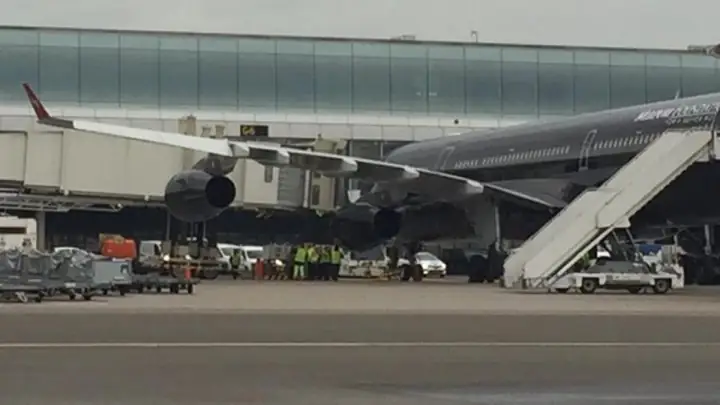
| Airline / operator | QantasLink, opb Cobham Aviation Services / Network Aviation |
|---|---|
| Aircraft (type, registration) | QantasLink, opb Cobham Aviation Services Boeing 717-200 (VH- NXN); Network Aviation Fokker 100 (VH-NHF) |
| Category (my classification) | Human factors / Taxi crew (flight or maintenance) |
| What happened | The taxiing aircraft was involved in a collision with a stationary aircraft, registered VH-NHF. The left-hand horizontal stabiliser of VH- NXN collided with the left-hand horizontal stabiliser of VH-NHF. |
| Injuries | ASN lists 0 fatalities. No injury statement in the ASN narrative. |
| Damage | Not stated |
| Official investigation | No investigation details on the ASN entry. Report / investigator link(s): http://www.atsb.gov.au/publications/investigation_reports/2016/aair/ao-2016-129/ |
| Source | Aviation Safety Network (ASN) entry: https://aviation-safety.net/wikibase/190515 Further sources listed on that page / found: http://www.atsb.gov.au/publications/investigation_reports/2016/aair/ao-2016-129/ http://www.abc.net.au/news/2016-10-06/planes-collided-on-paraburdoo-runway-qantas-admits/7907928 |
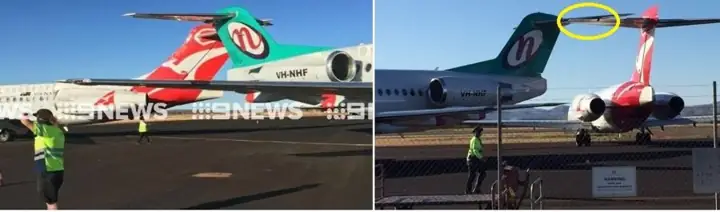
| Airline / operator | Finnair |
|---|---|
| Aircraft (type, registration) | Finnair Airbus A350-941 (OH-LWA) |
| Category (my classification) | Human factors / Taxi crew (flight or maintenance) |
| What happened | An Airbus A350-941 operated by Finnair as flight AY70 hit the air bridge at Helsinki-Vantaa Airport, Finland as the aircraft taxied into position at the arrival gate (gate 33 at Terminal 2). The no.1 engine air inlet cowl was damaged. |
| Injuries | No injury statement in the ASN narrative. |
| Damage | Minor |
| Official investigation | No investigation details on the ASN entry. |
| Source | Aviation Safety Network (ASN) entry: https://aviation-safety.net/wikibase/189623 |
| Airline / operator | Myanmar National Airlines / Mann Yadanarpon Airlines |
|---|---|
| Aircraft (type, registration) | Myanmar National Airlines Embraer ERJ-190AR (ERJ-190-100 IGW) (XY-AGQ); Mann Yadanarpon Airlines ATR 72-600 (72-212A) (XY-AJP) |
| Category (my classification) | Human factors / Taxi crew (flight or maintenance) Secondary: ATC / marshalling involved |
| What happened | An Embraer ERJ-190 (XY-AGQ, flight UBA315) was entering the apron when the right-hand wing clipped the right-hand wing of a parked ATR 72-600 (XY-AJP). The right-hand wingtip of the Embraer 190 was broken and the wing of the ATR 72 was also damaged. No one was injured. Primary Cause (from final report): During taxiing into the apron, the pilot was carelessly maneuvering the aircraft and trying to make 180 turn too close to another aircraft on his own judgment in a rush-rush manner without proper help of the ground handling service . Contributing Factors a) The copilot of the incident aircraft was not able to make right judgment on taxiing into the apron whether his aircraft was clear of obstacle or not. b) The wingman and marshaller were not able to identify so early whether their aircraft was clear of obstacle or not. c) The pilot had no fully faith and trust on their own ground handling service personnel in terms of ground handling service. |
| Injuries | No one was injured. |
| Damage | Minor |
| Official investigation | Investigating agency: MAIB Report number: Status: Investigation completed Duration: 1 year and 10 months Final report |
| Source | Aviation Safety Network (ASN) entry: https://aviation-safety.net/wikibase/209671 |
| Airline / operator | easyJet |
|---|---|
| Aircraft (type, registration) | easyJet Airbus A319-111 (G-EZGE) |
| Category (my classification) | Human factors / Taxi crew (flight or maintenance) |
| What happened | As the Airbus A319 aircraft, registration G-EZGE, was taxiing out of parking stand 29 at Ibiza Airport, Spain, under its own power, its right wingtip struck and became lodged in the boarding jetway. Exiting this parking stand requires the aircraft to make a sharp and constant turn to the left. In this case, the aircraft was turning with only the left engine providing thrust, as a result of which the aircraft's maneuverability was limited. The aircraft was unable to turn left at the required rate, and at one point the nose wheel was approximately 6 m to the right of the guide line marked on the ground, which caused the aircraft to strike the boarding jetway with its right wingtip. Airport personnel stated that the aircraft was moving in gradual turns and straightening out the wheels, and that from the start it did not follow the exit line painted on the apron for this type of aircraft, and instead widened the turn to the right. The airplane ended up facing parking stand 28 and encroaching on much of the No Parking Area between the two stands, affecting the departure of an aircraft being pushed back by a tractor. The incident aircraft was subsequently towed to stand 14 to await repairs. Causes/Contributing factors: The incident was caused by the failure of the aircraft to follow the guide line for this aircraft to taxi out of the parking stand. Contributing to the incident was the decision to use only one engine for the maneuver, and furthermore to use the engine on the inside of the turn. Another factor was the lack of coordination between the company's handling personnel and the crew. |
| Injuries | No injury statement in the ASN narrative. |
| Damage | Minor |
| Official investigation | Investigating agency: CIAIAC Report number: Status: Investigation completed Duration: 1 year and 6 months Final report Report / investigator link(s): http://www.fomento.gob.es/NR/rdonlyres/2D55E33B-88B7-463C-8E30-6D6F9F9D7E15/147156/2016_021_IN_ENG.pdf |
| Source | Aviation Safety Network (ASN) entry: https://aviation-safety.net/wikibase/204487 Further sources listed on that page / found: http://www.fomento.gob.es/NR/rdonlyres/2D55E33B-88B7-463C-8E30-6D6F9F9D7E15/147156/2016_021_IN_ENG.pdf |
| Airline / operator | Kalitta Charters II |
|---|---|
| Aircraft (type, registration) | Kalitta Charters II Boeing 727-2B6 Adv. (F) (N720CK) |
| Category (my classification) | Human factors / Taxi crew (flight or maintenance) |
| What happened | A Boeing 727-2B6 Adv(F) operated by Kalitta Charters II as Flight KFS724 from Willow Run Airport (KYIP), in Detroit, Michigan, collided with a stationary Boeing 727 during the post-landing taxi to the non-movement area at Chino Airport (KCNO), Chino, California. The airplane(s) sustained substantial damage and there were no reported injuries. |
| Injuries | The airplane(s) sustained substantial damage and there were no reported injuries. |
| Damage | Substantial |
| Official investigation | No investigation details on the ASN entry. |
| Source | Aviation Safety Network (ASN) entry: https://aviation-safety.net/wikibase/187766 Further sources listed on that page / found: http://www.kathrynsreport.com/ https://flightaware.com/live/flight/KFS724/history/20160530/0410Z/KYIP/KCNO http://www.opshots.net/gallery2/index.php?page=photos&search=Y29uc3RydWN0bnI6MjEyOTg= |
| Flag | Non-airline (business, government, special-mission or charter) operator: shows the risk type, not a direct WheelTug airline market case. |
| Airline / operator | Lion Air |
|---|---|
| Aircraft (type, registration) | Lion Air Airbus A330-343 (PK-LEF); Lion Air Boeing 737-8GP (WL) (PK-LJR) |
| Category (my classification) | Human factors / Taxi crew (flight or maintenance) |
| What happened | Two aircraft, both operated by Lion Air, suffered a wingtip contact incident at Jakarta-Soekarno-Hatta International Airport, Indonesia. Flight JT770, operated by a Boeing 737-800 (PK-LJR) contacted flight JT026, which was operated by an Airbus A330-343 (PK-LEF). At 18:50 in dusk light condition, the JT770 aircraft pushed back from parking stand A33, heading to taxiway SC3. The pilot was aware that their position was behind an Airbus A330 aircraft that was pushing back from parking stand K13 and also heading to taxiway SC3. The Airbus A330 aircraft registered PK-LEF was being operated by the same company as a scheduled passenger flight with flight number JT026 to Ngurah Rai International Airport, Bali. Weather condition at that time was fine and the ground visibility was nine kilometers. During taxi, the pilot of JT770 deviated to the right from the taxi guideline with the intention to avoid a collision with JT026 which was still stationary. When JT770 was abeam JT026, the pilot felt the aircraft shaking and heard an unusual sound. At that time, JT026 had just completed engine starting and the flight crew felt the aircraft shaking. The pilots saw that the engine parameters were normal and observed that the Boeing 737 aircraft was taxiing on the right side at a position that was very close to their aircraft. Ground personnel then informed that the right wing JT026 aircraft collided with JT770. The left-hand winglet of the Bieung 737 had scraped the right wing lower surface of the A330. JT026 then informed the Soekarno-Hatta ground controller that there had been a collision. At 18:59, the ground controller advised the JT770 to stop the taxi on taxiway SCX. Both aircraft returned to the parking stands and canceled the flight. No one injured as a result of this occurrence. Contributing Factors: "The time pressure to arrive at the destination prior to the end of operating hour led to rush situation resulted in mis-judgment while making separation and the wings collided." |
| Injuries | No one injured as a result of this occurrence. |
| Damage | Minor |
| Official investigation | Investigating agency: NTSC Report number: Status: Investigation completed Duration: 2 years and 4 months Final report |
| Source | Aviation Safety Network (ASN) entry: https://aviation-safety.net/wikibase/186942 Further sources listed on that page / found: http://nasional.republika.co.id/berita/nasional/umum/16/05/02/o6jjgg382-lion-air-bersenggolan-dirut-sebut-g… |
| Airline / operator | TAP Air Portugal |
|---|---|
| Aircraft (type, registration) | TAP Air Portugal Airbus A320-214 (CS-TNI) |
| Category (my classification) | Human factors / Taxi crew (flight or maintenance) |
| What happened | Engine #1 inlet fan cowl damage due to contact with the disembarking bridge when parking at stand 114. |
| Injuries | No injury statement in the ASN narrative. |
| Damage | Minor |
| Official investigation | Investigating agency: GPIAAF Report number: 02/INCID/2016 Status: Investigation completed Duration: Final report Report / investigator link(s): https://bea.aero/en/investigation-reports/notified-events/detail/serious-incident-to-an-airbus-a320-resgistered-cs-tni-operated-by-transportes-aereos-portugueses-survenu-le-02-24-16-investigation-led-bygpiaa---portugal/ |
| Source | Aviation Safety Network (ASN) entry: https://aviation-safety.net/wikibase/365530 Further sources listed on that page / found: https://bea.aero/en/investigation-reports/notified-events/detail/serious-incident-to-an-airbus-a320-resgist… |
| Airline / operator | Air India |
|---|---|
| Aircraft (type, registration) | Air India Boeing 777-337ER (VT-ALJ) |
| Category (my classification) | Human factors / Taxi crew (flight or maintenance) Secondary: ATC / marshalling involved |
| What happened | Air India flight AI191 was damaged in a ground incident at Mumbai- Chhatrapati Shivaji International Airport (BOM) when the right hand wing impacted a light pole during taxiing. The Boeing 777-300ER landed on runway 27 at 01:10 hours local time following a flight from Ahmedabad, India. News reports indicated that the flight was then cleared to taxi to stand K5 at Terminal 2 via taxiways Yankee 1 and 3. The crew radioed they had encountered an 'object' while taxiing. Upon parking at stand K5 damage to the right hand wing leading edge was noted. Along the taxiway it was found that a light pole had been knocked over. It seems ATC erroneously cleared the flight to use Y1 instead of taxiway H1 which was intended for widebodies. The continuing service to Newark (EWR) was carried out by a replacement aircraft. VT-ALP. Probable Cause of the Serious Incident The probable cause of Serious Incident was “In-correct taxi clearance” and “Non- Adherence of SOP for operations in South East Pier”. Contributory factors were: 1. Inadequate and Improper Pre-Flight Briefing. 2. Non-Compliance of Ground Warning Sign “MAX SPAN 36 M” |
| Injuries | No injury statement in the ASN narrative. |
| Damage | Unknown |
| Official investigation | Investigating agency: AAIB India Report number: Status: Investigation completed Duration: Final report Report / investigator link(s): https://aaib.gov.in/Reports/2016/Serious%20Incident/VT-ALJ%20Final%20Report.pdf |
| Source | Aviation Safety Network (ASN) entry: https://aviation-safety.net/wikibase/184810 Further sources listed on that page / found: https://aaib.gov.in/Reports/2016/Serious%20Incident/VT-ALJ%20Final%20Report.pdf https://mumbaimirror.indiatimes.com/mumbai/others/AI-aircraft-bangs-into-pole-whodunit-quest-on/articleshow… https://www.hindustantimes.com/india/mumbai-atc-2-air-india-pilots-suspended-after-plane-hits-light-pole/st… https://t.co/lAxtXUiFOb https://t.co/wjjWBSpxBh |
| Airline / operator | American Airlines / Southwest Airlines |
|---|---|
| Aircraft (type, registration) | American Airlines Boeing 737-823 (WL) (N925NN); Southwest Airlines Boeing 737-7H4 (WL) (N784SW) |
| Category (my classification) | Human factors / Taxi crew (flight or maintenance) |
| What happened | An American Airlines Boeing 737-800 (N925NN), contacted a Southwest Airlines Boeing 737-700 (N784SW), that was stationary on a deice pad with engines stopped and was being deiced at Detroit Metropolitan Airport (DTW). The American Airlines B737 was taxiing to an adjacent deice pad when it struck the Southwest Airlines B737. N925NN incurred damage to the right winglet, and N784SW sustained substantial damage to its right elevator, elevator tab, stabilizer leading edge, and APU exhaust. There were no injuries on either airplane, and both airplanes taxied back to gate to deplane passengers. According to the Southwest flight crew, N784SW was stationary on the deice pad 3 with the engines shut down and was being deiced. According to the deice ground crew, N784SW and a United airplane on deice pad 4 were not fully pulled into their respective parking spots on the deice pad. N925NN passed behind N784SW and turned to enter to an adjacent deice pad, and its right winglet contacted the right elevator, horizontal stabilizer, and APU of the Southwest B737. Probable Cause: N925NN flight crew's incorrect evaluation of the clearance between the two aircraft, leading to the inadvertent collision of the winglet with the horizontal stabilizer and elevator of N784SW |
| Injuries | There were no injuries on either airplane, and both airplanes taxied back to gate to deplane passengers. |
| Damage | Substantial, repaired |
| Official investigation | Investigating agency: NTSB Report number: DCA16CA094A Status: Investigation completed Duration: 4 years 1 month Final report Report / investigator link(s): https://data.ntsb.gov/carol-repgen/api/Aviation/ReportMain/GenerateNewestReport/92740/pdf |
| Source | Aviation Safety Network (ASN) entry: https://aviation-safety.net/wikibase/320129 Further sources listed on that page / found: https://data.ntsb.gov/carol-repgen/api/Aviation/ReportMain/GenerateNewestReport/92740/pdf |
| Airline / operator | Iberia |
|---|---|
| Aircraft (type, registration) | Iberia Airbus A320-216 (WL) (EC-LVD) |
| Category (my classification) | Human factors / Taxi crew (flight or maintenance) |
| What happened | Iberia flight IB3195 was involved in a ground incident when it contacted two de- icing trucks on the ramp at Munich Airport. The aircraft had positioned on de-icing stand DA14 and the crew started working the 'before deicing checklist'. At some point, the flight crew discussed the possibility that they might have inadvertently activated the fire extinguishing system for the cargo hold. They decided to return to their initial platform parking position. The crew notified the deicing crew that they needed to return. This was confirmed. After waiting about six minutes for taxi instructions the aircraft began to move forward. The aircraft then hit two de-icing trucks that were positioned on both sides of the airplane near both wing tips. The trucks tilted to the side. Conclusions: - Incorrect interpretations were made between the PIC and the de-icer in communication about the termination of the de-icing process; and - None of the two pilots was able to convince themselves of the obstacle clearance directly before starting to roll away. The absence of a phraseology standardised for pilots and de-icer alike has contributed to the severe incident. |
| Injuries | No injury statement in the ASN narrative. |
| Damage | Minor |
| Official investigation | Investigating agency: BFU Report number: BFU16-0055 Status: Investigation completed Duration: 1 year and 11 months Final report Report / investigator link(s): https://www.bfu-web.de/DE/Publikationen/Untersuchungsberichte/2016/Bericht_16-0055-EX_A320_Muenchen_Enteisung.pdf?__blob=publicationFile https://www.bfu-web.de/DE/Home/homepage_node.htmlDE/Publikationen/Bulletins/2016/Bulletin2016-01.pdf?__blob=publicationFile |
| Source | Aviation Safety Network (ASN) entry: https://aviation-safety.net/wikibase/183775 Further sources listed on that page / found: https://www.bfu-web.de/DE/Publikationen/Untersuchungsberichte/2016/Bericht_16-0055-EX_A320_Muenchen_Enteisu… http://www.merkur.de/lokales/erding/flughafen/airbus-iberia-kollidiert-flughafen-muenchen-enteisungsfahrzeu… http://aerossurance.com/safety-management/a320-deicing-collision/ https://www.bfu-web.de/DE/Home/homepage_node.htmlDE/Publikationen/Bulletins/2016/Bulletin2016-01.pdf?__blob… https://t.co/nH1IztstW5 |
| Airline / operator | Iberia / American Airlines |
|---|---|
| Aircraft (type, registration) | Iberia Airbus A330 (EC-LZX), flight IBE6118 from Miami; American Airlines Boeing 777 (N758AN), flight AAL037 |
| Category (my classification) | Human factors / Taxi crew (flight or maintenance) Secondary: ATC / marshalling involved Earlier cases (pre-2016, photo evidence) |
| What happened | The Iberia A330, taxiing on route B after arrival, struck the right elevator and then the right wingtip of the American Airlines 777, which was stopped at Z1 waiting for runway 36L, about 40 m short of where it should have stopped. A fragment of the A330's winglet was left in the 777's wingtip. CIAIAC found the Iberia crew continued taxiing although they saw the clearance was tight; contributing factors were the 777's position, a missing note in the Jeppesen chart and the controller not warning the crews. |
| Injuries | None reported. |
| Damage | Damage to the A330's left winglet and the 777's right elevator and right wingtip |
| Official investigation | CIAIAC investigation IN-033/2015, final report approved 26 Apr 2017. Report / investigator link(s): https://www.air-accidents.com/event/others/186061215.pdf https://www.transportes.gob.es/organos-colegiados/ciaiac/investigacion/2015 |
| Source | CIAIAC report IN-033/2015 (copy on air-accidents.com): https://www.air-accidents.com/event/others/186061215.pdf |
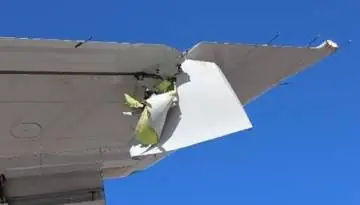
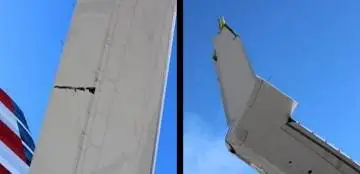
| Airline / operator | Emirates / Hak Air |
|---|---|
| Aircraft (type, registration) | Boeing 777-21HLR (A6-EWD); Boeing 737-4U3 (5N-BOU) |
| Category (my classification) | Human factors / Taxi crew (flight or maintenance) Secondary: Poor visibility (night) Earlier cases (pre-2016, photo evidence) |
| What happened | The Boeing 777-21HLR (A6-EWD), operating Emirates flight EK782 from Lagos, Nigeria to Dubai, UAE, was damaged when the right-hand wing tip impacted the tail fin of a parked Hak Air Boeing 737-400 (5N-BOU) in nighttime conditions. EK782 was taxiing from the international terminal to runway 18L for departure. It crossed runway 18L at Link 2 and proceeded on the taxiway to the east side of the runway, passing the domestic platforms. It then impacted the tailfin of a parked 737. The 737's tail fin sustained a large gash. Causal Factors 1. The decision to continue the taxi via Taxiway C to runway 18L after ATC had advised aircraft to proceed at "Pilot’s discretion". 2. The non-adherence to Emirates Taxi policies especially in a congested area. Contributory Factors 1. Inadequate lighting at the Apron of the General Aviation Terminal. 2. The faded markings and non-enforcement of parking regulations at the General Aviation Apron. 3. The incorrectly parked aircraft on the remote parking area adjacent to Taxiway C. |
| Injuries | Not stated in the source. |
| Damage | Minor |
| Official investigation | Investigating agency: AIB Nigeria Report number: Status: Investigation completed Duration: 3 years and 3 months Final report |
| Source | Aviation Safety Network: https://aviation-safety.net/wikibase/177655 |
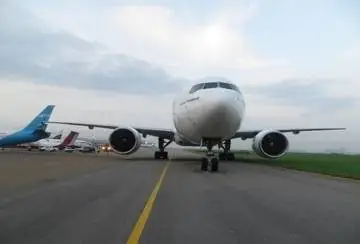
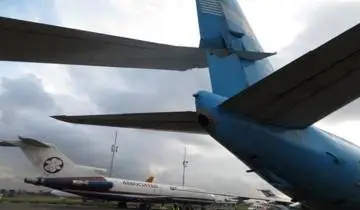
| Airline / operator | Ryanair / Ryanair |
|---|---|
| Aircraft (type, registration) | Boeing 737-8AS (WL) (EI-DYA); Boeing 737-8AS (WL) (EI-DWE) |
| Category (my classification) | Human factors / Taxi crew (flight or maintenance) Earlier cases (pre-2016, photo evidence) |
| What happened | Two Boeing 737-8AS (WL) aircraft operated by Ryanair suffered a wingtip strike while taxying at Dublin Airport, Ireland. The aircraft involved were flight FR812 to Edinburgh, U.K. (EI-DYA) and FR7312 to Zadar, Croatia (EI-DWE). FR7312 was taxiing via LINK 2 for a departure on runway 28. Flight FR812 was also taxiing via LINK 2 but for a departure on runway 34. FR7312 was instructed to proceed to taxiway F1 and to hold short of LINK 1. The aircraft halted at the beginning of taxiway F1. The second aircraft was instructed to turn right onto taxiway A to hold short of runway 34. This instruction included a caution regarding wingtip clearance with the aircraft ahead. At that point the winglet of FR812 (EI-DYA) impacted the starboard elevator of FR7312 (EI-DYA). EI-DYA's winglet was severed with a portion sliced off by EI-DWE. |
| Injuries | Not stated in the source. |
| Damage | Minor, repaired |
| Official investigation | Investigating agency: AAIU Report number: AAIU Report No: 2016-003 Status: Investigation completed Duration: 11 months Final report |
| Source | Aviation Safety Network: https://aviation-safety.net/wikibase/320324 |
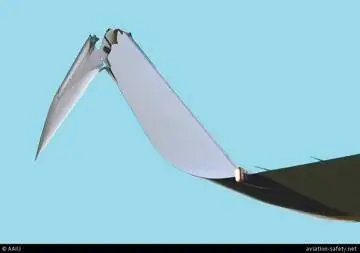
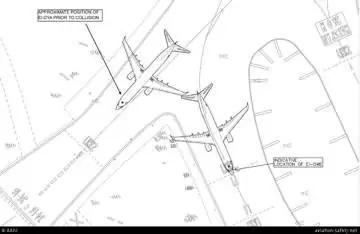
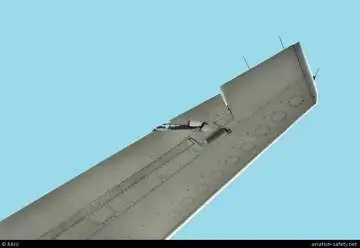
| Airline / operator | Delta Connection, opb Compass Airlines |
|---|---|
| Aircraft (type, registration) | Embraer ERJ 170-200 LR (ERJ-175LR) (N622CZ) |
| Category (my classification) | Human factors / Taxi crew (flight or maintenance) Earlier cases (pre-2016, photo evidence) |
| What happened | An Embraer ERJ-170 had been pushed back from gate G4 and positioned facing northwest on taxiway B with its parking brake set. A Boeing 757- 232 (WL) operated by Delta Airlines was taxiing along taxiway A and the captain reported that he observed the ERJ-170 and ground personnel, however, it was difficult to judge the distance so he offset his taxi to the left to "be on the safe side". He reported the presence of the wing walker gave him "a false sense of security." The wing walker reported he signaled with his lighted wands for the B757 to stop but it was too late and the airplanes collided. The left wing spar of the ERJ-170 was fractured, resulting in substantial damage, and the B757 experienced minor damage to its right wing leading edge slat. In the vicinity of the collision, taxiway B has a distinct bend which brings it closer to taxiway A. Weather at the time of the event was reported as night visual conditions. PROBABLE CAUSE: "The B757 Captain's failure to maintain a safe clearance between his wing and the wingtip of the ERJ-170. Contributing to the accident was the positioning of the ERJ-170 by the Compass ground personnel." |
| Injuries | Not stated in the source. |
| Damage | Substantial, repaired |
| Official investigation | Investigating agency: NTSB Report number: DCA15CA012A Status: Investigation completed Duration: 10 months Final report |
| Source | Aviation Safety Network: https://aviation-safety.net/wikibase/320421 |
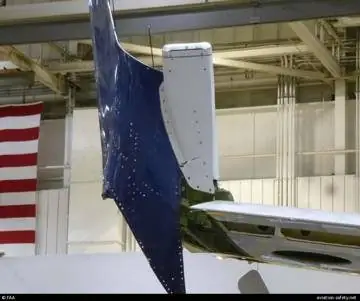
| Airline / operator | TAP Air Portugal |
|---|---|
| Aircraft (type, registration) | Airbus A330-223 (CS-TOI) |
| Category (my classification) | Human factors / Taxi crew (flight or maintenance) Secondary: ATC / marshalling involved Earlier cases (pre-2016, photo evidence) |
| What happened | TAP Air Portugal flight TP149 was a scheduled service from Lisbon, Portugal to Caracas, Venezuela with an en route stop at Madeira. On the second sector, between Madeira and Caracas, the aircraft took off at 13:05, with a delay of 110 minutes. It landed at Caracas at 20:10, with a delay of 55 minutes. Air traffic control then instructed the aircraft to taxi to stand 25 for parking and disembarkation of passengers. Entry to the stand was performed with the aid of marshaling. The stand does not have any automatic guidance system. Following the marshaller instructions, the aircraft did not stop its movement and collided with the boarding bridge at a speed of around 4 kts. The top of the inlet cowling of engine no.1 was damaged, causing the aircraft to be grounded 5 days for repairs and inspections. CAUSES: - There is no marking on the stand 25 for Airbus A330 family aircraft. - Only three elements were present during the manoeuvre of marshalling, missing the element that put the brand A-300 where the aircraft should stop their movement. - Improper placement of a cone in the position AB340, which served as a reference point for signs of marshalling. - Nonstandard parking procedure used to position the Airbus A330 on the stand mark. Contributing factors: - The stand does not have any automatic guiding system to assist the technical crew for the parking. - The fact that the aircraft has landed earlier than forecasted by the Service Provider, did not allow the ground handling team was complete for receiving the aircraft on stand, that is, with the usual four elements to perform marshalling. - The accumulated fatigue by the crew after more than 12 hours of length of service, may have contributed to a reduction of Situational Awareness. - Poor surface definition and confusing parking markings. - No clear parking team organization. |
| Injuries | Not stated in the source. |
| Damage | Minor |
| Official investigation | Investigating agency: GPIAA Report number: Status: Investigation completed Duration: Final report |
| Source | Aviation Safety Network: https://aviation-safety.net/wikibase/196524 |
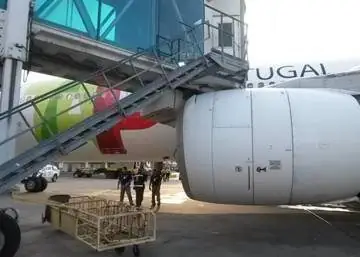
| Airline / operator | Ryanair / Ryanair |
|---|---|
| Aircraft (type, registration) | Boeing 737-8AS (WL) (EI-EKK); Boeing 737-8AS (WL) (EI-EMH) |
| Category (my classification) | Human factors / Taxi crew (flight or maintenance) Earlier cases (pre-2016, photo evidence) |
| What happened | At the time of the occurrence 'Dual Runway Operations' were in progress from runway 28 and runway 34 at Dublin. The ambient lighting conditions were early morning darkness. The first aircraft, EI-EKK, with a planned destination of Charleroi, Belgium, was number four for departure off runway 28 and was initially cleared by the Surface Movement Controller (SMC) from the central apron, for taxi to Foxtrot Outer/LINK 5 and to hold short of LINK 5. On approaching LINK 5, the aircraft was further cleared to taxiway E1 via the Foxtrot taxiways and to hold short of both runways (runway 34 and runway 28). On entering LINK 2, the SMC advised EI-EKK to monitor the Tower radio frequency. Just prior to entering taxiway F1, EI-EKK stopped, with the parking brake set, on LINK 2 behind two other aircraft which were queuing in sequence on LINK 1 (between taxiway F1 and taxiway B1) and taxiway E1 for departure from runway 28. The second aircraft (EI-EMH), with a planned destination of Edinburgh, was following behind EI-EKK in sequence but was due to depart from runway 34. EI-EMH had been cleared to taxi, LINK 5 onto the Foxtrots and taxiway A to hold short runway 34. When the aircraft was approaching LINK 2, the SMC advised EI-EMH to continue onto taxiway A, hold short runway 34, and the monitor radio frequency. As EI-EMH turned right onto LINK 2 and taxied towards taxiway A, the tip of the port side winglet struck the outer portion of the starboard elevator of the stationary aircraft, EI-EKK. On realizing that physical contact had been made with another aircraft, the Commander and Pilot Flying of EI-EMH, immediately stopped his aircraft and said to the First Officer that they had hit the other aircraft and asked her to advise ATC that they needed to return to stand. As the Air Movements Controller (AMC) cleared EI-EMH to line up and wait runway 34, the FO responded, "We actually need to go back onto stand". After a number of transmissions between the AMC and EI-EMH it was determined that a ground collision had in fact occurred between two aircraft. The AMC then advised both aircraft to "hold position we will get assistance to the area to you very quickly". The flight crew of EI-EKK, on sensing movement of their stationary aircraft, initially thought it was as a result of jet blast from the taxiing aircraft ahead on LINK 1. However, on hearing the ATC transmissions between the AMC and EI-EMH, it became apparent to them that their aircraft had in fact been struck by another aircraft. EI-EKK then advised Tower (TWR) "...we want to confirm that we’ve some sort of impact". ATC replied, "Roger hold position". The engines of both aircraft were shut down and all passengers deplaned. Probable Cause: Insufficient wing-tip clearance achieved while manoeuvring in close proximity to another aircraft. Contributory Causes: 1. Non-adherence to taxiing restrictions as specified in the AIP. 2. General complexity of the LINK 1/LINK 2 taxiway system. 3. Difficulties associated with judging absolute distances beyond 10 m. 4. Prevailing environmental conditions. |
| Injuries | Not stated in the source. |
| Damage | Minor, repaired |
| Official investigation | Investigating agency: AAIU Report number: AAIU Report No: 2015-019 Status: Investigation completed Duration: 1 year Final report |
| Source | Aviation Safety Network: https://aviation-safety.net/wikibase/320431 |
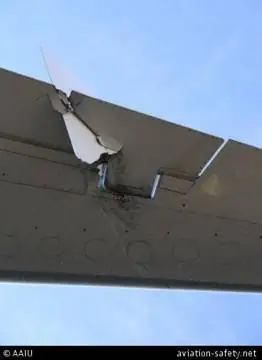
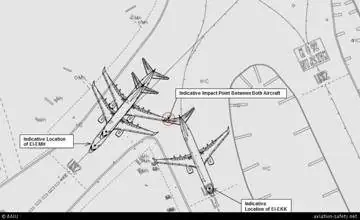
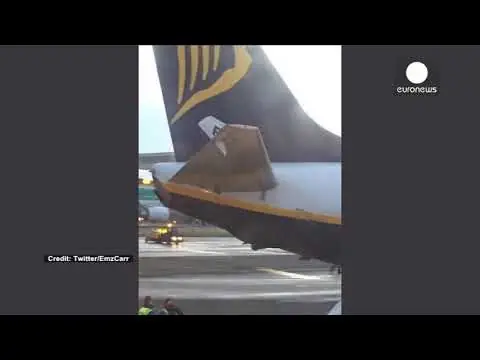 ▶ VIDEO
Still: YouTube thumbnail, euronews
| Airline / operator | British Airways |
|---|---|
| Aircraft (type, registration) | Boeing 747-400 (G-BNLL), flight BA34 to London Heathrow |
| Category (my classification) | Human factors / Taxi crew (flight or maintenance) Earlier cases (pre-2016, photo evidence) |
| What happened | While taxiing for departure at night, the 747 took a wrong, narrower taxiway and its right wing struck a two-storey building beside the taxiway. |
| Injuries | Four ground staff in the building were slightly injured; no passenger or crew injuries reported. |
| Damage | Right wing damaged; building damaged |
| Official investigation | South African Civil Aviation Authority investigation reported in the news. No public report found. |
| Source | BBC News: https://www.bbc.com/news/world-africa-25490906 Further sources listed on that page / found: https://www.telegraph.co.uk/news/worldnews/africaandindianocean/southafrica/10534084/British-Airways-plane-… https://twitter.com/HarrietTolputt/statuses/414884728605405184 |
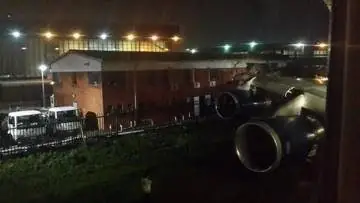
| Airline / operator | Turkish Airlines Cargo / Max Air |
|---|---|
| Aircraft (type, registration) | Airbus A330-243F (TC-JCI); Boeing 747-438 (5N-HMB) |
| Category (my classification) | Human factors / Taxi crew (flight or maintenance) Secondary: ATC / marshalling involved Earlier cases (pre-2016, photo evidence) |
| What happened | Turkish Airlines Flight TK-6323, an Airbus A330-243F, arrived at Lagos-Murtala Muhammed International Airport, Nigeria following a cargo flight from Istanbul, Turkey. It landed about 00:15 local time and taxied to Stand 103 for parking. As it was being marshalled in, the left hand winglet struck the right hand winglet of a Boeing 747- 400 that was parked on Stand 102. It appeared that the airplane in question, Max Air Boeing 747-438 registered 5N-HMB, was parked around 10 feet to the right of centreline on Stand 102. The winglet of the A330 sliced approx 60 cm into the 747's winglet. |
| Injuries | Not stated in the source. |
| Official investigation | See the ASN entry. |
| Source | Aviation Safety Network: https://aviation-safety.net/wikibase/161693 |
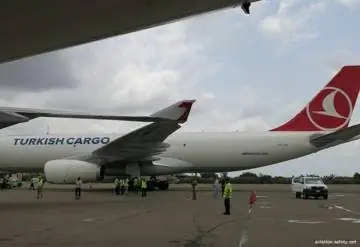
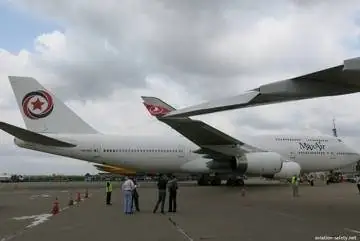
| Airline / operator | Swiss International Air Lines |
|---|---|
| Aircraft (type, registration) | Airbus A330-300 (HB-JHN) |
| Category (my classification) | Human factors / Taxi crew (flight or maintenance) Earlier cases (pre-2016, photo evidence) |
| What happened | Before departure as LX87, the right wingtip struck a parked mobile passenger-transfer vehicle while taxiing. The outer wing was substantially damaged and the flight was cancelled. There were 213 passengers on board and no injuries. |
| Injuries | No injuries (213 passengers on board). |
| Damage | Substantial damage to the outer right wing |
| Official investigation | No public investigation report found. |
| Source | 20 Minuten: https://www.20min.ch/story/swiss-airbus-vor-start-in-montreal-beschaedigt-173768814521 |
| Note | Taxi-lane details are from 20 Minuten/JACDEC reports. |
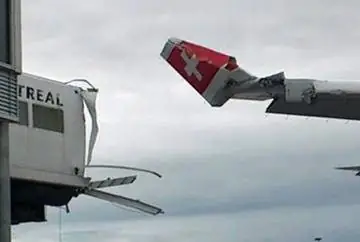
| Airline / operator | TAP Air Portugal |
|---|---|
| Aircraft (type, registration) | Airbus A330-223 (CS-TOF) |
| Category (my classification) | Human factors / Taxi crew (flight or maintenance) Secondary: ATC / marshalling involved Earlier cases (pre-2016, photo evidence) |
| What happened | Flight TP0059, Airbus A330-200. Was taxiing according to the Tower instructions on a different taxiway, and collided with a light post with one of the wings. Subsequent return flight was cancelled. |
| Injuries | Not stated in the source. |
| Damage | Minor |
| Official investigation | Investigating agency: CENIPA Report number: Status: Investigation completed Duration: Final report |
| Source | Aviation Safety Network: https://aviation-safety.net/wikibase/155103 |
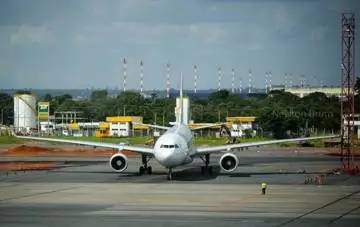
| Airline / operator | LAN Argentina |
|---|---|
| Aircraft (type, registration) | Airbus A320-233 (LV-BGI) |
| Category (my classification) | Human factors / Taxi crew (flight or maintenance) Earlier cases (pre-2016, photo evidence) |
| What happened | GOL Flight 7678 from São Paulo-Guarulhos (GRU), Brazil, was taxiing to the stand at Buenos Aires-Jorge Newbery (AEP) when it struck a LAN Airbus A320 (LV-BGI). LAN Argentina Flight 4022 to Cataratas del Iguazú (IGR), Argentina, was preparing for departure. The left hand winglet of the 737 struck the APU in the rear of the A320's tail. Cause On an International Commercial Passenger flight, during the taxiing phase, during the parking manoeuvre, a collision occurred with an aircraft that was stopped on the apron, due to a combination of the following factors: - Continuing the taxiing despite observing another aircraft that obstructed its path to the assigned position. - Inadequate movement of the aircraft in the manoeuvring area, as it left the centreline of the apron to try to overtake the aircraft that was blocking its parking manoeuvre. - Absence of signals to assist in the manoeuvre. - The instruction given by the air traffic operator to the LV-BGI aircraft was imprecise, as it did not give a specific position for its stop. |
| Injuries | Not stated in the source. |
| Damage | Minor |
| Official investigation | Investigating agency: JIAAC Report number: Status: Investigation completed Duration: Final report |
| Source | Aviation Safety Network: https://aviation-safety.net/wikibase/143733 |
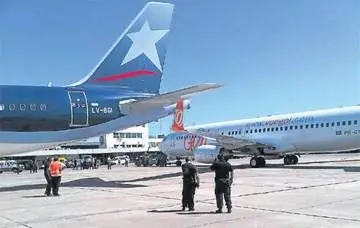
| Airline / operator | British Airways |
|---|---|
| Aircraft (type, registration) | Boeing 767-336ER (G-BNWY) |
| Category (my classification) | Human factors / Taxi crew (flight or maintenance) Secondary: ATC / marshalling involved Earlier cases (pre-2016, photo evidence) |
| What happened | the wing of British Airways flight BA265, a Boeing 767-300, struck an out-of-position jetway at Washington- Dulles International Airport, DC (IAD), while being marshalled into parking spot B38. The airplane sustained minor damage and no passengers, cabin crew, or flight crewmembers were injured. Night conditions existed at the time of the incident. The captain stated that during the taxi, the airplane was always on the yellow painted line on the pavement, and that the parking area appeared clear of vehicles and obstructions. The lead marshaller was indicating “all clear' with lighted wands, and as the airplane neared the final parking position, it came to a stop. The first officer characterized the stop as “gentle', as if the aircraft had met an inclined ramp. The lead marshaller continued to indicate “taxi forward' and some engine thrust was applied by the first officer, but because the airplane did not move, he retarded the throttles. The lead marshaller then indicated a routine “stop'. An examination of the B38/B40 parking area revealed that the B40 gate was not retracted and parked within its safety zone by airline personnel. Due to the proximity of jetways B38 and B40 to a ramp road or lane utilized by ground support vehicles, Evergreen E.A.G.L.E policy called for wing marshallers to remain near the road as aircraft are parked. This allowed them to stop ground support vehicle traffic until the parking airplane's engines were shut down. At the time of the incident, they did not “walk the wings' into the parking spots. The lead marshaller stated that he was in place on top of an airplane tug, but that jetway B38 blocked his view of the outer portion of the left wing as the airplane taxied toward him. He stated that he did not see the left side marshaller make any signals to stop the airplane. The left side marshaller, positioned behind the airplane at the ramp road, stated that he saw that the left wing was about to contact jetway B40, and signaled to the lead marshaller to stop the airplane. When he saw that the lead marshaller was not responding, he ran forward, but by that time the wing contact had already occurred. Probable Cause: The failure of the lead and left side marshallers to identify the B40 jetway obstacle and stop the airplane's taxi before the wingtip contacted the jetway. Contributing to the cause of this incident were inadequate marshalling procedures used by the ground support company, which failed to: (1) provide sufficient personnel to ensure that visual contact was maintained at all times when airplanes were taxiing to the gate area and (2) verify proper positioning of jetways in the taxi path of the airplane before directing airplanes into the gate area. |
| Injuries | Not stated in the source. |
| Damage | Minor |
| Official investigation | Investigating agency: NTSB Report number: DCA10IA006 Status: Investigation completed Duration: 10 months Final report |
| Source | Aviation Safety Network: https://aviation-safety.net/wikibase/90343 |
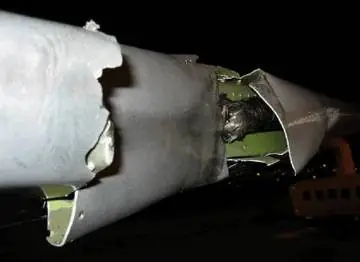
| Airline / operator | British Airways, operated by BA CityFlyer (G-BZAT); D-AVRJ operator not named in the AAIB bulletin (arrived from Munich) |
|---|---|
| Aircraft (type, registration) | Avro RJ85 (D-AVRJ); Avro RJ100 (G-BZAT) |
| Category (my classification) | Human factors / Taxi crew (flight or maintenance) Secondary: ATC / marshalling involved Earlier cases (pre-2016, photo evidence) |
| What happened | The RJ85 D-AVRJ was parked on Stand 10 at London City with the RJ100 G-BZAT on the adjacent Stand 11, itself parked 1 m right of its centreline. On the first taxi attempt the marshaller stopped the RJ85 because the left wingtip clearance was insufficient. A tug then pushed the RJ85 back on the stand to gain wingtip clearance, which reduced the tail clearance; this was not identified. As the RJ85 taxied forward and turned right under marshaller guidance, its left horizontal stabiliser passed under and contacted the RJ100's right horizontal stabiliser. |
| Injuries | None (4 crew, 37 passengers on D-AVRJ). |
| Damage | Minor: scoring of the RJ100's right elevator |
| Official investigation | UK AAIB Bulletin 4/2009 Report / investigator link(s): https://assets.publishing.service.gov.uk/media/5422f597e5274a13170005af/Avro_RJ85__D-AVRJ_04-09.pdf https://skybrary.aero/accidents-and-incidents/rj85-rj1h-london-city-airport-london-uk-2008 |
| Source | UK AAIB Bulletin 4/2009: https://assets.publishing.service.gov.uk/media/5422f597e5274a13170005af/Avro_RJ85__D-AVRJ_04-09.pdf Further sources listed on that page / found: https://aviation-safety.net/wikibase/488959 |
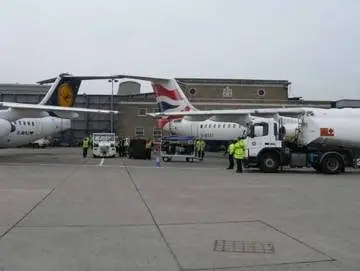
| Airline / operator | US Airways / US Airways Express, opb Republic Airways |
|---|---|
| Aircraft (type, registration) | Airbus A319-111 (N752US); Embraer ERJ 170-100 SU (ERJ-170SU) (N828MD) |
| Category (my classification) | Human factors / Taxi crew (flight or maintenance) Earlier cases (pre-2016, photo evidence) |
| What happened | An Embraer ERJ-170, N828MD, operated by Republic Airlines as flight 3416 destined to Rochester, NY, collided during taxi in the runup area of taxiway J at the north end of runway 19 of Washington-National Airport, DC (DCA), with an Airbus A319, N752US, operated by US Airways as flight US2166 destined to New York-LaGuardia Airport. The right aileron of the Airbus was substantially damaged, the left winglet of the Embraer had minor damage. There were no injuries. Visual meteorological conditions prevailed. The pilot of the ERJ-170 reported that he was positioned to the right of the Airbus, and observed a B737 approaching the runup area from taxiway J to his right. ATC cleared the Republic flight for departure, which required them to taxi past the Airbus. The captain stated that he checked the proximity of the Airbus, and it looked like he could clear it and then felt the impact. The captain notified ATC of the collision. Airport fire crews responded, but there was no fuel leak or fire. The crew of the Airbus reported that they were stationary with the parking brake applied while awaiting ATC clearance. Inadequate ground separation maintained by the pilot of the Embraer E170. |
| Injuries | Not stated in the source. |
| Damage | Substantial, repaired |
| Official investigation | Investigating agency: NTSB Report number: DCA08CA041B Status: Investigation completed Duration: 1 year and 4 months Final report |
| Source | Aviation Safety Network: https://aviation-safety.net/wikibase/321770 |
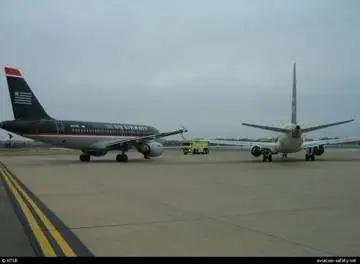
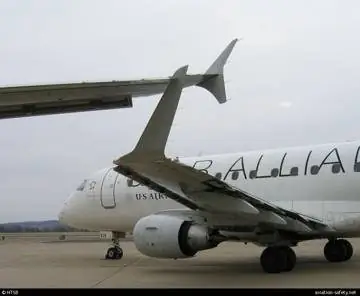
| Airline / operator | Syrianair |
|---|---|
| Aircraft (type, registration) | Boeing 747SP-94 (YK-AHB) |
| Category (my classification) | Human factors / Taxi crew (flight or maintenance) Secondary: ATC / marshalling involved Earlier cases (pre-2016, photo evidence) |
| What happened | The aircraft, a Boeing 747SP, had landed at Stockholm-Arlanda Airport after a scheduled flight from Damascus, Syria. When taxiing in to the gate the pilots were guided regarding distance and lateral deviations from a display board on the terminal building. The display was programmed by an operator from a handling company. She had received information about the arriving aircraft type from the data system at the airport, where the type code 74L was stated. She was not familiar with this specific code, but presumed it was a standard Boeing 747, which her colleagues also assumed. At the operators panel in the airbridge housing she programmed B747 after have deleted the first version alternative which was B747SP. The reason why 747 was first choice in the versions list, was that there had been accidents earlier at the airport when wrong version had been entered at the displays. A standard B747 is longer than a SP-version, implying that parking is considerably closer to the terminal building. The computer system laser scans the front profile of the parking aircraft to confirm that the correct type is programmed. Some gates at Arlanda have versions of this system that can separate different versions of the same aircraft type (B747 - B747SP). This modification was not implemented at the actual gate. When the aircraft was taxiing in towards the gate the display indicated the type version B747, according to the computer log in the system. During the interview the Commander stated that he earlier had experienced that docking systems had displayed B747, and yet had been correct for a B747SP. The operator supervised the intaxiing and when she realized that the aircraft came alarmingly close to the airbridge housing, she activated the emergency stop button. This was however already activated by the ground staff at the ramp. The top of the left wing struck the under side of the airbridge at the same time as the display indicated "STOP" and a large hole was torn up at the upper side of the wing. Causes: "The accident was caused by an inadequate training programme and deficient safety guidance in respect of the gate operator’s handling of the docking system. A contributory factor was that safety shortcomings that had been pointed out earlier had not been rectified." |
| Injuries | Not stated in the source. |
| Damage | Substantial, repaired |
| Official investigation | Investigating agency: SHK Report number: SHK Report RL 2007:23e Status: Investigation completed Duration: 1 year Final report |
| Source | Aviation Safety Network: https://aviation-safety.net/wikibase/322053 |
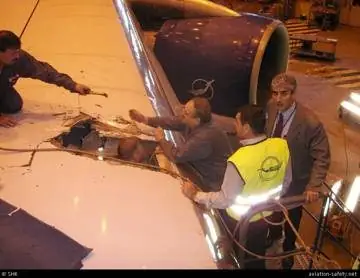
| Airline / operator | Royal Air Maroc - RAM |
|---|---|
| Aircraft (type, registration) | Boeing 737-5B6 (CN-RMV) |
| Category (my classification) | Human factors / Taxi crew (flight or maintenance) Earlier cases (pre-2016, photo evidence) |
| What happened | A Singapore Cargo Boeing 747-412(F) aircraft (9V-SFO) was taxiing for departure at Brussels National Airport. It was night and the traffic was unusually. At that time, a Royal Air Maroc Boeing 737-5B6 (CN-RMV) aircraft with 39 passengers on board was waiting for take-off clearance on taxyway Outer 7 at the intersection with taxiways Inner 6 / E6, queuing for depart from runway 25R. The pilots of the 747 received the authorization to cross the intersection of taxiways Outer 7/Inner 6, in order to get to its take-off position. When passing behind the 737, the wing tip of the 747 collided with the right horizontal stabilizer of the 737. The taxiway dimensions and markings at Brussels Airport complied with International Standards (ICAO) and were suitable for use by the aircraft types involved in the occurrence. Although not directly notified of the presence of the B737, the 747 crew was on the Ground Control frequency, where the presence of the B737 was notified to the preceding DC-10 aircraft. The clearance for taxi was given to follow the preceding DC-10. The area was sufficiently lit. The position of the B737 was not compatible with the wing span of the B747, resulting in the collision. Both aircraft suffered structural damages; the Boeing 747-400 sustained damage to the leading edge of the left wing tip, while the Boeing 737-500 had the outboard end of the horizontal stabilizer sheared off. |
| Injuries | Not stated in the source. |
| Damage | Unknown |
| Official investigation | Investigating agency: AAIU Belgium Report number: Status: Investigation completed Duration: Final report |
| Source | Aviation Safety Network: https://aviation-safety.net/wikibase/72254 |
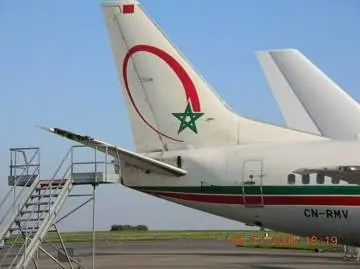
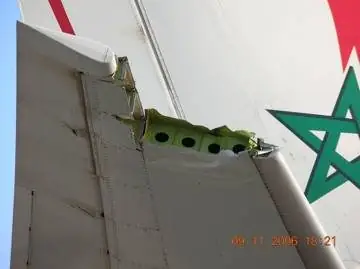
| Airline / operator | Qantas / United Airlines |
|---|---|
| Aircraft (type, registration) | Boeing 767-338ER (VH-OGH); Boeing 747-422 (N127UA) |
| Category (my classification) | Human factors / Taxi crew (flight or maintenance) Earlier cases (pre-2016, photo evidence) |
| What happened | A Boeing 747-422, operated by United Airlines, was taxiing for departure at Melbourne Airport, Australia. At the same time, a Boeing 767-338ER operated by Qantas was stationary on taxiway Echo and waiting in line to depart from runway 16. The tail section of the 767 was protruding into taxiway Alpha while it was stationary on taxiway Echo awaiting a clearance to enter the runway. The pilots of the 747 received a clearance to taxi, which included a taxi route from the international apron to the holding point on taxiway Bravo, for a departure from runway 16, via taxiways Uniform then Alpha. The pilot in command of the 747 deviated from the taxi clearance issued by the surface movement controller and turned the 747 right into taxiway Echo, to pass behind the 767. The left wing tip of the 747 collided with the right horizontal stabiliser of the 767 as the 747 crew attempted to manoeuvre behind the 767. The taxiway dimensions and markings at Melbourne Airport complied with international standards and were suitable for use by the aircraft types involved in the occurrence. The 747 crew was aware of the 767, and chose to pass behind it rather than wait on taxiway Alpha until the 767 was no longer obstructing the taxiway. The decision by the pilot in command of the 747 to deviate off the centreline of taxiway Alpha and taxi behind the 767 did not comply with the taxi clearance issued by the SMC. It was based on his assessment that it was safe to do so. The pilot in command of the 747 misjudged the distance between the wingtip of the 747 and the right horizontal stabiliser of the 767, which resulted in the collision. |
| Injuries | Not stated in the source. |
| Damage | Substantial, repaired |
| Official investigation | Investigating agency: ATSB Report number: 200600524 Status: Investigation completed Duration: 4 months Final report |
| Source | Aviation Safety Network: https://aviation-safety.net/wikibase/322241 |
Tug / pushback driver (136)
Pushback or tow-off-stand events where the tug driver or pushback team misjudged clearance or the pushback itself caused contact, including pushback near-misses.
With WheelTug, the flight crew moves the aircraft in reverse ('wheelback') instead of a tug pushback, with no pushback tug or tow bar (EUROCONTROL ConOps, pp. 26 and 41).
| Airline / operator | JetBlue Airways |
|---|---|
| Aircraft (type, registration) | JetBlue Airways Airbus A320-232 (N746JB) |
| Category (my classification) | Human factors / Tug / pushback driver |
| What happened | JetBlue flight 87, an Airbus A320, hit a light pole on pushback. The right horizontal stabilizer tip was damaged. |
| Injuries | ASN lists 0 fatalities. No injury statement in the ASN narrative. |
| Damage | Minor |
| Time out of service | N746JB: at least 9 days (no flights 20-28 Oct; first movement 29 Oct as JBU8454 ALB-MCO, possibly a non-revenue ferry - not confirmed), at least 26 missed flights (FlightAware) |
| Official investigation | No investigation details on the ASN entry. |
| Source | Aviation Safety Network (ASN) entry: https://aviation-safety.net/wikibase/583579 Further sources listed on that page / found: https://extranet.asias.faa.gov/apex/f?p=100%3A95%3A%3A%3ANO%3A%3AP95_EVENT_LCL_DATE%2CP95_LOC_CITY_NAME%2CP… https://www.facebook.com/groups/rampagents/permalink/29943488515241103/?mibextid=wwXIfr&rdid=SO2PbEVCZrNc9e… |
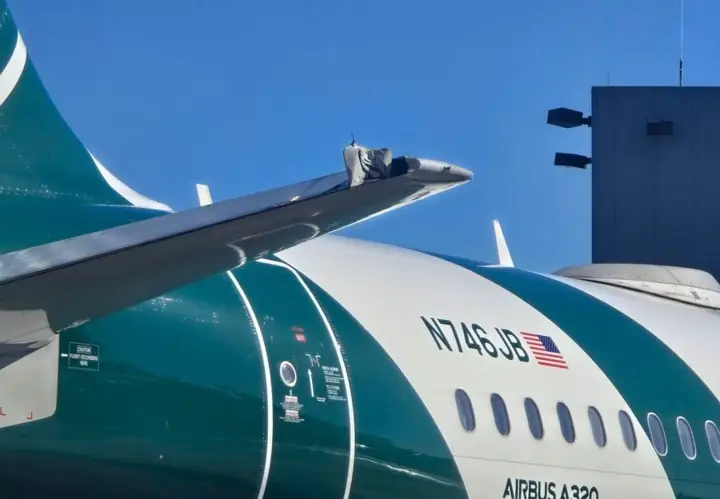
| Airline / operator | Delta Air Lines |
|---|---|
| Aircraft (type, registration) | Delta Air Lines Boeing 737-932ER (reg n/a) |
| Category (my classification) | Human factors / Tug / pushback driver |
| What happened | Delta flight DL2093, a Boeing 737-900, struck a catering truck during pushback. |
| Injuries | ASN lists 0 fatalities. No injury statement in the ASN narrative. |
| Damage | Unknown |
| Official investigation | No investigation details on the ASN entry. |
| Source | Aviation Safety Network (ASN) entry: https://aviation-safety.net/wikibase/583282 Further sources listed on that page / found: https://www.jetphotos.com/photo/12099182 |
| Airline / operator | Jetstar / QantasLink |
|---|---|
| Aircraft (type, registration) | Jetstar Airbus A320; QantasLink Dash 8 |
| Category (my classification) | Human factors / Tug / pushback driver |
| What happened | The Jetstar A320 was pushed back into the path of a taxiing QantasLink Dash 8; both aircraft stopped. No collision. |
| Injuries | None reported. |
| Damage | None |
| Official investigation | ATSB investigation; preliminary report published 2026-10-26. Report / investigator link(s): https://www.atsb.gov.au/news/2026/preliminary-reports-released-further-two-sydney-airport-taxiing-conflicts |
| Source | ATSB: https://www.atsb.gov.au/news/2026/preliminary-reports-released-further-two-sydney-airport-taxiing-conflicts |
| Note | Near-miss (pushback conflict), no contact. |
| Airline / operator | Frontier Airlines / Delta Connection, opb Endeavor Air |
|---|---|
| Aircraft (type, registration) | Frontier Airlines Airbus A320-251N (N364FR); Delta Connection, opb Endeavor Air Bombardier CRJ-900LR (N931XJ) |
| Category (my classification) | Human factors / Tug / pushback driver |
| What happened | Frontier Airlines flight F92395,an Airbus A320neo (N364FR) and Delta flight DL5051, a CRJ-900LR (N931XJ), were involved in a ground contact incident during pushback at Charlotte Douglas International Airport (CLT). The CRJ-900 was parked at gate A32. The left-hand tip of the A320neo's winglet contacted the underside of the left horizontal stabilizer of the CRJ. METAR: KCLT 272152Z 34007KT 10SM FEW050 SCT250 32/18 A2985 RMK SLP113 T03170183 KCLT 272252Z 01006KT 10SM FEW050 FEW250 31/19 A2985 RMK SLP112 T03060194 |
| Injuries | ASN lists 0 fatalities. No injury statement in the ASN narrative. |
| Damage | Unknown Location: Charlotte Douglas International Airport(CLT/KCLT) - United States of America Phase: Pushback / towing Nature: Passenger - Scheduled Departure airport: Charlotte-Douglas International Airport, NC (CLT/KCLT) Destination airport: Houston George Bush Intercontinental(IAH/KIAH) Airport Confidence Rating: Information is only available from news, social media or unofficial sources Narrative: Frontier Airlines flight F92395,an Airbus A320neo (N364FR) and Delta flight DL5051, a CRJ-900LR (N931XJ), were involved in a ground contact incident during pushback at Charlotte Douglas International Airport (CLT). The CRJ-900 was parked at gate A32. The left-hand tip of the A320neo's winglet contacted the underside of the left horizontal stabilizer of the CRJ. METAR: KCLT 272152Z 34007KT 10SM FEW050 SCT250 32/18 A2985 RMK SLP113 T03170183 KCLT 272252Z 01006KT 10SM FEW050 FEW250 31/19 A2985 RMK SLP112 T03060194 ICAO Occurrence |
| Time out of service | N931XJ: about 1–2 days, ≈ 7 missed flights (ADS-B flight data) N364FR: about 3–4 days, ≈ 11 missed flights (ADS-B flight data) |
| Official investigation | No investigation details on the ASN entry. |
| Source | Aviation Safety Network (ASN) entry: https://aviation-safety.net/wikibase/574845 Further sources listed on that page / found: https://www.reddit.com/r/aviation/comments/1v8hkkn/frontier_plane_hit_a_parked_crj_at_clt_during/ https://www.reddit.com/r/frontierairlines/comments/1v8g91u/sooooo/ https://www.reddit.com/user/Ian_CedarPt2/ https://www.reddit.com/r/frontierairlines/ https://www.reddit.com/r/delta/comments/1v8h6in/anyone_know_whats_happening_in_clt/ |
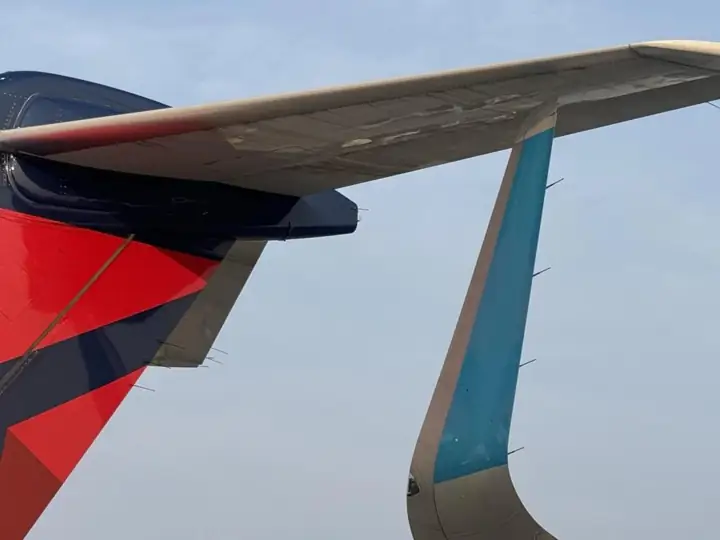
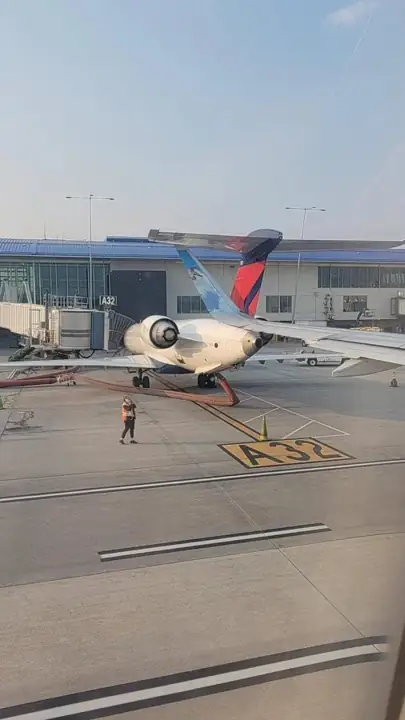
| Airline / operator | Southwest Airlines |
|---|---|
| Aircraft (type, registration) | Southwest Airlines Boeing 737-7H4 (WL) (N904WN) |
| Category (my classification) | Human factors / Tug / pushback driver |
| What happened | Southwest Airlines flight WN4793, a Boeing 737-7H4, clipped the vertical stabilizer of another aircraft while being pushed back gate B2 at New Orleans (MSY). The second aircraft involved was not identified by the FAA. ADS-B data show Southwest Boeing 737-7H4 N440LV was still on the ground about 15 hours after the incident. METAR: KMSY 202153Z 31007KT 10SM FEW040 34/22 A2985 RMK AO2 SLP111 T03440222 $ KMSY 202253Z 29007KT 10SM FEW040 FEW150 FEW250 34/22 A2984 RMK AO2 SLP107 CB DSNT S T03440217 $ |
| Injuries | ASN lists 0 fatalities. No injury statement in the ASN narrative. |
| Damage | Not stated |
| Time out of service | N904WN: less than 1 day, ≈ 2 missed flights (ADS-B flight data) N440LV: at least 15 hours (still on ground) (ASN) |
| Official investigation | No investigation details on the ASN entry. |
| Source | Aviation Safety Network (ASN) entry: https://aviation-safety.net/wikibase/574302 |
| Airline / operator | Israir, opb FLYYO |
|---|---|
| Aircraft (type, registration) | Israir, opb FLYYO Airbus A320-214 (YR-ADC) |
| Category (my classification) | Human factors / Tug / pushback driver |
| What happened | Israir flight 6H116, an Airbus A320-214, was damaged by a tow truck at London-Luton (LTN). The aircraft remained on the ground at LTN for 17 hours before it was released for service again. |
| Injuries | ASN lists 0 fatalities. No injury statement in the ASN narrative. |
| Damage | Not stated |
| Time out of service | YR-ADC: 17 hours, ≈ 3 missed flights (ASN) |
| Official investigation | No investigation details on the ASN entry. |
| Source | Aviation Safety Network (ASN) entry: https://aviation-safety.net/wikibase/574148 Further sources listed on that page / found: https://www.israelnationalnews.com/news/430339 https://vinnews.com/2026/07/19/israel-seeks-probe-after-third-vehicle-collision-with-israir-plane-at-london… https://www.mako.co.il/travel-news/international/Article-039b412170f6f91026.htm |
| Airline / operator | Alaska Airlines |
|---|---|
| Aircraft (type, registration) | Alaska Airlines Boeing 737-890 (WL) (N520AS) |
| Category (my classification) | Human factors / Tug / pushback driver |
| What happened | The aircraft struck a fuel truck during pushback. |
| Injuries | ASN lists 0 fatalities. No injury statement in the ASN narrative. |
| Damage | Not stated |
| Time out of service | N520AS: less than 1 day, ≈ 1 missed flights (ADS-B flight data) |
| Official investigation | No investigation details on the ASN entry. |
| Source | Aviation Safety Network (ASN) entry: https://aviation-safety.net/wikibase/572181 Further sources listed on that page / found: https://www.jetphotos.com/photo/10798359 |
| Airline / operator | Southwest Airlines |
|---|---|
| Aircraft (type, registration) | Southwest Airlines Boeing 737 MAX 8 (N8897K); Southwest Airlines Boeing 737 MAX 8 (N8701Q) |
| Category (my classification) | Human factors / Tug / pushback driver |
| What happened | Southwest Airlines flight WN562, a Boeing 737 MAX 8 (N8897K) struck the winglet of Southwest Airlines flight WN1048, a Boeing 737 MAX 8 (N8701Q), during pushback at BWI. |
| Injuries | ASN lists 0 fatalities. No injury statement in the ASN narrative. |
| Damage | Not stated |
| Time out of service | N8897K: about 3 days, ≈ 16 missed flights (ADS-B flight data) N8701Q: about 6 days, ≈ 30 missed flights (ADS-B flight data) |
| Official investigation | No investigation details on the ASN entry. |
| Source | Aviation Safety Network (ASN) entry: https://aviation-safety.net/wikibase/570078 Further sources listed on that page / found: https://92q.com/5902219/southwest-planes-collide-bwi-airport-pushback-incident/ |
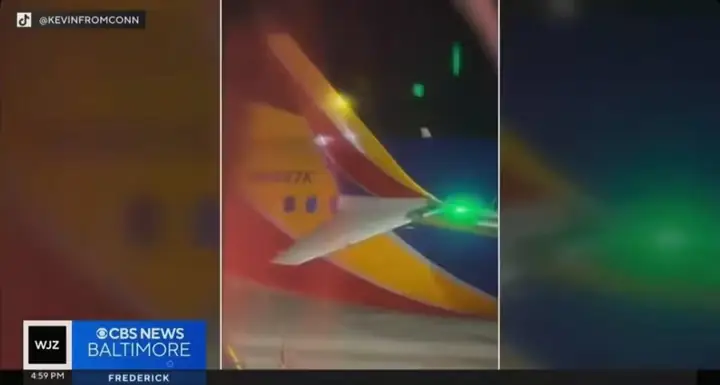
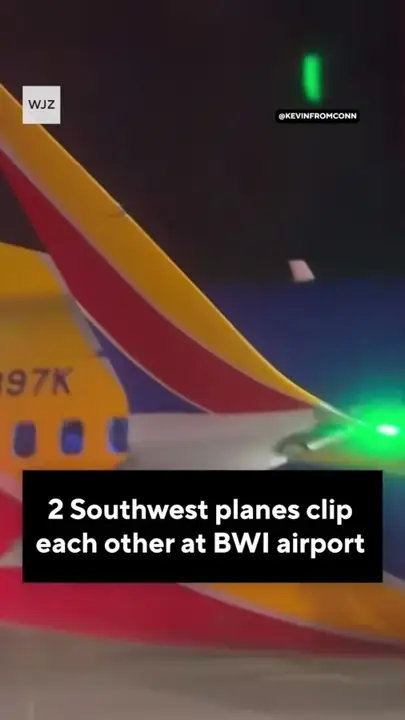
| Airline / operator | United Express, opb SkyWest Airlines |
|---|---|
| Aircraft (type, registration) | United Express, opb SkyWest Airlines Embraer ERJ-175LR (N166SY) |
| Category (my classification) | Human factors / Tug / pushback driver |
| What happened | United flight UA5767, an Embraer ERJ-175LR, struck a food truck during pushback resulting in damage to APU exhaust cone. The aircraft resumed service on 3 April 2026. |
| Injuries | ASN lists 0 fatalities. No injury statement in the ASN narrative. |
| Damage | Minor, repaired Location: Chicago-O'Hare International Airport, IL (ORD/KORD) - United States of America Phase: Pushback / towing Nature: Passenger - Scheduled Departure airport: Chicago-O'Hare International Airport, IL (ORD/KORD) Destination airport: Providence-Theodore Francis Greene State Airport, RI (PVD/KPVD) Confidence Rating: Information verified through data from accident investigation authorities Narrative: United flight UA5767, an Embraer ERJ-175LR, struck a food truck during pushback resulting in damage to APU exhaust cone. The aircraft resumed service on 3 April 2026. ICAO Occurrence |
| Time out of service | N166SY: 5 days, ≈ 23 missed flights (ASN) |
| Official investigation | No investigation details on the ASN entry. |
| Source | Aviation Safety Network (ASN) entry: https://aviation-safety.net/wikibase/568947 |
| Airline / operator | American Airlines |
|---|---|
| Aircraft (type, registration) | Boeing 737-800, flight AA1235 |
| Category (my classification) | Human factors / Tug / pushback driver |
| What happened | During pushback the 737-800 was pushed off the pavement and became stuck in the mud. |
| Injuries | No injuries reported. |
| Damage | Not stated in the source. |
| Official investigation | No public investigation found. |
| Source | syracuse.com: https://www.syracuse.com/news/2026/03/pilot-on-american-flight-leaving-syracuse-backs-off-runway-and-gets-stuck-in-the-mud.html Further sources listed on that page / found: https://simpleflying.com/american-airlines-boeing-737-800-lodged-mud-pushback-wrong-syracuse |
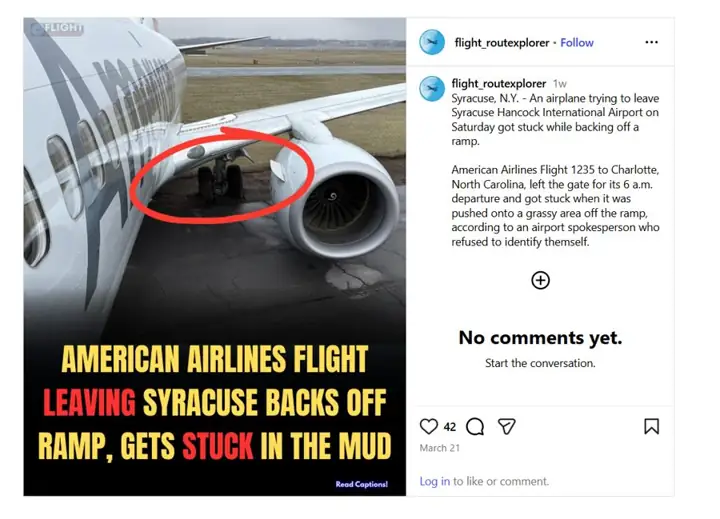
| Airline / operator | Singapore Airlines / Spirit Airlines |
|---|---|
| Aircraft (type, registration) | Singapore Airlines Airbus A350-941 (9V-SGA); Spirit Airlines Airbus A321-271NX (N720NK) |
| Category (my classification) | Human factors / Tug / pushback driver |
| What happened | Singapore Airlines flight SQ21, an Airbus A350-941 (9V-SGA), clipped the rudder of Spirit flight NK992, an Airbus A321-271NX (N720NK) during pushback at Newark, NJ (EWR). The rudder of the A321neo sustained a tear. The A350 was able to depart after a delay. |
| Injuries | ASN lists 0 fatalities. No injury statement in the ASN narrative. |
| Damage | None Location: Newark-Liberty International Airport, NJ (EWR/KEWR) - United States of America Phase: Pushback / towing Nature: Passenger - Scheduled Departure airport: Newark-Liberty International Airport, NJ (EWR/KEWR) Destination airport: Singapore-Changi International Airport (SIN/WSSS) Confidence Rating: Information is only available from news, social media or unofficial sources Narrative: Singapore Airlines flight SQ21, an Airbus A350-941 (9V-SGA), clipped the rudder of Spirit flight NK992, an Airbus A321-271NX (N720NK) during pushback at Newark, NJ (EWR). The rudder of the A321neo sustained a tear. The A350 was able to depart after a delay. ICAO Occurrence |
| Time out of service | N720NK: about 14 days, ≈ 53 missed flights (ADS-B flight data) 9V-SGA: about 0–3 days, ≈ 1 missed flights (ADS-B flight data) |
| Official investigation | No investigation details on the ASN entry. |
| Source | Aviation Safety Network (ASN) entry: https://aviation-safety.net/wikibase/567608 Further sources listed on that page / found: https://www.nbcnewyork.com/new-jersey/newark-airport-planes-clip-faa-investigation/6471840/ https://www.yahoo.com/news/articles/singapore-airlines-plane-clips-wing-195007165.html https://airlinegeeks.com/2026/03/03/singapore-a350-clips-wing-on-spirit-aircraft/ |
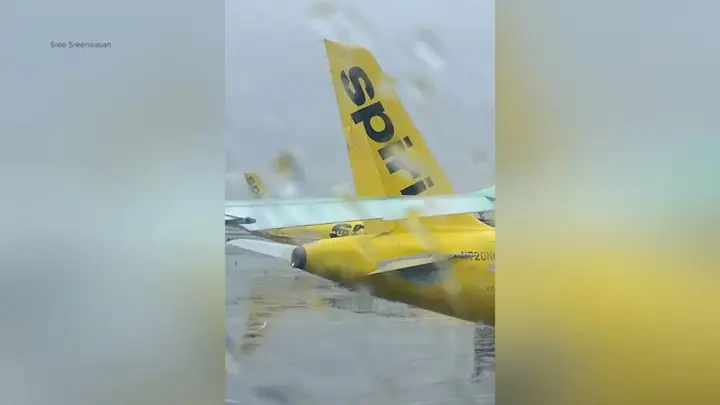
| Airline / operator | KLM Royal Dutch Airlines |
|---|---|
| Aircraft (type, registration) | KLM Royal Dutch Airlines Boeing 737-8K2 (WL) (PH-BGC); KLM Royal Dutch Airlines Boeing 737-800 (WL) (PH-BCL) |
| Category (my classification) | Human factors / Tug / pushback driver Secondary: ATC / marshalling involved |
| What happened | A KLM Boeing 737-800 (WL), PH-BCL, flight KLM1953, hit a stationary KLM Boeing 737-8K2 (WL), PH-BGC, during push back from gate D54 at Amsterdam-Schiphol International Airport (AMS/EHAM). PH-BGC taxied from the southwest to the north on taxiway Alpha to stand D29 and was in contact with Ground Control South. The area including stand D29 is colloquially called 'the tuning fork', because of the resemblance from an aerial viewpoint. The METAR at 07:25 showed good weather conditions with a horizontal visibility more than 10 kilometres, no clouds below 5,000 ft and no severe or significant weather (CAVOK). While taxiing to stand D29 from the southwest, aircraft pass a boundary (approximately at A8) from the working area of Ground Control South over to the area of Ground Control North. The standard taxiway used is taxiway Bravo. At 08:28:52, Ground Controller South asked Ground Controller North whether "he could bring PH-BGC into 'the tuning fork' via taxiway Alpha." Ground Controller North acknowledged this request. When PH-BGC arrived at stand D29, a ground handling employee was occupied at another stand and had not yet activated the Visual Docking Guidance System (VDGS) and no marshaller was present. In that case pilots must hold position on the yellow taxiway centre line to avoid excessive jet blast on opposite aircraft stands. However, the crew of PH- BGC manoeuvred the aircraft with the nose towards the stand, activated the parking brake and waited on the taxiway until the VDGS could guide them into D29. They informed Ground Controller South at 08:31:05 that they were holding position, which was replied with 'roger'. At 08:32:36, Ground Controller North cleared another Boeing 737-800 (PH- BCL), parked at stand D54, for a pushback onto the taxiway and start-up. No additions or restrictions were mentioned. Stand D54 is exactly opposite stand D29. The flight crew of the PH-BCL informed the pushback driver of the clearance. The driver subsequently conducted a check of the surrounding area from his seat in a Kalmar TBL 100E pushback truck and initiated a standard pushback in a straight line backwards at 08:33:02. Nine seconds later, while commencing the turn toward the Pushback Limit Line (PBLL), the pushback driver noticed PH-BGC and immediately halted the pushback operation before reaching the PBLL. However, a collision could no longer be avoided and the PH-BCL collided with the Boeing PH-BGC. PH-BGC sustained damage to the elevator, stabilizer, fuselage, and tail cone, while the PH-BCL sustained damage to the elevator, stabilizer, and rudder. No injuries were sustained. Preluding the collision, PH-BGC stood still with its nose towards stand D29. From the seat in the pushback truck, this inadvertently obscured PH-BGC behind the nose wheel and fuselage of the PH-BCL. Combined with the uphill slope of the apron before reaching the PBLL and the relatively high cabin position of the pushback truck, it was virtually impossible to see PH-BGC from the pushback truck when initiating the pushback. Furthermore, flight crews are not required to check for conflicts during a pushback, and they have a very limited rearward view from the cockpit. Therefore, they are dependent on the clearance message from the ground controller, who is responsible for the assessment of the taxiway behind the aircraft during pushback. Responsibility for an aircraft is transferred to the next ground controller when the aircraft passes the boundary of the ground control area. This transfer is carried out by instructing the flight crew to standby on the frequency of the next area and by transferring the corresponding Electronic Flight Strip to the next ground controller. However, according to Air Traffic Control the Netherlands, ground controllers at Schiphol Airport may mutually agree on the division of responsibilities depending on the traffic situation. After contacting Ground Controller North at 08:28:52 and after PH-BGC had crossed the area boundary, Ground Controller South kept the aircraft on his frequency and kept the Electronic Flight Strip. However, Ground Controller North did not interpret the request to bring PH-BGC into 'the tuning fork' via taxiway Alpha as meaning that the aircraft would remain with Ground Controller South until docking at D29. Instead, he understood the request solely as a change to the taxi route, with the aircraft arriving via Taxiway Alpha rather than Taxiway Bravo. Additionally, since the aircraft was on a different frequency, Ground Controller North did not hear the call from PH-BGC crew at 08:31:05, reporting that they were holding position. Consequently, Ground Controller North was unaware that PH-BGC had arrived at 'the tuning fork', in his area of responsibility. Prior to the pushback clearance of the PH-BCL, there was very little ground traffic in the northern sector. Ground Controller North had just started his shift, felt well-rested and had an unobstructed view of stands D54 and D29 from his own workstation. When he received the request for pushback and startup from the PH-BCL flight crew, he was gathering upcoming traffic information at another workstation. Due to the factors stated in this report, he was convinced that there were no conflicting aircraft in his northern sector and, as a result, he issued the pushback clearance without returning to his workstation and looking at 'the tuning fork'. METAR: METAR EHAM 210725Z 25015KT CAVOK 08/06 Q1016 NOSIG |
| Injuries | ASN lists 0 fatalities. No injuries were sustained. |
| Damage | Substantial, repaired |
| Time out of service | PH-BGC: about 49 days, ≈ 87 missed flights (ADS-B flight data) PH-BCL: about 35 days, ≈ 167 missed flights (ADS-B flight data) |
| Official investigation | Investigating agency: Dutch Safety Board Report number: 2026023 Status: Investigation completed Duration: Final report |
| Source | Aviation Safety Network (ASN) entry: https://aviation-safety.net/wikibase/567190 Further sources listed on that page / found: https://khaleejaviation.com/dutch-safety-board-schiphol-pushback-collision/ https://www.upinthesky.nl/2026/02/21/twee-klm-vliegtuigen-botsen-op-schiphol/ https://cdn.jetphotos.com/full/5/746580_1747235181.jpg https://www.reddit.com/r/KLM/comments/1rask99/klm_737s_collided_at_schiphol_airport/ https://www.reddit.com/user/AeroScopeNL/ https://nltimes.nl/2026/02/21/two-klm-jets-collide-schiphol |
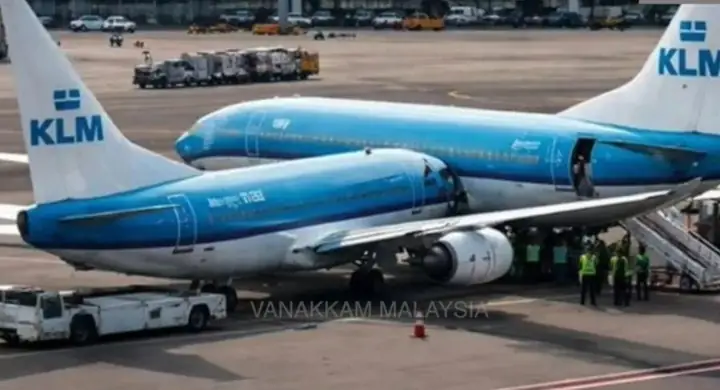
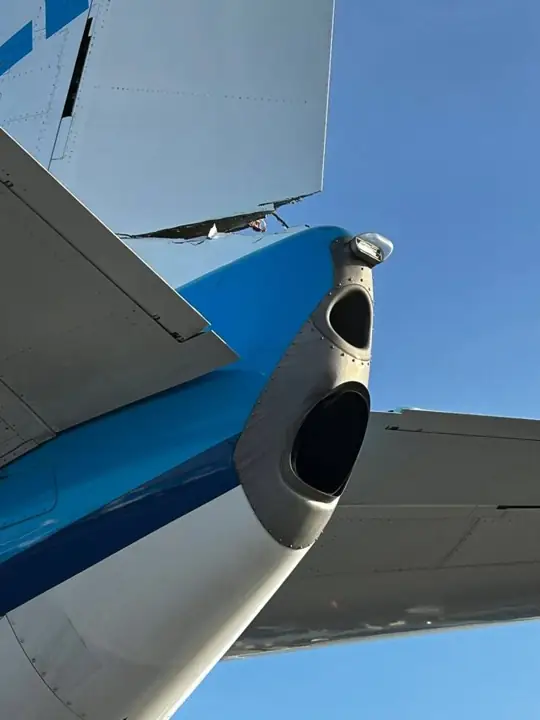
| Airline / operator | SAS Scandinavian Airlines, opb SAS Connect |
|---|---|
| Aircraft (type, registration) | SAS Scandinavian Airlines, opb SAS Connect Airbus A320-251N (EI- SIL) |
| Category (my classification) | Human factors / Tug / pushback driver |
| What happened | SAS aircraft Flight SK1707, an Airbus A320neo, collided with the pushback tug on the apron after pushback from gate 19 at Helsinki- Vantaa Airport. No one was injured. |
| Injuries | ASN lists 0 fatalities. No one was injured. |
| Damage | Minor Location: Helsinki-Vantaa Airport (HEL/EFHK) - Finland Phase: Pushback / towing Nature: Passenger - Scheduled Departure airport: Helsinki-Vantaa Airport (HEL/EFHK) Destination airport: København- Kastrup Airport (CPH/EKCH) Confidence Rating: Information is only available from news, social media or unofficial sources Narrative: SAS aircraft Flight SK1707, an Airbus A320neo, collided with the pushback tug on the apron after pushback from gate 19 at Helsinki-Vantaa Airport. No one was injured. ICAO Occurrence |
| Time out of service | EI-SIL: about 2 days, ≈ 10 missed flights (ADS-B flight data) |
| Official investigation | No investigation details on the ASN entry. |
| Source | Aviation Safety Network (ASN) entry: https://aviation-safety.net/wikibase/563741 Further sources listed on that page / found: https://www.mtvuutiset.fi/artikkeli/tyontotraktori-tormasi-matkustajakoneeseen-helsinki-vantaalla/9272552 https://www.tilannehuone.fi/tehtava.php?hash=f0f008b5c062f2ebaab87a3cfde625d2 https://www.is.fi/kotimaa/art-2000011704475.html https://www.vantaansanomat.fi/paikalliset/9089750 |
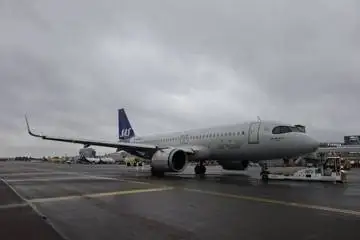
| Airline / operator | Not identified |
|---|---|
| Aircraft (type, registration) | Airbus A320-family aircraft (operator and registration not visible) |
| Category (my classification) | Human factors / Tug / pushback driver |
| What happened | CCTV footage shows a pushback tug that fails to stop before the aircraft. It strikes the nose landing gear, and a worker is caught between the tug and the gear. |
| Injuries | A worker is crushed between the tug and the nose gear; outcome not known. |
| Damage | Not known |
| Official investigation | No public investigation found. |
| Source | As shared with WheelTug (LinkedIn montage, A. G. Giordano): https://www.linkedin.com/feed/update/urn:li:activity:7380366854801940481/ |
| Note | Event not identified from public sources; the clip is at 1:05 in a ramp-incident montage posted 4 Oct 2025. |
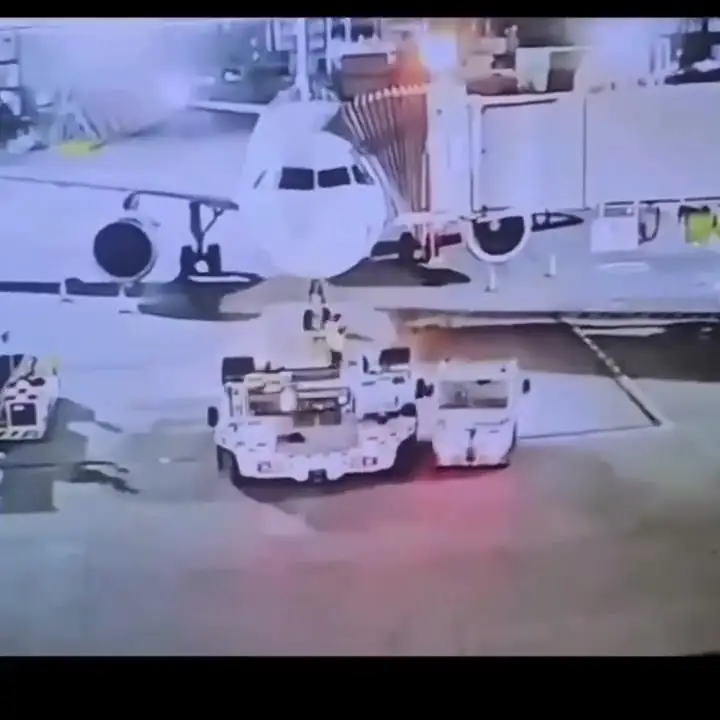 ▶ VIDEO
Still: frame at 1:05. As shared with WheelTug (LinkedIn montage, A. G. Giordano)
| Airline / operator | China Eastern Airlines |
|---|---|
| Aircraft (type, registration) | China Eastern Airlines Airbus A350-941 (B-329E) |
| Category (my classification) | Human factors / Tug / pushback driver |
| What happened | China Eastern Airlines flight CES262, an Airbus A350-941, was being pushed back from the gate when the left hand wing tip leading edge collided with a Boeing 787. The plane has been repaired and resumed operation. |
| Injuries | ASN lists 0 fatalities. No injury statement in the ASN narrative. |
| Damage | Minor, repaired Location: Madrid-Barajas Adolfo Suárez Airport (MAD/LEMD) - Spain Phase: Pushback / towing Nature: Passenger - Scheduled Departure airport: Madrid-Barajas Adolfo Suárez Airport (MAD/LEMD) Destination airport: Wenzhou Longwan International Airport (WNZ/ZSWZ) Confidence Rating: Information is only available from news, social media or unofficial sources Narrative: China Eastern Airlines flight CES262, an Airbus A350-941, was being pushed back from the gate when the left hand wing tip leading edge collided with a Boeing 787. The plane has been repaired and resumed operation. ICAO Occurrence |
| Time out of service | B-329E: about 85 days (Dec 1 MAD-TEV likely MRO, Dec 18 TEV-PVG; service Dec 21), ≈ 96 missed flights (ADS-B flight data) |
| Official investigation | No investigation details on the ASN entry. |
| Source | Aviation Safety Network (ASN) entry: https://aviation-safety.net/wikibase/564108 |
| Airline / operator | JetBlue Airways |
|---|---|
| Aircraft (type, registration) | JetBlue Airways Airbus A220-300 (N3257J) |
| Category (my classification) | Human factors / Tug / pushback driver |
| What happened | During pushback, JetBlue flight 1282, a scheduled passenger flight bound from Richmond International Airport to Boston Logan International Aiport, was accidentally pushed back too far, resulting in its left wingtip colliding with the airport building. The collision caused damage to the Airbus A220-300's wingtip as well as damage to three windows of the airport terminal. The passengers were deplaned from the incident airplane (N3257J); the flight eventually took off with a 5 hour, 40 minute delay, being flown by another A220-300 of the airline (N3241J) |
| Injuries | ASN lists 0 fatalities. No injury statement in the ASN narrative. |
| Damage | Not stated |
| Time out of service | N3257J: about 12 days, ≈ 53 missed flights (ADS-B flight data) |
| Official investigation | No investigation details on the ASN entry. |
| Source | Aviation Safety Network (ASN) entry: https://aviation-safety.net/wikibase/544182 Further sources listed on that page / found: https://www.12onyourside.com/2025/09/11/jetblue-plane-clips-window-richmond-international-airport/ https://www.wtvr.com/news/local-news/jetblue-plane-applebees-windows-damaged-sept-11-2025?fbclid=IwY2xjawMw… |
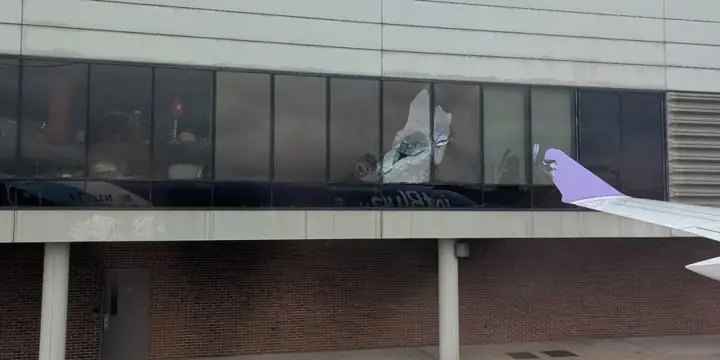
| Airline / operator | United Airlines |
|---|---|
| Aircraft (type, registration) | United Airlines Boeing 737-824 (WL) (N26232); United Airlines Boeing 737 MAX 9 (N17594) |
| Category (my classification) | Human factors / Tug / pushback driver |
| What happened | United Airlines flight UA1871, a Boeing 737-800 (N26232), and United Airlines flight UA796, a Boeing 737 MAX 9 (N17594), were damaged in a ground contact incident at San Francisco International Airport, CA (SFO). Flight UA1871 was being pushed back from the gate at the time of the incident. The left-hand horizontal stabilizer impacted the APU exhaust of flight UA796 which was still parked at the gate. |
| Injuries | ASN lists 0 fatalities. No injury statement in the ASN narrative. |
| Damage | Not stated |
| Time out of service | N26232: about 80 days, ≈ 304 missed flights (ADS-B flight data) N17594: about 25 days, ≈ 83 missed flights (ADS-B flight data) |
| Official investigation | No investigation details on the ASN entry. |
| Source | Aviation Safety Network (ASN) entry: https://aviation-safety.net/wikibase/542530 Further sources listed on that page / found: https://www.nbcbayarea.com/news/local/united-plane-ground-collision-sfo/3942088/ https://www.foxnews.com/us/united-plane-san-francisco-airport-collides-another-jet-while-pulling-back-gate https://nypost.com/2025/09/03/us-news/2-united-airlines-planes-collide-on-runway-at-california-airport-dama… |
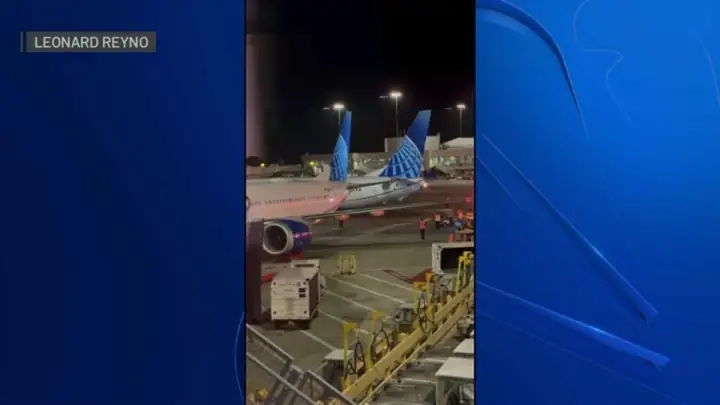
| Airline / operator | Delta Air Lines |
|---|---|
| Aircraft (type, registration) | Delta Air Lines Boeing 757-232 (WL) (N695DL) |
| Category (my classification) | Human factors / Tug / pushback driver |
| What happened | A Delta Air Lines Boeing 757-232 (WL), flight DAL1830, clipped a wing of A350-941 N569DZ during pushback at Hartsfield–Jackson Atlanta International Airport (ATL/KATL), Atlanta, Georgia. There were no injuries and the flight was cancelled. |
| Injuries | ASN lists 0 fatalities. There were no injuries and the flight was cancelled. |
| Damage | Not stated |
| Time out of service | N695DL: about 1 day, ≈ 3 missed flights (ADS-B flight data) |
| Official investigation | No investigation details on the ASN entry. |
| Source | Aviation Safety Network (ASN) entry: https://aviation-safety.net/wikibase/536048 Further sources listed on that page / found: https://www.fox5atlanta.com/news/delta-flight-clips-another-plane-atlanta-airport-causing-almost-4-hour-delay https://edition.cnn.com/2025/08/11/us/delta-airlines-clip-atlanta-hnk https://www.upi.com/Top_News/US/2025/08/11/Delta-plane-contact-atlanta/9171754900483/ https://cdn.jetphotos.com/full/5/1219828_1735080721.jpg https://vinnews.com/2025/08/10/delta-plane-wing-clips-empty-aircraft-during-pushback-from-gate-in-atlanta/ |
| Airline / operator | Alaska Airlines |
|---|---|
| Aircraft (type, registration) | Boeing 737 (AS1190); Boeing 737 (AS1094) |
| Category (my classification) | Human factors / Tug / pushback driver |
| What happened | Two Alaska Airlines 737s clipped each other during simultaneous pushback. |
| Injuries | Not stated in the source. |
| Damage | Not stated in the source. |
| Official investigation | No public investigation found. |
| Source | AeroTime: https://www.aerotime.aero/articles/alaska-airlines-b737s-clip-wings-at-seattle-tacoma-airport |
| Airline / operator | United Express, opb SkyWest Airlines |
|---|---|
| Aircraft (type, registration) | United Express, opb SkyWest Airlines Embraer ERJ-175LR (N148SY) |
| Category (my classification) | Human factors / Tug / pushback driver |
| What happened | United flight UA5563, an Embraer ERJ-175LR, struck a fuel truck while being pushed-back from gate F14 at Chicago-O'Hare International Airport, IL (ORD/KORD). No injuries were reported and only minor damage to the aircraft. |
| Injuries | ASN lists 0 fatalities. No injuries were reported and only minor damage to the aircraft. |
| Damage | Not stated |
| Official investigation | No investigation details on the ASN entry. |
| Source | Aviation Safety Network (ASN) entry: https://aviation-safety.net/wikibase/511649 Further sources listed on that page / found: https://photos.flightaware.com/photos/retriever/d78a3f9d627be1f1f14ac8b67a6776d43e800320 |
| Airline / operator | United Airlines |
|---|---|
| Aircraft (type, registration) | United Airlines Boeing 777-322(ER) (N2747U) |
| Category (my classification) | Human factors / Tug / pushback driver |
| What happened | Aircraft collided with N2645U/United Airlines Flight 877 during pushback, causing damage to the aircraft's right wing which was scheduled to perform Flight 863 to Sydney. Damage was inspected on the ground, after which the flight was cancelled and passengers deplaned. |
| Injuries | ASN lists 0 fatalities. No injury statement in the ASN narrative. |
| Damage | Not stated |
| Official investigation | No investigation details on the ASN entry. |
| Source | Aviation Safety Network (ASN) entry: https://aviation-safety.net/wikibase/509049 Further sources listed on that page / found: https://www.reddit.com/r/aviation/comments/1kfygkk/im_on_ua877_sfohkg_and_our_plane_just_collided/ https://simpleflying.com/united-airlines-flights-canceled-2-boeing-777-300ers-collide-san-francisco |
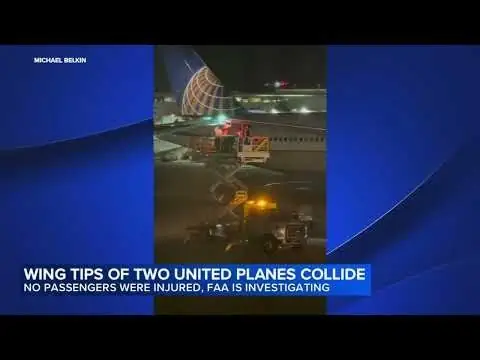
 ▶ VIDEO
Still: X video preview frame, @aviationbrk on X
| Airline / operator | Air Canada |
|---|---|
| Aircraft (type, registration) | Air Canada Boeing 737 MAX 8 (C-GEPG) |
| Category (my classification) | Human factors / Tug / pushback driver |
| What happened | Air Canada flight AC403, a Boeing 737 MAX 8, was being pushed back from gate 47 at Montreal-Pierre Elliott Trudeau International Airport, QC (YUL), when the left wing tip came into contact with a blast fence. The aircraft was returned for damage inspection. The wing tip was repaired and the aircraft returned to service on April 23, 2025. |
| Injuries | ASN lists 0 fatalities. No injury statement in the ASN narrative. |
| Damage | Minor, repaired Location: Montreal-Pierre Elliott Trudeau International Airport, QC (YUL/CYUL) - Canada Phase: Pushback / towing Nature: Passenger - Scheduled Departure airport: Montreal- Pierre Elliott Trudeau International Airport, QC (YUL/CYUL) Destination airport: Vancouver International Airport, BC (YVR/CYVR) Investigating agency: TSB Confidence Rating: Information verified through data from accident investigation authorities Narrative: Air Canada flight AC403, a Boeing 737 MAX 8, was being pushed back from gate 47 at Montreal-Pierre Elliott Trudeau International Airport, QC (YUL), when the left wing tip came into contact with a blast fence. The aircraft was returned for damage inspection. The wing tip was repaired and the aircraft returned to service on April 23, 2025. ICAO Occurrence |
| Time out of service | C-GEPG: 2 days (ASN) |
| Official investigation | No investigation details on the ASN entry. |
| Source | Aviation Safety Network (ASN) entry: https://aviation-safety.net/wikibase/511747 |
| Airline / operator | American Airlines |
|---|---|
| Aircraft (type, registration) | American Airlines Boeing 737-823 (WL) (N305NX) |
| Category (my classification) | Human factors / Tug / pushback driver |
| What happened | While under pushback from it's gate, for overnight parking, the aircraft contacted gate D2 on Terminal B. Damage was mainly to the right hand side elevator. The aircraft had arrived as AA1310 from PHX |
| Injuries | ASN lists 0 fatalities. No injury statement in the ASN narrative. |
| Damage | Not stated |
| Official investigation | No investigation details on the ASN entry. |
| Source | Aviation Safety Network (ASN) entry: https://aviation-safety.net/wikibase/486509 |
| Airline / operator | JetBlue Airways |
|---|---|
| Aircraft (type, registration) | JetBlue Airways Airbus A321-231 (WL) (N994JL) |
| Category (my classification) | Human factors / Tug / pushback driver |
| What happened | The aircraft was struck by a Goldhofer Phoenix towing vehicle, resulting in extensive damage to the bottom skin of the tail. Aircraft returned to service June 01, 2025 |
| Injuries | ASN lists 0 fatalities. No injury statement in the ASN narrative. |
| Damage | Substantial |
| Time out of service | N994JL: 100 days (ASN) |
| Official investigation | No investigation details on the ASN entry. |
| Source | Aviation Safety Network (ASN) entry: https://aviation-safety.net/wikibase/504093 |
| Airline / operator | Sunwing Airlines |
|---|---|
| Aircraft (type, registration) | Sunwing Airlines Boeing 737 MAX 8 (C-FZXI) |
| Category (my classification) | Human factors / Tug / pushback driver |
| What happened | Sunwing Airlines flight WG7182, a Boeing 737 MAX 8 was being pushed back from the gate at infield terminal at Toronto-Pearson International Airport, ON (YYZ) when the tail cone hit a blast fence. The flight and ground crew were not aware of the impact until after the aircraft had been pulled forward and a normal engine start. The damage to the tail cone was noticed by the ground crew. The tug was disconnected and the aircraft taxied back into position at the gate. Sunwing maintenance found damage to the aircraft tail cone, the APU exhaust duct muffler, and the lower aft heat blanket. The aircraft was repaired and resumed service on 11 February 2025. |
| Injuries | ASN lists 0 fatalities. No injury statement in the ASN narrative. |
| Damage | Substantial, repaired |
| Time out of service | C-FZXI: 8 days (ASN) |
| Official investigation | No investigation details on the ASN entry. |
| Source | Aviation Safety Network (ASN) entry: https://aviation-safety.net/wikibase/481014 |
| Airline / operator | American Airlines |
|---|---|
| Aircraft (type, registration) | American Airlines Boeing 737-823 (WL) (N905NN) |
| Category (my classification) | Human factors / Tug / pushback driver |
| What happened | American Airlines flight AA3161, a Boeing 737-800, contacted an Airbus A321 while being pushed back at Philadelphia International Airport, PA (PHL). Reportedly, the 737 suffered damage to the aft pressure bulkhead. |
| Injuries | ASN lists 0 fatalities. No injury statement in the ASN narrative. |
| Damage | Not stated |
| Official investigation | No investigation details on the ASN entry. |
| Source | Aviation Safety Network (ASN) entry: https://aviation-safety.net/wikibase/511607 Further sources listed on that page / found: https://www.airliners.net/forum/viewtopic.php?f=3&t=1498769&start=50 |
| Airline / operator | S7 Airlines |
|---|---|
| Aircraft (type, registration) | S7 Airlines Airbus A320-214 (RA-73422) |
| Category (my classification) | Human factors / Tug / pushback driver |
| What happened | S7 Airlines flight S73021, an Airbus A320-214, was damaged when the pushback truck hit the aircraft on the apron at Irkutsk Airport (IKT). After landing, while the aircraft was being psuhed back into parking spot no.6, the shear bolt of the towing truck broke. As a result the nose landing gear reached a critical angle of rotation and the air intake lip of the right engine was damaged. |
| Injuries | ASN lists 0 fatalities. No injury statement in the ASN narrative. |
| Damage | Minor |
| Official investigation | No investigation details on the ASN entry. |
| Source | Aviation Safety Network (ASN) entry: https://aviation-safety.net/wikibase/463662 |
| Airline / operator | Serve Air Cargo |
|---|---|
| Aircraft (type, registration) | Serve Air Cargo Boeing 737-3M8 (BDSF) (9S-AAA) |
| Category (my classification) | Human factors / Tug / pushback driver |
| What happened | A Boeing 737-300 (BDSF) cargo plane was struck by a pushback vehicle. The no.1 engine air intake lip was damaged. |
| Injuries | ASN lists 0 fatalities. No injury statement in the ASN narrative. |
| Damage | Minor, repaired |
| Official investigation | No investigation details on the ASN entry. |
| Source | Aviation Safety Network (ASN) entry: https://aviation-safety.net/wikibase/465279 Further sources listed on that page / found: https://www.facebook.com/groups/1233370706752367/posts/8622384351184262/ |
| Airline / operator | United Airlines |
|---|---|
| Aircraft (type, registration) | Boeing 737-900ER (N69806, UA544); Boeing 737-900ER (N68843, UA2451) |
| Category (my classification) | Human factors / Tug / pushback driver |
| What happened | The winglets of two United 737-900ERs struck each other during simultaneous pushback. |
| Injuries | Not stated in the source. |
| Damage | Winglet damage |
| Official investigation | No public investigation found. |
| Source | Simple Flying: https://simpleflying.com/united-airlines-boeing-737-900er-winglet-rip |
| Airline / operator | Malta Air, opf Ryanair |
|---|---|
| Aircraft (type, registration) | Malta Air, opf Ryanair Boeing 737-8AS (WL) (9H-QAA) |
| Category (my classification) | Human factors / Tug / pushback driver |
| What happened | A Boeing 737-8AS, registered 9H-QAA, was damaged in a pushback/towing incident at London Stansted Airport (STN). The aircraft was scheduled to operate from London Stansted Airport to Venice Airport, with a planned departure time of 08:05 hrs. After the boarding was complete at Stansted, the crew requested a ‘remote hold’ because of an ATC slot time of 08:40. The aircraft was cleared by ATC for a long pushback "to the bottom of the apron [D]" from Stand 63R. This involved the aircraft being pushed back to the end of the cul-de-sac on Apron Delta, abeam Stand 61L, where the tug would be disconnected, without the aircraft’s engines being started. The crew would then start the engines at an appropriate time to make the slot time. The pushback crew consisted of a headset operator and a wingman, who were on foot. A tug driving instructor (tug instructor) and trainee tug driver (trainee driver) were seated beside each other in the tug. The flight crew were in communication with the headset operator via the aircraft’s interphone. The pushback was commenced by the trainee driver. The initial turn onto the taxiway centreline was started too early so, with some instruction from the tug instructor, the trainee driver made several corrective turns. Noticing this, the aircraft commander asked the headset operator what was happening, who then explained that the driver was undergoing training. The trainee driver decided to stop the pushback and asked the tug instructor to take over. After swapping seats the instructor recommenced the pushback, correcting the aircraft back onto the taxiway centreline. He continued to reassure and advise the trainee while performing the pushback, looking at her while doing so. The headset operator continued walking on the right side of the tug, abeam its cabin. The wingman was on the left just ahead of the tug. The aircraft’s nosewheel reached the ‘Tug release point’ (TRP) ground markings, such that the tug was meant to stop. However, it continued moving beyond the TRP with its engine at idle and hit the blast barrier at the end of the cul-de- sac. Realising what had happened, the tug instructor pulled the aircraft forward off the fence then stopped the tug. The aircraft sustained substantial damage to the rear of the aircraft, including the APU, which was running at the time. It was repaired and returned to service 6 September 2024. Conclusion The aircraft was pushed beyond the TRP while the tug driving instructor was focussed on training another driver, while performing the driving task. It struck a blast fence at the end of a cul-de-sac. |
| Injuries | ASN lists 0 fatalities. No injury statement in the ASN narrative. |
| Damage | Substantial, repaired |
| Time out of service | 9H-QAA: 16 days (ASN; AAIB) |
| Official investigation | Investigating agency: AAIB Report number: AAIB-30304 Status: Investigation completed Duration: 1 year and 3 months Final report Report / investigator link(s): https://assets.publishing.service.gov.uk/media/693839b733c7ace9c4a41e75/Boeing_737-8AS_9H-QAA_12-25.pdf |
| Source | AAIB Bulletin 12/2025 (UK AAIB): https://assets.publishing.service.gov.uk/media/693839b733c7ace9c4a41e75/Boeing_737-8AS_9H-QAA_12-25.pdf Further sources listed on that page / found: https://assets.publishing.service.gov.uk/media/693839b733c7ace9c4a41e75/Boeing_737-8AS_9H-QAA_12-25.pdf https://www.gov.uk/aaib-reports/aaib-investigation-to-boeing-737-8as-9h-qaa https://www.gov.uk/aaib-reports/aaib-investigation-to-boeing-737-8as-9h-qaa https://www.gov.uk/aaib-reports/aaib-investigation-to-boeing-737-8as-9h-qaa https://www.gov.uk/aaib-reports/aaib-investigation-to-boeing-737-8as-9h-qaa https://www.gov.uk/aaib-reports/aaib-investigation-to-boeing-737-8as-9h-qaa https://www.gov.uk/aaib-reports/aaib-investigation-to-boeing-737-8as-9h-qaa https://www.gov.uk/aaib-reports/aaib-investigation-to-boeing-737-8as-9h-qaa https://www.gov.uk/aaib-reports/aaib-investigation-to-boeing-737-8as-9h-qaa https://www.gov.uk/aaib-reports/aaib-investigation-to-boeing-737-8as-9h-qaa https://aviation-safety.net/wikibase/539681 https://www.gov.uk/aaib-reports/aaib-investigation-to-boeing-737-8as-9h-qaa https://www.gov.uk/government/news/anniversary-statement-9h-qaa-boeing-737-8as https://www.flightera.net/en/planes/9H-QAA https://www.bbc.co.uk/news/articles/cx2543gj1l3o |
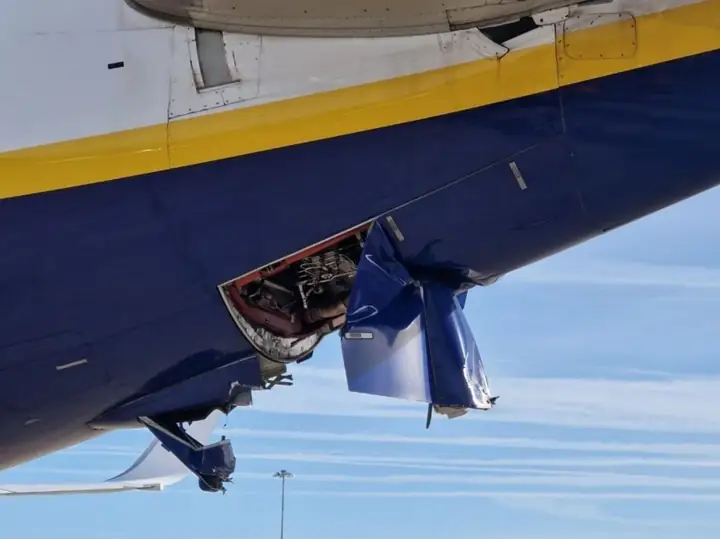
| Airline / operator | Saudi Arabian Airlines |
|---|---|
| Aircraft (type, registration) | Saudi Arabian Airlines Boeing 777-368ER (HZ-AK43); Saudi Arabian Airlines Boeing 777-3FGER (HZ-AK36) |
| Category (my classification) | Human factors / Tug / pushback driver |
| What happened | A Boeing 777-3FGER (HZ-AK36) and a Boeing 777-368ER (HZ-AK43) were damaged in a ground contact incident on the apron at Riyadh- King Khalid International Airport (RUH). During pushback of HZ- AK43, the underside of the tailcone tip contacted the the nose section of HZ-AK36, just below the right-hand windshield. HZ-AK43 sustained a rupture in the skin of the tailcone tip while HZ-AK36 suffered a tear in the nose section. |
| Injuries | ASN lists 0 fatalities. No injury statement in the ASN narrative. |
| Damage | Not stated |
| Official investigation | No investigation details on the ASN entry. |
| Source | Aviation Safety Network (ASN) entry: https://aviation-safety.net/wikibase/412751 Further sources listed on that page / found: https://slaati.com/2024/08/21/p2539414.html https://t.co/69AUngX4b7 https://t.co/VDcSoJvYkz |
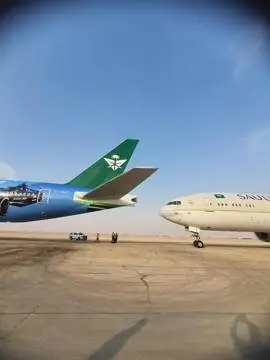
| Airline / operator | Aeroflot |
|---|---|
| Aircraft (type, registration) | Aeroflot Boeing 737-8LJ (WL) (RA-73112) |
| Category (my classification) | Human factors / Tug / pushback driver |
| What happened | Aeroflot flight SU794, a Boeing 737-800, struck the tow truck after it jack-knifed during pushback at Kazan International Airport (KZN). |
| Injuries | ASN lists 0 fatalities. No injury statement in the ASN narrative. |
| Damage | Minor |
| Official investigation | No investigation details on the ASN entry. |
| Source | Aviation Safety Network (ASN) entry: https://aviation-safety.net/wikibase/391709 Further sources listed on that page / found: https://t.me/aviatorshina/4884 https://www.goklerdeyiz.net/antalya-ucagi-yer-araci-ile-carpisti/ https://t.me/aviaincident/32641 |
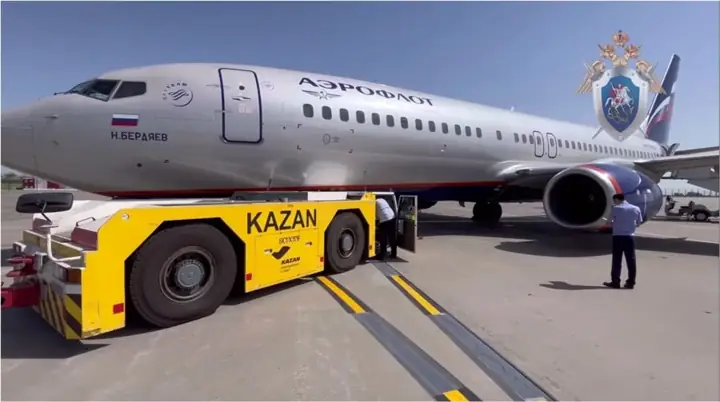
 ▶ VIDEO
Still: frame from the video in the linked post (same footage). Large semi-transparent letter watermark across the frame (the same watermark is on the X copy).
| Airline / operator | Japan Airlines (JAL) |
|---|---|
| Aircraft (type, registration) | Japan Airlines (JAL) Airbus A350-941 (JA09XJ); Japan Airlines (JAL) Airbus A350-941 (JA02XJ) |
| Category (my classification) | Human factors / Tug / pushback driver |
| What happened | Two A350-941s of Japan Airlines suffered a ground collision incident at an apron of terminal 1, Tokyo International Airport/Haneda. The flight JAL/JL503 from Tokyo/Haneda to Sapporo/New Chitose, JA02XJ, had just departed from spot 16 and was being pushed back when its left winglet contacted with the right winglet of vacant JA09XJ which was towed into spot 17 and should be used for JAL/JL505, just the same route as JL503. The right winglet of JA09XJ and static dischargers of the left winglet of 02XJ were damaged. No reported personal injuries. At the time, JA02XJ was instructed by Tokyo Ground to push back after JA09XJ's arrival to the gate 17, but JA02XJ commenced push back just prior to the arrival. The flight JL503 and the return flight JL504 were cancelled. Temporal flights JL4501/4502 were settled instead. JL505 started with a replaced A350- 941, JA03XJ, and a delay of 1 hour and 45 minutes. |
| Injuries | ASN lists 0 fatalities. No reported personal injuries. |
| Damage | Minor Location: Tokyo International Airport/Haneda (HND/RJTT) - Japan Phase: Pushback / towing Nature: Unknown Departure airport: Destination airport: Confidence Rating: Information is only available from news, social media or unofficial sources Narrative: Two A350-941s of Japan Airlines suffered a ground collision incident at an apron of terminal 1, Tokyo International Airport/Haneda. The flight JAL/JL503 from Tokyo/Haneda to Sapporo/New Chitose, JA02XJ, had just departed from spot 16 and was being pushed back when its left winglet contacted with the right winglet of vacant JA09XJ which was towed into spot 17 and should be used for JAL/JL505, just the same route as JL503. The right winglet of JA09XJ and static dischargers of the left winglet of 02XJ were damaged. No reported personal injuries. At the time, JA02XJ was instructed by Tokyo Ground to push back after JA09XJ's arrival to the gate 17, but JA02XJ commenced push back just prior to the arrival. The flight JL503 and the return flight JL504 were cancelled. Temporal flights JL4501/4502 were settled instead. JL505 started with a replaced A350- 941, JA03XJ, and a delay of 1 hour and 45 minutes. ICAO Occurrence |
| Official investigation | No investigation details on the ASN entry. |
| Source | Aviation Safety Network (ASN) entry: https://aviation-safety.net/wikibase/388239 Further sources listed on that page / found: https://www.aviationwire.jp/archives/301158 https://www.fnn.jp/articles/-/703296 https://news.tv-asahi.co.jp/news_society/articles/000350761.html https://www.yomiuri.co.jp/national/20240523-OYT1T50196/ |
| Airline / operator | American Airlines |
|---|---|
| Aircraft (type, registration) | American Airlines Airbus A321-231 (WL) (N136AN) |
| Category (my classification) | Human factors / Tug / pushback driver |
| What happened | An American Airlines passenger plane was hit by a ground vehicle at Charlotte Douglas International Airport.The report pointed out that due to operational errors, the tractor driver accidentally collided with the aircraft, causing damage to the bottom of the fuselage and the front landing gear. The aircraft has been repaired and resumed operation on July 20, 2024. |
| Injuries | ASN lists 0 fatalities. No injury statement in the ASN narrative. |
| Damage | Not stated |
| Official investigation | No investigation details on the ASN entry. |
| Source | Aviation Safety Network (ASN) entry: https://aviation-safety.net/wikibase/458580 Further sources listed on that page / found: https://www.sohu.com/a/774672797_121123900 https://k.sina.com.cn/article_1368589977_51930699040013vck.html https://simpleflying.com/american-airlines-airbus-a321-damaged-charlotte-airport |
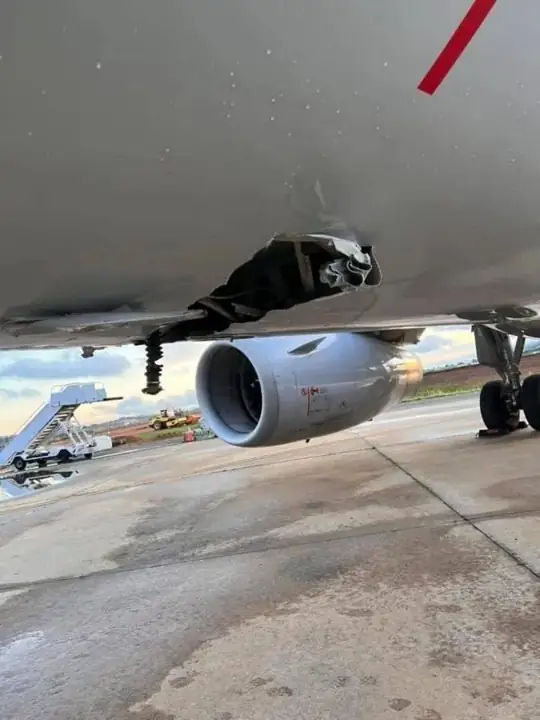
| Airline / operator | Frontier Airlines |
|---|---|
| Aircraft (type, registration) | Frontier Airlines Airbus A320-251N (N380FR) |
| Category (my classification) | Human factors / Tug / pushback driver |
| What happened | A Frontier Airlines A320neo collided with a peice of ground equipment during pushback. The aircraft was operating a scheduled flight to Fargo,ND (FAR/KFAR) as FFT4794. the collision caused a delay of the flight. |
| Injuries | ASN lists 0 fatalities. No injury statement in the ASN narrative. |
| Damage | Not stated |
| Official investigation | No investigation details on the ASN entry. |
| Source | Aviation Safety Network (ASN) entry: https://aviation-safety.net/wikibase/471131 Further sources listed on that page / found: https://www.aeronewsjournal.com/2024/04/frontier-a320-cleared-for-flight-after.html |
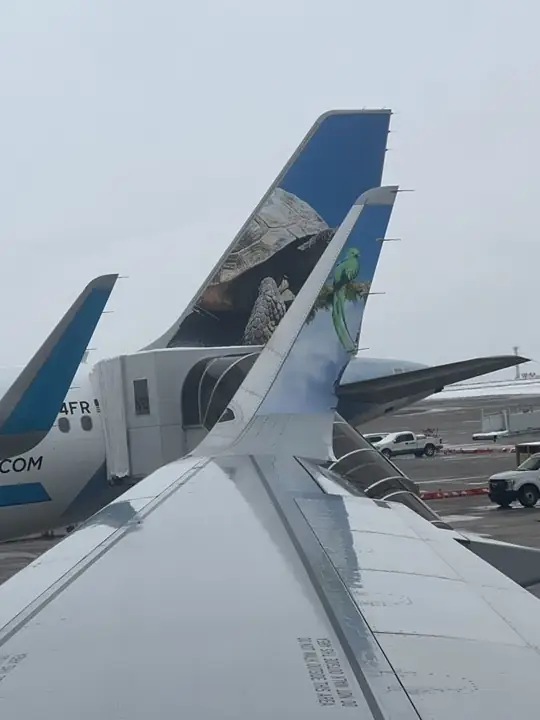
| Airline / operator | British Airways / Virgin Atlantic Airways |
|---|---|
| Aircraft (type, registration) | British Airways Airbus A350-1041 (G-XWBC); Virgin Atlantic Airways Boeing 787-9 Dreamliner (G-VDIA) |
| Category (my classification) | Human factors / Tug / pushback driver |
| What happened | A Virgin Atlantic Boeing 787-9 Dreamliner, G-VDIA, was being pushed back from the gate of Terminal 3 at London-Heathrow Airport (LHR) when the left- hand wing tip struck the right-hand horizontal stabilizer of a parked British Airways Airbus A350-1041 (G-XWBC). The British Airways flight had 121 persons on board (14 crew and 107 passengers). G-VDIA was parked on Stand 323 at London Heathrow Airport, and G-XWBC was parked alongside, on Stand 325. G-VDIA was scheduled to depart from Stand 211, so the aircraft needed to be pushed back and repositioned. G-XWBC was in the process of boarding passengers for flight. Three people were involved in the pushback operation: a tug driver, a headset operator and a ‘brake-rider’ in the cockpit. As G-VDIA was pushed back, the aircraft was turned in preparation for it entering the taxiway. The left wingtip struck the right horizontal stabiliser of G- XWBC causing damage to both aircraft. Nobody was injured but the collision was reportable to the AAIB because there were people were onboard G- XWBC with the intention of flight. AAIB Conclusion G-VDIA collided with G-XWBC when it was being pushed back to allow it to be repositioned on another stand. The aircraft was being moved in accordance with airport requirements, but the turn was initiated too soon. Contrary to the aircraft operator’s processes, the pushback was being carried out without dedicated wing walkers. A wing walker on the left side of the aircraft would probably have seen the impending collision. Safety actions ● The operator of G-VDIA issued a safety alert to highlight their requirement for wing walkers during aircraft pushbacks and towing operations. ● The airport operator issued an Aerodrome Safety Alert outlining factors that should be considered during aircraft pushback or towing operations. ● The airport operator advised they were reviewing non-standard pushback operations and the associated Operations Safety Instruction". Damage to airframe Per the AAIB Report, the damage to G-XWBC was that "Both aircraft sustained structural damage". To minimize disruption to its flight schedule, British Airways arranged for another A350-1000, registered as G-XWBB, to operate the scheduled flight to Ghana. However, it departed from London with a delay of 6 hours and 30 minutes. Meanwhile, Virgin Atlantic assured that although G-VDIA was removed from service, its flight schedule for April 6 remained unaffected. |
| Injuries | ASN lists 0 fatalities. Nobody was injured but the collision was reportable to the AAIB because there were people were onboard G-XWBC with the intention of flight. |
| Damage | Minor, repaired |
| Official investigation | Investigating agency: AAIB Report number: AAIB-29945 Status: Investigation completed Duration: 7 months Final report Report / investigator link(s): https://assets.publishing.service.gov.uk/media/67337a55bfc4a11a06122090/Boeing_787-9__G-VDIA_Airbus_A350-1041_G-ZWBC_11-24.pdf https://www.heathrow.com/content/dam/heathrow/web/common/documents/company/team-heathrow/airside/safety-alerts/ASGrOps_SA_066%20Aircraft%20Ground%20Collision.pdf https://simpleflying.com/aaib-report-british-airways-airbus-a350-virgin-atlantic-boeing-787-ground-collision-heathrow-airport/ https://assets.publishing.service.gov.uk/media/62e925308fa8f5033906b7f4/Airbus_A350-1041_G-XWBC_09-22.pdf |
| Source | Aviation Safety Network (ASN) entry: https://aviation-safety.net/wikibase/386376 Further sources listed on that page / found: https://assets.publishing.service.gov.uk/media/67337a55bfc4a11a06122090/Boeing_787-9__G-VDIA_Airbus_A350-10… https://www.heathrow.com/content/dam/heathrow/web/common/documents/company/team-heathrow/airside/safety-ale… https://www.thesun.co.uk/news/27159100/two-passenger-planes-crash-heathrow/ https://news.sky.com/story/two-planes-at-heathrow-airport-collide-wings-on-the-runway-13109099 https://www.bbc.com/news/uk-england-london-68749072.amp https://www.telegraph.co.uk/news/2024/04/06/two-passenger-planes-collided-at-heathrow-airport-damaging/ |
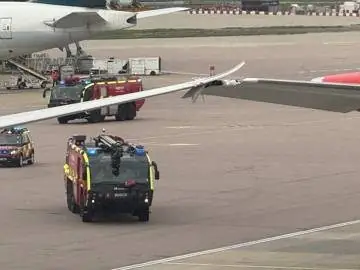
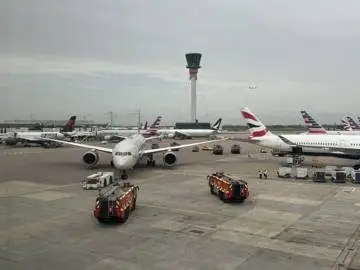
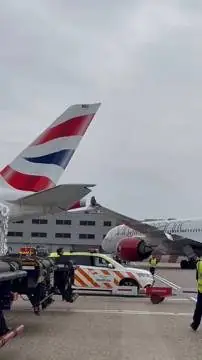 ▶ VIDEO
Still: X video preview frame, @slaytor_roger on X
 ▶ VIDEO
Still: X video preview frame, @Flyer737777 on X
| Airline / operator | American Airlines |
|---|---|
| Aircraft (type, registration) | American Airlines Airbus A320-214 (N107US) |
| Category (my classification) | Human factors / Tug / pushback driver |
| What happened | American Airlines flight AA847, an Airbus A320-214 (N107US), contacted an American Airlines Airbus A321-231 (N543UW) during pushback. The A321 was parked at the gate at the time. Both aircraft were grounded for inspection. |
| Injuries | ASN lists 0 fatalities. No injury statement in the ASN narrative. |
| Damage | Unknown Location: Philadelphia International Airport, PA (PHL/KPHL) - United States of America Phase: Pushback / towing Nature: Passenger - Scheduled Departure airport: Philadelphia International Airport, PA (PHL/KPHL) Destination airport: Charlotte-Douglas International Airport, NC (CLT/KCLT) Confidence Rating: Information is only available from news, social media or unofficial sources Narrative: American Airlines flight AA847, an Airbus A320-214 (N107US), contacted an American Airlines Airbus A321-231 (N543UW) during pushback. The A321 was parked at the gate at the time. Both aircraft were grounded for inspection. ICAO Occurrence |
| Official investigation | No investigation details on the ASN entry. |
| Source | Aviation Safety Network (ASN) entry: https://aviation-safety.net/wikibase/384528 Further sources listed on that page / found: https://6abc.com/american-airlines-plane-clips-parked-during-push-back-at-philadelphia-international-airpor… |
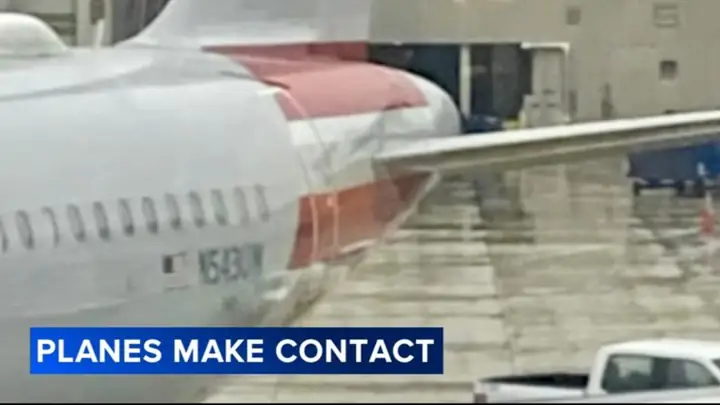
| Airline / operator | American Airlines |
|---|---|
| Aircraft (type, registration) | American Airlines Boeing 777-323ER (N736AT) |
| Category (my classification) | Human factors / Tug / pushback driver |
| What happened | American Airlines flight AA929, a Boeing 777-323ER (N736AT), struck Frontier flight F92484, an Airbus A321-271NX (N630FR), during pushback from the gate at Miami International Airport, FL (MIA). A video from the scene shows the left-hand horizontal stabilizer of the Boeing 777 was backed up into the horizontal stabilizer of the A321neo. The A321's tail was punctured. |
| Injuries | ASN lists 0 fatalities. No injury statement in the ASN narrative. |
| Damage | Minor Location: Miami International Airport, FL (MIA/KMIA) - United States of America Phase: Pushback / towing Nature: Passenger - Scheduled Departure airport: Miami International Airport, FL (MIA/KMIA) Destination airport: São Paulo-Guarulhos International Airport, SP (GRU/SBGR) Confidence Rating: Information is only available from news, social media or unofficial sources Narrative: American Airlines flight AA929, a Boeing 777-323ER (N736AT), struck Frontier flight F92484, an Airbus A321-271NX (N630FR), during pushback from the gate at Miami International Airport, FL (MIA). A video from the scene shows the left-hand horizontal stabilizer of the Boeing 777 was backed up into the horizontal stabilizer of the A321neo. The A321's tail was punctured. ICAO Occurrence |
| Official investigation | No investigation details on the ASN entry. |
| Source | Aviation Safety Network (ASN) entry: https://aviation-safety.net/wikibase/352799 Further sources listed on that page / found: https://t.co/BjWxL8dHRo |
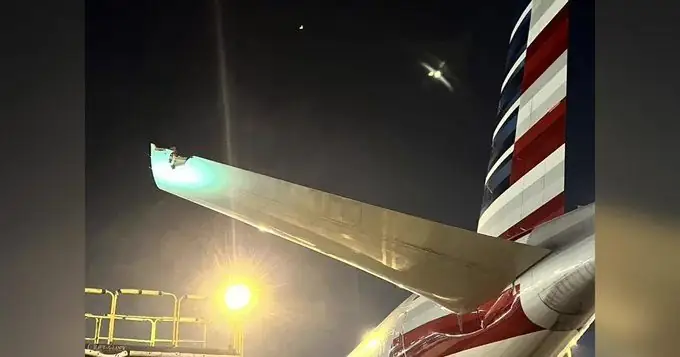
 ▶ VIDEO
Still: X video preview frame, @CitizenFreePres on X
| Airline / operator | SAS Scandinavian Airlines |
|---|---|
| Aircraft (type, registration) | SAS Scandinavian Airlines Airbus A320-251N (EI-SIT) |
| Category (my classification) | Human factors / Tug / pushback driver |
| What happened | SK864 hit something when being pushed backand damaged one of its winglets. Plane returned to gate and the flight was cancelled. |
| Injuries | ASN lists 0 fatalities. No injury statement in the ASN narrative. |
| Damage | Minor Location: Oslo-Gardermoen Airport (OSL/ENGM) - Norway Phase: Pushback / towing Nature: Passenger - Scheduled Departure airport: Oslo-Gardermoen Airport (OSL/ENGM) Destination airport: Stockholm-Arlanda Airport (ARN/ESSA) Confidence Rating: Information is only available from news, social media or unofficial sources Narrative: SK864 hit something when being pushed backand damaged one of its winglets. Plane returned to gate and the flight was cancelled. ICAO Occurrence |
| Official investigation | No investigation details on the ASN entry. |
| Source | Aviation Safety Network (ASN) entry: https://aviation-safety.net/wikibase/351695 Further sources listed on that page / found: https://www.vg.no/nyheter/innenriks/i/eJ92vM/sas-fly-krasjet-under-pushback-paa-gardermoen https://www.abcnyheter.no/nyheter/norge/2024/02/14/195982360/sas-fly-krasjet-pa-gardermoen https://www.aerotime.aero/articles/sas-incident-oslo-airport |
| Airline / operator | Norwegian Air Sweden / Norwegian Air Shuttle |
|---|---|
| Aircraft (type, registration) | Norwegian Air Sweden Boeing 737-8JP (WL) (SE-RPI); Norwegian Air Shuttle Boeing 737-8JP (WL) (LN-ENO) |
| Category (my classification) | Human factors / Tug / pushback driver |
| What happened | Norwegian flight DY276, a Boeing 737-800 (LN-ENO) contacted another Norwegian Boeing 737-800 (SE-RPI) while being pushed back from the gate at Oslo-Gardermoen Airport (OSL). The left winglet hit the left horizontal stabilizer of SE-RPI. |
| Injuries | ASN lists 0 fatalities. No injury statement in the ASN narrative. |
| Damage | Minor |
| Official investigation | No investigation details on the ASN entry. |
| Source | Aviation Safety Network (ASN) entry: https://aviation-safety.net/wikibase/351678 Further sources listed on that page / found: https://www.vg.no/nyheter/i/veaEB5/norwegian-fly-krasjet-inn-i-annet-fly-paa-gardermoen https://www.abcnyheter.no/nyheter/norge/2024/02/13/195982205/to-fly-krasjet-pa-gardermoen https://e24.no/norsk-oekonomi/i/dwygAJ/norwegian-fly-krasjet-inn-i-annet-fly-paa-gardermoen https://www.dagbladet.no/nyheter/norwegian-fly-krasjet-ristet/80971571 https://t.co/fDEe7yAFSO |
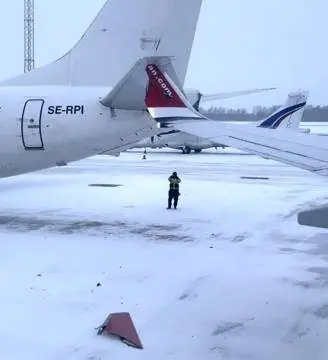
| Airline / operator | Aeroflot |
|---|---|
| Aircraft (type, registration) | Aeroflot Airbus A320-251N (RA-73733) |
| Category (my classification) | Human factors / Tug / pushback driver |
| What happened | Airbus A320neo flight SU1857 Baku-Moscow of Aeroflot airlines with 143 passengers on board landed at Sheremetyevo Airport. While being pushed tail-first, the plane's wing collided with a self- propelled passenger ramp. The left wing tip was partially destroyed. |
| Injuries | ASN lists 0 fatalities. No injury statement in the ASN narrative. |
| Damage | Minor, repaired Location: Moskva-Sheremetyevo Airport (SVO/UUEE) - Russia Phase: Pushback / towing Nature: Passenger - Scheduled Departure airport: Baku-Heydar Aliyev International Airport (GYD/UBBB) Destination airport: Moskva-Sheremetyevo Airport (SVO/UUEE) Confidence Rating: Information is only available from news, social media or unofficial sources Narrative: Airbus A320neo flight SU1857 Baku-Moscow of Aeroflot airlines with 143 passengers on board landed at Sheremetyevo Airport. While being pushed tail-first, the plane's wing collided with a self-propelled passenger ramp. The left wing tip was partially destroyed. ICAO Occurrence |
| Official investigation | No investigation details on the ASN entry. |
| Source | Aviation Safety Network (ASN) entry: https://aviation-safety.net/wikibase/351660 Further sources listed on that page / found: https://msk1.ru/text/incidents/2024/02/12/73219976/ https://t.me/aviatorshina/4203 https://t.me/mmtproc/2299 https://t.me/zmsutskr/2847 https://russianplanes.net/reginfo/194502 |
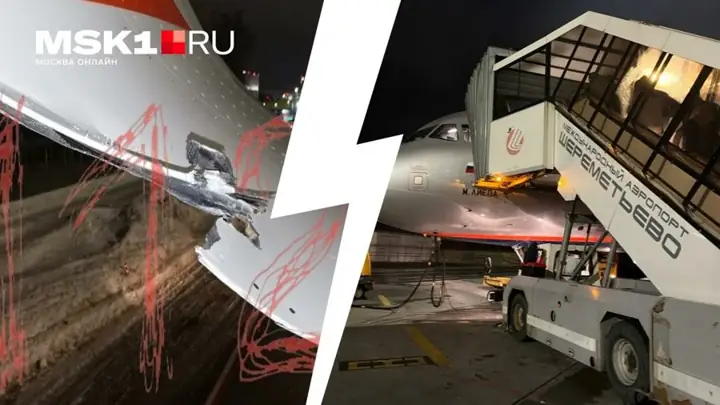
| Airline / operator | Norwegian Air Sweden |
|---|---|
| Aircraft (type, registration) | Norwegian Air Sweden Boeing 737-8JP (WL) (SE-RRJ) |
| Category (my classification) | Human factors / Tug / pushback driver |
| What happened | Norwegian Air Sweden flight D84104, a Boeing 737-800, was being pushed back from the gate when the left wing hit a fence. |
| Injuries | ASN lists 0 fatalities. No injury statement in the ASN narrative. |
| Damage | Unknown Location: Oslo-Gardermoen Airport (OSL/ENGM) - Norway Phase: Pushback / towing Nature: Passenger - Scheduled Departure airport: Oslo-Gardermoen Airport (OSL/ENGM) Destination airport: Stockholm-Arlanda Airport (ARN/ESSA) Confidence Rating: Information is only available from news, social media or unofficial sources Narrative: Norwegian Air Sweden flight D84104, a Boeing 737-800, was being pushed back from the gate when the left wing hit a fence. ICAO Occurrence |
| Official investigation | No investigation details on the ASN entry. |
| Source | Aviation Safety Network (ASN) entry: https://aviation-safety.net/wikibase/351379 Further sources listed on that page / found: https://www.dagbladet.no/nyheter/fly-har-kollidert-med-gjerde/80915620 |
| Airline / operator | Not stated |
|---|---|
| Aircraft (type, registration) | Not stated (photo shows a jet's nose landing gear on a towbarless tug) |
| Category (my classification) | Human factors / Tug / pushback driver |
| What happened | A LinkedIn post of 18 January 2024 shows an aircraft's nose landing gear sitting out of position on a towbarless tug, with the nose wheels up on the tug body rather than in its gear cradle. The post does not give the airport, airline, aircraft or date of the event. |
| Injuries | None shown or reported |
| Damage | Not stated |
| Official investigation | No public investigation found. |
| Source | LinkedIn post (achickinthecockpitb727), 18 Jan 2024: https://www.linkedin.com/posts/achickinthecockpitb727_aviation-aviationindustry-pilot-activity-7153780441286594560-IGM8 |
| Note | Date posted; event date unknown. Classified as a ground crew (tug) error. |
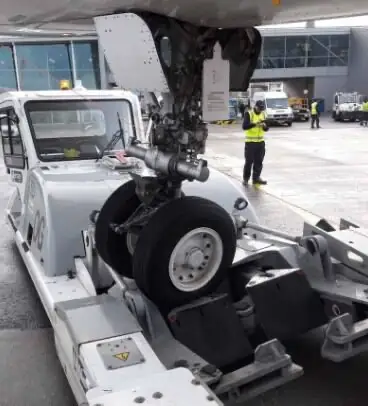
| Airline / operator | Korean Air Lines - KAL / Cathay Pacific Airways |
|---|---|
| Aircraft (type, registration) | Korean Air Lines - KAL Airbus A330-323 (HL7702); Cathay Pacific Airways Boeing 777-31H (B-HNW) |
| Category (my classification) | Human factors / Tug / pushback driver |
| What happened | Cathay's flight CPA/CX584 from Hong Kong to New Chitose, Japan had landed on New Chitose at 17:01 LT and has arrived at spot 69, with an hour delay due to heavy snow at Sapporo. Korean Air's flight KAL/KE766 from New Chitose, Japan to Seoul/Incheon, South Korea, an A330-323, with scheduled time of departure at 14:00 LT delay due to weather, has departed with more than three hours of delay. While KE766 was pushed back from the spot 70, the towing car slipped and the left winglet of A330 contacted with tail of B777, causing damages to both airplanes. There were no personal injuries, no fire nor no oil leak. On 4th March, JCAB rated this occurrence as an irregular operation, not a serious incident. METAR/SPECI reports at New Chitose: RJCC 160800Z 36003KT 0900 R01L/1500VP2000N R01R/1600VP2000N SHSN VV009 M07/M08 Q1017 RMK A3005= RJCC 160814Z VRB02KT 1500 R01L/1100VP2000U R01R/1100VP2000U - SHSN FEW006 BKN009 BKN012 M07/M08 Q1017 RMK 1ST006 5ST009 6ST012 A3005= RJCC 160830Z 02004KT 0700 R01L/P2000N R01R/P2000N SHSN VV006 M07/M08 Q1017 RMK A3005= RJCC 160834Z 02004KT 0500 R01L/1000VP2000D R01R/1400VP2000D SHSN VV005 M07/M08 Q1017 RMK A3005= RJCC 160900Z 02003KT 330V050 0700 R01L/1200VP2000D R01R/1100VP2000D SHSN VV006 M07/M08 Q1018 RMK A3007= |
| Injuries | ASN lists 0 fatalities. There were no personal injuries, no fire nor no oil leak. |
| Damage | Not stated |
| Official investigation | No investigation details on the ASN entry. |
| Source | Aviation Safety Network (ASN) entry: https://aviation-safety.net/wikibase/349946 Further sources listed on that page / found: https://news.yahoo.co.jp/articles/e13ee37b8cadb64b82c37fc3e5a470519748c071 https://news.yahoo.co.jp/articles/d60ef7f5cdee8fff34b54b843f5fa284c94a7139 https://news.yahoo.co.jp/articles/07741d008e7cc8dd4f1fbfac4942205ebcfe0157 https://news.yahoo.co.jp/articles/ee799f980cb7554721aac1de603e62bbf84c2053 https://news.yahoo.co.jp/articles/e12d08c8ec53e6d9d54fb0e9cbc7cc8f8a8d6962 https://www.aerotime.aero/articles/a330-vs-b777-korean-air-a330-scrapes-cathay-b777-during-pushback-in-japan |
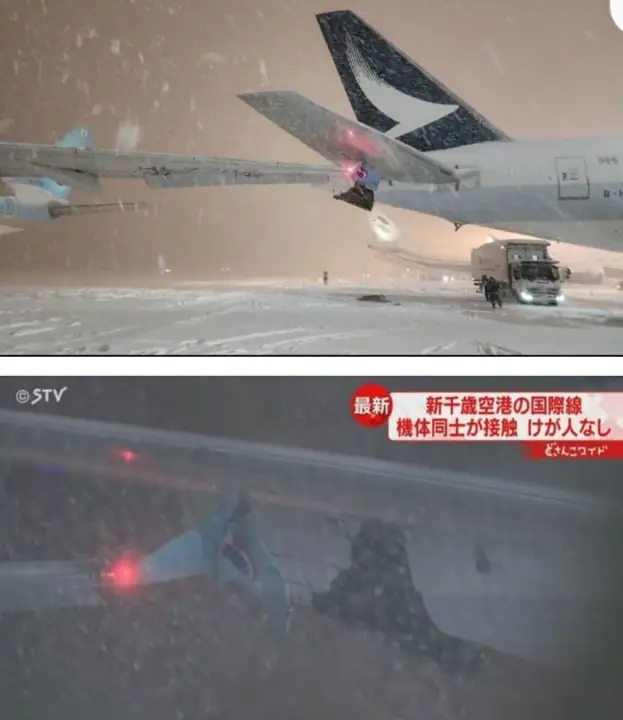
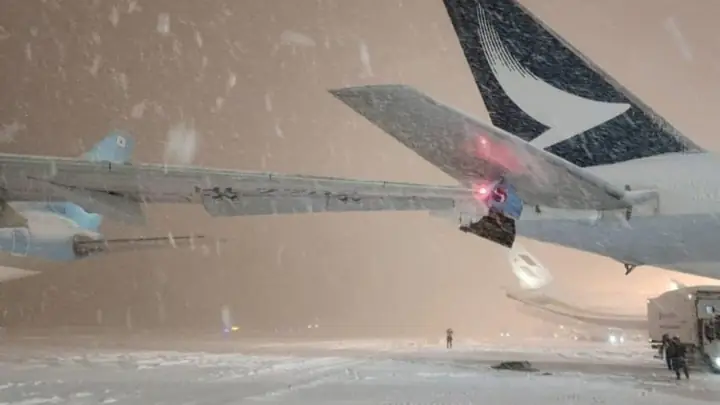
| Airline / operator | Eva Air |
|---|---|
| Aircraft (type, registration) | Eva Air Boeing 777-3ALER (B-16735) |
| Category (my classification) | Human factors / Tug / pushback driver |
| What happened | Eva Air flight BR17, a Boeing 777-300ER (B-16735), struck the rudder of a Delta Air Lines Boeing 737-932ER (N897DN) as it was being pushed back from the gate at San Francisco International Airport, CA (SFO). The right-hand wing tip of the B777 sliced through the rudder of the B737. The B777 was checked and departed with a few hours delay. |
| Injuries | ASN lists 0 fatalities. No injury statement in the ASN narrative. |
| Damage | Minor Location: San Francisco International Airport, CA (SFO/KSFO) - United States of America Phase: Pushback / towing Nature: Passenger - Scheduled Departure airport: San Francisco International Airport, CA (SFO/KSFO) Destination airport: Taipei-Taiwan Taoyuan International Airport (TPE/RCTP) Confidence Rating: Information is only available from news, social media or unofficial sources Narrative: Eva Air flight BR17, a Boeing 777-300ER (B- 16735), struck the rudder of a Delta Air Lines Boeing 737-932ER (N897DN) as it was being pushed back from the gate at San Francisco International Airport, CA (SFO). The right-hand wing tip of the B777 sliced through the rudder of the B737. The B777 was checked and departed with a few hours delay. ICAO Occurrence |
| Official investigation | No investigation details on the ASN entry. |
| Source | Aviation Safety Network (ASN) entry: https://aviation-safety.net/wikibase/349043 Further sources listed on that page / found: https://t.co/pelrlQ3SU2 |
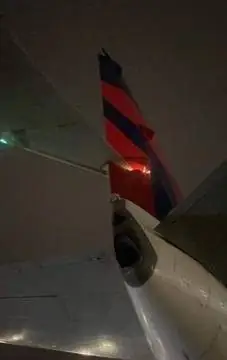
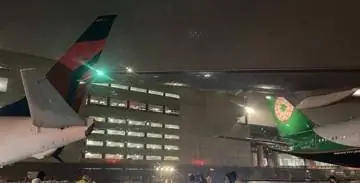
| Airline / operator | JetBlue Airways |
|---|---|
| Aircraft (type, registration) | JetBlue Airways Airbus A321-231 (WL) (N947JB) |
| Category (my classification) | Human factors / Tug / pushback driver |
| What happened | A JetBlue Airways Airbus A321-231(WL), intended to perform flight JBU34 to Logan International Airport (BOS/KBOS), Boston, Massachusetts, was hit by a tug vehicle at San Francisco International Airport (SFO/KSFO), San Francisco, California. After all occupants disembarked the aircraft it was taken out of service. The flight was delayed and performed later by JetBlue Airways Airbus A321-231 (WL) N944JT. Ex D-AVZC (test registration) |
| Injuries | ASN lists 0 fatalities. No injury statement in the ASN narrative. |
| Damage | Not stated |
| Official investigation | No investigation details on the ASN entry. |
| Source | Aviation Safety Network (ASN) entry: https://aviation-safety.net/wikibase/347675 Further sources listed on that page / found: https://www.nbcbayarea.com/news/local/san-francisco/jetblue-airplane-tug-vehicle-crash-sfo/3363745/ https://cdn.jetphotos.com/full/5/92602_1668996738.jpg |
| Airline / operator | Air Canada Rouge |
|---|---|
| Aircraft (type, registration) | Air Canada Rouge Airbus A319-114 (C-GBHO) |
| Category (my classification) | Human factors / Tug / pushback driver |
| What happened | C-GBHO, an Air Canada Rouge Airbus A319, was operating as flight ROU1904 from Vancouver International Airport (CYVR), BC, to Québec / Jean Lesage International Airport (CYQB), QC. During pushback from gate C31 at CYVR, the aircraft collided with C-GGNZ, a Jazz Aviation LP de Havilland Aircraft of Canada DHC-8-402 (Dash 8 Q400) which was parked at gate C34 with engines running and waiting to taxi. C-GGNZ was being operated as flight JZA8031 from CYVR to Nanaimo Airport (CYCD), BC. The pushback required the tug to push the A319 south and then turn it right (west) to a position on the north taxi line where it could start engines. At approximately 1415 Pacific Daylight Time, the left wing fence of the A319 made contact with the right wing tip of the DHC-8. When the collision occurred, the DHC-8 was on it’s designated parking spot. The tug was right of the pushback line and the A319 was approximately 25 feet north of the taxi line when it contacted the DHC-8. Wing walkers on both wings of the A319 and the lead station attendant for the DHC-8 all signalled the tug driver to stop. The first stop hand signal was initiated approximately 9 seconds before the collision. Apron 6, where the aircraft were located is uncontrolled. There were no injuries. Both aircraft suffered minor damage.Maintenance conducted a wing tip after impact inspection of the A319 in accordance with the aircraft maintenance manual (AMM). The left wing fence was damaged beyond limits and was replaced. The aircraft was returned to service.For the DHC-8, the damage was limited to the right aileron and wing tip. The wing tip was replaced as was the aileron and all its bearings. Function tests were carried out and the aircraft was returned to service. |
| Injuries | ASN lists 0 fatalities. There were no injuries. |
| Damage | Not stated |
| Official investigation | No investigation details on the ASN entry. |
| Source | Aviation Safety Network (ASN) entry: https://aviation-safety.net/wikibase/345209 Further sources listed on that page / found: https://in.investing.com/news/2-air-canada-planes-collide-on-tarmac-at-vancouver-intl-airport-3795347 |
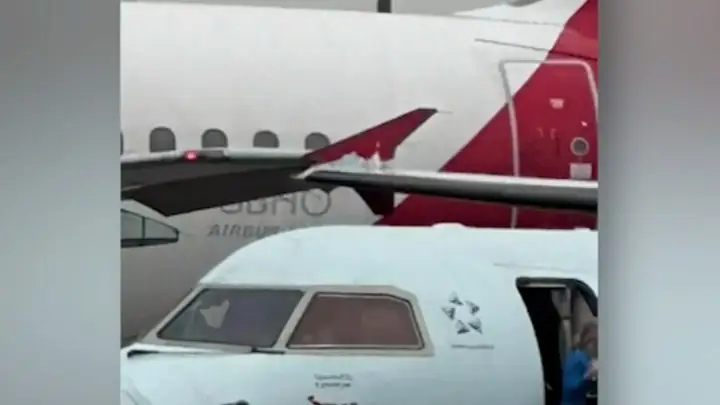
| Airline / operator | Vistara |
|---|---|
| Aircraft (type, registration) | Vistara Airbus A320-251N (VT-TNF) |
| Category (my classification) | Human factors / Tug / pushback driver |
| What happened | Vistara flight UK775, an Airbus A320-251N, sustained damage to the no.1 engine air intake lip after being struck by a push back truck. |
| Injuries | ASN lists 0 fatalities. No injury statement in the ASN narrative. |
| Damage | Not stated |
| Official investigation | No investigation details on the ASN entry. |
| Source | Aviation Safety Network (ASN) entry: https://aviation-safety.net/wikibase/343076 Further sources listed on that page / found: https://t.co/muBG4MWg2r https://t.co/dHgjRyimSf |
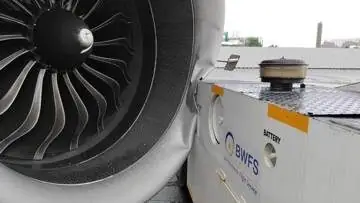
 ▶ VIDEO
Still: X video preview frame, @shukla_tarun on X
| Airline / operator | American Airlines |
|---|---|
| Aircraft (type, registration) | American Airlines Boeing 737-823 (WL) (N957NN) |
| Category (my classification) | Human factors / Tug / pushback driver |
| What happened | American Airlines flight AA2797, a Boeing 737-823, struck N559UW, an Airbus A321, while being pushed back. |
| Injuries | ASN lists 0 fatalities. No injury statement in the ASN narrative. |
| Damage | Not stated |
| Official investigation | No investigation details on the ASN entry. |
| Source | Aviation Safety Network (ASN) entry: https://aviation-safety.net/wikibase/316473 Further sources listed on that page / found: https://photos-e1.flightcdn.com/photos/retriever/9330561b5627f409c80e8d22b547561560744b75 |
| Airline / operator | JetSmart |
|---|---|
| Aircraft (type, registration) | JetSmart Airbus A320-232 (WL) (CC-AWC) |
| Category (my classification) | Human factors / Tug / pushback driver |
| What happened | The aircraft was parked at Gate E2B, of Terminal 2 at the Santiago- Arturo Merino Benitez Airport (SCL). While performing a pushback procedure from Gate E2B, of Terminal 2 at the Arturo Merino Benítez International Airport, the APU collided with the jet blast deflector adjacent to the gate. As a result, the flight crew and all passengers were unharmed, but the aircraft sustained damage. Cause Collision of the lower part of the aircraft's empennage with a jet blast deflector adjacent to the assigned gate during the pushback maneuver from its parking position, before engine start. Contributing Factors - The tug driver performed a non-standard maneuver during pushback, using his own judgment rather than following the designated blue guidance lines. - Absence of a wing walker positioned at the aircraft's tail during the pushback maneuver. - The jet blast deflector was not equipped with warning or position lights. |
| Injuries | ASN lists 0 fatalities. No injury statement in the ASN narrative. |
| Damage | Minor, repaired |
| Official investigation | Investigating agency: DGAC Chile Report number: 2025-23 Status: Investigation completed Duration: Final report Report / investigator link(s): https://servicios.dgac.gob.cl/dgac_backend/api/v1/documento/download/06b8ee7f-4a79-4bf2-b8ee-7f4a79fbf24b |
| Source | Aviation Safety Network (ASN) entry: https://aviation-safety.net/wikibase/387963 Further sources listed on that page / found: https://servicios.dgac.gob.cl/dgac_backend/api/v1/documento/download/06b8ee7f-4a79-4bf2-b8ee-7f4a79fbf24b |
| Airline / operator | Beijing Capital Airlines |
|---|---|
| Aircraft (type, registration) | Beijing Capital Airlines Airbus A320-251N (B-1246) |
| Category (my classification) | Human factors / Tug / pushback driver |
| What happened | A tow truck struck a Beijing Capital Airlines Airbus A320neo at Shanghai Pudong Airport (PVG). |
| Injuries | ASN lists 0 fatalities. No injury statement in the ASN narrative. |
| Damage | Not stated |
| Official investigation | No investigation details on the ASN entry. |
| Source | Aviation Safety Network (ASN) entry: https://aviation-safety.net/wikibase/312201 Further sources listed on that page / found: https://simpleflying.com/chinese-airports-2-collisions-1-day/ |
| Airline / operator | LATAM Airlines Chile |
|---|---|
| Aircraft (type, registration) | LATAM Airlines Chile Boeing 787-8 Dreamliner (CC-BBF) |
| Category (my classification) | Human factors / Tug / pushback driver |
| What happened | A LATAM Chile Boeing 787-8 Dreamliner, CC-BBF, was damaged in a towing incident at Bogotá-Eldorado Airport (BOG), Colombia. The aircraft was being repositioned at the airport when the tow truck jackknifed, hitting the fuselage of the aircraft. The aircraft is now undergoing repairs, as part of the repairs, the tail has been removed to prevent the aircraft from moving during winds. |
| Injuries | ASN lists 0 fatalities. No injury statement in the ASN narrative. |
| Damage | Not stated |
| Official investigation | No investigation details on the ASN entry. |
| Source | Aviation Safety Network (ASN) entry: https://aviation-safety.net/wikibase/312168 Further sources listed on that page / found: https://www.goklerdeyiz.net/video-ceki-araci-ucagin-altinda-kaldi/ https://t.co/NN44y6qFuQ https://t.co/mTdKmT2kFC https://t.co/hRR695Y7jH |
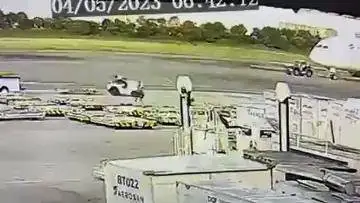 ▶ VIDEO
Still: X video preview frame, @fl360aero on X
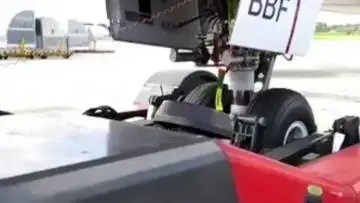 ▶ VIDEO
Still: X video preview frame, @aviacion_al_dia on X
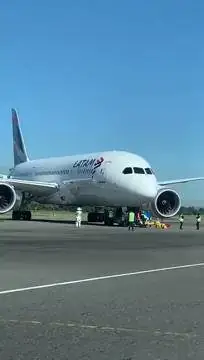 ▶ VIDEO
Still: X video preview frame, @fl360aero on X
| Airline / operator | United Airlines |
|---|---|
| Aircraft (type, registration) | United Airlines Boeing 737-924ER (WL) (N36444); United Airlines Boeing 737 MAX 8 (N27269) |
| Category (my classification) | Human factors / Tug / pushback driver |
| What happened | United Airlines Flight 515, a Boeing 737 MAX 8 (N27269) was being pushed back from the gate when the rear side of the right-hand winglet struck the leading edge of the left-hand horizontal stabilizer of a parked Boeing 737-924ER (N36444) which was being prepared for United Airlines Flight 267. No injuries reported. |
| Injuries | ASN lists 0 fatalities. No injuries reported. |
| Damage | Not stated |
| Official investigation | No investigation details on the ASN entry. |
| Source | Aviation Safety Network (ASN) entry: https://aviation-safety.net/wikibase/308975 Further sources listed on that page / found: https://www.goklerdeyiz.net/iki-ucak-yerde-carpisti-47/ |
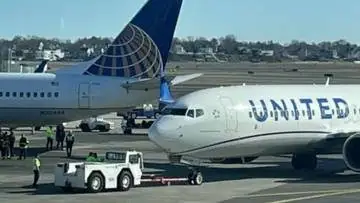
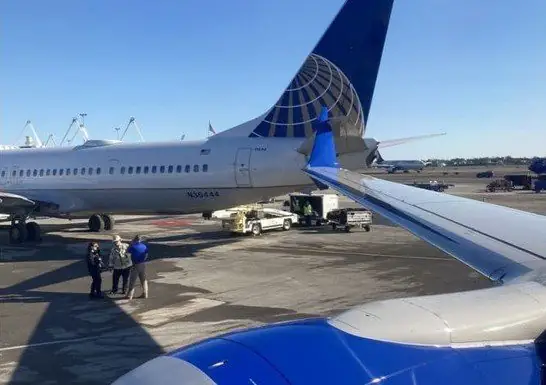
| Airline / operator | Vueling |
|---|---|
| Aircraft (type, registration) | Vueling Airbus A320-232 (WL) (EC-MEA) |
| Category (my classification) | Human factors / Tug / pushback driver |
| What happened | Vueling Airlines flight VY3511, an Airbus A320-232, struck the jetway at gate 28 at Ibiza Airport (LEIB) during pushback. The left- hand wing tip leading edge was damaged. |
| Injuries | ASN lists 0 fatalities. No injury statement in the ASN narrative. |
| Damage | Not stated |
| Official investigation | No investigation details on the ASN entry. |
| Source | Aviation Safety Network (ASN) entry: https://aviation-safety.net/wikibase/308020 Further sources listed on that page / found: https://www.periodicodeibiza.es/fotogaleria/accidente-aeropuerto-ibiza-imagenes.html |
| Airline / operator | JetBlue Airways |
|---|---|
| Aircraft (type, registration) | JetBlue Airways Airbus A321-231 (WL) (N954JB) |
| Category (my classification) | Human factors / Tug / pushback driver |
| What happened | JetBlue Airways flight B61603, an Airbus A321-231 (N954JB), contacted the tail of a parked JetBlue Airbus A320-232 (N634JB) as it was being pushed back for departure at New York-John F. Kennedy International Airport, NY (JFK). |
| Injuries | ASN lists 0 fatalities. No injury statement in the ASN narrative. |
| Damage | Minor |
| Official investigation | No investigation details on the ASN entry. |
| Source | Aviation Safety Network (ASN) entry: https://aviation-safety.net/wikibase/305956 Further sources listed on that page / found: https://www.nbcnewyork.com/news/local/jetblue-flight-bumps-plane-at-jfk-2nd-unusual-incident-in-days/4053910/ |
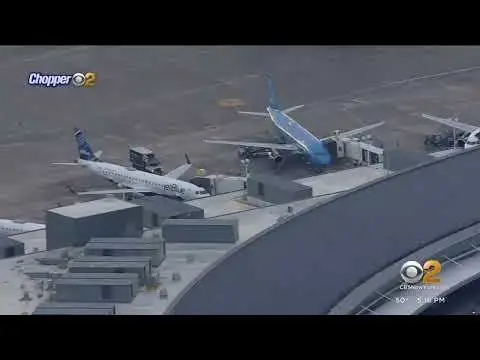
| Airline / operator | Hawaiian Airlines |
|---|---|
| Aircraft (type, registration) | Hawaiian Airlines Boeing 717-2BL (N493HA) |
| Category (my classification) | Human factors / Tug / pushback driver |
| What happened | Hawaiian Airlines flight HA366, a Boeing 717-2BL, made contact with a fence during pushback at Honolulu-Daniel K. Inouye International Airport, HI (HNL). The aircraft was grounded following the incident. |
| Injuries | ASN lists 0 fatalities. No injury statement in the ASN narrative. |
| Damage | Not stated |
| Official investigation | No investigation details on the ASN entry. |
| Source | Aviation Safety Network (ASN) entry: https://aviation-safety.net/wikibase/305803 Further sources listed on that page / found: https://www.kitv.com/news/local/hawaiian-airlines-jet-damaged-after-striking-fence-at-daniel-k-inouye-airpo… |
| Airline / operator | Southwest Airlines |
|---|---|
| Aircraft (type, registration) | Southwest Airlines Boeing 737-7H4 (WL) (N727SW); Southwest Airlines Boeing 737 MAX 8 (N8729H) |
| Category (my classification) | Human factors / Tug / pushback driver |
| What happened | Southwest Airlines flight WN962, a Boeing 737 MAX 8 (N8729H), was being pushed back from the gate at Denver when the right wing tip came in contact with left wing tip of Southwest Airlines flight WN1314, a Boeing 737-7H4 (N727SW). Both aircraft were grounded for repairs. |
| Injuries | ASN lists 0 fatalities. No injury statement in the ASN narrative. |
| Damage | Not stated |
| Official investigation | No investigation details on the ASN entry. |
| Source | Aviation Safety Network (ASN) entry: https://aviation-safety.net/wikibase/294383 |
| Airline / operator | United Airlines |
|---|---|
| Aircraft (type, registration) | Boeing 737 MAX 9 (N37510) |
| Category (my classification) | Human factors / Tug / pushback driver |
| What happened | After pushback, the 737 MAX 9 rolled back off the pavement onto soft ground. |
| Injuries | Not stated in the source. |
| Damage | Not stated in the source. |
| Official investigation | No public investigation found. |
| Source | JACDEC on X: https://x.com/JacdecNew/status/1571233494340177921 |
| Note | Date is the JACDEC post date. |
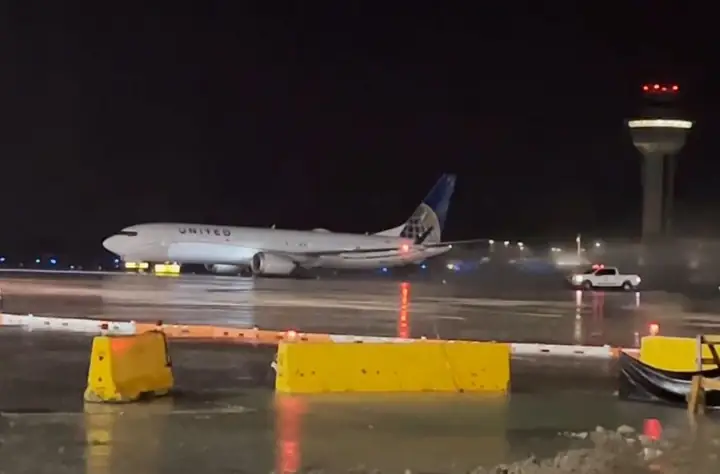
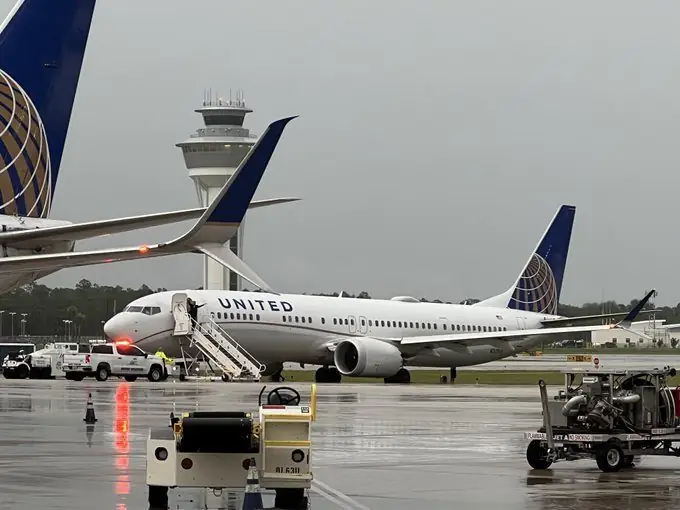
| Airline / operator | Corendon Airlines |
|---|---|
| Aircraft (type, registration) | Corendon Airlines Boeing 737 MAX 8 (TC-MKC) |
| Category (my classification) | Human factors / Tug / pushback driver |
| What happened | Corendon Airlines flight XC6222, a Boeing 737 MAX 8, collided with the pushback-tractor whilst beginning to taxi. The aircraft was able to continue the planned flight to Antalya. |
| Injuries | ASN lists 0 fatalities. No injury statement in the ASN narrative. |
| Damage | Unknown |
| Official investigation | No investigation details on the ASN entry. Report / investigator link(s): https://www.sust.admin.ch/inhalte/AV-berichte/TC-MKC_vs_ATL023_e.pdf |
| Source | Aviation Safety Network (ASN) entry: https://aviation-safety.net/wikibase/283809 Further sources listed on that page / found: https://www.sust.admin.ch/inhalte/AV-berichte/TC-MKC_vs_ATL023_e.pdf |
| Airline / operator | Air Senegal |
|---|---|
| Aircraft (type, registration) | Air Senegal Airbus A319-111 (6V-AMB) |
| Category (my classification) | Human factors / Tug / pushback driver |
| What happened | Air Senegal flight HC424, an Airbus A319, struck a catering truck with the left-hand wing tip during pushback for a flight to Dakar. No injuries reported. |
| Injuries | ASN lists 0 fatalities. No injuries reported. |
| Damage | Not stated |
| Official investigation | No investigation details on the ASN entry. |
| Source | Aviation Safety Network (ASN) entry: https://aviation-safety.net/wikibase/282234 Further sources listed on that page / found: https://www.goklerdeyiz.net/yolcu-ucagi-ile-yer-araci-carpisti-4/ |
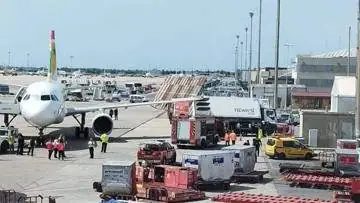
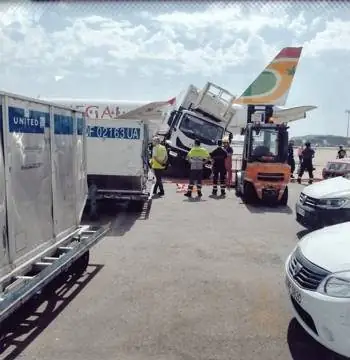
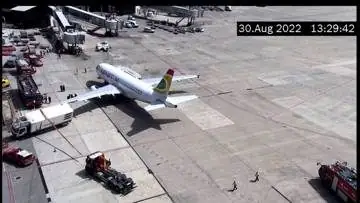
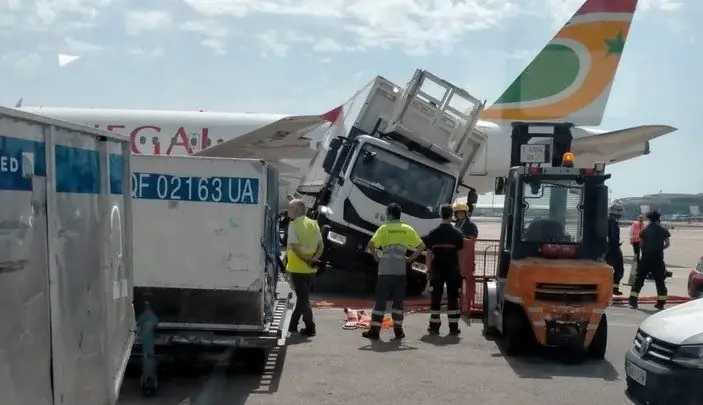
| Airline / operator | Delta Air Lines / Delta Connection, opb Endeavor Air |
|---|---|
| Aircraft (type, registration) | Delta Air Lines Boeing 757-231 (WL) (N717TW); Delta Connection, opb Endeavor Air Bombardier CRJ-900LR (N137EV) |
| Category (my classification) | Human factors / Tug / pushback driver |
| What happened | Delta Air Lines flight DL458, a Boeing 757-231 (N717TW), struck Endeavor flight 5488, a CRJ-900 (N137EV), during pushback at Boston-Logan International Airport, MA (BOS). The trailing edge of the left-hand winglet of the Boeing 757 struck the leading edge of the right-hand horizontal stabilizer of the CRJ-900. |
| Injuries | ASN lists 0 fatalities. No injury statement in the ASN narrative. |
| Damage | Not stated |
| Official investigation | No investigation details on the ASN entry. |
| Source | Aviation Safety Network (ASN) entry: https://aviation-safety.net/wikibase/281458 Further sources listed on that page / found: https://abcnews.go.com/US/wireStory/plane-bumps-backing-boston-airport-88341473 https://www.youtube.com/watch?v=qi34tU2yUnw https://www.wcvb.com/article/delta-plane-collides-with-another-plane-while-taxiing-at-boston-logan-airport/… https://t.co/SKrlgZoBBc |
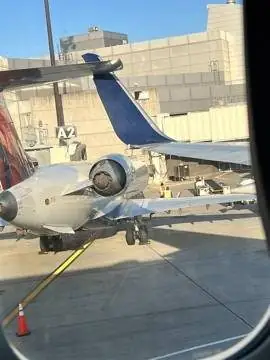
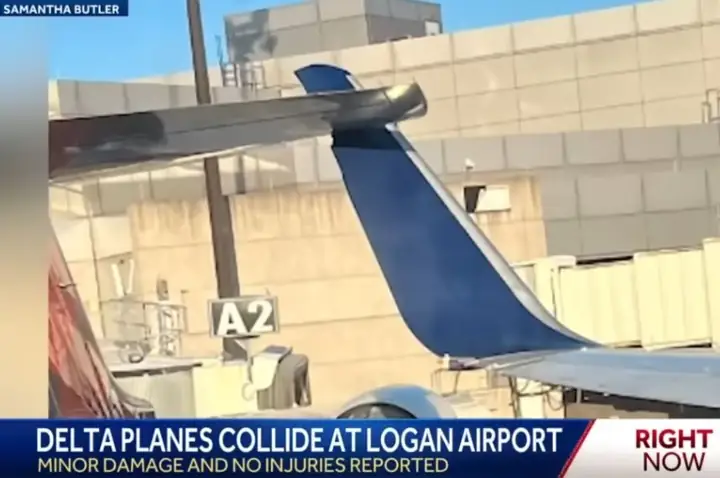
| Airline / operator | Southwest Airlines / JetBlue Airways |
|---|---|
| Aircraft (type, registration) | Southwest Airlines Boeing 737-7H4 (WL) (N421LV); JetBlue Airways Airbus A320-232 (N657JB) |
| Category (my classification) | Human factors / Tug / pushback driver |
| What happened | JetBlue Airways flight B62519, an Airbus A320-232 (N657JB), was being pushed back at New York-La Guardia Airport, NY (LGA) when the left wing tip hit the right wing tip of a parked Southwest Airlines Boeing 737-700 (N421LV). |
| Injuries | ASN lists 0 fatalities. No injury statement in the ASN narrative. |
| Damage | Not stated |
| Official investigation | No investigation details on the ASN entry. |
| Source | Aviation Safety Network (ASN) entry: https://aviation-safety.net/wikibase/281252 Further sources listed on that page / found: https://abc7ny.com/laguardia-airport-jetblue-southwest-airlines-planes-clip/12107521/ https://t.co/mwovburoy1 https://t.co/jtlfyXRmQK |
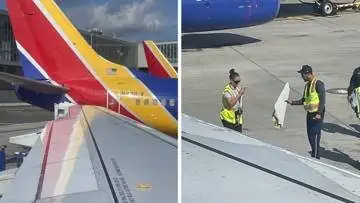
| Airline / operator | Delta Air Lines |
|---|---|
| Aircraft (type, registration) | Delta Air Lines Boeing 757-26D (WL) (N823DX); Delta Air Lines Boeing 737-832 (WL) (N3744F) |
| Category (my classification) | Human factors / Tug / pushback driver |
| What happened | Delta Air Lines flight DL2911, a Boeing 737-800 (N3744F), clipping wings with Delta Air Lines flight DL1654, a Boeing 757-200 (N823DX) at Miami Airport, Florida, USA. DL2911 was being pushed back from gate H5 when the right-hand winglet hit the rear side of the elevator of the Boeing 757 parked at gate H7. Both aircraft were grounded. The Boeing 737 resumed service after two days. |
| Injuries | ASN lists 0 fatalities. No injury statement in the ASN narrative. |
| Damage | Not stated |
| Time out of service | N3744F: 2 days (ASN) |
| Official investigation | No investigation details on the ASN entry. |
| Source | Aviation Safety Network (ASN) entry: https://aviation-safety.net/wikibase/280776 Further sources listed on that page / found: https://www.wlns.com/top-stories/2-delta-planes-collide-near-gate-at-florida-airport/ https://t.co/CebEQzq4aa |
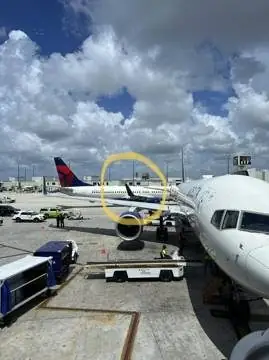
| Airline / operator | United Airlines |
|---|---|
| Aircraft (type, registration) | United Airlines Boeing 737-924ER (N39423) |
| Category (my classification) | Human factors / Tug / pushback driver |
| What happened | A United Airlines aircraft was being pushed from the gate at Newark-Liberty International Airport, NJ (EWR) when the right-hand winglet struck the leading edge of the left-hand horizontal stabilizer of N39423. |
| Injuries | ASN lists 0 fatalities. No injury statement in the ASN narrative. |
| Damage | Not stated |
| Official investigation | No investigation details on the ASN entry. |
| Source | Aviation Safety Network (ASN) entry: https://aviation-safety.net/wikibase/279636 Further sources listed on that page / found: https://www.goklerdeyiz.net/iki-ucak-yerde-carpisti-40/ https://t.co/P8qrIPYGek |
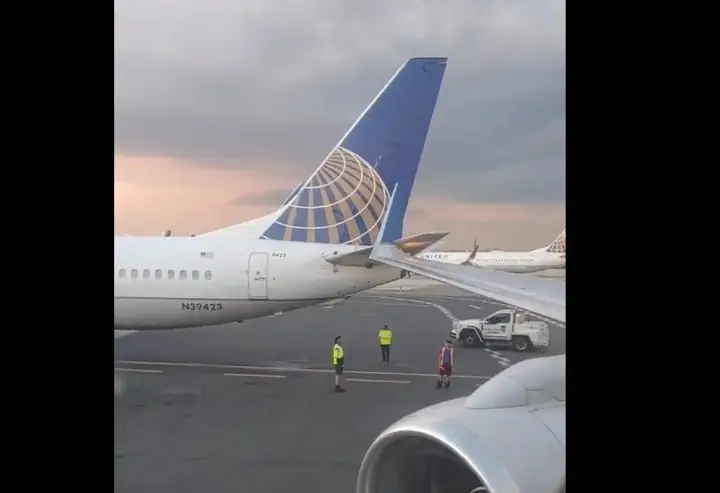
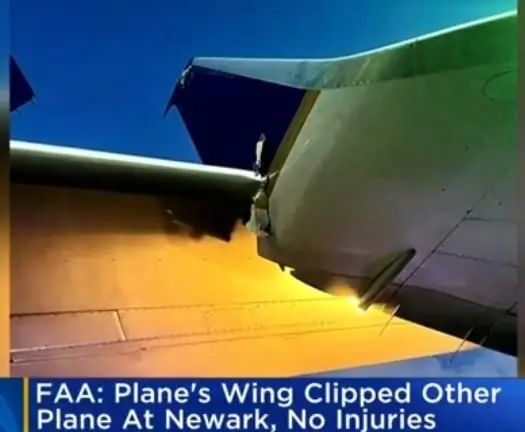
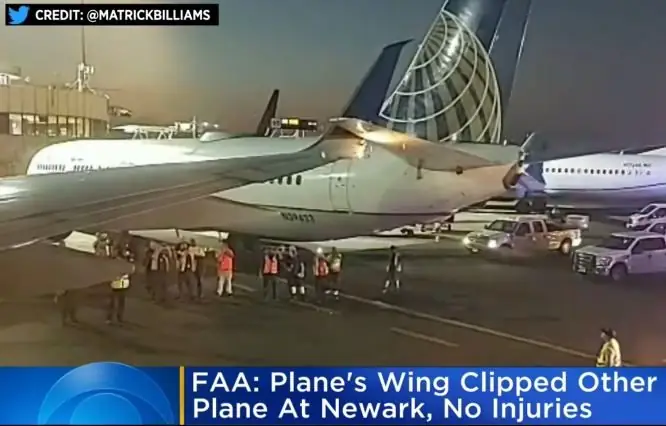
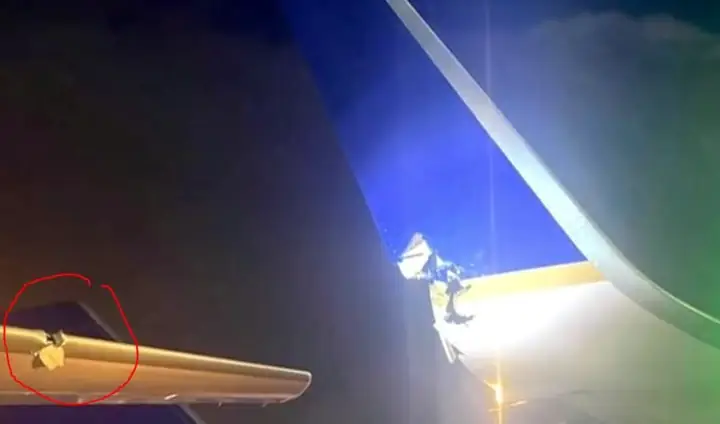
 ▶ VIDEO
Still: X video preview frame, @MatrickBilliams on X
| Airline / operator | Southwest Airlines |
|---|---|
| Aircraft (type, registration) | Boeing 737-800 (N8580Z), flight WN313 |
| Category (my classification) | Human factors / Tug / pushback driver |
| What happened | During pushback the left lower winglet of the Southwest 737-800 struck a catering truck. |
| Injuries | None reported (FAA record). |
| Damage | Minor (FAA record). |
| Official investigation | FAA incident record. |
| Source | Kathryn's Report (FAA incident data): http://www.kathrynsreport.com/2022/05/boeing-737-800-n8580z-incident-occurred.html |
Video: https://wheeltug-collisions.netlify.app/videos/GC-0644_1.mp4
Original: https://www.youtube.com/watch?v=yX7lNScDIZg
Video and still: Supplied by WheelTug; original: YouTube.
Video: https://wheeltug-collisions.netlify.app/videos/GC-0644_2.mp4
Original: https://www.youtube.com/watch?v=yX7lNScDIZg
Video and still: Supplied by WheelTug; original: YouTube.
| Airline / operator | SpiceJet |
|---|---|
| Aircraft (type, registration) | SpiceJet Boeing 737-8EH (WL) (VT-SLJ) |
| Category (my classification) | Human factors / Tug / pushback driver |
| What happened | A SpiceJet Boeing 737-8EH (WL), intented to perform flight SEJ160, collided with a lamppost at Indira Gandhi International Airport (DEL/VIDP), Delhi, during pushback and leaving a big hole in the right aileron. The aircraft was grounded and replaced by SpiceJet Boeing 737-8GJ (WL) VT-SGV. |
| Injuries | ASN lists 0 fatalities. No injury statement in the ASN narrative. |
| Damage | Not stated |
| Official investigation | No investigation details on the ASN entry. |
| Source | Aviation Safety Network (ASN) entry: https://aviation-safety.net/wikibase/276890 Further sources listed on that page / found: https://www.aviation24.be/airlines/spicejet/boeing-737-800-hits-light-pole-during-push-back-at-delhi-india/ https://news.abplive.com/news/india/spicejet-flight-collides-with-electric-pole-at-delhi-airport-with-passe… https://www.indiatoday.in/cities/delhi/story/delhi-jammu-spicejet-flight-collides-pole-airport-pictures-193… https://www.telegraaf.nl/video/1846274384/brokkenpiloot-laat-vliegtuig-botsen-op-luchthaven https://cdn.jetphotos.com/full/5/22859_1643201541.jpg |
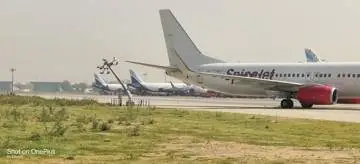
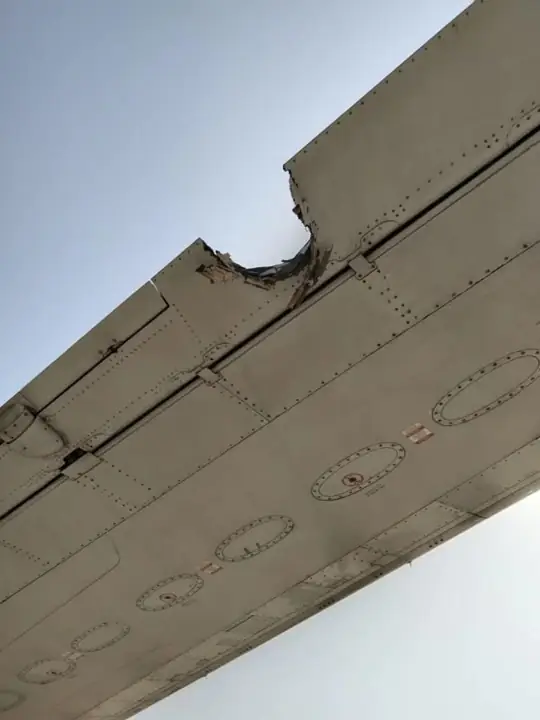
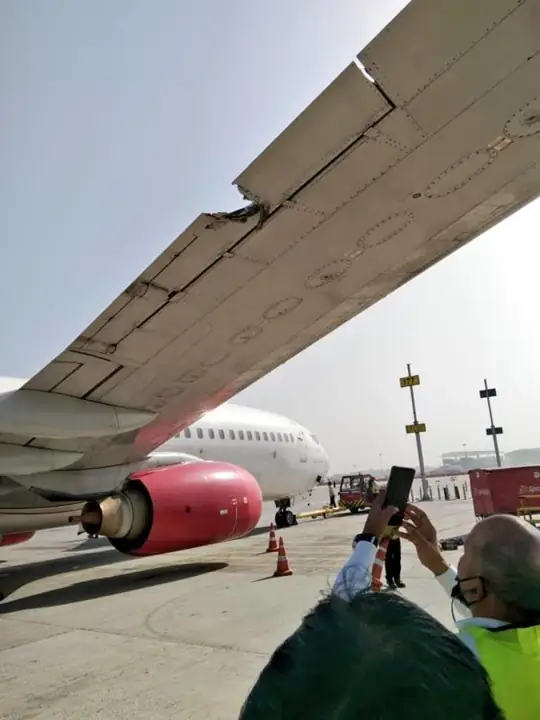
Video: https://wheeltug-collisions.netlify.app/videos/GC-0261_1.mp4
Original: https://x.com/puneet/status/1508776565701636099
Video and still: Supplied by WheelTug; original: @puneet on X.
| Airline / operator | British Airways |
|---|---|
| Aircraft (type, registration) | Boeing 777-300ER (G-YMMH) |
| Category (my classification) | Human factors / Tug / pushback driver |
| What happened | During a tug pushback to a remote stand, the open L2 door was still against the jet bridge and was torn off. No one was on board. Flight BA42 was cancelled and the jet bridge was damaged. |
| Injuries | None (aircraft empty). |
| Damage | L2 door torn off; jet bridge damaged. |
| Official investigation | Under investigation by the airport (ACSA), per News24. |
| Source | News24 (27 Jan 2022): https://www.news24.com/southafrica/news/flight-delay-after-british-airways-plane-door-ripped-off-at-cape-town-airport-20220127 Further sources listed on that page / found: https://www.independent.co.uk/travel/news-and-advice/british-airways-plane-door-cape-town-b2001536.html https://www.sabcnews.com/sabcnews/probe-underway-after-aeroplane-door-was-ripped-off-at-cape-town-internati… |
Video: https://wheeltug-collisions.netlify.app/videos/GC-0646_1.mp4
Original: https://www.youtube.com/watch?v=qZGczFCT0JE
Video and still: Supplied by WheelTug; original: YouTube.
| Airline / operator | Allegiant Air |
|---|---|
| Aircraft (type, registration) | Allegiant Air Airbus A320-214 (N293NV) |
| Category (my classification) | Human factors / Tug / pushback driver |
| What happened | Allegiant Air flight G41687, an Airbus A320-214, contacted a parked aircraft during pushback. The wingtip struck the auxiliary power unit (APU) of another aircraft. The flight was cancelled. |
| Injuries | ASN lists 0 fatalities. No injury statement in the ASN narrative. |
| Damage | Not stated |
| Official investigation | No investigation details on the ASN entry. |
| Source | Aviation Safety Network (ASN) entry: https://aviation-safety.net/wikibase/272287 Further sources listed on that page / found: https://www.goklerdeyiz.net/iki-ucak-yerde-carpisti-38/ https://www.mysuncoast.com/2021/12/27/2-planes-collide-punta-gorda-international-airport/ |
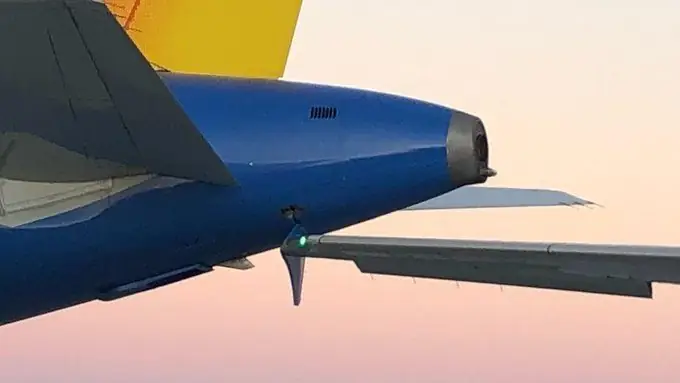
| Airline / operator | KLM Royal Dutch Airlines |
|---|---|
| Aircraft (type, registration) | KLM Royal Dutch Airlines Boeing 777-306ER (PH-BVR ?) |
| Category (my classification) | Human factors / Tug / pushback driver |
| What happened | A KLM Boeing 777 hit a light pole while being pushed into parking at Amsterdam's Schiphol Airport. No injuries reported. * Two Boeing 777-300's were on the ground at EHAM on October 28 and 29, PH- BVO and PH-BVR. A photo of the occurrence shows PH-BVO parked left of the incident aircraft. |
| Injuries | ASN lists 0 fatalities. No injuries reported. |
| Damage | Not stated |
| Official investigation | No investigation details on the ASN entry. |
| Source | Aviation Safety Network (ASN) entry: https://aviation-safety.net/wikibase/269232 |
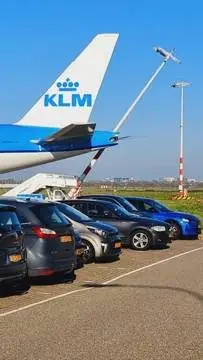
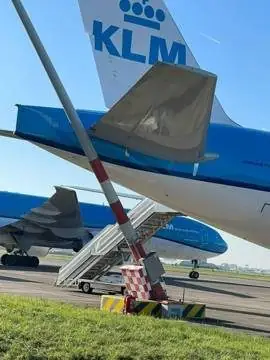
| Airline / operator | American Eagle, opb Envoy Air |
|---|---|
| Aircraft (type, registration) | American Eagle, opb Envoy Air Embraer ERJ-175LR (N252NN) |
| Category (my classification) | Human factors / Tug / pushback driver |
| What happened | Envoy flight 4265 experienced a jolt during pushback and a flight attendant broke a wrist. According to the captain, after the 'Before Start Checklist' was completed, the flightcrew was connected to the ground crew push-tug operator for push-back via the interphone. The push-tug operator informed him that he was ready for the captain to release the parking brake, and upon the captain doing so, the push began. During the final push, when the airplane transitioned from reverse to forward, the captain said that the communications connection with the ground crew deteriorated, and he believed he heard the push-tug operator say 'set parking brakeâ€, when actually the push-tug operator was directing the flight crew to start engines. The captain said that as a result he applied the parking brake while the tug operator was pulling the airplane forward, which resulted in a sudden jerk. The captain also said that the push- tug operator was difficult to understand because of his accent, which combined with the faulty interphone connection, resulted in the miscommunication. At the time of the event, two flight attendants (FA) were in the aisle performing the passenger safety demonstration. No. 1 FA was thrown against seat 4D, and No. 2 FA was thrown to the floor, hitting her head, back, and wrist, and was unable to stand. The airplane was towed back to the gate, and the No. 2 FA was taken to a local hospital where she was diagnosed with a fractured left wrist. Probable Cause: An abrupt jerk of the airplane as the captain applied the parking brake during the tow that caused a flight attendant to fall and break her wrist. |
| Injuries | ASN lists 0 fatalities. 2 FA was taken to a local hospital where she was diagnosed with a fractured left wrist. |
| Damage | None |
| Official investigation | Investigating agency: NTSB Report number: DCA22LA015 Status: Investigation completed Duration: 9 months Final report Report / investigator link(s): https://data.ntsb.gov/carol-repgen/api/Aviation/ReportMain/GenerateNewestReport/104161/pdf |
| Source | Aviation Safety Network (ASN) entry: https://aviation-safety.net/wikibase/302342 Further sources listed on that page / found: https://data.ntsb.gov/carol-repgen/api/Aviation/ReportMain/GenerateNewestReport/104161/pdf |
| Airline / operator | Pobeda Airlines |
|---|---|
| Aircraft (type, registration) | Pobeda Airlines Boeing 737-8MC (WL) (VP-BQJ) |
| Category (my classification) | Human factors / Tug / pushback driver |
| What happened | A Pobeda Airlines Boeing 737-800, VP-BQJ, was damaged after it struck a fuel truck during pushback at Astrakhan Airport, Russia. The aircraft was grounded and flight DP520 was carried out by a replacement aircraft. |
| Injuries | ASN lists 0 fatalities. No injury statement in the ASN narrative. |
| Damage | Not stated |
| Official investigation | No investigation details on the ASN entry. |
| Source | Aviation Safety Network (ASN) entry: https://aviation-safety.net/wikibase/268248 Further sources listed on that page / found: https://ria.ru/20211001/samolet-1752747676.html https://t.co/d2AyMlaOqW |
| Airline / operator | Delta Air Lines |
|---|---|
| Aircraft (type, registration) | Delta Air Lines Boeing 767-332ER (WL) (N196DN) |
| Category (my classification) | Human factors / Tug / pushback driver |
| What happened | Delta Air Lines flight 845 stopped abruptly during pushback at the Seattle-Tacoma International Airport (SEA), Seattle, Washington, resulting in a flight attendant falling and receiving a serious injury. According to the operator, the captain was the pilot-in- command and the first officer was the pilot monitoring. The airplane was pushed back to the gate with the push-tug after the event. According to the flight crew, as the first officer read through the pushback checklist, the configuration and status of the hydraulic panel was missed by both crew members. The airplane was pushed back by the push-tug, and the captain set the parking brake as the first officer was starting the left engine. As the tow bar was removed, the ground crew asked the flight crew to verify that the brakes were set, and the captain responded that brakes were set. Shortly thereafter, the ground crew and the first officer stated that the airplane was moving. The captain stated he then glanced at the brake pressure gauge and saw no pressure. Both crew members then noticed that the hydraulic panel was not set, and hydraulic pumps were not on. The captain immediately turned the hydraulic pumps on, while maintaining full brake pressure. As the brake system pressurized, the airplane abruptly stopped. The sudden stop caused several of the flight attendants in the cabin to fall. One flight attendant suffered a serious injury to her arm, and another suffered a minor injury. Probable Cause: The flightcrew's failure to set the hydraulic panel correctly during the execution of the pushback checklist, and when the hydraulic panel setting was corrected, that resulted in the airplane coming to a sudden stop and a flight attendant receiving a serious injury. |
| Injuries | ASN lists 0 fatalities. Delta Air Lines flight 845 stopped abruptly during pushback at the Seattle-Tacoma International Airport (SEA), Seattle, Washington, resulting in a flight attendant falling and receiving a serious injury.; One flight attendant suffered a serious injury to her arm, and another suffered a minor injury. |
| Damage | None |
| Official investigation | Investigating agency: NTSB Report number: DCA21LA229 Status: Investigation completed Duration: 10 months Final report Report / investigator link(s): https://data.ntsb.gov/carol-repgen/api/Aviation/ReportMain/GenerateNewestReport/103969/pdf |
| Source | Aviation Safety Network (ASN) entry: https://aviation-safety.net/wikibase/302347 Further sources listed on that page / found: https://data.ntsb.gov/carol-repgen/api/Aviation/ReportMain/GenerateNewestReport/103969/pdf |
| Airline / operator | American Airlines |
|---|---|
| Aircraft (type, registration) | American Airlines Boeing 737-823 (WL) (N954NN) |
| Category (my classification) | Human factors / Tug / pushback driver |
| What happened | An American Airlines Boeing 737-800 (N954NN) was involved in a minor ground collision with an Alaska Airlines Airbus A320 (N837VA) at Hollywood Burbank Airport. Alaska Airlines flight AS468 had arrived from Portland and was parked at the terminal. While being pushed back, the right-hand winglet of the Boeing 737-800, contacted the left-hand wing tip fence of the Airbus. |
| Injuries | ASN lists 0 fatalities. No injury statement in the ASN narrative. |
| Damage | Not stated |
| Official investigation | No investigation details on the ASN entry. |
| Source | Aviation Safety Network (ASN) entry: https://aviation-safety.net/wikibase/266977 Further sources listed on that page / found: https://losangeles.cbslocal.com/2021/08/20/runway-closed-burbank-airport-2-planes-clip-wings/ http://www.goklerdeyiz.net/iki-ucak-yerde-carpisti-34/ https://t.co/kZJgX4raQR |
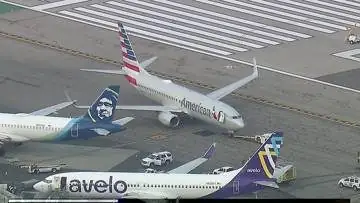
Video: https://wheeltug-collisions.netlify.app/videos/GC-0235_1.mp4
Original: https://www.youtube.com/watch?v=quAkwjGThYk
Video and still: Supplied by WheelTug; original: YouTube.
| Airline / operator | Flair Airlines |
|---|---|
| Aircraft (type, registration) | Flair Airlines Boeing 737 MAX 8 (C-FLKI) |
| Category (my classification) | Human factors / Tug / pushback driver |
| What happened | A Boeing 737 Max 8 operated by Flair Airlines as FLE635, was on an instrument flight rules flight from Montréal/Pierre Elliott Trudeau International Airport, QC (CYUL), to Toronto/Lester B. Pearson, ON (CYYZ) with 79 passengers and 6 crew members. During the push- back from Gate 47 on departure from CYUL, the right winglet struck a fence. The aircraft was returned to the gate and the passengers disembarked normally. There were no injuries and the damage was limited to the wingtip. The aircraft was repaired and resumed service on August 7, 2021. |
| Injuries | ASN lists 0 fatalities. There were no injuries and the damage was limited to the wingtip. |
| Damage | Not stated |
| Time out of service | C-FLKI: 3 days (ASN) |
| Official investigation | No investigation details on the ASN entry. |
| Source | Aviation Safety Network (ASN) entry: https://aviation-safety.net/wikibase/266694 |
| Airline / operator | KLM Royal Dutch Airlines |
|---|---|
| Aircraft (type, registration) | Boeing 777-300ER (PH-BVV), flight KL895 (cargo in cabin) |
| Category (my classification) | Human factors / Tug / pushback driver |
| What happened | The aircraft was pushed back while the over-wing boarding bridge was still too low or attached, and it struck the wing after about 8-10 m. KLM reported minor wing damage. It was a cargo-in-cabin flight with no passengers. |
| Injuries | None reported. |
| Damage | Minor wing damage. |
| Official investigation | Not stated. |
| Source | Aviation Safety Network (ASN) entry: https://aviation-safety.net/wikibase/253811 Further sources listed on that page / found: https://mentourpilot.com/klm-boeing-777-crashes-into-jet-bridge-during-pushback/ https://simpleflying.com/klm-boeing-777-pushback-damage/ |
| Note | KLM said the bridge was too low because of a malfunction; the photos show it still attached. Some posts give 24 Apr 2021 (the publication date). |
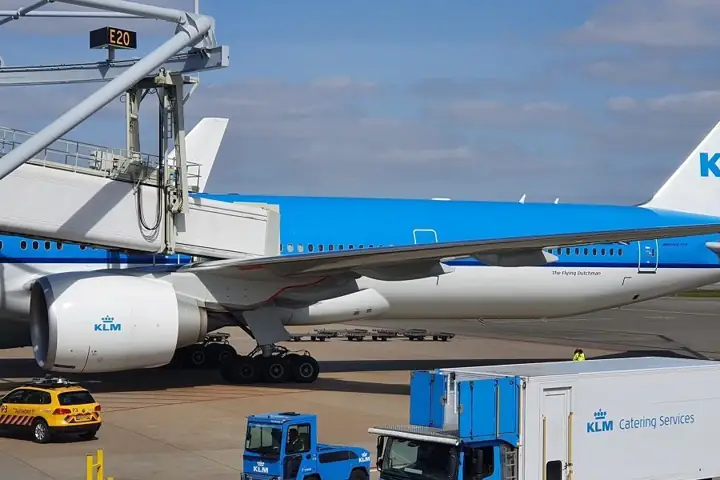
| Airline / operator | American Airlines |
|---|---|
| Aircraft (type, registration) | American Airlines Boeing 737-823 (WL) (N865NN); American Airlines Boeing 737-823 (WL) (N980AN) |
| Category (my classification) | Human factors / Tug / pushback driver |
| What happened | American Airlines flight AA1011, a Boeing 737-823 (N980AN), was pushed back from gate D40 at DFW when the right-hand winglet struck the horizontal stabilizer of American Airlines flight AA2518, a Boeing 737-823 (N865NN) parked at gate D38. |
| Injuries | ASN lists 0 fatalities. No injury statement in the ASN narrative. |
| Damage | Not stated |
| Official investigation | No investigation details on the ASN entry. |
| Source | Aviation Safety Network (ASN) entry: https://aviation-safety.net/wikibase/249526 |
| Airline / operator | Sky Gates Airlines |
|---|---|
| Aircraft (type, registration) | Sky Gates Airlines Boeing 747-467 (F) (VP-BCI) |
| Category (my classification) | Human factors / Tug / pushback driver |
| What happened | A Sky Gates Airlines Boeing 747-467(F) suffered minor damage when the lower part of the no.1 engine exhaust struck a snow bank during pushback. The aircraft resumed service on 24 February 2021. |
| Injuries | ASN lists 0 fatalities. No injury statement in the ASN narrative. |
| Damage | Not stated |
| Time out of service | VP-BCI: 3 days (ASN) |
| Official investigation | No investigation details on the ASN entry. |
| Source | Aviation Safety Network (ASN) entry: https://aviation-safety.net/wikibase/248256 |
| Airline / operator | Wizz Air |
|---|---|
| Aircraft (type, registration) | Wizz Air Airbus A320-271N (HA-LJC) |
| Category (my classification) | Human factors / Tug / pushback driver |
| What happened | Wizz Air flight W61661, an Airbus A320neo, collided with an airport truck at Gdansk Airport, Poland, after being pushed back from the gate. The cabin of the truck impacted the nose radome of the Airbus. |
| Injuries | ASN lists 0 fatalities. No injury statement in the ASN narrative. |
| Damage | Not stated |
| Official investigation | No investigation details on the ASN entry. |
| Source | Aviation Safety Network (ASN) entry: https://aviation-safety.net/wikibase/247533 Further sources listed on that page / found: https://t.co/iiSJxeAFLf |
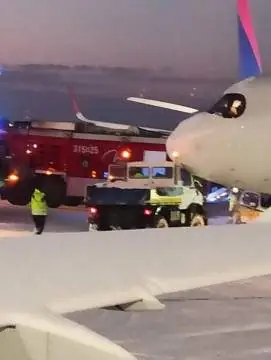
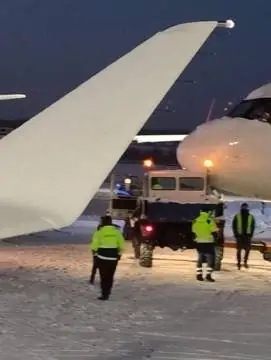
| Airline / operator | LATAM Airlines Brasil |
|---|---|
| Aircraft (type, registration) | LATAM Airlines Brasil Boeing 767-316ER (WL) (PT-MSS); LATAM Airlines Brasil Boeing 777-32WER (PT-MUB) |
| Category (my classification) | Human factors / Tug / pushback driver |
| What happened | A LATAM Boeing 777-300ER (PT-MUB) was being pushed back at Sao Paulo-Guarulhos International Airport when the rear side of the left-hand wing hit the right-hand elevator of a parked LATAM Boeing 767-300ER (PT-MSS). |
| Injuries | ASN lists 0 fatalities. No injury statement in the ASN narrative. |
| Damage | Not stated |
| Official investigation | No investigation details on the ASN entry. |
| Source | Aviation Safety Network (ASN) entry: https://aviation-safety.net/wikibase/236368 Further sources listed on that page / found: https://t.co/IrF7LAzeFh |
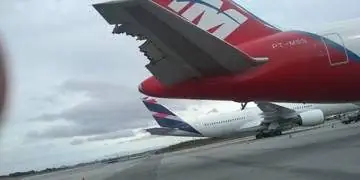
| Airline / operator | British Airways / Emirates |
|---|---|
| Aircraft (type, registration) | British Airways Airbus A350-1041 (G-XWBA); Emirates Boeing 777- 31HER (A6-EBR) |
| Category (my classification) | Human factors / Tug / pushback driver |
| What happened | British Airways A350-1000 (G-XWBA) collides with Emirates Boeing 777-300ER (A6-EBR) during pushback at Dubai Airport. No injuries reported. |
| Injuries | ASN lists 0 fatalities. No injuries reported. |
| Damage | Not stated |
| Official investigation | No investigation details on the ASN entry. |
| Source | Aviation Safety Network (ASN) entry: https://aviation-safety.net/wikibase/235066 Further sources listed on that page / found: http://www.goklerdeyiz.net/a350-ile-b777-yerde-carpisti/ https://t.co/dFKCt96d1Y |
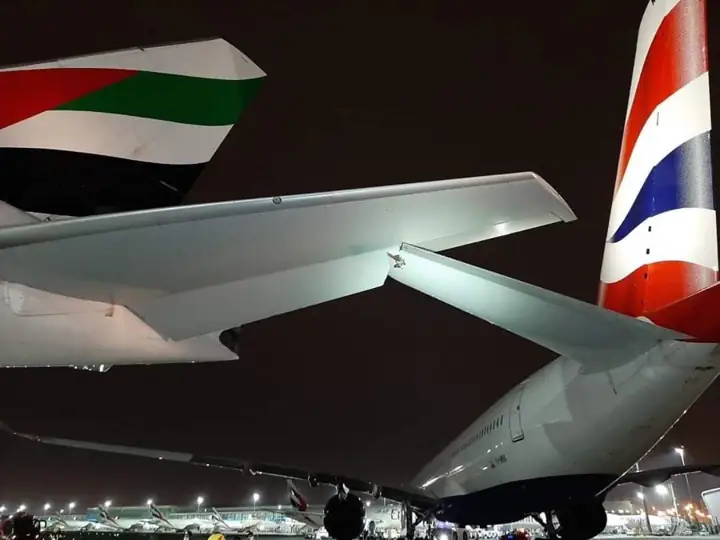
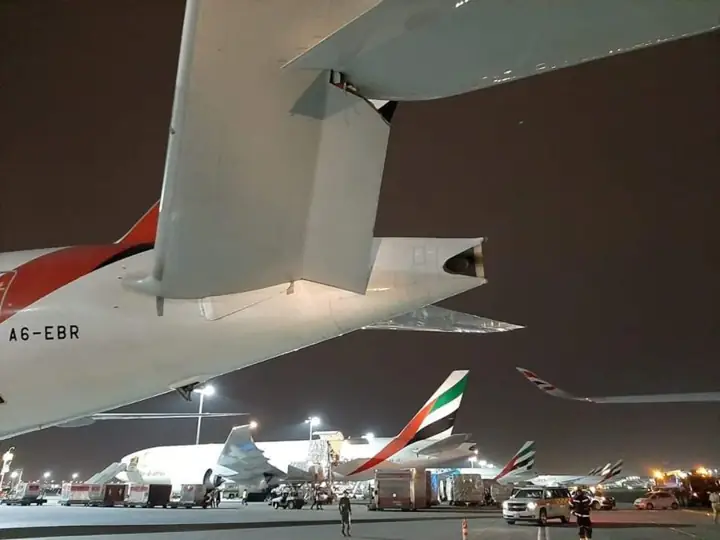
| Airline / operator | Malaysia Airlines |
|---|---|
| Aircraft (type, registration) | Malaysia Airlines Boeing 737-8FZ (WL) (9M-MLL) |
| Category (my classification) | Human factors / Tug / pushback driver |
| What happened | A Malaysia Airlines Boeing 737 was damaged at Kuala Lumpur Airport after tow truck became wedged below the fuselage. No injuries reported. |
| Injuries | ASN lists 0 fatalities. No injuries reported. |
| Damage | Not stated |
| Official investigation | No investigation details on the ASN entry. |
| Source | Aviation Safety Network (ASN) entry: https://aviation-safety.net/wikibase/234862 Further sources listed on that page / found: http://www.goklerdeyiz.net/ceki-araci-ucagin-altinda-kaldi-2/ https://www.airlive.net/incident-a-malaysia-airlines-boeing-737-800-has-been-damaged-during-pushback/ |
| Airline / operator | Qatar Airways / Helvetic Airways |
|---|---|
| Aircraft (type, registration) | Qatar Airways Airbus A350-941 (A7-AMH); Helvetic Airways Embraer ERJ-190AR (HB-JVU) |
| Category (my classification) | Human factors / Tug / pushback driver |
| What happened | Qatar Airways flight QR94 from Zurich to Doha, an Airbus A350- 900, contacted a parked Embraer ERJ-190 of Helvetic Airways at Zurich Airport, Switzerland. The left hand wingtip of the A350 struck the rudder during the pushback operation at Zurich Airport, Switzerland. |
| Injuries | ASN lists 0 fatalities. No injury statement in the ASN narrative. |
| Damage | Not stated |
| Official investigation | No investigation details on the ASN entry. |
| Source | Aviation Safety Network (ASN) entry: https://aviation-safety.net/wikibase/232870 Further sources listed on that page / found: http://www.goklerdeyiz.net/iki-ucak-yerde-carpisti-24/ |
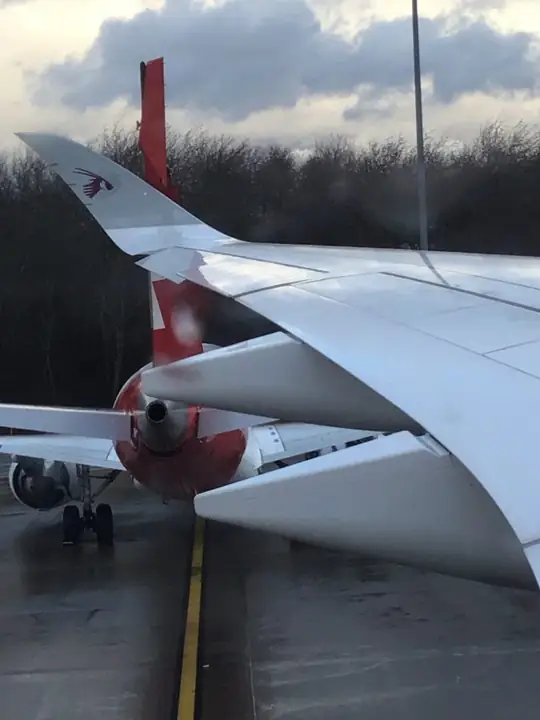
| Airline / operator | West Air Sweden |
|---|---|
| Aircraft (type, registration) | West Air Sweden Boeing 767-232 (BDSF) (SE-RLC) |
| Category (my classification) | Human factors / Tug / pushback driver |
| What happened | During push-back from stand 513, the Boeing 767 struck a movable light tower with the rear of the right wing. The tower had been placed inside the stand itself to improve visibility on the apron during cargo loading operations. |
| Injuries | ASN lists 0 fatalities. No injury statement in the ASN narrative. |
| Damage | Substantial, repaired |
| Official investigation | No investigation details on the ASN entry. Report / investigator link(s): https://ansv.it/wp-content/uploads/2021/04/Rapporto-ANSV-2020.pdf |
| Source | Aviation Safety Network (ASN) entry: https://aviation-safety.net/wikibase/309564 Further sources listed on that page / found: https://ansv.it/wp-content/uploads/2021/04/Rapporto-ANSV-2020.pdf |
| Airline / operator | Delta Air Lines |
|---|---|
| Aircraft (type, registration) | Delta Air Lines McDonnell Douglas MD-88 (N975DL) |
| Category (my classification) | Human factors / Tug / pushback driver |
| What happened | This plane damaged beyond repair 25 Nov 2019 at Atlanta Hartsfield - Jackson International Airport damaged by a tug, uneconomical to repair with imminent retirement. |
| Injuries | ASN lists 0 fatalities. No injury statement in the ASN narrative. |
| Damage | Not stated |
| Time out of service | N975DL: Written off (ASN) |
| Official investigation | No investigation details on the ASN entry. |
| Source | Aviation Safety Network (ASN) entry: https://aviation-safety.net/wikibase/458587 |
| Airline / operator | Scoot |
|---|---|
| Aircraft (type, registration) | Scoot Airbus A320-232 (9V-TRD) |
| Category (my classification) | Human factors / Tug / pushback driver |
| What happened | The nose section of the plane was damaged after the plane was struck by a towing vehicle. Flight TR875 was cancelled as a result. |
| Injuries | ASN lists 0 fatalities. No injury statement in the ASN narrative. |
| Damage | Not stated |
| Official investigation | No investigation details on the ASN entry. |
| Source | Aviation Safety Network (ASN) entry: https://aviation-safety.net/wikibase/230843 Further sources listed on that page / found: https://mothership.sg/2019/11/taipei-spore-scoot-flight-tr875-grounded-after-nose-landing-gear-damaged-by-t… |
| Airline / operator | Skywest Airlines, opf American Eagle |
|---|---|
| Aircraft (type, registration) | Skywest Airlines, opf American Eagle Bombardier CRJ-701ER (N765SK); Skywest Airlines, opf American Eagle Bombardier CRJ-701ER (N710SK) |
| Category (my classification) | Human factors / Tug / pushback driver |
| What happened | SkyWest flight 3019, a CRJ-700, N710SK, collided with SkyWest flight 3039, a CRJ-700, N765SK, during pushback at Chicago O'Hare International Airport (ORD), Illinois. There were no injuries to the passengers and crew onboard either airplane. Both airplanes sustained substantial damage. Flight 3019 was scheduled from ORD to Detroit Metropolitan Airport (DTW), Michigan, and flight 3039 was scheduled from ORD to Harrisburg International Airport (MDT), Pennsylvania. SkyWest 3019 was cleared to push back from gate G19A, with the assistance of a tug driver and two wing walkers. The tug driver indicated he performed a walk around prior to the push back and did not notice any airplane behind flight 3019. The wing walkers were positioned with one walker on each side of the airplane. Both wing walkers stated they were aware another airplane was behind SkyWest 3019, but initially believed that the stopped airplane would clear the area before the accident airplane was fully pushed back. The tug driver started to push flight 3019 without getting the 'all clear' signal from both wing walkers. The tug driver also stated he could not see the captain's side wing walker during a portion of the push and was focused on where the landing gear was proceeding, rather than viewing the surrounding area and his wing walkers. The captain's side wing walker said he tried to get the drivers attention, telling him to stop (the tug driver had a headset on to communicate with the flight crew), and had to eventually approach the tug driver to get his attention. The FO's side wing walker said she gave the emergency stop "X" sign to the tug driver, but it appeared that tug driver didn't see it. The driver was unaware of any problems until the captain's side wing walker approached him and told him to stop. SkyWest 3039 had pushed back from gate H1A and transitioned to the H alleyway and waiting for clearance to taxi onto the West Line (behind flight 3019). While stopped, the captain stated that the airplane shook, but that he thought it was only jet blast from another airplane. He then received clearance to take the West Line, but as he taxied out of the alleyway, he was notified of the collision. Post-accident examination revealed the left horizontal and vertical stabilizers of SkyWest 3019 and the tail cone and left elevator of SkyWest 3039 were substantially damaged. Probable Cause: the tug driver's inability to maintain visual contact with the wing walkers and lack of situational awareness during pushback. |
| Injuries | ASN lists 0 fatalities. There were no injuries to the passengers and crew onboard either airplane. |
| Damage | Substantial |
| Official investigation | Investigating agency: NTSB Report number: DCA19CA223B Status: Investigation completed Duration: 2 years and 5 months Final report Report / investigator link(s): https://data.ntsb.gov/carol-repgen/api/Aviation/ReportMain/GenerateNewestReport/101376/pdf |
| Source | Aviation Safety Network (ASN) entry: https://aviation-safety.net/wikibase/319335 Further sources listed on that page / found: https://data.ntsb.gov/carol-repgen/api/Aviation/ReportMain/GenerateNewestReport/101376/pdf |
| Airline / operator | Norwegian Air UK |
|---|---|
| Aircraft (type, registration) | Norwegian Air UK Boeing 787-9 Dreamliner (G-CKWB) |
| Category (my classification) | Human factors / Tug / pushback driver |
| What happened | Norwegian Air UK flight 7017, a Boeing 787-9 Dreamliner, was parked on Stand 38 at London-Gatwick Airport, U.K. The aircraft was loaded, with the doors closed ready to depart for its flight to the USA. Permission was granted by the ground controller for the aircraft to push back and start engines at 10:10. The aircraft was pushed back using the incorrect line and as a result the aircraft tail cone struck the blast screen. Stand 38 at Gatwick requires a non- standard pushback due to the limited space. The stand has pushback route markings and a stop line to assist the tug driver and headset operator position the aircraft correctly. G-CKWB was not pushed from the stand onto the required line or stopped at the correct point. This meant that the aircraft came into contact with the blast screen and the APU exhaust fairing was damaged. As a result, the aircraft was withdrawn from service for repairs. It resumed service on 31 August 2019. |
| Injuries | ASN lists 0 fatalities. No injury statement in the ASN narrative. |
| Damage | Minor, repaired |
| Time out of service | G-CKWB: 19 days (ASN) |
| Official investigation | Investigating agency: AAIB Report number: EW/G2019/08/12 Status: Investigation completed Duration: 7 months Final report |
| Source | Aviation Safety Network (ASN) entry: https://aviation-safety.net/wikibase/319365 |
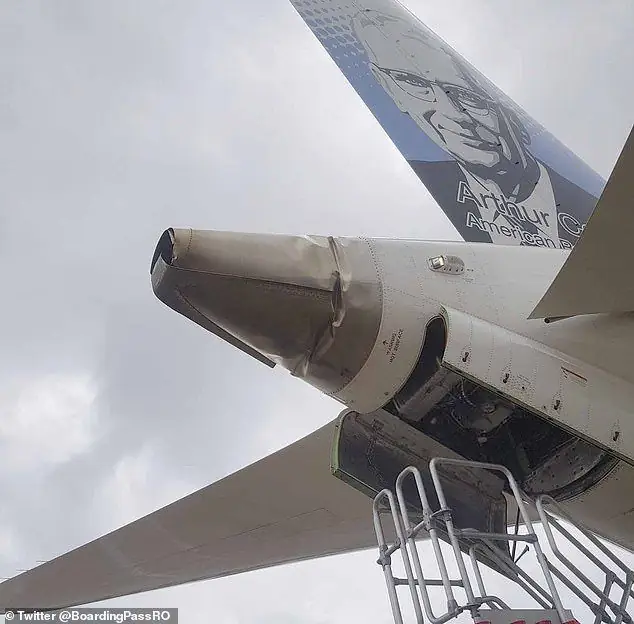
| Airline / operator | American Airlines |
|---|---|
| Aircraft (type, registration) | American Airlines Boeing 787-8 Dreamliner (N819AN) |
| Category (my classification) | Human factors / Tug / pushback driver |
| What happened | American Airlines Flight AA312, a Boeing 787-8 Dreamliner, struck the wing of Norwegian Air UK Boeing 787-9 Dreamliner G-CKWE on push back from gate at O'Hare International Airport (KORD), in Chicago, Illinois. The flight was cancelled as a result. |
| Injuries | ASN lists 0 fatalities. No injury statement in the ASN narrative. |
| Damage | Unknown |
| Official investigation | No investigation details on the ASN entry. |
| Source | Aviation Safety Network (ASN) entry: https://aviation-safety.net/wikibase/227743 Further sources listed on that page / found: https://flightaware.com/live/flight/N819AN |
| Airline / operator | United Airlines |
|---|---|
| Aircraft (type, registration) | United Airlines Boeing 757-324 (WL) (N57852) |
| Category (my classification) | Human factors / Tug / pushback driver |
| What happened | United Airlines flight 1161, N57852, a Boeing 757-324, received substantial damage during pushback. There were no injuries to the passengers or crew onboard. According to the flight crew the airplane was at gate 62 at San Francisco International Airport, CA (SFO) and after the door was closed and Pre-flight and Before-pushback checklists were completed, the flight crew then received clearance to push back. According to the ground crew, the pushback operation was conducted with a tug driver and a wing walker at each wing. After pushback was initiated, another airplane was towed behind the accident airplane. The tug driver stated he saw the other airplane and stopped but lost sight of the wing walker. After he thought the other airplane was clear, he started to move the airplane again, but then was signaled by the other airplanes ground crew to stop and that he had hit their airplane. Postaccident examination of the airplane revealed that the right-hand elevator outboard section had broken at the second attach fitting. Also, the right- hand horizontal stabilizer had a puncture, end cap damage and other damage to the lower skin extending about 24 to 30 inches from the outboard end. Probable Cause: failure of the ground crew to maintain clearance from the parked airplane during pushback. |
| Injuries | ASN lists 0 fatalities. There were no injuries to the passengers or crew onboard. |
| Damage | Substantial, repaired |
| Official investigation | Investigating agency: NTSB Report number: DCA19CA186 Status: Investigation completed Duration: 2 years and 7 months Final report Report / investigator link(s): https://data.ntsb.gov/carol-repgen/api/Aviation/ReportMain/GenerateNewestReport/99936/pdf |
| Source | Aviation Safety Network (ASN) entry: https://aviation-safety.net/wikibase/319390 Further sources listed on that page / found: https://data.ntsb.gov/carol-repgen/api/Aviation/ReportMain/GenerateNewestReport/99936/pdf |
| Airline / operator | easyJet Europe / KLM Royal Dutch Airlines |
|---|---|
| Aircraft (type, registration) | easyJet Europe Airbus A320-214 (WL) (OE-IVQ); KLM Royal Dutch Airlines Boeing 737-8K2 (WL) (PH-BXH) |
| Category (my classification) | Human factors / Tug / pushback driver |
| What happened | An easyJet Europe Airbus A320-214 (OE-IVQ, flight U28868) and a KLM Boeing 737-800 (PH-BXH, flight KL1699) were involved in a pushback collision accident at Amsterdam-Schiphol International Airport, the Netherlands. Both aircraft were parked on opposite sides at the D-concourse. The KLM flight was pushed back from D48 when OE-IVQ had already just commenced push back from D25. OE-IVQ's left-hand winglet struck the left-hand elevator of the KLM flight. Both aircraft were subsequently grounded for inspection and repairs. |
| Injuries | ASN lists 0 fatalities. No injury statement in the ASN narrative. |
| Damage | Minor |
| Official investigation | No investigation details on the ASN entry. |
| Source | Aviation Safety Network (ASN) entry: https://aviation-safety.net/wikibase/319400 |
| Airline / operator | Wizz Air |
|---|---|
| Aircraft (type, registration) | Wizz Air Airbus A320-232 (HA-LPL) |
| Category (my classification) | Human factors / Tug / pushback driver |
| What happened | An Airbus A320 at Stand No 2 at Bristol Airport had been given clearance and was being made ready for pushback. The nosewheel steering bypass pin had been installed and the TLD 200MT lift tug was aligned with the aircraft nose landing gear main forging. The tug was being driven by a driver undergoing his first pushback in this model and type of tug, under the direct supervision of a trainer seated alongside in the cab. The tug was being brought forward using its laser guidance system and joystick and was at the point where the 'paddles' close around the nosewheels. Whilst this was taking place the trainer observed movement of the nose gear followed by a bang. The driver immediately stopped the procedure, the brakes were applied, and the trainer and driver exited the cab to investigate the cause of the bang. On inspection they found that the paddle on the left side of the aircraft had contacted, and damaged, the nut on the torque link centre pivot. There also was a significant witness mark on the paddle. They then informed the aircraft commander and the aircraft maintenance company. The scheduled flight was cancelled, and the aircraft taken out of service. There were no injuries reported by the passengers or the crews of the aircraft and tug. It is not clear why the event occurred. The handling company confirmed that the training and knowledge of the requirement to align with the nosewheels was in place. However, in this case it is possible that a momentary lapse in concentration led to the system being aligned to the nose leg rather than the nose wheels. This error is likely to have gone unnoticed because the 10° to 15° offset of the nosewheels was not significant enough to indicate a problem. |
| Injuries | ASN lists 0 fatalities. There were no injuries reported by the passengers or the crews of the aircraft and tug. |
| Damage | Minor, repaired |
| Official investigation | Investigating agency: AAIB Report number: EW/G2019/03/11 Status: Investigation completed Duration: 6 months Final report Report / investigator link(s): https://assets.publishing.service.gov.uk/media/5f463b9de90e074c42ad4fd0/Airbus_A320-232_HA-LPL_10-19.pdf |
| Source | Aviation Safety Network (ASN) entry: https://aviation-safety.net/wikibase/319462 Further sources listed on that page / found: https://assets.publishing.service.gov.uk/media/5f463b9de90e074c42ad4fd0/Airbus_A320-232_HA-LPL_10-19.pdf |
| Airline / operator | FedEx Express / All Nippon Airways - ANA |
|---|---|
| Aircraft (type, registration) | FedEx Express McDonnell Douglas MD-11F (N623FE); All Nippon Airways - ANA Boeing 767-316F (WL) (JA605F) |
| Category (my classification) | Human factors / Tug / pushback driver |
| What happened | Two cargo flights from Tokyo/Narita, Japan to Shanghai/Pudong, China were cancelled due two ground contact at a taxiway in Narita. ANA/NH8517, a Boeing 767-316F, was pushed back when its tail crashed into standing FedEx MD-11F on the taxiway W. ANA sustained substantial damage on the vertical stabilizer and the tail cone, while FedEx received damage on the No.2 engine. No personal injuries were reported. |
| Injuries | ASN lists 0 fatalities. No personal injuries were reported. |
| Damage | Minor |
| Official investigation | No investigation details on the ASN entry. |
| Source | Aviation Safety Network (ASN) entry: https://aviation-safety.net/wikibase/223279 Further sources listed on that page / found: https://headlines.yahoo.co.jp/hl?a=20190322-00000030-asahi-soci https://headlines.yahoo.co.jp/hl?a=20190322-00000079-jij-soci https://headlines.yahoo.co.jp/hl?a=20190322-00000103-kyodonews-soci https://www3.nhk.or.jp/news/html/20190322/k10011856591000.html?utm_int=news-social_contents_list-items_013 |
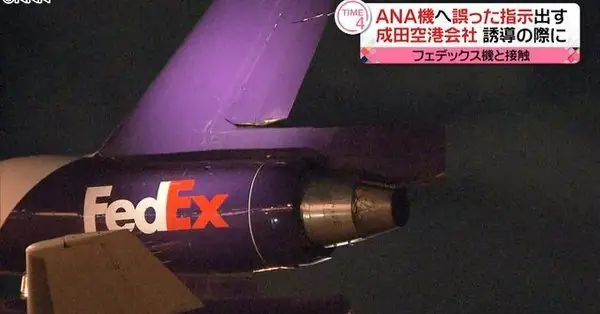
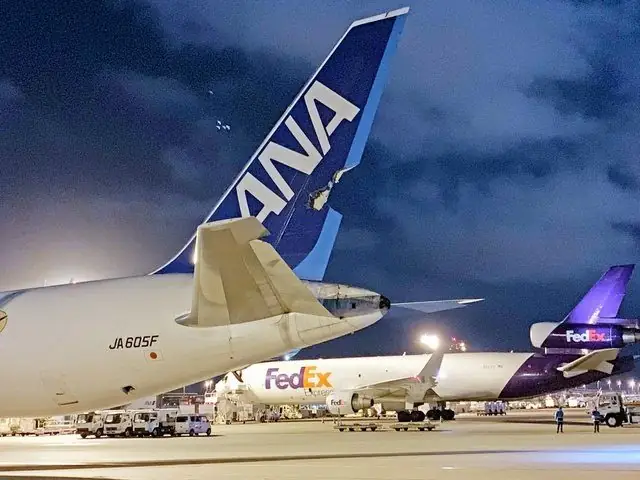
| Airline / operator | PSA Airlines, opf American Eagle |
|---|---|
| Aircraft (type, registration) | PSA Airlines, opf American Eagle Bombardier CL-600-2C10 Regional Jet CRJ- 702ER (N530EA); PSA Airlines, opf American Eagle Bombardier CRJ-900LR (N569NN) |
| Category (my classification) | Human factors / Tug / pushback driver |
| What happened | PSA Airlines flight 5366, a CRJ-900LR, N569NN, collided with PSA Airlines flight 5141, a CRJ-702ER, N530EA while pushing back from gate E31 at the Charlotte Douglas International Airport (KCLT), North Carolina, USA. There were no injuries the passengers and crew onboard either airplane, and both airplanes received substantial damage. The CRJ-700 had pushed back from gate E14B and was waiting for taxi by spot 29W. The CRJ900 requested push back from gate E31, and the north ramp controller initially instructed them to "10 and hold". The push back was approved about 2 minutes later and the flight crew coordinated with ground crew. After pushing back about 30 feet, the tail of the CRJ-900 impacted the tail of the CRJ-700. After feeling the impact, the CRJ-900 crew aborted their engine start procedure and set the parking brake, while the CRJ- 700 crew started their auxiliary power unit and shut down both engines after receiving damage reports from ATC and neighboring airplanes. An emergency evacuation was not performed on either aircraft. Post-accident examination revealed substantially damaged to the horizontal and vertical stabilizers and left elevator of the CRJ-900, and the horizontal stabilizer and left elevator of the CRJ- 700. Probable Cause: "Failure of the ground crew to maintain visual separation and avoid the holding aircraft." |
| Injuries | ASN lists 0 fatalities. There were no injuries the passengers and crew onboard either airplane, and both airplanes received substantial damage. |
| Damage | Substantial, repaired |
| Official investigation | Investigating agency: NTSB Report number: DCA19CA102A Status: Investigation completed Duration: 2 years and 11 months Final report Report / investigator link(s): https://data.ntsb.gov/carol-repgen/api/Aviation/ReportMain/GenerateNewestReport/99084/pdf |
| Source | Aviation Safety Network (ASN) entry: https://aviation-safety.net/wikibase/319472 Further sources listed on that page / found: https://data.ntsb.gov/carol-repgen/api/Aviation/ReportMain/GenerateNewestReport/99084/pdf https://www.charlotteobserver.com/news/local/article227383174.html |
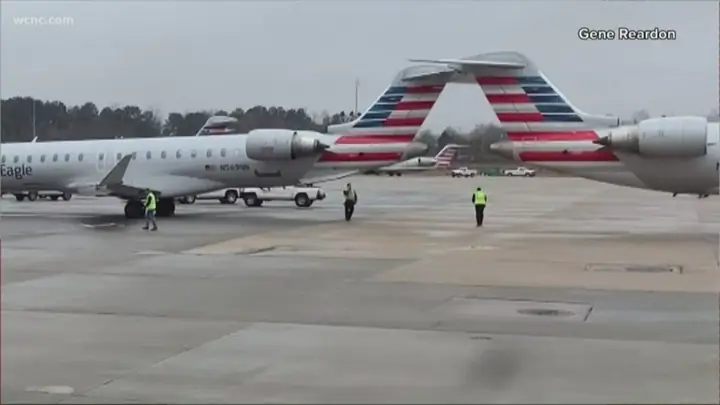
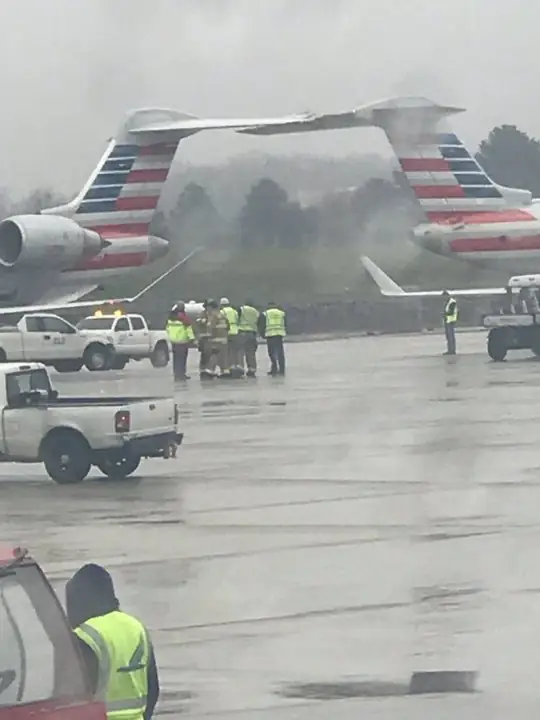
| Airline / operator | El Al Israel Airlines |
|---|---|
| Aircraft (type, registration) | El Al Israel Airlines Boeing 777-258ER (4X-ECC) |
| Category (my classification) | Human factors / Tug / pushback driver |
| What happened | A pushback tractor crashed into the plane, causing a tire to explode. There were no personal injuries. |
| Injuries | ASN lists 0 fatalities. There were no personal injuries. |
| Damage | Minor Location: Warszawa-Frédéric Chopin Airport (WAW/EPWA) - Poland Phase: Pushback / towing Nature: Passenger - Non- Scheduled/charter/Air Taxi Departure airport: Warszawa-Frédéric Chopin Airport (WAW/EPWA) Destination airport: Israël Confidence Rating: Information is only available from news, social media or unofficial sources Narrative: A pushback tractor crashed into the plane, causing a tire to explode. There were no personal injuries. ICAO Occurrence |
| Official investigation | No investigation details on the ASN entry. |
| Source | Aviation Safety Network (ASN) entry: https://aviation-safety.net/wikibase/221849 Further sources listed on that page / found: https://www.timesofisrael.com/pm-forced-to-spend-extra-night-in-warsaw-after-plane-tire-blows/ https://www.jetphotos.com/photo/9171136 |
| Airline / operator | Rossiya / Azur Air |
|---|---|
| Aircraft (type, registration) | Rossiya Boeing 747-446 (EI-XLH); Azur Air Boeing 767-33AER (VQ- BUO) |
| Category (my classification) | Human factors / Tug / pushback driver |
| What happened | A Rossiya Boeing 747-400 (EI-XLH) and an Azur Air Boeing 767- 300ER (VQ-BUO) were damaged in a ground incident at Moscow's Vnukuvo Airport, Russia. The Boeing 747 was being pushed back on the apron when the right-hand winglet impacted the wingtip of the right-hand horizontal stabilizer of the parked Boeing 767. The tip of the wing was ripped off and remained embedded in the torn winglet of the Boeing 747. |
| Injuries | ASN lists 0 fatalities. No injury statement in the ASN narrative. |
| Damage | Minor |
| Official investigation | No investigation details on the ASN entry. |
| Source | Aviation Safety Network (ASN) entry: https://aviation-safety.net/wikibase/221888 Further sources listed on that page / found: http://www.goklerdeyiz.net/iki-ucak-yerde-carpisti-15/ https://www.gazeta.ru/social/2019/02/14/12184723.shtml https://t.co/noTk7uiSYL https://t.co/hSUlZPdDtm |
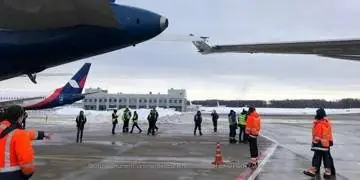
| Airline / operator | United Airlines |
|---|---|
| Aircraft (type, registration) | United Airlines Boeing 737-824 (WL) (N26215) |
| Category (my classification) | Human factors / Tug / pushback driver |
| What happened | The Boeing 737-800 aircraft operated as Flight 1442 to Newark Liberty International Airport impacted the jet bridge during pushback at Buffalo Niagara International Airport in Buffalo, New York. Aircraft damage has not been determined and there were no reported injuries to the one hundred fifty eight occupants onboard. |
| Injuries | ASN lists 0 fatalities. Aircraft damage has not been determined and there were no reported injuries to the one hundred fifty eight occupants onboard. |
| Damage | Not stated |
| Official investigation | No investigation details on the ASN entry. |
| Source | Aviation Safety Network (ASN) entry: https://aviation-safety.net/wikibase/221810 Further sources listed on that page / found: https://buffalonews.com/2019/02/13/strong-winds-likely-a-factor-as-plane-hits-jet-bridge-at-buffalo-airport/ https://flightaware.com/live/flight/UAL1442/history/20190213/1110Z/KBUF/KEWR |
| Airline / operator | KLM Royal Dutch Airlines |
|---|---|
| Aircraft (type, registration) | KLM Royal Dutch Airlines Boeing 787-9 Dreamliner (PH-BHA); KLM Royal Dutch Airlines Boeing 747-406M (PH-BFV) |
| Category (my classification) | Human factors / Tug / pushback driver Secondary: ATC / marshalling involved |
| What happened | KLM flight KL601, a Boeing 747-400 (PH-BFV) and KLM flight KL623, a Boeing 787-9 (PH-BHA) both suffered damage in a ground contact incident at Amsterdam-Schiphol International Airport. KL623 was instructed by the Schiphol ground controller to do a long push back from gate F8 to allow for a Boeing 747 to arrive at F8. Subsequently, KL601 received a conditional clearance to be pushed back from neighboring gate F6 if sufficient clearance could be maintained with KL623. Push back was commenced and during this maneuver, the right-hand winglet of KL601 hit the right-hand horizontal stabilizer of the Boeing 787. Both aircraft were grounded for repairs. PH-BFV resumed service on February 16. |
| Injuries | ASN lists 0 fatalities. No injury statement in the ASN narrative. |
| Damage | Minor, repaired |
| Time out of service | PH-BFV: 3 days (ASN) |
| Official investigation | No investigation details on the ASN entry. |
| Source | Aviation Safety Network (ASN) entry: https://aviation-safety.net/wikibase/319489 |
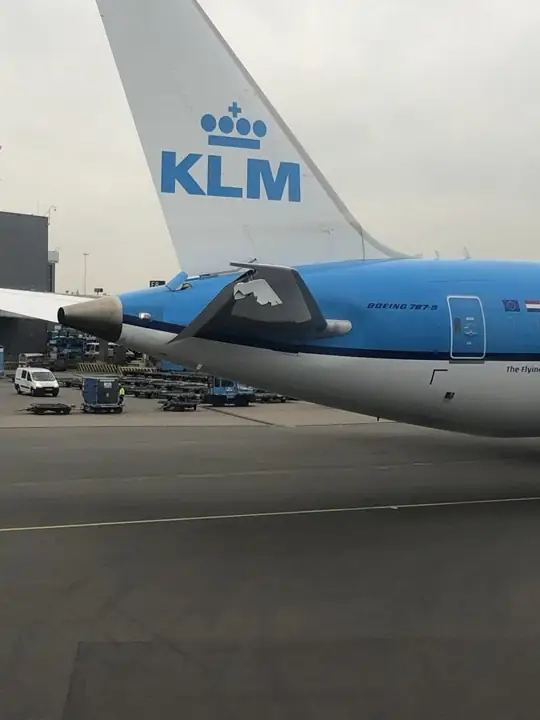
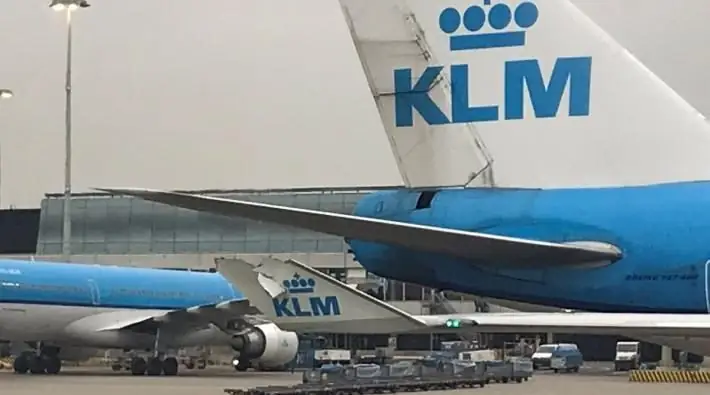
| Airline / operator | Frontier Airlines |
|---|---|
| Aircraft (type, registration) | Frontier Airlines Airbus A320-214 (WL) (N220FR) |
| Category (my classification) | Human factors / Tug / pushback driver |
| What happened | Frontier Airlines flight 450, an Airbus A320-214, N220FR, was struck by the tug during pushback operations at Denver International Airport (KDEN), Denver, Colorado. There were no injuries and the airplane received substantial damage. According to flight crew statements, the crew advised the tug driver they were cleared to push back, either tail east or straight back. At the time of the accident, dark night conditions existed and the ramp was contaminated with snow. During the pushback, the flight crew started No. 1 and 2 engines. The tug driver pushed the airplane back with its empennage towards the east and then notified the captain that he would pull forward to straighten them out. As the tug driver pulled the airplane forward and was coming to a stop the airplane's nose began to drift to the left. The tug detached from the airplane and impacted the right forward fuselage and right engine air intake resulting in substantial damage. The captain noted that the nose swung to the left, and then said it felt as if the airplane was moving backwards. According to the operator, on the morning of the accident, the ramp management company had instructed their ground personnel that all pushbacks should be straight back pushes due to the snowy conditions. It is likely that the angle of the towbar from pushing the airplane back to the east, combined with the snow contaminated ramp and the engine idle thrust, caused the tug driver to lose control of the tug during the pushback. Probable Cause: loss of control of the tug by the driver during pushback operations as a result of the contaminated ramp, angle of the towbar, and the airplane engines being at idle thrust. |
| Injuries | ASN lists 0 fatalities. There were no injuries and the airplane received substantial damage. |
| Damage | Substantial, repaired |
| Official investigation | Investigating agency: NTSB Report number: DCA19CA079 Status: Investigation completed Duration: 3 years 1 month Final report Report / investigator link(s): https://data.ntsb.gov/carol-repgen/api/Aviation/ReportMain/GenerateNewestReport/98963/pdf |
| Source | Aviation Safety Network (ASN) entry: https://aviation-safety.net/wikibase/319500 Further sources listed on that page / found: https://data.ntsb.gov/carol-repgen/api/Aviation/ReportMain/GenerateNewestReport/98963/pdf |
| Airline / operator | British Airways |
|---|---|
| Aircraft (type, registration) | British Airways Airbus A320-232 (G-EUUL) |
| Category (my classification) | Human factors / Tug / pushback driver Secondary: Taxi crew (flight or maintenance) |
| What happened | On January 26, 2019, the Airbus A320-232 aircraft, was prepared for a flight from Sofia (LBSF) to London (EGLL). After completion of pre-flight ground service, the aircraft was pulled with a tug from the stand No.3 partially ice and snow-covered to the taxiway L. During the pushback manoeuvre, the aircraft's engines was being started and were brought to ground idle mode. On the slippery apron surface, the aircraft began to move slowly forward and collided in the pushing tug. The nose gear and the inlet cowl of engine No 2 nacelle of the aircraft were damaged. The damage to the aircraft did not allow the flight to be performed. There were no consequences for the flight crew, the passengers and the ground handling crew. The flight was cancelled and the passengers were returned to the terminal. Causes Based on the analysis performed, the Commission points out that the serious incident resulted from the following causes: 1. Lack of coordinated actions between the flight crew and the ramp agent on the order and procedure of engine start-up during the aircraft push on frozen ground areas; 2. Insufficient and poor quality cleaning and removal of icing on aircraft stand No 3. 3. Starting the aircraft engines while pushing the aircraft on the icy slopes of the aircraft stand and taxiway. 4. Loss of control by the driver of the tractor, due to the use of brakes on the icy area. |
| Injuries | No injury statement in the ASN narrative. |
| Damage | Minor, repaired |
| Official investigation | Investigating agency: AAIU Bulgaria Report number: Status: Investigation completed Duration: 5 years and 2 months Final report Report / investigator link(s): https://www.mtc.government.bg/sites/default/files/uploads/zveno/avio-2021/en_fr_g-euul_26012019_final_p.pdf |
| Source | Aviation Safety Network (ASN) entry: https://aviation-safety.net/wikibase/376316 Further sources listed on that page / found: https://www.mtc.government.bg/sites/default/files/uploads/zveno/avio-2021/en_fr_g-euul_26012019_final_p.pdf |
| Note | ASN entry 376316 gives 26 Jan 2016; this is treated as an error. The Bulgarian final report (file name and text) gives 26 Jan 2019, which is used here. |
| Airline / operator | WestJet |
|---|---|
| Aircraft (type, registration) | WestJet Boeing 737-8CT (WL) (C-GAWS) |
| Category (my classification) | Human factors / Tug / pushback driver |
| What happened | A Boeing 737-800 aircraft operated by WestJet, was conducting flight WS1722, from Vancouver Intl (CYVR), BC to Palm Springs Intl (KPSP), CA. As the aircraft was being pushed back from Gate E83 at CYVR during the departure procedure, it collided with a catering vehicle. The vehicle, which was parked within the safety area at Gate E83, was taller than prescribed limitations. ARFF responded and confirmed that there was no fire, and no fluid leaks. The aircraft sustained minor damage to the port side winglet, and was removed from service. There were no injuries, and passengers were deplaned into the boarding lounge until service was continued aboard an alternate aircraft. The incident aircraft resumed service nine hours after the event. |
| Injuries | ASN lists 0 fatalities. There were no injuries, and passengers were deplaned into the boarding lounge until service was continued aboard an alternate aircraft. |
| Damage | Not stated |
| Time out of service | C-GAWS: 9 hours (ASN) |
| Official investigation | No investigation details on the ASN entry. |
| Source | Aviation Safety Network (ASN) entry: https://aviation-safety.net/wikibase/220896 |
| Airline / operator | Alitalia |
|---|---|
| Aircraft (type, registration) | Alitalia Airbus A319-112 (EI-IMW) |
| Category (my classification) | Human factors / Tug / pushback driver |
| What happened | Alitalia flight AZ1293, an Airbus A319, was cancelled after the right hand wing tip scraped the top of a food truck. The aircraft had just been pushed back from the gate. |
| Injuries | ASN lists 0 fatalities. No injury statement in the ASN narrative. |
| Damage | Not stated |
| Official investigation | No investigation details on the ASN entry. |
| Source | Aviation Safety Network (ASN) entry: https://aviation-safety.net/wikibase/217470 Further sources listed on that page / found: http://www.milanotoday.it/cronaca/incidente-aereo-furgone-linate.html https://www.ilmessaggero.it/italia/linate_furgone_urta_aereo_alitalia_ferito-4093658.html https://www.ilgiorno.it/milano/cronaca/linate-incidente-autocisterna-aereo-1.4284938 |
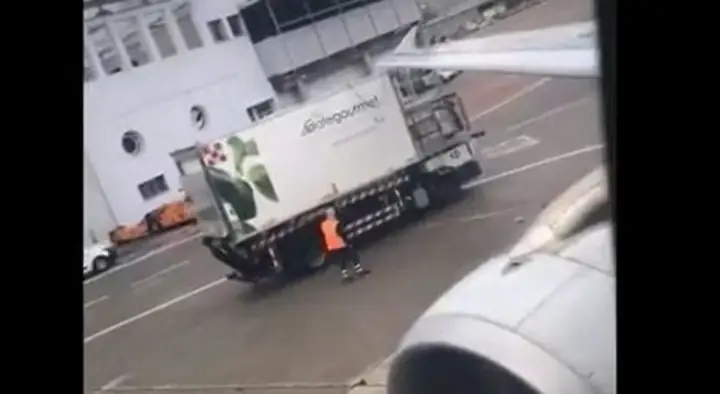
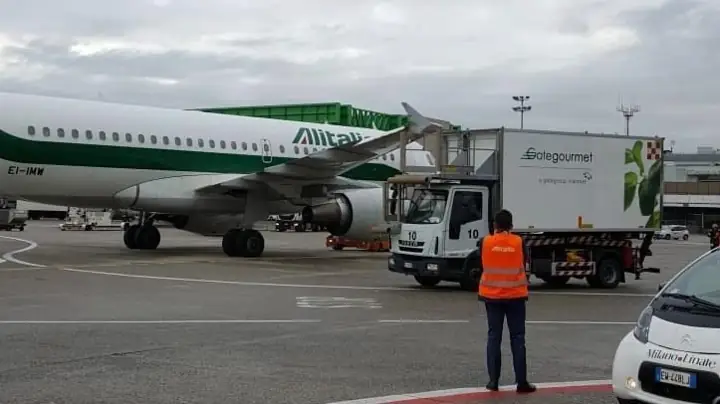
| Airline / operator | Singapore Airlines |
|---|---|
| Aircraft (type, registration) | Singapore Airlines Airbus A330-343 (reg n/a) |
| Category (my classification) | Human factors / Tug / pushback driver |
| What happened | During pushback the airplane (flight SQ178) struck an aerobridge. There were no personal injuries. |
| Injuries | ASN lists 0 fatalities. There were no personal injuries. |
| Damage | Not stated |
| Official investigation | No investigation details on the ASN entry. |
| Source | Aviation Safety Network (ASN) entry: https://aviation-safety.net/wikibase/215491 Further sources listed on that page / found: https://www.channelnewsasia.com/news/singapore/sia-plane-hits-aerobridge-changi-284-on-board-ho-chi-minh-10… |
| Airline / operator | Air Canada Express, opb Sky Regional Airlines |
|---|---|
| Aircraft (type, registration) | Air Canada Express, opb Sky Regional Airlines Embraer ERJ-175SU (ERJ-170-200 SU) (C-FEJL) |
| Category (my classification) | Human factors / Tug / pushback driver |
| What happened | An Embraer ERJ-170-200 aircraft operated by Sky Regional Airlines, was conducting flight SKV7678 from Toronto/Lester B. Pearson Intl, ON (CYYZ) to Boston/General Edward Lawrence Logan Intl, MA (KBOS). As the aircraft was being pushed back from Gate 162 at CYYZ, the two wing walkers were not prepared and were not in position. A catering vehicle was stopped behind the aircraft, waiting for another aircraft to arrive at the next gate. One of the wing walkers attempted to signal the driver to stop the pushback, however was unsuccessful. The tail section collided with the catering truck, resulting in damage to the aircraft and the truck. There were no injuries to the passengers, however the catering truck driver later complained of back and neck soreness, and was taken to the hospital as a precaution. The aircraft was brought back to the gate, and passengers deplaned normally. |
| Injuries | ASN lists 0 fatalities. There were no injuries to the passengers, however the catering truck driver later complained of back and neck soreness, and was taken to the hospital as a precaution. |
| Damage | Minor |
| Official investigation | No investigation details on the ASN entry. |
| Source | Aviation Safety Network (ASN) entry: https://aviation-safety.net/wikibase/215549 |
| Airline / operator | Cathay Pacific Airways |
|---|---|
| Aircraft (type, registration) | Cathay Pacific Airways Boeing 777-367ER (B-KPY) |
| Category (my classification) | Human factors / Tug / pushback driver |
| What happened | The right hand wing of a Cathay Pacific Airways Boeing 777-367ER sustained serious damage after impacting a floodlight pole during pushback at Rome's Fiumicino Airport, Italy. The aircraft arrived as Cathay Pacific flight 293 from Hong Kong at 07:20 local time. The aircraft parked on remote stand 835. That same morning the aircraft was to be towed to a departure gate for boarding of the return flight back to Hong Kong (CX292). During towing, the right hand wing was backed into a floodlight pole, causing severe damage. There were no personal injuries. |
| Injuries | ASN lists 0 fatalities. There were no personal injuries. |
| Damage | Substantial, repaired |
| Official investigation | No investigation details on the ASN entry. |
| Source | Aviation Safety Network (ASN) entry: https://aviation-safety.net/wikibase/319586 Further sources listed on that page / found: https://www.scmp.com/news/hong-kong/hong-kong-economy/article/2159912/cathay-pacific-plane-crashes-pole-rom… |
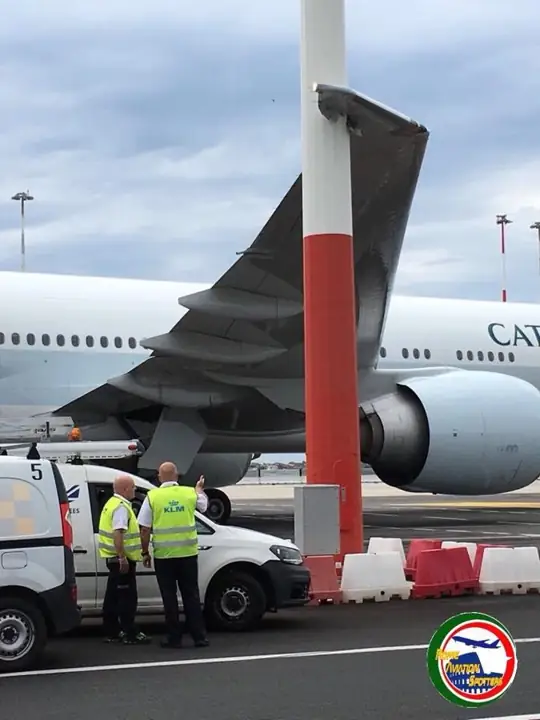
| Airline / operator | United Airlines |
|---|---|
| Aircraft (type, registration) | United Airlines Airbus A320-232 (N448UA) |
| Category (my classification) | Human factors / Tug / pushback driver |
| What happened | A United Airlines Airbus A320 operating as Flight 645 to Portland, Oregon, clipped wings with a stationary United Airlines Boeing 737- 700 operating as Flight 2746 during pushback from Gate C30 at Chicago O'Hare International Airport (KORD), Chicago, Illinois. Degree of aircraft damage has not been ascertained and there were no reported injuries. |
| Injuries | ASN lists 0 fatalities. Degree of aircraft damage has not been ascertained and there were no reported injuries. |
| Damage | Unknown |
| Official investigation | No investigation details on the ASN entry. |
| Source | Aviation Safety Network (ASN) entry: https://aviation-safety.net/wikibase/214452 Further sources listed on that page / found: https://heavy.com/news/2018/08/planes-collide-ohare/ https://flightaware.com/live/flight/UAL645 https://flightaware.com/live/flight/UAL2746/history/20180815/2010Z/KORD/KCLE |
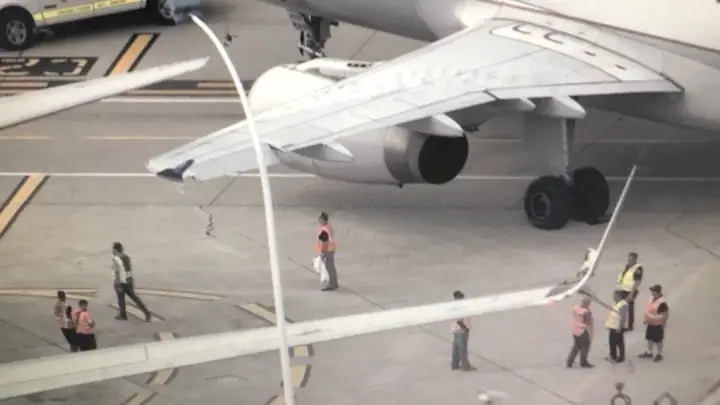
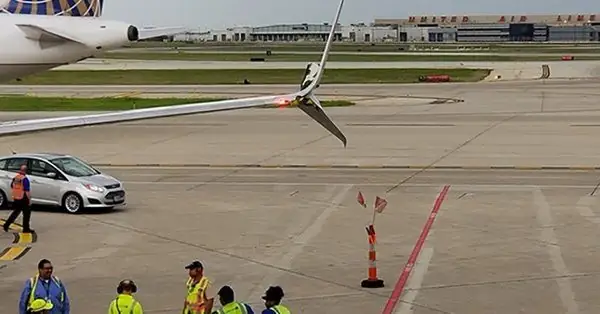
Video: https://wheeltug-collisions.netlify.app/videos/GC-0088_1.mp4
Original: https://www.youtube.com/watch?v=S9yOftiErzw
Video and still: Supplied by WheelTug; original: YouTube.
| Airline / operator | United Express, opb ExpressJet Airlines |
|---|---|
| Aircraft (type, registration) | United Express, opb ExpressJet Airlines Embraer ERJ-145LR (N14568) |
| Category (my classification) | Human factors / Tug / pushback driver |
| What happened | An Embraer ERJ-145LR operating flight UA4080, collided with an airport service truck as it was pushed back from the gate at Newark-Liberty International Airport, New Jersey, USA. The truck fell over; the aircraft suffered minor damage to the tail. |
| Injuries | ASN lists 0 fatalities. No injury statement in the ASN narrative. |
| Damage | Minor |
| Official investigation | No investigation details on the ASN entry. |
| Source | Aviation Safety Network (ASN) entry: https://aviation-safety.net/wikibase/214011 Further sources listed on that page / found: https://www.nbcphiladelphia.com/news/national-international/United-Express-Jet-Backs-Into-Catering-Truck-In… https://t.co/GyU6BzXIfV https://t.co/27z1A7BOSR |
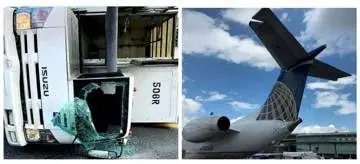
| Airline / operator | Ryanair |
|---|---|
| Aircraft (type, registration) | Ryanair Boeing 737-8AS (WL) (EI-GDZ) |
| Category (my classification) | Human factors / Tug / pushback driver |
| What happened | The aircraft was parked on Stand 43L at Stansted Airport, and because it was unable to make a Calculated Take Off Time (CTOT) of 08:45 hrs a new CTOT of 10:05 hrs was allocated. The crew requested to "push and hold" which was granted by the ground controller who added, "push across to the east line, abeam stand 50R. do not start engines". These instructions were repeated to the groundcrew. During the pushback, ATC informed the crew of a new CTOT, very close to the present time. The crew informed the groundcrew and advised them that they would start engines after the pushback. Approaching the end of the pushback, the flight crew felt the tug stop abruptly. The commander asked the groundcrew if everything was alright and the groundcrew responded that they had pushed the aircraft too close to the blast fence and were going to pull it forward. The Senior Cabin Crew member called the flight deck on the interphone and informed them that she and the cabin crew seated at the rear of the aircraft felt that the tail of the aircraft had struck something. The commander checked with the groundcrew, who thought it hadn’t, but the commander contacted engineering who sent out an engineer. On inspection, damage was found to the trailing edge of the left elevator. The commander called the ground controller and informed them of the collision. The Fire Service attended and, following an inspection, determined that there was no immediate danger to the aircraft or passengers, which was also confirmed by the engineer. The aircraft was towed to Stand 50L and the passengers disembarked using the air stairs. Discussion The clearance was to carry out a pushback of the aircraft to abeam Stand 50R and the headset operator believed this would be when the pilot's window was in line with the stand. The pushback continued until the elevator struck the blast fence but the relative positions of the pilot’s window and the stand were not determined at this point. The poor weather, light and poor clarity of the taxi line as seen by the tug driver meant that all his attention was focussed on his task. This and his restricted viewpoint from the nose of the aircraft prevented him from monitoring the actions of the headset operator and being aware of the proximity of the tail to the blast fence. |
| Injuries | ASN lists 0 fatalities. No injury statement in the ASN narrative. |
| Damage | Substantial, repaired |
| Official investigation | Investigating agency: AAIB Report number: EW/G2018/04/18 Status: Investigation completed Duration: 9 months Final report Report / investigator link(s): https://assets.publishing.service.gov.uk/media/5f5a2ee2d3bf7f723b6c34c4/Boeing_737-8AS_EI-GDZ_02-19.pdf |
| Source | Aviation Safety Network (ASN) entry: https://aviation-safety.net/wikibase/319667 Further sources listed on that page / found: https://assets.publishing.service.gov.uk/media/5f5a2ee2d3bf7f723b6c34c4/Boeing_737-8AS_EI-GDZ_02-19.pdf |
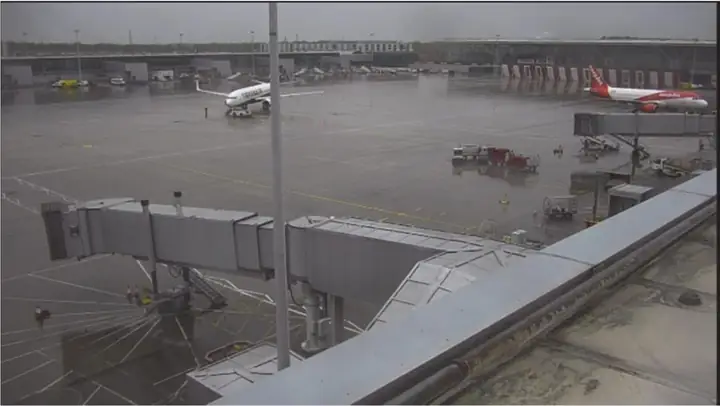
| Airline / operator | El Al Israel Airlines / Germania |
|---|---|
| Aircraft (type, registration) | El Al Israel Airlines Boeing 767-3Q8ER (4X-EAK); Germania Boeing 737-76J (WL) (D-ABLB) |
| Category (my classification) | Human factors / Tug / pushback driver Secondary: ATC / marshalling involved |
| What happened | A Germania Boeing 737-700 (D-ABLB) was involved in a ground collision accident with an El Al Boeing 767-300ER (4X-EAK) at Tel Aviv-Ben Gurion International Airport, Israel. Both aircraft were parked at Terminal 3, with the B737 at gate C8 and the B767 at gate C9. At 06:17 the B767 was cleared for pushback by the ground controller: "ElAl 385 Heavy C9 pushback and startup approved, release point 37 facing east". Two minutes later the B737 was also cleared for pushback: "Germania 4915 pushback and startup approved, release point 48 facing east." This clearance was later amended to point 47 facing west. What the ground controller did not realise was the fact that the B767 on point 37 was blocking the pushback lane of the B737. Germania flight 4915 was being pushed back from the gate until the tail fin impacted the right hand horizontal stabilizer of El Al flight 385. At the time of the accident it was dark and visibility was decreased by rain and reflecting lights. The two ground crew members that were supposed to walk along the wing tip and tail during the pushback of the B737 were in the tow truck, contrary to procedures. The main causes for the accident The severe safety event began with a wrong instruction in the pushback clearance, issued by the ground controller for the 737 a/c aircraft, a pushback which evolved to an accident, under the prevailing local visibility and environmental conditions, as a result of the pushback supervisors of the two pushed back aircraft failing to perform a safe pushback and detect hazards and obstacles on the pushback routes. |
| Injuries | ASN lists 0 fatalities. No injury statement in the ASN narrative. |
| Damage | Substantial, written off |
| Time out of service | 4X-EAK: Written off (ASN) |
| Official investigation | Investigating agency: AIAI Report number: 31-18 Status: Investigation completed Duration: 1 year and 2 months Final report Report / investigator link(s): https://www.gov.il/BlobFolder/dynamiccollectorresultitem/31_18-en/en/31-18-E.pdf |
| Source | Aviation Safety Network (ASN) entry: https://aviation-safety.net/wikibase/319703 Further sources listed on that page / found: https://www.gov.il/BlobFolder/dynamiccollectorresultitem/31_18-en/en/31-18-E.pdf |
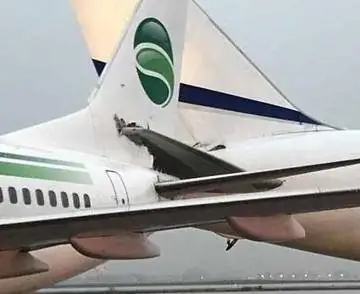
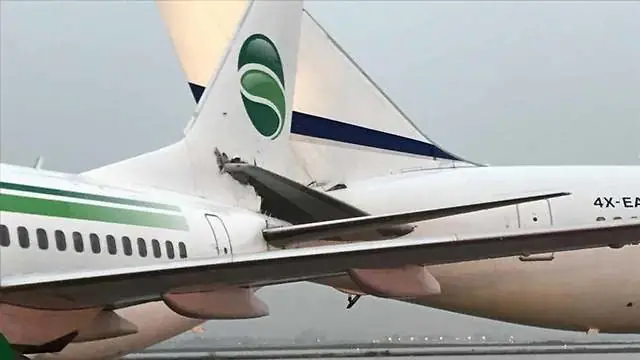
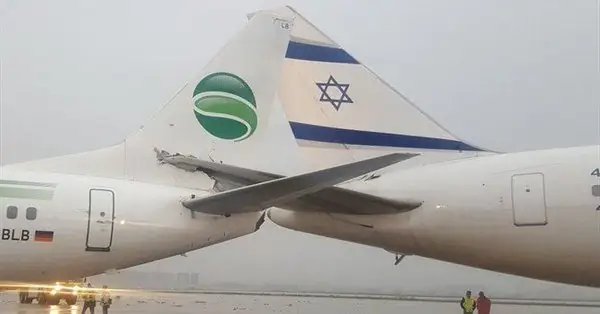
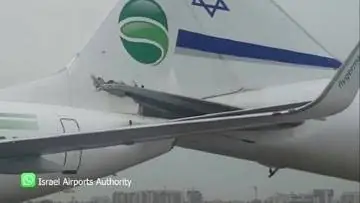 ▶ VIDEO
Still: Israel Airports Authority footage, per on-screen watermark.
Video: https://wheeltug-collisions.netlify.app/videos/GC-0072_2.mp4
Video and still: Supplied by WheelTug.
| Airline / operator | Korean Air |
|---|---|
| Aircraft (type, registration) | Korean Air Airbus A380-861 (HL7627); Korean Air Boeing 777- 3B5ER (HL8208) |
| Category (my classification) | Human factors / Tug / pushback driver |
| What happened | During pushback from the gate at Incheon International Airport, the left-hand wing tip of Korean Air flight KE011 (Airbus A380-861, HL7627) contacted the tail of another Korean Air aircraft, a Boeing 777-3B5ER (HL8208). There were no personal injuries. A replacement A380 was used to carry out the flight to Los Angeles. |
| Injuries | ASN lists 0 fatalities. There were no personal injuries. |
| Damage | Not stated |
| Official investigation | No investigation details on the ASN entry. |
| Source | Aviation Safety Network (ASN) entry: https://aviation-safety.net/wikibase/207135 Further sources listed on that page / found: http://www.koreaherald.com/view.php?ud=20180307000638 |
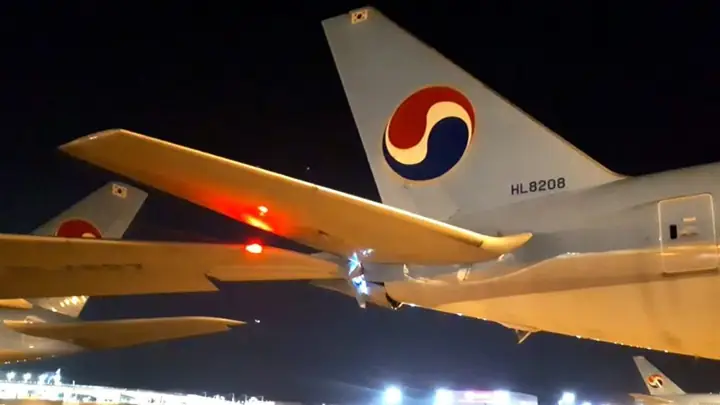
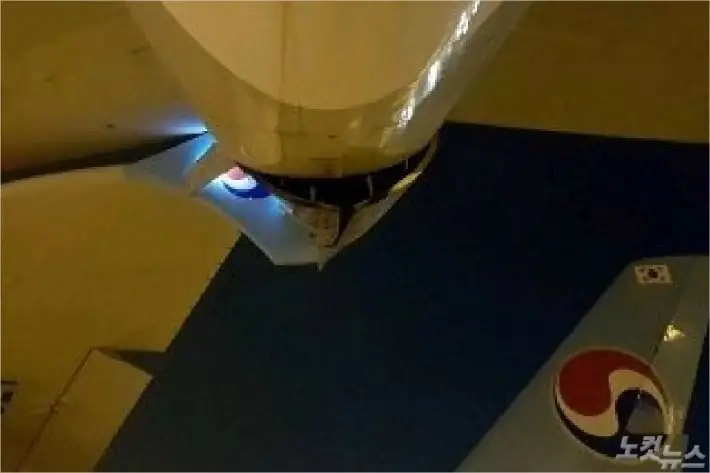
| Airline / operator | Delta Air Lines |
|---|---|
| Aircraft (type, registration) | Delta Air Lines McDonnell Douglas MD-88 (N924DL) |
| Category (my classification) | Human factors / Tug / pushback driver |
| What happened | Delta Air Lines flight 2421, a McDonnell Douglas MD-88, after being pushed back from the gate, with the towbar still connected, was substantially damaged after the airplane moved forward after engine start and struck the tug at Detroit Metropolitan Airport (DTW), Michigan, USA. There were no injuries to the 61 passengers and crew onboard. During pushback, the tug driver informed the flight crew they were cleared to start. After the left engine was started, the airplane started to unexpectedly move forward. Both flight crew members were focused inside the cockpit, running checklists, when the tug driver asked if the brake was set on the airplane. The captain responded "no" and the first officer then noticed the position of the tug and told the captain that they needed to stop the airplane. The airplane struck the tug before stopping. After the airplane's brake was set, the flight crew noticed that the engine throttles were not at idle as expected. Ground conditions were reported as slippery. The tug struck the right forward lower fuselage causing damage to the pressure vessel (skin, stringers, and frames). Probable Cause: Failure of the flight crew to confirm the left engine throttle lever was at idle during engine start. |
| Injuries | ASN lists 0 fatalities. There were no injuries to the 61 passengers and crew onboard. |
| Damage | Substantial, repaired |
| Official investigation | Investigating agency: NTSB Report number: DCA18CA042 Status: Investigation completed Duration: 2 years and 6 months Final report Report / investigator link(s): https://data.ntsb.gov/carol-repgen/api/Aviation/ReportMain/GenerateNewestReport/96468/pdf |
| Source | Aviation Safety Network (ASN) entry: https://aviation-safety.net/wikibase/319756 Further sources listed on that page / found: https://data.ntsb.gov/carol-repgen/api/Aviation/ReportMain/GenerateNewestReport/96468/pdf |
| Airline / operator | Austral Lineas Aéreas |
|---|---|
| Aircraft (type, registration) | Austral Lineas Aéreas Embraer ERJ-190AR (ERJ-190-100 IGW) (LV- FPS) |
| Category (my classification) | Human factors / Tug / pushback driver |
| What happened | During pushback from position 23 at Buenos Aires-Jorge Newbery Airport, Argentina, the aircraft was hit by the towing vehicle, causing damage to the nose radome. The aircraft was repaired and back in service 18 hours after the incident. 3.1 Conclusions regarding factors related to the incident ✓ The collision between the towing tractor and the aircraft occurred during the pre-starting reversal manoeuvre. ✓ The damage received by the aircraft in the radome was the result of the impact against the cabin of the towing tractor. ✓ The ramp operator was certified to perform the pushback maneuver under supervision. ✓ The supervisor was not present during the aircraft pushback maneuver. ✓ The aircraft pushback maneuver was probably performed with an excessive steering angle of the towing tractor. ✓ Parking position 23 was contaminated by hydraulic fluids. ✓ No spills were recorded during the apron surface inspections on the day of the incident. ✓ The last training received by the tow tractor operator and recorded in his file was in 2012. |
| Injuries | ASN lists 0 fatalities. No injury statement in the ASN narrative. |
| Damage | Minor |
| Time out of service | LV-FPS: 18 hours (ASN) |
| Official investigation | Investigating agency: JIAAC Report number: Status: Investigation completed Duration: Final report Report / investigator link(s): https://jiaac.gob.ar/files/329092-17.pdf https://jiaac.gob.ar/files/informes/329092-17.pdf |
| Source | Aviation Safety Network (ASN) entry: https://aviation-safety.net/wikibase/202390 Further sources listed on that page / found: https://jiaac.gob.ar/files/329092-17.pdf https://jiaac.gob.ar/files/informes/329092-17.pdf |
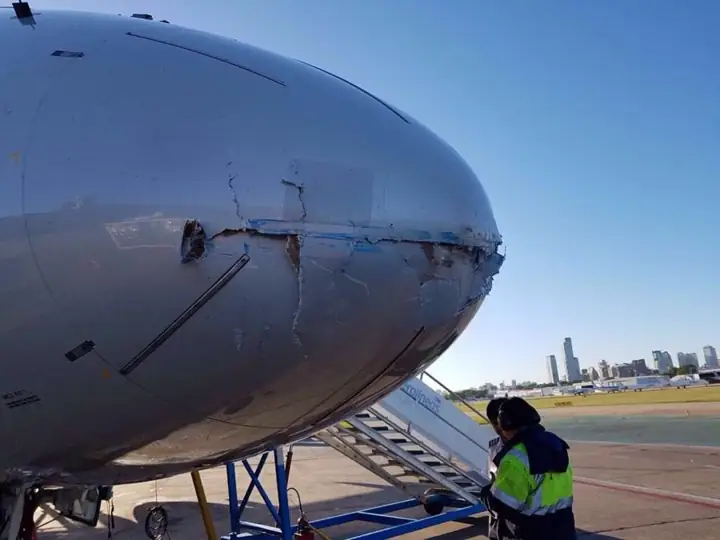
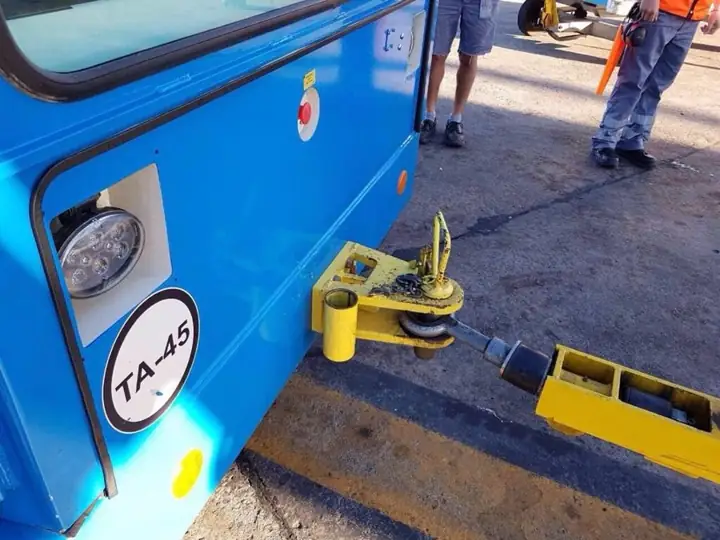
| Airline / operator | Aurigny Air Services |
|---|---|
| Aircraft (type, registration) | Aurigny Air Services ATR 72-500 (72-212A) (G-COBO) |
| Category (my classification) | Human factors / Tug / pushback driver |
| What happened | Aurigny Air Services flight GR671, an ATR 72-500 was cancelled when the plane hit a catering truck during push back from the gate at Manchester Airport, U.K. There were no personal injuries. |
| Injuries | ASN lists 0 fatalities. There were no personal injuries. |
| Damage | Minor |
| Official investigation | No investigation details on the ASN entry. |
| Source | Aviation Safety Network (ASN) entry: https://aviation-safety.net/wikibase/199749 Further sources listed on that page / found: https://www.rt.com/uk/403619-manchester-airport-plane-crash/ https://siteapps.caa.co.uk/g-info/ http://www.airlive.net/alert-aurigny-planes-wing-has-hit-a-catering-truck-at-manchester-airport/ https://t.co/vujyvg2bIl https://t.co/XbnSlrf4Jp |
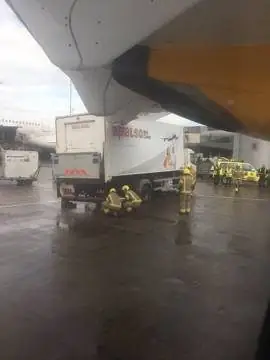
| Airline / operator | THY Turkish Airlines |
|---|---|
| Aircraft (type, registration) | THY Turkish Airlines Airbus A330-303 (TC-LNE) |
| Category (my classification) | Human factors / Tug / pushback driver |
| What happened | Turkish Airlines flight TK82 from Boston, USA to Istanbul, Turkey, was cancelled after the no.2 engine inlet cowling was damaged when a pushback tug had impacted the engine. The aircraft was ferried to Miami on September 12 and flown to Istanbul the next day to re-enter service. |
| Injuries | ASN lists 0 fatalities. No injury statement in the ASN narrative. |
| Damage | Minor |
| Time out of service | TC-LNE: about 12 days (ferried MIA 12 Sep, to IST next day to re-enter service) (ASN) |
| Official investigation | No investigation details on the ASN entry. |
| Source | Aviation Safety Network (ASN) entry: https://aviation-safety.net/wikibase/199817 Further sources listed on that page / found: http://web.archive.org/web/20171119143234/http://www.airturkhaber.com/haber.asp?id=4688 https://t.co/C4FZxqLnmx https://t.co/b8zSO78kL0 |
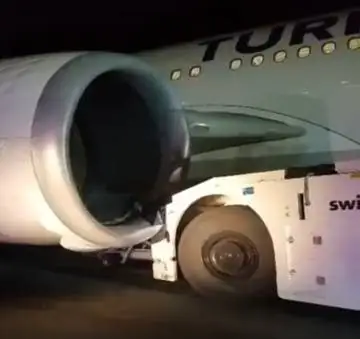
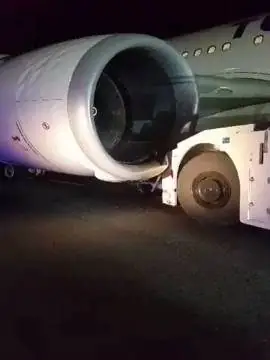 ▶ VIDEO
Still: X video preview frame, @airturkhaber on X
| Airline / operator | Ethiopian Airlines / Air India |
|---|---|
| Aircraft (type, registration) | Ethiopian Boeing 767-300, flight ET687 / Air India A320 (VT-EXD, parked) |
| Category (my classification) | Human factors / Tug / pushback driver |
| What happened | The Ethiopian 767 was pushed back without wing walkers and struck Air India A320 VT-EXD, parked out of service on stand 86L. Both aircraft were unfit for flight afterwards. |
| Injuries | None reported. |
| Damage | Both aircraft unfit for flight. |
| Official investigation | Investigated by the AAIB India (summarised by SKYbrary). |
| Source | SKYbrary: https://skybrary.aero/accidents-and-incidents/b763-a320-delhi-india-2017 |
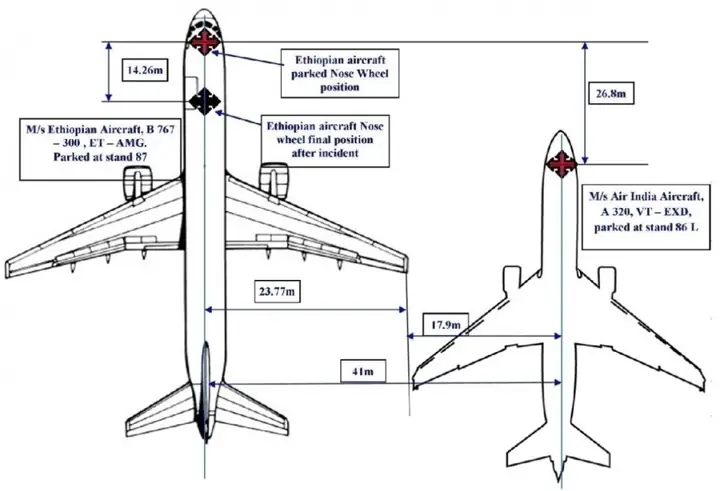
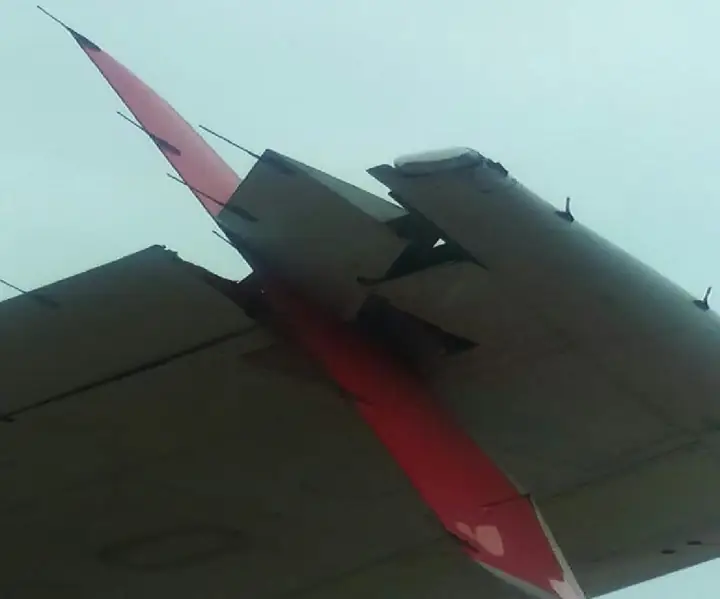
| Airline / operator | Kenya Airways |
|---|---|
| Aircraft (type, registration) | Kenya Airways Boeing 737-86N (WL) (5Y-KYF) |
| Category (my classification) | Human factors / Tug / pushback driver |
| What happened | A Boeing 737-800 operated by Kenya Airways sustained subtantial damage to the right hand fuselage skin after a pushback mishap at Nairobi-Jomo Kenyatta International Airport in Kenya. The cabin of a tow truck struck the right hand side of the fuselage, causing a large gash. The incident occurred in the hours of darkness as the aircraft was being pushed back from the gate in preparation for a service (KQ760) to Johannesburg, South Africa. |
| Injuries | ASN lists 0 fatalities. No injury statement in the ASN narrative. |
| Damage | Substantial Location: Nairobi-Jomo Kenyatta International Airport (NBO/HKJK) - Kenya Phase: Pushback / towing Nature: Passenger - Scheduled Departure airport: Nairobi-Jomo Kenyatta International Airport (NBO/HKJK) Destination airport: JBO Confidence Rating: Information is only available from news, social media or unofficial sources Narrative: A Boeing 737-800 operated by Kenya Airways sustained subtantial damage to the right hand fuselage skin after a pushback mishap at Nairobi-Jomo Kenyatta International Airport in Kenya. The cabin of a tow truck struck the right hand side of the fuselage, causing a large gash. The incident occurred in the hours of darkness as the aircraft was being pushed back from the gate in preparation for a service (KQ760) to Johannesburg, South Africa. ICAO Occurrence |
| Official investigation | No investigation details on the ASN entry. |
| Source | Aviation Safety Network (ASN) entry: https://aviation-safety.net/wikibase/196839 Further sources listed on that page / found: https://www.kahawatungu.com/2017/07/24/kq-plane-hit-tow-track/ https://t.co/U6lZVKz2or |
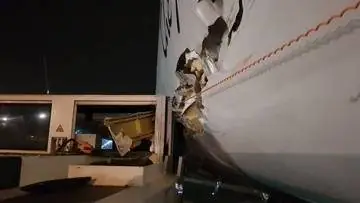
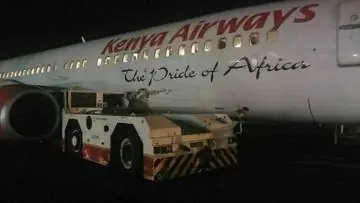
| Airline / operator | Thomas Cook Airlines Belgium |
|---|---|
| Aircraft (type, registration) | Thomas Cook Airlines Belgium Airbus A320-212 (OO-TCT) |
| Category (my classification) | Human factors / Tug / pushback driver |
| What happened | Thomas Cook Airlines Belgium flight HQ1509 was grounded at Tenerife-Sur Reina Sofia Airport, Canary Islands, Spain after impacting a tow truck. |
| Injuries | ASN lists 0 fatalities. No injury statement in the ASN narrative. |
| Damage | Not stated |
| Official investigation | No investigation details on the ASN entry. |
| Source | Aviation Safety Network (ASN) entry: https://aviation-safety.net/wikibase/196050 Further sources listed on that page / found: https://nieuws.vtm.be/binnenland/passagiers-thomas-cook-gestrand |
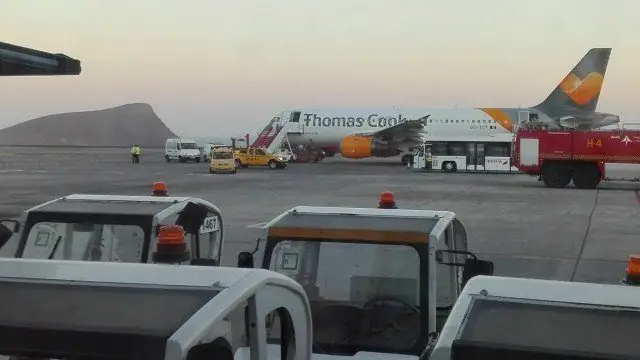
| Airline / operator | United Express, opb SkyWest Airlines |
|---|---|
| Aircraft (type, registration) | United Express, opb SkyWest Airlines Embraer ERJ-175LR (reg n/a) |
| Category (my classification) | Human factors / Tug / pushback driver |
| What happened | During pushback from the gate, flight 5588 was damaged when contacing another aircraft. The right hand winglet of the Embraer ERJ-175LR was severed after it hit the left hand winglet of United flight UA599, a Boeing 737-900. |
| Injuries | ASN lists 0 fatalities. No injury statement in the ASN narrative. |
| Damage | Minor |
| Official investigation | No investigation details on the ASN entry. |
| Source | Aviation Safety Network (ASN) entry: https://aviation-safety.net/wikibase/196001 Further sources listed on that page / found: http://chicago.cbslocal.com/2017/06/08/planes-scrape-each-other-on-ohare-tarmac/ |
| Airline / operator | KLM Royal Dutch Airlines / British Airways, opb BA CityFlyer |
|---|---|
| Aircraft (type, registration) | KLM Royal Dutch Airlines Boeing 737-8K2 (WL) (PH-BGB); British Airways, opb BA CityFlyer Embraer ERJ-190SR (G-LCYP) |
| Category (my classification) | Human factors / Tug / pushback driver Secondary: ATC / marshalling involved |
| What happened | On 20 April 2017, a near-collision occurred at Amsterdam Airport Schiphol between two aircraft on the ground. KLM flight KL1230 (Boeing 737-8K2 PH-BGB) was taxiing to its aircraft stand in front of the terminal after landing and Flight BA8452 (G-LCYP) BA CityFlyer, an Embraer ERJ-190, was being pushed from its aircraft stand to the apron by an aircraft tug. Air Traffic Control The Netherlands (LVNL) reported this occurrence to the Dutch Safety Board and initiated an investigation itself. The Dutch Safety Board did not start its own investigation into the occurrence. The Boeing 737 aircraft landed on Runway 18R and taxied towards Parking Space D54. Because Runway 18C was being used for landing traffic at the same time, the aircraft taxied via the southern taxi route along Taxiway Zulu. After Taxiway Zulu, the Boeing continued on its way along Taxiway Quebec. Maintenance was being performed on Runway 06-24. Part of the adjacent Taxiway Bravo was also closed to air traffic. As a result, the Boeing was directed to travel along the non-standard Taxiway Alpha up to Intersection A9. Here, the aircraft turned onto the apron and headed for D54. This action was not coordinated with the ground controller who was responsible for the apron where the incident took place. Aircraft Stand D27 was occupied by another Boeing 737 that was being pushed backwards in preparation for departure. An Embraer 190 parked at D31 was also given permission for pushback. The pushback of the Embraer started just as the incoming Boeing on Taxiway Alpha was taxiing past the Embraer. When the Boeing executed a left turn at Intersection A9, the Embraer entered the field of vision of the Boeing’s crew. The driver of the aircraft tug saw the Boeing at the same moment. Both the crew of the Boeing and the driver immediately took action and stopped. According to the people involved, the distance between the two aircraft was no more than a few metres. LVNL’s investigation report showed that the ground controller involved had not noticed the conflict between the Boeing taxiing to D54 and the Embraer being pushed back. This was partly due to the complexity of the volume of traffic, in combination with the maintenance work on Runway 06-24 and the use of different taxi routes than normal. The analysis also revealed that the occurrence took place due to insufficient collaboration among the ground controllers. |
| Injuries | ASN lists 0 fatalities. No injury statement in the ASN narrative. |
| Damage | None |
| Official investigation | No investigation details on the ASN entry. Report / investigator link(s): https://onderzoeksraad.nl/uploads/phase-docs/1686/e781b5b9946620172661-luchtvaartrapportage-q4-2017-171130-en.pdf |
| Source | Aviation Safety Network (ASN) entry: https://aviation-safety.net/wikibase/202898 Further sources listed on that page / found: https://onderzoeksraad.nl/uploads/phase-docs/1686/e781b5b9946620172661-luchtvaartrapportage-q4-2017-171130-… |
| Airline / operator | Southwest Airlines / Frontier Airlines |
|---|---|
| Aircraft (type, registration) | Southwest Airlines Boeing 737-8H4 (WL) (N8303R); Frontier Airlines Airbus A320-214 (N202FR) |
| Category (my classification) | Human factors / Tug / pushback driver |
| What happened | Southwest Flight WN4182, a Boeing 737-800 (N8630B) and Frontier Airlines Flight F9756, an Airbus A320 (N202FR), were involved in a ground contact incident at Phoenix-Sky Harbor International Airport, Arizona, USA. Southwest Flight 4182 was taxiing to the gate when at the same time the Fronier A319 was being pushed back from the gate at Terminal 3. An impact occurred and parts of the Airbus' tail broke off, becoming embedded in the left hand wing of the B737. |
| Injuries | ASN lists 0 fatalities. No injury statement in the ASN narrative. |
| Damage | Unknown |
| Official investigation | No investigation details on the ASN entry. |
| Source | Aviation Safety Network (ASN) entry: https://aviation-safety.net/wikibase/193658 Further sources listed on that page / found: http://www.azfamily.com/story/34528220/2-planes-clip-wings-at-phoenix-sky-harbor https://t.co/mi587ff6B2 |
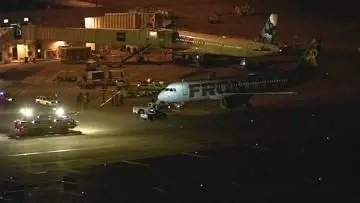
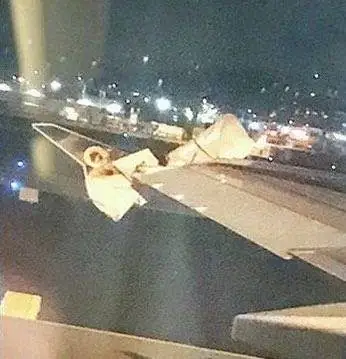
| Airline / operator | SereneAir |
|---|---|
| Aircraft (type, registration) | SereneAir Boeing 737-86X (WL) (AP-BNA) |
| Category (my classification) | Human factors / Tug / pushback driver |
| What happened | Damaged by tug during push back. The aircraft was due to return from Islamabad to Karachi as flight ER501. Repairs were made and the aircraft was back in service on February 19. |
| Injuries | ASN lists 0 fatalities. No injury statement in the ASN narrative. |
| Damage | Minor |
| Time out of service | AP-BNA: 13 days (ASN) |
| Official investigation | No investigation details on the ASN entry. |
| Source | Aviation Safety Network (ASN) entry: https://aviation-safety.net/wikibase/193322 Further sources listed on that page / found: http://pkaviation.com/2017/02/06/serene-accident/ https://www.youtube.com/watch?v=i9_MMozoF_M https://t.co/HyRXs9yWjt https://t.co/nv2sSkcmnD |
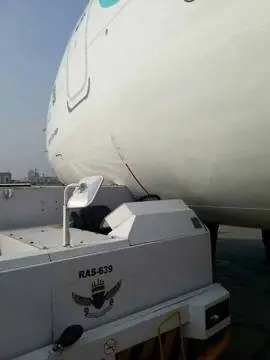
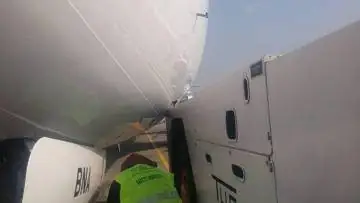
| Airline / operator | Air Transat |
|---|---|
| Aircraft (type, registration) | Air Transat Airbus A330-243 (reg n/a) |
| Category (my classification) | Human factors / Tug / pushback driver |
| What happened | An Airbus A330-243 sustained damage to the left hand lower fuselage after a pushback tug became stuck. |
| Injuries | ASN lists 0 fatalities. No injury statement in the ASN narrative. |
| Damage | Minor |
| Official investigation | No investigation details on the ASN entry. |
| Source | Aviation Safety Network (ASN) entry: https://aviation-safety.net/wikibase/192417 Further sources listed on that page / found: https://t.co/cDFiRogqIH |
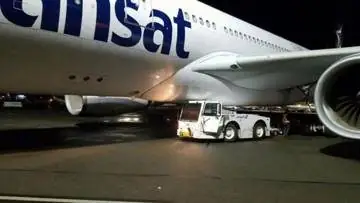
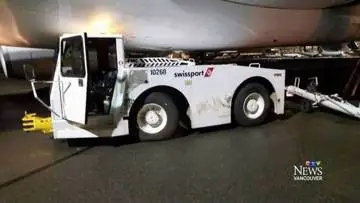
| Aircraft (type, registration) | Airbus A319 (reg n/a) |
|---|---|
| Category (my classification) | Human factors / Tug / pushback driver |
| What happened | A tow truck, towing an Airbus A319, collided with a snow-plow at Domodedovo International Airport in Moscow. The aircraft landing gear strut was damaged. |
| Injuries | ASN lists 0 fatalities. No injury statement in the ASN narrative. |
| Damage | Not stated |
| Official investigation | No investigation details on the ASN entry. |
| Source | Aviation Safety Network (ASN) entry: https://aviation-safety.net/wikibase/191296 Further sources listed on that page / found: https://tvrain.ru/news/domodedovo-420877/?utm_source=fb&utm_medium=social&utm_campaign=news&utm_term=420877 http://www.interfax.ru/moscow/536676 |
| Airline / operator | China Southern Airlines |
|---|---|
| Aircraft (type, registration) | China Southern Airlines Airbus A380-841 (B-6139) |
| Category (my classification) | Human factors / Tug / pushback driver |
| What happened | China Southern Airlines flight CZ328 from Los Angeles, California, USA to Guangzhou, China, was cancelled after the aircraft, an Airbus A380, impacted a towing truck. |
| Injuries | ASN lists 0 fatalities. No injury statement in the ASN narrative. |
| Damage | Minor |
| Official investigation | No investigation details on the ASN entry. |
| Source | Aviation Safety Network (ASN) entry: https://aviation-safety.net/wikibase/191278 Further sources listed on that page / found: http://www.dailymail.co.uk/news/article-3929326/Tow-truck-pulling-China-Southern-Airlines-plane-LAX-CRASHES… https://t.co/VPYtjmIgLY https://t.co/ObgRjknUmI |
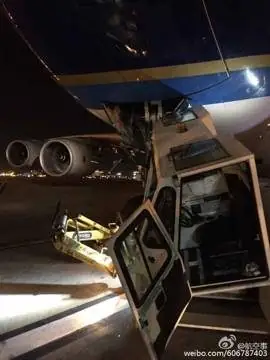
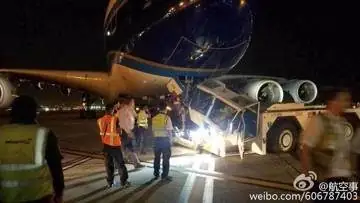
| Airline / operator | Iran Air / Mahan Air |
|---|---|
| Aircraft (type, registration) | Iran Air Airbus A310-304 (EP-IBK); Mahan Air Airbus A340-642 (EP- MMR) |
| Category (my classification) | Human factors / Tug / pushback driver |
| What happened | An Iran Air Airbus A310-304 sustained substantial damage in a push back incident at Tehran-Imam Khomeini International Airport, Iran. The aircraft, EP-IBK, was being pushed back when the right hand horizontal stabilizer impacted the underside of the rear fuselage of a Mahan Air Airbus A340, EP-MMR which also pushing back to depart to Munich (MUC). The stabilizer was severely bent. The A340 sustained damage near the APU and all 98 onboard persons were disembarked . |
| Injuries | No injury statement in the ASN narrative. |
| Damage | Substantial Location: Tehran-Imam Khomeini International Airport (IKA/OIIE) - Iran Phase: Pushback / towing Nature: Passenger - Scheduled Departure airport: Tehran-Imam Khomeini International Airport (IKA/OIIE) Destination airport: London-Heathrow Airport (LHR/EGLL) Confidence Rating: Information is only available from news, social media or unofficial sources Narrative: An Iran Air Airbus A310-304 sustained substantial damage in a push back incident at Tehran-Imam Khomeini International Airport, Iran. The aircraft, EP-IBK, was being pushed back when the right hand horizontal stabilizer impacted the underside of the rear fuselage of a Mahan Air Airbus A340, EP-MMR which also pushing back to depart to Munich (MUC). The stabilizer was severely bent. The A340 sustained damage near the APU and all 98 onboard persons were disembarked . ICAO Occurrence |
| Official investigation | No investigation details on the ASN entry. |
| Source | Aviation Safety Network (ASN) entry: https://aviation-safety.net/wikibase/190382 Further sources listed on that page / found: https://t.co/FAlaJYaDds |
| Airline / operator | Vietnam Airlines |
|---|---|
| Aircraft (type, registration) | Vietnam Airlines Airbus A321-200 (reg n/a) |
| Category (my classification) | Human factors / Tug / pushback driver |
| What happened | The tailplane was damaged in a towing accident. The damage to the tailplane of a Vietnam Airlines aircraft was most likely caused when the tailplane hit a light pole in Tan Son Nhat Airport due to a tow car driver's mistake. The damage was discovered after landing in Vinh, during the preparations for the return flight, which was cancelled. |
| Injuries | No injury statement in the ASN narrative. |
| Damage | Minor |
| Official investigation | No investigation details on the ASN entry. |
| Source | Aviation Safety Network (ASN) entry: https://aviation-safety.net/wikibase/189493 Further sources listed on that page / found: http://www.thanhniennews.com/society/tailplane-damage-causes-vietnam-airlines-to-cancel-flight-65477.html http://www.thanhniennews.com/society/vietnam-airlines-aircraft-damage-likely-caused-when-tailplane-hit-ligh… |
| Airline / operator | Southwest Airlines |
|---|---|
| Aircraft (type, registration) | Southwest Airlines Boeing 737-3H4 (WL) (N368SW) |
| Category (my classification) | Human factors / Tug / pushback driver |
| What happened | Southwest Airlines flight 149, a Boeing 737-300, N368SW, experienced a failure of the nose landing gear during pushback from the gate at the Baltimore/Washington-Thurgood Marshall International Airport, Maryland, USA. The aircraft was substantially damaged and there were no injuries to the 6 crewmembers or 129 passengers but the airplane was substantially damaged. According to the flight crew, as the pushback tug was maneuvering the aircraft off the gate, the flight crew felt the front of the airplane bounce up and down, and then came to rest on the nose. The passengers were deplaned via air stairs. The nose gear collapsed in a forward direction, resulting in substantial damage to the gear structure, the nose gear well, and crushing the forward bulkhead. An airport surveillance camera video was obtained, which showed the tug pushing the aircraft at approximately 6 knots. The tug specifications indicate that speed could be achieved only in second gear or higher. The airline general operating manual specifies that pushback must be conducted in low or first gear, and at a walking speed. As a result of the damage sustained, retirement of the aircraft was moved forward. PROBABLE CAUSE: "The tug operators excessive speed during pushback." |
| Injuries | The aircraft was substantially damaged and there were no injuries to the 6 crewmembers or 129 passengers but the airplane was substantially damaged. |
| Damage | Substantial, written off |
| Time out of service | N368SW: Written off (ASN) |
| Official investigation | No investigation details on the ASN entry. Report / investigator link(s): https://app.ntsb.gov/pdfgenerator/ReportGeneratorFile.ashx?EventID=20160805X44633&AKey=1&RType=Final&IType=CA |
| Source | Aviation Safety Network (ASN) entry: https://aviation-safety.net/wikibase/320035 Further sources listed on that page / found: https://app.ntsb.gov/pdfgenerator/ReportGeneratorFile.ashx?EventID=20160805X44633&AKey=1&RType=Final&IType=CA |
| Airline / operator | KLM Cityhopper / Germanwings |
|---|---|
| Aircraft (type, registration) | KLM Cityhopper Embraer ERJ-190STD (ERJ-190-100) (PH-EZB); Germanwings Airbus A319-112 (D-AKNU) |
| Category (my classification) | Human factors / Tug / pushback driver |
| What happened | An Airbus A319 operated by Germanwings (D-AKNU) and an Embraer ERJ-190STD (PH-EZB) operated by KLM Cityhopper were damaged when the right hand wing tip of the Airbus contacted the APU of the Embraer jet. The Airbus was being pushed back at the time of the incident. The Embraer was due to operate flight KL1866 to Amsterdam. The Airbus was due to operate flight 4U2648 to Faro. The Embraer was repaired aat Stuttgart and was ferried back to Amsterdam on July 1. The Airbus was back in service the same morning. |
| Injuries | No injury statement in the ASN narrative. |
| Damage | Unknown |
| Time out of service | PH-EZB: about 16 days (repaired at Stuttgart, ferried back to AMS 1 Jul) (ASN) D-AKNU: Same morning (ASN) |
| Official investigation | No investigation details on the ASN entry. Report / investigator link(s): https://onderzoeksraad.nl/uploads/phase-docs/1289/04440b6c471dovv-kwartaalrapportage-luchtvaart-kw-ii-2016.pdf https://onderzoeksraad.nl/nl/onderzoek/2244/kwartaalrapportage-luchtvaart-2e-kwartaal-2016 |
| Source | Aviation Safety Network (ASN) entry: https://aviation-safety.net/wikibase/188169 Further sources listed on that page / found: https://www.bild.de/regional/stuttgart/flughafen-stuttgart/flugzeug-crash-46310270.bild.html https://www.stuttgarter-zeitung.de/inhalt.flughafen-stuttgart-maschinen-prallen-auf-rollfeld-zusammen.64779… https://onderzoeksraad.nl/uploads/phase-docs/1289/04440b6c471dovv-kwartaalrapportage-luchtvaart-kw-ii-2016.… https://t.co/E3WEOUwYK2 https://t.co/GK4XwRQMSb |
| Airline / operator | Vueling |
|---|---|
| Aircraft (type, registration) | Vueling Airbus A320-214 (EC-JGM) |
| Category (my classification) | Human factors / Tug / pushback driver |
| What happened | Vueling flight VY8749 was involved in a mishap with a pushback tug at Manchester Airport, U.K. The aircraft, an A320, impacted the tug on the right hand side of the airplane. The aircraft was repaired at Manchester and ferried back to Barcelona on July 28, 2016. |
| Injuries | No injury statement in the ASN narrative. |
| Damage | Substantial, repaired |
| Time out of service | EC-JGM: about 61 days (repaired at MAN, ferried to BCN 28 Jul) (ASN) |
| Official investigation | No investigation details on the ASN entry. Report / investigator link(s): https://www.bea.aero/les-enquetes/les-evenements-notifies/detail/event/accident-de-lairbus-a320-immatricule-ec-jgm-et-exploite-par-vueling-survenu-le-28052016-a-manchester-enquete-menee-par-aaib-royaume-uni/ |
| Source | Aviation Safety Network (ASN) entry: https://aviation-safety.net/wikibase/320072 Further sources listed on that page / found: https://www.bea.aero/les-enquetes/les-evenements-notifies/detail/event/accident-de-lairbus-a320-immatricule… |
| Airline / operator | Air Atlanta Icelandic |
|---|---|
| Aircraft (type, registration) | Air Atlanta Icelandic Boeing 747-428 (TF-AAK) |
| Category (my classification) | Human factors / Tug / pushback driver |
| What happened | The chartered aircraft collided with the ground tug, badly damaging the undercarriage, two of the plane's engines and injuring two ground tug operators. The aircraft was operating as the tour aircraft for Iron Maiden. |
| Injuries | The chartered aircraft collided with the ground tug, badly damaging the undercarriage, two of the plane's engines and injuring two ground tug operators. |
| Damage | Not stated |
| Official investigation | No investigation details on the ASN entry. |
| Source | Aviation Safety Network (ASN) entry: https://aviation-safety.net/wikibase/185336 Further sources listed on that page / found: http://www.blabbermouth.net/news/iron-maidens-plane-badly-damaged-in-collision-at-santiago-airport/ https://t.co/JnqFR2vbgX https://t.co/uXSajaL9ig |
| Airline / operator | El Al Israel Airlines |
|---|---|
| Aircraft (type, registration) | El Al Israel Airlines Boeing 737-958ER (WL) (4X-EHA) |
| Category (my classification) | Human factors / Tug / pushback driver |
| What happened | A Boeing 737-900ER, operating El Al Flight LY338, sustained damage to the left hand winglet in a pushback incident at gate G02 at Amsterdam-Schiphol International Airport, the Netherlands. Flight 338 was being pushed back for departure to Tel Aviv, Israel, when the winglet contacted a blast fence. The winglet sustaained a large horizontal tear. Consequently, the flight was cancelled. |
| Injuries | No injury statement in the ASN narrative. |
| Damage | Minor |
| Official investigation | No investigation details on the ASN entry. |
| Source | Aviation Safety Network (ASN) entry: https://aviation-safety.net/wikibase/184626 Further sources listed on that page / found: http://www.at5.nl/artikelen/152941/vliegtuig-el-al-botst-tijdens-taxin-tegen-hek-op-schiphol http://www.telegraaf.nl/binnenland/25233662/__El_Al_kist_breekt_vleugel__.html https://t.co/TfD8H542vi |
| Airline / operator | Alaska Airlines |
|---|---|
| Aircraft (type, registration) | Boeing 737-990ER (N461AS) |
| Category (my classification) | Human factors / Tug / pushback driver Earlier cases (pre-2016, photo evidence) |
| What happened | Alaska Airlines Flight AS543 was being pushed back from the gate about at Los Angeles International Airport (LAX) when the left hand winglet of the Boeing 737 contact the right hand horizontal stabilizer of a United Airlines Boeing 757-224 (N19136). United Airlines Flight UA1199 was taxiing to the gate after landing from Newark Airport, NJ when the incident happened. |
| Injuries | Not stated in the source. |
| Damage | Minor |
| Official investigation | See the ASN entry. |
| Source | Aviation Safety Network: https://aviation-safety.net/wikibase/179537 |
| Airline / operator | Southwest Airlines; JetBlue Airways |
|---|---|
| Aircraft (type, registration) | Boeing 737-7H4 (N942WN); Airbus A320 (N643JB) |
| Category (my classification) | Human factors / Tug / pushback driver Earlier cases (pre-2016, photo evidence) |
| What happened | During pushback from the gate, the winglet of Southwest Boeing 737 N942WN struck the horizontal stabilizer of JetBlue Airbus A320 N643JB, which was parked at Gate 11. |
| Injuries | Not stated in the source. |
| Damage | Winglet and horizontal stabilizer damaged |
| Official investigation | No investigation details on the ASN entry. |
| Source | Aviation Safety Network (ASN) entries: https://aviation-safety.net/wikibase/166818 Further sources listed on that page / found: https://aviation-safety.net/wikibase/166819 |
| Note | ASN logged one entry per aircraft (166818, 166819); merged here. |
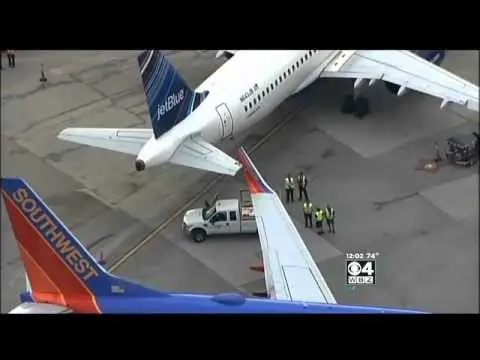 ▶ VIDEO
Still: YouTube thumbnail, CBS Boston
| Airline / operator | Emirates |
|---|---|
| Aircraft (type, registration) | Boeing 777-31HER (A6-ENK) |
| Category (my classification) | Human factors / Tug / pushback driver Earlier cases (pre-2016, photo evidence) |
| What happened | The aircraft, a Boeing 777-300, registration A6-ENK, operating flight EK089 from Dubai to Geneva on 19 October 2013, contacted a jet blast fence and light pole during pushback off Stand G17 at Dubai International Airport, causing damage to the lower aft fuselage and dislodgement of two static discharge wicks from the starboard horizontal stabilizer. An aircraft was parked on the adjacent Stand G18 and the Pushback Operator (PBO) judged that he would have to turn the aircraft on Stand G17 to the left early during the pushback to ensure that there was no contact between the aircraft wing tips. Before the pushback commenced, the Headset Mechanic (HM) had joined the PBO in the tug cab and he remained there until the pushback and pull forward stopped. From their position in the tug cab, neither the PBO nor the HM were able to observe the aft fuselage or tail area of the aircraft. After the aircraft had been pushed approximately 10 to 15 feet along the stand centerline, the PBO started to turn the aircraft to the left, off the stand centerline. As the push continued to the left, the aircraft was brought onto a collision course with a jetblast fence which was protecting a service roadway located at the edge of the ramp. The aft fuselage contacted the jetblast fence and overrode it, and then the right hand horizontal stabilizer struck a light pole located on the far side of the service roadway. The lower aft fuselage sustained damage and two static discharge wicks were dislodged from the right hand horizontal stabilizer. A section of the upper deflector vane of the jet blast fence was damaged, and the light pole, located on the opposite side of a service road that runs behind the jet blast fence, was bent. The pushback crew did not notice that the aircraft had contacted the jet blast fence and the light pole, and the flight crew were unaware of any problem. The aircraft was pulled forward to the engine start position, disconnected from the tug, and commenced to taxi. A ground handling agent operator, who was driving a lower deck loader vehicle along the service road adjacent to Stand G17, witnessed the incident and alerted airline personnel to the problem. The flight crew were advised and the aircraft was taxied to Stand G04, where the passengers and crew disembarked. There were no injuries to those onboard and the aircraft was withdrawn from service. The investigation concluded that the incident occurred because the PBO did not remember the details of the non-standard pushback procedure for Stand G17 as a period of approximately nine weeks had elapsed between the time that he had read the non-standard procedure, and the first occasion on which he was required to use the procedure. |
| Injuries | Not stated in the source. |
| Damage | Minor |
| Official investigation | Investigating agency: GCAA Report number: Status: Investigation completed Duration: Final report |
| Source | Aviation Safety Network: https://aviation-safety.net/wikibase/186306 |
| Airline / operator | Virgin Australia Airlines / Jetstar Airways |
|---|---|
| Aircraft (type, registration) | Boeing 737-8FE (WL) (VH-YID); Airbus A320-232 (VH-VGR) |
| Category (my classification) | Human factors / Tug / pushback driver Earlier cases (pre-2016, photo evidence) |
| What happened | An Airbus A320, registered VH-VGR and operated by Jetstar Airways, operated on a domestic flight from Sydney, Australia to Melbourne. Upon arrival, the flight was cleared by the ground controller to taxi to gate D2. At 09:30 the aircraft entered the apron en route to gate D2, when a Boeing 737-800, registered VH-YID, requested pushback approval from gate E1. The 737 was being operated by Virgin Australia Airlines on a flight to Sunshine Coast Airport. The controller advised the crew of that a Jetstar A320 was entering the apron behind them for bay D2 and that when that traffic was 'on the gate', pushback from bay E1 was approved. The flight crew of VH-YID reported that they saw the Jetstar A320 pass behind them from the reflection in the terminal window in front of their parked aircraft. The captain of VH-YID relayed the pushback approval to the dispatcher, including that it could only commence once the A320 was on the gate. The dispatcher was standing to the right of the aircraft’s nose. At 09:31:34, as VH-VGR approached the gate on bay D2, the automatic nose-in guidance system (NIGS) displayed a message 'STOP-WAIT'. In response the flight crew stopped the aircraft short of the gate. The dispatcher on VH-YID reported looking under the aircraft and observing that the A320 was stopped. The dispatcher reported then waiting for about 15–20 seconds to confirm the aircraft remained stationary. As it did, the dispatcher was satisfied that the A320 was on the gate and the pushback of VH-YID could commence. Pushback began at 09:31:46. At 09:31:58, the crew of the A320 transmitted to the controller that they were holding short of the bay because of the NIGS. However, that message was over- transmitted by another aircraft. Forty seconds later, the crew re-transmitted the same message. The message was acknowledged by the controller, who requested to be advised when the aircraft was at the gate. Neither the crew of VH-VGR nor the controller mentioned the gate number during the transmissions. The crew of the 737 later reported they did not hear these transmissions. At 09:33:03, the left wingtip of VH-YID contacted the tail cone of the A320 immediately aft of the operating auxiliary power unit. The tail cone immediately aft of the auxiliary power unit separated from the aircraft and fell to the ground. The left wingtip of VH-YID was damaged during the collision. Following the collision, VH-YID was towed back to gate E1 and VGR was marshalled to gate D2.There were no injuries as a result of the collision. Contributing factors: - The dispatcher of the B737 could not visually confirm the position of the A320 relative to its assigned gate and incorrectly assessed that, as the aircraft was stationary, it was at the gate. - The pushback of the B737 was commenced with insufficient clearance from the A320, which was not identified prior to the collision as the dispatcher's position to the right-front of the B737 prevented observation of its left wing. |
| Injuries | Not stated in the source. |
| Damage | Substantial, repaired |
| Official investigation | Investigating agency: ATSB Report number: AO-2013-125 Status: Investigation completed Duration: 3 years Final report |
| Source | Aviation Safety Network: https://aviation-safety.net/wikibase/320697 |
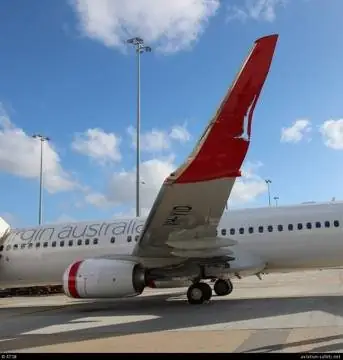
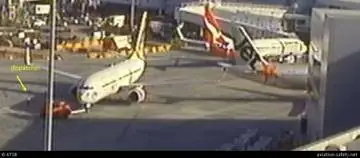
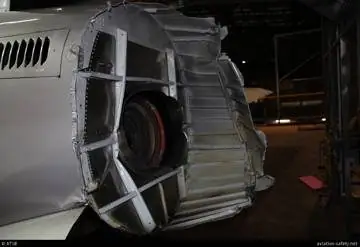
| Airline / operator | Air Service |
|---|---|
| Aircraft (type, registration) | Canadair CL-600-2B19 Regional Jet CRJ-100ER (F-GPTC) |
| Category (my classification) | Human factors / Tug / pushback driver Earlier cases (pre-2016, photo evidence) |
| What happened | While the aircraft was being pushed back from the hangar, the driver of the pushback tug mistakenly turned left before the correct time. Subsequently the Left edge of the Horizontal was damaged. Nobody was injured. |
| Injuries | Not stated in the source. |
| Official investigation | See the ASN entry. |
| Source | Aviation Safety Network: https://aviation-safety.net/wikibase/16192 |
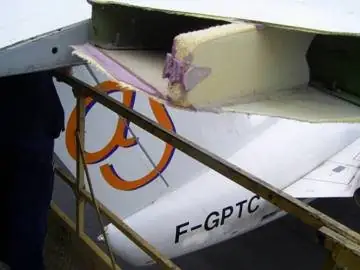
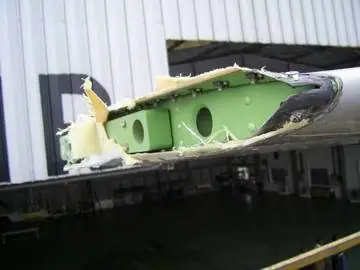
| Airline / operator | British Airways |
|---|---|
| Aircraft (type, registration) | Boeing 777-200 (G-VIIK); Airbus A321 (G-EUXH) |
| Category (my classification) | Human factors / Tug / pushback driver Earlier cases (pre-2016, photo evidence) |
| What happened | During the pushback of G-VIIK, its left wing struck the fin of G- EUXH. |
| Injuries | Not stated in the source. |
| Damage | Not stated |
| Official investigation | UK AAIB Bulletin 6/2009 Report / investigator link(s): https://assets.publishing.service.gov.uk/media/5423047fe5274a1314000c03/Boeing_777-236__G-VIIK_and_Airbus_A321-231__G-EUXH_06-09.pdf |
| Source | UK AAIB Bulletin 6/2009: https://assets.publishing.service.gov.uk/media/5423047fe5274a1314000c03/Boeing_777-236__G-VIIK_and_Airbus_A321-231__G-EUXH_06-09.pdf |
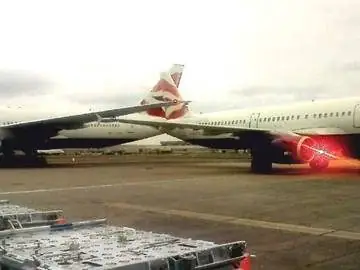
Wing-walker / towing crew (69)
Maintenance or repositioning tows (often with no flight crew on board) where the towing team misjudged clearance.
| Airline / operator | WestJet |
|---|---|
| Aircraft (type, registration) | WestJet Boeing 737 MAX 8 (C-FRYV) |
| Category (my classification) | Human factors / Wing-walker / towing crew |
| What happened | WestJet Flight WS2221, Boeing 737 MAX 8, collided with a food catering truck as it taxied into the gate at Toronto (YYZ). The truck was substantially damaged. |
| Injuries | ASN lists 0 fatalities. No injury statement in the ASN narrative. |
| Damage | Unknown |
| Time out of service | C-FRYV: at least 3 days (no flights seen 27 Oct 18:09 EDT to 30 Oct 17:35 EDT) (FlightAware) |
| Official investigation | No investigation details on the ASN entry. |
| Source | Aviation Safety Network (ASN) entry: https://aviation-safety.net/wikibase/583862 Further sources listed on that page / found: https://globalnews.ca/news/12124528/empty-westjet-plane-hits-catering-truck-toronto/ |
| Note | Correction (TSB/WestJet): the aircraft was being towed with no crew or passengers to an overnight pad; categorised as towing. |
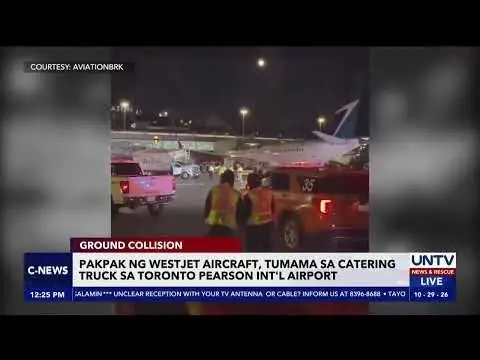
 ▶ VIDEO
Still: X video preview frame, @TripppleSeven7 on X
 ▶ VIDEO
Still: X video preview frame, @Breaking911 on X
| Airline / operator | Avelo Airlines / Southwest Airlines |
|---|---|
| Aircraft (type, registration) | Avelo Airlines Boeing 737-7H4 (WL) (N707VL); Southwest Airlines Boeing 737 MAX 8 (N8909L) |
| Category (my classification) | Human factors / Wing-walker / towing crew |
| What happened | A Boeing 737-700 of Avelo Airlines, N707VL, struck a parked Southwest Airlines aircraft while being towed at Raleigh Durham. Nobody was injured. |
| Injuries | ASN lists 0 fatalities. Nobody was injured. |
| Damage | Minor |
| Time out of service | N8909L: about 29 days (Jan 5 RDU-DAL likely ferry, Jan 15 DAL-PAE likely MRO; normal service from Jan 30), ≈ 152 missed flights (ADS-B flight data) N707VL: about 3.6 days, ≈ 15 missed flights (ADS-B flight data) |
| Official investigation | No investigation details on the ASN entry. |
| Source | Aviation Safety Network (ASN) entry: https://aviation-safety.net/wikibase/565134 Further sources listed on that page / found: https://abc11.com/amp/post/unoccupied-avelo-southwest-planes-clip-wings-raleigh-durham-international-airpor… https://www.jetphotos.com/photo/11842495 https://www.jetphotos.com/photo/11882175 |
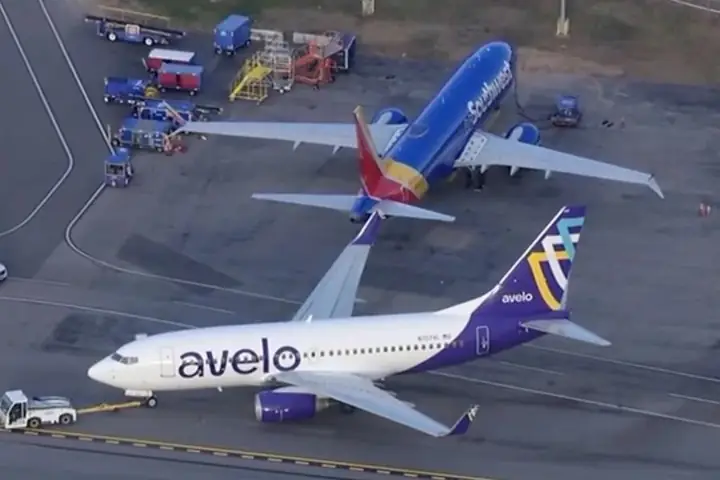
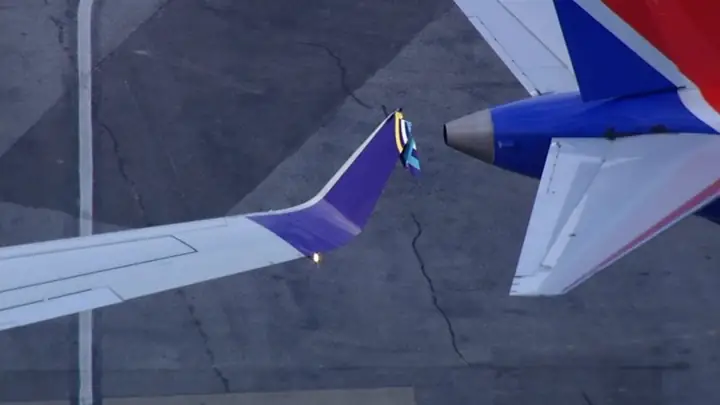
| Airline / operator | Japan Airlines (JAL) |
|---|---|
| Aircraft (type, registration) | Japan Airlines (JAL) Airbus A350-1041 (JA10WJ) |
| Category (my classification) | Human factors / Wing-walker / towing crew |
| What happened | An Airbus A350-1041 of Japan Airlines, parked at John F. Kennedy International Airport, USA for maintenance after arrival from Tokyo/Haneda, Japan as flight JAL/JL4, was substantially damaged to the cockpit windows and on the left pitot tube on the front of the fuselage and the bottom of the L1 door by contacting with the right wing of a towed Hi Fly Malta Airbus A330-202, 9H-ALC, operated for Arkia Airlines. |
| Injuries | ASN lists 0 fatalities. No injury statement in the ASN narrative. |
| Damage | Not stated |
| Official investigation | No investigation details on the ASN entry. |
| Source | Aviation Safety Network (ASN) entry: https://aviation-safety.net/wikibase/563703 Further sources listed on that page / found: https://news.ntv.co.jp/category/society/3e58fc28c37b4971a5afef7066d9d27e https://www.jal.co.jp/jp/en/info/2025/other/251217/ https://www.thetraveler.org/japan-airlines-jfk-ground-collision-triggers-weeks-of-long-haul-disruption-on-k… |
| Airline / operator | Air Canada |
|---|---|
| Aircraft (type, registration) | Boeing 737 MAX 8 (under tow); Airbus A321 (C-FGKN) |
| Category (my classification) | Human factors / Wing-walker / towing crew |
| What happened | An Air Canada 737 MAX 8 under tow struck the horizontal stabilizer of parked A321 C-FGKN with its winglet at stand H15. |
| Injuries | Not stated in the source. |
| Damage | Winglet and stabilizer damage |
| Time out of service | C-FGKN: about 52 days, ≈ 154 missed flights (ADS-B flight data) |
| Official investigation | No investigation details on the ASN entry. |
| Source | Aviation Safety Network (ASN) entry: https://aviation-safety.net/wikibase/551931 Further sources listed on that page / found: https://simpleflying.com/air-canada-boeing-737-max-8-hits-a321-tow-toronto |
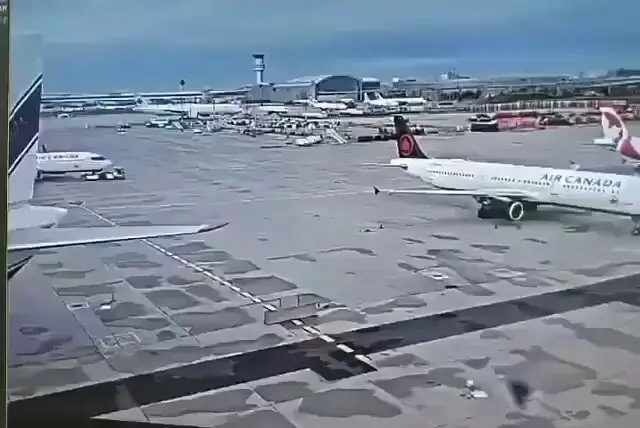 ▶ VIDEO
Still: X video preview frame, @Mrgunsngear on X
| Airline / operator | Finnair, opb NoRRA - Nordic Regional Airlines |
|---|---|
| Aircraft (type, registration) | Finnair, opb NoRRA - Nordic Regional Airlines ATR 72-212A (ATR 72-500) (OH-ATE) |
| Category (my classification) | Human factors / Wing-walker / towing crew |
| What happened | The no 2 propeller's blades of a Finnair ATR 72-212A (ATR 72-500), flight FIN1175, operated by Norra, impacted a ground power unit after it began to roll forward after engine start.on the apron at Helsinki-Vantaa Airport (HEL/EFHK), Helsinki. Parts of the propeller hit the fuselage piercing the fuselage of the aircraft. No reported injuries. The airplane had been towed to the stand by a ground handling service provider’s employee. The applicable procedure states that the tug operator shall engage the parking brake on completion of towing when this is necessary. The flight crew is also required to engage the brake and verify handle position during pre-start preparations. No specific procedure had been established for the handover of responsibilities between the tug operator and the flight crew. The ground handling service provider’s dispatcher assisted the flight crew in pre-departure preparations outside the airplane. Because he had no verbal communication with the flight crew, he communicated with the crew using hand signals. The dispatcher was signaled to remove the wheel chocks and disconnect the GPU. While undertaking these tasks he turned around, saw the airplane coming toward him, and dashed to safety before the airplane struck the GPU. The dispatcher did not show the “verify/set parking brake” signal during engine start. Although the ground handling service provider’s manual mentions the hand signal, it is not usually shown. The ground handling service provider recognized that work practices have occasionally deviated from management system procedures, and the same applied to the airplane operator’s manuals vs. work practices. Investigation determined that the occurrence resulted from non-adherence to procedures. The flight crew’s post-occurrence actions were not completed fully. Because the crew did not declare a distress or urgency condition, alerting was made belatedly and delay was experienced in building situational awareness. Compliance with standard phraseology and communication practices is important in the event of an accident in order to ensure timely and adequate emergency response. Lack of direct communication between the rescue units and the flight crew hampered building of common situational awareness. A common radio frequency should be available for communication between flight crews and rescue services. |
| Injuries | ASN lists 0 fatalities. No reported injuries. |
| Damage | Substantial, repaired |
| Official investigation | Investigating agency: SIAF Report number: L2025-02 Status: Investigation completed Duration: 1 year 1 month Final report Report / investigator link(s): https://www.turvallisuustutkinta.fi/app/uploads/sites/8/2026/10/L2025-02-Tutkintaselostus-FIN.pdf https://bea.aero/en/investigation-reports/notified-events/detail/accident-to-the-atr-72-registered-oh-ate-operated-by-norra-on-16-08-2025-at-helsinki/ |
| Source | Aviation Safety Network (ASN) entry: https://aviation-safety.net/wikibase/538155 Further sources listed on that page / found: https://www.turvallisuustutkinta.fi/app/uploads/sites/8/2026/10/L2025-02-Tutkintaselostus-FIN.pdf https://www.is.fi/kotimaa/art-2000011432454.html https://www.hs.fi/pkseutu/art-2000011432467.html https://yle.fi/a/74-20177815 https://www.tilannehuone.fi/tehtava.php?hash=e9206cc3f72dc77591000c2693dc45fe |
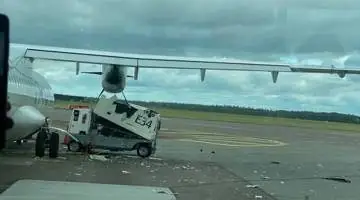
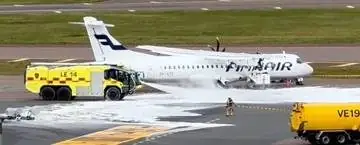
| Airline / operator | Finnair |
|---|---|
| Aircraft (type, registration) | Finnair Airbus A350-941 (OH-LWH) |
| Category (my classification) | Human factors / Wing-walker / towing crew |
| What happened | A Finnair Airbus A350-941, was being moved to a maintenance hangar at Helsinki-Vantaa Airport (HEL) when the wing of the aircraft hit the door. |
| Injuries | ASN lists 0 fatalities. No injury statement in the ASN narrative. |
| Damage | Not stated |
| Official investigation | No investigation details on the ASN entry. |
| Source | Aviation Safety Network (ASN) entry: https://aviation-safety.net/wikibase/534949 |
| Airline / operator | CemAir |
|---|---|
| Aircraft (type, registration) | CemAir Canadair CRJ-100ER (ZS-CMK) |
| Category (my classification) | Human factors / Wing-walker / towing crew |
| What happened | At 0815Z, the captain (CPT), who was the pilot flying (PF), attended the pre-flight briefing before proceeding to the airport parking bays for a scheduled 0930Z flight. Whilst en route to the parking bays, he was informed that the aircraft was at the hangar due to a radio defect encountered earlier on the day. After contacting maintenance, the CPT was advised that the aircraft was being towed to parking bay C16. Upon arrival at C16 at 0850Z, the aircraft was yet to be delivered; it was only received at 0900Z. After liaising with the ramp agent (RA), the CPT conducted the pre-flight inspection in which he identified that there was insufficient fuel in the aircraft. He then requested fuel which arrived at 0909Z where upon refuelling commenced concurrently with passenger boarding. The CPT boarded the aircraft to configure the flight deck and conduct pre-flight briefings with the first officer (FO). The FAOR ground control issued a calculated take-off time (CTOT) of 0933Z. At 0930Z, the CPT queried the RA regarding the nose landing gear doors which remained open. The RA responded that they would be closed post-refuelling. Refuelling was completed at 0933Z and the CPT signed the fuel slip. The cockpit warning system still displayed the nose gear doors as open; this prompted the CPT to disembark from the aircraft to verify with the RA. Meanwhile, the refuelling agent removed the grounding cable from the nose landing gear whilst he secured the refuelling rig. After disembarking, the CPT noticed a white minibus near the bay; the RA explained that the refuelling personnel were conducting an audit. After the RA had closed the doors, the CPT instructed the RA to expedite the process before he boarded the aircraft to continue with the engine start checks. Meanwhile, the minibus departed as the CPT returned to the cockpit. During this time, the refuelling agent was retracting the bowser's stabiliser in preparation for departure. The CPT initiated engine start-up, beginning with Engine No. 2 (starboard/right) followed by Engine No. 1 (port/left). At 0934Z, the CPT instructed the RA to remove the chocks which were repositioned to the left of Bay C16. The crew proceeded with after-start and flight control checks before requesting a clearance signal. The FO observed the CPT giving a thumbs-up but was unable to locate the RA for confirmation. The crew requested taxi clearance from FAOR ground control and were instructed to proceed after two Airlink aircraft had cleared the area. At 0935Z, after confirming 'no obstructions', the CPT announced, 'clear left,' and the FO responded, 'clear right.' The FO focused on passing aircraft and ground traffic on the right-side but did not check beyond his shoulder, thus, limiting his view of the refuelling bowser. The aircraft impacted the fuel bowser. The close circuit television (CCTV) footage captured the following sequence of events: After chock removal, the RA did not issue the final 'All clear to go' signal. He proceeded to the bowser to verify the ongoing delays and observed the stabiliser still being retracted. During the interview, the RA stated that whilst he was preparing to signal the crew, the aircraft began to move forward, and it impacted the fuel bowser. At 0936Z, the CCTV recorded the RA and the refuelling personnel standing between the wing and the bowser. As the aircraft advanced, both individuals ran to safety before impact. The aircraft sustained substantial damage to the outer leading edge of the right-wing; the bowser incurred damage to its control panel and refuelling rig. No person was injured on-board the aircraft and on the ground. Probable Cause(s) The aircraft impacted the refuelling bowser after it had advanced before receiving a clearance signal from the ramp agent. Contributing Factor(s) - Delays relating to aircraft delivery shortened pre-flight preparation. - Simultaneous refuelling, boarding and flight deck setup increased workload. - Miscommunication between the flight crew and RA regarding taxi clearance. - FO's limited scanning of obstacles on the right side of the aircraft caused him to miss to identify the refuelling bowser. - CPT deviated from refuelling SOPs to save time. |
| Injuries | ASN lists 0 fatalities. No person was injured on-board the aircraft and on the ground. |
| Damage | Substantial, repaired |
| Official investigation | Investigating agency: CAA S.A. Report number: CA18//3/2/1471 Status: Investigation completed Duration: 4 months Final report Report / investigator link(s): https://caasanwebsitestorage.blob.core.windows.net/accidents-and-incidents-report/1471.pdf |
| Source | Aviation Safety Network (ASN) entry: https://aviation-safety.net/wikibase/522006 Further sources listed on that page / found: https://caasanwebsitestorage.blob.core.windows.net/accidents-and-incidents-report/1471.pdf |
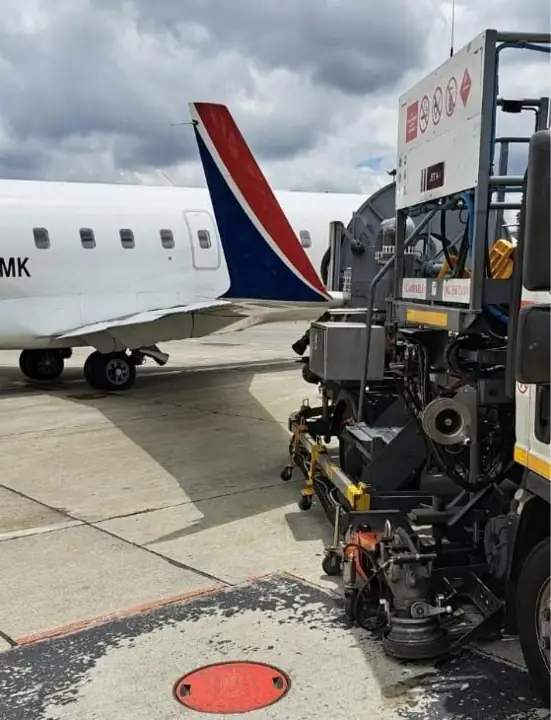
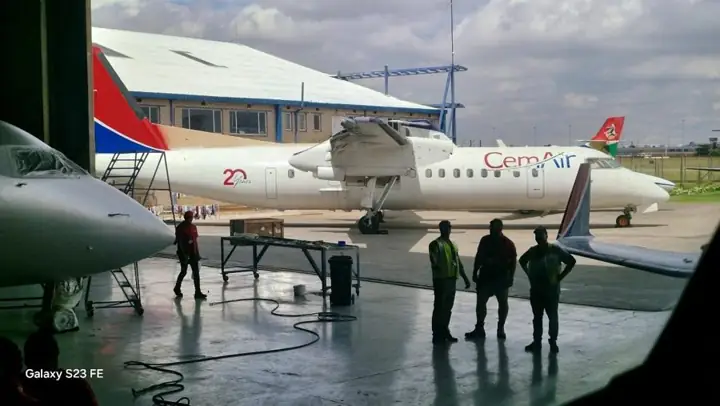
| Airline / operator | United Airlines |
|---|---|
| Aircraft (type, registration) | United Boeing 737-900 (reg not given) |
| Category (my classification) | Human factors / Wing-walker / towing crew |
| What happened | While being towed to a gate (no passengers), the 737-900 hit a catering vendor's box truck, which tipped over; the wing appeared damaged. |
| Injuries | No injuries; truck driver got out. |
| Damage | Wing damage (per video/NBC6) |
| Official investigation | No public investigation report found. |
| Source | NBC 6 South Florida: https://www.nbcmiami.com/news/local/united-plane-hits-flips-box-truck-on-miami-international-airport-tarmac/3502439/ |
 ▶ VIDEO
Still: NBC 6 South Florida (video thumbnail)
| Airline / operator | JetBlue Airways (towed aircraft); Cape Air (struck aircraft) |
|---|---|
| Aircraft (type, registration) | Airbus A321 (unoccupied, under tow); Tecnam P2012 Traveller (N651CA) |
| Category (my classification) | Human factors / Wing-walker / towing crew |
| What happened | A JetBlue tug towing an unoccupied A321 struck the rear of a stationary Cape Air Tecnam P2012, N651CA. |
| Injuries | Two people with minor injuries. |
| Damage | Substantial damage to the Tecnam's elevator and horizontal stabilizer |
| Official investigation | NTSB final report ERA25LA060. Probable cause: the tug crew's inadequate visual lookout. Report / investigator link(s): https://data.ntsb.gov/carol-repgen/api/Aviation/ReportMain/GenerateFinalReport/195551/pdf |
| Source | NTSB final report: https://data.ntsb.gov/carol-repgen/api/Aviation/ReportMain/GenerateFinalReport/195551/pdf Further sources listed on that page / found: https://www.cbsnews.com/boston/news/cape-air-plane-struck-tug-vehicle-logan-airport/ |
| Airline / operator | Swiss International Air Lines |
|---|---|
| Aircraft (type, registration) | Swiss International Air Lines Airbus A220-300 (HB-JCH) |
| Category (my classification) | Human factors / Wing-walker / towing crew |
| What happened | Swiss International Air Lines flight LX790, an Airbus A220-300, sustained substantial damage after being struck by a tow truck at Brussel-Zaventem Airport (BRU). After landing on runway 25L and vacating the runway, the airplane encountered slippery conditions on taxiway E1. Both engines were shut down and the crew requested to be towed to its parking stand. A noselift truck came to tow the aircraft to his stand 410. While making the turn on strip 0, the noselift truck started to slip and eventually slipped underneath the aircraft damaging the underside of the fuselage and an antenna of the aircraft. METAR: EBBR 210620Z 22010KT CAVOK 01/M02 Q1004 NOSIG EBBR 210720Z 23009KT CAVOK 01/M03 Q1003 NOSIG EBBR 210820Z 22010KT 9999 FEW030 00/M03 Q1002 NOSIG |
| Injuries | ASN lists 0 fatalities. No injury statement in the ASN narrative. |
| Damage | Substantial, repaired |
| Official investigation | Investigating agency: AAIU Belgium Report number: Status: Preliminary report Duration: Preliminary report Report / investigator link(s): https://mobilit.belgium.be/sites/default/files/documents/publications/2025/AAIU-2024-11-21-01-progress_0.pdf |
| Source | Aviation Safety Network (ASN) entry: https://aviation-safety.net/wikibase/476913 Further sources listed on that page / found: https://mobilit.belgium.be/sites/default/files/documents/publications/2025/AAIU-2024-11-21-01-progress_0.pdf |
| Airline / operator | Silk Way West Airlines |
|---|---|
| Aircraft (type, registration) | Silk Way West Airlines Boeing 747-8F (VQ-BWY) |
| Category (my classification) | Human factors / Wing-walker / towing crew |
| What happened | Silk Way West Airlines flight 7L8119, a Boeing 747-8F, was parked at position N23 at Ben Gurion Airport. The flight crew was making final preparations for departure. The aircraft's Auxiliary Power Unit (APU) was inoperative, so the crew planned to start one engine at the parking position using external power (ground power) and an external air compressor (ASU), and then to push back to the engine start position to start the remaining engines. The ground crew requested to tow the aircraft slightly forward to remove the chocks from the rear wheels as preparation for starting the engine at the position. The ramp controller decided that to tow the aircraft, it was necessary to disconnect the external power. The power was disconnected, the tow truck connected and pulled the aircraft slightly forward. The chocks were released from the grip of the wheels, and were removed, the tow truck disconnected from the aircraft, and the external power was reconnected. At this point, due to a descending slope at the position, the aircraft began to roll backwards uncontrollably for about 70 meters, pulling out two air hoses and external power cables that were connected to it. The ground crew ran with the chocks and threw them under the front wheels, but the aircraft jumped over them and continued to roll backwards. The aircraft reached the lowest point in the area, and on an ascending slope, stopped and even began to roll slightly forward until it completely stopped not far from another DHL cargo aircraft parked behind it. |
| Injuries | ASN lists 0 fatalities. No injury statement in the ASN narrative. |
| Damage | None |
| Official investigation | Investigating agency: AIAI Report number: 22-24 Status: Investigation completed Duration: Final report |
| Source | Aviation Safety Network (ASN) entry: https://aviation-safety.net/wikibase/484143 |
| Airline / operator | Cebu Pacific |
|---|---|
| Aircraft (type, registration) | Airbus A321neo (RP-C4126) |
| Category (my classification) | Human factors / Wing-walker / towing crew |
| What happened | While being repositioned by tug from Gate 110 to Gate 122, the A321neo's left main gear rolled off the pavement. |
| Injuries | Not stated in the source. |
| Damage | Not stated in the source. |
| Official investigation | No public investigation found. |
| Source | JACDEC on X: https://x.com/JacdecNew/status/1811650771768730046 |
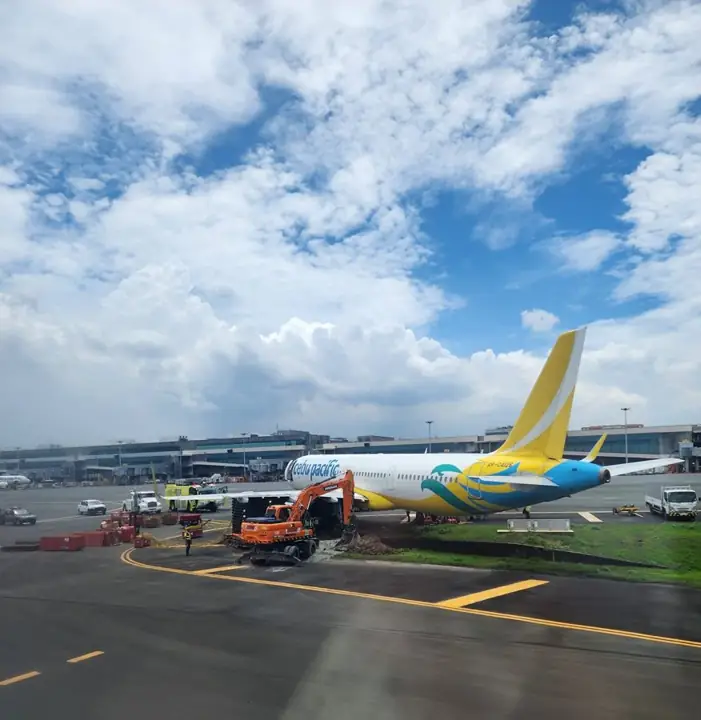
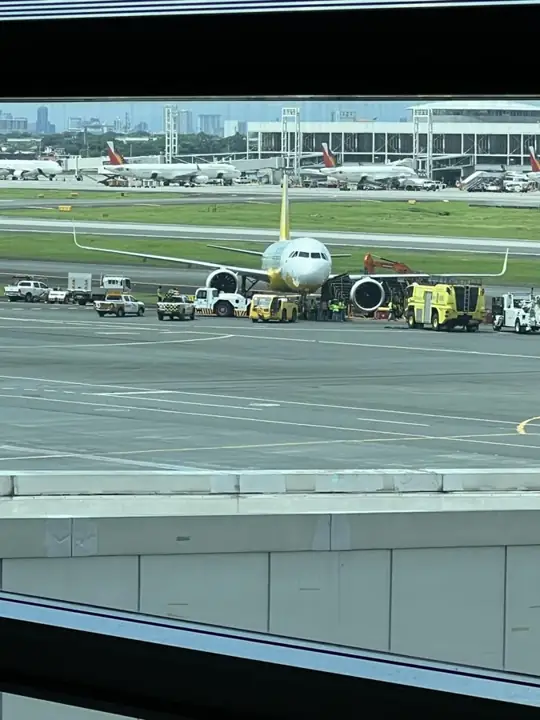
| Airline / operator | British Airways |
|---|---|
| Aircraft (type, registration) | British Airways Airbus A320-251N (G-TTNE) |
| Category (my classification) | Human factors / Wing-walker / towing crew |
| What happened | Air bridge contacted fuselage and L1 door, causing structural damage to the airframe. Aircraft towed to maintenance centre at London-Heathrow for repairs in the evening. On 13-Dec-2024, after more than 5 months on the ground, it was flown to Glasgow, for further repairs and/or maintenance by BA Maintenance Glasgow. On 18-Jan-2025, it returned back back to service as SHT1480 GLA- LGW, total downtime 201 days. |
| Injuries | ASN lists 0 fatalities. No injury statement in the ASN narrative. |
| Damage | Not stated |
| Official investigation | No investigation details on the ASN entry. |
| Source | Aviation Safety Network (ASN) entry: https://aviation-safety.net/wikibase/468968 Further sources listed on that page / found: https://www.airliners.net/forum/viewtopic.php?f=3&t=1496859 https://www.pprune.org/accidents-close-calls/662809-ba-320n-g-ttne-out-action-5-months-now.html#post11789918 |
| Airline / operator | LOT Polskie Linie Lotnicze |
|---|---|
| Aircraft (type, registration) | LOT Polskie Linie Lotnicze Boeing 787-8 Dreamliner (SP-LRC) |
| Category (my classification) | Human factors / Wing-walker / towing crew |
| What happened | A LOT Polish Airlines Boeing 787 was being towed to the gate when the left engine nacelle struck the passenger jetway. |
| Injuries | ASN lists 0 fatalities. No injury statement in the ASN narrative. |
| Damage | Not stated |
| Official investigation | No investigation details on the ASN entry. |
| Source | Aviation Safety Network (ASN) entry: https://aviation-safety.net/wikibase/390208 Further sources listed on that page / found: https://tvn24.pl/tvnwarszawa/wlochy/kolizja-dreamlinera-z-pomostem-pasazerskim-na-lotnisku-chopina-st7982050 |
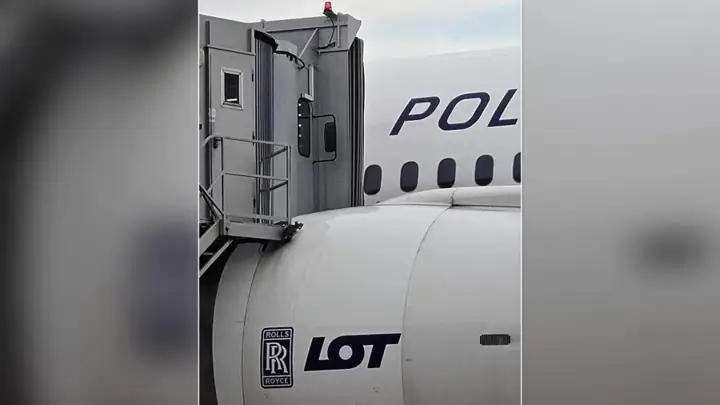
| Airline / operator | Austrian Airlines |
|---|---|
| Aircraft (type, registration) | Austrian Airlines Airbus A320-271N (OE-LZQ) |
| Category (my classification) | Human factors / Wing-walker / towing crew |
| What happened | The A320neo had arrived as flight OS456 from London-Heathrow and was being moved to an outer parking stand, with no passengers or crew on board. According to the Austrian ministry, quoted by ORF, after it was released from the tug the aircraft rolled on a slope and struck a light mast and a passenger boarding bridge. ASN reports that the brakes had not been applied and no wheel chocks had been placed. Photos show heavy damage to the right-hand horizontal stabilizer. |
| Injuries | None (no one on board) |
| Damage | Substantial, repaired (ASN) |
| Official investigation | No public investigation report found. |
| Source | Aviation Safety Network (ASN) entry: https://aviation-safety.net/wikibase/386391 Further sources listed on that page / found: https://noe.orf.at/stories/3252347/ https://simpleflying.com/austrian-airlines-airbus-a320neo-stabilizer-damage-jet-bridge-vienna-airport/ |
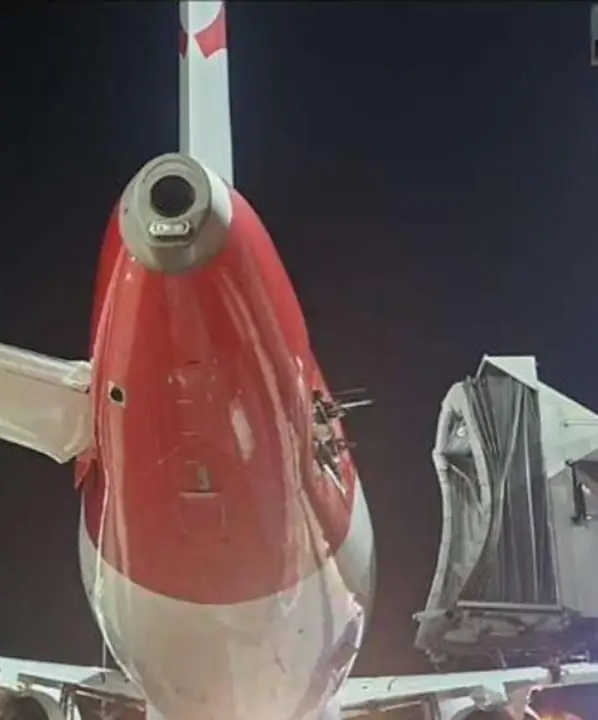
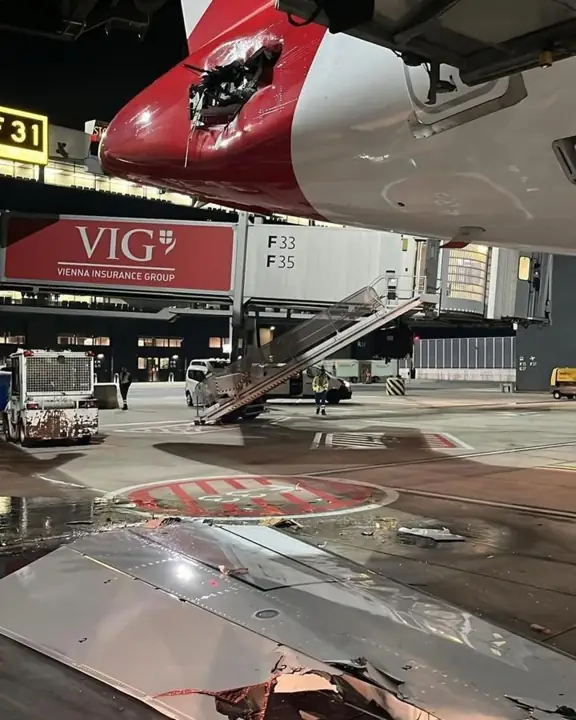
| Airline / operator | Sunwing Airlines, opb Smartwings |
|---|---|
| Aircraft (type, registration) | Sunwing Airlines, opb Smartwings Boeing 737-86N (WL) (OK-TST) |
| Category (my classification) | Human factors / Wing-walker / towing crew |
| What happened | Sunwing flight SWG2466, a Boeing 737-800 operated by Smartwings, was being prepared for a flight at Ottawa/Macdonald- Cartier International Airport (CYOW), ON, at the area of gate 40. After conclusion of the water service, as the water cart was being towed away, it made contact with the aircraft causing damage to the cargo door. The aircraft was repaired and resumed service on 24 March 2024. |
| Injuries | ASN lists 0 fatalities. No injury statement in the ASN narrative. |
| Damage | Substantial, repaired |
| Time out of service | OK-TST: 24 days (ASN) |
| Official investigation | No investigation details on the ASN entry. Report / investigator link(s): https://uzpln.cz/pdf/20240422124016.pdf |
| Source | Aviation Safety Network (ASN) entry: https://aviation-safety.net/wikibase/364612 Further sources listed on that page / found: https://uzpln.cz/pdf/20240422124016.pdf |
| Airline / operator | SkyUp Airlines |
|---|---|
| Aircraft (type, registration) | SkyUp Airlines Boeing 737-8BK (WL) (UR-SQP) |
| Category (my classification) | Human factors / Wing-walker / towing crew |
| What happened | The SkyUp Boeing 737-800 was being towed at Malta Airport when it collided with another aircraft located in the adjacent parking lot. As a result of the collision the front edge of the lower part of the right winglet (ventral strake) was damaged, and its rear edge was torn (separated). |
| Injuries | ASN lists 0 fatalities. No injury statement in the ASN narrative. |
| Damage | Minor |
| Official investigation | No investigation details on the ASN entry. Report / investigator link(s): https://nbaai.gov.ua/wp-content/uploads/2024/03/02_feb_24.pdf |
| Source | Aviation Safety Network (ASN) entry: https://aviation-safety.net/wikibase/360312 Further sources listed on that page / found: https://nbaai.gov.ua/wp-content/uploads/2024/03/02_feb_24.pdf |
| Airline / operator | Silver Airways |
|---|---|
| Aircraft (type, registration) | ATR 72 (N702SV); ATR 72 (N708SV) |
| Category (my classification) | Human factors / Wing-walker / towing crew |
| What happened | ATR 72 N702SV, under tow with no passengers on board, contacted the tail of N708SV west of Terminal 3. |
| Injuries | Not stated in the source. |
| Damage | Minor damage |
| Official investigation | No public investigation found. |
| Source | JACDEC on X (video): https://x.com/JacdecNew/status/1743373164170690674 |
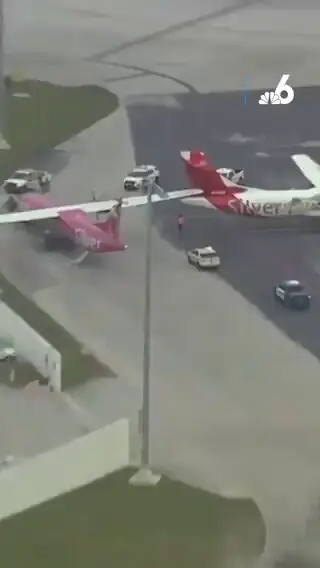 ▶ VIDEO
Still: X video preview frame, @JacdecNew on X
| Airline / operator | Corsair |
|---|---|
| Aircraft (type, registration) | Corsair Airbus A330-343E (F-HROK) |
| Category (my classification) | Human factors / Wing-walker / towing crew |
| What happened | A Corsair Airbus A330-343E, intended to perform flight CRL894 to Felix Houphouet Boigny Airport (ABJ/DIAP), Abidjan, Ivory Coast, hit a mobile aircraft stairs with the left engine nacelle when being towed at Paris-Orly Airport (ORY/LFPO). The empty aircraft received minor damage and the flight was cancelled. Ex VQ-BEL, F-WWYR (reserved as EC-ODR for Wamos Air) |
| Injuries | ASN lists 0 fatalities. No injury statement in the ASN narrative. |
| Damage | Not stated |
| Official investigation | No investigation details on the ASN entry. |
| Source | Aviation Safety Network (ASN) entry: https://aviation-safety.net/wikibase/347555 Further sources listed on that page / found: https://www.lindependant.fr/2023/11/03/un-airbus-a330-percute-une-passerelle-pour-passager-a-laeroport-de-p… https://cdn.jetphotos.com/full/6/903793_1690475204.jpg https://t.co/MkOEgFCIJx https://t.co/wuIJ9VowVz |
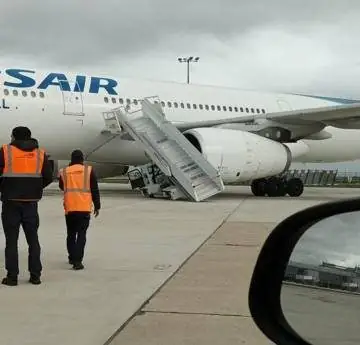
| Airline / operator | Aeromexico |
|---|---|
| Aircraft (type, registration) | Aeromexico Boeing 737-852 (WL) (XA-AMV) |
| Category (my classification) | Human factors / Wing-walker / towing crew |
| What happened | An Aeroméxico Boeing 737-800 with registration XA-AMV, suffered a mishap while being towed at Seattle International Airport. In a video circulating on social networks, it can be seen that the tug tried to make an abrupt left turn, when it skidded and ended up hitting the fuselage of the aircraft. The aircraft had arrived as flight AM494 before the accident. The passengers had already disembarked and the jet was being taken to a secure area to park for the night. |
| Injuries | ASN lists 0 fatalities. No injury statement in the ASN narrative. |
| Damage | Not stated |
| Official investigation | No investigation details on the ASN entry. |
| Source | Aviation Safety Network (ASN) entry: https://aviation-safety.net/wikibase/343337 Further sources listed on that page / found: https://www.facebook.com/photo.php?fbid=678208187678475&set=p.678208187678475&type=3 https://www.kilgorenewsherald.com/tow-truck-crashes-into-passenger-plane-at-seattle-airport/video_edd0b040-… https://t.co/VLC50JNExs https://t.co/7fbeo15tLu https://t.co/1kedh5JuH8 |

 ▶ VIDEO
Still: X video preview frame, @fl360aero on X
| Airline / operator | Air Greenland |
|---|---|
| Aircraft (type, registration) | Air Greenland Airbus A330-841 (OY-GKN) |
| Category (my classification) | Human factors / Wing-walker / towing crew |
| What happened | An Air Greenland Airbus A330-841, OY-GKN, was damaged after it contacted a parked SAS aircraft while being towed at Copenhagen Airport in Denmark. |
| Injuries | ASN lists 0 fatalities. No injury statement in the ASN narrative. |
| Damage | Not stated |
| Official investigation | No investigation details on the ASN entry. |
| Source | Aviation Safety Network (ASN) entry: https://aviation-safety.net/wikibase/313804 Further sources listed on that page / found: https://www.aerotelegraph.com/air-greenlands-airbus-a330-neo-nach-kollision-am-boden |
| Airline / operator | EVA Air |
|---|---|
| Aircraft (type, registration) | EVA Air Boeing 777-35EER (B-16740); EVA Air Airbus A321-211 (B- 16227) |
| Category (my classification) | Human factors / Wing-walker / towing crew |
| What happened | Eva Air flight BR386, an Airbus A321-211 (B-16227), was being towed after landing when the right wing struck a parked Eva Air Boeing 777-35E (B-16740) at Taiwan Taoyuan International Airport (TPE/RCTP), Taiwan. There were no injuries. Evergreen Aviation attributed the accident to the driver’s "careless operation" and he was suspended as a result. B-16740 resumed service on 21 August 2023 and B-16227 resumed service on 25 May 2023. |
| Injuries | ASN lists 0 fatalities. There were no injuries. |
| Damage | Substantial, repaired |
| Time out of service | B-16740: 127 days (ASN) B-16227: 39 days (ASN) |
| Official investigation | No investigation details on the ASN entry. |
| Source | Aviation Safety Network (ASN) entry: https://aviation-safety.net/wikibase/311094 Further sources listed on that page / found: https://airlive.net/emergency/2023/04/17/the-wing-tip-of-an-eva-air-a321-aircraft-collided-with-a-parked-bo… https://flightaware.com/live/flight/B16227/history/20230416/1110Z/VVNB/RCTP https://cdn.jetphotos.com/full/5/57403_1600013632.jpg |
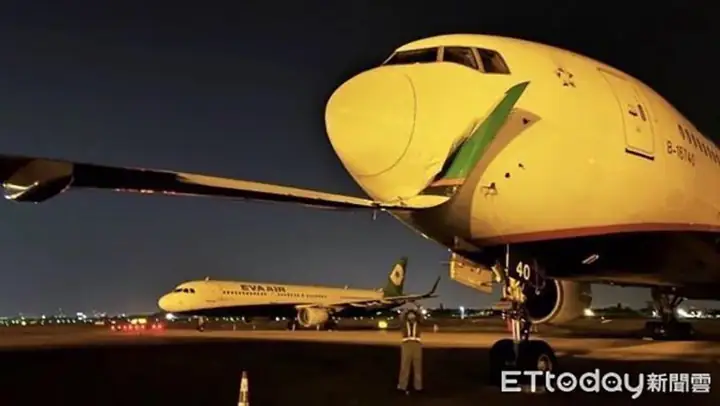
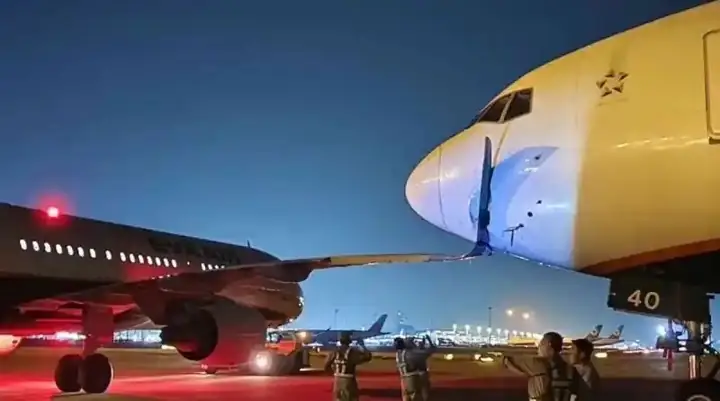
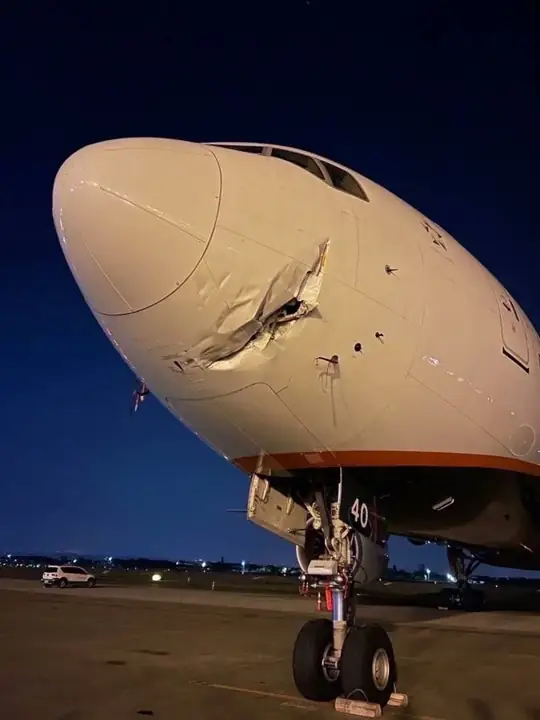
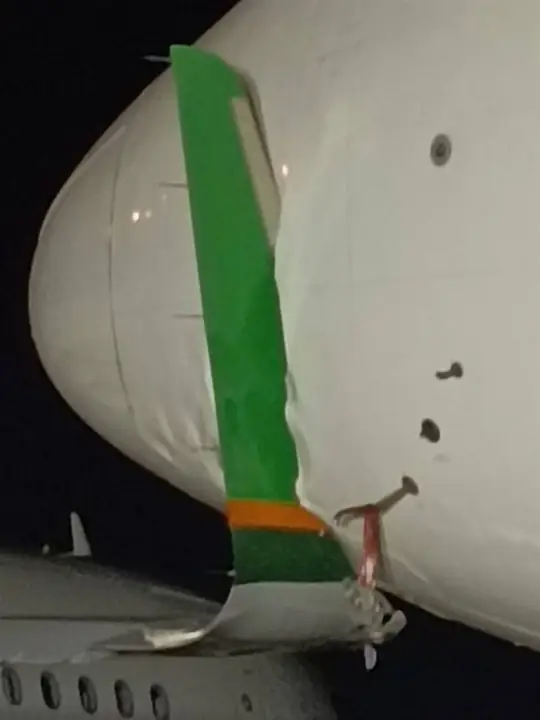
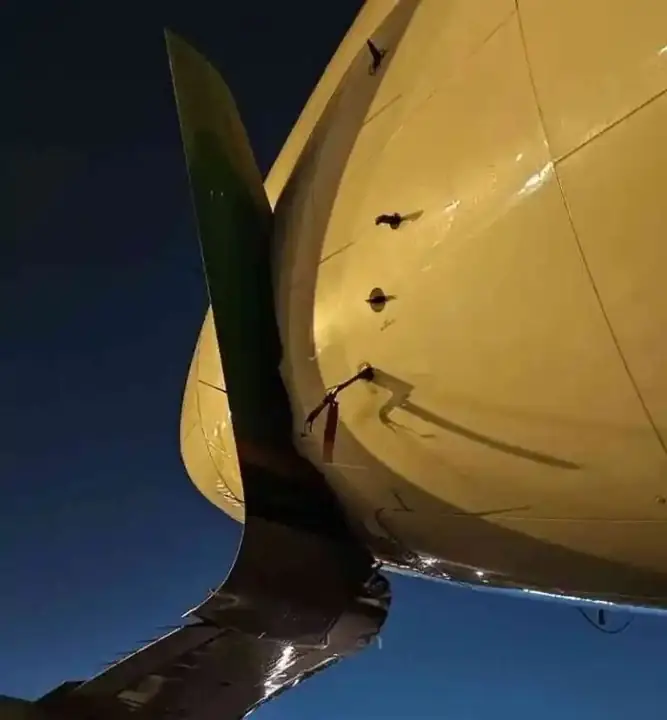
| Airline / operator | South African Air Force - SAAF |
|---|---|
| Aircraft (type, registration) | South African Air Force - SAAF Boeing 737-7ED(BBJ) (ZS-RSA) |
| Category (my classification) | Human factors / Wing-walker / towing crew |
| What happened | While being towed at Cape Town International Airport (CPT/FACT), the Boeing 737-ED(BBJ) hit a structure resulting in damage to its wing. There were no personal injuries. |
| Injuries | ASN lists 0 fatalities. There were no personal injuries. |
| Damage | Not stated |
| Official investigation | No investigation details on the ASN entry. |
| Source | Aviation Safety Network (ASN) entry: https://aviation-safety.net/wikibase/308168 Further sources listed on that page / found: https://www.iol.co.za/weekend-argus/news/its-grounded-ramaphosas-plane-damaged-after-tail-collided-with-avi… https://cdn.jetphotos.com/full/5/31040_1659125090.jpg |
| Flag | Non-airline (military / government / private / special- mission) operator: shows the risk type, not a direct WheelTug airline market case. |
| Airline / operator | Condor Flugdienst |
|---|---|
| Aircraft (type, registration) | Condor Flugdienst Airbus A330-941N (D-ANRA) |
| Category (my classification) | Human factors / Wing-walker / towing crew |
| What happened | An Airbus A330-941N operated by Condor struck a hangar while being towed at the Airbus factory. The aircraft appears to have sustained minor damage to the wing. |
| Injuries | ASN lists 0 fatalities. No injury statement in the ASN narrative. |
| Damage | Not stated |
| Official investigation | No investigation details on the ASN entry. |
| Source | Aviation Safety Network (ASN) entry: https://aviation-safety.net/wikibase/302677 Further sources listed on that page / found: https://simpleflying.com/collision-condors-first-airbus-a330neo-hits-a-building/ https://t.co/pxoLetMF9V |
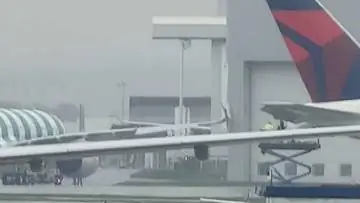
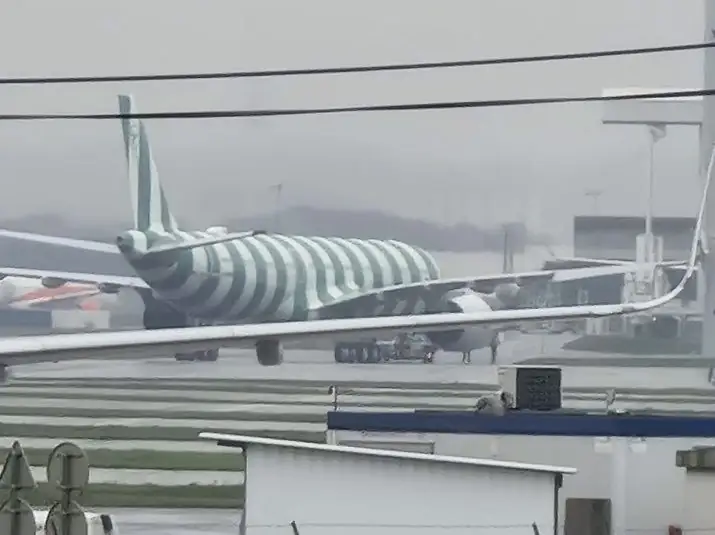
| Airline / operator | South African Airways / FlySafair |
|---|---|
| Aircraft (type, registration) | South African Airways Airbus A320-232 (ZS-SZJ), under tow; FlySafair Boeing 737-8BG (WL) (ZS-SJH) |
| Category (my classification) | Human factors / Wing-walker / towing crew |
| What happened | A South African Airways Airbus A320 (ZS-SZJ) being towed at O.R. Tambo International Airport, Johannesburg, struck a FlySafair Boeing 737 (ZS-SJH). |
| Injuries | ASN lists 0 fatalities. No injury statement in the ASN narrative. |
| Damage | Not stated |
| Official investigation | No investigation details on the ASN entry. |
| Source | Aviation Safety Network (ASN) entry: https://aviation-safety.net/wikibase/301059 Further sources listed on that page / found: https://www.timeslive.co.za/news/south-africa/2022-11-13-towed-saa-plane-collides-into-stationary-flysafair… |
| Note | ASN logged one entry per aircraft (301058, 301059); merged here. |
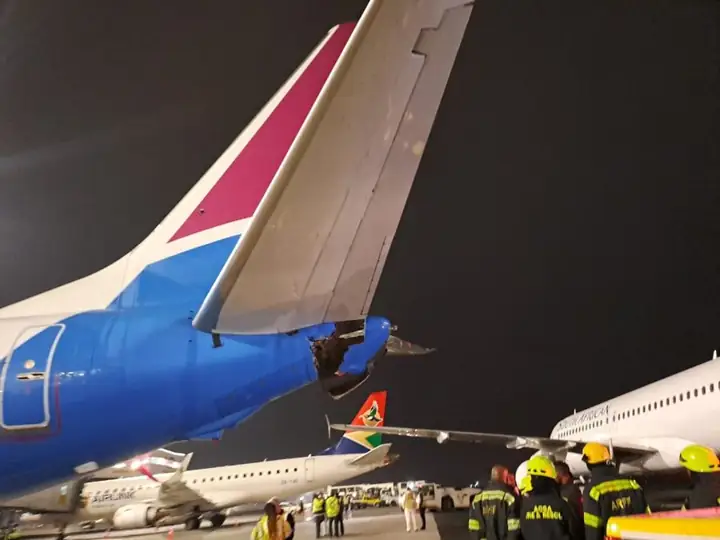
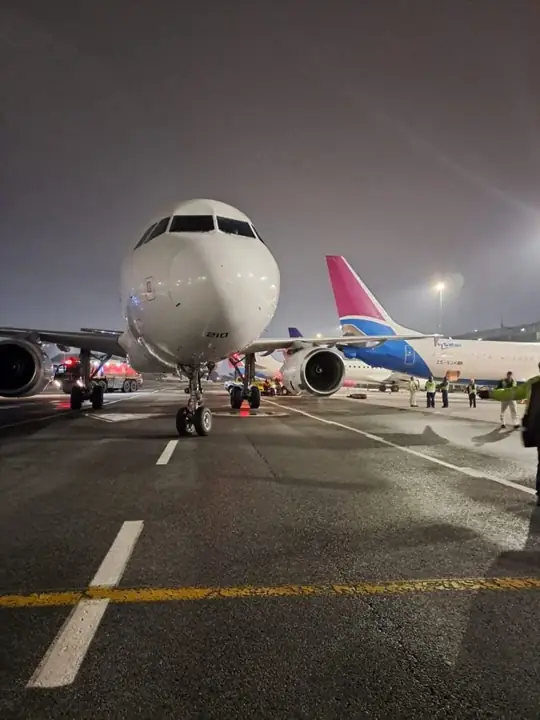
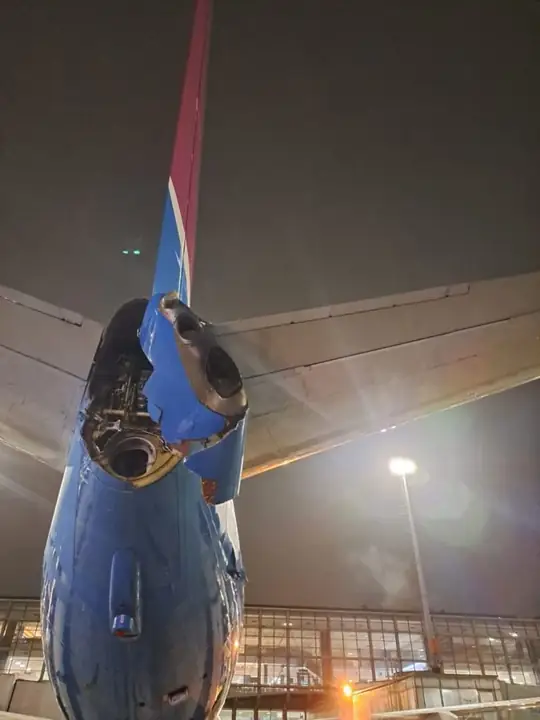
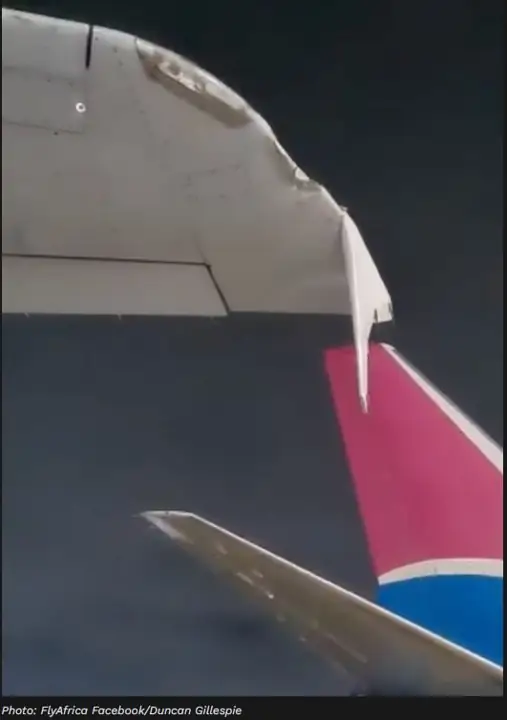
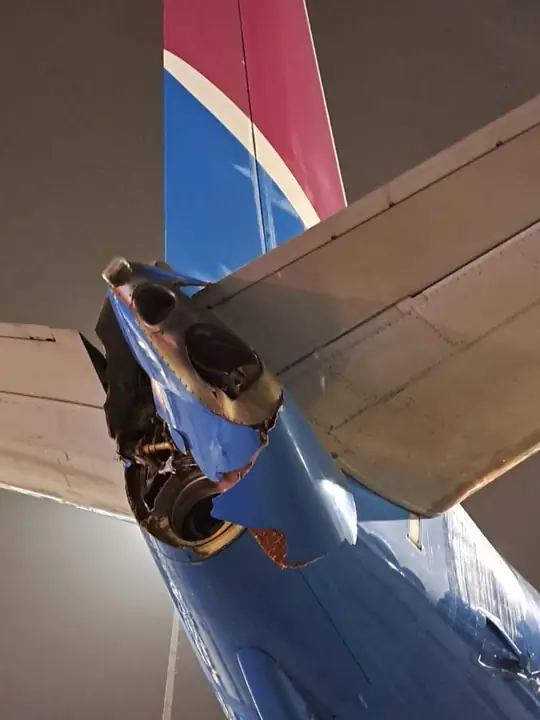
| Airline / operator | American Airlines |
|---|---|
| Aircraft (type, registration) | American Airlines Boeing 737-823 (WL) (N949NN) |
| Category (my classification) | Human factors / Wing-walker / towing crew |
| What happened | An American Airlines Boeing 737-823, N949NN, was being towed at New York-La Guardia Airport, NY (LGA) when the tow truck jackknifed. The aircraft turned right and the tow truck became wedged under the centre fuselage of the 737. |
| Injuries | ASN lists 0 fatalities. No injury statement in the ASN narrative. |
| Damage | Not stated |
| Official investigation | No investigation details on the ASN entry. |
| Source | Aviation Safety Network (ASN) entry: https://aviation-safety.net/wikibase/281045 Further sources listed on that page / found: https://t.co/MEBb7o33Ky |
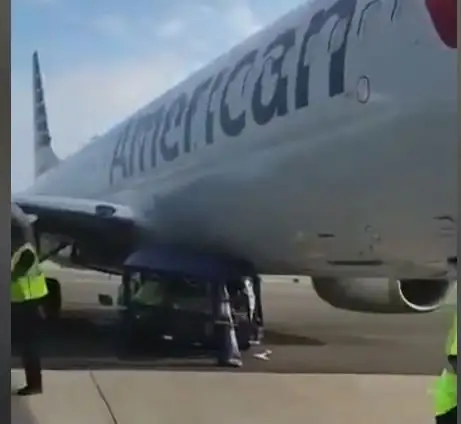
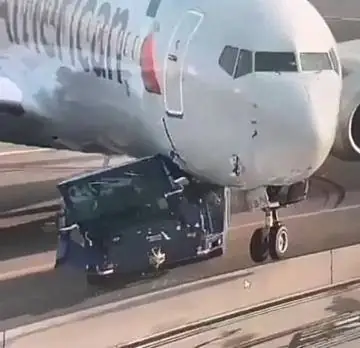 ▶ VIDEO
Still: frame at 36 s from a video as shared with WheelTug. No watermark visible.
 ▶ VIDEO
Still: X video preview frame, @whatisny on X
Video: https://wheeltug-collisions.netlify.app/videos/GC-0275_3.mp4
Video and still: Supplied by WheelTug.
Video: https://wheeltug-collisions.netlify.app/videos/GC-0275_4.mp4
Original: https://www.youtube.com/watch?v=gDOUn554DUI
Video and still: Supplied by WheelTug; original: YouTube.
Video: https://wheeltug-collisions.netlify.app/videos/GC-0275_5.mp4
Video and still: Supplied by WheelTug.
| Airline / operator | Korean Air |
|---|---|
| Aircraft (type, registration) | Korean Air Boeing 747-8HTF (HL7609) |
| Category (my classification) | Human factors / Wing-walker / towing crew |
| What happened | A Korean Air Boeing 747-8HTF cargo plane was being towed when it broke loose and rolled, impacting a truck and a fence. No reported injuries and the aircraft received minor damage. |
| Injuries | ASN lists 0 fatalities. No reported injuries and the aircraft received minor damage. |
| Damage | Not stated |
| Official investigation | No investigation details on the ASN entry. |
| Source | Aviation Safety Network (ASN) entry: https://aviation-safety.net/wikibase/281024 Further sources listed on that page / found: https://www.alaskasnewssource.com/2022/08/01/fencing-vehicle-damaged-after-cargo-plane-breaks-loose-ted-ste… https://flightaware.com/live/flight/HL7609 https://t.co/XLcrP6dDBt |
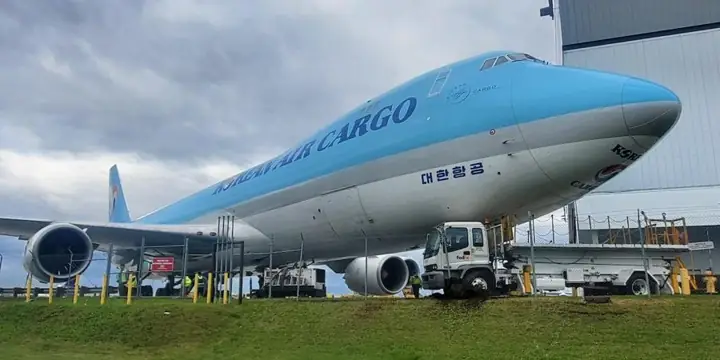
| Airline / operator | Biman Bangladesh Airlines |
|---|---|
| Aircraft (type, registration) | Biman Bangladesh Airlines Boeing 787-8 Dreamliner (S2-AJU); Biman Bangladesh Airlines Boeing 737-83N (WL) (S2-AFL) |
| Category (my classification) | Human factors / Wing-walker / towing crew |
| What happened | A Biman Bangladesh Airlines Boeing 787-8 Dreamliner was damaged in a ground contact incident at Dhaka Airport. The aircraft had arrived from Singapore as flight BG585 at 19:15 local time. After all occupants had disembarked, the aircraft was towed to a maintenance area. In the process, the right-hand wing trailing edge struck the left-hand winglet tip of a parked Biman Boeing 737-800 (S2-AFL). S2-AJU resumed service 2,5 days after the occurrence. |
| Injuries | ASN lists 0 fatalities. No injury statement in the ASN narrative. |
| Damage | Not stated |
| Time out of service | S2-AJU: 2.5 days (ASN) |
| Official investigation | No investigation details on the ASN entry. |
| Source | Aviation Safety Network (ASN) entry: https://aviation-safety.net/wikibase/279977 Further sources listed on that page / found: https://www.dhakatribune.com/bangladesh/2022/07/04/biman-jets-collide-again-at-dhaka-airport-hanger https://www.thedailystar.net/news/bangladesh/accidents-fires/news/2-biman-boeings-damaged-dhaka-airport-aga… https://t.co/pY4DBPWfXl |
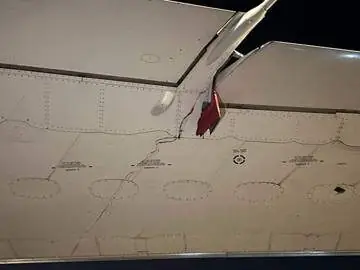
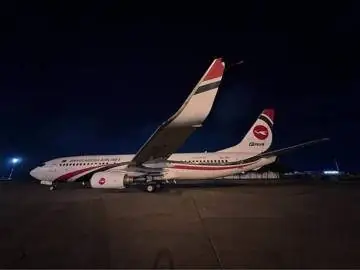
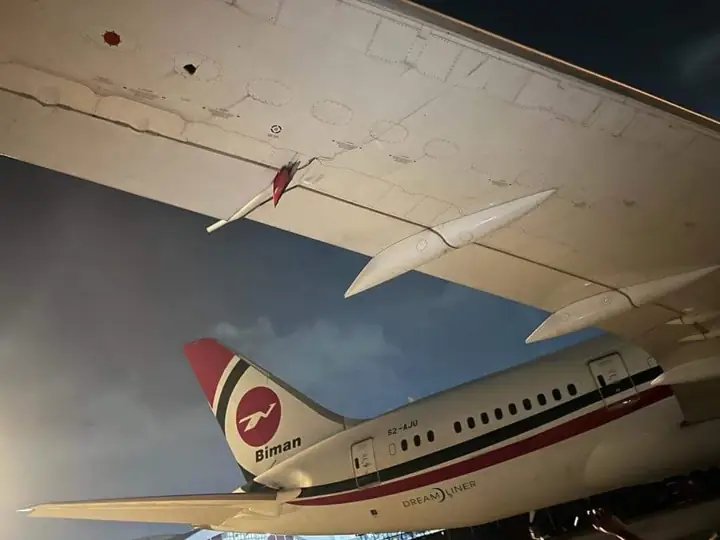
| Airline / operator | Ryanair |
|---|---|
| Aircraft (type, registration) | Ryanair Boeing 737-8AS (WL) (EI-DWI) |
| Category (my classification) | Human factors / Wing-walker / towing crew |
| What happened | A Ryanair Boeing 737 sustained damage to the fuselage after being struck by tug while under tow at Stansted Airport, UK. No injuries reported. |
| Injuries | ASN lists 0 fatalities. No injuries reported. |
| Damage | Not stated |
| Official investigation | No investigation details on the ASN entry. |
| Source | Aviation Safety Network (ASN) entry: https://aviation-safety.net/wikibase/269133 Further sources listed on that page / found: http://www.goklerdeyiz.net/yolcu-ucagina-yer-araci-carpti/ https://www.facebook.com/groups/1060320460719124/posts/4466742193410250/ https://t.co/Lj2GbZHXam |
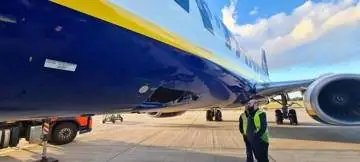
| Airline / operator | KLM Royal Dutch Airlines |
|---|---|
| Aircraft (type, registration) | KLM Royal Dutch Airlines Boeing 747-406M (PH-BFV) |
| Category (my classification) | Human factors / Wing-walker / towing crew |
| What happened | During towing, the Boeing 747-406M collided with KLM Airbus A330-203 PH-AOM. |
| Injuries | ASN lists 0 fatalities. No injury statement in the ASN narrative. |
| Damage | Not stated |
| Official investigation | No investigation details on the ASN entry. |
| Source | Aviation Safety Network (ASN) entry: https://aviation-safety.net/wikibase/244958 Further sources listed on that page / found: https://www.nhnieuws.nl/nieuws/276245/schade-aan-klm-boeing-747-bij-botsing-op-schiphol |
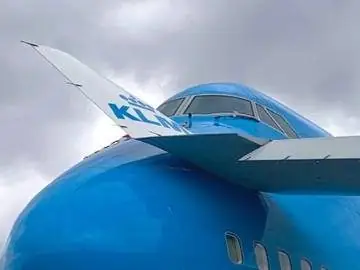
| Airline / operator | LATAM Airlines Chile |
|---|---|
| Aircraft (type, registration) | LATAM Airlines Chile Airbus A320-232 (CC-BAE); LATAM Airlines Chile Airbus A320-214 (CC-BFL) |
| Category (my classification) | Human factors / Wing-walker / towing crew |
| What happened | Two LATAM Chile Airbus A320 aircraft (CC-BAE and CC-BFL) were damaged in a ground contact incident at Santiago International Airport, Chile. CC-BAE was being towed from the maintenance area to parking position 21 when the left-hand the wing tip fence hit the right-hand wing tip of CC-BFL, which was parked at gate 20B. The top half of CC-BAE's wing tip fence broke off. Cause Impact to the left wing of an AIRBUS A320-232 aircraft that was in the process of disembarking passengers at Gate 20B, caused by another aircraft being towed to Gate 21. Both aircraft sustained damage as a result. Contributing Factors 1. The towing monitor recorded the towing of an aircraft to a gate different from the one indicated on the aircraft movement log and from what was communicated via radio. 2. Despite being aware of the restrictions outlined in the risk map for parking positions—which identifies which aircraft types may use specific gates—the towing monitor proceeded to tow an aircraft to a different gate. 3. The towing monitor misjudged the visual references installed on the aircraft disembarking passengers (such as the wingtip signal cone and the hatched area marking the wingtip overlap zone on the right side), and continued the towing maneuver, resulting in a collision with the other aircraft. |
| Injuries | ASN lists 0 fatalities. No injury statement in the ASN narrative. |
| Damage | Minor, repaired |
| Official investigation | Investigating agency: DGAC Chile Report number: 1927JA Status: Investigation completed Duration: Final report Report / investigator link(s): https://www.dgac.gob.cl/wp-content/uploads/2022/06/1927.pdf |
| Source | Aviation Safety Network (ASN) entry: https://aviation-safety.net/wikibase/244493 Further sources listed on that page / found: https://www.dgac.gob.cl/wp-content/uploads/2022/06/1927.pdf http://www.goklerdeyiz.net/iki-ucak-yerde-carpisti-31/ |
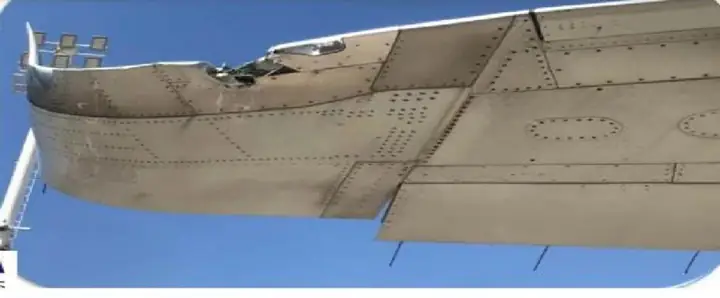
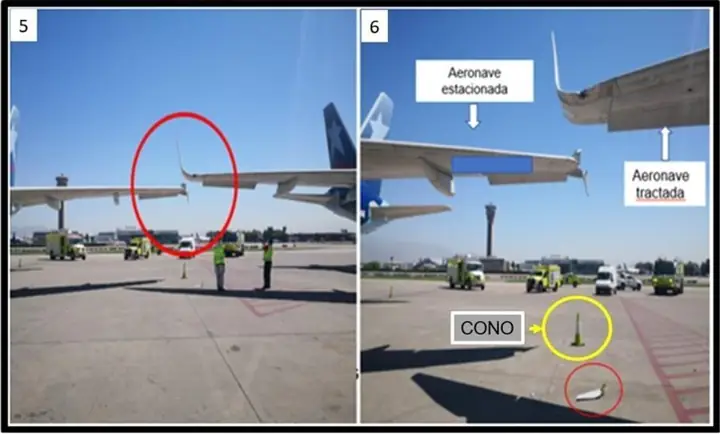
| Airline / operator | French Air Force |
|---|---|
| Aircraft (type, registration) | French Air Force Airbus A330-223 (F-RARF) |
| Category (my classification) | Human factors / Wing-walker / towing crew |
| What happened | The French Presidential Airbus A330 suffered damage to the left- hand winglet when it struck the wall of a hangar during towing. The wingtip of the A330 has punctured a hole in a hangar after the incident. The A332 arrived in Beirut on Monday under the callsign “COTAM 001” which is the ATC designation for any aircraft the President is flying onboard. |
| Injuries | ASN lists 0 fatalities. No injury statement in the ASN narrative. |
| Damage | Not stated |
| Official investigation | No investigation details on the ASN entry. |
| Source | Aviation Safety Network (ASN) entry: https://aviation-safety.net/wikibase/240841 Further sources listed on that page / found: https://www.aerospcworld.com/2020/09/french-presidential-a330-suffered-wing-strike-in-Beirut.html http://www.goklerdeyiz.net/fransa-baskanlik-ucagi-hangara-carpti/ |
| Flag | Non-airline (military / government / private / special- mission) operator: shows the risk type, not a direct WheelTug airline market case. |
| Airline / operator | Hong Kong Express Airways |
|---|---|
| Aircraft (type, registration) | Hong Kong Express Airways Airbus A321-231 (B-LEF) |
| Category (my classification) | Human factors / Wing-walker / towing crew |
| What happened | A Hong Kong Express Airbus A321-231 (B-LEF) that was being towed, struck a parked company A321 (B-LEG) at Hong Kong Chek Lap Kok Airport. Both aircraft suffered minor damage. |
| Injuries | ASN lists 0 fatalities. No injury statement in the ASN narrative. |
| Damage | Not stated |
| Official investigation | No investigation details on the ASN entry. |
| Source | Aviation Safety Network (ASN) entry: https://aviation-safety.net/wikibase/240009 Further sources listed on that page / found: http://www.goklerdeyiz.net/iki-ucak-yerde-carpisti-30/ https://www.dimsumdaily.hk/two-hong-kong-express-planes-collide-with-each-other-on-airport-apron/ |
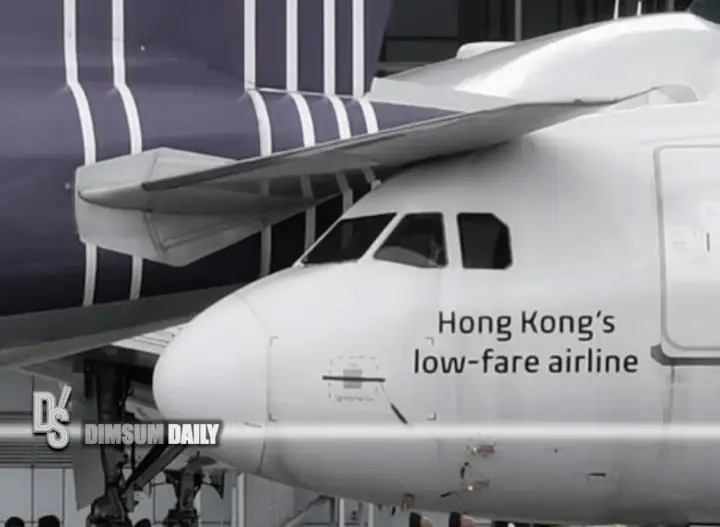
| Airline / operator | Ryanair |
|---|---|
| Aircraft (type, registration) | Ryanair Boeing 737-8AS (WL) (EI-EKY) |
| Category (my classification) | Human factors / Wing-walker / towing crew |
| What happened | A Ryanair Boeing 737-800 (EI-EKY) contacted a parked Boeing 737- 800 aircraft (EI-GRE) as it was being towed at Bucuresti Baneasa Airport in Romania. EI-EKY suffered minor scrape damage to the right-hand winglet. The aircraft had arrived at Baneasa Airport earlier in the day to undergo maintenance. |
| Injuries | ASN lists 0 fatalities. No injury statement in the ASN narrative. |
| Damage | Not stated |
| Official investigation | No investigation details on the ASN entry. |
| Source | Aviation Safety Network (ASN) entry: https://aviation-safety.net/wikibase/238731 Further sources listed on that page / found: http://www.goklerdeyiz.net/iki-ucak-yerde-carpisti-29/ |
| Airline / operator | TUI fly Netherlands |
|---|---|
| Aircraft (type, registration) | TUI fly Netherlands Boeing 787-8 Dreamliner (PH-TFL) |
| Category (my classification) | Human factors / Wing-walker / towing crew |
| What happened | A TUI Boeing 787-8 was being towed to the gate at Amsterdam- Schiphol International Airport when the no.1 engine air intake cowl lip hit a passenger bridge. |
| Injuries | ASN lists 0 fatalities. No injury statement in the ASN narrative. |
| Damage | Not stated |
| Official investigation | No investigation details on the ASN entry. |
| Source | Aviation Safety Network (ASN) entry: https://aviation-safety.net/wikibase/237612 Further sources listed on that page / found: http://www.goklerdeyiz.net/boeing-787-yolcu-koprusune-carpti/ https://t.co/kSrvS3wniL |
| Airline / operator | Aviation Capital Group |
|---|---|
| Aircraft (type, registration) | Aviation Capital Group Airbus A321-211 (VP-CCG) |
| Category (my classification) | Human factors / Wing-walker / towing crew |
| What happened | On May 22 2020 during pushback operation of an airbus A321 Msn 1887 and registration no. VP-CCG in a hangar of a maintenance repair organization (MRO), based at Larnaca Airport the aircraft (A/C), right hand (R/H), elevator tip was damaged against the hangar right hand door. The aircraft (A/C) was under maintenance where the R/H main landing gear (MLG), retraction actuator was replaced and subsequent landing gear retraction checks were necessary. The A/C had to be pushed a few meters backwards in order to allow for clearance from other A/C and equipment in the hangar. For the pushback operation an AIRPORT (A/P), handling company was contacted and their driver came in the MRO’s hangar where he connected the Towing Track to the A/C nose landing gear. An MRO’ supervisor was controlling the push back operation by positioning an engineer in the cockpit and three engineers at the A/C extremities, (one below each wing tip and one below the tail of the A/C). The supervisor was positioned between the tow track and no.1 engine in order to co-ordinate the operation. The L/H hangar door was completely opened and the R/H Hangar was partially opened due to multifunction, but it was decided that there was adequate space for the tail to pass through the hangar doors. |
| Injuries | ASN lists 0 fatalities. No injury statement in the ASN narrative. |
| Damage | Minor |
| Official investigation | Investigating agency: AAIIB Cyprus Report number: Status: Investigation completed Duration: Final report Report / investigator link(s): http://www.aaiib.gov.cy/mcw/DCA/AAIIB/aaiib.nsf/All/AB600447F9C4F8FAC2258721003063CA/$file/FINAL%20REPORT%201%202020%20.pdf |
| Source | Aviation Safety Network (ASN) entry: https://aviation-safety.net/wikibase/514064 Further sources listed on that page / found: http://www.aaiib.gov.cy/mcw/DCA/AAIIB/aaiib.nsf/All/AB600447F9C4F8FAC2258721003063CA/$file/FINAL%20REPORT%2… https://www.jetphotos.com/photo/9652776 |
| Airline / operator | Cathay Pacific Airways |
|---|---|
| Aircraft (type, registration) | Cathay Pacific Airways Boeing 777-367ER (B-KPD); Cathay Pacific Airways Airbus A350-941 (B-LRE) |
| Category (my classification) | Human factors / Wing-walker / towing crew |
| What happened | A Cathay Pacific Airbus A350 contacted a parked Boeing 777-300ER (B-KPD) during towing at Hong Kong Airport. No passengers were on board at the time of the incident. The A350 sustained damage to the right-hand winglet while the B777 sustained damage to the left- hand tip of the horizontal stabilizer. |
| Injuries | ASN lists 0 fatalities. No injury statement in the ASN narrative. |
| Damage | Minor |
| Official investigation | No investigation details on the ASN entry. |
| Source | Aviation Safety Network (ASN) entry: https://aviation-safety.net/wikibase/235114 Further sources listed on that page / found: http://www.goklerdeyiz.net/iki-ucak-yerde-carpisti-25/ https://t.co/YB7snmjGNj |
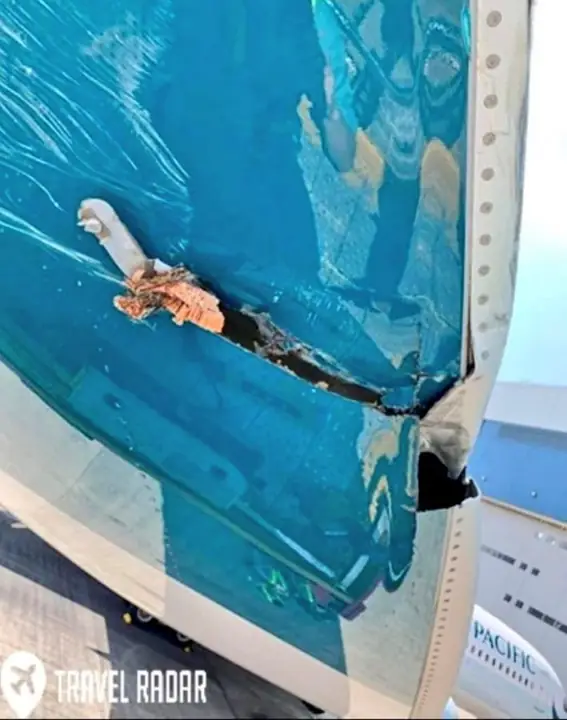
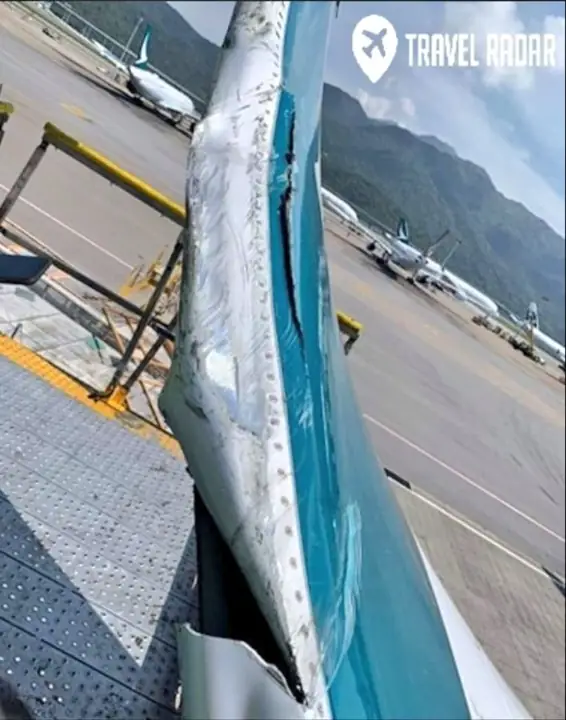
| Airline / operator | Nok Air |
|---|---|
| Aircraft (type, registration) | Nok Air Boeing 737-88L (WL) (HS-DBT) |
| Category (my classification) | Human factors / Wing-walker / towing crew |
| What happened | A Nok Air Boeing 737-88L, that was due to carry out flight DD6458, was being towed to the passenger ramp at Bangkok-Don Muang International Airport (DMK/VTBD) when the towing truck stopped. The aircraft continued and hit the tow truck with the area between the left-hand engine and the fuselage. The tug driver sustained serious injuries and died. Another employee was also injured and rushed to hospital. |
| Injuries | ASN lists 0 fatalities. The tug driver sustained serious injuries and died.; Another employee was also injured and rushed to hospital. |
| Damage | Not stated |
| Official investigation | No investigation details on the ASN entry. |
| Source | Aviation Safety Network (ASN) entry: https://aviation-safety.net/wikibase/232814 Further sources listed on that page / found: https://coconuts.co/bangkok/news/don-mueang-airport-employee-killed-on-runway-by-nok-air-plane/ https://www.bangkokpost.com/thailand/general/1852719/towed-plane-hits-aircraft-tug-killing-driver-at-don-mu… https://cdn.jetphotos.com/full/6/64657_1552009655.jpg |
Video: https://wheeltug-collisions.netlify.app/videos/GC-0183_1.mp4
Original: https://www.youtube.com/watch?v=wFIQTj4MJ9M
Video and still: Supplied by WheelTug; original: TNN16 on YouTube.
| Airline / operator | Air Canada |
|---|---|
| Aircraft (type, registration) | Air Canada Boeing 777-333ER (C-FIUL); Air Canada Airbus A321- 211 (C-GJWO) |
| Category (my classification) | Human factors / Wing-walker / towing crew |
| What happened | While being towed, an Air Canada Boeing 777-300 (C-FIUL) clipped the tail of a parked Air Canada Airbus A321 (C-GJWO) in Toronto on Friday Dec 27. Both aircraft were unoccupied at the time. |
| Injuries | ASN lists 0 fatalities. No injury statement in the ASN narrative. |
| Damage | Not stated |
| Official investigation | No investigation details on the ASN entry. |
| Source | Aviation Safety Network (ASN) entry: https://aviation-safety.net/wikibase/231839 Further sources listed on that page / found: http://www.goklerdeyiz.net/iki-ucak-yerde-carpisti-23/ |
| Airline / operator | El Al Israel Airlines |
|---|---|
| Aircraft (type, registration) | El Al Israel Airlines Boeing 787-9 Dreamliner (4X-EDH) |
| Category (my classification) | Human factors / Wing-walker / towing crew |
| What happened | El Al flight LY22, a Boeing 787-9, contacted a pole while being towed to a parking spot in Las Vegas. The right-hand rear part of the wing tip sustained cracks. |
| Injuries | ASN lists 0 fatalities. No injury statement in the ASN narrative. |
| Damage | Not stated |
| Official investigation | No investigation details on the ASN entry. |
| Source | Aviation Safety Network (ASN) entry: https://aviation-safety.net/wikibase/231390 Further sources listed on that page / found: https://t.co/IqOE9vFVaJ |
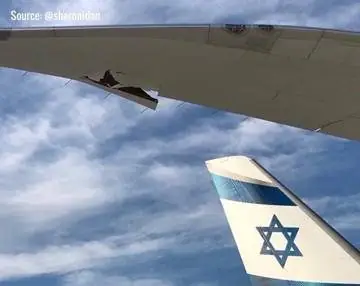
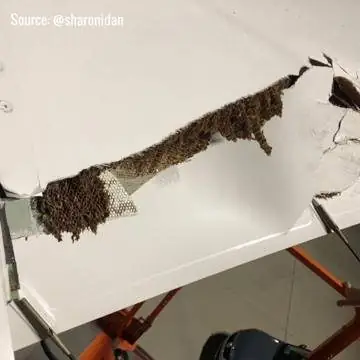
| Airline / operator | Qantas |
|---|---|
| Aircraft (type, registration) | Qantas Airbus A380-842 (VH-OQB) |
| Category (my classification) | Human factors / Wing-walker / towing crew |
| What happened | The aircraft had been undergoing routine maintenance in Hangar 96 at Sydney Airport, Australia and was being pulled out to resume service. At that time an open door struck scaffolding causing the door to be almost ripped off from the hinges. |
| Injuries | ASN lists 0 fatalities. No injury statement in the ASN narrative. |
| Damage | Not stated |
| Official investigation | No investigation details on the ASN entry. |
| Source | Aviation Safety Network (ASN) entry: https://aviation-safety.net/wikibase/230493 Further sources listed on that page / found: https://www.smh.com.au/national/qantas-a380-grounded-after-door-almost-ripped-off-at-sydney-airport-2019110… |
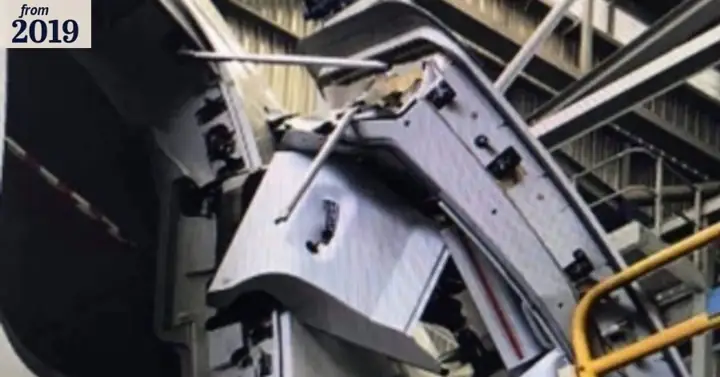
| Airline / operator | Royal Canadian Air Force - RCAF |
|---|---|
| Aircraft (type, registration) | Royal Canadian Air Force - RCAF Airbus CC-150 Polaris (A310-300) (15001) |
| Category (my classification) | Human factors / Wing-walker / towing crew |
| What happened | A CC-150 Polaris was towed from the North ramp at Trenton to 10 hangar. This space is not normally used by the CC-150, and the D- 14 tow tractor normally used is too large for the limited space available inside 10 hangar. Before entering the hangar, the ground crew were required to stop and swap the tow tractor from the bigger D-14 to the smaller D-12. Once the aircraft reached a position in front of 10 hangar, the tow crew stopped the aircraft, set the chocks and the parking brake. During the tow tractor change, while no tractor was attached, the aircraft started moving forward and over the chocks. Attempts to stop the aircraft by the tow crew were unsuccessful. The right engine struck the D-12 tow tractor parked inside the hangar, before the nose contacted the hangar far wall structure, finally stopping the aircraft. The aircraft sustained very serious damage. The investigation could not positively determine the cause for the parking brake not holding the aircraft in position. However, it was found that the chocks used to secure the aircraft were not authorized in the Technical Support Arrangement and not all wheels had chocks at the time of the accident. Brakeman training was found to be informal and lacking emergency procedures and reference to aircraft publications. |
| Injuries | ASN lists 0 fatalities. No injury statement in the ASN narrative. |
| Damage | Substantial, repaired |
| Official investigation | No investigation details on the ASN entry. |
| Source | Aviation Safety Network (ASN) entry: https://aviation-safety.net/wikibase/319315 Further sources listed on that page / found: http://www.rcaf-arc.forces.gc.ca/en/flight-safety/article-template-flight-safety.page?doc=cc15001-airbus-ep… |
| Flag | Business jet / non-airliner: shows the risk type, not a direct WheelTug market case. |
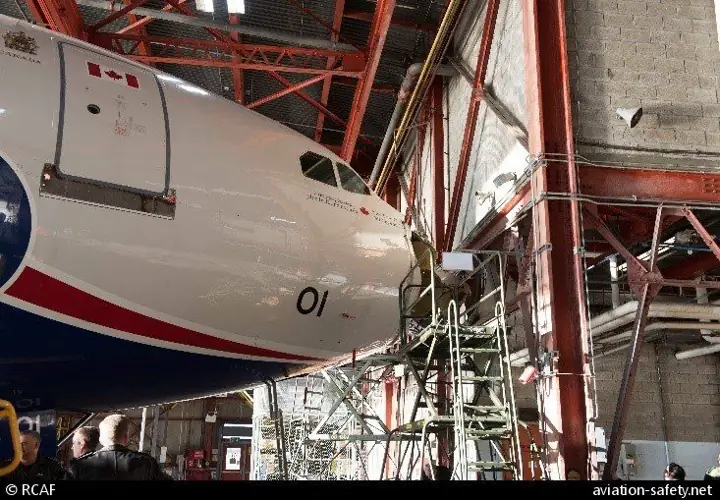
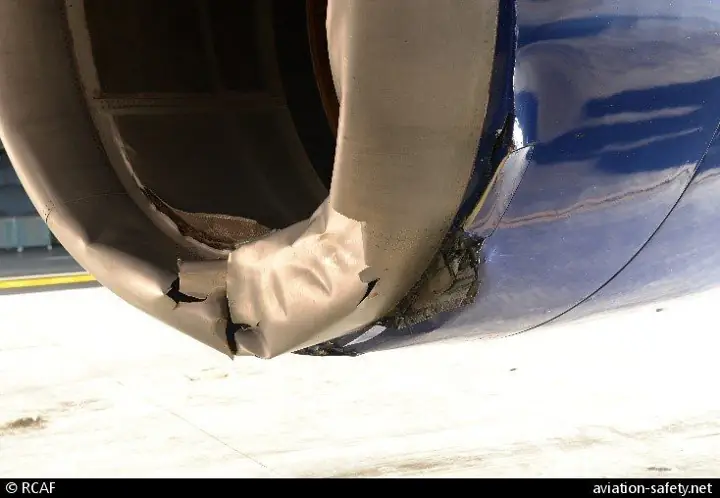
| Airline / operator | Royal Flight / Aeroflot |
|---|---|
| Aircraft (type, registration) | Royal Flight Boeing 777-31HER (VP-BGK); Aeroflot Airbus A330-343 (VQ-BMY) |
| Category (my classification) | Human factors / Wing-walker / towing crew |
| What happened | An Aeroflot Airbus A330-343 (VQ-BMY) and a Royal Flight Boeing 777 (VP-BGK) sustained minor damage in a ground contact incident at Moscow's Sheremetyevo Airport. As the Royal Flight plane was being towed, the right-hand wing clipped the left-hand wing of the Aeroflot plane. |
| Injuries | ASN lists 0 fatalities. No injury statement in the ASN narrative. |
| Damage | Not stated |
| Official investigation | No investigation details on the ASN entry. |
| Source | Aviation Safety Network (ASN) entry: https://aviation-safety.net/wikibase/228714 Further sources listed on that page / found: http://www.goklerdeyiz.net/iki-ucak-yerde-carpisti-22/ https://www.newsru.com/russia/03sep2019/aeroflot.html https://t.co/UmukR3RZJF https://t.co/Hrgvb2y4tk https://sputniknews.com/russia/201909031076713839-two-planes-collide-at-moscows-sheremetyevo-airport-during… |
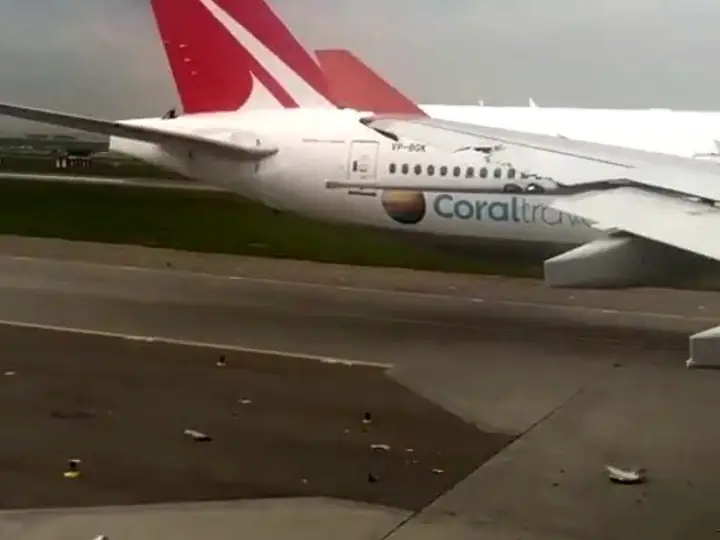
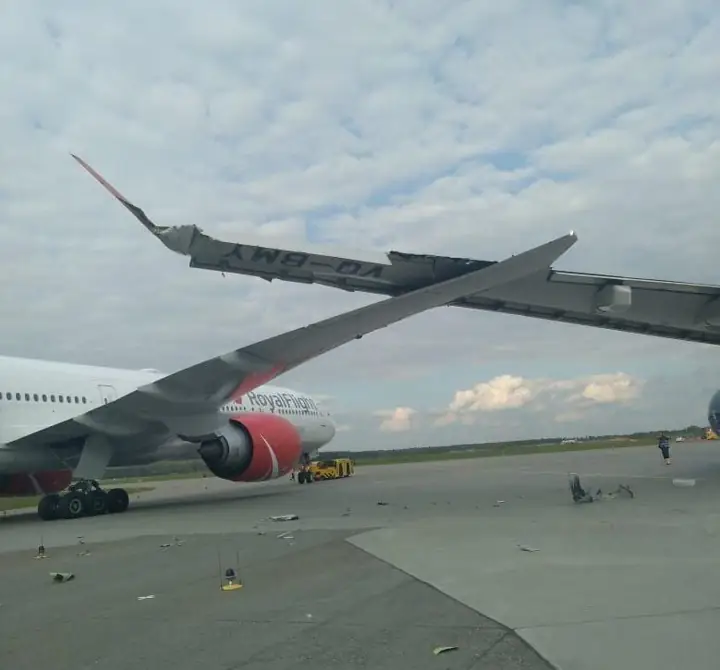
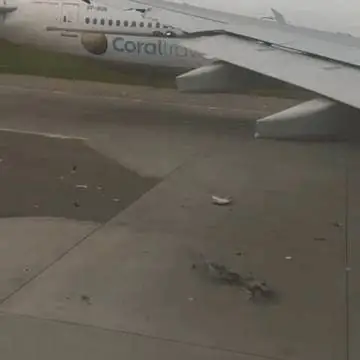 ▶ VIDEO
Still: X video preview frame, @rianru on X
| Airline / operator | Air India |
|---|---|
| Aircraft (type, registration) | Air India Airbus A321 (VT-PPB), under tow; Air India Boeing 777 (VT- ALN), parked |
| Category (my classification) | Human factors / Wing-walker / towing crew |
| What happened | Early in the morning, the A321 was being towed from the ramp area to the NEC hangar. Its rudder struck the right wingtip of the Boeing 777, which was parked outside the hangar. The A321's rudder and the 777's wingtip navigation light were damaged. |
| Injuries | None reported. |
| Damage | A321 rudder and 777 wingtip navigation light damaged |
| Official investigation | No public investigation report found. |
| Source | The Times of India: https://timesofindia.indiatimes.com/business/india-business/air-india-plane-being-towed-to-hangar-hits-parked-ai-boeing-777-at-mumbai-airport/articleshow/70246660.cms |
| Airline / operator | AirBridgeCargo Airlines |
|---|---|
| Aircraft (type, registration) | AirBridgeCargo Airlines Boeing 747-8HVF (VQ-BRH) |
| Category (my classification) | Human factors / Wing-walker / towing crew |
| What happened | During towing, the right-hand wing tip of the Boeing 747-8HVF cargo plane contacted a light pole. The aircraft was back in service 15 hours later. |
| Injuries | ASN lists 0 fatalities. No injury statement in the ASN narrative. |
| Damage | Not stated |
| Time out of service | VQ-BRH: 15 hours (ASN) |
| Official investigation | No investigation details on the ASN entry. |
| Source | Aviation Safety Network (ASN) entry: https://aviation-safety.net/wikibase/222911 Further sources listed on that page / found: https://tvzvezda.ru/news/vstrane_i_mire/content/201903131336-zp0e.htm https://t.co/jgAaFyeUrY https://t.co/CkmwWsqtoB |
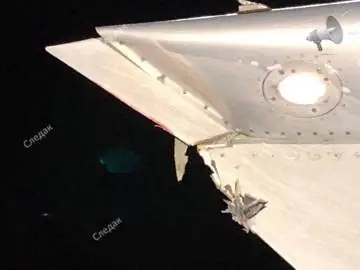
| Airline / operator | Air Mauritius / Air France |
|---|---|
| Aircraft (type, registration) | Air Mauritius Airbus A350-941 (3B-NBQ); Air France Boeing 777- 328ER (F-GSQH) |
| Category (my classification) | Human factors / Wing-walker / towing crew |
| What happened | An Air Mauritius Airbus A350-941 (3B-NBQ) was involved in a ground contact incident with an Air France Boeing 777-328ER (F- GSQH) Paris Charles de Gaulle Airport, France. The right-hand winglet of the A350 hit the left-hand horizontal stabilizer tip. Local media reports state that both aircraft were empty and being towed/pushed back at the time of the incident. |
| Injuries | ASN lists 0 fatalities. No injury statement in the ASN narrative. |
| Damage | Not stated |
| Official investigation | No investigation details on the ASN entry. |
| Source | Aviation Safety Network (ASN) entry: https://aviation-safety.net/wikibase/221815 Further sources listed on that page / found: http://www.goklerdeyiz.net/iki-ucak-yerde-carpisti-14/ https://defimedia.info/un-avion-dair-mauritius-endommage-laeroport-paris-charles-de-gaulles https://t.co/3NuwYiDPDA https://t.co/sxoZQyyVtH |
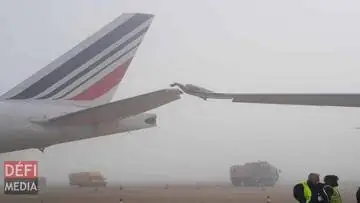
| Airline / operator | PSA Airlines |
|---|---|
| Aircraft (type, registration) | PSA Airlines Bombardier CRJ-200LR (N202PS) |
| Category (my classification) | Human factors / Wing-walker / towing crew |
| What happened | PSA Airlines flight 5541, a CRJ-200, N202PS, struck a tug during engine start at New York-LaGuardia Airport (LGA). There were no injuries to the 27 passengers and crew onboard. The airplane was substantially damaged. According to the operator, the accident airplane had six deferred items on the dispatch release including, auxiliary power unit (APU) crossflow, power crossflow shutoff valves (SOV), and the APU. These deferred items rendered the fuel tank transfer on the ground inoperative and required the right engine to be started via an air cart. The flight crew indicated that the tug driver had to use hand signals to communicate back to them because the transmit function on his headset was inoperative. The captain indicated that he had requested to start both engines at the gate to limit fuel imbalance while on the ground, but the ground crew had denied that request. The towing operation was initiated with only the right engine running. A cross-bleed start on the CRJ-200 requires a significant increase in thrust in the operative engine to allow the appropriate amount of bleed pressure to power the air turbine starter and imparts a lateral thrust imbalance on the airplane. A checklist item on the CRJ-200 Engine Start (Cross-Bleed) procedure is to set the parking brake prior to initiating a cross-bleed engine start. However, the captain initiated the cross-bleed start while still under tow after receiving clearance from the ground crew. According to the operator, the flight data indicated the was initiated with the right engine N2 first increasing to approximately 82.5%, and then to maximum N2 about 12 seconds after start was initiated. About ten seconds later, a lateral acceleration of 0.20 g was recorded. The tug impacted the right side of the airplane underneath the right front galley door, after jack knifing while remaining attached to the nose gear. The airplane sustained a whole 14.5 inches by 7.5 inches and a fractured stringer. Probable Cause: The captain initiating a cross bleed start while under tow. |
| Injuries | ASN lists 0 fatalities. There were no injuries to the 27 passengers and crew onboard. |
| Damage | Substantial, repaired |
| Official investigation | Investigating agency: NTSB Report number: DCA19CA035 Status: Investigation completed Duration: 3 years and 3 months Final report Report / investigator link(s): https://data.ntsb.gov/carol-repgen/api/Aviation/ReportMain/GenerateNewestReport/98734/pdf |
| Source | Aviation Safety Network (ASN) entry: https://aviation-safety.net/wikibase/319529 Further sources listed on that page / found: https://data.ntsb.gov/carol-repgen/api/Aviation/ReportMain/GenerateNewestReport/98734/pdf |
| Airline / operator | KLM Royal Dutch Airlines |
|---|---|
| Aircraft (type, registration) | KLM Royal Dutch Airlines Boeing 747-406 (PH-BFN) |
| Category (my classification) | Human factors / Wing-walker / towing crew |
| What happened | The no. 4 engine was substantially damaged when it collided with a high loader while the aircraft was being towed to the Romeo platform at Amsterdam-Schiphol Airport. |
| Injuries | ASN lists 0 fatalities. No injury statement in the ASN narrative. |
| Damage | Not stated |
| Official investigation | No investigation details on the ASN entry. |
| Source | Aviation Safety Network (ASN) entry: https://aviation-safety.net/wikibase/216288 Further sources listed on that page / found: https://thepointsguy.com/news/klm-aircraft-engine-damaged-in-collision-at-schiphol/ https://www.luchtvaartnieuws.nl/nieuws/categorie/2/airlines/klm-jumbo-flink-beschadigd-door-botsing-met-hoo… https://www.dumpert.nl/mediabase/7544789/4903746a |
| Airline / operator | Delta Air Lines |
|---|---|
| Aircraft (type, registration) | Delta Air Lines McDonnell Douglas MD-90 (reg n/a) |
| Category (my classification) | Human factors / Wing-walker / towing crew |
| What happened | Flight number 2226: Was pushed back from the gate and waiting to start their taxi. The wing of a Delta Air Lines, Airbus A320 under tow clipped the back of the McDonnell Douglas MD-90. |
| Injuries | ASN lists 0 fatalities. No injury statement in the ASN narrative. |
| Damage | Not stated |
| Official investigation | No investigation details on the ASN entry. |
| Source | Aviation Safety Network (ASN) entry: https://aviation-safety.net/wikibase/216172 |
| Airline / operator | LATAM Airlines Brasil |
|---|---|
| Aircraft (type, registration) | LATAM Airlines Brasil Airbus A320-232 (PT-MZJ) |
| Category (my classification) | Human factors / Wing-walker / towing crew |
| What happened | An Airbus A320-232 of LATAM Airlines Brasil rolled into trees while being towed at São Paulo-Congonhas Airport in Brazil. The aircraft was being towed when the aircraft apparently rolled to the rear near Apron 3. The tail impacted a group of trees, causing severe damage to the right-hand horizontal stabilizer. |
| Injuries | ASN lists 0 fatalities. No injury statement in the ASN narrative. |
| Damage | Substantial, written off |
| Time out of service | PT-MZJ: Written off (ASN) |
| Official investigation | No investigation details on the ASN entry. |
| Source | Aviation Safety Network (ASN) entry: https://aviation-safety.net/wikibase/319556 Further sources listed on that page / found: https://noticias.band.uol.com.br/cidades/noticias/100000933485/aviao-que-estava-sendo-rebocado-esbarra-em-a… |
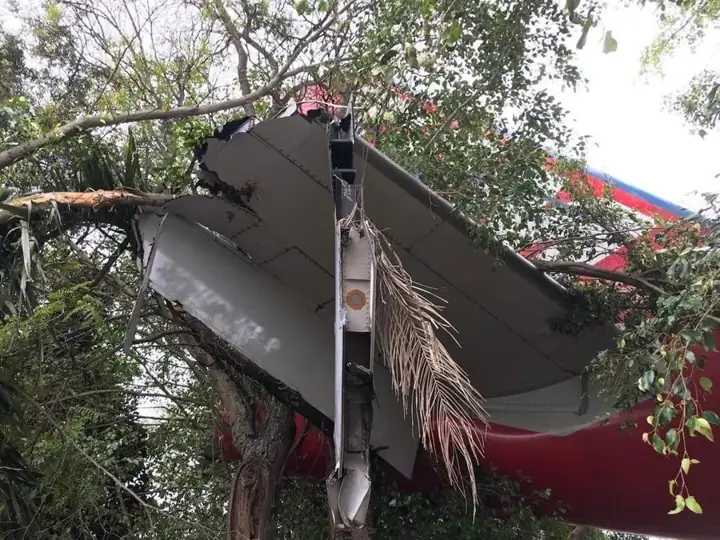
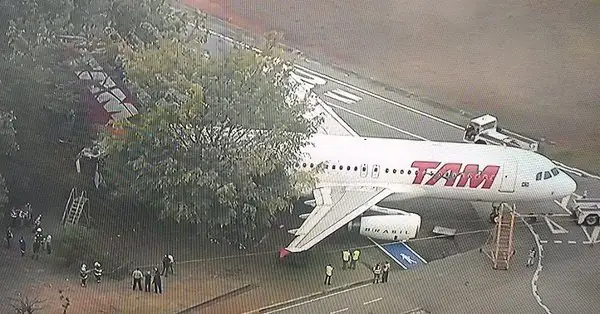
| Airline / operator | Korean Air / Asiana Airlines |
|---|---|
| Aircraft (type, registration) | Korean Air Boeing 777-2B5ER (HL7764); Asiana Airlines Airbus A330-323 (HL8286) |
| Category (my classification) | Human factors / Wing-walker / towing crew |
| What happened | A Korean Air Boeing 777-2B5ER, HL7764, sustained substantial damage to the rear underside of the fuselage after being struck by an Asiana Airlines Airbus A330 at Seoul-Gimpo Airport, South Korea. At the time of the incident, the A330, HL8286, was being towed from parking spot 228 to gate 39. At the same time, the Boeing 777 was being towed from parking spot 230 to gate 35. The Boeing 777 had stopped on the apron at the intermediate holding position opposite of gate 35. The A330 was then towed behind it over taxiway N3. The right hand winglet of the Airbus then impacted the horizontal stabilizer and underside of the rear fuselage of the Boeing 777. METAR: 22:38 UTC / 07:38 local time: RKSS 252238Z 12005KT 090V160 2500 RA BR BKN025 OVC080 21/17 Q1008 NOSIG 23:00 UTC / 08:00 local time: RKSS 252300Z 10010KT 2500 RA BR BKN025 OVC080 20/17 Q1007 NOSIG |
| Injuries | ASN lists 0 fatalities. No injury statement in the ASN narrative. |
| Damage | Substantial, repaired |
| Official investigation | No investigation details on the ASN entry. |
| Source | Aviation Safety Network (ASN) entry: https://aviation-safety.net/wikibase/319625 Further sources listed on that page / found: http://www.hani.co.kr/arti/economy/marketing/850661.html |
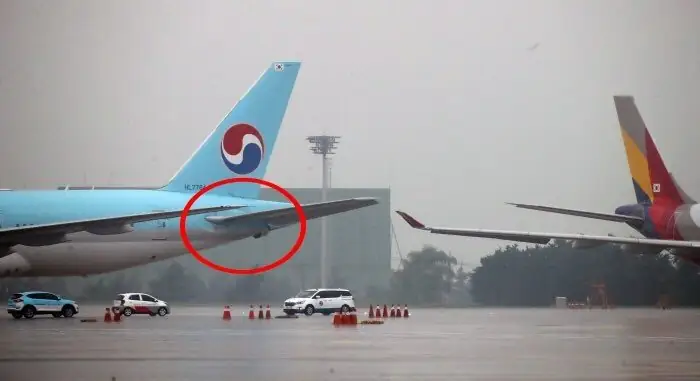
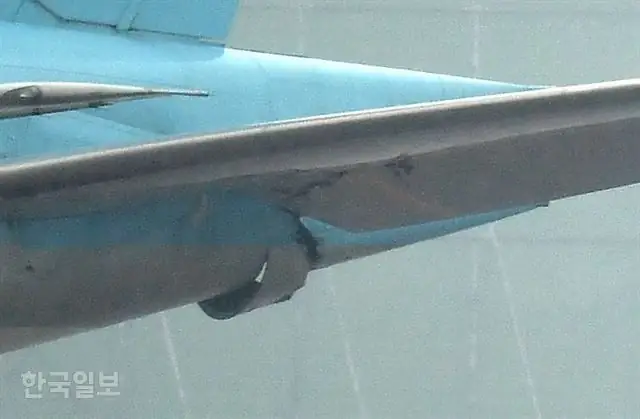
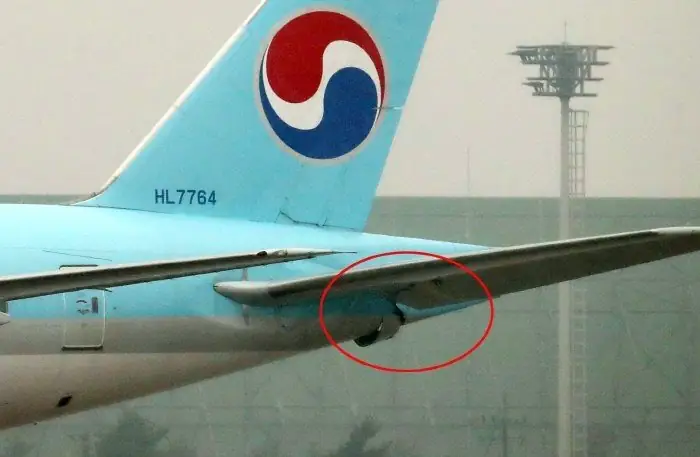
| Airline / operator | Lufthansa |
|---|---|
| Aircraft (type, registration) | Lufthansa Airbus A340-313 (D-AIFA) |
| Category (my classification) | Human factors / Wing-walker / towing crew |
| What happened | An Airbus A340-300, registration D-AIFA, was being towed at Frankfurt Airport, Germany when a fire broke out in the tow tug. The plane sustained substantial damage to the nose and cockpit section. Ten airport staff, consisting of ground crew and emergency responders, suffered minor injuries as a result of smoke inhalation. The aircraft was being prepared for flight LH426 from Frankfurt Airport, Germany to Philadelphia International Airport, USA. D-AIGP was assigned to replace the damaged aircraft, and departed at 3:10PM CEST with a delay of two hours. |
| Injuries | ASN lists 0 fatalities. Ten airport staff, consisting of ground crew and emergency responders, suffered minor injuries as a result of smoke inhalation. |
| Damage | Substantial, written off |
| Time out of service | D-AIFA: Written off (ASN) |
| Official investigation | No investigation details on the ASN entry. |
| Source | Aviation Safety Network (ASN) entry: https://aviation-safety.net/wikibase/319634 Further sources listed on that page / found: http://www.aero.de/news-29355/Airbus-A340-von-Lufthansa-bei-Feuer-beschaedigt.html https://eu.usatoday.com/story/travel/flights/todayinthesky/2018/06/11/airbus-340-damaged-fire-frankfurt-air… |
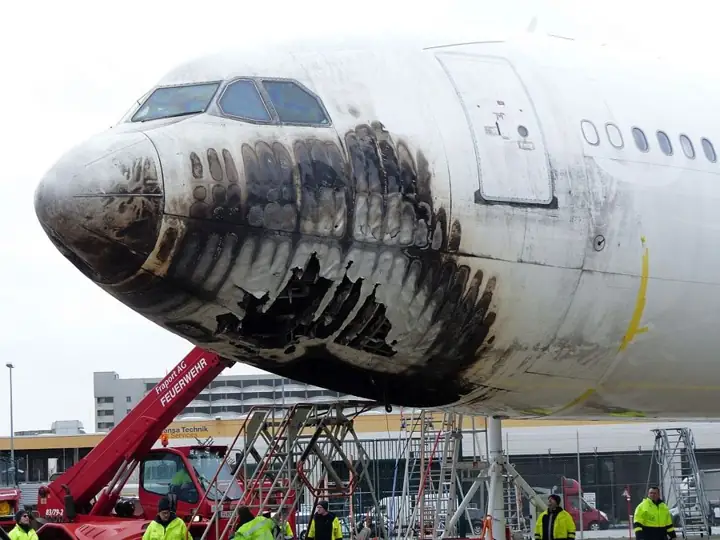
| Airline / operator | Sunwing Airlines / WestJet |
|---|---|
| Aircraft (type, registration) | Sunwing Airlines Boeing 737-8FH (WL) (C-FPRP); WestJet Boeing 737-8CT (WL) (C-FDMB) |
| Category (my classification) | Human factors / Wing-walker / towing crew |
| What happened | Two Boeing 737-800 aircraft were involved in a collision on the ground at Toronto-Pearson International Airport, Canada. WestJet flight 2425, a Boeing 737-800 registered C-FDMB, landed on runway 24R at 17:39 hours local time following a flight from Cancún, Mexico. The flight taxied to Terminal 3 and was stopped with the engines and APU running, on Taxi-lane 2 on the north side of Pier B. The flight crew were waiting for ground personnel to marshal the aircraft into position at Gate B12. The WestJet aircraft was positioned directly behind and perpendicular to a Sunwing Airlines Boeing 737-800 (C-FPRP), which was parked at Gate B13. The Sunwing aircraft was being prepared to be towed to another location at the airport. A Sunwing maintenance technician was in the cockpit of C-FPRP, and the aircraft's APU was running. Two ground personnel were in the cab of the tow vehicle. The tow vehicle was informed by the North Apron controller to pushback at their discretion. The Sunwing aircraft (under tow) began to move back and the APU contacted the right wing of the stationary WestJet aircraft. A fire rapidly ensued. The WestJet flight crew immediately commenced the required steps for an evacuation, and an evacuation was ordered shortly after. The tow vehicle operator pulled the Sunwing aircraft back towards the gate to separate the two aircraft. The slides on the WestJet aircraft were utilized on doors L1, R1 and L2, along with the over-wing exits on the left side; all passengers evacuated safely. The maintenance technician aboard the Sunwing aircraft exited the left cockpit window using the emergency rope and received minor injuries. ARFF arrived at the scene, and extinguished the fire. The Sunwing aircraft sustained substantial damage. Summary: In this accident, the pushback was conducted without the use of wing walkers, which is not in accordance with Swissport, Sunwing, and GTAA requirements. The investigation also determined that wing walkers were normally used by Swissport only when pushing back aircraft with passengers on board. In addition, the GTAA apron radio officer used phraseology that was not consistent with GTAA AMU procedures. WestJet’s pre-flight safety briefings do not inform passengers to leave behind carry-on baggage in the event of an evacuation. During this occurrence, several passengers retrieved their carry-on baggage, despite the fact that FAs repeatedly provided specific instructions to the contrary. These passenger actions, in combination with the lack of emergency lighting, delayed the evacuation process. |
| Injuries | ASN lists 0 fatalities. The maintenance technician aboard the Sunwing aircraft exited the left cockpit window using the emergency rope and received minor injuries. |
| Damage | Substantial, repaired |
| Official investigation | Investigating agency: TSB Report number: A18O0002 Status: Investigation completed Duration: 6 months Final report |
| Source | Aviation Safety Network (ASN) entry: https://aviation-safety.net/wikibase/319744 Further sources listed on that page / found: https://www.torontopearson.com/pearson_leftNavOneColumnWF.aspx?pageid=78&id=21474840489# |
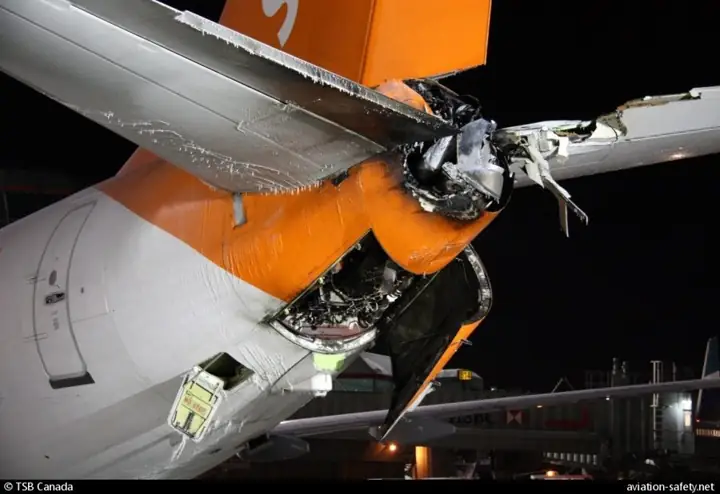
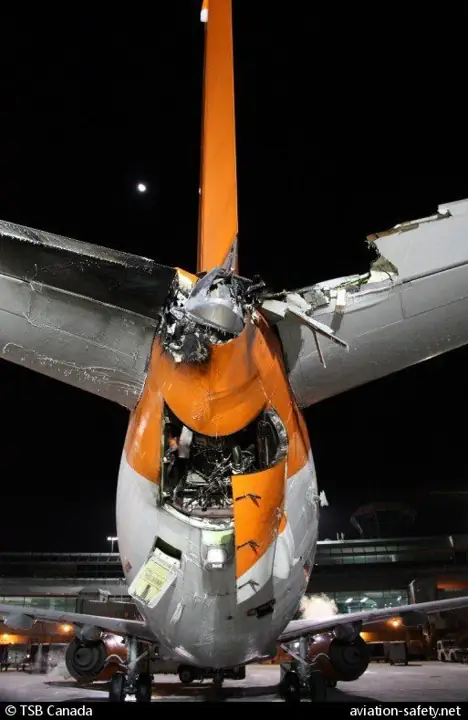
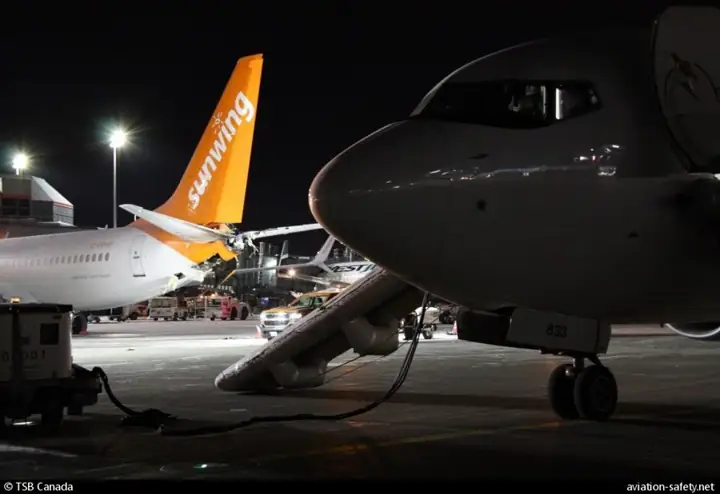
| Airline / operator | Singapore Airlines |
|---|---|
| Aircraft (type, registration) | Singapore Airlines Boeing 777-212ER (9V-SQK) |
| Category (my classification) | Human factors / Wing-walker / towing crew |
| What happened | A Singapore Airlines Boeing 777-212ER, 9V-SQK, was being towed from a remote parking bay to Terminal 3 at Singapore-Changi International Airport when the tow truck caught fire. The fire was put out by ARFF. The lower forward fuselage was covered in soot. The technician who was on the flight deck at the time of the incident evacuated the aircraft. |
| Injuries | ASN lists 0 fatalities. No injury statement in the ASN narrative. |
| Damage | Substantial, written off |
| Time out of service | 9V-SQK: Written off (ASN) |
| Official investigation | No investigation details on the ASN entry. |
| Source | Aviation Safety Network (ASN) entry: https://aviation-safety.net/wikibase/319762 Further sources listed on that page / found: https://www.straitstimes.com/singapore/transport/tow-tug-at-changi-airport-catches-fire-as-it-is-towing-a-s… |
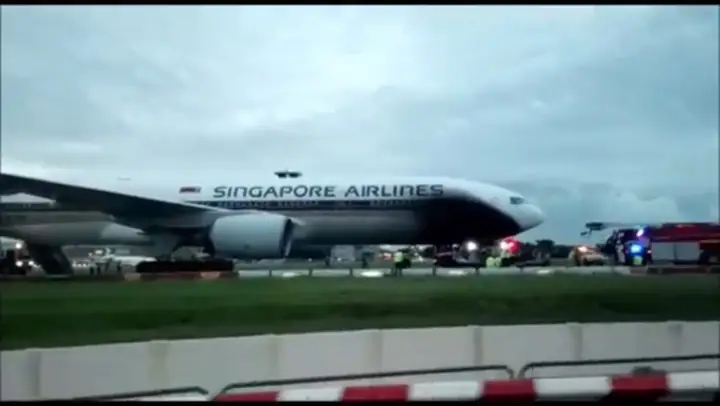
| Airline / operator | Far Eastern Air Transport - FEAT |
|---|---|
| Aircraft (type, registration) | Far Eastern Air Transport - FEAT McDonnell Douglas MD-80 (reg n/a) |
| Category (my classification) | Human factors / Wing-walker / towing crew |
| What happened | An MD-80 of Far Eastern Air Transport was towed out of a hangar at Taipei-Sung Shan Airport, Taiwan when it hit a company MD-80 that was parked nearby. The parked aircraft was later cleared for service, while the other one sustained damage to its tail and was grounded for further repair and inspection. Involved in the incident was likely MD-82 B-28035 or MD-83 B-28027. |
| Injuries | ASN lists 0 fatalities. No injury statement in the ASN narrative. |
| Damage | Not stated |
| Official investigation | No investigation details on the ASN entry. |
| Source | Aviation Safety Network (ASN) entry: https://aviation-safety.net/wikibase/200456 Further sources listed on that page / found: http://focustaiwan.tw/news/asoc/201710170028.aspx |
| Airline / operator | Air Canada / United Airlines |
|---|---|
| Aircraft (type, registration) | Air Canada Boeing 767-375ER (C-GHOZ); United Airlines Boeing 737-924ER (WL) (N69813) |
| Category (my classification) | Human factors / Wing-walker / towing crew |
| What happened | United Airlines flight 447, a Boeing 737-900 (N69813) sustained damage when the right hand winglet scraped the horizontal stabilizer of Air Canada flight 785, a Boeing 767-300ER (C-GHOZ) at Los Angeles International Airport, California, USA. The Boeing 767 was being marshalled onto gate 69B after arrival and was instructed to stop approximately 15 feet short of the stop line because it is normally a tow-in gate. The flight crew shut down the engines and awaited the ground crew to hook up the tow bar. There are white lines painted around each gate area to aid ground vehicles driving on the ramp. The B767 tail protruded beyond the white lines perpendicular to, and adjacent to, taxiway C. The Boeing 737 was taxiing out for departure via taxiway C in accordance with ATC instructions. The captain reported that he saw the B767 and maneuvered left of centerline for more clearance. However, the NTSB reports that surveillance video from Gate 69B showed that the B737 nosewheel was tracking along the yellow centerline of taxiway C. The captain asked the first officer (FO), who was heads down making FMS entries, to look and verify if they had enough clearance. The FO reported he saw that the B767 was hooked up to the tug but wasn't sure if it was being towed. He judged that there was about 5 feet of clearance. He said he saw no action by the marshallers indicating they thought the airplanes were too close. As the airplane continued taxiing, the right winglet of the B737 contacted the horizontal stabilizer of the B767. The flight crew reported that they did not feel an impact but were told by ATC that the collision had occurred. The B737 returned to the gate and deplaned passengers normally. The B767 was towed into the gate and deplaned passengers normally. C-GHOZ received substantial damage to its right hand elevator's lower right stabilizer control surface. PROBABLE CAUSE: "The B737 flight crew's misjudgement of the clearance between their wingtip and the B767 horizontal stabilizer." |
| Injuries | ASN lists 0 fatalities. No injury statement in the ASN narrative. |
| Damage | Substantial, repaired |
| Official investigation | Investigating agency: NTSB Report number: DCA17CA195B Status: Investigation completed Duration: 11 months Final report |
| Source | Aviation Safety Network (ASN) entry: https://aviation-safety.net/wikibase/319817 |
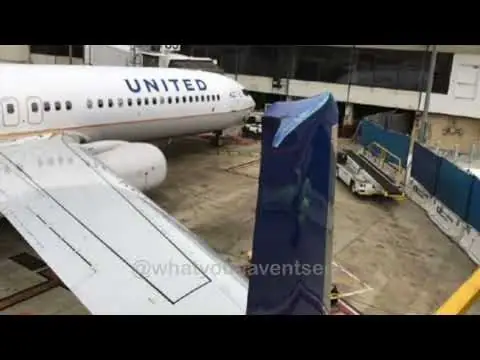
| Airline / operator | Lufthansa |
|---|---|
| Aircraft (type, registration) | Lufthansa Airbus A380-841 (D-AIML) |
| Category (my classification) | Human factors / Wing-walker / towing crew |
| What happened | The A380 was being towed to a maintenance area when it hit a catering truck near position V6. The truck overturned. The airplane sustained damage to an engine. |
| Injuries | ASN lists 0 fatalities. No injury statement in the ASN narrative. |
| Damage | Minor |
| Official investigation | No investigation details on the ASN entry. |
| Source | Aviation Safety Network (ASN) entry: https://aviation-safety.net/wikibase/199109 Further sources listed on that page / found: https://www.tag24.de/nachrichten/frankfurt-hessen-flughafen-airbus-a380-lkw-rammt-317605 https://www.flugrevue.de/zivilluftfahrt/flugzeuge/leere-lufthansa-a380-kollidiert-mit-catering-truck/732650 |
| Airline / operator | Air France |
|---|---|
| Aircraft (type, registration) | Air France Boeing 777-328ER (F-GZNO) |
| Category (my classification) | Human factors / Wing-walker / towing crew |
| What happened | Flight AF651 sustained damage to starboard engine, including dent in lower front and tear in skin on starboard side. Damage only spotted during taxi for take off (possibly by pilot of plane following in queue behind). Damage possibly caused by baggage container under tow. |
| Injuries | ASN lists 0 fatalities. No injury statement in the ASN narrative. |
| Damage | Minor |
| Official investigation | No investigation details on the ASN entry. |
| Source | Aviation Safety Network (ASN) entry: https://aviation-safety.net/wikibase/194049 |
| Airline / operator | BRA - Braathens Regional Airlines / Scandinavian Airlines System - SAS |
|---|---|
| Aircraft (type, registration) | BRA - Braathens Regional Airlines Avro RJ100 (SE-DST); Scandinavian Airlines System - SAS Airbus A340-313 (OY- KBC) |
| Category (my classification) | Human factors / Wing-walker / towing crew |
| What happened | An Airbus A340-313, OY-KBC operated by SAS, and an Avro RJ100, SE-DST operated by BRA - Braathens Regional Airlines, were both damaged in a ground collision accident at Copenhagen's Kastrup Airport in Denmark. BRA flight 9078 landed at 15:51 hours following a repositioning flight from Göteborg, Sweden. Arriving at aircraft stand E77 at 15:57 hours, the flight crew of SE-DST noticed that the ground handling personnel had not yet arrived at the aircraft stand. They attempted to contact their handling agent several times. The flight crew of SE-DST was concerned that aircraft wing clearance to obstacles outside of the marked aircraft manoeuvring area of aircraft stand E77 was insufficient for moving the aircraft onto the stand and insufficient for the coming departure. For that reason, the flight crew decided to move the aircraft onto the stand guided by the yellow centre line, and the flight crew then stopped the aircraft approximately 14 metres in front of the stopping mark. While waiting for the ground handling personnel to arrive and waiting for entry guidance, the aircraft engines were running. At 16:06 hours, a towbarless tractor driver contacted Kastrup Apron by radio and requested towing instructions for towing OY-KBC from hangar 5 to an aircraft stand. At that point, it was the perception of the apron controller at Kastrup Apron that SE-DST had fully parked at aircraft stand E77. At 16:07 hours, Kastrup Apron instructed the driver to tow OY-KBC to aircraft stand C29 via taxiway T, taxiway V and to hold short of taxiway S. The driver read back the towing instructions. An onboard flight deck operator in OY-KBC handled the aircraft auxiliary power unit and the aircraft external lights. No radio communication between the driver and the onboard flight deck operator was established. When entering taxiway T, the driver observed and perceived SE-DST as standing (aircraft anticollision light on) within the marked demarcation of aircraft stand E77. It was the perception of the driver that SE-DST was outgoing traffic but awaiting taxi instructions and therefore in sequence behind the towed OY-KBC. The onboard flight deck operator in OY-KBC did not notice the presence of SE-DST, until the right winglet of OY-KBC collided with the tail section of SE-DST. The driver stopped the truck and reported to Kastrup Apron that the towed OY-KBC had collided with an aircraft at aircraft stand E77 and that no one had suffered any injuries. The right winglet of OY-KBC suffered minor damages and the aircraft was back in service two days later. The horizontal stabilizer, the elevator and the rudder of SE-DST suffered substantial damages. CONCLUSION: A TBL towed OY-KBC on taxiway T, and the winglet of OY-KBC collided with the tail section of SE-DST, which had not fully parked at aircraft stand E77. Independent expectations led to three diverging mental realities affecting the sequence of events: 1. The TBL driver perceived SE-DST as standing within the marked demarcation of aircraft stand E77 and expected that SE-DST was outgoing traffic but in sequence behind OY-KBC under tow 2. The flight crew of SE-DST awaited and expected aircraft stand entry guidance and stopped the aircraft approximately 14 meters in front of the aircraft stand stopping mark at aircraft stand E77 3. Kastrup Apron expected that SE-DST had fully parked given that approximately nine minutes had passed since the arrival of SE-DST at aircraft stand E77 |
| Injuries | ASN lists 0 fatalities. The driver stopped the truck and reported to Kastrup Apron that the towed OY-KBC had collided with an aircraft at aircraft stand E77 and that no one had suffered any injuries. |
| Damage | Substantial, written off |
| Time out of service | SE-DST: Written off (ASN) OY-KBC: 2 days (ASN) |
| Official investigation | Investigating agency: HCLJ Report number: HCLJ510-2016-322 Status: Investigation completed Duration: 2 months Final report |
| Source | Aviation Safety Network (ASN) entry: https://aviation-safety.net/wikibase/319950 |
| Airline / operator | Aeroflot |
|---|---|
| Aircraft (type, registration) | Aeroflot Airbus A330-343 (reg n/a); Aeroflot Airbus A330-343 (VQ- BPK) |
| Category (my classification) | Human factors / Wing-walker / towing crew |
| What happened | Two Airbus A330 aircraft operated by Aeroflot were damaged on the ground at Moscow-Sheremetyevo International Airport, Russia in a ground collision incident. The right hand winglet clipped the right hand winglet of the other aircraft. One of the aircraft was reportedly being prepared for departure to Vladivostok at 20:50. The second aircraft was being towed. |
| Injuries | ASN lists 0 fatalities. No injury statement in the ASN narrative. |
| Damage | Minor |
| Official investigation | No investigation details on the ASN entry. |
| Source | Aviation Safety Network (ASN) entry: https://aviation-safety.net/wikibase/192044 Further sources listed on that page / found: http://ren.tv/novosti/2016-12-17/v-aeroportu-sheremetevo-stolknulis-dva-samoleta https://www.vesti.ru/doc.html?id=2834144 http://tass.ru/proisshestviya/3883184 https://www.rbc.ru/rbcfreenews/58558e7a9a794711d59ef656 https://www.instagram.com/p/BOJDKXqAUlH/ |
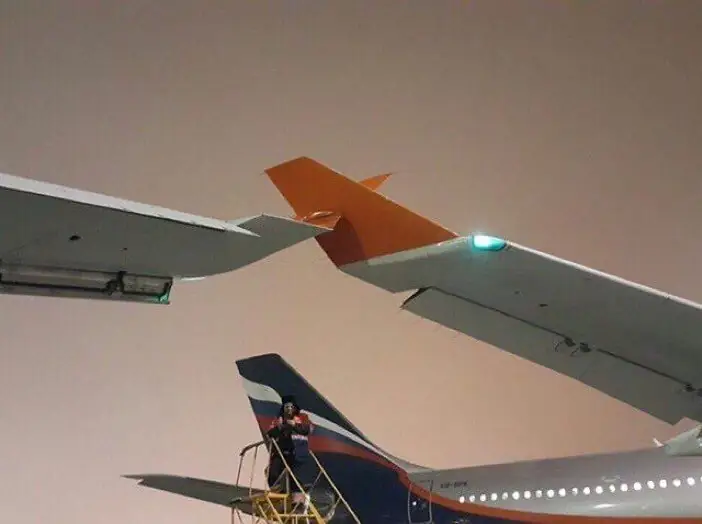
| Airline / operator | Asiana Airlines |
|---|---|
| Aircraft (type, registration) | Asiana Airlines Airbus A330-323 (HL8258) |
| Category (my classification) | Human factors / Wing-walker / towing crew |
| What happened | An Airbus A330-323 sustained substantial damage to the horizontal stabilizers in a towing accident at Seoul-Incheon International Airport (ICN), South Korea. The left-hand horizontal stabilizer apparently hit a hangar door causing a distortion of the tail section and damage to the left-hand horizontal stabilizer's leading edge. |
| Injuries | No injury statement in the ASN narrative. |
| Damage | Substantial, repaired |
| Official investigation | No investigation details on the ASN entry. |
| Source | Aviation Safety Network (ASN) entry: https://aviation-safety.net/wikibase/320024 Further sources listed on that page / found: https://www.flightglobal.com/news/articles/asiana-a330-damaged-in-ground-accident-428969/ |
| Airline / operator | MRO maintenance tow (operator not stated); SilkAir (landing aircraft) |
|---|---|
| Aircraft (type, registration) | Boeing 787 under maintenance tow (registration not stated); SilkAir Boeing 737-8SA (9V-MGB), landing |
| Category (my classification) | Human factors / Wing-walker / towing crew Secondary: ATC / marshalling involved |
| What happened | In the early morning of 6 August 2016, a tow tug was to tow a Boeing 787 aircraft to Bay 300 in Singapore Changi Airport for the aircraft to be prepared for departure. The B787 had some maintenance work done by an aircraft maintenance, repair and overhaul organisation (MRO) located on the west side of the southern end of runway 02L/20R. The towing would involve crossing runway 02L/20R via taxiway SA onto taxiway W9 The towing crew comprised the following personnel from the MRO: three aircraft maintenance engineers, a headset man and a tow tug driver. One of the aircraft maintenance engineers was designated as the Flight Deck Engineer cum Engineer-in-charge (EIC) of the towing crew. The other two engineers were assigned to carry out checks on the aircraft cockpit avionics to prepare the aircraft for departure. The towing started from within the MRO’s premises. The EIC briefed the towing crew at about 03:30 LT and prepared the B787 for towing and conducted communications check with Changi Apron Control to test communications equipment serviceability. Then, using a tow tug of the MRO, the towing crew towed the B787 to a point on Taxiway SA such that the MRO’s tow tug was just beyond the MRO’s gate to the aerodrome. Here the MRO’s tow tug and tow tug driver were replaced by a tow tug and tow tug driver from a ground service provider (GSP) at Changi Airport engaged by the MRO. At about 03:55 LT, while the headset man was with the replaced tow tug, the EIC and the other two engineers entered the B787’s cockpit and contacted Changi Apron Control to seek the necessary clearance for towing across runway 02L/20R to proceed to Bay 300. Changi Apron Control relayed the request to the runway controller at Changi Control Tower. The runway controller contacted the EIC on frequency 121.9MHz and said, "... expect to tow across 20R in about two ...correction, in about three minutes’ time." The EIC thought he heard the runway controller say "...expedite to tow across the runway in 2-3 minutes’ time". Believing that it was possible to cross runway 02L/20R quickly, the EIC read back, "... we’ll cross the Runway 02L in two minutes’ time." The runway controller acknowledged with "Affirm." The towing column then moved forward. The red stop bar lights indication on the Airfield Ground Lighting Control and Monitoring System (AGLCMS) at the Control Tower was not deactivated by the runway controller. As the towing column was moving forward, the tow tug driver spotted an aircraft approaching the airport from the north. He informed the headset man who was beside him. The headset man in turn informed the EIC. The EIC and engineers at the cockpit saw the aircraft and instructed the tow tug driver to stop. The EIC reported to the runway controller that they saw an aircraft approaching runway 02L/20R. The runway controller saw that the towing column was apparently not moving and told the EIC that he was not given clearance to cross the runway. In the meantime, the microwave barrier detector (MBD) of the airport’s runway incursion alerting system installed at taxiway SA also triggered an alarm that alerted the runway controller. The arriving aircraft, SilkAir flight 937 from Chengdu, operated by Boeing 737-8SA 9V-MGB, landed safely and vacated the runway at taxiway W8 without any incident. The towing column had stopped at about 115m from the centreline of runway 02L/20R (i.e. 85m from the edge of the runway). |
| Injuries | No injury statement in the ASN narrative. |
| Damage | None |
| Official investigation | Investigating agency: TSIB Singapore Report number: Status: Investigation completed Duration: Final report Report / investigator link(s): https://www.mot.gov.sg/uploadedFiles/Ministry_of_Transport/Content_Blocks/About_MOT/Air_Transport/AAIB/Tow%20tug%20runway%20incursion%20Changi%20Airport%206%20Aug%2016%20Final%20Report.pdf |
| Source | Aviation Safety Network (ASN) entry: https://aviation-safety.net/wikibase/199301 Further sources listed on that page / found: https://www.mot.gov.sg/uploadedFiles/Ministry_of_Transport/Content_Blocks/About_MOT/Air_Transport/AAIB/Tow%… |
| Note | Near-collision: towed aircraft crossed an active runway with an aircraft approaching. |
| Airline / operator | Singapore Airlines |
|---|---|
| Aircraft (type, registration) | Singapore Airlines Boeing 777-312 (9V-SYL); Singapore Airlines Boeing 777-212ER (9V-SQJ) |
| Category (my classification) | Human factors / Wing-walker / towing crew |
| What happened | Two Boeing 777 aircraft, both owned by Singapore Airlines, were damaged after a ground incident at Singapore-Changi International Airport. A Boeing 777-312 (9V-SYL) was being towed when the right hand wing struck the tail cone of a parked Boeing 777-212 (9V-SQJ). The tail cone, housing the APU, sustained substantial damage. Boeing 777-312 9V-SYL arrived at 18:03 hours as flight SQ917 from Manila. Boeing 777-212ER 9V-SQJ arrived at 16:02 hours as flight SQ891 from Hong Kong. 9V-SYL was back in service on June 5. |
| Injuries | No injury statement in the ASN narrative. |
| Damage | Minor |
| Time out of service | 9V-SYL: 6 days (ASN) |
| Official investigation | No investigation details on the ASN entry. |
| Source | Aviation Safety Network (ASN) entry: https://aviation-safety.net/wikibase/187772 Further sources listed on that page / found: https://www.channelnewsasia.com/news/singapore/tail-of-singapore-airlines-plane-damaged-after-collision-795… |
| Airline / operator | Air France |
|---|---|
| Aircraft (type, registration) | Air France Airbus A320-214 (F-GKXJ); Air France Boeing 777-328ER (F-GZNT) |
| Category (my classification) | Human factors / Wing-walker / towing crew Secondary: ATC / marshalling involved |
| What happened | Air France flight 1084 was taxiing towards the departure runway at Paris-Charles de Gaulle Airport. The aircraft, an Airbus A320, used taxiway R and was instructed to stop at T4 and wait behind an Airbus A319. At the same time, an Air France Boeing 777-300ER, F- GZNT, was being towed to remote parking spot M10. The tug driver was instructed to stop behind the A320. After a few minutes the controller radioed the person in the flight deck of the 777 if they were able to pass the A320. He in turn contacted the tug driver, who reported that he would move slowly and pass the A320. During this manoeuvre the wing tip struck the rudder of the A320. BEA stated that this accident and previous accidents have shown that it may be difficult to assess the distances between the end wing tips and obstacles from the cockpit or from a tug. The final report did not contain a Probable Cause statement. |
| Injuries | No injury statement in the ASN narrative. |
| Damage | Substantial, repaired |
| Official investigation | Investigating agency: BEA Report number: BEA2016-0277 Status: Investigation completed Duration: 6 months Final report |
| Source | Aviation Safety Network (ASN) entry: https://aviation-safety.net/wikibase/320081 |
| Airline / operator | United Express, opb SkyWest Airlines |
|---|---|
| Aircraft (type, registration) | United Express, opb SkyWest Airlines Canadair CL-600-2B19 Regional Jet CRJ-200ER (N961SW) |
| Category (my classification) | Human factors / Wing-walker / towing crew |
| What happened | SkyWest Airlines flight 5260, a CRJ-200, was struck after being pushed back from the gate by an airplane that was being towed by maintenance personnel at San Francisco International Airport (KSFO), California, USA. There were no injuries and both airplanes received substantial damage. After having been pushed back from the gate, N961SW was awaiting taxi clearance with engines operating and the parking brake set when it was struck by the Boeing 777 that was being reposition under tow. The tug driver that was pushing the Boeing 777 indicated that he saw wing walkers on both sides and began to push back. He stated that he never saw any signal from the wing walker's signal wands indicating to stop. The left wing walker stated that the tow driver started pushing the Boeing 777 in reverse before asking if he and the other walkers were ready stating, that the airplane "was halfway out of the gate before I could react." He stated that, after the airplane entered the roadway, he notice that the tug driver was not slowing down as he approached N961SW. The left wing walk made an "X" with his signal wands and then started jumping up and down and moving to better location to be seen. The Boeing 777's lower left fuselage contacted the right stabilizer of N961SW resulting in substantial damage to the stabilizer and right elevator. Probable cause: "The tug driver's failure to comply with the wing walkers direction to stop, which resulted in the towed airplane colliding with N961SW." |
| Injuries | There were no injuries and both airplanes received substantial damage. |
| Damage | Substantial, repaired |
| Official investigation | Investigating agency: NTSB Report number: DCA16CA139 Status: Investigation completed Duration: 3 years and 12 months Final report Report / investigator link(s): https://data.ntsb.gov/carol-repgen/api/Aviation/ReportMain/GenerateNewestReport/93084/pdf |
| Source | Aviation Safety Network (ASN) entry: https://aviation-safety.net/wikibase/320089 Further sources listed on that page / found: https://data.ntsb.gov/carol-repgen/api/Aviation/ReportMain/GenerateNewestReport/93084/pdf |
| Airline / operator | TransNusa Aviation |
|---|---|
| Aircraft (type, registration) | TransNusa Aviation ATR 42-600 (PK-TNJ) |
| Category (my classification) | Human factors / Wing-walker / towing crew Secondary: ATC / marshalling involved |
| What happened | Batik Air flight ID7703, operated by a Boeing 737-800 with registration PK-LBS, collided with an ATR-42-600 aircraft on takeoff from runway 24 at Jakarta-Halim Perdana Kusuma Airport (HLP), Indonesia. Dark, night time conditions existed at the time of the accident. The ATR-42-600, operated by TransNusa Aviation Mandiri and registered PK-TNJ, was parked at stand B-1 on the north apron of Halim Airport and was to be moved from the north to the south apron. For this the aircraft had to cross the active runway. A towing car was used with a driver and one supporting personnel. Two engineers occupied the pilot seats in the aircraft. The engineers were assigned to apply aircraft brakes if required during the towing process. The towed aircraft was towed without aircraft electrical power fed to the system and the navigation light, strobe light and the aircraft radio communications were off. The communication between the towing car driver and Halim Tower was performed by a handheld radio communication on frequency 152.7 MHz. At 19:45 local time flight ID7703 requested pushback clearance to the Halim Tower controller on frequency 118.6 MHz. The aircraft was parked on parking stand B-2 and was approved to push back. After the ID7703 completed the pushback, the towing car driver of the towed aircraft requested clearance to Halim Tower Control Unit to reposition from parking stand B-1 to the south apron. The towing car driver was instructed to follow ID7703 and to report when on taxiway C. The communication between the towing car driver and Halim Tower was handled by the assistant controller. The controller heard the communication between the assistant and towing car driver, he recognized the position of the towed aircraft was on the parking stand B-1. The ID7703 flight crew did not know that there was a towing aircraft behind as communications with the car were on a different frequency. At 19:48, ID7703 received taxi clearance to runway 24 via taxiway C. At 19:50, the controller instructed ID7703 to hold on taxiway C due to an arriving aircraft. The assistant stated that when ID7703 was holding on short taxiway C, the towing car began moving the ATR-42. At 19:53, ID7703 received clearance from controller to enter runway 24 to back track for departure. The aircraft that had just arrived would use parking stand B-1. Therefore, the assistant controller instructed the towing car driver to expedite the tow and report when on taxiway C. The controller was not observing the ATR at that time. The towing car was about to enter taxiway C at that time. At 19:56, ID7703 reported ready for takeoff. The controller did not see any vehicle or object on the runway then issued clearance for takeoff. The pilot stated that during line up, the lights surrounding the turn pad were very bright and affected his forward vision for a short time. It was common practice in Halim to lineup at the turn pad beyond the threshold runway 24. After receiving the takeoff clearance, the Second in Command (SIC) as pilot flying (PF) opened the power and pressed the Take Off / Go Around (TOGA) button. The towing car driver stated that, when he saw ID7703 was lining up for takeoff, he asked Halim Tower whether ID7703 was initiating the takeoff. There was no reply from Halim Tower. The towing car driver then sped up the towing and turned to the right side of the runway. When ID7703 was accelerating through approximate 80 knots, the SIC saw an object warned the captain. The pilots could not identify the object but later on when the object became closer, the SIC realized that there was an aircraft. The captain took over control and applied the right rudder towards the right side of runway centerline and maintained a course between the runway centerline and the runway edge. The PIC intended to reject the takeoff shortly after they felt an impact. The impact occurred at a ground speed of about 130 knots, after passing V1. The pilot rejected takeoff and the aircraft stopped at approximately 400 meter from the towed aircraft which stopped at the left of the runway 24 centerline at approximately 100 meters from taxiway G. The captain noticed fire on the left wing tip and immediately shut down both engines, activated the fire extinguishers of both engines and Auxiliary Power Unit (APU) and commanded to the flight attendant "evacuation from the right". The flight attendants opened all aircraft passenger doors and the escape slides deployed. Most of passengers were evacuated from the left forward door (L1). Both aircraft sustained substantial damage. There were no reported injuries to the accident. The outer portion of the left wing of the Boeing 737, about 5,75 m, was severed. The ATR-42s left hand wing, outboard of the no.1 engine, was severed, along with the entire empennage. Contributing Factors: - Handling of two movements in the same area with different controllers on separate frequencies without proper coordination resulted in the lack of awareness to the controllers, pilots and towing car driver. - The communication misunderstanding of the instruction to follow ID 7703 most likely contributed the towed aircraft enter the runway. - The lighting environments in the tower cab and turning pad area of runway 24 might have diminished the capability to the controllers and pilots to recognize the towed aircraft that was installed with insufficient lightings. METAR: 12:00 UTC / 19:00 local time: WIHH 041200Z 04006KT 5000 HZ FEW017CB SCT018 30/25 Q1010 RMK CB TO SW |
| Injuries | There were no reported injuries to the accident. |
| Damage | Destroyed, written off |
| Time out of service | PK-TNJ: Written off (ASN) |
| Official investigation | Investigating agency: NTSC Report number: KNKT.16.04.07.04 Status: Investigation completed Duration: 1 year Final report |
| Source | Aviation Safety Network (ASN) entry: https://aviation-safety.net/wikibase/320101 Further sources listed on that page / found: https://www.facebook.com/BatikAirID/posts/1085506588168568 |
| Airline / operator | Delta Air Lines |
|---|---|
| Aircraft (type, registration) | Delta Air Lines McDonnell Douglas MD-88 (N908DE) |
| Category (my classification) | Human factors / Wing-walker / towing crew |
| What happened | On January 24, 2016 at 19:22 eastern standard time, Delta Air Lines flight 1409, a McDonnell Douglas MD-88, N908DE, was struck by a Boeing 767, N178DZ, that was under tow by a Delta Airlines ground crew in the vicinity of gate 42 at Newark Liberty International Airport, Newark, New Jersey (EWR). There were no injuries to the 153 passengers and crew members onboard the MD-88 or to the one person aboard the B767 nor to the four ground crew personnel. There was substantial damage to the horizontal stabilizer and elevator of the MD-88. According to the operator, after landing the MD-88 crew taxied into the alley in the vicinity of gate 36, awaiting gate 41B to clear, and set the parking brake. Airport Customer Service (ACS) representatives were towing the B767 to gate 42 (the ACS personnel were not aboard with the intent for flight), and following a Port Authority vehicle to gate 42. The ACS agents and the MD-88 flight crew reported that the ramp conditions were very slushy and limited space was available. The ACS representative aboard the B767 requested that the MD-88 pull forward, to allow clearance between the two aircraft, and the flight crew complied with the request. The captain stated that he could only move about 15 to 20 feet due to the ramp conditions. Shortly afterward, the flight crew felt the impact and noted that the two aircraft had made contact. The tug driver was not aware of the impact until after arrival at gate 42. The MD-88 was towed to the gate and passengers deplaned via the jetway. The MD-88 received substantial damage to the left elevator, elevator tab, and horizontal stabilizer tip. The left winglet of the B767 received minor damage. Probable Cause: the ground crew's misjudgment of the distance between the B767 wingtip and the MD-88 tail. Contributing to the accident was the slushy condition of the ramp which limited the maneuvering space available. |
| Injuries | There were no injuries to the 153 passengers and crew members onboard the MD-88 or to the one person aboard the B767 nor to the four ground crew personnel. |
| Damage | Substantial |
| Official investigation | Investigating agency: NTSB Report number: DCA16CA070 Status: Investigation completed Duration: 2 years and 8 months Final report Report / investigator link(s): https://data.ntsb.gov/carol-repgen/api/Aviation/ReportMain/GenerateNewestReport/92634/pdf |
| Source | Aviation Safety Network (ASN) entry: https://aviation-safety.net/wikibase/216134 Further sources listed on that page / found: https://data.ntsb.gov/carol-repgen/api/Aviation/ReportMain/GenerateNewestReport/92634/pdf |
| Airline / operator | TAAG Angola Airlines |
|---|---|
| Aircraft (type, registration) | TAAG Angola Airlines Boeing 777-3M2ER (D2-TEI) |
| Category (my classification) | Human factors / Wing-walker / towing crew |
| What happened | A Boeing 777-300ER operated by TAAG, D2-TEI, operated on a round trip from Luanda, Angola to Lisbon, Portugal. The flight to Lisbon was uneventful and the aircraft was parked at stand 146. With a rotation of 4 hours on the ground, the aircraft was scheduled to fly back with a new crew at an estimated off blocks time of 10:00 UTC. The commander of the flight, while performing the aircraft exterior inspection, found that the wings had accumulated ice on the upper surface and the underside surface, and that it was out of the operating limits. As Lisbon Airport is not equipped with a de-icing system, the aircraft after being refueled with 9.604 kg of fuel and boarding of the passengers and cargo was towed to a position with a greater sun exposure (Multipurpose Ramp) to help the defrosting of the wings. During the towing manoeuvre to the Multipurpose Ramp the underside of the right wing tip of the aircraft collided with a jet blast deflector. This caused a scratch on the underside of the wing tip with a length of 8.5 inches, a maximum width of ¼ inch and a depth of 0.005 inches. Cause of the Incident: 1. Tight tow maneuver of 180º turn of an aircraft of class E, in a platform that has an obstacle of 7 meters height (jet blast deflector); 2. The pushback procedure required to position the aircraft to avoid jet blast deflector as an obstacle; 3. Nonstandard pushback procedure used to position the Boeing 777-300ER on the desig-nated platform (Multipurpose Ramp); 4. No wing walker used to manage the wingtip clearance risk; Contributing Factors: 1. The lack of marks on the ground in the Multipurpose Ramp, facilitating the towing maneuvers; 2. The difficulty of moving the jet blast deflector; 3. No clear pushback team organization; 4. Nonstandard Push back maneuvers risk mitigation not clearly defined; |
| Injuries | No injury statement in the ASN narrative. |
| Damage | Minor |
| Official investigation | Investigating agency: GPIAA Report number: Status: Investigation completed Duration: Final report |
| Source | Aviation Safety Network (ASN) entry: https://aviation-safety.net/wikibase/191303 |
| Airline / operator | British Airways / Aer Lingus |
|---|---|
| Aircraft (type, registration) | Boeing 747-400 (G-BNLK); Airbus A321 (EI-CPE) |
| Category (my classification) | Human factors / Wing-walker / towing crew Earlier cases (pre-2016, photo evidence) |
| What happened | The left wingtip of the towed BA 747 G-BNLK struck the rudder of the stationary Aer Lingus A321 EI-CPE. |
| Injuries | Not stated in the source. |
| Damage | Not stated |
| Official investigation | UK AAIB Bulletin 11/2004 Report / investigator link(s): https://assets.publishing.service.gov.uk/media/5423036e40f0b61346000c93/dft_avsafety_pdf_032603.pdf https://skybrary.aero/accidents-and-incidents/b744-a321-london-heathrow-uk-2004 |
| Source | UK AAIB Bulletin 11/2004: https://assets.publishing.service.gov.uk/media/5423036e40f0b61346000c93/dft_avsafety_pdf_032603.pdf |
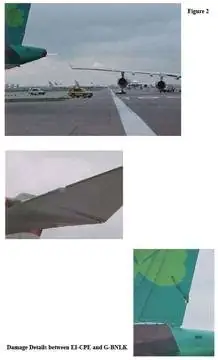
Ground vehicle driver (43)
A ground vehicle and a moving aircraft collided, with the vehicle driver's actions the main factor.
| Airline / operator | Corendon Airlines |
|---|---|
| Aircraft (type, registration) | Corendon Airlines Boeing 737 MAX 8 (TC-MKD) |
| Category (my classification) | Human factors / Ground vehicle driver |
| What happened | A Corendon Airlines Boeing 737 MAX 8, flight CAI185, at Friedrichshafen Airport (FDH/EDNY), Friedrichshafen, Bodensee, Baden-Württemberg, collided with a fire brigade truck during taxi and sustained substantial damage to the left underside of the Advanced Technology (AT) winglet. The 186 occupants were not injured and the aircraft was taken out of service and the replacement Boeing 737-86J TC-TJV took over the flight. |
| Injuries | ASN lists 0 fatalities. The 186 occupants were not injured and the aircraft was taken out of service and the replacement Boeing 737-86J TC-TJV took over the flight. |
| Damage | Not stated |
| Time out of service | TC-MKD: about 2 days, ≈ 9 missed flights (ADS-B flight data) |
| Official investigation | No investigation details on the ASN entry. |
| Source | Aviation Safety Network (ASN) entry: https://aviation-safety.net/wikibase/582829 Further sources listed on that page / found: https://aerocorner.com/news/corendon-xc185-tc-mkd-friedrichshafen-fire-truck-collision/ https://www.aerotelegraph.com/sicherheit/boeing-737-max-von-corendon-kollidiert-in-friedrichshafen-mit-feue… https://www.swr.de/swraktuell/baden-wuerttemberg/friedrichshafen/zusammenstoss-flugzeug-und-feuerwehrfahrze… https://cdn.jetphotos.com/full/5/885032_1697051932.jpg https://www.instagram.com/reel/Dd627WwRihM/?utm_source=ig_embed&utm_campaign=loading |
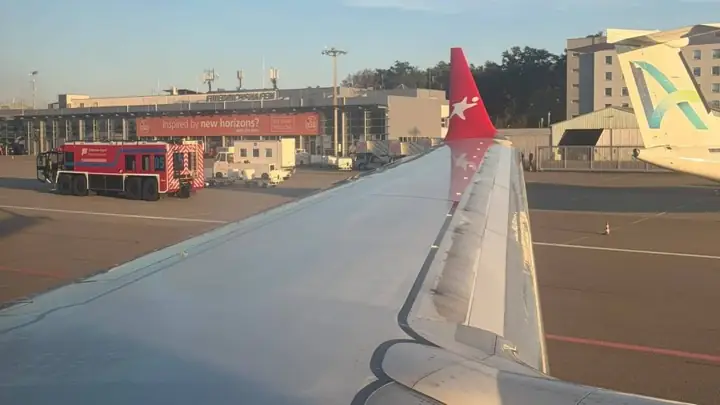
 ▶ VIDEO
Still: X video preview frame, @muratherdemm on X
 ▶ VIDEO
Still: X video preview frame, @HaberAero on X
| Airline / operator | Slam Air (aircraft); dnata (vehicle) |
|---|---|
| Aircraft (type, registration) | Hawker 400A (I-AERB) |
| Category (my classification) | Human factors / Ground vehicle driver |
| What happened | A dnata Fiat Panda crossed the path of the Hawker 400A as it taxied to the runway, and the aircraft's nose struck the car. No one was on board the aircraft and there were no injuries. Operations were suspended for 30 to 40 minutes. |
| Injuries | No injuries. |
| Damage | Nose of the aircraft and the car damaged |
| Official investigation | No public investigation found. |
| Source | AviationPros (citing AIN): https://www.aviationpros.com/ground-support-worldwide/ground-handling/news/55397834/ground-vehicle-collides-with-taxiing-business-jet-at-milan-linate |
| Flag | Non-airline (business, government, special-mission or charter) operator: shows the risk type, not a direct WheelTug airline market case. |
| Airline / operator | Iberia |
|---|---|
| Aircraft (type, registration) | Iberia Airbus A350-941 (EC-NXD) |
| Category (my classification) | Human factors / Ground vehicle driver Secondary: Taxi crew (flight or maintenance) |
| What happened | Iberia flight IB132 to Madrid, Airbus A350-941 EC-NXD, was taxiing between two airport fire trucks for a water-arch salute, requested because Iberia had begun using the A350 on the route (El Universo). The left wingtip struck the extended arm and turret of one fire truck (airport operator TAGSA statement). The crew stopped and returned to the apron, and the flight was cancelled. Time 11:56 local per AirPro News; Ecuavisa says about 11:30. |
| Injuries | None reported. |
| Damage | Left winglet tip broken. |
| Time out of service | EC-NXD: about 8 days, ≈ 9 missed flights (ADS-B flight data) |
| Official investigation | Ecuador DGAC investigating. No report published as of 29 Oct 2026. |
| Source | Aviation Safety Network (ASN) entry: https://aviation-safety.net/wikibase/571748 Further sources listed on that page / found: https://www.eluniverso.com/guayaquil/comunidad/avion-airbus-a350-de-iberia-sufre-incidente-durante-ceremoni… https://www.eluniverso.com/noticias/ecuador/que-provoco-el-incidente-del-airbus-a350-de-iberia-en-guayaquil… https://airpronews.com/2026/06/06/iberia-a350-winglet-damaged-in-guayaquil-water-salute-incident/ https://www.aerotime.aero/articles/watch-iberia-a350-wingtip-hits-fire-truck-during-water-salute-in-ecuador https://www.ecuavisa.com/guayaquil/esto-saben-vuelo-iberia-cancelado-punta-ala-rota-20260604-0107.html https://www.instagram.com/reel/DZLOeXcqXjd/ |
| Note | Filed under ground vehicle driver: AeroTime reports the truck on the left appeared to be positioned too close to the aircraft's path. El Universo quotes two pilots who point to a misjudgement by the fire crew, while also saying the flight crew's actions should be reviewed. |
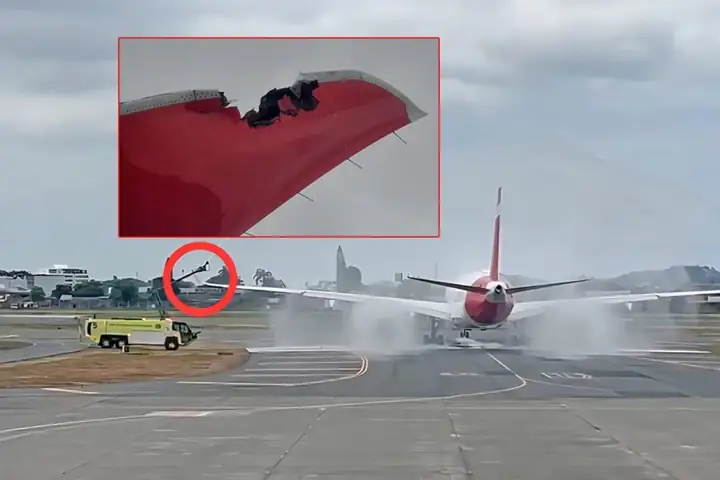
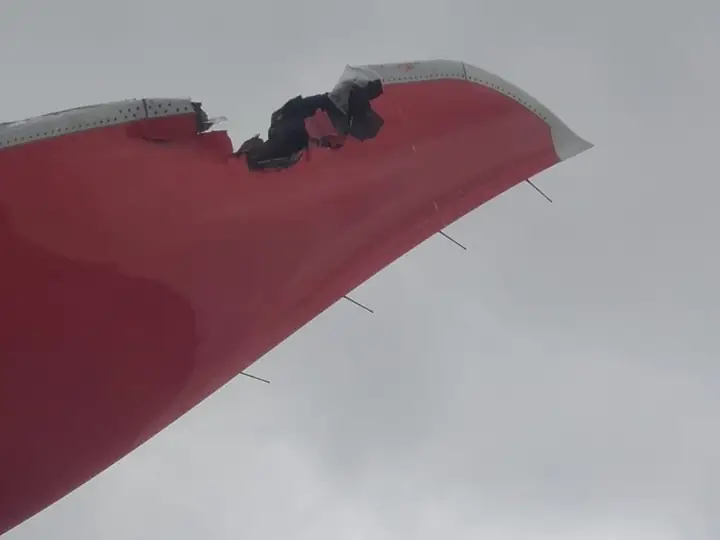
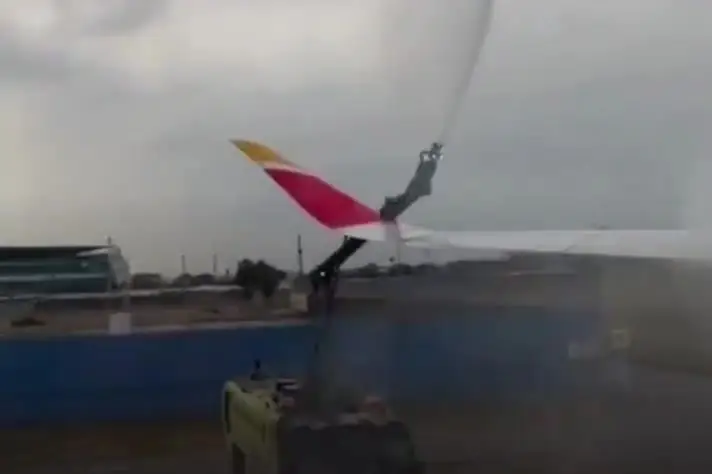 ▶ VIDEO
Still: frame at 2 s from a video posted on X by @airmainengineer
| Airline / operator | Eurowings, opb Smartwings |
|---|---|
| Aircraft (type, registration) | Eurowings, opb Smartwings Boeing 737-86N (WL) (OK-TVV) |
| Category (my classification) | Human factors / Ground vehicle driver |
| What happened | Eurowings flight EW535, a Boeing 737-800, suffered damage to the lower split scimitar winglet while leaving the stand at Málaga, when it struck maintenance steps positioned by the stand. The crew noticed no impact and the aircraft's behavior showed no anomalies. The damage was discovered only after landing at Cologne/Bonn (CGN). The incident aircraft was repaired and resumed service 27 hours after landing at CGN. METAR: LEMG 260800Z 01001KT CAVOK 22/14 Q1027 NOSIG LEMG 260900Z 13007KT 070V170 CAVOK 23/14 Q1027 NOSIG |
| Injuries | ASN lists 0 fatalities. No injury statement in the ASN narrative. |
| Damage | Minor, repaired |
| Time out of service | OK-TVV: 27 hours, ≈ 5 missed flights (ASN) |
| Official investigation | No investigation details on the ASN entry. Report / investigator link(s): https://uzpln.gov.cz/pdf/202607301152-Rozbor |
| Source | Aviation Safety Network (ASN) entry: https://aviation-safety.net/wikibase/575394 Further sources listed on that page / found: https://uzpln.gov.cz/pdf/202607301152-Rozbor |
| Airline / operator | Not identified |
|---|---|
| Aircraft (type, registration) | Frontier Airlines Airbus A320 (registration not confirmed) |
| Category (my classification) | Human factors / Ground vehicle driver Secondary: Tug involved |
| What happened | During pushback of a Frontier A320, with a Spirit A320 in the background at a US airport, the right horizontal stabilizer strikes a pickup truck driving behind the aircraft. |
| Injuries | Not known |
| Damage | Not known |
| Official investigation | No public investigation found. |
| Source | As shared with WheelTug (LinkedIn montage, A. G. Giordano): https://www.linkedin.com/feed/update/urn:li:activity:7380366854801940481/ |
| Note | Event not identified from public sources; the clip is at 1:41 in a ramp-incident montage posted 4 Oct 2025. A registration read from the video as N314FR could not be confirmed; public posts describe N314FR as a Cessna 182S, so it is not used. |
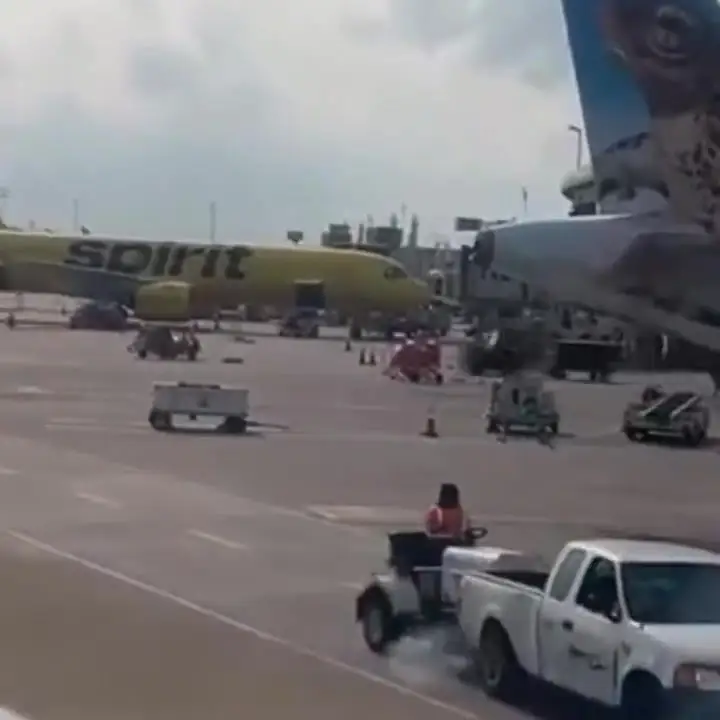 ▶ VIDEO
Still: frame at 1:41. As shared with WheelTug (LinkedIn montage, A. G. Giordano)
| Airline / operator | Not identified |
|---|---|
| Aircraft (type, registration) | CRJ-type regional jet (operator and registration not visible) |
| Category (my classification) | Human factors / Ground vehicle driver Secondary: Taxi crew (flight or maintenance) |
| What happened | A regional jet taxiing near gates 41 and 42 strikes a baggage cart being towed across its path. The clip carries an "Aviation_thing" watermark. |
| Injuries | Not known |
| Damage | Not known |
| Official investigation | No public investigation found. |
| Source | As shared with WheelTug (LinkedIn montage, A. G. Giordano): https://www.linkedin.com/feed/update/urn:li:activity:7380366854801940481/ |
| Note | Event not identified from public sources; the clip is at 0:04 in a ramp-incident montage posted 4 Oct 2025. |
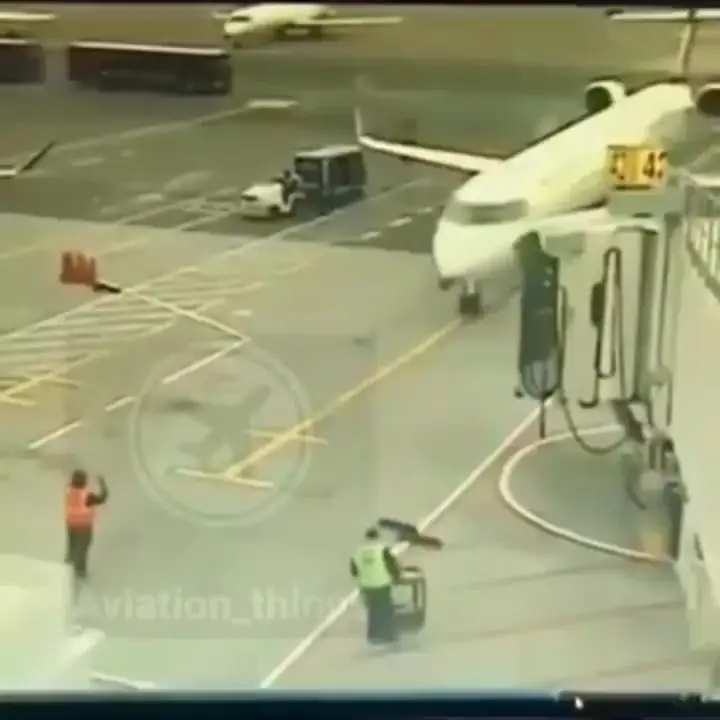 ▶ VIDEO
Still: frame at 0:04. As shared with WheelTug (LinkedIn montage, A. G. Giordano)
| Airline / operator | Transavia France |
|---|---|
| Aircraft (type, registration) | Transavia France Boeing 737-8K5 (WL) (F-HUYR) |
| Category (my classification) | Human factors / Ground vehicle driver |
| What happened | Ambulift hit the right winglet of the aircraft during pushback, causing minor damage on the lower part of the split scimitar winglet. The plane was repaired and took off the next day. The incident was captured on live stream at the link under, where you can hear the ATC reporting the issue and on another stream where you can see the damage and the repairs, that basically was sorted by removing the lower part of the winglet on the opposite wing. |
| Injuries | ASN lists 0 fatalities. No injury statement in the ASN narrative. |
| Damage | Not stated |
| Time out of service | F-HUYR: about 1 day, ≈ 4 missed flights (ADS-B flight data) |
| Official investigation | No investigation details on the ASN entry. |
| Source | Aviation Safety Network (ASN) entry: https://aviation-safety.net/wikibase/537098 |
| Airline / operator | Garuda Indonesia Airways |
|---|---|
| Aircraft (type, registration) | Garuda Indonesia Airways Boeing 737-8U3 (WL) (PK-GMP) |
| Category (my classification) | Human factors / Ground vehicle driver |
| What happened | Garuda Indonesia flight GA196, a Boeing 737-800, suffered minor damage after being hit by a vehicle during parking at Medan-Kualanamu International Airport (KNO), Indonesia. At 21:26 LT, the aircraft was taxiing on Apron W and turned right to Parking Stand W29, following the lead-in line. At the same time, when the aircraft was in line with the parking stand, a Lavatory Service Truck (LST) which was parked in the Equipment Staging Area (ESA) began moving unaided. When the aircraft reached the parking position and stopped, the LST impacted the tail section of the aircraft. No persons were injured as a result of this occurrence; however, the aircraft and the LST were damaged. Contributing Factors The KNKT concluded the contributing factors as follows: • The assumption that an the unserviceable parking brake could be replaced with a wheel chock resulted in the LST with an unserviceable parking brake being assessed as a serviceable vehicle during periodic inspection and daily checks. • The combination of late-evening work and developing fatigue might have influenced the improper placement of the wheel chock. • The vibration from the LST engine running and the aircraft movement toward the parking stand, combined with the suction effect generated by the aircraft engine, might have triggered the movement of the LST. • The existing triggering conditions to move the LST, combined with the downslope of the parking surface, the unserviceable parking brake, and improper placement of the wheel chock, resulted in the unintentional movement of the LST. |
| Injuries | ASN lists 0 fatalities. No persons were injured as a result of this occurrence; however, the aircraft and the LST were damaged. |
| Damage | Minor |
| Official investigation | Investigating agency: NTSC Report number: KNKT.24.10.22.04 Status: Investigation completed Duration: 1 year and 3 months Final report Report / investigator link(s): https://knkt.go.id/Repo/Files/Laporan/Penerbangan/2024/KNKT.24.10.22.04-Final-Report.pdf |
| Source | Aviation Safety Network (ASN) entry: https://aviation-safety.net/wikibase/458678 Further sources listed on that page / found: https://knkt.go.id/Repo/Files/Laporan/Penerbangan/2024/KNKT.24.10.22.04-Final-Report.pdf |
| Airline / operator | Air India Express |
|---|---|
| Aircraft (type, registration) | Air India Express Airbus A320-251N (VT-ATJ) |
| Category (my classification) | Human factors / Ground vehicle driver |
| What happened | Air India Express flight IX172, an Airbus A320-251N, struck a construction vehicle during taxi after landing at Surat. The aircraft sustained damage to a leading edge slat on the left- hand wing. During taxi after landing, the aircraft took a left turn on a non-operational (greyed-out) old apron taxiway, which is 9m away from the apron pavement edge. As they were taxiing on the wrong apron taxiway and were trying to identify the stand, the aircraft LH wing hit the bed of the construction dump truck. The FO reacted initially saying something had hit to which the PIC replied ‘nothing has hit’ and ‘its all okay’. The aircraft was halted for 8 seconds and in the meantime, FO identified stand no 8. After the PIC said its clear from the left side, the FO identified the taxiway they were on, had its markings removed. As the aircraft was taking turn for joining lead-in line for Stand no. 8, the FO identified that they were not on a taxiway and had shown PIC the actual taxiway. After docking, the AME informed the crew that the no.5 slat was damaged. Nobody was injured in this incident. The incident took place at night. Cause: The failure of the crew to correctly identify the operational apron taxiway and following the non-operational apron taxiway and failure to take cognizance of the obstacles near the apron edge line. Contributory Factor: The lack of taxiway closure marking on the old apron taxiway, improper obliteration of old apron taxiway marking, use of non-reflective pavement markings and the improper mitigating actions during safety risk assessment by the aerodrome operator are the contributing factors to the incident. |
| Injuries | ASN lists 0 fatalities. Nobody was injured in this incident. |
| Damage | Minor, repaired |
| Official investigation | Investigating agency: DGAC India Report number: Status: Investigation completed Duration: 10 months Final report Report / investigator link(s): https://www.dgca.gov.in/digigov-portal/Upload?flag=iframeAttachView&attachId=NZmZMIpeKKo2KKPj0Pm9vw%3D%3D |
| Source | Aviation Safety Network (ASN) entry: https://aviation-safety.net/wikibase/359356 Further sources listed on that page / found: https://www.dgca.gov.in/digigov-portal/Upload?flag=iframeAttachView&attachId=NZmZMIpeKKo2KKPj0Pm9vw%3D%3D https://t.co/bYJr05PXZy |
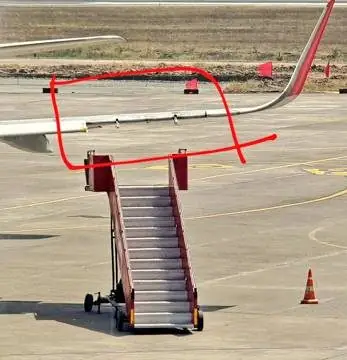
| Airline / operator | American Airlines |
|---|---|
| Aircraft (type, registration) | American Airlines Airbus A321-253NX (N417AN) |
| Category (my classification) | Human factors / Ground vehicle driver |
| What happened | American Airlines flight AA315, an Airbus A321-253NX, was pushing back from the gate when it was struck by a tug with baggage carts. |
| Injuries | ASN lists 0 fatalities. No injury statement in the ASN narrative. |
| Damage | Minor Location: Los Angeles International Airport, CA (LAX/KLAX) - United States of America Phase: Pushback / towing Nature: Passenger - Scheduled Departure airport: Los Angeles International Airport, CA (LAX/KLAX) Destination airport: Miami International Airport, FL (MIA/KMIA) Confidence Rating: Information verified through data from accident investigation authorities Narrative: American Airlines flight AA315, an Airbus A321-253NX, was pushing back from the gate when it was struck by a tug with baggage carts. ICAO Occurrence |
| Official investigation | No investigation details on the ASN entry. |
| Source | Aviation Safety Network (ASN) entry: https://aviation-safety.net/wikibase/356183 |
| Airline / operator | American Airlines |
|---|---|
| Aircraft (type, registration) | American Airlines Airbus A319-115 (N9022G) |
| Category (my classification) | Human factors / Ground vehicle driver |
| What happened | American Airlines flight AA1195, an Airbus A319-115, struck a set of air stairs while taxiing to the gate. |
| Injuries | ASN lists 0 fatalities. No injury statement in the ASN narrative. |
| Damage | Minor Location: Saint Thomas-Cyril E. King Airport (STT/TIST) - U.S. Virgin Islands Phase: Taxi Nature: Passenger - Scheduled Departure airport: Charlotte-Douglas International Airport, NC (CLT/KCLT) Destination airport: Saint Thomas-Cyril E. King Airport (STT/TIST) Confidence Rating: Information verified through data from accident investigation authorities Narrative: American Airlines flight AA1195, an Airbus A319-115, struck a set of air stairs while taxiing to the gate. ICAO Occurrence |
| Official investigation | No investigation details on the ASN entry. |
| Source | Aviation Safety Network (ASN) entry: https://aviation-safety.net/wikibase/351383 |
| Airline / operator | Jetstar Airways |
|---|---|
| Aircraft (type, registration) | Jetstar Airways Airbus A320-232 (VH-VGJ) |
| Category (my classification) | Human factors / Ground vehicle driver |
| What happened | The airplane was hit by a utility vehicle and was taken out of service. The no.2 engine nacelle was damaged. |
| Injuries | ASN lists 0 fatalities. No injury statement in the ASN narrative. |
| Damage | Minor |
| Official investigation | No investigation details on the ASN entry. |
| Source | Aviation Safety Network (ASN) entry: https://aviation-safety.net/wikibase/351097 Further sources listed on that page / found: https://www.dailymail.co.uk/news/article-12990495/Ute-crashes-Jetstar-plane-Sydney-Airport-causing-major-di… https://www.9news.com.au/videos/national/delays-after-ute-and-plane-collide-at-sydney-airport/clrolddw0000v… https://t.co/fQ7C8qodXI https://www.aerotime.aero/articles/utility-vehicle-crashes-into-jetstar-a320-aircraft-on-tarmac-at-sydney-a… |
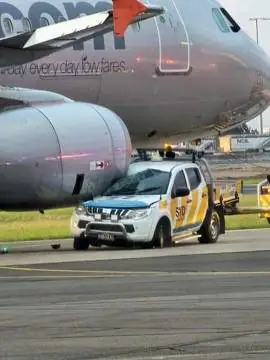
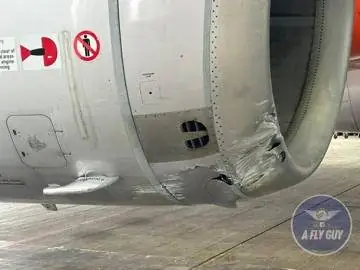
| Airline / operator | Ryanair |
|---|---|
| Aircraft (type, registration) | Ryanair Boeing 737-8AS (WL) (9H-QEN) |
| Category (my classification) | Human factors / Ground vehicle driver |
| What happened | Ryanair flight FR408, a Boeing 737-8AS, was involved in a serious incident with a snow removal vehicle on taxiway B in Copenhagen (EKCH). When holding at the holding point for runway 12 on taxiway B, the tower controller (ATCO) in Kastrup Tower cleared the aircraft to cross runway 12 and continue taxiing via taxiway B to the holding point for runway 04R. At that point, a convoy of 14 snow removal vehicles and one service vehicle performed snow removal on taxiway B. Based on issued ATCO instructions, the mission of the convoy was snow removal on taxiway B and subsequently snow removal on runway 04R. The snow removal vehicles had their rotating lights turned on. The ATCO had visual contact with the serious incident site. When the convoy passed taxiway B3, the two rearmost snow removal vehicles of the convoy turned slightly right to clear snow in the intersection between taxiway B and taxiway E2. This manoeuvre caused a gap of approximately 40 meters between the third from last snow removal vehicle in the convoy down to the two rearmost snow removal vehicles and the service vehicle. The convoy stopped on taxiway B awaiting an ATCO clearance to enter runway 04R. The two rearmost snow removal vehicles caught up with the rest of the snow removal vehicle convoy and stopped to the right of the taxiway edge marking (just outside the double yellow line). The line-up of the convoy of snow removal vehicles on taxiway B was eight vehicles in a displaced snow removal formation (active snow removal) and six vehicles in line (inactive snow removal) on the taxiway shoulder to the right of the taxiway edge marking. There was a minor gap between the third from last snow removal vehicle in the convoy down to the two rearmost snow removal vehicles. The flight crew noticed the involved two snow removal vehicles to the right of the taxiway edge marking. Because of the positions of and no issued traffic information about the snow removal vehicles, the flight crew considered the vehicles to be of no risk to the aircraft and continued taxiing on the taxiway centreline with a close lookout. The driver of the rearmost snow removal vehicle noticed that the service vehicle suddenly turned right on taxiway E2, and that an aircraft from behind approached the two snow removal vehicles. The driver expected the aircraft to turn left via taxiway B3 for the holding point for runway 04R. The driver realised that the aircraft continued taxiing toward the positions of the two rearmost snow removal vehicles and requested the ATCO to stop the aircraft "Please stop the aircraft, the aircraft wing is right now passing just overhead the snow removal vehicle" (translated from Danish). The driver of the second to last snow removal vehicle did not notice the aircraft, until the driver heard aircraft engine noise. Through the sideview mirror, the driver observed the aircraft approaching and feared a collision between the aircraft right wing and the cab of the snow removal vehicle. The driver lied down on the front seat. As the aircraft passed, the driver heard a scraping sound from the cap top. The ATCO instructed FR408 to hold position. The flight crew reacted and stopped the aircraft. At that point, the aircraft had passed the two rearmost snow removal vehicles with marginal wing clearance. The leader of the convoy of the snow removal vehicles called the ATCO, because the clearance between the aircraft right wing and the second to last snow removal vehicle was marginal. The ATCO informed the flight crew about a potential collision with a snow removal vehicle and asked the flight crew, if they wanted a wing inspection. The flight crew declined. Because of their close lookout throughout the sequence of events, the flight crew was positive that a collision did not occur. CONCLUSIONS Diverging perceptions of the traffic situation on taxiway B led to marginal clearance or a possible collision between the aircraft right wing and a snow removal vehicle. METAR: METAR EKCH 032250Z 08028G41KT 2000 -SN BKN010 BKN014 00/M02 Q0989 TEMPO 08028G40KT 5000 BKN015= METAR EKCH 032220Z 08027G41KT 2000 -SN BKN009 BKN014 00/M02 Q0989 TEMPO 08028G40KT 5000 BKN015= METAR EKCH 032150Z 08027G40KT 2000 -SN SCT009 BKN012 00/M02 Q0989 TEMPO 5000 BKN008= |
| Injuries | ASN lists 0 fatalities. No injury statement in the ASN narrative. |
| Damage | None |
| Official investigation | Investigating agency: HCLJ Report number: 2024-30 Status: Investigation completed Duration: 4 months Final report Report / investigator link(s): https://havarikommissionen.dk/Media/638526545107303546/L_2024_SeriousIncident_2024-30_9H-QEN_Aircraft_Copenhagen..pdf |
| Source | Aviation Safety Network (ASN) entry: https://aviation-safety.net/wikibase/388632 Further sources listed on that page / found: https://havarikommissionen.dk/Media/638526545107303546/L_2024_SeriousIncident_2024-30_9H-QEN_Aircraft_Copen… |
| Airline / operator | JetBlue Airways |
|---|---|
| Aircraft (type, registration) | JetBlue Airways Airbus A320-232 (N607JB) |
| Category (my classification) | Human factors / Ground vehicle driver |
| What happened | JetBlue Airways flight B62306, an Airbus A320-232, was taxiing to the gate when a tug collided with the no.2 engine. |
| Injuries | ASN lists 0 fatalities. No injury statement in the ASN narrative. |
| Damage | Minor Location: Newark-Liberty International Airport, NJ (EWR/KEWR) - United States of America Phase: Taxi Nature: Passenger - Scheduled Departure airport: Fort Lauderdale International Airport, FL (FLL/KFLL) Destination airport: Newark- Liberty International Airport, NJ (EWR/KEWR) Confidence Rating: Information verified through data from accident investigation authorities Narrative: JetBlue Airways flight B62306, an Airbus A320-232, was taxiing to the gate when a tug collided with the no.2 engine. ICAO Occurrence |
| Official investigation | No investigation details on the ASN entry. |
| Source | Aviation Safety Network (ASN) entry: https://aviation-safety.net/wikibase/348972 |
| Airline / operator | American Eagle, opb Envoy Air |
|---|---|
| Aircraft (type, registration) | American Eagle, opb Envoy Air Embraer ERJ-170STD (N766JM) |
| Category (my classification) | Human factors / Ground vehicle driver |
| What happened | American flight AA3473, an Embraer ERJ-170STD, was damaged when a truck collided with the aircraft during pushback at Chicago- O'Hare International Airport, IL (ORD). The incident aircraft resumed regular service 23 hours after the occurrence. |
| Injuries | ASN lists 0 fatalities. No injury statement in the ASN narrative. |
| Damage | Not stated |
| Time out of service | N766JM: 23 hours (ASN) |
| Official investigation | No investigation details on the ASN entry. |
| Source | Aviation Safety Network (ASN) entry: https://aviation-safety.net/wikibase/348216 |
| Airline / operator | Air Europa |
|---|---|
| Aircraft (type, registration) | Air Europa Boeing 737-85P (WL) (EC-LTM) |
| Category (my classification) | Human factors / Ground vehicle driver |
| What happened | Air Europa flight UX1093, a Boeing 737-85P, nearly collided with a tow truck during taxi at Amsterdam-Schiphol International Airport (AMS). The flight crew of the Boeing 737, which had landed on Runway 18R, received clearance to taxi to parking stand C13 and cross Runway 18C at W13. After the flight crew’s readback, the ground controller instructed them to take the first right turn after crossing, via Taxiway Delta and to contact Ground on another frequency. They were then cleared to continue via taxiways Bravo and Quebec. At the first junction, however, the Boeing 737 turned left onto Taxiway Bravo. It then proceeded in front of an aircraft under tow, which was heading south on Taxiway Charlie and had clearance to turn left onto Taxiway Bravo. The driver of the tug vehicle had to brake abruptly to avoid a collision. The Boeing 737 continued taxiing, with the distance between the two aircraft narrowing to approximately 40 metres. The intention of the ground controller was for the Boeing 737 to taxi straight ahead on Delta to Bravo. However, the crew of the airliner misinterpreted the clearance from the ground controller and turned left to taxi clockwise on Bravo. Although the standard taxi routing on Taxiway Bravo is counter clockwise, it was logical for the crew to turn left, as parts of the parallel Taxiway Alfa were unavailable that day. |
| Injuries | ASN lists 0 fatalities. No injury statement in the ASN narrative. |
| Damage | None |
| Official investigation | Investigating agency: Dutch Safety Board Report number: 2023209 Status: Investigation completed Duration: 5 months Final report |
| Source | Aviation Safety Network (ASN) entry: https://aviation-safety.net/wikibase/367702 |
| Airline / operator | Royal Air Maroc - RAM |
|---|---|
| Aircraft (type, registration) | Royal Air Maroc - RAM Boeing 737-8B6 (WL) (CN-ROU) |
| Category (my classification) | Human factors / Ground vehicle driver |
| What happened | The Royal Air Maroc Boeing 737-8B6 (CN-ROU) was involved in a ground collision with a catering truck during entry manoeuvres to parking bay C8 at Casablanca-Mohamed V Airport (CMN). ADS-B data show that both CN-ROU and another RAM Boeing 737-800, CN- RNU, were still on the ground at CMN eight days after the incident. |
| Injuries | ASN lists 0 fatalities. No injury statement in the ASN narrative. |
| Damage | Unknown |
| Time out of service | CN-ROU: at least 8 days (ADS-B) (ASN) |
| Official investigation | No investigation details on the ASN entry. |
| Source | Aviation Safety Network (ASN) entry: https://aviation-safety.net/wikibase/346624 |
| Airline / operator | American Eagle, opb Air Wisconsin |
|---|---|
| Aircraft (type, registration) | American Eagle, opb Air Wisconsin Canadair CRJ-200LR (N457AW) |
| Category (my classification) | Human factors / Ground vehicle driver |
| What happened | An American Airlines regional jet collided with a shuttle bus at Chicago O'Hare Airport while taxiing for T/O. There were no injuries in the airplane. Two people on the bus sustained minor injuries. Aircraft suffered substantial damage to it's nose cone. |
| Injuries | ASN lists 0 fatalities. There were no injuries in the airplane.; Two people on the bus sustained minor injuries. |
| Damage | Minor |
| Official investigation | No investigation details on the ASN entry. |
| Source | Aviation Safety Network (ASN) entry: https://aviation-safety.net/wikibase/346323 Further sources listed on that page / found: https://www.nbcwashington.com/news/national-international/2-hospitalized-after-small-passenger-aircraft-str… https://edition.cnn.com/2023/10/07/us/chicago-ohare-plane-bus-collision/index.html |
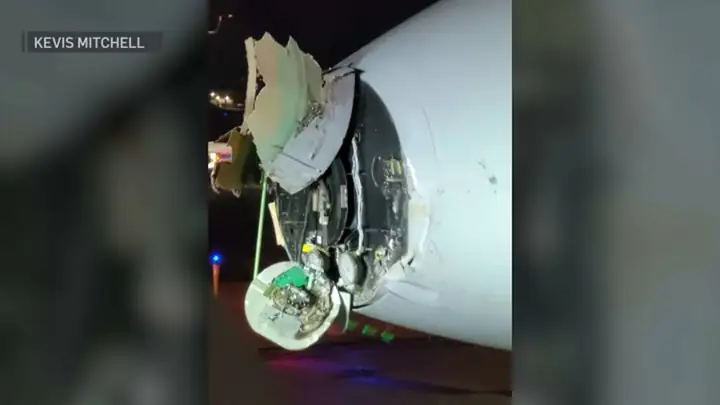
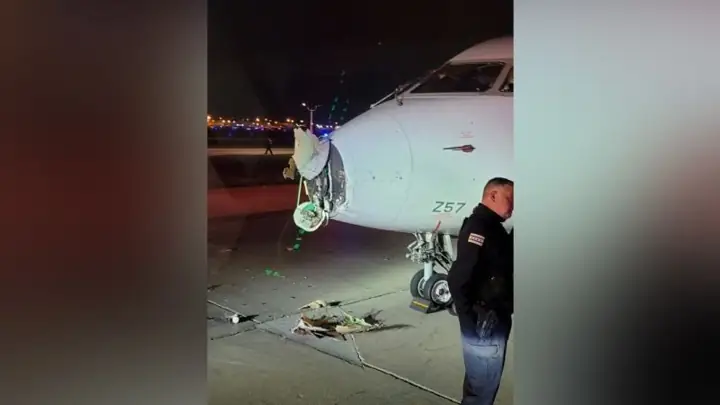
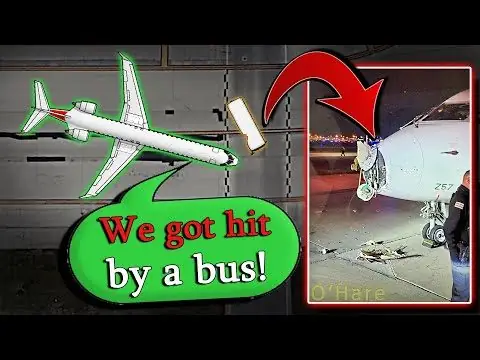 ▶ VIDEO
Still: YouTube thumbnail, VASAviation
| Airline / operator | Ryanair |
|---|---|
| Aircraft (type, registration) | Ryanair Boeing 737-8AS (WL) (EI-EGD) |
| Category (my classification) | Human factors / Ground vehicle driver |
| What happened | Ryanair flight FR2861, a Boeing 737-8AS, impacted an ambulift truck while taxiing into the stand at London-Stansted Airport (STN). The aircraft sustained damage to a leading edge slat on the right-hand wing. EI-EGD was turning onto the stand across the back-of-stand road the vehicle was travelling on. Conclusion A Bulmor SideBull OMNI 135 vehicle collided with EI-EGD because the vehicle driver did not see the aircraft or did not anticipate it would turn onto stand. The driver may have experienced inattentional blindness and his performance may have been reduced by the fast operating tempo, high workload and task related fatigue. The stand and road layout in the area created the potential for conflict between vehicles and aircraft to arise from any direction. |
| Injuries | ASN lists 0 fatalities. No injury statement in the ASN narrative. |
| Damage | Minor, repaired |
| Official investigation | Investigating agency: AAIB Report number: AAIB-29638 Status: Investigation completed Duration: 10 months Final report Report / investigator link(s): https://assets.publishing.service.gov.uk/media/66b23c5eab418ab0555933bf/Boeing_737-8AS_EI-EGD_08-24.pdf |
| Source | Aviation Safety Network (ASN) entry: https://aviation-safety.net/wikibase/346444 Further sources listed on that page / found: https://assets.publishing.service.gov.uk/media/66b23c5eab418ab0555933bf/Boeing_737-8AS_EI-EGD_08-24.pdf https://uk.news.yahoo.com/cctv-ryanair-plane-collides-truck-122654172.html https://t.co/Ii1AtDUuuu |
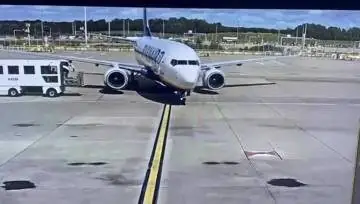 ▶ VIDEO
Still: frame from the video in the linked post (same footage).
 ▶ VIDEO
Still: X video preview frame, @Conradoaviacion on X
| Airline / operator | Tri-State Charter |
|---|---|
| Aircraft (type, registration) | Tri-State Charter Canadair CRJ-100SE (N998CA) |
| Category (my classification) | Human factors / Ground vehicle driver |
| What happened | The Canadair CRJ-100SE, aborted takeoff from Houston-David Wayne Hooks Airport, TX (DWH) and taxiied to the apron, where it collided with a tug. The tug became wedged under the fuselage. |
| Injuries | ASN lists 0 fatalities. No injury statement in the ASN narrative. |
| Damage | Unknown Location: Houston-David Wayne Hooks Airport, TX (DWH/KDWH) - United States of America Phase: Taxi Nature: Unknown Departure airport: Houston-David Wayne Hooks Airport, TX (DWH/KDWH) Destination airport: Confidence Rating: Information verified through data from accident investigation authorities Narrative: The Canadair CRJ-100SE, aborted takeoff from Houston-David Wayne Hooks Airport, TX (DWH) and taxiied to the apron, where it collided with a tug. The tug became wedged under the fuselage. ICAO Occurrence |
| Official investigation | No investigation details on the ASN entry. |
| Source | Aviation Safety Network (ASN) entry: https://aviation-safety.net/wikibase/345547 |
| Flag | Non-airline (business, government, special-mission or charter) operator: shows the risk type, not a direct WheelTug airline market case. |
| Airline / operator | Gol Linhas Aéreas |
|---|---|
| Aircraft (type, registration) | Gol Linhas Aéreas Boeing 737 MAX 8 (PS-GPG) |
| Category (my classification) | Human factors / Ground vehicle driver |
| What happened | A GOL Boeing 737 was damaged in a collision with ground equipment at São Paulo-Guarulhos International Airport, SP (GRU) . The driver of the ground vehicle sustained injures and the vehicle appears to have been crushed. |
| Injuries | ASN lists 0 fatalities. The driver of the ground vehicle sustained injures and the vehicle appears to have been crushed. |
| Damage | Minor Location: São Paulo-Guarulhos International Airport, SP (GRU/SBGR) - Brazil Phase: Standing Nature: Passenger - Scheduled Departure airport: Destination airport: Confidence Rating: Little or no information is available Narrative: A GOL Boeing 737 was damaged in a collision with ground equipment at São Paulo- Guarulhos International Airport, SP (GRU) . The driver of the ground vehicle sustained injures and the vehicle appears to have been crushed. ICAO Occurrence |
| Official investigation | No investigation details on the ASN entry. |
| Source | Aviation Safety Network (ASN) entry: https://aviation-safety.net/wikibase/312270 Further sources listed on that page / found: https://www.goklerdeyiz.net/yolcu-ucagi-ile-yer-araci-carpisti-7/ https://aeroin.net/em-colisao-no-aeroporto-de-guarulhos-aviao-da-gol-sofre-danos-e-funcionario-e-socorrido-… |
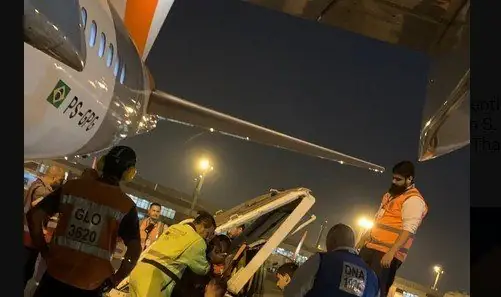
| Airline / operator | American Airlines |
|---|---|
| Aircraft (type, registration) | American Airlines Airbus A321-211 (N193UW) |
| Category (my classification) | Human factors / Ground vehicle driver |
| What happened | While being towed, a passenger bus crashed into an American Airlines airplane at Los Angeles International Airport. Four persons were injured. |
| Injuries | ASN lists 0 fatalities. Four persons were injured. |
| Damage | Minor |
| Official investigation | No investigation details on the ASN entry. |
| Source | Aviation Safety Network (ASN) entry: https://aviation-safety.net/wikibase/308148 Further sources listed on that page / found: http://www.cbsnews.com/ https://flightaware.com/live/flight/N193UW https://t.co/WrLhIWARWG https://t.co/A2Kj7Tiaha |
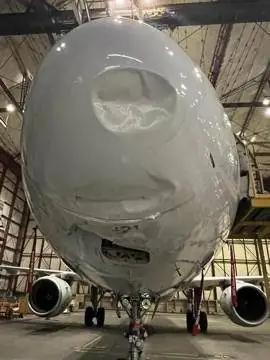
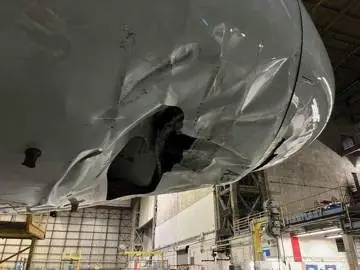
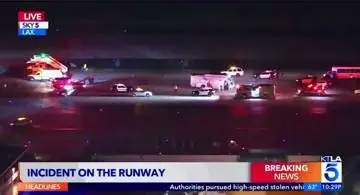 ▶ VIDEO
Still: X video preview frame, @IntelPointAlert on X
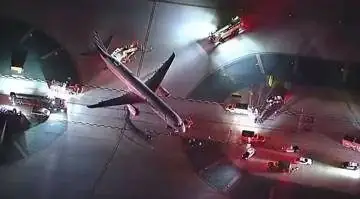 ▶ VIDEO
Still: X video preview frame, @airplusnews on X
| Airline / operator | SunExpress |
|---|---|
| Aircraft (type, registration) | Boeing 737-800 (TC-SOA) |
| Category (my classification) | Human factors / Ground vehicle driver |
| What happened | A bus hit the wing of SunExpress TC-SOA during parking. |
| Injuries | Not stated in the source. |
| Damage | Wing damaged |
| Official investigation | No public investigation found. |
| Source | JACDEC on X: https://x.com/JacdecNew/status/1584128948153503744 |
| Note | Date is the JACDEC post date. Source does not make clear whether the aircraft was still moving. |
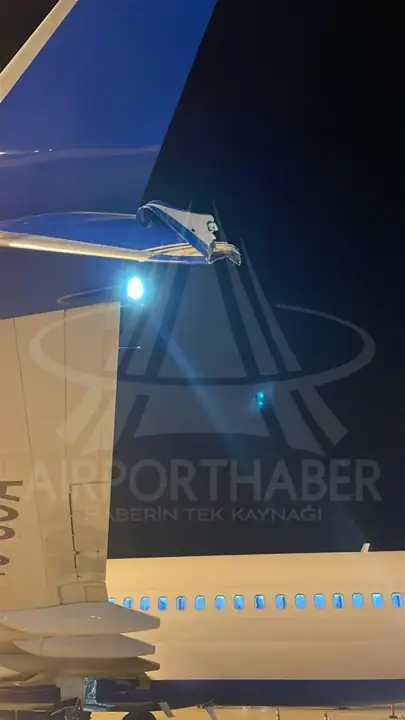
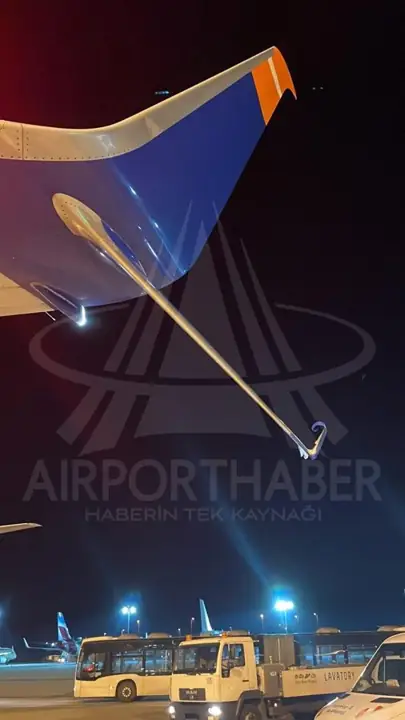
| Airline / operator | JetBlue Airways |
|---|---|
| Aircraft (type, registration) | JetBlue Airways Airbus A320-232 (N527JL) |
| Category (my classification) | Human factors / Ground vehicle driver |
| What happened | JetBlue flight JBU2339, an Airbus A320-232, was taxiing when an SUV collided with it at LaGuardia Airport (LGA/KLGA), New York. The vehicle was reportedly not occupied and rolled into the aircraft. No injuries reported. The flight was cancelled. |
| Injuries | ASN lists 0 fatalities. No injuries reported. |
| Damage | Minor |
| Official investigation | No investigation details on the ASN entry. |
| Source | Aviation Safety Network (ASN) entry: https://aviation-safety.net/wikibase/283543 Further sources listed on that page / found: https://www.goklerdeyiz.net/yolcu-ucagi-ile-yer-araci-carpisti-6/ |
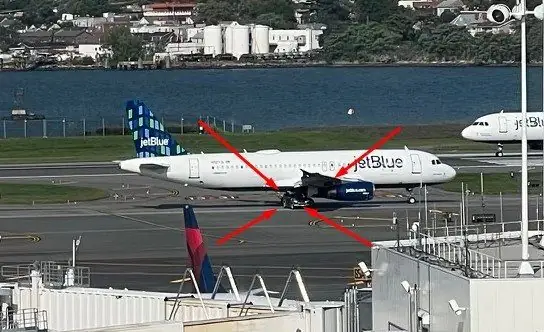
| Airline / operator | Air Canada Express, opb Jazz |
|---|---|
| Aircraft (type, registration) | Bombardier CRJ-900 (C-GJFZ) |
| Category (my classification) | Human factors / Ground vehicle driver |
| What happened | The CRJ-900 was hit by a tug while parking; flight AC8695 was cancelled. |
| Injuries | Not stated in the source. |
| Damage | Damage visible in the posted photo; extent not stated |
| Official investigation | No public investigation found. |
| Source | JACDEC on X: https://x.com/JacdecNew/status/1546217494305816578 |
| Note | Date is the JACDEC post date. Source does not make clear whether the aircraft or the tug was moving at impact. |
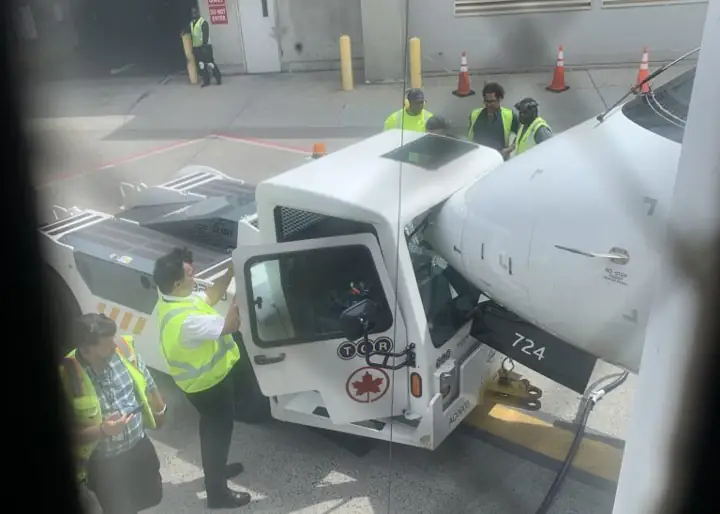
| Airline / operator | Aeroflot |
|---|---|
| Aircraft (type, registration) | Aeroflot Airbus A350-941 (VP-BXC) |
| Category (my classification) | Human factors / Ground vehicle driver |
| What happened | Aeroflot A350-941 reg VP-BXC collides with de-icing truck at Moscow Sheremetyevo Airport in Russia. The driver was injured and taken to hospital for medical treatment. At the time of the incident the right wing of the aircraft was being de-iced. The aircraft began to move forward, striking the vehicle and causing it to topple. The aircraft received damage to the right slat in the form of a dent up to 60 cm in size. |
| Injuries | ASN lists 0 fatalities. The driver was injured and taken to hospital for medical treatment. |
| Damage | Not stated |
| Official investigation | No investigation details on the ASN entry. |
| Source | Aviation Safety Network (ASN) entry: https://aviation-safety.net/wikibase/270809 Further sources listed on that page / found: https://www.goklerdeyiz.net/yolcu-ucagi-de-icing-aracina-carpti/ https://t.me/aviaincident/12303 |
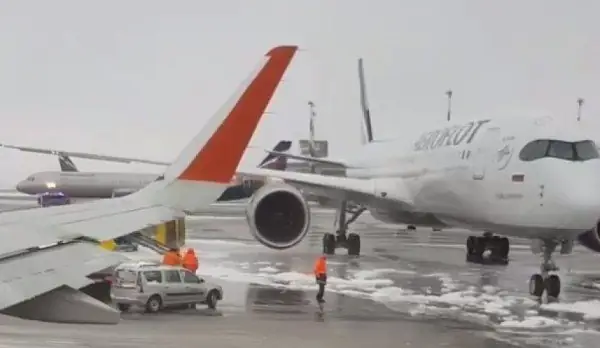
| Airline / operator | KLM Cityhopper |
|---|---|
| Aircraft (type, registration) | KLM Cityhopper Embraer ERJ-175STD (PH-EXW) |
| Category (my classification) | Human factors / Ground vehicle driver |
| What happened | A KLM Cityhopper Embraer ERJ-175STD, PH-EXW, sustained damage to the APU casing after it was struck by an airport bus. It's unclear if the aircraft was stationary or if it was pushed back at the time of the incident. |
| Injuries | ASN lists 0 fatalities. No injury statement in the ASN narrative. |
| Damage | Not stated |
| Official investigation | No investigation details on the ASN entry. |
| Source | Aviation Safety Network (ASN) entry: https://aviation-safety.net/wikibase/270547 Further sources listed on that page / found: https://t.co/1351S12PgT |
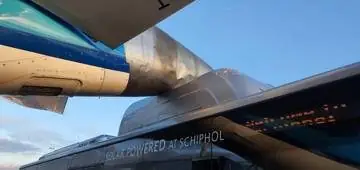
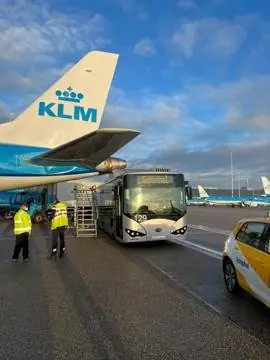
| Airline / operator | United Express, opb Air Wisconsin |
|---|---|
| Aircraft (type, registration) | United Express, opb Air Wisconsin Canadair CRJ-200LR (N444ZW) |
| Category (my classification) | Human factors / Ground vehicle driver Secondary: ATC / marshalling involved |
| What happened | United Express flight 3937 had been pushed back from the gate at Asheville Regional Airport, North Carolina, USA, when it was struck by a fuel truck. According to the flight crew, after pushback they received instructions from the ground controller to hold their position due to a 30-minute delay before takeoff. While they were holding, a fuel truck began backing up in their direction without the assistance of marshallers. The captain attempted to get the drivers attention by flashing the airplane's landing lights. However, the fuel truck driver continued backing up and struck the airplane resulting in substantial damage to an area under the first officer’s window. The captain immediately shut down the right engine and made a public address announcement for the passengers to remain seated. Post-accident inspection revealed a hole in the forward fuselage of the airplane. Probable Cause: The fuel truck driver backing up in the direction of the airplane without the use of marshallers. |
| Injuries | ASN lists 0 fatalities. No injury statement in the ASN narrative. |
| Damage | Substantial, repaired |
| Official investigation | Investigating agency: NTSB Report number: DCA21LA226 Status: Investigation completed Duration: 10 months Final report Report / investigator link(s): https://data.ntsb.gov/carol-repgen/api/Aviation/ReportMain/GenerateNewestReport/103922/pdf |
| Source | Aviation Safety Network (ASN) entry: https://aviation-safety.net/wikibase/318937 Further sources listed on that page / found: https://data.ntsb.gov/carol-repgen/api/Aviation/ReportMain/GenerateNewestReport/103922/pdf |
| Airline / operator | Air Europa |
|---|---|
| Aircraft (type, registration) | Air Europa Boeing 737-85P (WL) (EC-MUZ) |
| Category (my classification) | Human factors / Ground vehicle driver |
| What happened | Air Europa flight UX6066, a Boeing 737-85P, was taxiing on taxiway M at Madrid Airport, after landing on runway 18L. At a certain point, the crew noticed that a van without a driver was encroaching on the taxiway from the right. The pilot attempted to avoid it by making a left turn, but this was not sufficient. The vehicle impacted the side of engine number 2 and came to rest on the other side of the taxiway. The aircraft continued taxiing without stopping and was able to reach its parking place. There were no injuries. The aircraft sustained damage to the nacelle of engine number 2. The aircraft was repaired and resumed service 25 August 2021. Causes/contributing factors The investigation has determined that the cause of the incident was the failure of the van driver to adhere to platform safety regulations by not activating the handbrake before leaving his vehicle. |
| Injuries | ASN lists 0 fatalities. There were no injuries. |
| Damage | Minor, repaired |
| Time out of service | EC-MUZ: 5 days (ASN) |
| Official investigation | Investigating agency: CIAIAC Report number: IN-040/2021 Status: Investigation completed Duration: 1 year and 8 months Final report Report / investigator link(s): https://www.transportes.gob.es/recursos_mfom/comodin/recursos/in-040-2021_informe-final_nm.pdf https://www.transportes.gob.es/organos-colegiados/ciaiac/investigacion/2021/IN-040-2021 |
| Source | Aviation Safety Network (ASN) entry: https://aviation-safety.net/wikibase/268031 Further sources listed on that page / found: https://www.transportes.gob.es/recursos_mfom/comodin/recursos/in-040-2021_informe-final_nm.pdf https://www.transportes.gob.es/organos-colegiados/ciaiac/investigacion/2021/IN-040-2021 |
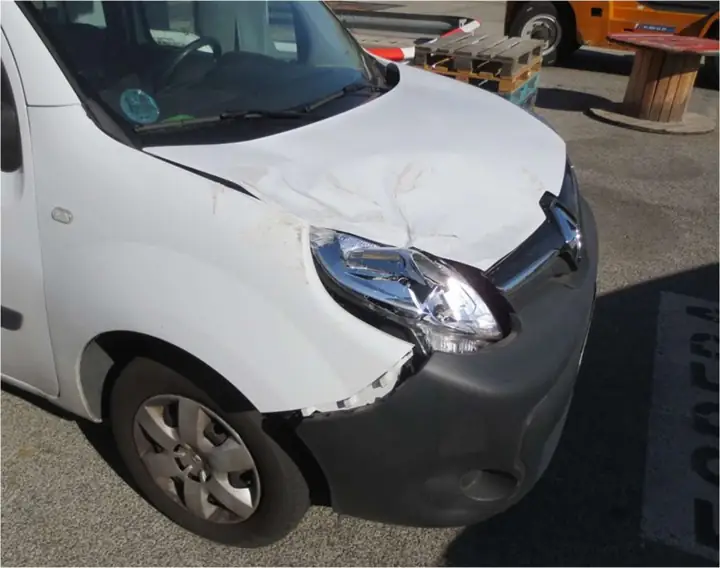
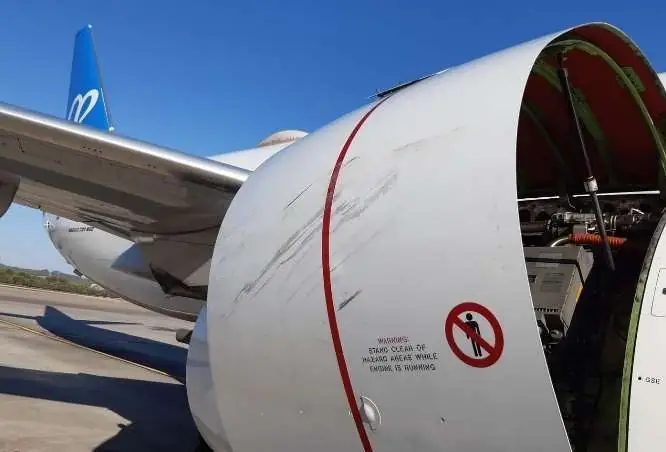
| Airline / operator | Delta Connection, opb SkyWest Airlines |
|---|---|
| Aircraft (type, registration) | Delta Connection, opb SkyWest Airlines Embraer ERJ-175LL (N291SY) |
| Category (my classification) | Human factors / Ground vehicle driver |
| What happened | SkyWest Airlines FLDL4819, an Embraer ERJ-175LL, N291SY, was struck by a tug or baggage car while pulling into the gate at Minneapolis-St. Paul International Airport, MN (MSP). |
| Injuries | ASN lists 0 fatalities. No injury statement in the ASN narrative. |
| Damage | Not stated |
| Official investigation | No investigation details on the ASN entry. |
| Source | Aviation Safety Network (ASN) entry: https://aviation-safety.net/wikibase/228382 |
| Airline / operator | Air Canada Express, opb Jazz Aviation |
|---|---|
| Aircraft (type, registration) | Air Canada Express, opb Jazz Aviation de Havilland Canada DHC-8- 311 Dash 8 (C-FJXZ) |
| Category (my classification) | Human factors / Ground vehicle driver |
| What happened | Air Canada Express flight 8615, a DHC-8-311, collided with a fuel truck while taxiing to gate at Toronto Pearson Airport in Canada. Five persons were injured in the accident. Flight 8615 departed Toronto on May 9, 23:03 hours local time, on a domestic flight to Sudbury. Visibility at Sudbury was poor and the flight was not able to land. The flight crew elected to return to Toronto, where a normal landing was made at 01:25 hours local time (May 10). As the aircraft was taxiing to the gate, a collision occurred with a fuel truck. The aircraft spun and sustained serious damage to the left side of the flight deck. The left hand rear cargo door was pushed inward and the no.1 propeller also suffered damage. Findings as to causes and contributing factors: 1. The limited field of view to the right of the fuel tanker driver’s cab caused by the front elevating service platform and its structural elements, along with the condensation on the windows, resulted in the driver being unable to see the aircraft in time to avoid the collision. 2. The captain had a clear field of view in the direction of the oncoming fuel tanker but the visibility was limited due to darkness, rain, and reflected light, and he did not see the oncoming tanker during the critical moments before the collision. |
| Injuries | ASN lists 0 fatalities. Five persons were injured in the accident. |
| Damage | Substantial, written off |
| Time out of service | C-FJXZ: Written off (ASN) |
| Official investigation | Investigating agency: TSB Report number: A19O0063 Status: Investigation completed Duration: 1 year and 3 months Final report Report / investigator link(s): https://tsb.gc.ca/sites/default/files/rapports-reports/aviation/a19o0063/eng/a19o0063.pdf |
| Source | Aviation Safety Network (ASN) entry: https://aviation-safety.net/wikibase/319435 Further sources listed on that page / found: https://tsb.gc.ca/sites/default/files/rapports-reports/aviation/a19o0063/eng/a19o0063.pdf |
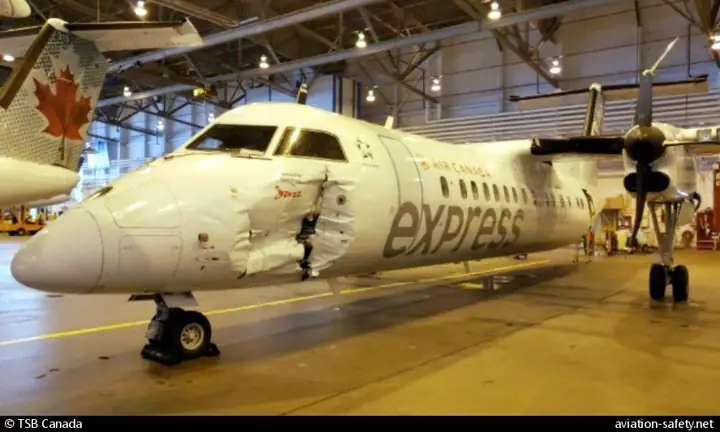
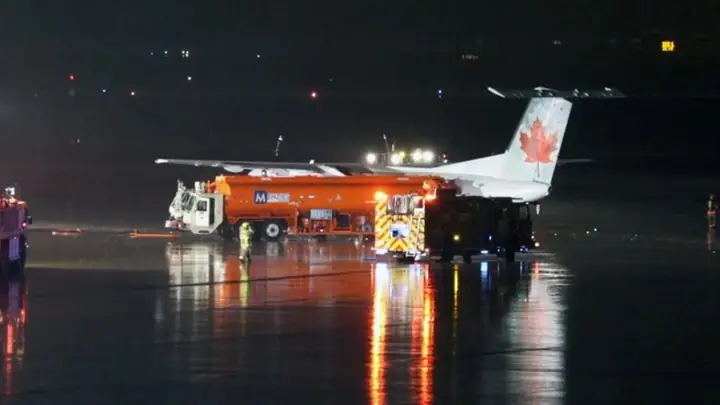
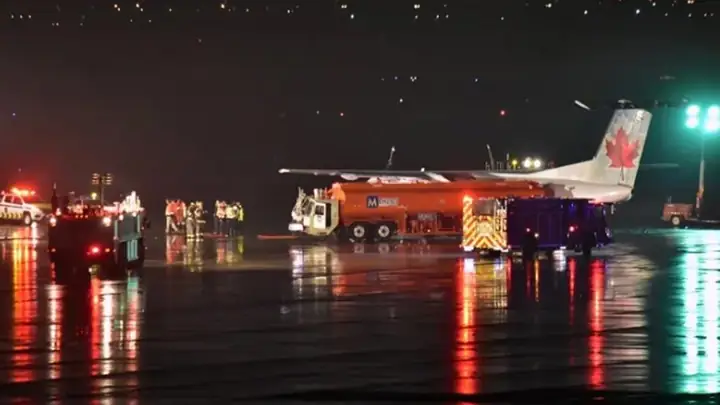
| Airline / operator | Afrijet |
|---|---|
| Aircraft (type, registration) | Afrijet ATR 72-500 (72-212A) (TR-ABS) |
| Category (my classification) | Human factors / Ground vehicle driver |
| What happened | Afrijet Flight J7 342 landed at Sao Tome International Airport at 18:10 UTC. The crew taxied the aircraft to a parking position at ramp as instructed by marshalling personnel. Immediately the crew shut down engine no.1 and requested the connection of ground power to allow the procedure for disembarking of passengers. After connecting the ground power unit (GPU) to the aircraft by the mechanic, the ramp assistant removed the tractor from the GPU, switched it on and drove away. Turning left he saw the mechanic standing close to the nose of the aircraft and being unable to stop the tractor he hit him, lost the control of the tractor, turning again to the left and hitting at this time the forward right side of the fuselage near the socket causing a serious rupture. Without delay the flight crew shut down engine no.2 and as a safety measure they switched off all systems in the aircraft. CAUSAL FACTORS 1 In a hurry and speeding while driving the tractor led the ramp assistant to lose control and consequently having caused the accident. CONTRIBUTORY FACTORS 1 Steering will and braking system faulty. 2 Improper maintenance which led to faulty tractor steering wheel and braking system. |
| Injuries | ASN lists 0 fatalities. No injury statement in the ASN narrative. |
| Damage | Substantial, repaired |
| Official investigation | Investigating agency: CNIPAIA Report number: AC/21/03/2019/RF Status: Investigation completed Duration: 1 year and 3 months Final report |
| Source | Aviation Safety Network (ASN) entry: https://aviation-safety.net/wikibase/391919 |
| Airline / operator | Flybe |
|---|---|
| Aircraft (type, registration) | Flybe de Havilland Canada DHC-8-402Q Dash 8 (G-JECN) |
| Category (my classification) | Human factors / Ground vehicle driver |
| What happened | The aircraft had landed at Southampton and was being taxied to its allocated stand. The No 1 engine had been shut down in accordance with the operator’s SOPs. As it approached the stand, at walking pace, the commander applied the brakes, which had no effect and the aircraft hit signage and the rotating No 2 (right) propeller struck a nearby ground power unit (GPU). During the collision the aircraft sustained damage to the nose fuselage behind the radome, a nose landing gear door and right propeller tips. There were no injuries to the passengers or crew. There were a series of minor factors which coincided to cause this accident. The landing was the last of a day which had consisted of repeated and routine sectors. The absence of the approach checks meant that the aircraft was not configured correctly in preparation for the operator’s SOP in which, after landing, the No 1 engine is shut down and the aircraft taxied to the stand on the No 2 engine. That did not predestine the aircraft to remain in this incorrect configuration. There was a further intervention during the after landing checks with the check of the stby hyd press and ptu cntrl advisory light. However, this check was also overlooked when the crew were distracted by remembering that the aircraft required an OSG check after the last flight of the week which then interrupted the after landing checks. After this, there were no other prompts during the remainder of the taxi by which to indentify the situation. When the accident sequence was underway, and the crew realised what was happening, the co-pilot remembered the stby hyd press and ptu cntrl were off and tried to switch them on, by which time it was too late. |
| Injuries | ASN lists 0 fatalities. There were no injuries to the passengers or crew. |
| Damage | Substantial |
| Official investigation | Investigating agency: AAIB Report number: EW/G2019/03/01 Status: Investigation completed Duration: 4 months Final report Report / investigator link(s): https://assets.publishing.service.gov.uk/media/5f4680178fa8f5362f7feb73/DHC-8-402_Dash_8_G-JECN_07-19.pdf |
| Source | Aviation Safety Network (ASN) entry: https://aviation-safety.net/wikibase/315103 Further sources listed on that page / found: https://assets.publishing.service.gov.uk/media/5f4680178fa8f5362f7feb73/DHC-8-402_Dash_8_G-JECN_07-19.pdf |
| Airline / operator | Aerolineas Argentinas |
|---|---|
| Aircraft (type, registration) | Aerolineas Argentinas Airbus A340-313 (LV-FPU) |
| Category (my classification) | Human factors / Ground vehicle driver |
| What happened | Aerolineas Argentinas Airbus A340-300 (LV-FPU) received winglet damage when it struck the boom of a water spraying fire engine in honor of a pilot retirement as it taxied after landing at Buenos Aires-Ezeiza Intl AP (SAEZ), Argentina on flight AR1133. JIAAC Conclusions regarding factors related to the incident: - The fire truck was located in the obstacle-free zone specified in RAAC 154. - The fire truck, being with the discharging arm extended, could not be moved to avoid the impact. - There is no standard procedure for carrying out "bows of honour". |
| Injuries | ASN lists 0 fatalities. No injury statement in the ASN narrative. |
| Damage | Minor |
| Official investigation | Investigating agency: JIAAC Report number: Status: Investigation completed Duration: 1 year 1 month Final report |
| Source | Aviation Safety Network (ASN) entry: https://aviation-safety.net/wikibase/218139 Further sources listed on that page / found: https://www.infobae.com/sociedad/2018/11/19/un-homenaje-a-un-piloto-de-aerolineas-argentinas-casi-provoca-u… http://www.goklerdeyiz.net/toren-sirasinda-itfaiye-aracina-carpti/ https://t.co/X61bf28OcJ |
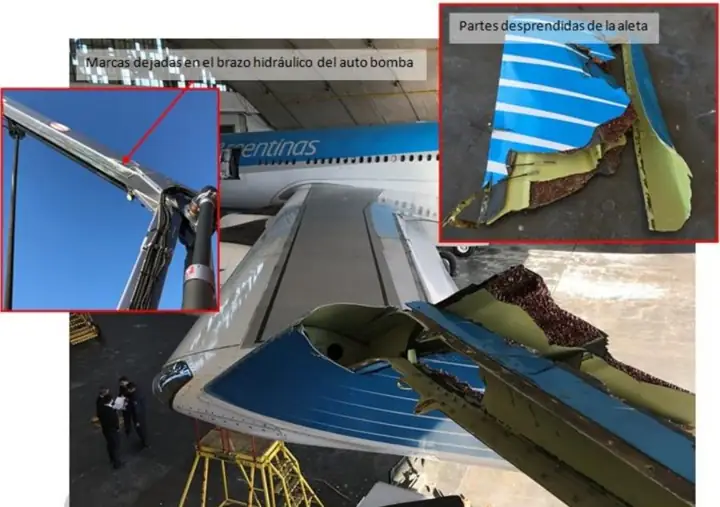
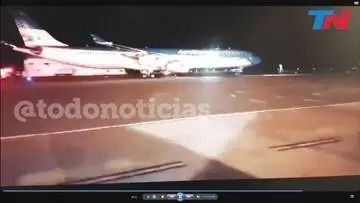 ▶ VIDEO
Still: X video preview frame, @lualemedina on X
| Airline / operator | Spring Airlines |
|---|---|
| Aircraft (type, registration) | Spring Airlines Airbus A320-214 (WL) (B-8873) |
| Category (my classification) | Human factors / Ground vehicle driver |
| What happened | A Spring Airlines Airbus A320-200 B-8873, performing flight 9C8563 from Dalian (China) to Jeju (South Korea). The flight was docked at boarding bridge No. 26 at Dalian Airport; passengers had boarded, the cabin doors were closed, and the aircraft was awaiting pushback. At 17:32, Dalian Airport maintenance personnel drove a maintenance service vehicle to Stand 205 to retrieve the flight logbook from the aircraft parked there. Upon stopping in the designated operational waiting area at Stand 205, the airport maintenance pilot failed to turn off the engine and remove the key as required, and also failed to place wheel chocks. The vehicle moved while unattended and collided with the right engine of the aircraft, resulting in damage to the passenger plane exceeding the standard. Possible reasons:The direct cause of this unsafe incident was that the driver left the vehicle with the engine running and wheel chocks not engaged. The vehicle moved 210 meters on its own 30 seconds after the driver left, colliding with the right engine of a Spring Airlines A320 aircraft before coming to a stop. Both the aircraft and the vehicle were damaged; inspection confirmed that the aircraft damage exceeded the standard. |
| Injuries | ASN lists 0 fatalities. No injury statement in the ASN narrative. |
| Damage | Not stated |
| Official investigation | No investigation details on the ASN entry. |
| Source | Aviation Safety Network (ASN) entry: https://aviation-safety.net/wikibase/572113 Further sources listed on that page / found: https://www.ccaonline.cn/news/top/457388.html https://m.163.com/dy/article/DTO9P97E0511CCIF.html https://m.sohu.com/a/258585361_789985/ https://mp.weixin.qq.com/s/IGIJPSFhSQPcRGjYWL4TKQ http://www.aero.cn/2018/1011/72467.html |
| Airline / operator | Southwest Airlines |
|---|---|
| Aircraft (type, registration) | Southwest Airlines Boeing 737-8H4 (WL) (N8655D) |
| Category (my classification) | Human factors / Ground vehicle driver |
| What happened | Southwest Flight 6263 was struck by a Southwest Airlines maintenance truck as the aircraft was being marshalled into its gate at Baltimore/Washington International Thurgood Marshall Airport (KBWI), Maryland, USA. There were no injuries. According to the flight crew, they had cleared the safety zone prior to joining the J-line. According to ground witnesses, the maintenance vehicle appeared to initially slow down for the airplane, but then appeared to increase its speed to pass in front of the airplane before it could enter the gate. The airplane sustained damage to the left and right nose landing gear doors, nose landing gear trunnion fittings, and to the left-hand forward fuselage skin and stringers. The aircraft was ferried to Indianapolis for repairs on May 13 and was back in service on June 11, 2018. PROBABLE CAUSE: "The maintenance truck driver's failure to give way to the airplane that resulted in the truck colliding with the taxiing aircraft." |
| Injuries | ASN lists 0 fatalities. There were no injuries. |
| Damage | Substantial, repaired |
| Time out of service | N8655D: 35 days (ASN) |
| Official investigation | Investigating agency: NTSB Report number: DCA18CA169 Status: Investigation completed Duration: 4 months Final report Report / investigator link(s): https://data.ntsb.gov/carol-repgen/api/Aviation/ReportMain/GenerateNewestReport/97175/pdf |
| Source | Aviation Safety Network (ASN) entry: https://aviation-safety.net/wikibase/319658 Further sources listed on that page / found: https://data.ntsb.gov/carol-repgen/api/Aviation/ReportMain/GenerateNewestReport/97175/pdf http://kcby.com/news/nation-world/southwest-airlines-plane-is-struck-by-truck-at-bwi-airport |
| Airline / operator | Jet Airways |
|---|---|
| Aircraft (type, registration) | Jet Airways Boeing 737-85R (WL) (VT-JFZ) |
| Category (my classification) | Human factors / Ground vehicle driver |
| What happened | Jet Airways flight 9W545 contacted a catering van as it was taxiing at Delhi-Indira Gandhi International Airport in India. The aircraft had arrived from Dubai and taxied to parking bay 20R. The aircraft turned right to the park spot when the righ hand wing tip scraped the roof of the catering van. |
| Injuries | ASN lists 0 fatalities. No injury statement in the ASN narrative. |
| Damage | Not stated |
| Official investigation | No investigation details on the ASN entry. |
| Source | Aviation Safety Network (ASN) entry: https://aviation-safety.net/wikibase/209000 Further sources listed on that page / found: https://www.hindustantimes.com/india-news/jet-airways-aircraft-wing-hits-truck-at-delhi-airport-another-mak… https://t.co/Vo2LUeNemg https://t.co/Uxnus79A7l |
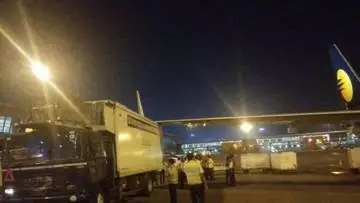
| Airline / operator | Air Baltic |
|---|---|
| Aircraft (type, registration) | Air Baltic de Havilland Canada DHC-8-402Q Dash 8 (YL-BBT) |
| Category (my classification) | Human factors / Ground vehicle driver |
| What happened | Air Baltic flight BT360 was arriving at the parking spot at Riga International Airport, Latvia, when the right-hand wing tip impacted the iron bars of a staircase. |
| Injuries | ASN lists 0 fatalities. No injury statement in the ASN narrative. |
| Damage | Not stated |
| Official investigation | No investigation details on the ASN entry. |
| Source | Aviation Safety Network (ASN) entry: https://aviation-safety.net/wikibase/201115 Further sources listed on that page / found: https://www.aviacijospasaulis.lt/straipsniai/naujienos-04/2017/11/air-baltic-lektuvo-sparnas-kliude-laipini… |
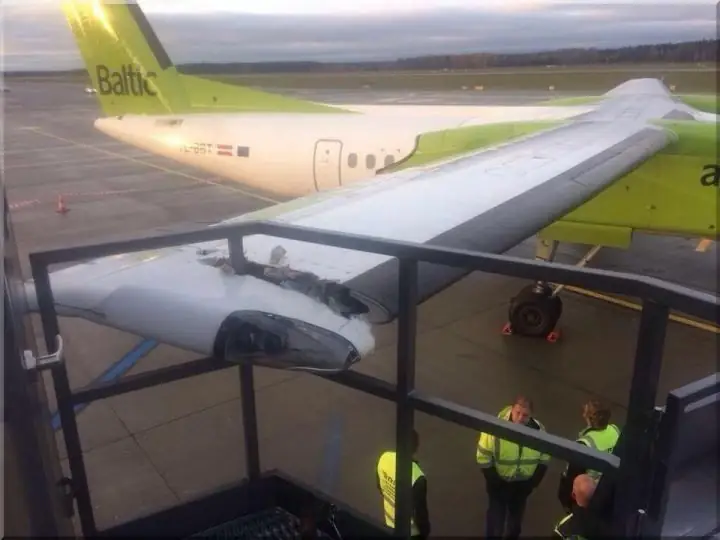
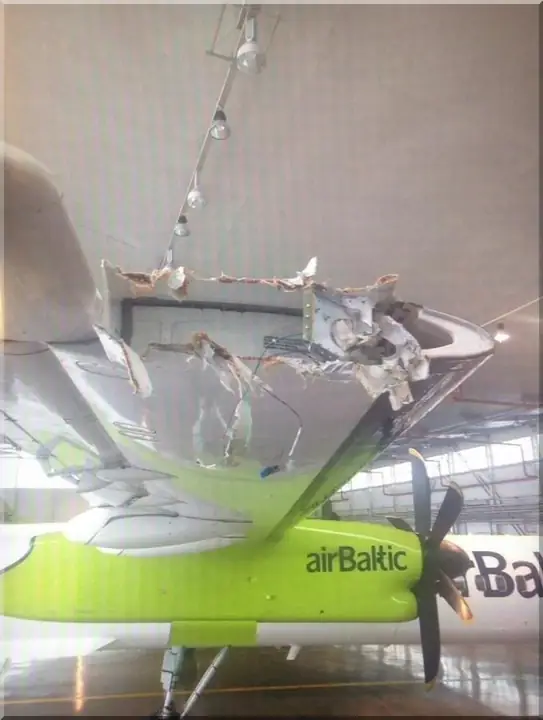
| Airline / operator | Vueling |
|---|---|
| Aircraft (type, registration) | Vueling Airbus A320-214 (EC-JFF) |
| Category (my classification) | Human factors / Ground vehicle driver |
| What happened | Vueling flight VY1366 was taxiing for departure at Alicante Airport when it hit a vehicle. The no.2 engine cowling impacted the side of a car. The aircraft re-entered service almost 30 hours after the incident. |
| Injuries | ASN lists 0 fatalities. No injury statement in the ASN narrative. |
| Damage | Minor |
| Time out of service | EC-JFF: about 30 hours (ASN) |
| Official investigation | No investigation details on the ASN entry. |
| Source | Aviation Safety Network (ASN) entry: https://aviation-safety.net/wikibase/196320 Further sources listed on that page / found: http://www.diarioinformacion.com/alicante/2017/06/23/choque-avion-coche-aeropuerto-obliga/1909737.html https://www.facebook.com/notes/vueling/alcfco-vy1366/10159019485455492/ https://t.co/UvrpXyO3h5 |
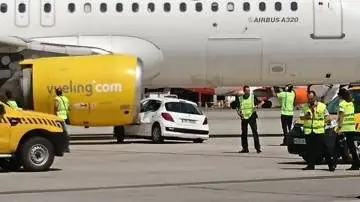
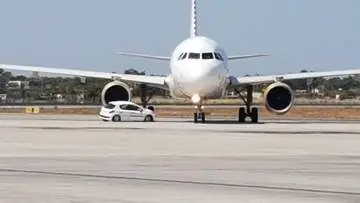
| Airline / operator | Aeroméxico |
|---|---|
| Aircraft (type, registration) | Aeroméxico Boeing 737-852 (WL) (XA-AML) |
| Category (my classification) | Human factors / Ground vehicle driver |
| What happened | A Boeing 737-852 aircraft operating as Aeroméxico Flight AMX642 from Mexico City International Airport (MEX/MMMX) clipped a supply vehicle during taxi after landing at Los Angeles International Airport. The airplane sustained unreported damage and the 146 passengers and crew were not injured. Two of the eight occupants onboard the supply vehicle were seriously injured and six received minor injuries. The incident happened after landing on runway 25L. The aircraft left the runway at H8 and then crossed runway 25R via taxiway P. The collision occurred just after it had crossed taxiway B near the intersection of taxiways P and C. |
| Injuries | ASN lists 0 fatalities. The airplane sustained unreported damage and the 146 passengers and crew were not injured.; Two of the eight occupants onboard the supply vehicle were seriously injured and six received minor injuries. |
| Damage | Unknown |
| Official investigation | No investigation details on the ASN entry. Report / investigator link(s): https://download.aopa.org/ustprocs/current/SW-3/lax_airport_diagram.pdf |
| Source | Aviation Safety Network (ASN) entry: https://aviation-safety.net/wikibase/195518 Further sources listed on that page / found: http://abc30.com/news/8-hurt-after-jet-collides-with-truck-on-service-road-at-los-angeles-international-air… https://flightaware.com/live/flight/AMX642 https://3.bp.blogspot.com/-q7HtcTMQYPU/WSDXLA-dOFI/AAAAAAAB2rc/5bIDHbgyVncGy3kFxvwuKHfDge0t5AEJQCLcB/s1600/… http://www.airliners.net/photo/AeroMexico/Boeing-737-852/3964755 https://download.aopa.org/ustprocs/current/SW-3/lax_airport_diagram.pdf |
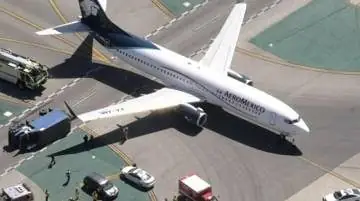
| Airline / operator | Air Canada Rouge |
|---|---|
| Aircraft (type, registration) | Air Canada Rouge Boeing 767-316ER (WL) (C-FMLV) |
| Category (my classification) | Human factors / Ground vehicle driver |
| What happened | Hit by a vehicle on the ground. The aircraft was ferried unpressurized to Miami (MIA) for repair on April 18 and continued to Toronto (YYZ) on April 25 following repairs. |
| Injuries | ASN lists 0 fatalities. No injury statement in the ASN narrative. |
| Damage | Minor |
| Time out of service | C-FMLV: about 10 days (repaired at MIA, continued to YYZ 25 Apr) (ASN) |
| Official investigation | No investigation details on the ASN entry. |
| Source | Aviation Safety Network (ASN) entry: https://aviation-safety.net/wikibase/195087 Further sources listed on that page / found: http://overseas.weico.cc/share/1330704.html?weibo_id=4098224959130191 |
| Airline / operator | Alaska Airlines |
|---|---|
| Aircraft (type, registration) | Alaska Airlines Boeing 737-990ER (WL) (N493AS) |
| Category (my classification) | Human factors / Ground vehicle driver |
| What happened | Alaska Airlines flight AS769 was cancelled after the Boeing 737-990ER knocked over a de-icing truck at Boston-Logan International Airport, MA, USA. One employee on the truck was injured. Flight 469 was being deiced by two trucks. Truck A was deicing the aircraft's right side; truck C was deicing the left. Due to staffing issues, the deice supervisor was also acting as the Follow-me Vehicle, escorting aircraft into/out of deice pad. Flight 769 was parked at spot 3 in the "Juliet" deice pad. Towards the end of the deice process, the supervisor instructed the trucks to change sides due to wind blowing deice fluid into the open bucket of truck A. This swap was to occur after deicing. Both trucks acknowledged the instruction, completed deicing, parked aft of the aircraft and reported clear. The supervisor then radioed the flight crew the post-deice report, reported clear and drove from the nose to the tail of the aircraft to observe it leave the deice pad. The supervisor reported parking the van facing away from the aircraft. At this time, truck A mis-heard a radio instruction to complete a contamination check on ASA769. Truck A drove into position in front of the left wing and the deice technician returned to the bucket. Truck A was performing this contamination check when the aircraft began to taxi out of the deice pad. The left wing stuck the extended boom of the deicing truck causing it to tip over. Truck A had driven into position after the flight crew visually cleared the area around the aircraft. Flight crew visibility was also hampered by de-ice fluid covering the flight deck windows. The supervisor had lost visual contact of truck a due to parking the vehicle facing away from the aircraft. No injuries were reported onboard the aircraft. The collision caused minor damage to the aircraft's left leading edge and winglet. The passengers were deplaned on the deice ramp and bussed to the terminal.The driver and deice technician of truck A suffered only minor injuries. |
| Injuries | ASN lists 0 fatalities. One employee on the truck was injured.; No injuries were reported onboard the aircraft. |
| Damage | Minor, repaired |
| Official investigation | No investigation details on the ASN entry. |
| Source | Aviation Safety Network (ASN) entry: https://aviation-safety.net/wikibase/194141 Further sources listed on that page / found: https://abcnews.go.com/US/de-icing-truck-collides-alaska-airlines-aircraft-boston/story?id=46064288 https://t.co/0HoCVVvDDB https://t.co/LCoWAupvnK https://t.co/3sDUl6pb7l |
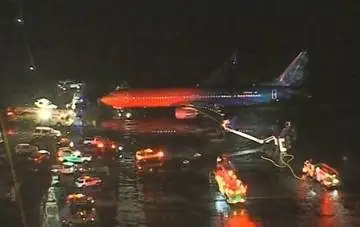
| Airline / operator | Cathay Dragon |
|---|---|
| Aircraft (type, registration) | Cathay Dragon Airbus A330-342 (B-HLL) |
| Category (my classification) | Human factors / Ground vehicle driver |
| What happened | Cathay Dragon Flight KA691, an Airbus A330-342, hit an airport delivery van with the no.1 engine as it was taxiing to the runway. The aircraft had been parked at stand S23 and was pushed back at 16:06 hours local time. Immediately after it started moving on taxiway H7, the collision occurred. The driver of the van suffered minor head injuries. CCTV images of the occurrence show the van driving towards the plane and turning right into the air linet cowling of the engine. |
| Injuries | The driver of the van suffered minor head injuries. |
| Damage | Minor |
| Official investigation | No investigation details on the ASN entry. |
| Source | Aviation Safety Network (ASN) entry: https://aviation-safety.net/wikibase/189906 Further sources listed on that page / found: http://www.scmp.com/news/hong-kong/article/2017672/dragonair-plane-collides-delivery-van-hong-kong-airport https://t.co/4GXPzxlt4w https://t.co/ZT0m0ANnrC |
Equipment failure (39)
Collisions where a piece of equipment failed.
Tow bar failure / tow bar left attached (34)
Tow bar or shear pin broke or disconnected during pushback or towing, or a tow bar was left attached.
For the on-board solution, the ConOps pushback comparison lists no ground equipment (no pushback tug or tow bar) (EUROCONTROL ConOps, p. 41).
| Airline / operator | Flexjet |
|---|---|
| Aircraft (type, registration) | Flexjet Gulfstream G700 (N103FX) |
| Category (my classification) | Equipment failure / Tow bar failure / tow bar left attached |
| What happened | The Gulfstream G700 was being pushed back under tow at Rome- Ciampino Airport (CIA), while the crew started an engine. The tow bar failed and the jet lunged forward over running the tug. The NTSB rated the occurrence an accident. |
| Injuries | ASN lists 0 fatalities. No injury statement in the ASN narrative. |
| Damage | Substantial |
| Time out of service | N103FX: at least 6 days (last flight arrived LIRA 23 Oct; none to 30 Oct) (FlightAware) |
| Official investigation | No investigation details on the ASN entry. NTSB reference GAA27WA019 (foreign occurrence, per earlier report). |
| Source | Aviation Safety Network (ASN) entry: https://aviation-safety.net/wikibase/583914 Further sources listed on that page / found: https://www.facebook.com/share/p/19bUcfavjQ/ https://www.jetphotos.com/photo/12246381 |
| Flag | Business jet (Flexjet Gulfstream G700): shows the risk type, not a direct WheelTug airline market case. |
| Airline / operator | Virgin Australia Airlines |
|---|---|
| Aircraft (type, registration) | Virgin Australia Airlines Boeing 737-8FE (WL) (VH-YIO) |
| Category (my classification) | Equipment failure / Tow bar failure / tow bar left attached |
| What happened | The Virgin Australia Boeing 737 was being towed to the maintenance hangar at Melbourne Airport when it became disconnected from the tug vehicle, causing the tug to impact the side of the aircraft. |
| Injuries | ASN lists 0 fatalities. No injury statement in the ASN narrative. |
| Damage | Substantial |
| Official investigation | No investigation details on the ASN entry. |
| Source | Aviation Safety Network (ASN) entry: https://aviation-safety.net/wikibase/530588 Further sources listed on that page / found: https://www.news.com.au/travel/travel-updates/incidents/virgin-australia-plane-collides-with-ground-vehicle… https://www.instagram.com/p/DMoiVB_sAbT/?igsh=c2dzcHEwZnhuejFr |
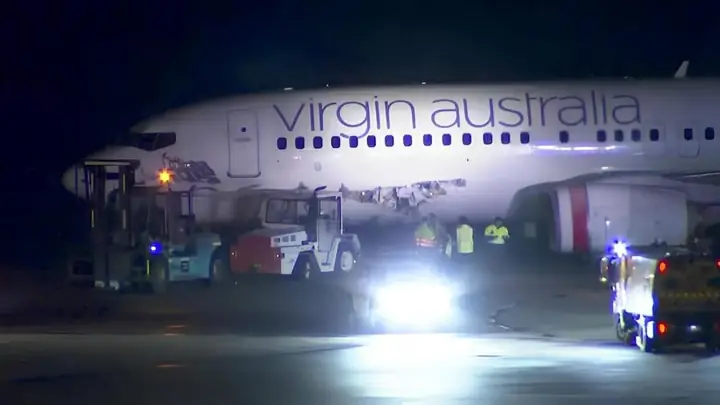
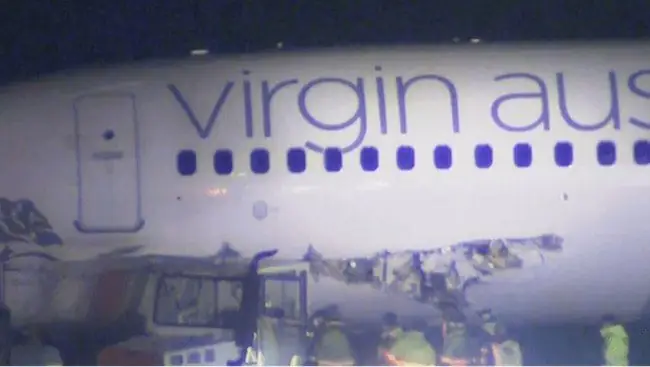
| Airline / operator | Air India |
|---|---|
| Aircraft (type, registration) | Air India Airbus A321-211 (VT-PPK) |
| Category (my classification) | Equipment failure / Tow bar failure / tow bar left attached |
| What happened | Air India flight AI858, an Airbus A321-211, collided with a pushback tug at Pune Airport. During pushback the tow bar disconnected and the tug collided with the fuselage near the left-hand wing. |
| Injuries | ASN lists 0 fatalities. No injury statement in the ASN narrative. |
| Damage | Minor Location: Pune-Lohegaon Airport (PNQ/VAPO) - India Phase: Pushback / towing Nature: Passenger - Scheduled Departure airport: Pune-Lohegaon Airport (PNQ/VAPO) Destination airport: Delhi-Indira Gandhi International Airport (DEL/VIDP) Confidence Rating: Information is only available from news, social media or unofficial sources Narrative: Air India flight AI858, an Airbus A321- 211, collided with a pushback tug at Pune Airport. During pushback the tow bar disconnected and the tug collided with the fuselage near the left-hand wing. ICAO Occurrence |
| Official investigation | No investigation details on the ASN entry. |
| Source | Aviation Safety Network (ASN) entry: https://aviation-safety.net/wikibase/388008 Further sources listed on that page / found: https://www.esakal.com/desh/an-air-india-flight-from-pune-to-delhi-was-seriously-damaged-after-it-collided-… https://t.co/uMpReoZFoq https://t.co/bDuI0l56mx https://www.aviationpros.com/airport-business/airside-operations-area/news/55040714/air-india-flight-with-1… |
| Airline / operator | JetBlue Airways |
|---|---|
| Aircraft (type, registration) | JetBlue Airways Embraer ERJ-190AR (N329JB) |
| Category (my classification) | Equipment failure / Tow bar failure / tow bar left attached |
| What happened | JetBlue Airways flight B6983, an Embraer ERJ-190AR, was under tow during pushback for departure when the tow bar broke. The tug struck and damaged the nose. |
| Injuries | ASN lists 0 fatalities. No injury statement in the ASN narrative. |
| Damage | Minor |
| Official investigation | No investigation details on the ASN entry. |
| Source | Aviation Safety Network (ASN) entry: https://aviation-safety.net/wikibase/387135 |
| Airline / operator | Hawaiian Airlines |
|---|---|
| Aircraft (type, registration) | Hawaiian Airlines Boeing 717-2BL (N494HA) |
| Category (my classification) | Equipment failure / Tow bar failure / tow bar left attached |
| What happened | A Boeing 717-200, N494HA, sustained minor damage when it was involved in an incident after pushback and while taxiing for departure at Kahului Airport (OGG), Maui, Hawaii. The 119 passengers and crew onboard were uninjured. One ramp personnel sustained minor injuries. The flight crew reported that after push back from the gate, they received clearance from the tug driver to start the engines. The number one (left) engine was successfully started, the brakes set, and the ground crew was instructed to disconnect the tow bar. While waiting for load closeout and an air route traffic control clearance, the number two (right) engine was successfully started, and the ground crew was released to disconnect the headset and nose landing gear bypass pin. The captain confirmed the pin had been disconnected, the after-start checklist was completed, and a taxi clearance was received from ATC. The taxi commenced followed by an unusual motion as the airplane impacted the tow tractor. The operator reported that after push back, the disconnect agent disconnected the tow bar from the airplane, and the tow tractor was moved to the left side of the airplane by the tow tractor driver while waiting for the all clear signal from the flight crew. The disconnect agent remained near the front of the airplane and attempted to show the nose landing gear bypass pin to the pilots while the tow tractor driver sounded the vehicle’s horn to gain the flight crews attention. Subsequently, the airplane began to move, the tow tractor driver attempted to move the tractor away from the path of the airplane while the disconnect agent vacated the area towards the terminal. The airplane impacted the tow tractor with the left wing collapsing the cab of the tow tractor. Airport fire and rescue responded to the scene and extricated the driver who was transported to the local hospital for treatment. Probable Cause and Findings The captain did not verify that the tow tractor had exited the area in front of the airplane before taxiing for departure. Contributing factors were the dark conditions and the absence of an illuminated hazard beacon on the tow tractor, which reduced its conspicuity; the tow tractor operator’s positioning of the tractor too close to the airplane; the captain’s forgetting to verify the ramp agent’s display of the nosewheel bypass steering pin and provide him a return salute due to the performance of competing operational tasks; the flight crew’s rote performance of the “departure salute” checklist item and the required visual check of the sides of the airplane before commencing the taxi; and the ground crew’s discarding lighted wands during the pushback, which subsequently made it more difficult for them to attract the captain’s attention. In addition, the lack of procedure for ground crew to re-establish communications with the flight crew once the headset is disconnected from the airplane. |
| Injuries | ASN lists 0 fatalities. The 119 passengers and crew onboard were uninjured.; One ramp personnel sustained minor injuries. |
| Damage | Minor, repaired |
| Official investigation | Investigating agency: NTSB Report number: DCA24LA034 Status: Investigation completed Duration: 1 year and 10 months Final report Report / investigator link(s): https://data.ntsb.gov/carol-repgen/api/Aviation/ReportMain/GenerateFinalReport/193459/pdf |
| Source | Aviation Safety Network (ASN) entry: https://aviation-safety.net/wikibase/348535 Further sources listed on that page / found: https://data.ntsb.gov/carol-repgen/api/Aviation/ReportMain/GenerateFinalReport/193459/pdf |
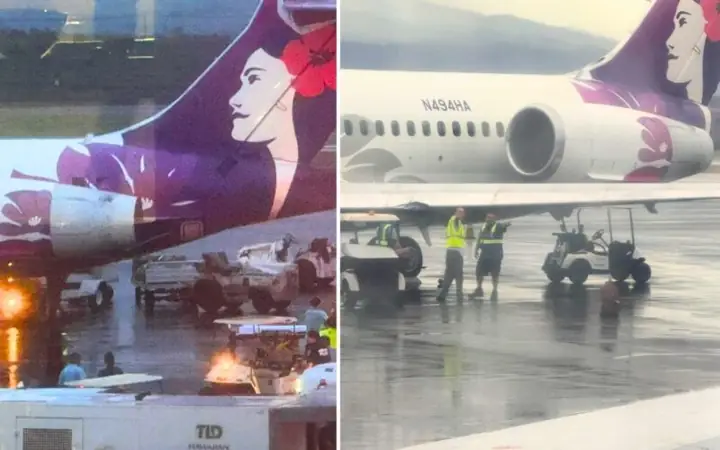
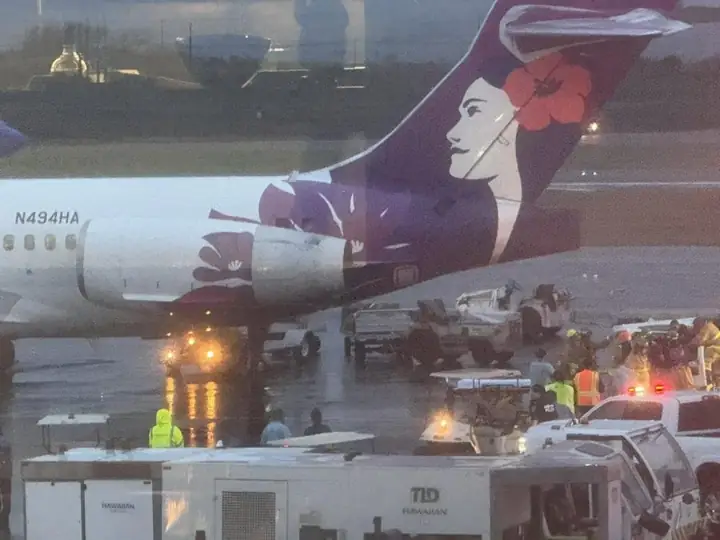
| Airline / operator | Wizz Air Malta |
|---|---|
| Aircraft (type, registration) | Wizz Air Malta Airbus A321-271NX (9H-WDN) |
| Category (my classification) | Equipment failure / Tow bar failure / tow bar left attached |
| What happened | Wizz Air Malta flight W48201, an Airbus A321-271NX, was being pushed back on the apron at Catania-Fontanarossa Airport (CTA) when the tow bar broke. The aircraft remained at CTA while the flight was carried out by a replacement aircraft. |
| Injuries | ASN lists 0 fatalities. No injury statement in the ASN narrative. |
| Damage | Not stated |
| Official investigation | No investigation details on the ASN entry. |
| Source | Aviation Safety Network (ASN) entry: https://aviation-safety.net/wikibase/345218 Further sources listed on that page / found: https://www.facebook.com/SiciliaInVolo/posts/pfbid02gb8wmoEmWmXSnWvCSvWZdaB2FWcdx3xndM18HXMt5K4exHpZJEEAnML… |
| Airline / operator | FedEx Express / Challenge Airlines |
|---|---|
| Aircraft (type, registration) | FedEx Express Boeing 757-23A (SF) (N918FD); Challenge Airlines Boeing 747-412F (OE-LRG) |
| Category (my classification) | Equipment failure / Tow bar failure / tow bar left attached |
| What happened | A Challenge Airlines Boeing 747-412F, OE-LRG, was damaged in a pushback incident at Tel Aviv-Ben Gurion International Airport (TLV). The aircraft started its engines while being pushed back from parking position 21 to engine start position 71 on the November apron area. The pushback was conducted using a tow truck and a tow bar. During the pushback/tow, the wireless communication between the ground crew and the pilots was lost without the pilots' knowledge. To adjust the aircraft's position from pushback to tow to the engine start position, the tow truck driver moved from the driving cab where the pushback was performed to the cabin on the other side of the tow truck, from which he intended to perform the tow to the engine start position. During the transition between the two driving cabs, the driver noticed that the aircraft was pushing the tow truck. The driver's attempts to stop from the cabin were unsuccessful. In the absence of wireless communication, the ground crew chief signaled to the pilots to stop the aircraft's movement using a flashlight with a white light. The pilots, who did not understand the significance of the flashing signal, which is not part of the international signals they operate by, did not stop the aircraft, not wanting to damage the tow truck, which was underneath them and with which they had no visual contact. The tow truck was pushed in a rotational motion around itself, breaking the tow bar's shear pins and became stuck under the aircraft's fuselage. During the rotational movement of the aircraft, its left wing struck the tail of a parked FedEx Boeing 757-200F (N918FD), causing a tear in the rudder. The Boeing 747 resumed regular service on 15 August 2023; the FedEx Boeing 757 resumed regular service on 26 October 2023. AIAI conclusions: Numerous factors combined to cause a towing accident that only by luck ended without physical or psychological casualties. In principle, there was no party in the process who performed their role without some failure. Lack of regulation, an insufficiently hierarchical procedural framework (which procedure takes precedence over which regarding the airline and IAI, for example), lack of understanding of the operational process of aircraft departure, lack of appropriate risk analysis and identification of vulnerabilities in the process, inadequately detailed work procedures at the ground crew and airline level, erroneous actions by the ground crew during the process with emphasis on loss of voice communication during it, failure to equip the ground crew with appropriate equipment, inadequate familiarity of the ground crew and driver with the tug - all constitute the background to the accident. The primary and direct cause of the accident was starting the aircraft engines during pushback/towing while using a tug with towbar. |
| Injuries | ASN lists 0 fatalities. No injury statement in the ASN narrative. |
| Damage | Substantial, repaired |
| Time out of service | OE-LRG: 29 days (ASN) N918FD: 101 days (ASN) |
| Official investigation | Investigating agency: AIAI Report number: 19-23 Status: Investigation completed Duration: Final report |
| Source | Aviation Safety Network (ASN) entry: https://aviation-safety.net/wikibase/318105 Further sources listed on that page / found: https://tinyurl.com/sdbt9azk https://www.maariv.co.il/news/israel/Article-1023026 https://www.gov.il/BlobFolder/dynamiccollectorresultitem/19-23/he/%D7%94%D7%A6%D7%94%D7%A8%D7%AA%20%D7%91%D… https://t.co/Fd1ia2QA7p |
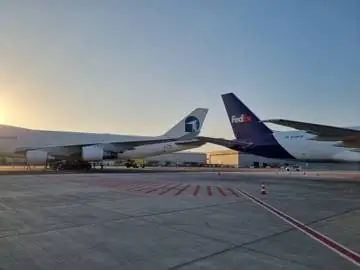
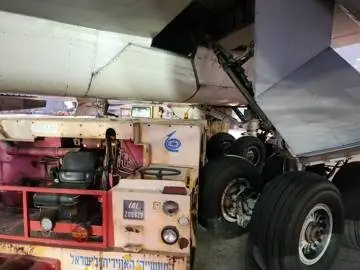
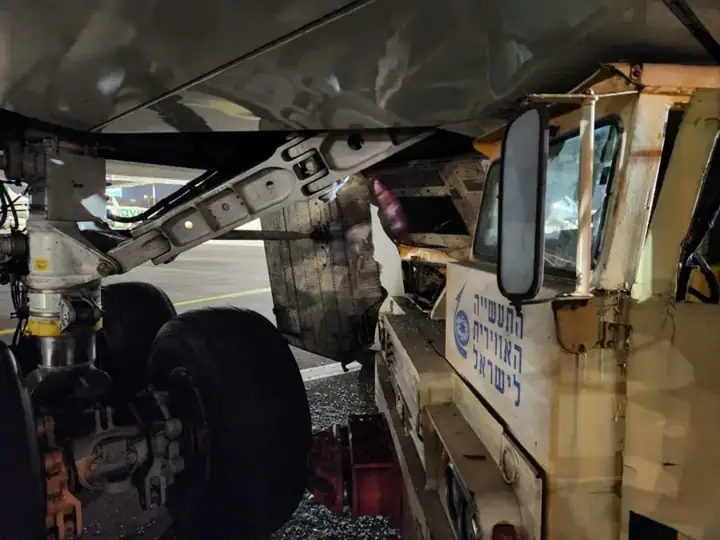
| Airline / operator | WestJet |
|---|---|
| Aircraft (type, registration) | WestJet Boeing 737-8CT (WL) (C-GWSX) |
| Category (my classification) | Equipment failure / Tow bar failure / tow bar left attached |
| What happened | WestJet flight WJA1536, a Boeing 737-800, was involved in a ground accident at Calgary (CYYC). During pushback from the gate, the flight crew had started both engines. Once the aircraft was on Taxiway BA, the pushback tractor stopped, and the ground crew disconnected the towbar. The aircraft started rolling forward towards the pushback tractor, where the lower nose of the aircraft collided with the roof structure of the tractor. A hole was punctured into the lower fuselage and the tractor became wedged in the fuselage. The windshield of the tractor was shattered. There were no injuries. The aircraft received damage to the lower fuselage and radome. After company maintenance assessed the aircraft damage, the aircraft was towed back to the gate and the passengers deplaned. |
| Injuries | ASN lists 0 fatalities. There were no injuries. |
| Damage | Substantial, repaired |
| Official investigation | No investigation details on the ASN entry. |
| Source | Aviation Safety Network (ASN) entry: https://aviation-safety.net/wikibase/315481 |
| Airline / operator | Air Transat |
|---|---|
| Aircraft (type, registration) | Air Transat Airbus A321-271NX (C-GOIR) |
| Category (my classification) | Equipment failure / Tow bar failure / tow bar left attached |
| What happened | An Air Transat Airbus A321neo sustained damage to the nose section when the tow truck became wedged after the towbar had snapped. The aircraft had arrived at the stand at Vancouver International Airport, BC (YVR) at 22:18 after a flight from Montreal Airport, QC (YUL). The incident likely occurred during night from 2-3 November. |
| Injuries | ASN lists 0 fatalities. No injury statement in the ASN narrative. |
| Damage | Not stated |
| Official investigation | No investigation details on the ASN entry. |
| Source | Aviation Safety Network (ASN) entry: https://aviation-safety.net/wikibase/301251 Further sources listed on that page / found: https://www.goklerdeyiz.net/yolcu-ucagi-cekis-sirasinda-hasar-aldi/ |
| Note | One source gives 2 Nov 2022 and some posts are dated 15 Nov (the news date); ASN gives 3 Nov. |
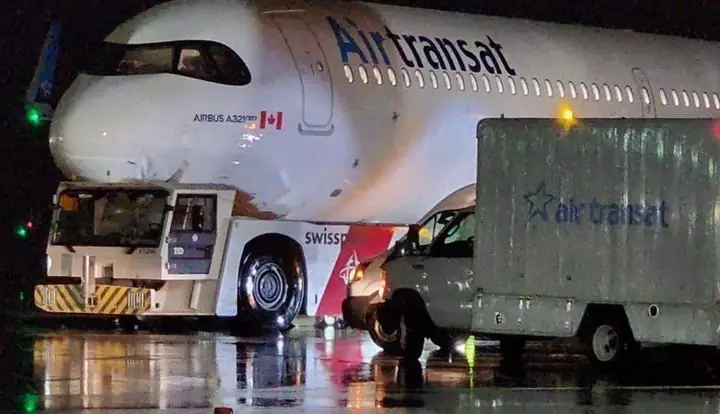
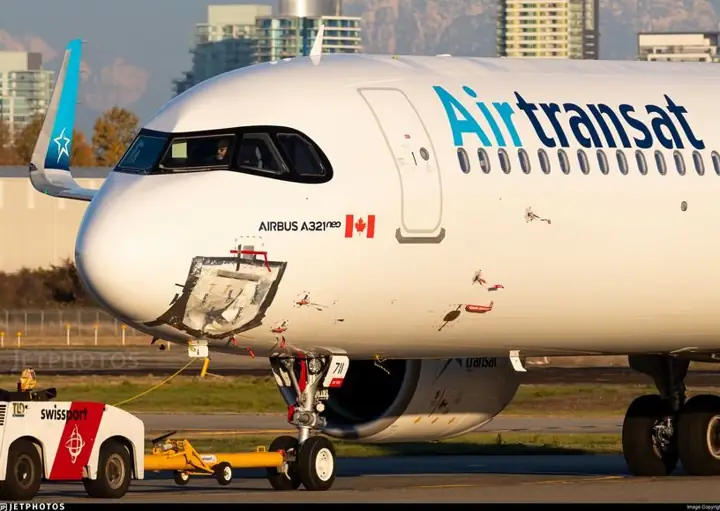
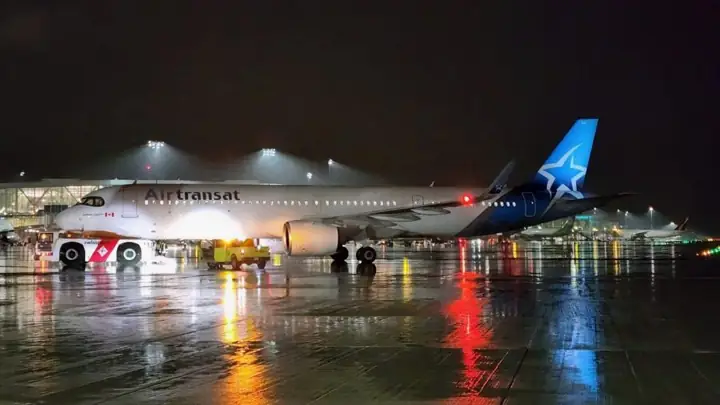
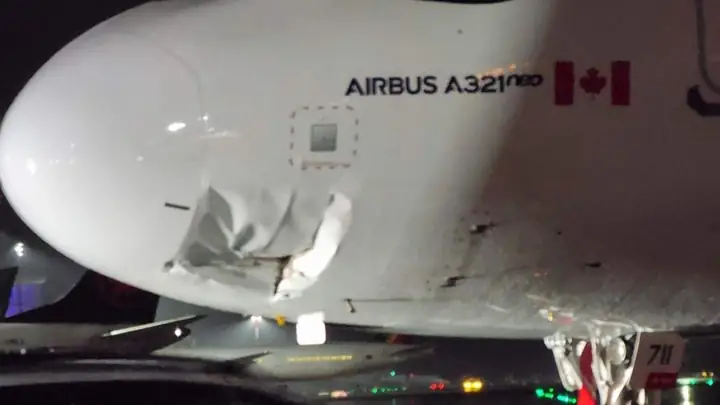
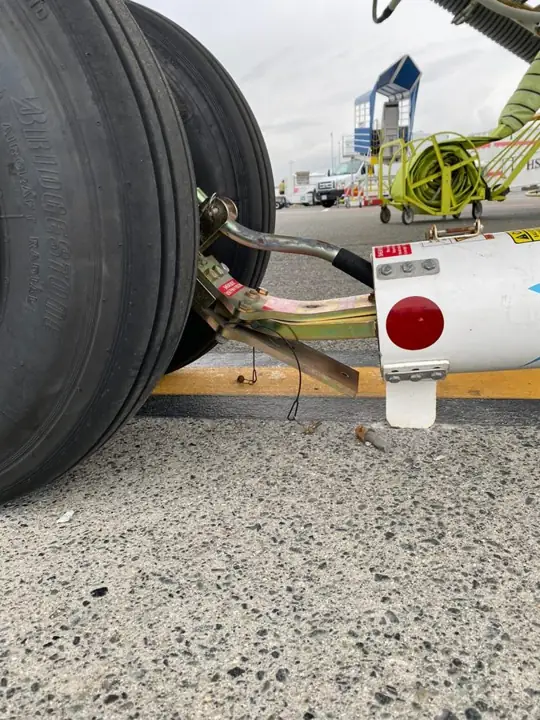
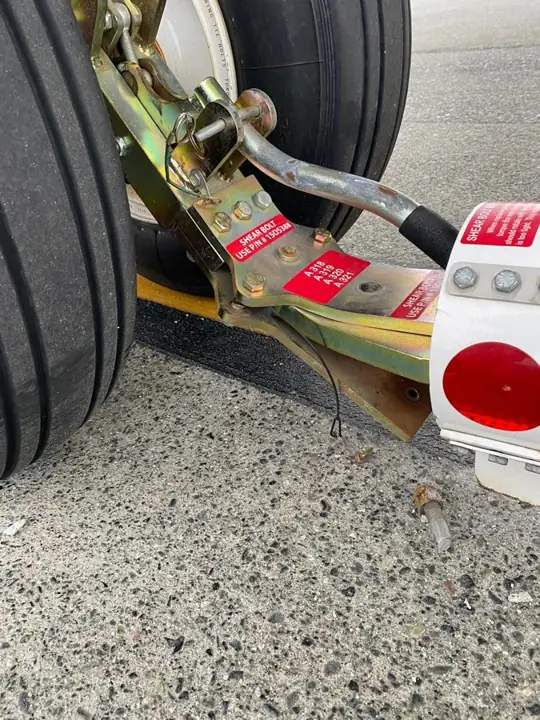
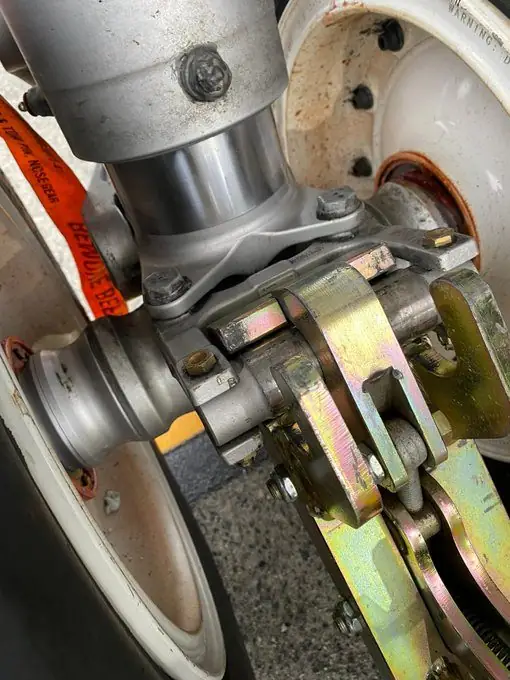
| Airline / operator | Air India |
|---|---|
| Aircraft (type, registration) | Air India Airbus A321-211 (VT-PPH) |
| Category (my classification) | Equipment failure / Tow bar failure / tow bar left attached |
| What happened | Air India flight AI889, an Airbus A321, was damaged by tow truck after the tow bar shear pin broke during pushback. No injuries reported to the tug driver or ground staff. |
| Injuries | ASN lists 0 fatalities. No injuries reported to the tug driver or ground staff. |
| Damage | Not stated |
| Official investigation | No investigation details on the ASN entry. |
| Source | Aviation Safety Network (ASN) entry: https://aviation-safety.net/wikibase/277394 Further sources listed on that page / found: https://www.goklerdeyiz.net/yolcu-ucagi-ile-yer-araci-carpisti-2/ https://t.co/lmcqd7umvF |
| Airline / operator | United Airlines |
|---|---|
| Aircraft (type, registration) | United Boeing 767-300ER (N646UA) |
| Category (my classification) | Equipment failure / Tow bar failure / tow bar left attached |
| What happened | During a ground move at Santiago, the 767 separated from its tug and rolled across the apron on its own with the tow bar still attached to the nose gear, until it was stopped. United said "the aircraft disconnected from the tug". Filmed from a ground vehicle driving alongside. |
| Injuries | No injuries reported. |
| Damage | None reported |
| Official investigation | No public investigation report found. Cause of the separation not published. |
| Source | Simple Flying: https://simpleflying.com/united-boeing-767-chile/ Further sources listed on that page / found: https://aviation.direct/en/chile-united-b767-rolled-across-the-apron-without-a-lead https://www.transponder1200.com/avion-de-united-se-desconecta-del-tractor-y-avanza-sin-control-en-santiago/ https://www.facebook.com/FL360aero/videos/241221a-serious-damage-was-averted-after-an-united-airlines-b767-… |
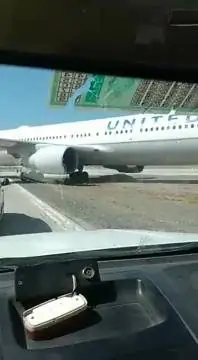 ▶ VIDEO
Still: frame from the video in the linked post (same footage).
| Airline / operator | Malta Air (Ryanair livery) |
|---|---|
| Aircraft (type, registration) | Boeing 737-800 (9H-QAH), flight FR2907 to Fuerteventura |
| Category (my classification) | Equipment failure / Tow bar failure / tow bar left attached |
| What happened | After pushback the aircraft began to taxi with the tow bar still attached; the tow bar got stuck under the right engine and was dragged, throwing sparks, until the pilots stopped. |
| Injuries | None reported. |
| Damage | Right-engine damage reported (extent unknown, per AirLive) |
| Official investigation | No public investigation report found. |
| Source | AirLive: https://airlive.net/emergency/2021/12/19/incident-a-ryanair-boeing-737-800-began-to-taxi-with-its-tow-bar-still-attached/ Further sources listed on that page / found: https://www.aviation24.be/airlines/ryanair/haste-makes-waste-ryanair-boeing-737-taxies-out-with-tow-bar-und… https://x.com/i/status/1472330506444451845 |
| Note | Tow bar not removed before taxi (how this happened was not published). |
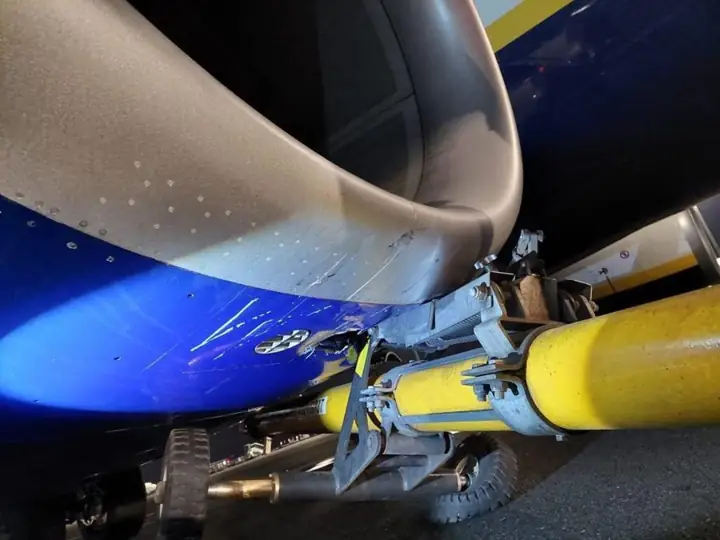
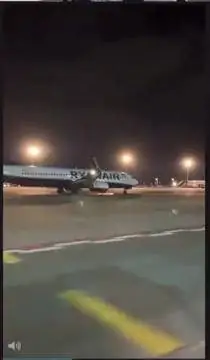 ▶ VIDEO
Still: frame from the video in the linked post (same footage). JACDEC credits the video to @BaileyB92043349.
| Airline / operator | Swiftair |
|---|---|
| Aircraft (type, registration) | Swiftair Boeing 737-4Y0 (SF) (EC-MIE) |
| Category (my classification) | Equipment failure / Tow bar failure / tow bar left attached |
| What happened | AAIB investigation to Boeing 737-4Y0F, EC-MIE: Aircraft taxied over towbar, East Midlands Airport, Leicestershire, 16 June 2021. The AAIB report into the incident was published on 13 January 2022, and the following is an excerpt from it... "The aircraft was on a cargo flight from East Midlands Airport, Leicestershire, to VitoriaAirport, Spain. It was parked on Stand 99, on the West Apron. This is a ‘nose-in’ stand which requires a pushback prior to taxi. The ground crew in attendance for the pushback were a headset operative (HO) and a tug driver (TD). At the time, it was night. The pushback and start up were uneventful. Once the pushback was completed the HO placed a chock in front of the nosewheel, to prevent the aircraft from moving, while the towbar and the HO’s headset were disconnected. It is the HO’s last task and responsibility to remove the chock and hand it to the TD, who places it in a basket on the tug, before walking off the taxiway. At this time the commander informed the HO that he was cleared to disconnect, and he would await the ‘visual clearance’, with the nosewheel steering bypass pin, on the right side of the aircraft. Upon clearance from the HO, the TD reversed the tug slightly to allow the HO to disconnect the towbar from the tug. The HO then disconnected the towbar from the aircraft, removed the bypass pin and disconnected his headset. The TD turned the tug around and exited to re- connect the towbar to the rear of the tug, positioning the towbar on top of the rear attachment on the tug. However, before he secured it to the tug with a drop-in pin, he noticed that the HO was walking away from the aircraft with the chock still in front of the nosewheel. This was recorded on CCTV. The TD left the towbar on top of the attachment, went to the nosewheel, removed the chock and placed it in the basket on the tug. He then re-entered the tug and drove off the taxiway to collect the HO, without connecting the towbar to the tug. The towbar remained on the taxiway in front of the aircraft. Once the HO had given the crew the visual clearance, he entered the tug and the TD drove them to the towbar parking area, before the aircraft started to taxi, but without checking the taxiway was clear. The crew received clearance from ATC to taxi towards Runway 27. Soon after the aircraft started to move, the co-pilot felt something similar to the toe brakes being applied momentarily. Upon asking the commander if he had checked the brakes, the commander said he had not. They did not see the towbar under the aircraft’s nose prior to commencing the taxi After the tug arrived at the towbar parking area, the HO got out to disconnect the towbar to discover it was not attached. Upon informing the TD he immediately drove back to Stand 99, without the HO, entering the taxiway without permission, and found the towbar in the taxiway with damage indicating that the aircraft had taxied over it. The TD immediately informed ATC and his supervisor, who informed airfield operations. Whilst the aircraft was waiting to depart at the holding point for Runway 27, ATC informed the crew that there had been an incident during the pushback and an inspection of the aircraft was required. Subsequently, they were informed by the handling agent that the aircraft had struck something and they should return to a stand for an inspection. The aircraft was subsequently taxied back towards the East Apron, stopped, shutdown and towed onto a stand, where it was inspected. Upon inspection, damage was discovered to the two tyres on the left landing gear. The damaged tyres were replaced before the aircraft departed after a delay of nearly four hours". =Damage sustained to airframe = Per the above AAIB report "Damage to towbar and two landing gear tyres" |
| Injuries | ASN lists 0 fatalities. No injury statement in the ASN narrative. |
| Damage | Not stated |
| Official investigation | Investigating agency: AAIB Report number: Status: Investigation completed Duration: Final report Report / investigator link(s): https://assets.publishing.service.gov.uk/media/61bb30ade90e07043c35f651/Boeing_737-4Y0F_EC-MIE_01-22.pdf |
| Source | Aviation Safety Network (ASN) entry: https://aviation-safety.net/wikibase/274264 Further sources listed on that page / found: https://assets.publishing.service.gov.uk/media/61bb30ade90e07043c35f651/Boeing_737-4Y0F_EC-MIE_01-22.pdf https://www.flightglobal.com/safety/crew-of-737-freighter-taxied-over-towbar-left-by-distracted-ground-hand… http://www.b737.org.uk/accident_news.htm https://commons.wikimedia.org/wiki/File:EC-MIE_(LEVT,_2016-04-09).png https://commons.wikimedia.org/wiki/File:Swiftair,_EC-MIE,_Boeing_737-4Y0_SF_(32231351234).jpg |
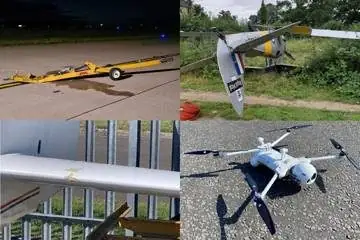
 ▶ VIDEO
Still: YouTube thumbnail, VASAviation -
| Airline / operator | Jetblue Airways |
|---|---|
| Aircraft (type, registration) | Jetblue Airways Airbus A320-200 (reg n/a) |
| Category (my classification) | Equipment failure / Tow bar failure / tow bar left attached |
| What happened | The Airbus crushed the tug after it broke off during towing. |
| Injuries | ASN lists 0 fatalities. No injury statement in the ASN narrative. |
| Damage | Unknown Location: Los Angeles International Airport, CA (LAX/KLAX) - United States of America Phase: Pushback / towing Nature: Passenger - Scheduled Departure airport: Destination airport: Confidence Rating: Information is only available from news, social media or unofficial sources Narrative: The Airbus crushed the tug after it broke off during towing. ICAO Occurrence |
| Official investigation | No investigation details on the ASN entry. |
| Source | Aviation Safety Network (ASN) entry: https://aviation-safety.net/wikibase/259753 Further sources listed on that page / found: https://fb.watch/5qadhKW2th/ |
| Airline / operator | Malta Air, opf Ryanair |
|---|---|
| Aircraft (type, registration) | Malta Air, opf Ryanair Boeing 737-8AS (WL) (9H-QCJ) |
| Category (my classification) | Equipment failure / Tow bar failure / tow bar left attached |
| What happened | A Boeing 737-800, 9H-QCJ, was being repositioned from Apron 8 to Apron 2 at Malta-Luqa Airport under tow. The aircraft was pushed back from Stand 2 onto taxiway I and the tow proceeded along taxiway I and taxiway J, crossing runway 23. As the tow truck turned onto taxiway K, the tow bar became detached and the aircraft proceeded straight, entering the cargo and GSE Area and coming to rest against a bank of 4 fuel bowsers parked side by side. Conclusions: Aircraft towing is a routine operation that, despite its relatively mundane nature, requires careful operation and stringent safety procedures to ensure that incidents and accidents are avoided. This accident occurred due to a lack of adherence to such procedures, including: 1) Proper flight deck checks and aircraft setup for a towing procedure; 2) Adequate coordination between ground staff and the tug driver to ensure a safe environment that avoids the need of sudden braking by the tug; 3) Careful checking of the shear pins following a sudden or sharp braking event; 4) Correct seating of the brake operator in the pilot’s seat during tow to be able to apply brakes in an effective and timely manner in the event of tow bar detachment. In addition, the lack of training on aircraft operating procedures and emergency evacuation procedures given to the tow crew jeopardized the safe securing of the aircraft and safe evacuation after the accident. In conclusion, the cause of the accident was identified to be: - A lack of training, clear procedures and inadequate level of attention given to safety during operation. |
| Injuries | ASN lists 0 fatalities. No injury statement in the ASN narrative. |
| Damage | Minor |
| Official investigation | Investigating agency: BAAI Report number: BAAI/ACR-002-2021 Status: Investigation completed Duration: 1 year 1 month Final report Report / investigator link(s): https://baai.gov.mt/en/Documents/BAAI-020421%20Final%20Report%209H-QCJ.pdf |
| Source | Aviation Safety Network (ASN) entry: https://aviation-safety.net/wikibase/319019 Further sources listed on that page / found: https://baai.gov.mt/en/Documents/BAAI-020421%20Final%20Report%209H-QCJ.pdf https://timesofmalta.com/articles/view/two-flights-diverted-following-aircraft-accident-at-airport.862075 |
| Airline / operator | NSW Rural Fire Service |
|---|---|
| Aircraft (type, registration) | NSW Rural Fire Service Boeing 737-3H4 (N138CG) |
| Category (my classification) | Equipment failure / Tow bar failure / tow bar left attached |
| What happened | A Boeing 737-3H4 firefighting aircraft, registration N138CG "Marie Bashie", was damaged in a ground incident at Richmond RAAF Base (XRH/YSRI), New South Wales, Australia. The aircraft reportedly rolled forward on the apron until the nose hit a hangar door. Aircraft was towed from one location to another, with an engineer in the cockpit to apply the brakes as required. The APU was not turned on and, as the aircraft had sat for some time, the brake accumulator held no pressure. The aircraft was disconnected from the towbar before chocks could be put in place and subsequently the aircraft began to roll away. It impacted the doors of an RAAF hangar before coming to rest. |
| Injuries | ASN lists 0 fatalities. No injury statement in the ASN narrative. |
| Damage | Not stated |
| Official investigation | No investigation details on the ASN entry. |
| Source | Aviation Safety Network (ASN) entry: https://aviation-safety.net/wikibase/249263 Further sources listed on that page / found: https://www.facebook.com/airattackmag/posts/2785811948302179 https://fireaviation.com/2021/03/31/737-vs-hangar/ https://www.jetphotos.com/photo/9550716 https://flightaware.com/live/flight/N138CG https://www.facebook.com/airattackmag/ |
| Flag | Non-airline (business, government, special-mission or charter) operator: shows the risk type, not a direct WheelTug airline market case. |
| Airline / operator | Jota Aviation |
|---|---|
| Aircraft (type, registration) | Jota Aviation Avro RJ85 (G-JOTR) |
| Category (my classification) | Equipment failure / Tow bar failure / tow bar left attached |
| What happened | The crew boarded G-JOTR while it was parked on a taxiway at London- Biggin Hill Airport, but airfield restrictions required it to be towed to a designated area on the apron for engine start. The towing route followed the edge of the apron, which was damp and downhill, and involved a 90° left turn to line up for start. A combination of unfamiliarity with a relatively new operating base, towing in reverse and difficulty interpreting "indistinct" taxiway markings meant the tug driver entered the left turn later than intended. The late entry made the turn excessively tight, and the tug lost traction on the damp surface and jack-knifed. The resulting combination of a sharp towing angle and the aircraft’s downhill momentum caused the towbar shear pin to break. The commander applied the brakes immediately on hearing "the sound of snapping metal" but was unable to prevent the aircraft rolling forward into the tug. The operator’s internal investigation report made several safety recommendations, including a review of towing procedures, enhanced driver training, the use of radios by towing teams and improvements to taxiway markings. The company also reviewed its apron risk assessment and towing was added to their audit plan. On 10 February 2021 the aircraft was ferried to Cranfield for repairs. On 1 July 2021 the aircraft was flown back to London-Biggin Hill Airport. |
| Injuries | ASN lists 0 fatalities. No injury statement in the ASN narrative. |
| Damage | Substantial, repaired |
| Time out of service | G-JOTR: at least 22 days (ferried to Cranfield for repairs 10 Feb) (ASN) |
| Official investigation | Investigating agency: AAIB Report number: AAIB-27100 Status: Investigation completed Duration: 5 months Final report Report / investigator link(s): https://assets.publishing.service.gov.uk/media/60c22c708fa8f57ce63f18ed/Avro_146-RJ85_G-JOTR_07-21.pdf |
| Source | Aviation Safety Network (ASN) entry: https://aviation-safety.net/wikibase/319057 Further sources listed on that page / found: https://assets.publishing.service.gov.uk/media/60c22c708fa8f57ce63f18ed/Avro_146-RJ85_G-JOTR_07-21.pdf |
| Airline / operator | AerCaribe Cargo |
|---|---|
| Aircraft (type, registration) | AerCaribe Cargo Boeing 737-4B6 (SF) (HK-5228) |
| Category (my classification) | Equipment failure / Tow bar failure / tow bar left attached |
| What happened | Aer Caribe flight JK1156, a Boeing 737-300 cargo plane sustained damage to the fuselage in a towing incident during pushback at Juan Santamaria Airport in Costa Rica. The tug driver was slightly injured. Probable Cause During a commercial flight, after the backward towing maneuver and during the forward towing maneuver to the "foxtrot" (F) position for release, the aircraft made an uncommanded turn to the right and impacted the towing truck with its right side of the fuselage, which caused considerable damage to the aircraft. It is presumed that this accident was due to: - The breakage of the fusible bolts of the tow bar, due to tangential stresses on these, which were the root cause that allowed the aircraft to continue with a divergent displacement trajectory and overtake the tractor trailer on its left. - Once the aircraft overtook the tractor trailer and continued to be hooked to it, the bar caused the nose wheel of the aircraft to turn to the right at an angle greater than 135 degrees, which caused it to make an uncontrolled turn of approximately 260° to the right and impact the tow vehicle. Contributing factors directly related to the accident - Increased ground speed of the aircraft caused by both engines running, probable increase in speed of the tractor trailer and a 1.5% slope of the apron to the southwest. - Maneuver performed to center the aircraft on the taxi axis line. |
| Injuries | ASN lists 0 fatalities. The tug driver was slightly injured. |
| Damage | Destroyed, written off |
| Time out of service | HK-5228: Written off (ASN) |
| Official investigation | Report number: Status: Investigation completed Duration: 2 years and 5 months Final report Report / investigator link(s): https://sub.dgac.go.cr/wp-content/uploads/2023/03/Proyecto-de-Informe-Final-HK-5228-CR-AS-C-01-2020-Re-aprobado.pdf |
| Source | Aviation Safety Network (ASN) entry: https://aviation-safety.net/wikibase/243711 Further sources listed on that page / found: https://sub.dgac.go.cr/wp-content/uploads/2023/03/Proyecto-de-Informe-Final-HK-5228-CR-AS-C-01-2020-Re-apro… https://t.co/CGzaso2QQY |
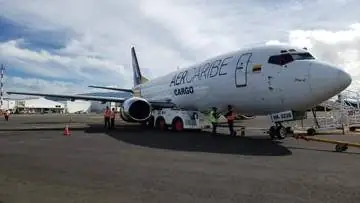
| Airline / operator | Aerolíneas Argentinas |
|---|---|
| Aircraft (type, registration) | Aerolíneas Argentinas Airbus A330-202 (LV-FVH) |
| Category (my classification) | Equipment failure / Tow bar failure / tow bar left attached |
| What happened | The A330 was being towed at Buenos Aires/Ezeiza Airport, when the towbar broke. Because of inertia, the aircraft's nose landing gear went on to the grass. |
| Injuries | ASN lists 0 fatalities. No injury statement in the ASN narrative. |
| Damage | Not stated |
| Official investigation | No investigation details on the ASN entry. |
| Source | Aviation Safety Network (ASN) entry: https://aviation-safety.net/wikibase/240871 Further sources listed on that page / found: https://pbs.twimg.com/media/Eg6iyvwXYAACIH4?format=jpg&name=large https://t.co/MoGPjt3Lxu https://t.co/UpvZbObgxP |
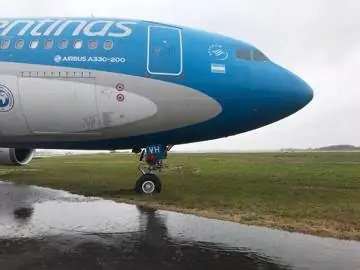
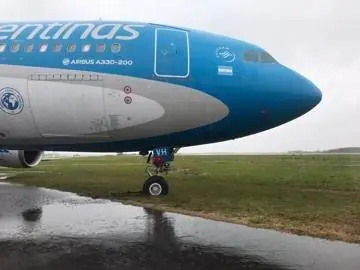
| Airline / operator | Rossiya |
|---|---|
| Aircraft (type, registration) | Rossiya Boeing 777-31HER (EI-GFA) |
| Category (my classification) | Equipment failure / Tow bar failure / tow bar left attached |
| What happened | A Boeing 777 of Rossiya, operating flight SU6284, sustained damage to the nose landing gear after the tow bar failed during pushback. |
| Injuries | ASN lists 0 fatalities. No injury statement in the ASN narrative. |
| Damage | Not stated |
| Official investigation | No investigation details on the ASN entry. |
| Source | Aviation Safety Network (ASN) entry: https://aviation-safety.net/wikibase/233252 Further sources listed on that page / found: http://www.goklerdeyiz.net/boeing-777nin-burun-inis-takimi-hasar-aldi/ |
| Airline / operator | Hong Kong Dragon Airlines |
|---|---|
| Aircraft (type, registration) | Hong Kong Dragon Airlines Airbus A330-343 (B-HLT) |
| Category (my classification) | Equipment failure / Tow bar failure / tow bar left attached |
| What happened | On 24 January 2020 at 1645 hrs, a Hong Kong Dragon Airlines Airbus A330-343, registration mark B-HLT, located at Parking Bay N66 of Hong Kong International Airport was pushed back for positioning onto Taxilane B7 by a tractor for departure to Kaohsiung. During the pushback, the flight crew started both engines in sequence. After the aircraft was aligned with the centreline of Taxilane B7 abeam Parking Bay N64, the headset man and the wing walker disconnected the towbar without confirming that the parking brake light was ‘ON’ and a chock was placed in front of the Nose Landing Gear (NLG) wheels. With both engines at idle power, the aircraft moved forward slowly and collided with the left-hand side of the tractor, causing damage to the NLG. There was no injury to the crew and the passengers on board the aircraft or the ground personnel. Cause The ground handling crew disconnected the towbar without confirming the parking brake light on the NLG was ON. A chock was not placed in front of the NLG wheel before disconnecting the towbar. Contributing Factor No chock of HAECO was available for the pushback operation. Human factors including authority gradient, confirmation bias / norms, peer pressure, and communication affected the actions and decisions taken by the ground crew leading to non-compliance with relevant SOPs. |
| Injuries | ASN lists 0 fatalities. There was no injury to the crew and the passengers on board the aircraft or the ground personnel. |
| Damage | Minor |
| Official investigation | Investigating agency: CAD Hong Kong Report number: Status: Investigation completed Duration: 1 year and 3 months Final report Report / investigator link(s): https://www.thb.gov.hk/aaia/doc/Serious%20Incident%20Final%20Report%201-2021.pdf |
| Source | Aviation Safety Network (ASN) entry: https://aviation-safety.net/wikibase/260533 Further sources listed on that page / found: https://www.thb.gov.hk/aaia/doc/Serious%20Incident%20Final%20Report%201-2021.pdf |
| Airline / operator | TAAG Angola Airlines |
|---|---|
| Aircraft (type, registration) | TAAG Angola Airlines Boeing 777-3M2ER (D2-TEH) |
| Category (my classification) | Equipment failure / Tow bar failure / tow bar left attached |
| What happened | A TAAG Boeing 777-3M2ER detached from the tug at Porto Airport, Portugal, and rolled down the apron. The right wing knocked over a mast and the aircraft came to rest across an airport road. |
| Injuries | ASN lists 0 fatalities. No injury statement in the ASN narrative. |
| Damage | Minor |
| Official investigation | No investigation details on the ASN entry. |
| Source | Aviation Safety Network (ASN) entry: https://aviation-safety.net/wikibase/229916 Further sources listed on that page / found: https://www.tsf.pt/portugal/economia/ana-abre-inquerito-a-aviao-que-saiu-de-calcos-e-deslizou-no-aeroporto-… https://t.co/9N1fr6ByPc |
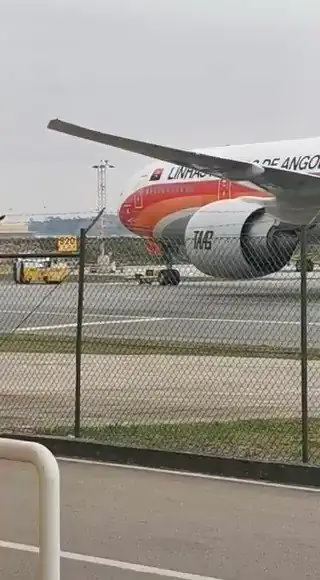
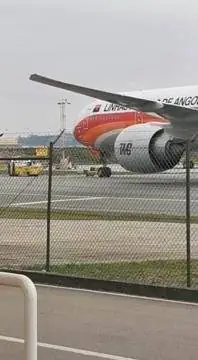 ▶ VIDEO
Still: X video preview frame, @CoelhoCuervo on X
| Airline / operator | Pakistan International Airlines - PIA |
|---|---|
| Aircraft (type, registration) | Pakistan International Airlines - PIA Boeing 777-240LR (AP-BGZ) |
| Category (my classification) | Equipment failure / Tow bar failure / tow bar left attached |
| What happened | The Boeing 777-200, AP-BGZ, taxied prematurely and struck the towbar at Birmingham Airport Following pushback and engine start the aircraft began to taxi before ground crew and equipment had moved away. The aircraft struck the towbar, damaging it and the taxiway surface. History of the flight The aircraft was departing Birmingham en-route to Islamabad and, following a normal pushback, it was stopped and the parking brake was applied. The flight crew advised the ground crew to disconnect the ground equipment and give a hand signal when clear to the left. The ground crew disconnected the tug and towbar and positioned the tug to the left of the aircraft nose. The towbar was moved behind the tug so that it could be attached to the rear tow point for removal from the taxiway. The flight crew saw the tug clear of the aircraft to the left and observed the ground crew moving around. After a period during which the ground crew did not appear again and did not make contact, the flight crew assumed that he had left the aircraft. They attempted to gain the ground crew’s attention with gestures from the flight deck and via the intercom but were unable to do so. The aircraft commander, believing they were ready to taxi, asked the co-pilot to obtain taxi clearance. The flight crew did not ask ATC if they could assist in confirming that all personnel were gone from beneath the aircraft and did not receive the final clearing hand signal from the ground crew. The time interval from the towbar being disconnected from the aircraft to the aircraft starting to move was approximately 23 seconds. The handling agent commented that it would be usual for this period to be about two to three minutes. Shortly after starting to move, the aircraft struck the towbar and the crew stopped and applied the parking brake. Neither of the ground personnel nor the tug were struck by the aircraft. The aircraft was inspected by the airline ground engineer and subsequently cleared to depart. The towbar and the taxiway surface were damaged during the event. Analysis After a normal pushback, the ground crew were cleared to remove the ground equipment and intercom in the normal manner. After a while, the commander asked the co-pilot to obtain taxi clearance from ATC even though neither had seen a clearing hand signal from the ground crew. The flight crew tried to contact the ground crew but were unable to do so, and the tug remained in view to the left of the aircraft. They did not ask ATC to remove doubt about the position of the ground personnel and equipment and, as a result, the ground equipment remained in the path of the aircraft when it began to move and a collision resulted. Conclusion The commander decided to taxi before all the ground personnel and equipment were clear of the aircraft. Shortly after starting to move, the aircraft struck the towbar". Damage Sustained to Airframe Per the AAIB Report "None" (that is, no damage sustained to aircraft)., However, as already stated, the towbar and the taxiway surface were damaged. |
| Injuries | ASN lists 0 fatalities. No injury statement in the ASN narrative. |
| Damage | None |
| Official investigation | Investigating agency: AAIB Report number: Status: Investigation completed Duration: Final report Report / investigator link(s): https://assets.publishing.service.gov.uk/media/5f1e881fd3bf7f596c19b798/Boeing_777-200_AP-BGZ_05-20.pdf |
| Source | Aviation Safety Network (ASN) entry: https://aviation-safety.net/wikibase/423258 Further sources listed on that page / found: https://assets.publishing.service.gov.uk/media/5f1e881fd3bf7f596c19b798/Boeing_777-200_AP-BGZ_05-20.pdf https://propakistani.pk/2020/05/15/investigations-determine-pia-crew-was-responsible-for-boeing-777-accident/ https://www.flightglobal.com/safety/pia-777-taxied-without-all-clear-from-ground-crew/138375.article https://airport-data.com/aircraft/AP-BGZ.html https://en.wikipedia.org/wiki/Birmingham_Airport |
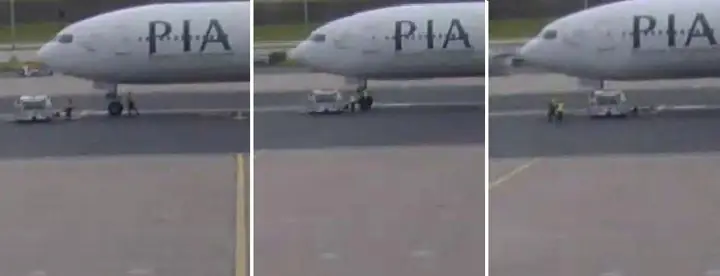
| Airline / operator | Air Canada |
|---|---|
| Aircraft (type, registration) | Air Canada Boeing 777-333ER (C-FNNQ) |
| Category (my classification) | Equipment failure / Tow bar failure / tow bar left attached |
| What happened | The crew undertook a scheduled flight departing from Paris - Charles de Gaulle (France) bound for Toronto (Canada). The scheduled block time was 11:56 and push-back started at 11:44. The push-back operation from stand A38 was carried out by personnel from two separate handling companies: the headset operator works for Air France Industries and the push-back tractor was driven by two agents employed by Airlines Ground Service (AGS). The driver was a trainee completing his training and accompanied by his instructor. At the end of the push-back, when the aeroplane was nearly on the centreline of the taxiway, the tractor reached its maximum turn angle. The instructor on board the tractor asked the driver to apply the tractor parking brake, alighted the tractor then initiated the operations necessary to disconnect the push-back bar. He actuated the hydraulic extension system of the retractable wheel gear of the tow bar then asked the driver of the tractor to raise the drawbar pin ensuring connection of the bar with the tractor. During this operation, the aeroplane, on which the parking brake was not applied, moved forwards and one of the bar wheels rolled over the right foot of the instructor who became trapped. Under stress, the bar suddenly unhooked from the tractor and hit the instructor?s right leg. One of the bar?s shear pins was found ruptured.The statements collected differ in such a way that the investigation was unable to determine the exact sequence of the accident, in particular: the exact time of the shear pin rupture; whether signals were exchanged between the headset operator and the agents on board the tractor. The fact is that the driver?s instructor alighted and started to remove the tow bar without the aeroplane parking brake being applied and without blocks in position. During disconnection of the bar, a forward movement of the aeroplane led to the immobilisation of the agent, his foot trapped under a tow bar wheel. This agent was then struck by the tow bar after it was released. |
| Injuries | ASN lists 0 fatalities. No injury statement in the ASN narrative. |
| Damage | None |
| Official investigation | Investigating agency: BEA Report number: A19F0190 Status: Investigation completed Duration: Final report Report / investigator link(s): https://www.bea.aero/fileadmin/user_upload/BEA2019-0413.en.pdf https://bea.aero/en/investigation-reports/notified-events/detail/accident-to-the-boeing-777-registered-c-fnnq-and-operated-by-air-canada-on-24-07-2019-at-paris-charles-de-gaulle/ |
| Source | Aviation Safety Network (ASN) entry: https://aviation-safety.net/wikibase/302490 Further sources listed on that page / found: https://www.bea.aero/fileadmin/user_upload/BEA2019-0413.en.pdf https://bea.aero/en/investigation-reports/notified-events/detail/accident-to-the-boeing-777-registered-c-fn… |
| Airline / operator | Kuwait Airways |
|---|---|
| Aircraft (type, registration) | Kuwait Airways Boeing 777-369ER (9K-AOH) |
| Category (my classification) | Equipment failure / Tow bar failure / tow bar left attached |
| What happened | A technical staff member was killed during a towing accident at the company's base airport on May 6, the airline said sharing details on Twitter. And there also also other sources with the tragical news. He was towing a Boeing 777-369ER from the parking area to Terminal 4 of Kuwait International Airport (KWI/OKBK). The towbar broke and due to a slope on the taxiway the nose wheels of the aircraft rolled over the tractor and the driver. No crew members or passengers were on board the aircraft when the incident happened. |
| Injuries | ASN lists 0 fatalities. A technical staff member was killed during a towing accident at the company's base airport on May 6, the airline said sharing details on Twitter. |
| Damage | Not stated |
| Official investigation | No investigation details on the ASN entry. |
| Source | Aviation Safety Network (ASN) entry: https://aviation-safety.net/wikibase/224818 Further sources listed on that page / found: http://newsinflight.com/2019/05/07/a-technician-died-while-towing-a-boeing-777-at-kuwait-airport/ https://www.khaleejtimes.com/region/kuwait/gulf-airline-worker-dies-in-freak-boeing-777-accident https://www.flightglobal.com/news/articles/ground-worker-killed-in-kuwait-777-towing-accident-457957/ https://www.facebook.com/Aeronews.ro/posts/2208725425870212 https://t.co/MGp9VOo5DP |
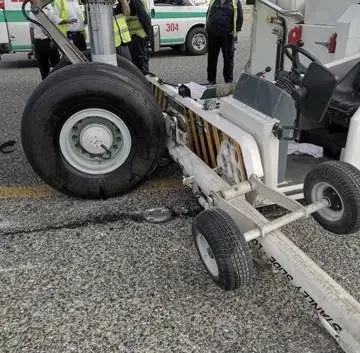
| Airline / operator | easyJet |
|---|---|
| Aircraft (type, registration) | easyJet Airbus A320-214 (G-EZWC) |
| Category (my classification) | Equipment failure / Tow bar failure / tow bar left attached |
| What happened | EasyJet flight U26755, an Airbus A320-214, sustained damage to the right-hand engine inlet cowling during pushback at Belfast International Airport, Northern Ireland. The aircraft was being pushed back from Stand 18 and was stopped with the tug and tow bar positioned at a significant angle to the aircraft’s nose. The tow bar disconnected from the nose landing gear, and the aircraft rolled forward and struck the tug. Conclusion: During the pushback, the left turn was made beyond the correct turning point because the tug driver had difficulty seeing the taxi line in the wet reflective surface of the apron. The aircraft was stopped with the tug and tow bar positioned at a significant angle to the right of the aircraft’s nose and, at some point, the tow bar disconnected from the nose landing gear. The aircraft rolled forward slowly, and the flight crew believed it was still under tow and they could not apply aircraft brakes. The aircraft was brought to a halt when it struck the tug. |
| Injuries | ASN lists 0 fatalities. No injury statement in the ASN narrative. |
| Damage | Minor, repaired |
| Official investigation | Investigating agency: AAIB Report number: EW/G2019/04/01 Status: Investigation completed Duration: 7 months Final report Report / investigator link(s): https://assets.publishing.service.gov.uk/media/5d9f2d3140f0b607f3e679c6/Airbus_A320-214_G-EZWC_11-19.pdf |
| Source | Aviation Safety Network (ASN) entry: https://aviation-safety.net/wikibase/319459 Further sources listed on that page / found: https://assets.publishing.service.gov.uk/media/5d9f2d3140f0b607f3e679c6/Airbus_A320-214_G-EZWC_11-19.pdf |
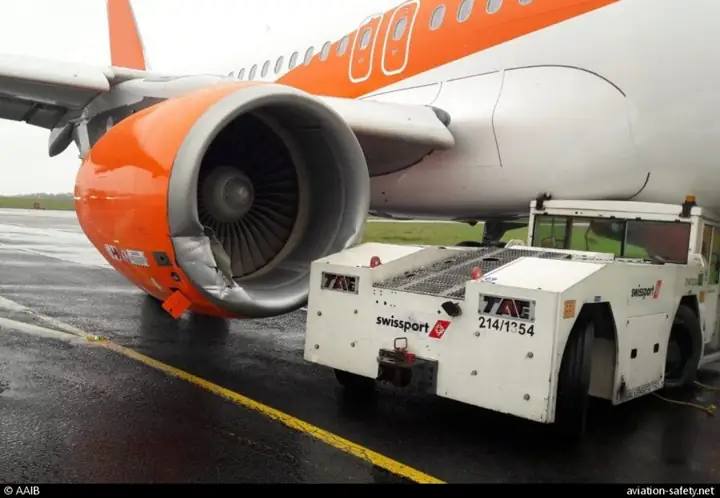
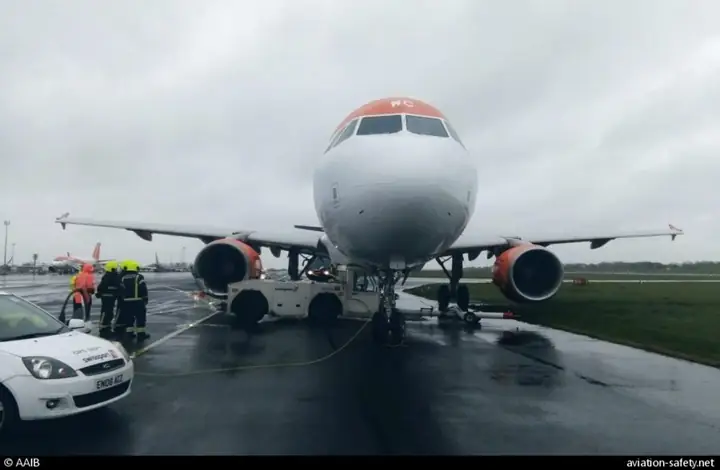
| Airline / operator | Hawaiian Airlines |
|---|---|
| Aircraft (type, registration) | Hawaiian Airlines Airbus A321-271N (N216HA) |
| Category (my classification) | Equipment failure / Tow bar failure / tow bar left attached |
| What happened | Hawaiian Airlines flight HA63, an Airbus A321neo, hit a tow truck after the tow bar broke. The aircraft was taken out of service. There were no injuries. |
| Injuries | ASN lists 0 fatalities. There were no injuries. |
| Damage | Not stated |
| Official investigation | No investigation details on the ASN entry. |
| Source | Aviation Safety Network (ASN) entry: https://aviation-safety.net/wikibase/222131 Further sources listed on that page / found: https://www.hawaiinewsnow.com/2019/02/22/lihue-bound-hawaiian-airlines-flight-canceled-after-plane-hits-tru… |
| Airline / operator | Qantas |
|---|---|
| Aircraft (type, registration) | Qantas Boeing 737-838 (WL) (VH-VZZ) |
| Category (my classification) | Equipment failure / Tow bar failure / tow bar left attached |
| What happened | At about 18:30 local time on 14 October 2017, the flight crew of a Qantas Boeing 737 boarded the aircraft at Sydney Airport, Australia. The aircraft was scheduled to operate a passenger flight to Melbourne, Victoria, with two flight crew, five cabin crew, and 174 passengers. After boarding, the flight crew found the aircraft had no battery power, as the battery switch had inadvertently been left on. Consequently, another Boeing 737 aircraft, registered VH-VZZ (VZZ) was assigned for the flight. Catering had already been loaded on the originally assigned aircraft so a catering crew (driver and marshaller) were tasked to transfer the catering to VZZ. At about 19:10, a dispatch engineer was assigned to the departure of VZZ, which was scheduled for 19:30. At about 19:21, the engineer arrived at the aircraft, and received a handover from the other engineer who had been in attendance. The engineers discussed the aircraft status under the aerobridge as it had just started to rain. At this time, the catering vehicle (truck) was loading the forward galley through the right forward main entry door. The pushback vehicle's (tug) towbar was already connected to the aircraft. At about 19:22, the catering crew completed loading the forward galley. They then moved the truck to the right rear main entry door and began loading the rear galley. The engineer completed his walk around of VZZ and stood under the wing waiting for the catering crew to complete loading. He saw the catering crew close the main entry door and then visually checked that the aircraft door was closed. The engineer then proceeded towards the front of the aircraft. He put on his headset, which was connected to an external jack point, and contacted the flight crew who confirmed they were ready to depart. As it was still raining, the engineer entered the right side of the tug and sat in its cabin. Meanwhile, the catering crew retracted the truck's loading platform and began lowering the truck's body. At about 19:30, air traffic control cleared VZZ for pushback, and its captain informed the engineer accordingly. When the aerobridge had been retracted, the engineer leaned out of the tug cabin and completed a visual check of the left forward main entry door. At 19:32:23, the catering truck body had finished lowering and the stabilisers began to raise. The crew exited the truck body. A few seconds later, the flight crew turned on the aircraft's anti-collision light. At 19:32:43, the engineer looked left and right from the tug cabin to check for vehicles. He then gave the 'thumbs up' signal to the tug driver to commence pushback. When VZZ began reversing, the engineer approved the flight crew to start the right engine. The crew selected the engine start switch and the engine began rotating. The catering truck driver began reversing the truck at this time. A few seconds later, the catering truck's marshaller identified that VZZ was moving and tried to alert the truck driver. At the same time, the engineer saw that the catering truck was not clear and 'yelled' at the tug driver to stop. The tug driver immediately applied the brakes. The tug stopped but the pins in the towbar sheared and it separated from VZZ. The flight crew heard a loud 'bang' and then saw VZZ moving away from the tug. The catering truck was reversing but still 5-7 m behind the aircraft's right engine so the engineer asked the flight crew to apply the aircraft's brakes. The captain applied the brakes as firmly as possible. The aircraft slowed but continued rolling back 3- 4 m. At 19:32:53, the aircraft's right wing collided with the truck before it came to a stop. The flight crew then engaged the aircraft's park brake and turned the right engine switch to OFF and the engine wound down as fuel had not been introduced. The aircraft was found to have substantial damage to its right outboard flaps, wing structure between the flaps and aileron, and the aileron. Findings: - The dispatch engineer assumed that the catering truck was clear and did not visually confirm it was before he cleared VH-VZZ for pushback. In part, this assumption was based on an incorrect expectation of the time required for the truck to move clear. - The engineer’s view of the truck from the pushback tug’s cabin was largely obstructed by the aircraft. The dark and rainy conditions also made it difficult to see the truck, and the engineer saw it too late to prevent the collision. |
| Injuries | ASN lists 0 fatalities. No injury statement in the ASN narrative. |
| Damage | Minor, repaired |
| Official investigation | Investigating agency: ATSB Report number: AO-2017-099 Status: Investigation completed Duration: 1 year 1 month Final report Report / investigator link(s): https://www.atsb.gov.au/sites/default/files/media/5775312/ao-2017-099_final.pdf |
| Source | Aviation Safety Network (ASN) entry: https://aviation-safety.net/wikibase/319793 Further sources listed on that page / found: https://www.atsb.gov.au/sites/default/files/media/5775312/ao-2017-099_final.pdf |
| Airline / operator | Iberia Express |
|---|---|
| Aircraft (type, registration) | Iberia Express Airbus A320-216 (WL) (EC-LVQ) |
| Category (my classification) | Equipment failure / Tow bar failure / tow bar left attached |
| What happened | Iberia Express flight 3791, an Airbus A320-216, sustained damage to the no.2 engine air inlet cowl after contacting a tow truck at Dublin Airport, Ireland. Having obtained Air Traffic Control approval "to push and start to Tug Release Point November [TRP ‘N’]", Airbus A320 EC- LVQ was pushed off parking Stand 318R, in preparation for departure to Madrid Barajas Airport (LEMD), Spain. The manoeuvre involved an initial pushback, followed by a pull forward onto Apron Taxiway 5, to TRP ‘N’. Following the initial pushback, and in order to bring the aircraft onto the taxiway, the tractor pulled the aircraft forward through the taxiway centreline to the south east of the line, prior to turning right to align the aircraft with the taxiway. During the pull forward the flight crew obtained clearance from the headset operator to start the starboard engine. As the tractor turned right to align the aircraft onto the taxiway, the aircraft nose began to overtake the tractor. The headset operator immediately instructed the Flight Crew to shut down the starboard engine. Although the tractor driver attempted to stop the tractor, it was pulled and rotated as the aircraft continued to move forward. The aircraft then turned slightly to the right as it remained attached to the tractor via the towbar and came to rest with the tractor wedged against the right hand side of the starboard engine cowling. Probable Cause: Failure of the towbar shear- pin during a pull forward manoeuvre. |
| Injuries | ASN lists 0 fatalities. No injury statement in the ASN narrative. |
| Damage | Minor |
| Official investigation | Investigating agency: AAIU Report number: Status: Investigation completed Duration: 8 months Final report Report / investigator link(s): http://www.aaiu.ie/sites/default/files/report-attachments/REPORT%202018-009.pdf |
| Source | Aviation Safety Network (ASN) entry: https://aviation-safety.net/wikibase/199998 Further sources listed on that page / found: http://www.aaiu.ie/sites/default/files/report-attachments/REPORT%202018-009.pdf |
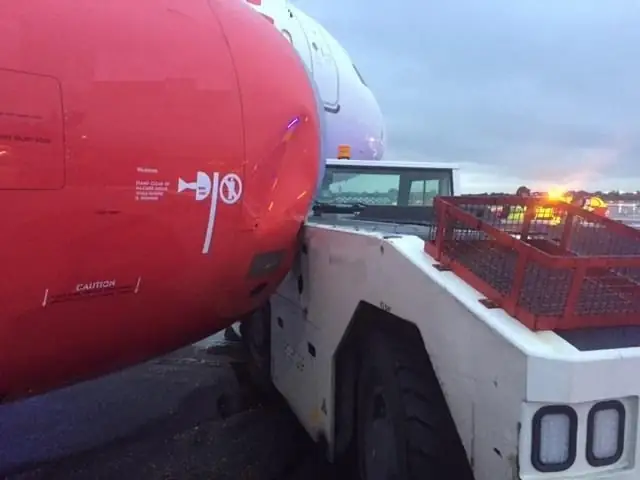
| Airline / operator | Kuwait Airways |
|---|---|
| Aircraft (type, registration) | Kuwait Airways Airbus A320-214 (WL) (9K-AKE) |
| Category (my classification) | Equipment failure / Tow bar failure / tow bar left attached |
| What happened | A Kuwait Airways Airbus A320 was damaged after it hit a push-back tractor at Kuwait International Airport. The aircraft was being pushed back from the gate for flight KU331 to Thiruvananthapuram in India when the incident happened. The tow bar broke, causing the vehicle to become stuck under the fuselage. |
| Injuries | ASN lists 0 fatalities. No injury statement in the ASN narrative. |
| Damage | Minor |
| Official investigation | No investigation details on the ASN entry. |
| Source | Aviation Safety Network (ASN) entry: https://aviation-safety.net/wikibase/196138 Further sources listed on that page / found: https://www.kuna.net.kw/ArticleDetails.aspx?id=2616118&language=en https://t.co/XA7AFyGiuY |
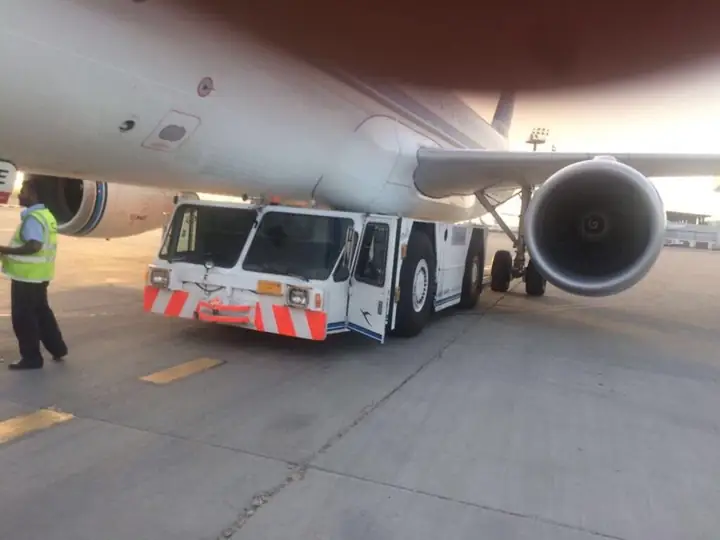
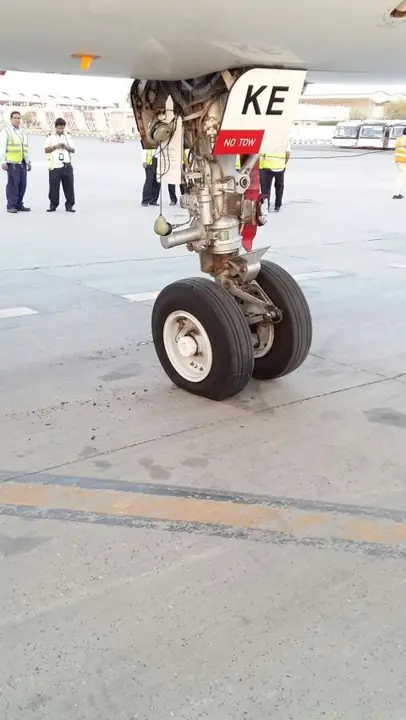
| Airline / operator | Viva Aerobus |
|---|---|
| Aircraft (type, registration) | Viva Aerobus Airbus A320-232 (XA-VAH) |
| Category (my classification) | Equipment failure / Tow bar failure / tow bar left attached |
| What happened | Viva Aerobus flight VB1704 was damaged in a pushback incident at Monterrey, Mexico. The tow bar broke, and the aircraft impacted the tug, causing damage to the electronics compartment. The aircraft was back in service on April 14. |
| Injuries | ASN lists 0 fatalities. No injury statement in the ASN narrative. |
| Damage | Minor |
| Time out of service | XA-VAH: 2 days (ASN) |
| Official investigation | No investigation details on the ASN entry. Report / investigator link(s): https://www.bea.aero/en/investigation-reports/notified-events/detail/event/seious-incident-to-the-airbus-a320-registered-xa-vah-and-operated-by-vivaaerobus-on-12042017-at-mo/ |
| Source | Aviation Safety Network (ASN) entry: https://aviation-safety.net/wikibase/195053 Further sources listed on that page / found: https://www.bea.aero/en/investigation-reports/notified-events/detail/event/seious-incident-to-the-airbus-a3… |
| Airline / operator | easyJet |
|---|---|
| Aircraft (type, registration) | easyJet Airbus A320-214 (G-EZTV) |
| Category (my classification) | Equipment failure / Tow bar failure / tow bar left attached |
| What happened | EasyJet flight 1985, a scheduled service from Manchester, U.K. to Copenhagen, Denmark, was cancelled after a tow truck jack-knifed and became stuck under the aircraft's fuselage. During the pushback from Stand 1 at Manchester Airport, in dark and wet conditions, the flight deck crew felt a fore and aft jolt and heard a mechanical "clunk". The commander informed the headset operator who conferred with the tug driver, and then visually checked the towbar and its attachment to the tug and to the aircraft. The ground crew saw nothing abnormal and they assumed the clunk was due to the tow hitch shifting, which is a familiar occurrence. The headset operator informed the commander that all was well, and the pushback continued. In response to a request from the commander, the headset operator indicated the left engine could be started, although the aircraft had not reached the designated engine start positon for that stand. As the aircraft was halted, in preparation for being pulled forward to the release point, the headset operator approved a request from the flight deck crew to start the right engine. The commander was conscious of the aircraft beginning to move gently forward, while he was concentrating on starting the right engine. Both the tug and the headset operator were concealed from his field of view and he was not surprised when the aircraft’s nose turned first to the right and then to the left, as if it was being lined-up on the taxiway centreline. He then heard an urgent instruction from the headset operator for the brakes to be applied, so he responded by pressing on the toe brakes before setting the park brake. The headset operator then informed him that the tug and aircraft had collided, but that nobody was injured. Both engines were then shut down. Ground crew from adjacent stands came to assist and found the towbar was still connected to both the tug and to the aircraft. The nose gear leg was rotated approximately 90° to the left and the tow bar was bent around the front corner of the tug. The shear pins on the towbar had fractured, and pieces were later found within the boundary of the stand, but the central retaining pin remained intact. The passengers and crew disembarked without injury from the rear right exit door. An investigation by the ground handling company showed One of the pins on this towbar had failed 16 days before the accident and only that pin had been replaced. It was also established that other maintenance procedures for the shear pins had not been followed. They had not been lubricated correctly and the training given to ground crews did not prepare them for conducting adequate serviceability checks on the pins. No Probable Cause was issued by the AAIB |
| Injuries | ASN lists 0 fatalities. The headset operator then informed him that the tug and aircraft had collided, but that nobody was injured.; The passengers and crew disembarked without injury from the rear right exit door. |
| Damage | Substantial, repaired |
| Official investigation | Investigating agency: AAIB Report number: EW/G2017/03/01 Status: Investigation completed Duration: 9 months Final report Report / investigator link(s): https://assets.publishing.service.gov.uk/media/5a0abf8940f0b60b04839a90/Airbus_A320-214_G-EZTV_12-17.pdf |
| Source | Aviation Safety Network (ASN) entry: https://aviation-safety.net/wikibase/319916 Further sources listed on that page / found: https://assets.publishing.service.gov.uk/media/5a0abf8940f0b60b04839a90/Airbus_A320-214_G-EZTV_12-17.pdf |
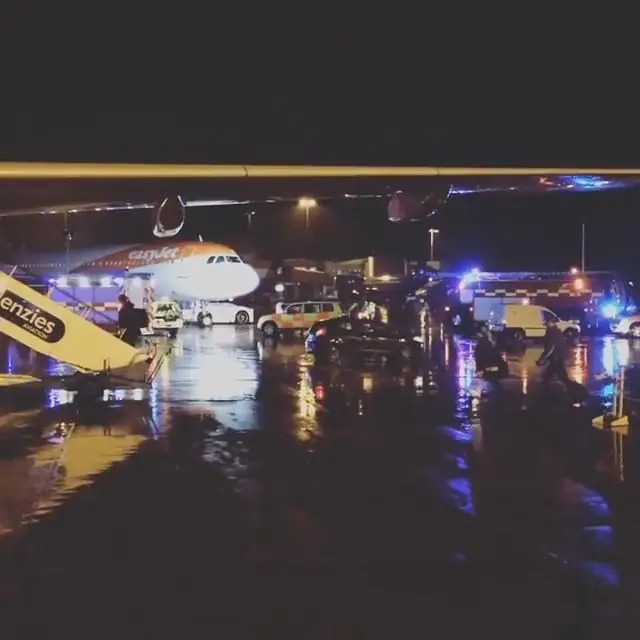
| Airline / operator | Ukraine International Airlines |
|---|---|
| Aircraft (type, registration) | Ukraine International Airlines Boeing 767-33AER (WL) (UR-GEB) |
| Category (my classification) | Equipment failure / Tow bar failure / tow bar left attached |
| What happened | The aircraft was being towed away for maintenance when the tow bar attachment broke, causing the towing truck to become stuck under the center fuselage. It appeared there was a lack of communication between the truck driver and the engineer in the cockpit and that the towing speed was too high for the circumstances (snow). |
| Injuries | ASN lists 0 fatalities. No injury statement in the ASN narrative. |
| Damage | Minor |
| Official investigation | No investigation details on the ASN entry. Report / investigator link(s): http://www.nbaai.gov.ua/uploads/pdf/B-767_UR-GEB.pdf |
| Source | Aviation Safety Network (ASN) entry: https://aviation-safety.net/wikibase/193208 Further sources listed on that page / found: http://www.nbaai.gov.ua/uploads/pdf/B-767_UR-GEB.pdf |
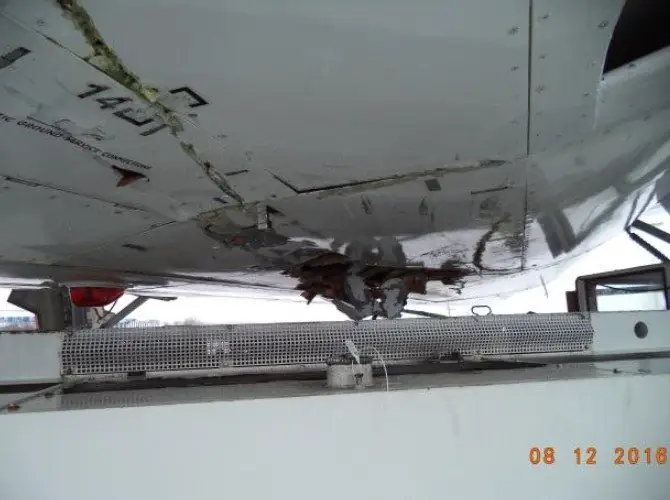
| Airline / operator | Ryanair |
|---|---|
| Aircraft (type, registration) | Boeing 737-800 (EI-DLR) |
| Category (my classification) | Equipment failure / Tow bar failure / tow bar left attached Earlier cases (pre-2016, photo evidence) |
| What happened | A cross-bleed engine start was made during pushback. The towbar failed and the engine struck the tug. |
| Injuries | Not stated in the source. |
| Damage | Not stated |
| Official investigation | UK AAIB EW/C2008/11/04 (Bulletin 12/2009) Report / investigator link(s): https://assets.publishing.service.gov.uk/media/5422fee6e5274a13170009f7/Boeing_737-8AS__EI-DLR_12-09.pdf https://skybrary.aero/accidents-and-incidents/b738-london-stansted-uk-2008 |
| Source | UK AAIB Bulletin 12/2009: https://assets.publishing.service.gov.uk/media/5422fee6e5274a13170009f7/Boeing_737-8AS__EI-DLR_12-09.pdf |
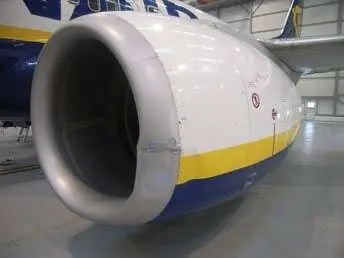
Aircraft brake / steering / nose-gear failure (2)
The aircraft's own brakes, hydraulics, steering or nose gear failed during a ground move.
| Airline / operator | Wings Air |
|---|---|
| Aircraft (type, registration) | Wings Air ATR 72-500 (72-212A) (PK-WFT) |
| Category (my classification) | Equipment failure / Aircraft brake / steering / nose-gear failure |
| What happened | En route the aircraft experienced hydraulic system blue and green low level. The aircraft landed safely. While entering the apron, the brakes failed and the aircraft hit a towing tractor. |
| Injuries | ASN lists 0 fatalities. No injury statement in the ASN narrative. |
| Damage | Minor |
| Official investigation | No investigation details on the ASN entry. Report / investigator link(s): https://www.bea.aero/en/investigation-reports/notified-events/detail/event/serious-incident-to-the-atr-72-registered-pk-wft-operated-by-wing-abadi-airlines-on-21102016-at-jakarta-investigation-led-by-par-ntsc-indonesia/ |
| Source | Aviation Safety Network (ASN) entry: https://aviation-safety.net/wikibase/191167 Further sources listed on that page / found: https://www.bea.aero/en/investigation-reports/notified-events/detail/event/serious-incident-to-the-atr-72-r… |
| Airline / operator | Northwest Airlines |
|---|---|
| Aircraft (type, registration) | Douglas DC-9 (N763NC); Airbus A319 (N368NB) |
| Category (my classification) | Equipment failure / Aircraft brake / steering / nose-gear failure Earlier cases (pre-2016, photo evidence) |
| What happened | After a hydraulic failure, with the left engine shut down by the captain, the taxiing NW DC-9 N763NC struck NW A319 N368NB. Passengers evacuated the A319 by slide. |
| Injuries | Not stated in the source. |
| Damage | Damage to both aircraft |
| Official investigation | NTSB CHI05MA111 Report / investigator link(s): https://reports.aviation-safety.net/2005/20050510-1_A319_N368NB.pdf |
| Source | Aviation Safety Network (ASN) entry: https://aviation-safety.net/wikibase/322403 |
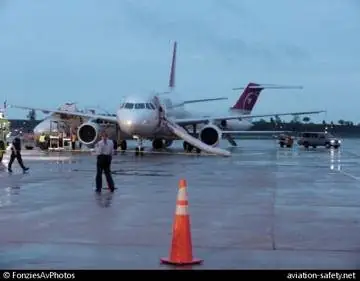
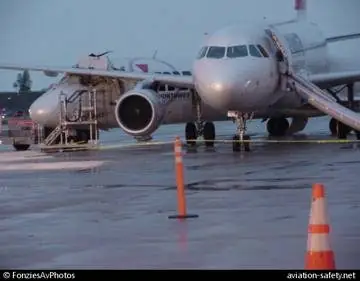
Tug failure (mechanical, brakes, fire, other) (3)
The tug itself failed (mechanical, brakes, fire or other).
| Airline / operator | Turkish Airlines |
|---|---|
| Aircraft (type, registration) | Turkish Airlines Airbus A319 (TC-JLT), flight TK2054 to Kütahya-Zafer |
| Category (my classification) | Equipment failure / Tug failure (mechanical, brakes, fire, other) |
| What happened | During pushback of flight TK2054 from Istanbul to Kütahya-Zafer, the pushback tug could not be detached from the aircraft. Istanbul Airport (İGA) and TGS ground-handling teams worked for about 1 hour 30 minutes before the tug came free and the aircraft departed. |
| Injuries | None reported |
| Damage | Not reported |
| Official investigation | No public investigation found. |
| Source | HavaSosyalMedya, 25 Jul 2025 (in Turkish): https://havasosyalmedya.com/pushback-araci-ucaktan-ayrilamadi/ |
| Note | Not a collision. Included because the delay came from the pushback tug itself. |
| Airline / operator | American Airlines |
|---|---|
| Aircraft (type, registration) | Boeing 787-9 (unoccupied) |
| Category (my classification) | Equipment failure / Tug failure (mechanical, brakes, fire, other) |
| What happened | A third-party contractor's tug caught fire while towing an unoccupied American Airlines 787-9. The aircraft was moved away by another tug. |
| Injuries | No injuries reported. |
| Damage | No aircraft damage reported; tug burned |
| Official investigation | No public investigation found. |
| Source | Simple Flying: https://simpleflying.com/tug-american-airlines-boeing-787-9-dreamliner-sao-paulo-fire Further sources listed on that page / found: https://www1.folha.uol.com.br/cotidiano/2024/09/veiculo-de-reboque-de-boeing-pega-fogo-no-aeroporto-de-guar… |
| Airline / operator | Virgin America |
|---|---|
| Aircraft (type, registration) | Virgin America Airbus A320-214 (N642VA) |
| Category (my classification) | Equipment failure / Tug failure (mechanical, brakes, fire, other) |
| What happened | An Airbus A320-214 sustained minor damage when a pushback tug caught fire while the aircraft was being towed at Los Angeles International Airport. The tug caught on fire on Taxiway E between E11 and E12. The fire was quickly contained by the airport fire service. |
| Injuries | No injury statement in the ASN narrative. |
| Damage | Minor |
| Official investigation | No investigation details on the ASN entry. |
| Source | Aviation Safety Network (ASN) entry: https://aviation-safety.net/wikibase/184790 Further sources listed on that page / found: https://patch.com/california/hermosabeach/s/fmdh0/tug-towing-virgin-america-plane-catches-on-fire-at-laxutm… https://t.co/5VcaFBZBWM https://t.co/OfBqWcy63y |
Cause not stated (13)
Ground collisions where the published sources do not say enough to assign a cause.
| Airline / operator | Ryanair |
|---|---|
| Aircraft (type, registration) | Ryanair Boeing 737 MAX 8-200 (EI-ILN) |
| Category (my classification) | Cause not stated |
| What happened | The wingtip of Ryanair flight FR5667, a Boeing 737 MAX 8-200, and the cab of a fuel bowser came into contact at Edinburgh Airport. There were no injuries. |
| Injuries | ASN lists 0 fatalities. There were no injuries. |
| Damage | Minor Location: Edinburgh-Turnhouse Airport (EDI/EGPH) - United Kingdom Phase: Pushback / towing Nature: Passenger - Scheduled Departure airport: Edinburgh-Turnhouse Airport (EDI/EGPH) Destination airport: Faro Airport (FAO/LPFR) Confidence Rating: Information is only available from news, social media or unofficial sources Narrative: The wingtip of Ryanair flight FR5667, a Boeing 737 MAX 8-200, and the cab of a fuel bowser came into contact at Edinburgh Airport. There were no injuries. ICAO Occurrence |
| Time out of service | EI-ILN: about 1 day, ≈ 4 missed flights (ADS-B flight data) |
| Official investigation | No investigation details on the ASN entry. |
| Source | Aviation Safety Network (ASN) entry: https://aviation-safety.net/wikibase/564111 Further sources listed on that page / found: https://uknip.co.uk/news/uk/breaking/chaos-at-edinburgh-airport-plane-crashes-into-fuel-truck/ https://www.mirror.co.uk/news/uk-news/breaking-ryanair-flight-crashes-fuel-36440429 https://news.stv.tv/east-central/ryanair-plane-evacuated-on-edinburgh-airport-runway-after-crashing-with-fu… https://t.co/Klqp4Qc0XV https://t.co/5NdU8NFK6N |
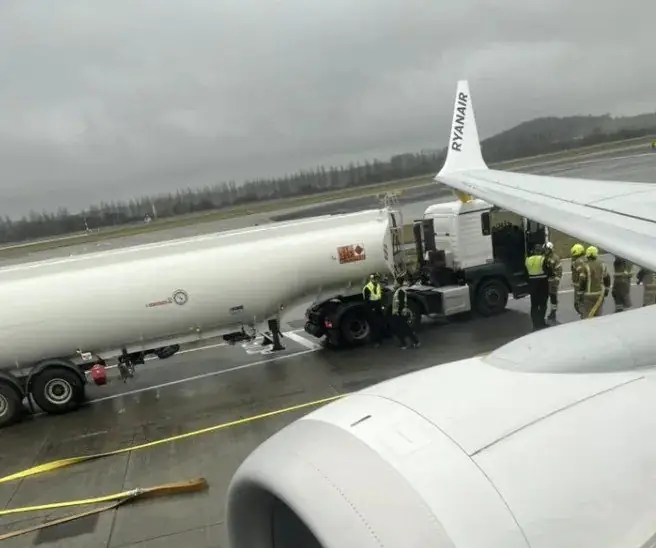
 ▶ VIDEO
Still: X video preview frame, @STVNews on X
| Airline / operator | American Airlines |
|---|---|
| Aircraft (type, registration) | American Airlines Boeing 787-9 (N820AL) |
| Category (my classification) | Cause not stated Secondary: Tug involved |
| What happened | Simple Flying reported that American Airlines Boeing 787-9 N820AL was ferried from New York JFK to San Antonio on 20 December 2024 for repair after a reported tug accident in New York. The aircraft had been on the ground since 29 November 2024. The article does not say how the accident happened or how much damage there was. |
| Injuries | None reported |
| Damage | Not stated (the aircraft was ferried for repair) |
| Time out of service | N820AL: at least 21 days (on ground at JFK 29 Nov - 20 Dec 2024, then ferried to SAT for repair) (Simple Flying) |
| Official investigation | No public investigation found. |
| Source | Simple Flying, 24 Dec 2024: https://simpleflying.com/american-airlines-boeing-787-9-ferried-san-antonio-tug-accident/ |
| Note | 29 Nov 2024 is the date from which the aircraft was on the ground, per Simple Flying; the date of the tug accident itself is not stated. |
| Airline / operator | Royal Air Maroc - RAM |
|---|---|
| Aircraft (type, registration) | Royal Air Maroc - RAM Boeing 787-8 Dreamliner (CN-RGB) |
| Category (my classification) | Cause not stated |
| What happened | The Royal Air Maroc Boeing 787-8 Dreamliner collided with a jetbridge at Casablanca-Mohamed V Airport (CMN). The aircraft resumed regular service on 24 November 2024. |
| Injuries | ASN lists 0 fatalities. No injury statement in the ASN narrative. |
| Damage | Unknown |
| Time out of service | CN-RGB: 13 days (ASN) |
| Official investigation | No investigation details on the ASN entry. |
| Source | Aviation Safety Network (ASN) entry: https://aviation-safety.net/wikibase/460603 |
| Airline / operator | American Eagle, opb Republic Airways |
|---|---|
| Aircraft (type, registration) | American Eagle Embraer E175 (N136HQ) |
| Category (my classification) | Cause not stated Secondary: Tug involved |
| What happened | During pushback at Philadelphia for American Eagle flight 4487 to Kansas City, Embraer E175 N136HQ, operated by Republic Airways, collided with the tug. The 65 passengers and four crew were deplaned and the flight left about six hours late on a replacement aircraft (N137HQ). The reports do not say how the collision happened. |
| Injuries | No passengers or crew were injured. The tug driver was taken to hospital. |
| Damage | Not stated; the aircraft was taken out of service for inspection. |
| Time out of service | N136HQ: at least 2 days (still out of service for inspection on 19 Aug 2024) (AeroTime) |
| Official investigation | No public investigation found. |
| Source | Simple Flying, 18 Aug 2024: https://simpleflying.com/american-eagle-embraer-e175-collides-tug-philadelphia/ Further sources listed on that page / found: https://www.aerotime.aero/articles/american-eagle-collides-with-tug-tractor-at-phl-airport |
| Airline / operator | Solaseed Air |
|---|---|
| Aircraft (type, registration) | Solaseed Air Boeing 737-86N (WL) (JA806X) |
| Category (my classification) | Cause not stated |
| What happened | Solaseed Air flight SNJ/6J31 from Tokyo/Haneda to Nagasaki, a Boeing 737-86N(WL), suffered left winglet contact with a stair car at the spot 507 of Haneda on departure. The flight was cancelled together with following five more flights of the day for inspection. |
| Injuries | ASN lists 0 fatalities. No injury statement in the ASN narrative. |
| Damage | Not stated |
| Official investigation | No investigation details on the ASN entry. |
| Source | Aviation Safety Network (ASN) entry: https://aviation-safety.net/wikibase/309480 Further sources listed on that page / found: https://news.yahoo.co.jp/articles/cc65434cd7c5a1ec73cb9316630ecc055ab4ea47 https://www.solaseedair.jp/info/2023/03/2023324.html |
| Airline / operator | ITA Airways; Delta Connection, opb Endeavor Air |
|---|---|
| Aircraft (type, registration) | Airbus A330 (EI-EJM); Bombardier CRJ-900 (N928XJ) |
| Category (my classification) | Cause not stated |
| What happened | ITA Airways A330 EI-EJM and Endeavor Air CRJ-900 N928XJ collided on the ground; the A330's right winglet was sheared off. |
| Injuries | Not stated in the source. |
| Damage | A330 right winglet sheared off |
| Official investigation | No public investigation found. |
| Source | JACDEC on X: https://x.com/JacdecNew/status/1613570150988484616 |
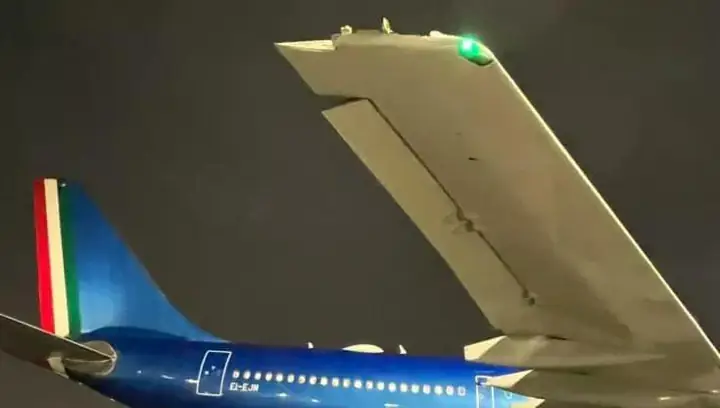
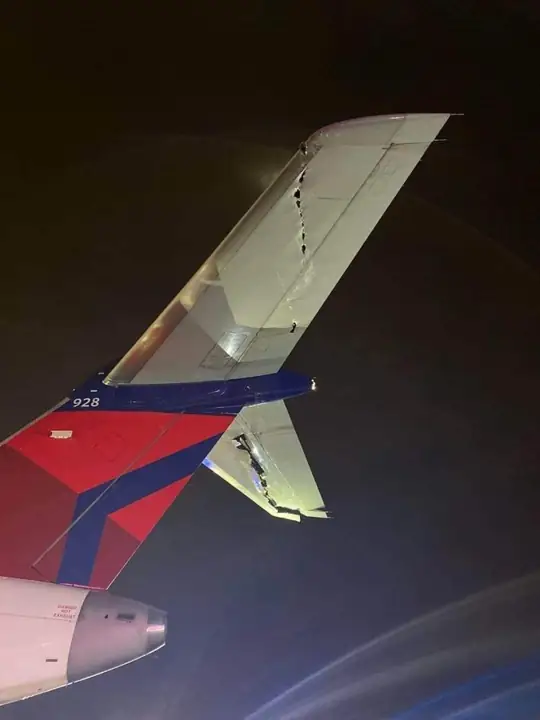
| Airline / operator | Biman Bangladesh Airlines |
|---|---|
| Aircraft (type, registration) | Biman Bangladesh Airlines Boeing 777-3E9ER (S2-AHN); Biman Bangladesh Airlines Boeing 737-83N (WL) (S2-AFL) |
| Category (my classification) | Cause not stated |
| What happened | A Boeing 737-800 (S2-AFL) and a Boeing 777-300ER (S2-AHN) of Biman Bangladesh Airlines were damaged in a ground contact incident at Dhaka Airport, Bangladesh. The nose radome of the Boeing 777 was damaged after coming in contact with the vertical stabilizer of the Boeing 737-800. |
| Injuries | ASN lists 0 fatalities. No injury statement in the ASN narrative. |
| Damage | Not stated |
| Official investigation | No investigation details on the ASN entry. |
| Source | Aviation Safety Network (ASN) entry: https://aviation-safety.net/wikibase/277343 Further sources listed on that page / found: https://www.thedailystar.net/nrb/departure-arrival/airlines-more/news/biman-planes-collide-hangar-3002946 |
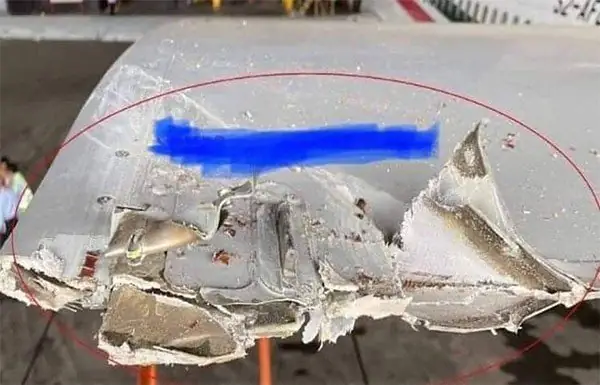
| Airline / operator | Bamboo Airways |
|---|---|
| Aircraft (type, registration) | Bamboo Airways Airbus A321-251N (VN-A222) |
| Category (my classification) | Cause not stated |
| What happened | Bamboo Airways flight QH1621, an Airbus A321neo (VN-A222), struck another parked Bamboo Airways Airbus A321neo (VN-A590) at Hanoi-Noi Bai International Airport, Vietnam. The left-hand elevator of VN-A222 touched the cockpit of VN-A590, causing minor damage. |
| Injuries | ASN lists 0 fatalities. No injury statement in the ASN narrative. |
| Damage | Not stated |
| Official investigation | No investigation details on the ASN entry. |
| Source | Aviation Safety Network (ASN) entry: https://aviation-safety.net/wikibase/269316 Further sources listed on that page / found: http://www.goklerdeyiz.net/iki-ucak-yerde-carpisti-35/ https://zingnews.vn/hai-may-bay-cua-bamboo-airways-va-cham-tai-san-bay-noi-bai-post1274695.html |
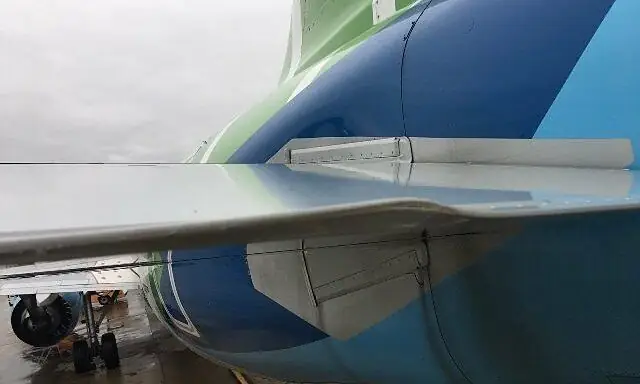
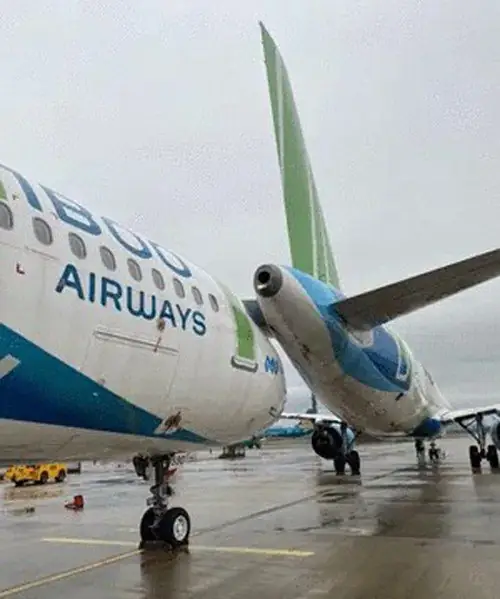
| Airline / operator | Batik Air |
|---|---|
| Aircraft (type, registration) | Airbus A320 (PK-LUV), flight ID6506 from Jakarta |
| Category (my classification) | Cause not stated |
| What happened | While parking at stand A38 the aircraft moved 4-6 m forward and its left engine struck the jet bridge. The airport said the cause was not known. 119 passengers and 4 crew were uninjured; the aircraft was grounded. |
| Injuries | None (119 passengers, 4 crew). |
| Damage | Left engine and jet bridge damaged; aircraft grounded. |
| Official investigation | Investigated by the airport authority (Otoritas Bandara); no cause published. |
| Source | Aviation Safety Network (ASN) entry: https://aviation-safety.net/wikibase/262976 Further sources listed on that page / found: https://coconuts.co/bali/news/batik-air-plane-bangs-wing-into-jet-bridge-in-bali-authorities-investigate/ https://news.detik.com/berita/d-5579474/tabrak-garbarata-pesawat-batik-air-di-grounded-hingga-investigasi-k… |
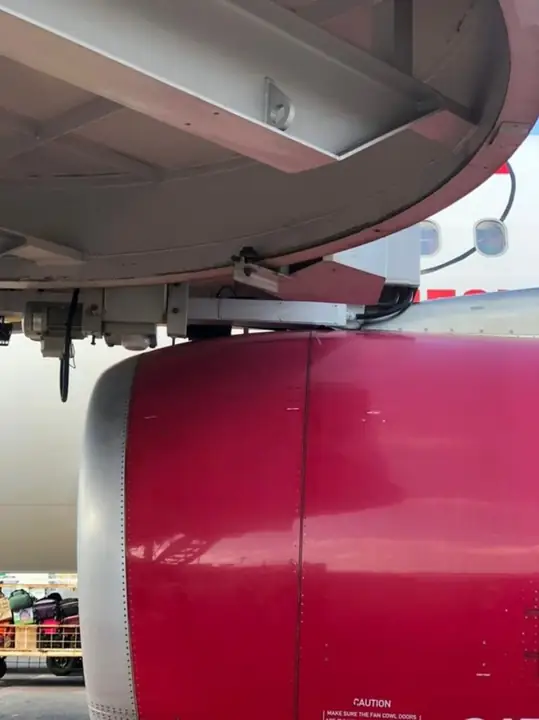
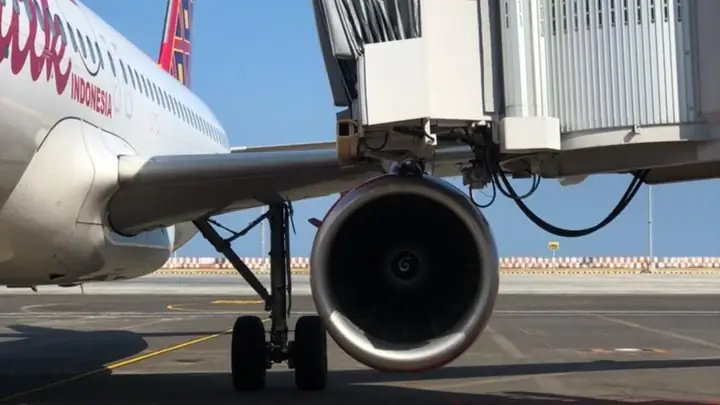
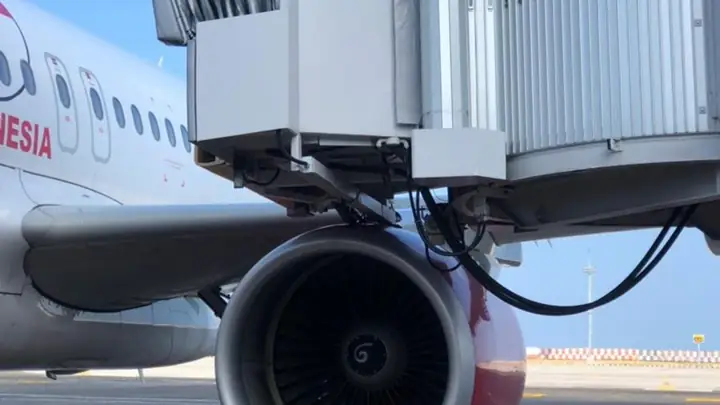
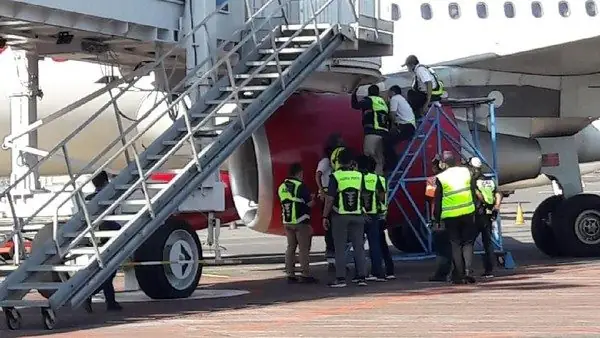
| Airline / operator | Delta Air Lines |
|---|---|
| Aircraft (type, registration) | Delta Air Lines Boeing 717-200 (reg n/a) |
| Category (my classification) | Cause not stated |
| What happened | Delta Air Lines flight 1056: Sustained damage due to contact with a belt loader. |
| Injuries | ASN lists 0 fatalities. No injury statement in the ASN narrative. |
| Damage | Not stated |
| Official investigation | No investigation details on the ASN entry. |
| Source | Aviation Safety Network (ASN) entry: https://aviation-safety.net/wikibase/224304 |
| Airline / operator | Viva Aerobus |
|---|---|
| Aircraft (type, registration) | Viva Aerobus Airbus A320-232 (WL) (XA-VAK); Viva Aerobus Airbus A320-232 (WL) (XA-VAV) |
| Category (my classification) | Cause not stated |
| What happened | Two Airbus A320 aircraft of Viva Aerobus were involved in a ground contact incident in the hours of darkness. The right-hand wing-tip sharklet of XA-VAK collided with the left-hand horizontal stabilizer of XA-VAV. |
| Injuries | ASN lists 0 fatalities. No injury statement in the ASN narrative. |
| Damage | Not stated |
| Official investigation | No investigation details on the ASN entry. |
| Source | Aviation Safety Network (ASN) entry: https://aviation-safety.net/wikibase/200319 Further sources listed on that page / found: http://www.transponder1200.com/video-colisionan-dos-aviones-vivaaerobus-maniobras-aicm/ |
| Airline / operator | American Airlines |
|---|---|
| Aircraft (type, registration) | American Airlines Boeing 777-323ER (N730AN) |
| Category (my classification) | Cause not stated |
| What happened | American Airlines flight AA39 to Miami International Airport, Florida, USA, was cancelled when the aircraft was damaged following a ground collision incident at London Heathrow Airport, U.K. The aircraft was flown to Miami as flight AA9666, two days after the incident. |
| Injuries | ASN lists 0 fatalities. No injury statement in the ASN narrative. |
| Damage | Minor |
| Official investigation | No investigation details on the ASN entry. |
| Source | Aviation Safety Network (ASN) entry: https://aviation-safety.net/wikibase/200039 |
| Airline / operator | Frontier Airlines |
|---|---|
| Aircraft (type, registration) | Frontier Airlines Airbus A319-111 (N918FR) |
| Category (my classification) | Cause not stated |
| What happened | A Frontier Airlines Airbus A319-111 hit a push back truck at Chicago-O'Hare International Airport, Illinois. The incident happened at Taxiway A17. |
| Injuries | No injury statement in the ASN narrative. |
| Damage | Unknown |
| Official investigation | No investigation details on the ASN entry. |
| Source | Aviation Safety Network (ASN) entry: https://aviation-safety.net/wikibase/185119 Further sources listed on that page / found: https://flightaware.com/resources/airport/ORD/APD/AIRPORT+DIAGRAM/pdf https://t.co/tGRIZfIDDe |
Ramp worker injury (24)
Ramp or ground staff injured (or exposed, near-miss) around a moving aircraft, tug or running engine.
| Airline / operator | French Bee |
|---|---|
| Aircraft (type, registration) | French Bee Airbus A350-941 (F-HREY) |
| Category (my classification) | Ramp worker injury |
| What happened | French Bee flight BF5761 from Montréal to Paris-Orly, operated by a A350-900, F-HREY, was involved in an accident involving a pushback tug. The driver of the tug was critically injured and died later at a hospital.The circumstances are currently unknown. |
| Injuries | ASN lists 0 fatalities. The driver of the tug was critically injured and died later at a hospital.The circumstances are currently unknown. |
| Damage | Unknown |
| Time out of service | F-HREY: about 3 days, ≈ 5 missed flights (ADS-B flight data) |
| Official investigation | No investigation details on the ASN entry. |
| Source | Aviation Safety Network (ASN) entry: https://aviation-safety.net/wikibase/577406 Further sources listed on that page / found: https://lanouvelletribune.info/2026/08/aeroport-de-montreal-un-employe-grievement-blesse-par-un-avion-de-fr… https://www.zinfos974.com/montreal-un-employe-de-laeroport-grievement-blesse-lors-du-repoussage-dun-avion-f… https://www.leparisien.fr/faits-divers/un-employe-de-laeroport-de-montreal-grievement-blesse-apres-avoir-et… https://ici.radio-canada.ca/nouvelle/2277428/accident-aeroport-montreal-employe-blesse https://www.jetphotos.com/photo/12175506 |
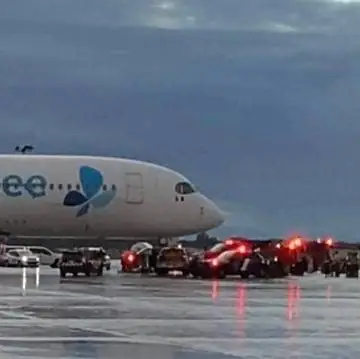
| Airline / operator | Air Burkina ? |
|---|---|
| Aircraft (type, registration) | Air Burkina ? Embraer ERJ-190LR ? (XT-ABI ?) |
| Category (my classification) | Ramp worker injury |
| What happened | An aircraft being pushed back for departure at Ouagadougou Airport (OUA) struck and killed a ground crew member. The identity of the aircraft was not mentioned in local media. One aircraft had a planned departure time of 08:00, which is when the accident is reported to have occurred. This was Air Burkina flight 2J566,an Embraer ERJ-190LR,registered XT-ABI. The plane took off safely from Ouagadougou Airport after a 3-hour delay. |
| Injuries | ASN lists 0 fatalities. An aircraft being pushed back for departure at Ouagadougou Airport (OUA) struck and killed a ground crew member. |
| Damage | Unknown |
| Time out of service | XT-ABI: about 1 day, ≈ 1 missed flights (ADS-B flight data) |
| Official investigation | No investigation details on the ASN entry. |
| Source | Aviation Safety Network (ASN) entry: https://aviation-safety.net/wikibase/567272 Further sources listed on that page / found: https://lefaso.net/spip.php?article144621 https://www.flightera.net/zh/route/DFFD/GABS/2026-02-21%2000_00#google_vignette |
| Airline / operator | Ryanair |
|---|---|
| Aircraft (type, registration) | Ryanair Boeing 737 MAX 8-200 (EI-IGL) |
| Category (my classification) | Ramp worker injury |
| What happened | A Ryanair Boeing 737 MAX 8-200, EI-IGL, was prepared for a flight from Faro (FAO) to London-Stansted (STN). At 16:18LT, during towing operations and after receiving clearance for engine start, the crew successfully started engine No.2. Subsequently, they proceeded with the start of engine No.1. During the process, the crew identified an abnormal fuel flow without the corresponding increase in Exhaust Gas Temperature (EGT) after approximately 15s. The Pilot Flying (PF) instructed an engine start abort and requested the Aborted Engine Start checklist, while simultaneously informing Air Traffic Control (ATC). It was decided to return to the parking stand. Upon arrival at the stand, and during the After Landing Flow and Transit Shutdown checklist, the maintenance team was called. Maintenance technicians carried out several tests and inspections, and no anomalies were identified. In accordance with company procedures, it was determined that an engine run would be required at the parking stand, with passengers on board. Engine No.1 was started with no apparent abnormalities observed in the cockpit. Once the test procedures were completed, the engine was shut down in accordance with the applicable checklist. The maintenance technician disembarked to conduct an external inspection of the engine. Shortly afterwards, he returned to the cockpit and reported observing flames in the internal rear section of engine No.1. Upon receiving this information, the Captain declared a Mayday on the tower frequency and requested the immediate assistance of the airport fire services. A public address (PA) announcement was made to the cabin: “Disembark passengers through all available exits, disembark passengers through all available exits immediately.” Flaps were selected to 40 to facilitate the evacuation. One of the cabin crew members reported that several passengers were pushing and demanding the use of the rear exits, refusing to move towards the forward exits. Given the situation, the cabin crew member armed the rear slides, opened the doors and authorized disembarkation through those exits. The mid-cabin exits were also opened by another cabin crew member. Four of the eight slides available on the aircraft were deployed. The evacuation was conducted rapidly and the passengers were disembarked safely, with the exception of one cabin crew member, identified as ‘number 3’ in the crew roster, who sustained minor injuries while using the right aft exit |
| Injuries | ASN lists 0 fatalities. The evacuation was conducted rapidly and the passengers were disembarked safely, with the exception of one cabin crew member, identified as ‘number 3’ in the crew roster, who sustained minor injuries while using the right aft exit |
| Damage | Unknown Location: Faro Airport (FAO/LPFR) - Portugal Phase: Standing Nature: Passenger - Scheduled Departure airport: Faro Airport (FAO/LPFR) Destination airport: London- Stansted Airport (STN/EGSS) Confidence Rating: Information verified through data from accident investigation authorities Narrative: A Ryanair Boeing 737 MAX 8-200, EI- IGL, was prepared for a flight from Faro (FAO) to London-Stansted (STN). At 16:18LT, during towing operations and after receiving clearance for engine start, the crew successfully started engine No.2. Subsequently, they proceeded with the start of engine No.1. During the process, the crew identified an abnormal fuel flow without the corresponding increase in Exhaust Gas Temperature (EGT) after approximately 15s. The Pilot Flying (PF) instructed an engine start abort and requested the Aborted Engine Start checklist, while simultaneously informing Air Traffic Control (ATC). It was decided to return to the parking stand. Upon arrival at the stand, and during the After Landing Flow and Transit Shutdown checklist, the maintenance team was called. Maintenance technicians carried out several tests and inspections, and no anomalies were identified. In accordance with company procedures, it was determined that an engine run would be required at the parking stand, with passengers on board. Engine No.1 was started with no apparent abnormalities observed in the cockpit. Once the test procedures were completed, the engine was shut down in accordance with the applicable checklist. The maintenance technician disembarked to conduct an external inspection of the engine. Shortly afterwards, he returned to the cockpit and reported observing flames in the internal rear section of engine No.1. Upon receiving this information, the Captain declared a Mayday on the tower frequency and requested the immediate assistance of the airport fire services. A public address (PA) announcement was made to the cabin: “Disembark passengers through all available exits, disembark passengers through all available exits immediately.” Flaps were selected to 40 to facilitate the evacuation. One of the cabin crew members reported that several passengers were pushing and demanding the use of the rear exits, refusing to move towards the forward exits. Given the situation, the cabin crew member armed the rear slides, opened the doors and authorized disembarkation through those exits. The mid-cabin exits were also opened by another cabin crew member. Four of the eight slides available on the aircraft were deployed. The evacuation was conducted rapidly and the passengers were disembarked safely, with the exception of one cabin crew member, identified as ‘number 3’ in the crew roster, who sustained minor injuries while using the right aft exit ICAO Occurrence |
| Time out of service | EI-IGL: about 3.5 days, ≈ 12 missed flights (ADS-B flight data) |
| Official investigation | No investigation details on the ASN entry. Report / investigator link(s): https://www.gpiaaf.gov.pt/detalhe-noticias?v=%3d%3dQwAAAB%2bLCAAAAAAAAANLy8xJtXXz9HHVMzUyMdQzN7fQMzI0NdcLSc0tyEksSXXNSc1NzSvRMzKw0DM20zM2ViupLEi1TQNqc8kvz8vJT0wBAMcE79FDAAAA |
| Source | Aviation Safety Network (ASN) entry: https://aviation-safety.net/wikibase/569021 Further sources listed on that page / found: https://www.gpiaaf.gov.pt/detalhe-noticias?v=%3d%3dQwAAAB%2bLCAAAAAAAAANLy8xJtXXz9HHVMzUyMdQzN7fQMzI0NdcLSc… |
| Airline / operator | American Airlines |
|---|---|
| Aircraft (type, registration) | American Airlines Boeing 787-8 Dreamliner (N808AN) |
| Category (my classification) | Ramp worker injury |
| What happened | A ramp worker was struck by the no.2 engine intake lip of an American Airlines Boeing 787 that was being towed to the gate at Dallas/Fort Worth International Airport (DFW). |
| Injuries | ASN lists 0 fatalities. No injury statement in the ASN narrative. |
| Damage | Minor Location: Dallas/Fort Worth International Airport, TX (DFW/KDFW) - United States of America Phase: Pushback / towing Nature: - Departure airport: - Destination airport: - Confidence Rating: Information is only available from news, social media or unofficial sources Narrative: A ramp worker was struck by the no.2 engine intake lip of an American Airlines Boeing 787 that was being towed to the gate at Dallas/Fort Worth International Airport (DFW). ICAO Occurrence |
| Time out of service | N808AN: about 1–2.5 days, ≈ 2 missed flights (ADS-B flight data) |
| Official investigation | No investigation details on the ASN entry. |
| Source | Aviation Safety Network (ASN) entry: https://aviation-safety.net/wikibase/562655 Further sources listed on that page / found: https://aviationa2z.com/index.php/2025/11/26/american-airlines-boeing-787-pilots-hit-wing-walker-at-dfw/ https://simpleflying.com/american-airlines-wing-walker-hospitialized-run-over-boeing-787 |
| Airline / operator | Brussels Airlines |
|---|---|
| Aircraft (type, registration) | Brussels Airlines Airbus A319-111 (OO-SSF) |
| Category (my classification) | Ramp worker injury |
| What happened | Brussels Airlines flight SN2048, Airbus A319-111, was being pushed back from gate 41 at Birmingham International Airport (BHX) when a member of the pushback crew was seriously injured. During a routine pushback, when the tug was disconnected from the aircraft and moved away, the aircraft started to roll and injured the headset operator’s leg. METAR: EGBB 241520Z 24005KT 210V280 9999 6000S VCSH FEW012CB SCT024 09/08 Q0996 RERA EGBB 241620Z 22006KT 170V250 9999 SCT027 09/07 Q0996 |
| Injuries | ASN lists 0 fatalities. Brussels Airlines flight SN2048, Airbus A319- 111, was being pushed back from gate 41 at Birmingham International Airport (BHX) when a member of the pushback crew was seriously injured.; During a routine pushback, when the tug was disconnected from the aircraft and moved away, the aircraft started to roll and injured the headset operator’s leg. |
| Damage | None |
| Time out of service | OO-SSF: about 2 days, ≈ 10 missed flights (ADS-B flight data) |
| Official investigation | No investigation details on the ASN entry. Report / investigator link(s): https://bea.aero/en/investigation-reports/notified-events/detail/accident-to-an-airbus-a319-operated-by-brussels-airlines-on-24-10-2025-at-birmingham-ad/ https://www.gov.uk/government/news/anniversary-statement-airbus-a319-100-oo-ssf |
| Source | Aviation Safety Network (ASN) entry: https://aviation-safety.net/wikibase/562409 Further sources listed on that page / found: https://www.gov.uk/government/news/anniversary-statement-airbus-a319-100-oo-ssf https://bea.aero/en/investigation-reports/notified-events/detail/accident-to-an-airbus-a319-operated-by-bru… |
| Airline / operator | American Eagle, opb Air Wisconsin |
|---|---|
| Aircraft (type, registration) | American Eagle, opb Air Wisconsin Bombardier CRJ-200LR (N420AW) |
| Category (my classification) | Ramp worker injury |
| What happened | A serious injury was sustained by a tug driver following a collision with the left wing of Air Wisconsin flight 6181, a CRJ-200, during taxi operations at Chicago O’Hare International Airport (ORD). No injuries were reported among the airplane’s crew or passengers. Night visual meteorological conditions (VMC) prevailed at the time of the accident. Flight 6181 landed at ORD and was initially held at the B Pad for an open gate. Once cleared, the aircraft proceeded southbound on Taxiway A under a standard clearance. The first officer was actively monitoring both ramp and ground control frequencies during the taxi. The captain reported first observing the tug on Taxiway B as the tug began crossing at the access road. The tug appeared to be slowing down suggesting an intent to stop. The captain could not recall whether the tug’s headlights were illuminated and believed he saw the vehicle using ambient lighting. After briefly diverting attention toward the gate area, the captain looked back and recognized an imminent collision with the tug. Braking was initiated immediately by the captain, but the impact occurred shortly thereafter. The captain described the impact as “not that bad” and believed the tug had struck the wingtip. The flight crew then communicated with the flight attendants, followed by dispatch via the Aircraft Communications Addressing and Reporting System (ACARS). According to the tug driver, while returning from the international terminal, the vehicle approached the service road leading to the L gates. Before entering the road and crossing taxiway B, the tug came to a complete stop at the designated stop sign and the driver observed an airplane taxiing outbound on Taxiway B. The driver checked both directions and waited until the outbound aircraft cleared the taxiway. The driver also verified that no aircraft were approaching from behind or the opposite direction before proceeding to cross the taxiways (A&B). The driver stated that as the tug was crossing the taxiways, the left wing of flight 6181, approaching on taxiway A, was not visible until the last moment, leaving insufficient time to react. He also noted the absence of a nose-gear light on flight 6181, which may have contributed to the tug driver not detecting the presence of flight 6181 before the collision. The collision resulted in the tug overturning and trapping the driver, leading to serious injury. Post-flight inspection revealed substantial damage to the leading- edge front spar of the airplane’s left wing. The tug driver emphasized that had he been aware of the airplane’s presence, he would not have entered the intersection. According to the Chicago Department of Aviation (CDA) ground motor vehicle operating regulations manual, dated August 2023, a driver must stop prior to initiating the crossing of the taxiways A, B, and V to determine if the crossing could be accomplished without stopping in the islands between the taxiways. Vehicles on service roads must yield to vehicles crossing taxiways. Probable Cause: The tug driver’s failure to ensure the taxiway was clear of aircraft prior to crossing, resulting in a collision with the left wing of the taxiing aircraft. Contributing to the accident was the limited visibility of the aircraft due to ambient lighting conditions and the absence of the aircraft’s nose-gear light, which reduced the tug driver’s ability to detect the aircraft’s presence in time to avoid the collision. |
| Injuries | ASN lists 0 fatalities. A serious injury was sustained by a tug driver following a collision with the left wing of Air Wisconsin flight 6181, a CRJ-200, during taxi operations at Chicago O’Hare International Airport (ORD).; No injuries were reported among the airplane’s crew or passengers. |
| Damage | Substantial |
| Official investigation | Investigating agency: NTSB Report number: 20250201000859A Status: Investigation completed Duration: 7 months Final report Report / investigator link(s): https://data.ntsb.gov/carol-repgen/api/Aviation/ReportMain/GenerateNewestReport/199663/pdf https://data.ntsb.gov/Docket?ProjectID=199663 |
| Source | Aviation Safety Network (ASN) entry: https://aviation-safety.net/wikibase/475037 Further sources listed on that page / found: https://data.ntsb.gov/carol-repgen/api/Aviation/ReportMain/GenerateNewestReport/199663/pdf https://abc7chicago.com/post/chicago-airport-news-airplane-strikes-aircraft-tug-ohare-international-64-year… https://data.ntsb.gov/Docket?ProjectID=199663 |
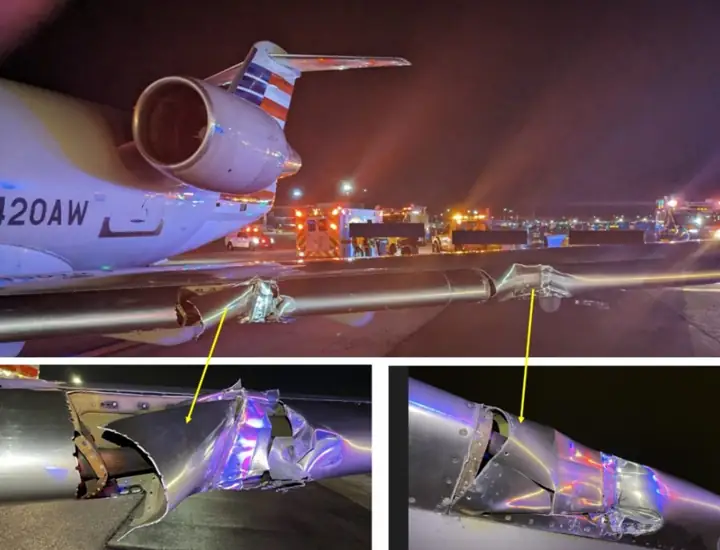
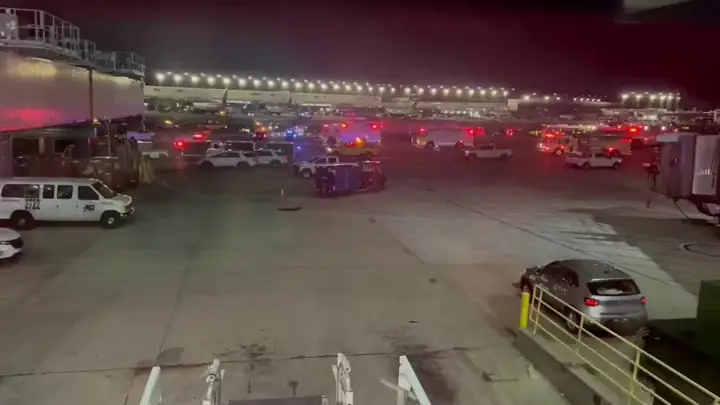 ▶ VIDEO
Still: X video preview frame, @fl360aero on X
| Airline / operator | American Airlines (ground crew) |
|---|---|
| Aircraft (type, registration) | Not stated (flight PS234) |
| Category (my classification) | Ramp worker injury Secondary: Tug / pushback driver |
| What happened | Near Gate B12, an American Airlines wing walker removed the tow bar and was then struck from behind and killed by the same tug. |
| Injuries | One ramp worker killed. |
| Damage | Not stated in the source. |
| Official investigation | OSHA accident record. Report / investigator link(s): https://www.osha.gov/ords/imis/accidentsearch.accident_detail?id=173878.015 |
| Source | WBTV: https://www.wbtv.com/2025/01/28/american-airlines-tug-hits-kills-employee-tarmac-charlotte-airport/ |
| Airline / operator | Finnair |
|---|---|
| Aircraft (type, registration) | Finnair Airbus A350-941 (OH-LWO) |
| Category (my classification) | Ramp worker injury |
| What happened | The Airbus A350-941 had completed flight AY62 from Tokyo Haneda Airport to Helsinki Airport in Finland. After the passengers disembarked, the ground crew began preparing for the next flight of this aircraft. During this process, the tow truck was preparing to move the plane from the boarding gate to a distant parking spot, but did not notice that there was a garbage truck behind the plane and ground crew were still cleaning the plane's restroom. When the plane was towed, a ground crew member was caught between the plane and the garbage truck and unfortunately died. Finnair has confirmed that the aircraft is currently undergoing maintenance. |
| Injuries | ASN lists 0 fatalities. When the plane was towed, a ground crew member was caught between the plane and the garbage truck and unfortunately died. |
| Damage | Not stated |
| Official investigation | No investigation details on the ASN entry. |
| Source | Aviation Safety Network (ASN) entry: https://aviation-safety.net/wikibase/458846 Further sources listed on that page / found: https://www.lentoposti.fi/uutiset/maahuolintayhti_n_ty_ntekij_menehtyi_ty_tapaturmassa_helsinki_vantaan_len… https://m.thepaper.cn/baijiahao_29249717?sdkver=7d05c2f1 |
| Airline / operator | Binter Canarias, lsf Galistar Malta |
|---|---|
| Aircraft (type, registration) | Binter Canarias, lsf Galistar Malta Airbus A320-214 (9H-VDS) |
| Category (my classification) | Ramp worker injury |
| What happened | Binter Canarias flight NT5203, an Airbus A320-214, was being towed backwards with a turn on the platform to guide it taxiing in a northerly direction towards runway 21 by means of a tow truck. There were difficulties when the operator unhooked the tow bar from the tractor. When trying to solve the problem, there was a certain lack of coordination and haste among the ground workers: coordinator, bar operator and tractor operator, so that several actions deviating from the operating procedures accumulated. In this process, the crew was asked to release the plane's parking brake and the operator driving the tractor got off it. In the attempt to release or unhook the airplane's tow bar, he got trapped and a wheel of the nose gear seriously injured his leg. |
| Injuries | ASN lists 0 fatalities. In the attempt to release or unhook the airplane's tow bar, he got trapped and a wheel of the nose gear seriously injured his leg. |
| Damage | None |
| Official investigation | Investigating agency: CIAIAC Report number: A-022-2024 Status: Preliminary report Report / investigator link(s): https://www.transportes.gob.es/organos-colegiados/ciaiac/investigacion/2024/a-022-2024 |
| Source | Aviation Safety Network (ASN) entry: https://aviation-safety.net/wikibase/409566 Further sources listed on that page / found: https://www.transportes.gob.es/organos-colegiados/ciaiac/investigacion/2024/a-022-2024 |
| Airline / operator | Ural Airlines |
|---|---|
| Aircraft (type, registration) | Ural Airlines Airbus A320-214 (RA-73832) |
| Category (my classification) | Ramp worker injury |
| What happened | An Ural Airlines Airbus A320-214, performing flight U62985, started taxiing after it had been pushed back for departure at Koltsovo Airport (USSS/SVX), Ekaterinburg. A ground crew member was still completing some checks and was run over by the nose landing gear. He sustained serious injuries. |
| Injuries | ASN lists 0 fatalities. He sustained serious injuries. |
| Damage | None |
| Official investigation | No investigation details on the ASN entry. |
| Source | Aviation Safety Network (ASN) entry: https://aviation-safety.net/wikibase/388184 Further sources listed on that page / found: https://www.amur.life/news/2024/05/20/samolet-uralskih-avialiniy-naehal-na-cheloveka https://www.interfax.ru/russia/961247 https://ura.news/news/1052771245 https://t.me/uraltransprok/5380 https://www.flightaware.com/live/flight/RA73832/history/20240519/0125Z/USSS/UCFM https://www.aerotime.aero/articles/video-clip-captures-moment-a-ural-airlines-a320-ran-over-airport-ground-… |
| Airline / operator | Not stated |
|---|---|
| Aircraft (type, registration) | Not stated |
| Category (my classification) | Ramp worker injury Secondary: Wing-walker / towing crew |
| What happened | A ground worker fell from a towing tractor and was run over by the aircraft being towed. He died. |
| Injuries | One ground worker killed. |
| Damage | Not stated in the source. |
| Official investigation | Hong Kong Government press release; no investigation report found. |
| Source | Hong Kong Government press release: https://www.info.gov.hk/gia/general/202402/06/P2024020600363.htm Further sources listed on that page / found: https://www.aerotime.aero/articles/hong-kong-airport-ground-worker-accidentally-killed-by-aircraft-being-to… https://simpleflying.com/hong-kong-ground-worker-killed-towed-aircraft |
| Airline / operator | Delta Air Lines |
|---|---|
| Aircraft (type, registration) | Delta Air Lines Boeing 717 (registration not published) |
| Category (my classification) | Ramp worker injury Secondary: Ground vehicle driver |
| What happened | On the evening of Saturday 10 December 2022, a Delta ramp worker who was guiding a Delta Boeing 717 into Gate C-36 was hit from behind and run over by a service truck. Atlanta Police said the driver told officers he was not paying attention to where he was driving because he was looking down at his tablet. Video of the accident was published that week. |
| Injuries | The worker was taken to hospital; her family reported a concussion and a fractured skull (11Alive). Delta described the injuries as non-life-threatening. |
| Damage | None reported to the aircraft |
| Official investigation | Atlanta Police investigation; Delta internal investigation. No public report found. |
| Source | 11Alive (WXIA), 15 Dec 2022: https://www.11alive.com/article/news/local/family-speaks-out-delta-worker-hit-by-truck-atlanta-airport/85-41d2f8f4-0891-4688-a70b-2f347265c490 Further sources listed on that page / found: https://www.wsbtv.com/news/local/atlanta/video-shows-truck-plow-into-delta-worker-guiding-plane-tarmac-warn… https://www.youtube.com/watch?v=e-KYuFGlqp4 |
| Note | 15 Dec 2022 is the date the video was published; the accident happened on Saturday 10 Dec 2022 (11Alive). |
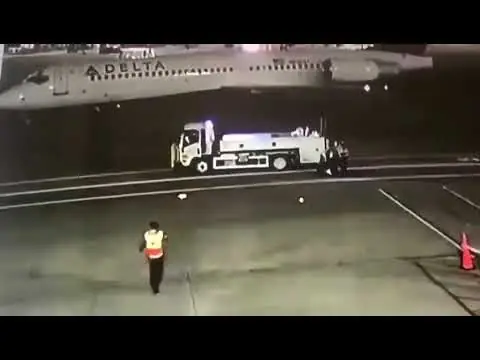 ▶ VIDEO
Still: YouTube video thumbnail frame (VideoTape)
| Airline / operator | Avianca |
|---|---|
| Aircraft (type, registration) | Avianca Airbus A320-214 (N950AV) |
| Category (my classification) | Ramp worker injury |
| What happened | The Airbus A320-214 had completed the pushback and started the engines on Spot No. 2. At approximately 12:37 local time, the taxiing commenced after the crew received clearance from ground personnel. When the aircraft had moved approximately 10 meters, ground support personnel positioned themselves in the aircraft's path and made a visual signal to the crew to stop, as they noticed that the communication connection door was left open. The crew indeed stopped the aircraft, and as a result of the deceleration, a Cabin Crew Member who was standing fell onto the forward galley and sustained injuries. The crew became aware of the situation and suspended the flight, which was resumed two (2) hours later. The crewmember, suffered a serious spinal injury. As a result of the injury, the flight attendant received a total of 100 days of disability. The investigation determined that the accident occurred due to the following probable cause: Failure of the ground support personnel to adhere to dispatch procedures and checks by neglecting to close the access door of the External Power / Communication Jack, a task that was delegated to a Technical Apprentice by a Licensed Technician (instructor). As a contributing factor, the investigation found: Unsecured position of the Cabin Crew Member, which resulted in her falling during an unexpected and abrupt braking by the flight deck crew. |
| Injuries | ASN lists 0 fatalities. The crew indeed stopped the aircraft, and as a result of the deceleration, a Cabin Crew Member who was standing fell onto the forward galley and sustained injuries.; The crewmember, suffered a serious spinal injury. |
| Damage | None |
| Official investigation | Investigating agency: Aerocivil Report number: COL-22-46-DIACC Status: Investigation completed Duration: 10 months Final report Report / investigator link(s): https://www.aerocivil.gov.co/info/aeronautica_civil/media/1740581578_COL-22-46-DIACC |
| Source | Aviation Safety Network (ASN) entry: https://aviation-safety.net/wikibase/315406 Further sources listed on that page / found: https://www.aerocivil.gov.co/info/aeronautica_civil/media/1740581578_COL-22-46-DIACC |
| Airline / operator | Qingdao Airlines |
|---|---|
| Aircraft (type, registration) | Qingdao Airlines Airbus A320-271N (B-30FG) |
| Category (my classification) | Ramp worker injury |
| What happened | During towing operations, a ground engineer was run over by a wheel of the nose landing of the Airbus A320neo. The aircraft was being repositioned from Stand 610 to Stand 501 after an A-check and maintenance work had been performed on the maintenance ramp. The ground engineer had inadvertently dropped the "Towing Aircraft Checklist" and was in a crouched position to pick it up when the aircraft was being towed. |
| Injuries | ASN lists 0 fatalities. No injury statement in the ASN narrative. |
| Damage | Not stated |
| Official investigation | Investigating agency: CAAC Report number: Status: Investigation completed Duration: Final report |
| Source | Aviation Safety Network (ASN) entry: https://aviation-safety.net/wikibase/309437 |
| Airline / operator | American Airlines |
|---|---|
| Aircraft (type, registration) | American Airlines Airbus A321-231 (N980UY) |
| Category (my classification) | Ramp worker injury |
| What happened | American Airlines flight AA646, an Airbus A321-231, was struck by a tug at the gate. The tug driver was transported to hospital. |
| Injuries | ASN lists 0 fatalities. The tug driver was transported to hospital. |
| Damage | Not stated |
| Official investigation | No investigation details on the ASN entry. |
| Source | Aviation Safety Network (ASN) entry: https://aviation-safety.net/wikibase/272379 |
| Airline / operator | Kingman Aviation Services |
|---|---|
| Aircraft (type, registration) | Kingman Aviation Services Embraer ERJ-145LR (N16911) |
| Category (my classification) | Ramp worker injury |
| What happened | An Embraer ERJ-145LR jet, N16911, sustained substantial damage when it was involved in an engine maintenance runup event at Kingman Airport (IGM/KIGM), Arizona. One maintenance personnel sustained serious injuries. The airplane last flew in May 2020 and was being stored at Kingman. The former operator was ExpressJet; all ExpressJet E145s were re-assigned to Commutair in September 2020. Preliminary information indicates the aircraft was doing engine runups by the Bureau of Land Management (BLM) ramp. According to an interview with a Kingman Aviation Services, Inc. (KASI) employee, the aircraft was chocked and connected to a tug, he wasn't sure about brakes. The aircraft surged forward colliding with 2 KASI owned vehicles and crushing the legs of a KASI employee. Kingman Fire Department and River Medical provided emergency care. Upon further investigation it seems that KASI was doing a full power run up on an aircraft that was missing one wheel and possibly had reduced braking ability. It seems under power the aircraft pivoted around the landing gear on the side with both wheels, and struck the vehicles and personnel. The NTSB will not investigate the occurrence because the aircraft wasn’t in preparation for flight. One or two mechanics were seated in the pilot seats and operating the controls. |
| Injuries | ASN lists 0 fatalities. One maintenance personnel sustained serious injuries. |
| Damage | Substantial |
| Official investigation | No investigation details on the ASN entry. |
| Source | Aviation Safety Network (ASN) entry: https://aviation-safety.net/wikibase/271121 Further sources listed on that page / found: https://flightaware.com/live/flight/N16911 https://en.wikipedia.org/wiki/ExpressJet |
| Airline / operator | ACT Airlines |
|---|---|
| Aircraft (type, registration) | ACT Airlines Boeing 747-428ERF (TC-ACR) |
| Category (my classification) | Ramp worker injury |
| What happened | During the push-back operation, a person on the apron was hit by the nose wheel and seriously injured. |
| Injuries | ASN lists 0 fatalities. During the push-back operation, a person on the apron was hit by the nose wheel and seriously injured. |
| Damage | None |
| Official investigation | No investigation details on the ASN entry. |
| Source | Aviation Safety Network (ASN) entry: https://aviation-safety.net/wikibase/302576 |
| Airline / operator | Batik Air |
|---|---|
| Aircraft (type, registration) | Batik Air Airbus A320-214 (WL) (PK-LZJ) |
| Category (my classification) | Ramp worker injury |
| What happened | The Airbus A320 aircraft, registered PK-LZJ, was involved in a ground handling accident at Makassar-Sultan Hasanuddin International Airport (WAAA), Indonesia. At 1842 UTC (0242 LT), at night, the aircraft commenced pushback from stand B1. The push back operation used a towing tractor with the three crew members consisting of a towing tractor driver, a wing-man and a headset- man, a task performed by an aircraft mechanic. There was no briefing among the crew related to the pushback activity including the push back maneuver. The towing tractor driver and wing-man used high visibility vest while the headset-man used company uniform without any fluorescence strip or high visibility vest. The push back maneuver did not follow the guideline and the headset-man walked behind the nose wheel while observing the engine start process. During a turn, the aircraft nose wheel passed over the right foot of the headset-man. The towing tractor driver felt a bump and noticed that the headset-man laid on the ground. The headset-man was evacuated to the nearest hospital for medical treatment and found to have sustainied a fracture on his right tarsometatarsal. Contributing factors of the occurrence: The different assumption of pushback maneuver between headset-man and the push back tractor driver, and both were fixated to their own duties while working on a reduced alertness condition, resulted in the towing tractor driver did not aware of the headset-man position and the headset-man did not aware of the nose wheel position. These conditions led to the nose wheel passed over the headset-man foot. |
| Injuries | ASN lists 0 fatalities. The headset-man was evacuated to the nearest hospital for medical treatment and found to have sustainied a fracture on his right tarsometatarsal. |
| Damage | None |
| Official investigation | Investigating agency: NTSC Report number: KNKT.19.05.10.04 Status: Investigation completed Duration: 1 year and 3 months Final report Report / investigator link(s): https://knkt.go.id/Repo/Files/Laporan/Penerbangan/2019/KNKT.19.05.09.04-Final-Report.pdf |
| Source | Aviation Safety Network (ASN) entry: https://aviation-safety.net/wikibase/310211 Further sources listed on that page / found: https://knkt.go.id/Repo/Files/Laporan/Penerbangan/2019/KNKT.19.05.09.04-Final-Report.pdf |
| Airline / operator | Delta Air Lines |
|---|---|
| Aircraft (type, registration) | Delta Air Lines McDonnell Douglas MD-88 (N977DL) |
| Category (my classification) | Ramp worker injury |
| What happened | Delta Airlines Flight 1276, was struck by a tug while taxing. The tug driver received minor injures. Night visual conditions with light rain prevailed at the time of the accident. The captain reported that after landing at Atlanta Hartsfield-Jackson International Airport, ATC cleared the flight to enter the Ramp 2 east taxi lane and taxi to gate B14. The captain indicated that as they began to turn right into the ramp, Ramp Control instructed flight 1276 to give way to opposite direction traffic. As the captain was looking forward to identify the traffic, the first officer called out, "Stop, Stop, Stop!" The captain immediately applied full brakes. The flight crew then heard and felt an impact coming from the right side of the forward fuselage. The pilots notified ramp control and held position. Ground support personnel arrived quickly to assist. The ground personnel told the pilot via inter-phone that a tug and baggage cart had impacted the fuselage and was against the nose gear. Ground personnel reported to the crew that the tug driver was OK but that he did not know where he was or how he got there. Probable cause: "Failure of the tug driver to give way to the taxiing airplane." |
| Injuries | ASN lists 0 fatalities. The tug driver received minor injures. |
| Damage | Substantial, written off |
| Time out of service | N977DL: Written off (ASN) |
| Official investigation | Investigating agency: NTSB Report number: DCA19CA146 Status: Investigation completed Duration: 1 year Final report Report / investigator link(s): https://data.ntsb.gov/carol-repgen/api/Aviation/ReportMain/GenerateNewestReport/99376/pdf |
| Source | Aviation Safety Network (ASN) entry: https://aviation-safety.net/wikibase/319457 Further sources listed on that page / found: https://data.ntsb.gov/carol-repgen/api/Aviation/ReportMain/GenerateNewestReport/99376/pdf |
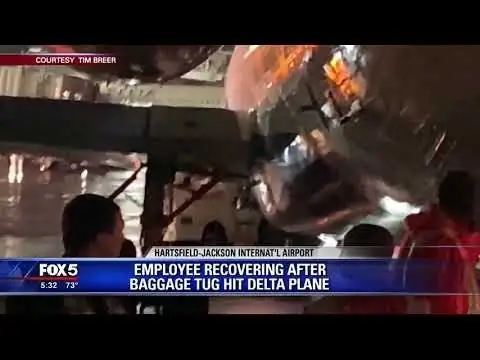
| Airline / operator | Aer Lingus |
|---|---|
| Aircraft (type, registration) | Aer Lingus Boeing 757-2Q8 (WL) (EI-LBT) |
| Category (my classification) | Ramp worker injury |
| What happened | On August 24, 2018, about 2350 eastern daylight time, Aer Lingus flight 114, a Boeing 757-200, EI-LBT, had a ground service employee suffer a serious injury while engaged in pushback from the gate at Philadelphia International Airport (KPHL), Philadelphia, Pennsylvania. There were no injuries to 177 passengers and crew onboard. The airplane was not damaged. The flight was operated as a Title 14 Code of Federal Regulations Part 129 scheduled international passenger flight from KPHL to Dublin Airport (EIDW), Dublin, Ireland. According to the operator, the ground service employee was connected to the airplane via a headset and was engaged in push-back from gate A6. At some point, the service employee fell down and the nose wheel ran over his right leg, causing a serious injury. The flight crew reported that the pushback was nearly complete and were about halfway through the 90 degree turn onto the taxi line, when the airplane jerked to a stop. There was general confusion for several minutes before they were informed of what happened. Probable Cause: The ground service employee's inadvertent fall near the nose wheel during pushback. |
| Injuries | ASN lists 0 fatalities. On August 24, 2018, about 2350 eastern daylight time, Aer Lingus flight 114, a Boeing 757-200, EI-LBT, had a ground service employee suffer a serious injury while engaged in pushback from the gate at Philadelphia International Airport (KPHL), Philadelphia, Pennsylvania.; There were no injuries to 177 passengers and crew onboard. |
| Damage | None |
| Official investigation | Investigating agency: NTSB Report number: DCA18CA272 Status: Investigation completed Duration: 2 years and 9 months Final report Report / investigator link(s): https://data.ntsb.gov/carol-repgen/api/Aviation/ReportMain/GenerateNewestReport/98174/pdf |
| Source | Aviation Safety Network (ASN) entry: https://aviation-safety.net/wikibase/311610 Further sources listed on that page / found: https://data.ntsb.gov/carol-repgen/api/Aviation/ReportMain/GenerateNewestReport/98174/pdf |
| Airline / operator | Japan Coast Guard |
|---|---|
| Aircraft (type, registration) | Japan Coast Guard Saab 340B (JA8952) |
| Category (my classification) | Ramp worker injury |
| What happened | A male mechanic of Japan Air Commuter received fatal injury when a Saab 340B of Japan Coast Guard, JA8952 named 'Umitsubame (stormy petrel)', tilted left during a tow back to a hangar for maintenance. The left main landing gear was retracted, and the head of the mechanic was caught between the left wing and the ground. Japan Air Commuter undertakes periodic inspections of Saab 340B's of Japan Coast Guard at Kagoshima Airport. |
| Injuries | ASN lists 0 fatalities. A male mechanic of Japan Air Commuter received fatal injury when a Saab 340B of Japan Coast Guard, JA8952 named 'Umitsubame (stormy petrel)', tilted left during a tow back to a hangar for maintenance. |
| Damage | Not stated |
| Official investigation | No investigation details on the ASN entry. |
| Source | Aviation Safety Network (ASN) entry: https://aviation-safety.net/wikibase/203539 Further sources listed on that page / found: http://web.archive.org/web/20171229172141/https://www3.nhk.or.jp/news/html/20171229/k10011275341000.htmlutm… |
| Flag | Non-airline (business, government, special-mission or charter) operator: shows the risk type, not a direct WheelTug airline market case. |
| Airline / operator | Eva Air |
|---|---|
| Aircraft (type, registration) | Eva Air Boeing 777-35EER (B-16718) |
| Category (my classification) | Ramp worker injury |
| What happened | A Boeing 777-300 aircraft operated by EVA Air as flight 035 from Toronto-Pearson International Airport, Canada, to Taipei-Taiwan Taoyuan International Airport in Taiwan. As the aircraft was taxiing for departure following deice at Toronto, ATC instructed the flight crew to taxi via Victor, Echo and Delta to runway 33R. While taxiing on Taxiway Victor and transitioning through PAD1 of the Central De- icing Facility (CDF), the flight crew followed the line marked 1S rather than 1C, and struck two light poles. The leading edge of the right wing and outboard slats were substantially damaged, and one light pole broke off at the base and fell over. There were no fuel leaks or fire and none of the passengers were injured. The aircraft was instructed to stop after exiting PAD1 when ATC was notified of the event by a CDF worker. ARFF was dispatched to the scene. Passengers were deplaned and boarded airport buses back to the terminal. |
| Injuries | ASN lists 0 fatalities. There were no fuel leaks or fire and none of the passengers were injured. |
| Damage | Substantial, repaired |
| Official investigation | No investigation details on the ASN entry. |
| Source | Aviation Safety Network (ASN) entry: https://aviation-safety.net/wikibase/319761 |
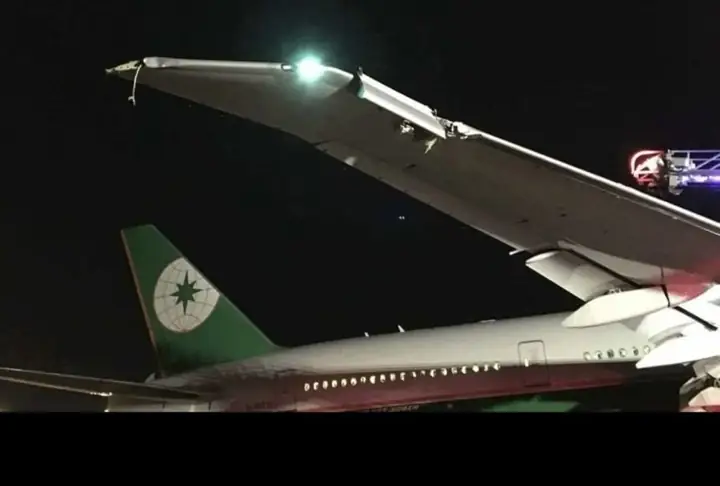
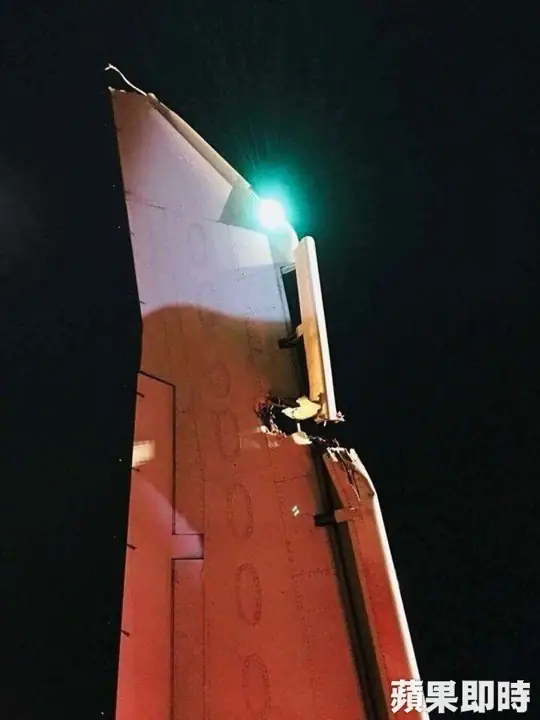


| Airline / operator | Air Berlin |
|---|---|
| Aircraft (type, registration) | Air Berlin Airbus A320-216 (D-ABZI) |
| Category (my classification) | Ramp worker injury |
| What happened | Air Berlin flight AB8070 from Berlin-Tegel Airport, Germany, landed on runway 04L at Helsinki-Vantaa Airport, Finland, at 01:00 hours local time. The pilots taxied to the stand of gate 29 at terminal T2. Soon after arriving at the gate people smelled the odour of an electric fire burning and smoke became visible at the front of the cabin. Cabin attendant A (senior cabin crew member) ordered cabin attendant B (cabin crew member) to don protective breathing equipment (PBE) and gave her a portable Halon fire extinguisher. Cabin attendant B donned the smoke hood and activated its oxygen generator. Cabin attendant A reported the smoke on the interphone to the flight deck as well as to attendants C and D at the rear of the cabin. The training captain, seated in the co-pilot’s seat, went into the cabin to check the situation and soon returned to the cockpit to report the smoke to the captain and the air traffic control. He also told the ramp crew that they were not to open the cargo doors because the source of the smoke was unknown. The pilots began ascertaining if the smoke originated in the aircraft’s systems. Just to be sure they shut off the APU bleed air, as they had turned it on just prior to the smoke being detected. The passenger services agent knocked on the aircraft door to indicate to the crew that they could now open the front left door. She placed a detached platform (walk ramp) between the jetway and the aircraft. When cabin attendant A opened the door she said that there was a fire on board and that the passengers should be evacuated immediately. Prior to this the passenger services agent had not been informed of the fire. Cabin attendant A made an announcement in English, ordering the passengers to return to their seats. The passengers at the front of the aircraft obeyed the order and cabin attendant B could proceed forward down the aisle. Cabin attendants C and D could not see the situation because passengers were standing in front of them. Cabin attendant C discussed the situation with cabin attendant A on the interphone, inquiring about the need to don smoke hoods at the rear of the cabin. Cabin attendant A replied that this was no longer necessary. The passengers were shouting that the smoke was coming from the right side of the aisle, pointing to the footwell of seat 8F. Cabin attendant B noticed that the smoke was coming from a nylon backpack containing a laptop computer. She moved the laptop with her foot so as to make it more accessible and then discharged the fire extinguisher towards it. In addition, she shoved the neighbouring passengers’ bags and overcoats to the side and kept monitoring that the fire had been extinguished. She also told nearby passengers to cover their mouths and noses with cloth. The sequence from the first detection of smoke to extinguishing the laptop took approximately one minute. The situation caused restlessness among the passengers in the rear of the cabin at which time cabin attendant C began calming them down. Since there was still acrid smoke in the cabin after the fire had been extinguished, cabin attendant A called cabin attendant D on the interphone and told her to open the left rear door. Cabin attendant D opened the door and placed a barricade strap in front of it because there were no passenger stairs at the door. Cabin attendant A announced that the passengers should disembark rapidly. Soon after this she made another announcement, telling all passengers to leave their belongings in the cabin. At first, some passengers were confused about which exits they should use. The passenger services agent remained at the door to help people disembark because the walk ramp between the jetway and the aircraft had to be removed as it was too slippery. All passengers deplaned through the front left door. Some of the passengers followed the instructions and disembarked without their outer garments or hand luggage. They stayed at the boarding gate to wait for their belongings. Other passengers tried to take their hand luggage with them, which resulted in the aisle being blocked and the deplaning process being slowed down. A wheelchair-bound passenger was the last one to be assisted out of the aircraft. The brand or type of laptop was not mentioned in the AIB final report. However, the battery specifications, laptop dimensions described in the report, along with photos of the laptop show strong similarities with an Acer Aspire Switch E model. It had a double-cell 3.5 volt (V) lithium-ion polymer (LiPo) battery with a 30 Wh rating. The stated capacity of the battery was 8060 mAh. The family that owned the laptop had bought two laptops approximately six months before the occurrence. Both laptops had their original CE-marked batteries. According to the owner the laptop did not heat up unusually during use. The damaged laptop was switched off for the duration of the flight. According to the experts the laptop fire was possibly caused by external damage to the battery. While a hole was detected on the outer surface of the battery, the investigation could not confirm whether the hole had been there prior to the fire or caused as a result of it. CONCLUSIONS 1. The lithium-ion battery of a laptop placed under a seat caught fire as an Airbus A320 airliner, after having landed at Helsinki-Vantaa airport, was taxiing towards its arrival gate. Conclusion: Devices fitted with lithium- ion batteries are routinely transported in aircraft. Laptop battery fires are rare in flight but they are not altogether unheard of. Lithium-ion batteries are categorised as dangerous goods. In light of the investigation material, operators’ instructions for transporting lithium-ion batteries by air vary in content, availability and clarity. 2. The ways and means to control fires in the air are limited. Even a small fire in a closed space is one of the most serious threats to aircraft. For this reason a fire must be met with immediate and decisive action. Conclusion: Ways of controlling fires in the air constitute, among other things, first extinguishing equipment and systems on the aircraft, firefighting training provided to the aircrew as well as the proper placement of luggage. 3. The crew acted in accordance with their training and the operator’s instructions during the fire. First extinguishing was successfully completed and the fire did not spread in the cabin. Following this, the communication between the crew and the fire officer who entered the cabin did not function adequately in all aspects. Therefore, they did not share the same situational awareness at the onset of the events. Conclusion: The aircrew were well prepared to control a fire in the cabin. The extinguishers that were used worked well and they were appropriate for the task. Following the successful first extinguishing the aircrew considered the situation to be over. 4. After the first extinguishing the crew ordered the passengers to immediately leave the aircraft. The passengers were not gathered together in the terminal following disembarkation. By gathering passengers together it is possible to find out whether all persons on board the aircraft have deplaned, to check their condition, and provide additional information to them about the incident. Conclusion: The instructions of the airline’s representative and those of HelsinkiVantaa airport contained no guidelines for rapid passenger disembarkation in an abnormal situation or for managing the situation inside the terminal after the occurrence. 5. The training captain reported smoke in the cabin to the air traffic controller and requested rescue units be dispatched to the aircraft. At the same time the captain requested a frequency for communicating with the rescue units. Conclusion: The training captain’s request was clear. The air traffic controller acted in accordance with the request for help, alerted airport rescue and relayed the distress call to the Emergency Response Centre. Helsinki-Vantaa had not designated a frequency for communication between rescue units and aircraft. 6. At some point in the phone call the air traffic controller assessed that the air ambulance was not needed at the site. The events in the cabin progressed rapidly; neither the aircrew nor the air traffic controller had enough time to form a sufficiently accurate opinion of the possible harm to the passengers caused by the toxic fumes or the extinguishing agent. Conclusion: The assessment of the need for an air ambulance at the target must be based on timely and authenticated information received from the site. The rescue authority, as the overall situation commander, is in charge of the rescue operation; only the commander has the right to relieve units as required by the situation. 7. The fire officer who rode on the foam tender received preliminary information of the fire after the training captain opened the cockpit window. Following this, he went into the cabin to check what was happening and to get a picture of the situation. Conclusion: The incident commander received good situational information from the fire officer that entered the aircraft. He was then able to establish a situation picture and also relay this information to the rescue units of Central Uusimaa Rescue Department. 8. Lithium-ion batteries are commonly used in portable electronic devices because they are light and long-lasting and have a larger capacity per weight ratio than other battery types. Lithium-ion batteries are becoming increasingly commonplace. Conclusion: The production of lithium-ion batteries requires sophisticated manufacturing technology. An internally or externally damaged lithium-ion battery may ignite in an explosive manner, causing material damage and injuries to persons. |
| Injuries | ASN lists 0 fatalities. An internally or externally damaged lithium-ion battery may ignite in an explosive manner, causing material damage and injuries to persons. |
| Damage | None |
| Official investigation | Investigating agency: AIB Finland Report number: L2017-01 Status: Investigation completed Duration: 1 year Final report Report / investigator link(s): https://www.turvallisuustutkinta.fi/app/uploads/sites/8/2024/11/Investigation_report_L2017-01.pdf https://www.bfu-web.de/DE/Publikationen/Bulletins/2017/Bulletin2017-03.pdf?__blob=publicationFile https://aviation-safety.net/wikibase/194204 |
| Source | Aviation Safety Network (ASN) entry: https://aviation-safety.net/wikibase/194204 Further sources listed on that page / found: https://www.turvallisuustutkinta.fi/app/uploads/sites/8/2024/11/Investigation_report_L2017-01.pdf http://www.onnettomuustutkinta.fi/en/index/ajankohtaista/aloitetuttutkinnattiedotteet/l2017-01kannettavanti… https://www.bfu-web.de/DE/Publikationen/Bulletins/2017/Bulletin2017-03.pdf?__blob=publicationFile https://t.co/ivK271MUUs https://t.co/9qKBefCK5J |
| Airline / operator | LATAM Airlines Brasil |
|---|---|
| Aircraft (type, registration) | LATAM Airlines Brasil Airbus A321-231 (PT-MXC) |
| Category (my classification) | Ramp worker injury |
| What happened | A ground mechanic was killed after being run over by the main landing gear wheels of a LATAM Airlines Brasil aircraft that was being pushed back at Salgado Filho Airport. |
| Injuries | A ground mechanic was killed after being run over by the main landing gear wheels of a LATAM Airlines Brasil aircraft that was being pushed back at Salgado Filho Airport. |
| Damage | None |
| Official investigation | No investigation details on the ASN entry. |
| Source | Aviation Safety Network (ASN) entry: https://aviation-safety.net/wikibase/188634 Further sources listed on that page / found: http://g1.globo.com/rs/rio-grande-do-sul/noticia/2016/07/funcionario-morre-esmagado-por-aviao-no-aeroporto-… http://cidadeverde.com/noticias/224113/funcionario-morre-esmagado-por-aviao-no-aeroporto-de-porto-alegre |
Poor-visibility taxi (4)
Darkness, snow, fog or rain cited as a factor in a taxi collision.
| Airline / operator | United Airlines |
|---|---|
| Aircraft (type, registration) | United Airlines Airbus A320-232 (N490UA) |
| Category (my classification) | Poor-visibility taxi Secondary: Taxi crew (flight or maintenance) |
| What happened | United Airlines flight UA2333, an Airbus A320-232 (N490UA), and American flight AA4195, an Embraer ERJ-175LR (N317TB), were involved in a ground collision during taxi at Chicago-O'Hare (ORD). UA2333 was taxiing to the gate after arrival and AA4195 was taxiing to the runway for departure when the collision occurred. Statements from the Envoy Airlines flight crew indicated that ORD was experiencing a winter weather storm with heavy snow falling for several hours and the taxiways were covered in snow making the taxi center lines difficult to see. Statements from the United Airlines flight crew also indicated that the taxiways were completely snow- covered, obscuring centerlines, taxiway edges, and several taxiway signs. The impact between UA2333 left winglet and ENY4028 tail resulted in a fractured winglet for UA2333 and damage to the ENY4028 right horizontal stabilizer and elevator. ENY4028’s elevator sustained a fractured tip cap and deformation to the trailing edge outboard end. ENY4028’s right horizontal stabilizer had a puncture about 20 inches long by 4 inches wide with fracture damage and deformation to the skin, 3 stringers and 1 rib. This damage adversely affected the structural strength and flight characteristics requiring a major repair or replacement and was considered substantial. The damage to the UAL2333 left winglet was considered minor. The A320 was able to resume service on 3 December 2025. The ERJ-175 remained on the ground until 4 February 2026. Probable Cause: United Airlines flight crew’s failure to maintain adequate clearance from the parked Envoy Airlines airplane while taxiing in winter weather conditions. |
| Injuries | ASN lists 0 fatalities. No injury statement in the ASN narrative. |
| Damage | Minor, repaired |
| Time out of service | N490UA: about 4.4 days, ≈ 14 missed flights (ADS-B flight data) N317TB: 67 days (ASN) |
| Official investigation | Investigating agency: NTSB Report number: DCA26LA047 Status: Investigation completed Duration: 8 months Final report Report / investigator link(s): https://data.ntsb.gov/carol-repgen/api/Aviation/ReportMain/GenerateNewestReport/202083/pdf |
| Source | Aviation Safety Network (ASN) entry: https://aviation-safety.net/wikibase/569190 Further sources listed on that page / found: https://data.ntsb.gov/carol-repgen/api/Aviation/ReportMain/GenerateNewestReport/202083/pdf |
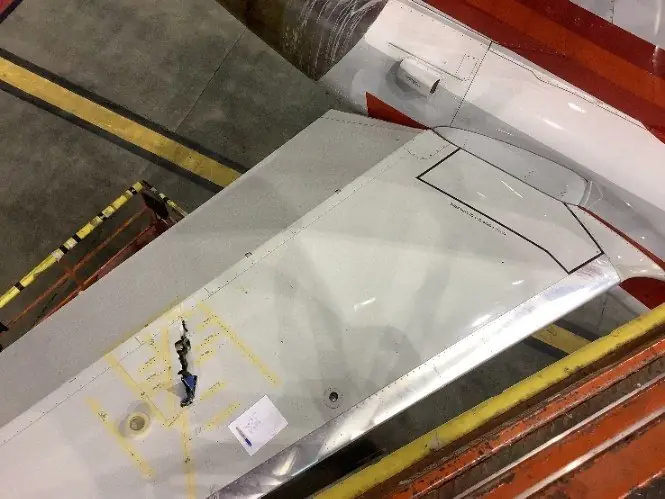
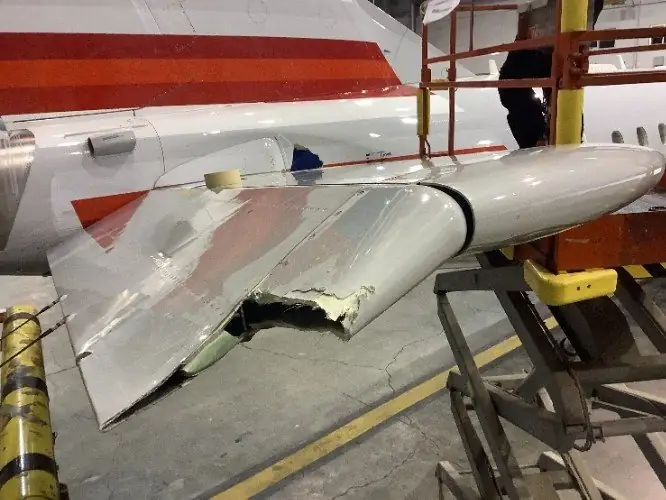
| Airline / operator | Western Air |
|---|---|
| Aircraft (type, registration) | Western Air Embraer ERJ-145LR (C6-VIP) |
| Category (my classification) | Poor-visibility taxi |
| What happened | On 12th May, 2025 at approximately 10:40 am local (1440 UTC), an Embraer 145-LR aircraft with Bahamas registration C6-VIP, operated by Western Air, was involved in an occurrence while taxing to the ramp area at the South Bimini Int’l Airport (MYBS), Bimini Bahamas. The commercial scheduled flight, operating as flight WST900, departed Lynden Pindling Int’l Airport (MYNN) with South Bimini Int’l Airport (MYBS) as its final destination. There were a total of twenty five (25) passengers and three (3) crewmembers on board. CCTV footage shows that upon landing at MYBS, WST900 exited Runway 10/28 via Taxiway Alpha. The aircraft was marshaled from the taxiway onto the apron and directed into close proximity of the Airport Rescue & Fire Fighting (ARFF) garage shelter near the terminal building. While being guided into a right-hand turn, the aircraft came to a stop due to the presence of ground handling equipment obstructing its path. The equipment was subsequently repositioned by ground staff, and the aircraft resumed its right-hand turn. Responsibility for marshaling was then transferred to another ground handler, who directed the aircraft toward its final parking position adjacent to the terminal building. During this maneuver, the aircrafts’ left wingtip came into contact with the ARFF shelter. A Western Air ground employee is seen attempting to alert the original ground handler by pointing toward the wing tip and the nearby ARFF structure. Once the aircraft was in position, the ground handler alerted the flight crew that the aircraft came into contact with the ARFF shelter. The flight crew upon exiting the aircraft, observed some damages to the left wingtip. There were no injuries reported in relation to this occurrence. Probable Cause The Aircraft Accident Investigation Authority (AAIA) has determined the probable cause of this occurrence to be the reduced situational awareness of the flight crew while operating in the movement area at the South Bimini International Airport (MYBS). Contributing Factors include: 1. The absence of ramp markings during an active construction phase. 2. Reduced visibility due to rainfall at the time of the occurrence. 3. Inadequate preparation and clearance of the parking area prior to aircraft entry. 4. Close proximity of fixed structures to the aircraft’s taxi path. 5. Reliance on external marshalling due to limited wingtip visibility from the cockpit. 6. Reduced coordination effectiveness associated with initial marshalling by personnel not routinely assigned to the operation. |
| Injuries | ASN lists 0 fatalities. There were no injuries reported in relation to this occurrence. |
| Damage | Minor |
| Official investigation | Investigating agency: AAIA Bahamas Report number: OCC-2025/0013 Status: Investigation completed Duration: 1 year Final report Report / investigator link(s): https://www.baaid.org/_files/ugd/320f20_f2d1f05927a347fe917a747dd3183fb4.pdf |
| Source | Aviation Safety Network (ASN) entry: https://aviation-safety.net/wikibase/511530 Further sources listed on that page / found: https://www.baaid.org/_files/ugd/320f20_f2d1f05927a347fe917a747dd3183fb4.pdf |
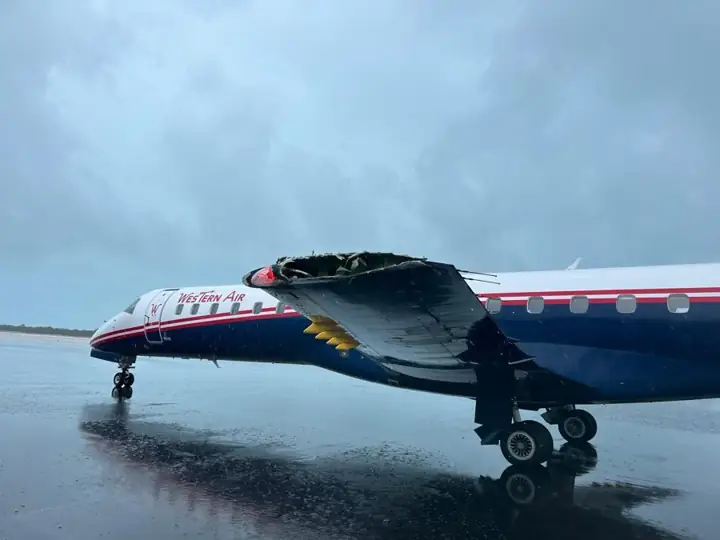
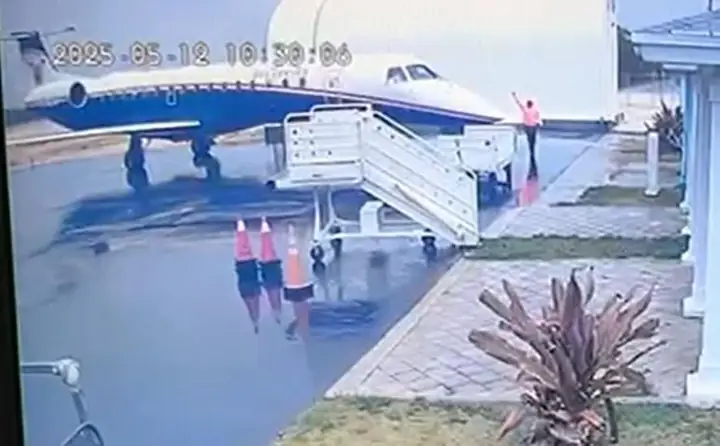
| Airline / operator | ICRC / Aercap |
|---|---|
| Aircraft (type, registration) | ICRC de Havilland Canada DHC-8-106 (5Y-BXU); Aercap Embraer ERJ-195AR (N255GE) |
| Category (my classification) | Poor-visibility taxi |
| What happened | An Embraer ERJ-195AR, N255GE, was taxiing and struck a parked DHC-8, 5Y-BXU. N255GE was operating a ferry flight to Johannesburg (FAOR), South Africa, for delivery to Airlink. The aircraft had arrived earlier in the week at Amman (OJAI), from New York (KJFK), and remained there for approximately 72 hours awaiting overflight and landing permits. On 16 September 2023, the aircraft departed OJAI at 1525 and arrived at Nairobi (HKJK) at 21:26 local time. The flight was uneventful. After landing on Runway 06 at HKJK during night conditions, the aircraft vacated to the right via Taxiway L and continued onto Taxiway G. The crew established communication with apron control and was instructed to proceed via Taxiway M, where a follow-me-vehicle would guide the crew to parking Bay H-5. The pilot-in-command (PIC) was the pilot flying, while the First Officer (FO) was pilot monitoring (PM). Upon entering the apron area, the crew observed that it was congested, with multiple aircraft parked on both sides of the taxi lane. The PIC maintained the aircraft within the marked yellow taxi guideline and reduced taxi speed to approximately 2 knots due to limited wingtip clearance and restricted visibility from the cockpit. Since the ERJ-190’s right wingtip was not directly visible from the PIC’s seat, the FO was tasked with monitoring clearance on the right side, while the PIC concentrated on obstacles to the left. The crew reported passing several parked aircraft in close proximity as they continued toward the assigned bay. As the aircraft approached the parking stands H, the follow-me-vehicle accelerated ahead and was temporarily no longer in direct view of the flight crew. The ground staff member who had been escorting the aircraft repositioned toward Bay H-5 to prepare for marshalling. The ERJ-190 continued taxiing along the designated lane without wing walkers positioned at the wingtips. While nearing Bay H-8, the right wingtip of the ERJ-190 came into contact with the left aileron of the stationary DHC-8 aircraft, registration 5Y-BXU. The crew felt a noticeable shudder. The FO immediately queried whether braking had occurred due to perceived proximity on the left side. The PIC applied the brakes, and both pilots visually confirmed that contact had been made with the Dash 8 aircraft. The crew informed apron control of the collision, shut down the engines, and completed the parking checklist, leaving the auxiliary power unit running. The crew documented the scene with photographs and video recordings but did not attempt to reposition the aircraft. Shortly thereafter, the follow-me-vehicle returned to the location, and ground handling personnel arrived. 5Y-BXU, had arrived at HKJK from Wajir airport (HKWJ) in Northern Kenya on 14 September 2023 and was instructed to park behind the H apron due to unavailability of designated stand space. Upon landing, Apron control directed the Dash 8 crew to conduct a power-back maneuver to clear the taxiway. The maneuver was performed under apron control instructions in an area constrained by a light mast on one side and another aircraft on the opposite side. The Dash 8 was repositioned and reportedly stopped with its structure behind the double yellow line demarcating the taxi lane boundary. The aircraft remained parked in that location from 14 September until the time of the ground collision incident. The occurrence took place under night conditions on a congested apron with limited maneuvering space. The event involved slow-speed taxiing of the ERJ-190 in proximity to closely parked aircraft, absence of direct wingtip visual reference from the flight deck, and ground guidance that was not continuously in the crew’s forward field of view at the critical moment prior to impact. Probable Cause(s) The right wingtip of N255GE struck the left wingtip of the Dash 8 due to the Dash 8 being parked in a non-designated area, which encroached on taxiway clearance. Contributing factors The incident was contributed to by reduced night-time visibility, the absence of continuous follow-me guidance and wing walker assistance, congested apron conditions with closely spaced aircraft, and procedural non-compliance through the use of a non-designated parking area. |
| Injuries | ASN lists 0 fatalities. No injury statement in the ASN narrative. |
| Damage | Minor |
| Official investigation | Investigating agency: AAID Kenya Report number: 01/09/2023 Status: Investigation completed Duration: 2 years and 9 months Final report Report / investigator link(s): https://aaid.transport.go.ke/sites/default/files/2026-06/Final%20Report-N255GE%20%26%205Y-BXU.pdf |
| Source | Aviation Safety Network (ASN) entry: https://aviation-safety.net/wikibase/573279 Further sources listed on that page / found: https://aaid.transport.go.ke/sites/default/files/2026-06/Final%20Report-N255GE%20%26%205Y-BXU.pdf |
| Airline / operator | Jet2 / Ryanair |
|---|---|
| Aircraft (type, registration) | Jet2 Boeing 737-33A (WL) (G-GDFB); Ryanair Boeing 737-73S (WL) (EI-SEV) |
| Category (my classification) | Poor-visibility taxi |
| What happened | A Ryanair Boeing 737-700 (EI-SEV) contacted the tail of a parked Jet2 Boeing 737- 300 (G-GDFB) as it was taxiing at East Midlands, U.K. At the time of the accident East Midlands Airport was operating under Low Visibility Procedures (LVPs). The reported Runway Visual Range (RVR) was 300 to 325 m. EI-SEV arrived from Stansted Airport (STN) and landed on runway 27 before following taxiway Alpha eastwards to the Central Apron. Due to the poor weather and their elevated position in the control tower, air traffic controllers could not see the aircraft, taxiway or apron. G-GDFB was not painting on the Controllers’ Surface Movement Radar (SMR) display. With no other information about stand occupancy available to them, ATC were unaware that S24 was occupied. Accordingly, the ground movements controller cleared EI-SEV to taxi the shortest route to S22 which was via Quebec (Q), the western entry point to the apron. The aircraft captain taxied EI- SEV as cleared, turning left from Taxiway Quebec towards Stand S22. The flight crew became aware of an aircraft parked on S24 and noted that the space available to pass behind it looked "tight". Seeing that the parked aircraft was on its stop bar, they were reassured that there would be enough room to pass behind, provided they accurately tracked the stand taxi-lane centreline. As EI-SEV crossed behind G-GDFB the commander brought the aircraft to a slow walking pace and the co-pilot monitored the right wing tip. From his perspective it appeared to be clear, but as they overlapped EI-SEV’s winglet struck G-GDFB’s right horizontal stabiliser. The captain brought the aircraft to a halt and reported the collision to ATC. Conclusion: Due to the poor weather conditions and limitations of the SMR, EI- SEV was given an unachievable taxi clearance. The fallibility of the human eye in accurately judging relative distance at range seduced the crew into thinking that safe separation had been achieved. Less than minimum standard taxi separations existed on S20-25 but there were no published warnings, limitations or guidance to alert ATC or flight crews to the risks. Flight crew need to remain alert to the potential for consistently safe outcomes desensitising them to latent airfield hazards. |
| Injuries | ASN lists 0 fatalities. No injury statement in the ASN narrative. |
| Damage | Substantial, repaired |
| Official investigation | Investigating agency: AAIB Report number: EW/G2019/04/18 Status: Investigation completed Duration: 6 months Final report |
| Source | Aviation Safety Network (ASN) entry: https://aviation-safety.net/wikibase/319445 |
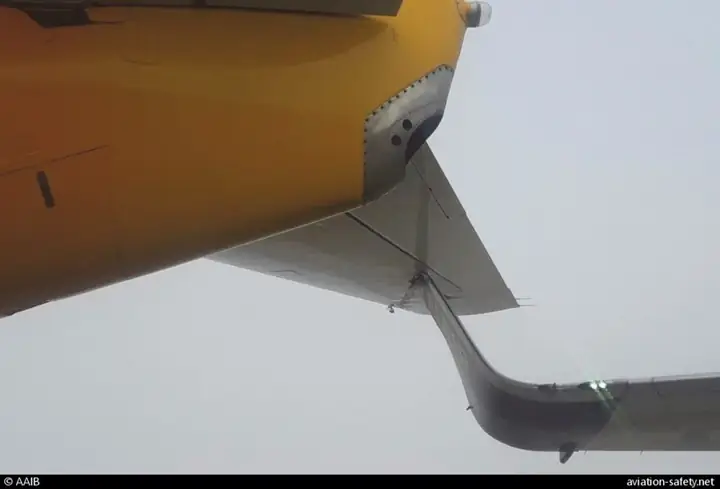
Exceptional congestion cases that WT would have avoided (1)
Exceptional ground gridlock in which aircraft were stuck until a tug arrived to back one of them up. WheelTug lets the flight crew reverse the aircraft under its own power. Routine taxi congestion is not included.
| Airline / operator | JetBlue Airways / Lufthansa |
|---|---|
| Aircraft (type, registration) | JetBlue Airbus A321 (flight B6 620 to Boston); Lufthansa Airbus A350 (arriving from Munich) |
| Category (my classification) | Exceptional congestion cases that WT would have avoided |
| What happened | In fog and shifting winds, arrivals were landing on runway 9 while departures waited for runway 27. A Lufthansa A350 that had just landed turned onto a taxiway where the JetBlue A321 was waiting, and the two aircraft ended up nose to nose with no room to pass. A tug had to be called to push the A321 back, and the area was blocked for nearly an hour. The A321 returned to a gate under the tarmac-delay rule and landed in Boston at 04:12 the next morning instead of 20:35. |
| Injuries | None |
| Damage | None (no contact) |
| Official investigation | None. |
| Source | One Mile at a Time, 11 Feb 2025: https://onemileatatime.com/news/jetblue-lufthansa-planes-stuck-nose-to-nose/ Further sources listed on that page / found: https://aviationa2z.com/index.php/2025/02/11/lufthansa-a350-came-nose-to-nose-with-jetblue-a321/ https://www.youtube.com/watch?v=5zKs7dmo7Io |
| Note | No collision. Included as an exceptional congestion case: the aircraft were stuck until a tug arrived to back one of them up. |
Runway blockage, tow required (no collision) (1)
An aircraft stopped on the runway and could not vacate under its own power, so it had to wait for a tow. No collision occurred; these cases are counted separately from collisions.
| Airline / operator | JetBlue Airways |
|---|---|
| Aircraft (type, registration) | Airbus A320-200 (N607JB), flight B6-1692 from Guanacaste |
| Category (my classification) | Runway blockage, tow required (no collision) |
| What happened | After landing on runway 22L the crew stopped on the runway and told the tower they could not vacate and needed a tow. Emergency services responded and the aircraft was later towed to the apron. No cause has been published. There was no collision. |
| Injuries | None reported. |
| Damage | None reported. |
| Official investigation | No cause published. |
| Source | The Aviation Herald (6 Jul 2022): https://avherald.com/h?article=4fb49f1c |
Jet blast: dedicated section (19 incidents)
The risk
Jet engines produce high-velocity exhaust behind the aircraft even at idle. The hazard rises sharply at breakaway thrust, the extra power a stopped aircraft needs to start rolling, and in tight turns on the apron. Blast can move baggage carts, containers, stairs and vehicles. It can knock people over and push or damage other aircraft. Running engines also pose an ingestion hazard at the intake.
FAA Advisory Circular 150/5300-13B Airport Design covers this in §5.17 "Jet Blast and Propeller Wash on Aprons", §6.6 "Blast Fences" and Appendix C. Aprons and service roads must be laid out with blast in mind. FAA AC 150/5300-13B (PDF) Boeing Airplane Characteristics for Airport Planning (ACAPS), Section 6 "Jet Engine Wake and Noise Data", gives exhaust-velocity contours behind each model at idle, breakaway and takeoff thrust. Example: 777-200/300 777 ACA PS (PDF); index of all models: https://www.boeing.com/commercial/airports/plan-manualsAirbus Aircraft Characteristics (Airport and Maintenance Planning), Chapter 6, shows the engine danger areas (exhaust and intake) at idle, breakaway and takeoff power. Example: A320 family A320 AC (PDF); index: https://www.aircraft.airbus.com/en/customer-care/fleet-wide-care/airport-operations-and-aircraft-characteristics/aircraft-charac teristics IATA Engine Danger Areas (July 2024) says the risk is "further increased if… an aircraft stops and then applies additional thrust required to break away". It cites the Montgomery and Schiphol engine-ingestion deaths and advises "Avoid driving baggage carts between turbojets…". IATA Engine Danger Areas (PDF) Flight Safety Foundation, "Defusing the Ramp" (AeroSafety World, May 2007): https://flightsafety.org/asw/may07/asw_may07_p20-24.pdf NASA ASRS Directline, "Ground Jet Blast Hazard": https://asrs.arc.nasa.gov/publications/directline/dl6_blast.htm
Veillette (Business & Commercial Aviation, 2019): "Ramp areas, taxiways and runway approach ends tend to be the airport locations where jet blast incidents are most common." He adds: "Since ramp spaces are rather tight, substantial damage has been caused by jet blast to nearby parked aircraft." Source: Patrick Veillette, Ph.D., "All About Jet Blast: A Potential Hazard On Ramps, Taxiways And Runways", Aviation Week, 20 Aug 2019: aviationweek.com
I did not find a public ALPA document on apron jet blast that I could open and cite, so none is quoted here. The SKYbrary "Jet Efflux Hazard" page returned a server error when checked.
Our assessment (not an investigator finding): Breakaway and taxi thrust on the apron is what blows over carts, stairs, containers and people near gates. WheelTug's concept is to push back and taxi with the main engines off, which would remove that exhaust and intake hazard from the gate area. Engines would be started away from the stand, so the actual benefit depends on airline procedures. WheelTug does nothing about takeoff thrust: events like Maho Beach or blast from a departing aircraft at the runway are listed for completeness but are outside what WheelTug addresses.
Cross-reference: two blast-driven ingestion events are in the FOD Ingestion section: the O'Hare 17 Oct 2024 container ingestion and the Sheremetyevo 16 Jul 2022 ladder blown into a parked 777's intake. Together with the incidents below, they make up the jet-blast-related set.
EUROCONTROL notes that with an on-board taxi system "the lack of engine intake or engine blast risks positively influences risk level and improves risk mitigation in the vicinity of aircraft stands" (EUROCONTROL ConOps, p. 25). Its pushback comparison lists "No risk of jetblast near aircraft stand" and "Low risk of FOD" for the on-board solution (p. 41).
Jet-blast incidents
| Airline / operator | Korean Air |
|---|---|
| Aircraft (type, registration) | Korean Air Boeing 777-3B5ER (HL7783) |
| Category (my classification) | Jet blast Secondary: Taxi crew (flight or maintenance) |
| What happened | The aircraft was involved in a Jetblast accident that resulted in serious injury. |
| Injuries | ASN lists 0 fatalities. The aircraft was involved in a Jetblast accident that resulted in serious injury. |
| Damage | None |
| Time out of service | HL7783: about 1 day, ≈ 2 missed flights (ADS-B flight data) |
| Official investigation | NTSB investigation, case DCA26LA329 (per the ASN entry). |
| Source | Aviation Safety Network (ASN) entry: https://aviation-safety.net/wikibase/579623 |
| Airline / operator | Windrose Airlines, lst United Nigeria Airlines |
|---|---|
| Aircraft (type, registration) | Windrose Airlines, lst United Nigeria Airlines Embraer ERJ-190STD (ERJ-190-100) (UR-EMA) |
| Category (my classification) | Jet blast Secondary: Taxi crew (flight or maintenance) |
| What happened | On 29 March 2026, a Windrose Airlines ERJ-190 (UR-EMA) operating United Nigeria Airlines flight NUA500 from Lagos to Enugu was damaged while loading baggage and passengers on the ramp at Lagos International Airport as a result of jet blast from a taxiing Enugu Air ERJ-170 (5N-ENU). Damage was sustained to the aircraft as a result of a baggage cart hitting the aircraft as a result of the jet blast, damaging the No. 2 transponder antenna, water discharge mast and lower TCAS antenna. As a result of the damage, the flight was cancelled. |
| Injuries | ASN lists 0 fatalities. No injury statement in the ASN narrative. |
| Damage | Minor |
| Time out of service | UR-EMA: about 3.5 days, ≈ 11 missed flights (ADS-B flight data) |
| Official investigation | No investigation details on the ASN entry. Report / investigator link(s): https://nbaai.gov.ua/wp-content/uploads/2026/04/03_mar_26.pdf |
| Source | Aviation Safety Network (ASN) entry: https://aviation-safety.net/wikibase/568598 Further sources listed on that page / found: https://aviationtoday.in/incidents/united-nigeria-grounds-two-aircraft-after-jet-blast-damage-bird-strike-i… https://nbaai.gov.ua/wp-content/uploads/2026/04/03_mar_26.pdf |
| Airline / operator | United Airlines |
|---|---|
| Aircraft (type, registration) | United Airlines Boeing 737 MAX 8 (N17316) |
| Category (my classification) | Jet blast Secondary: Taxi crew (flight or maintenance) |
| What happened | United Airlines flight UA1303, a Boeing 737 MAX 8, was involved in a jetblast incident during taxi for departure, leading to a serious injury of a person on the ground. |
| Injuries | ASN lists 0 fatalities. United Airlines flight UA1303, a Boeing 737 MAX 8, was involved in a jetblast incident during taxi for departure, leading to a serious injury of a person on the ground. |
| Damage | None |
| Time out of service | N17316: less than 1 day, ≈ 2 missed flights (ADS-B flight data) |
| Official investigation | Investigating agency: NTSB Report number: DCA26LA164 Status: Preliminary report Duration: Preliminary report Report / investigator link(s): https://data.ntsb.gov/carol-repgen/api/Aviation/ReportMain/GenerateNewestReport/202695/pdf |
| Source | Aviation Safety Network (ASN) entry: https://aviation-safety.net/wikibase/568410 Further sources listed on that page / found: https://data.ntsb.gov/carol-repgen/api/Aviation/ReportMain/GenerateNewestReport/202695/pdf |
| Airline / operator | Not identified |
|---|---|
| Aircraft (type, registration) | Airbus A320-family aircraft (registration partly visible, beginning HC-, an Ecuador prefix) |
| Category (my classification) | Jet blast Secondary: Ramp worker injury |
| What happened | Engine blast from an A320-family aircraft on the ground knocks over a ground worker walking near the engine. The clip carries an "Airport Ramp Life" watermark. |
| Injuries | A ground worker is knocked over; injuries not known. |
| Damage | None to the aircraft shown |
| Official investigation | No public investigation found. |
| Source | As shared with WheelTug (LinkedIn montage, A. G. Giordano): https://www.linkedin.com/feed/update/urn:li:activity:7380366854801940481/ |
| Note | Event not identified from public sources; the clip is at 0:45 in a ramp-incident montage posted 4 Oct 2025. |
 ▶ VIDEO
Still: frame at 0:45. As shared with WheelTug (LinkedIn montage, A. G. Giordano)
| Airline / operator | United Airlines |
|---|---|
| Aircraft (type, registration) | United Airlines Airbus A319-131 (N822UA) |
| Category (my classification) | Jet blast |
| What happened | On arrival at Santa Barbara Municipal Airport (SBA), Santa Barbara, California, United Airlines flight 2428 (UAL2428), operating from San Francisco International Airport (SFO), San Francisco, California, experienced multiple electrical system fault indications after landing and during taxi-in. Following the aircraft’s arrival at its gate, a ramp service agent sustained serious injuries after entering the jet blast area of an engine that remained running during ramp operations. No damage to the aircraft was reported. The flight crew reported that the flight segment from SFO to SBA was uneventful. After landing and clearing the runway, the first officer (FO), who was the pilot monitoring, started the auxiliary power unit (APU) and conducted the after-landing checklist. The captain, who was the pilot flying, taxied the airplane toward gate 2, where ramp personnel were positioned to receive the aircraft. As the airplane approached the stopping point at the gate, the Electronic Centralized Aircraft Monitoring (ECAM) system annunciated a Level 2 caution chime and light with a “ELEC APU GEN FAULT” on the Engine/Warning Display. The captain verbalized “ECAM” and instructed the FO to “Stand by” on the ECAM procedure as the captain prioritized their parking guidance. Upon reaching the designated gate stop point, the marshaller signaled the flight crew to stop the airplane, and the captain set the parking brake. The FO subsequently shut down the Number 2 (right) engine in accordance with the standard parking procedure. Immediately following the right engine shutdown, the flight crew observed multiple ECAM fault messages, including an intermittent right engine fire warning accompanied by an aural alert and illumination of associated warning lights. The indication cleared within several seconds. With the left engine still running and the aircraft beacon still on the captain instructed the FO to begin ECAM actions to try and get the APU GEN back online. The flight crew attempted to reset the APU generator; however, the fault condition persisted. The crew then requested ground power before shutting down the remaining Number 1 (left) engine. Ramp personnel informed the crew that jet bridge power could not be connected while the left engine was still operating. A portable ground power unit (GPU) was subsequently retrieved and connected to the aircraft. After verifying that external power was available, the flight crew shut down the left engine and completed the parking checklist. According to the captain, the elapsed time from parking brake set to engine shutdown was approximately 10 minutes. Once the aircraft was secured, the captain and FO coordinated with United Maintenance Control to troubleshoot the electrical system faults. During this time, the FO was informed by the ramp lead that one of the ground crew members, serving as a wing walker, had sustained a serious injury from jet blast while the left engine remained running. According to the ramp lead, the injured wing walker approached the aircraft prematurely to place chalks at the main landing gear and entered the jet blast zone without confirming that the left engine had been shut down. The ramp lead indicated that the employee was relatively new and may have misinterpreted marshalling procedures, potentially confusing the procedures with those used by other carriers operating at SBA. According to United, there were 5 ground crew members in place to bring in UAL2428. The marshaller was behind the aircraft nose stop mark, one wing walker was on the left-wing side of the airplane, the lead ramp agent and the right wing walker was at the right-wing side of the airplane, and another support ramp agent was by the jetbridge to handle the chocks and other arrival duties. Once the aircraft came to a stop, the marshaller gave the X signal (stop), and the support agent placed the nose landing gear chocks. The support ramp agent does not need an all-clear signal to chock the nose landing gear, as this position is not exposed to engine jet blast. The marshaller then gave the hand signal to the flight crew indicating that the aircraft was chocked and lowered his hands. Standard procedure requires the left and right wing walkers—who are potentially exposed to engine jet blast—to wait for an all-clear signal from the marshaller before approaching the airplane to chock the main landing gear. The injured ramp service agent (left wing walker) indicated that he was waiting for the “safe-to-approach” signal from the marshaller but was uncertain whether he misinterpreted the signal or received it in error. He proceeded behind the left engine while carrying wheel chocks, unaware that the engine was still operating. He recalled being struck by jet blast and falling onto his left side, sustaining multiple injuries. He reported experiencing shock and was unable to feel pain immediately after impact. Nearby personnel assisted him and transported him to the on-site emergency response vehicle. The injured agent reported that he was not distracted or under time pressure and had already serviced four flights that day. The lead ramp agent stated that the ramp experienced a brief delay due to the ongoing electrical issue reported by the flight crew. During this time, the injured ramp agent appeared to misinterpret the marshaller’s gestures as the all-clear signal and began approaching the aircraft carrying two wheel chocks. The lead agent observed that the anti- collision beacon remained illuminated and that the left engine was still operating. He attempted to radio the injured agent to stop, but the agent did not appear to have heard the transmission. Moments later, the agent was struck by the exhaust blast from the operating left engine resulting in the agent being thrown to the ground. Following the accident, United issued a safety alert reminding the employees that aircraft must only be approached after marshallers give the “Safe to Approach” signal and only after confirming the nose gear is chocked, both engines are fully shut down and spooled down, the beacon light is off, and emphasizing “when in doubt, wait.” Probable Cause: The ramp worker’s premature entry into the jet blast hazard area of an operating engine due to his failure to maintain situational awareness and his misinterpretation of the marshaller’s hand signals. |
| Injuries | ASN lists 0 fatalities. Following the aircraft’s arrival at its gate, a ramp service agent sustained serious injuries after entering the jet blast area of an engine that remained running during ramp operations.; During this time, the FO was informed by the ramp lead that one of the ground crew members, serving as a wing walker, had sustained a serious injury from jet blast while the left engine remained running. |
| Damage | None |
| Official investigation | Investigating agency: NTSB Report number: DCA25LA268 Status: Investigation completed Duration: 8 months Final report Report / investigator link(s): https://data.ntsb.gov/carol-repgen/api/Aviation/ReportMain/GenerateNewestReport/200619/pdf https://data.ntsb.gov/Docket?ProjectID=200619 |
| Source | Aviation Safety Network (ASN) entry: https://aviation-safety.net/wikibase/529874 Further sources listed on that page / found: https://data.ntsb.gov/carol-repgen/api/Aviation/ReportMain/GenerateNewestReport/200619/pdf https://data.ntsb.gov/Docket?ProjectID=200619 |
| Airline / operator | JetBlue Airways |
|---|---|
| Aircraft (type, registration) | JetBlue Airways Airbus A321-231 (WL) (N952JB) |
| Category (my classification) | Jet blast Secondary: Taxi crew (flight or maintenance) |
| What happened | JetBlue Airways flight B62662, an Airbus A321-231, was taxiing to the ramp after landing , was struck by jet blast from Korean Air flight 85, an Airbus A380 (HL7627) that was taxiing in front. The left windshield was shattered. |
| Injuries | ASN lists 0 fatalities. No injury statement in the ASN narrative. |
| Damage | Minor |
| Official investigation | No investigation details on the ASN entry. |
| Source | Aviation Safety Network (ASN) entry: https://aviation-safety.net/wikibase/464299 |
| Airline / operator | Condor Flugdienst |
|---|---|
| Aircraft (type, registration) | Condor Flugdienst Boeing 757-330 (WL) (D-ABOL) |
| Category (my classification) | Jet blast Secondary: Taxi crew (flight or maintenance) |
| What happened | Condor flight DE1778, a Boeing 757-330, was parking at Stand 56 after arrival at Palma de Mallorca Airport (PMI), Spain, when the flight coordinator of the ground service company was blown over by the jet blast. He was seriously injured. |
| Injuries | ASN lists 0 fatalities. He was seriously injured. |
| Damage | None |
| Official investigation | Investigating agency: CIAIAC Report number: A-027/2024 Status: Preliminary report Report / investigator link(s): https://www.transportes.gob.es/organos-colegiados/ciaiac/investigacion/2024/in-a027-2024 |
| Source | Aviation Safety Network (ASN) entry: https://aviation-safety.net/wikibase/435620 Further sources listed on that page / found: https://www.transportes.gob.es/organos-colegiados/ciaiac/investigacion/2024/in-a027-2024 |
| Airline / operator | Amerijet International |
|---|---|
| Aircraft (type, registration) | Amerijet Boeing 767-300F (N378CX), flight M6857; parked Cessna 172 (N172GK) |
| Category (my classification) | Jet blast Secondary: Taxi crew (flight or maintenance) |
| What happened | After a taxi-instruction mix-up the 767 freighter taxied onto the southern general-aviation ramp; its jet blast tipped a parked Cessna 172 onto its right wing. |
| Injuries | None reported. |
| Damage | Minor damage to the Cessna 172 |
| Official investigation | Gate Checked reports an investigation was launched; no public report found. |
| Source | Gate Checked: https://www.gatechecked.com/amerijet-767-jet-blast-blows-cessna-172-onto-its-side-in-aruba-8681 |
| Flag | Victim was a light aircraft; the blast came from a cargo airliner. |
| Airline / operator | LATAM Airlines Brasil |
|---|---|
| Aircraft (type, registration) | LATAM Airbus A320neo (PR-XBK) |
| Category (my classification) | Jet blast Secondary: Taxi crew (flight or maintenance) |
| What happened | While waiting for clearance and then powering up to taxi out, the A320neo's jet blast tipped over the boarding-stair truck that had been used for boarding, parked some tens of metres behind it. The stairs narrowly missed a ground worker walking away from the aircraft. Filmed by a passenger in the terminal. |
| Injuries | No injuries reported; one worker narrowly missed. |
| Damage | Boarding-stair truck toppled; aircraft not damaged (none reported) |
| Official investigation | No public investigation report found. |
| Source | Up in the Sky (NL), 17 Jan 2024 (event on Monday 15 Jan): https://www.upinthesky.nl/2024/01/17/airbus-a320-blaast-trap-omver-video/ Further sources listed on that page / found: https://x.com/i/status/1747293686449246531 https://www.rtl.de/videos/turbine-blaest-stahltreppe-um-personal-rennt-um-sein-leben-65ae453c11ea0d8bfd0259… |
| Note | Near-miss for the worker. |
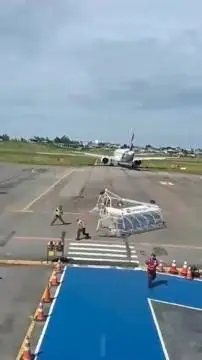 ▶ VIDEO
Still: frame from the video in the linked post (same footage). The X copy credits the video to "fdpamplona".
| Airline / operator | El Al Israel Airlines |
|---|---|
| Aircraft (type, registration) | El Al Israel Airlines Boeing 777-258ER (4X-ECB) |
| Category (my classification) | Jet blast |
| What happened | El Al Israel Airlines flight LY337, a Boeing 777-258ER, taxied via to stand G4R after landing at Amsterdam-Schiphol International Airport (AMS). Opposite to stand G4R, at stand F5L, a Boeing 787 was parked with maintenance personnel engaged in operational tasks. For the execution of these tasks on the B787, a technician was positioned on a ladder at the left aft door of the aircraft, approximately at belly height. As the B777 turned into stand G4R, its jet engines emitted a jet blast, overturning the ladder and causing the technician to fall from a height of nearly 3 metres onto the platform; fortunately, the individual did not sustain serious injuries. The space between the G-pier and F-pier is wider than the maneuvering space at other stands, and the Aeronautical Information Publication (AIP) does not specifically caution about the dangers of jet blast at these stands. The AIP advises that pilots should generally use the minimum necessary power when maneuvering on taxiways, particularly in areas where jet blast can affect adjacent stands. The B777 taxiing procedure stipulates that where there is a risk of damage from jet blast, pilots should select engine power not exceeding 35% N1.13 If 35% N1 is insufficient for aircraft movement in tight gate areas, where jet blast could potentially cause damage, pilots are instructed to reduce throttle to idle and request a tow. Information from the airline indicated that as the B777 turned towards stand G04, the power selected for the right engine was 58.2% N1 rpm, and for the left engine, it was 54.7% N1 rpm. After completing the turn, the throttles were set to idle. To prevent reoccurrence the airline decided to share the details of this event amongst its flight crews. The Dutch Safety Board did not further investigate the incident. |
| Injuries | ASN lists 0 fatalities. As the B777 turned into stand G4R, its jet engines emitted a jet blast, overturning the ladder and causing the technician to fall from a height of nearly 3 metres onto the platform; fortunately, the individual did not sustain serious injuries. |
| Damage | None |
| Official investigation | Investigating agency: Dutch Safety Board Report number: 2023144 Status: Investigation completed Duration: 10 months Final report |
| Source | Aviation Safety Network (ASN) entry: https://aviation-safety.net/wikibase/388577 |
| Airline / operator | Hawaiian Airlines |
|---|---|
| Aircraft (type, registration) | Hawaiian Airlines Boeing 717-22A (N485HA) |
| Category (my classification) | Jet blast Secondary: Taxi crew (flight or maintenance) |
| What happened | Hawaiian Airlines flight HA184, a Boeing 717-22A, was struck on nose cone by an empty LD3 cargo container that was blown off a cargo dolly by jet blast from another aircraft. The aircraft resumed service about 26 hours later. |
| Injuries | ASN lists 0 fatalities. No injury statement in the ASN narrative. |
| Damage | Not stated |
| Time out of service | N485HA: about 26 hours (ASN) |
| Official investigation | No investigation details on the ASN entry. |
| Source | Aviation Safety Network (ASN) entry: https://aviation-safety.net/wikibase/316498 |
| Airline / operator | Delta Air Lines |
|---|---|
| Aircraft (type, registration) | Delta Air Lines Boeing 737-8EH (WL) (N774DE) |
| Category (my classification) | Jet blast Secondary: Taxi crew (flight or maintenance) |
| What happened | A Delta Air Ls Boeing 737-800, was struck by baggage cart which was blown across ramp area by jet blast from a taxiing Southwest Airlines aircraft. The left engine was damaged. The aircaft resumed service on May 7, 2023. |
| Injuries | ASN lists 0 fatalities. No injury statement in the ASN narrative. |
| Damage | Not stated |
| Time out of service | N774DE: 4 days (ASN) |
| Official investigation | No investigation details on the ASN entry. |
| Source | Aviation Safety Network (ASN) entry: https://aviation-safety.net/wikibase/312290 |
| Airline / operator | Pacific Airlines |
|---|---|
| Aircraft (type, registration) | Airbus A320 (VN-A564, parked) |
| Category (my classification) | Jet blast |
| What happened | Jet blast from a taxiing Antonov An-124 pushed a hand-pushed boarding stair into the wing of the Pacific Airlines A320 parked on stand 56. The wing skin was slightly damaged and the aircraft was withdrawn for repair. |
| Injuries | None reported. |
| Damage | Minor wing-skin damage. |
| Official investigation | Civil Aviation Authority of Vietnam (CAAV) reported. |
| Source | VTV (14 Sep 2022, citing CAAV): https://vtv.vn/xa-hoi/xac-minh-vu-xe-thang-va-cham-may-bay-o-noi-bai-20220914223020555.htm Further sources listed on that page / found: https://bnews.vn/cuc-hang-khong-viet-nam-bao-cao-vu-xe-thang-va-cham-voi-tau-bay-tai-noi-bai/258303.html |
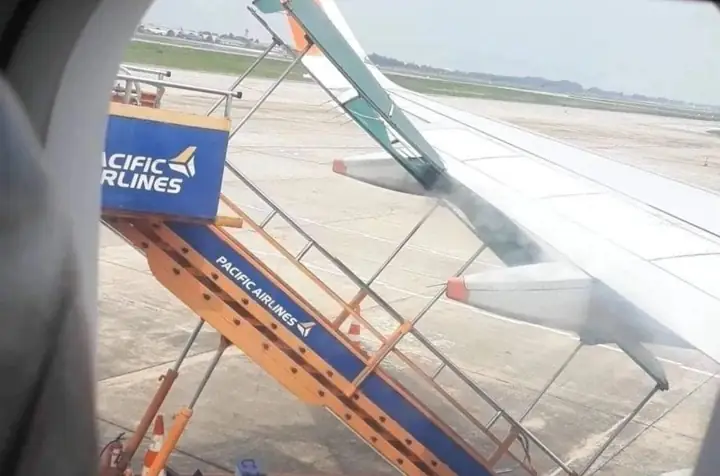
| Airline / operator | AeroLogic |
|---|---|
| Aircraft (type, registration) | AeroLogic Boeing 777-F1H (D-AALU) |
| Category (my classification) | Jet blast |
| What happened | The Boeing 777F was scheduled to depart from Frankfurt Airport on a planned cargo flight to New York- JFK Airport, USA. After pushing back from parking position F235 onto taxiway N-North, the crew received taxi clearance to taxi via taxiway N17 and to hold short of taxiway N At the time of the release, the Boeing 777F was close to taxiway N17 and a full left turn of 90° into N17 was not possible because the pilot had to stay clear of N. Therefore, the pilot stopped about halfway and waited for further taxi clearance. After receiving taxi clearance onto taxiway N and taxiing clearance onto runway 18, he added thrust of the right engine to start rolling. The thrust lever for the right engine was moved forward from idle to 47% N1 within 7 seconds, while the thrust lever for the left engine remained at idle. The aircraft started moving at a right engine speed of 42% N1 at 19:05:04 and turned left into taxiway N17. During the spooling-up of the right engine, its exhaust was directed toward parking position F234. At this position another cargo aircraft was being loaded and several empty cargo containers were blown off the pallet trailers by the exhaust. One ground crew member was standing next to the wing and was caught by the thrust and pushed to the ground. She suffered a left humeral head fracture. |
| Injuries | ASN lists 0 fatalities. No injury statement in the ASN narrative. |
| Damage | None |
| Official investigation | Investigating agency: BFU Report number: Status: Investigation completed Duration: 4 months Final report Report / investigator link(s): https://www.bfu-web.de/DE/Publikationen/Untersuchungsberichte/2022/Bericht_22-0927-1X_Boing777_Frankfurt.pdf?__blob=publicationFile&v=9 |
| Source | Aviation Safety Network (ASN) entry: https://aviation-safety.net/wikibase/305688 Further sources listed on that page / found: https://www.bfu-web.de/DE/Publikationen/Untersuchungsberichte/2022/Bericht_22-0927-1X_Boing777_Frankfurt.pd… |
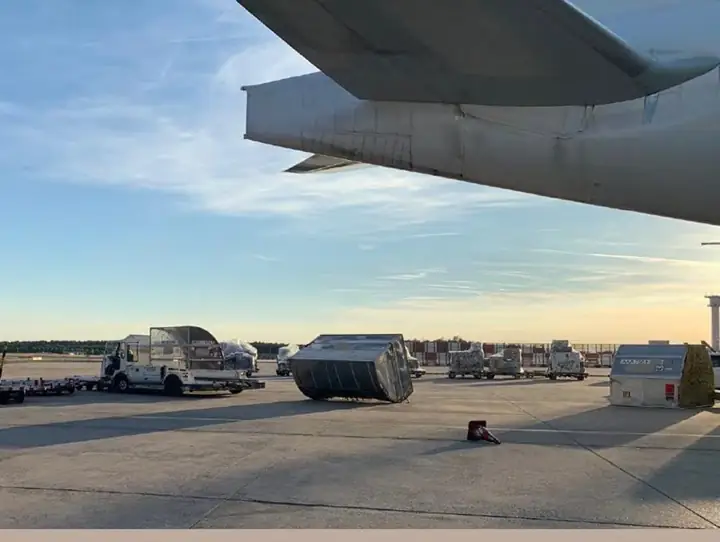
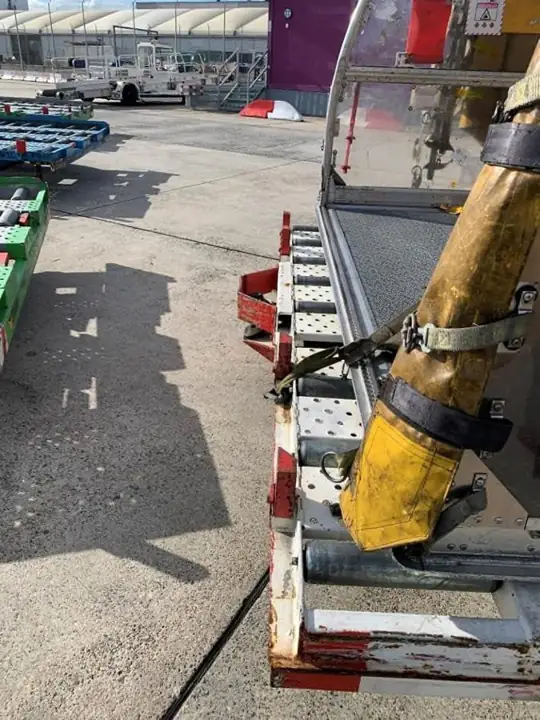
| Airline / operator | El Al Israel Airlines |
|---|---|
| Aircraft (type, registration) | El Al Israel Airlines Boeing 777-258ER (4X-ECD) |
| Category (my classification) | Jet blast |
| What happened | The B772-200 was parked on stand 61. Aircraft kept engines running for at least 35 minutes. Aerodrome Operator was aware that the engines would be kept running whilst on stand. This information was not passed to ATC. Tower was expecting aircraft, when parking was finished, to shutdown engines as per standard company operating procedures. ATC referred to the potential risk that jet blast from engines, at idle power, can create to light aircraft, that might taxi on taxi-lane CU, behind the aircraft. The airport operator has conducted Jet Blast Simulations (20/12/2021) for Idle Power and Break-off power for aircraft types A320-200, A300-600F and B747-200. after a request from Larnaca Airport Control Tower (14/12/2021). The answer was that for idle power on aircraft up to the category of B747-200 on stand 61-64, the operator does not see any issues with light a/e passing behind and that for Break Off power, the Larger Aircraft B747-200 may cause a problem to a light aircraft passing behind at the time that the B747 starts to Taxi. |
| Injuries | ASN lists 0 fatalities. No injury statement in the ASN narrative. |
| Damage | None |
| Official investigation | Investigating agency: AAIIB Cyprus Report number: Status: Investigation completed Duration: Final report Report / investigator link(s): http://www.aaiib.gov.cy/mcw/DCA/AAIIB/aaiib.nsf/All/C9536595445BE58DC2258C120049B2D7/$file/FINAL%20REPORT%20REF%201%2024.pdf |
| Source | Aviation Safety Network (ASN) entry: https://aviation-safety.net/wikibase/514995 Further sources listed on that page / found: http://www.aaiib.gov.cy/mcw/DCA/AAIIB/aaiib.nsf/All/C9536595445BE58DC2258C120049B2D7/$file/FINAL%20REPORT%2… https://www.jetphotos.com/photo/10726647 |
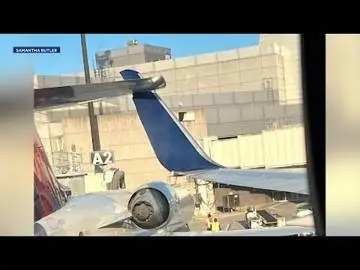 ▶ VIDEO
Still: YouTube thumbnail, WCVB Channel 5 Boston
| Airline / operator | Air Horizont, Isf Blue Panorama Airlines |
|---|---|
| Aircraft (type, registration) | Air Horizont, Isf Blue Panorama Airlines Boeing 737-430 (9H-GTC) |
| Category (my classification) | Jet blast Secondary: Taxi crew (flight or maintenance) |
| What happened | The aircraft was given permission for an engine startup. At the same time a smaller aircraft was cleared to taxi behind the 737. As the smaller aircraft passed behind the 737, the Jetblast from the 737 moved the smaller aircraft 1.5 Meters off the taxiway and caused it minor damage. |
| Injuries | ASN lists 0 fatalities. No injury statement in the ASN narrative. |
| Damage | None |
| Official investigation | Investigating agency: AKISA Report number: Status: Investigation completed Duration: 3 years and 9 months Final report Report / investigator link(s): https://akisa.gov.al/wp-content/uploads/2023/07/Final-Report-Incident-Guarda-di-Finanza.pdf |
| Source | Aviation Safety Network (ASN) entry: https://aviation-safety.net/wikibase/519783 Further sources listed on that page / found: https://akisa.gov.al/wp-content/uploads/2023/07/Final-Report-Incident-Guarda-di-Finanza.pdf https://www.jetphotos.com/photo/9526849 |
| Airline / operator | Endeavor Air |
|---|---|
| Aircraft (type, registration) | Endeavor Air Bombardier CRJ-200LR (N819AY) |
| Category (my classification) | Jet blast Secondary: Taxi crew (flight or maintenance) |
| What happened | Endeavor Air Flight 5336, a CRJ-200, reportedly had visible damage to the wing due to a possible jet blast from a departing British Airways Boeing 747-400 (G-CIVW, flight BA116) on runway 31L. The aircraft taxied back to the gate and was able to depart an hour later. |
| Injuries | ASN lists 0 fatalities. No injury statement in the ASN narrative. |
| Damage | Unknown |
| Official investigation | No investigation details on the ASN entry. |
| Source | Aviation Safety Network (ASN) entry: https://aviation-safety.net/wikibase/222277 |
| Airline / operator | Copa Airlines |
|---|---|
| Aircraft (type, registration) | Copa Airlines Embraer ERJ-190AR (HP-1540CMP *) |
| Category (my classification) | Jet blast Secondary: Taxi crew (flight or maintenance) |
| What happened | An Embraer ERJ-190AR suffered damage to the fuselage skin after the aircraft was hit by airport equipment that was blown away by a departing Iberia A340-642 airplane. * unconfirmed |
| Injuries | ASN lists 0 fatalities. No injury statement in the ASN narrative. |
| Damage | Not stated |
| Official investigation | No investigation details on the ASN entry. |
| Source | Aviation Safety Network (ASN) entry: https://aviation-safety.net/wikibase/220817 Further sources listed on that page / found: https://www.facebook.com/permalink.php?story_fbid=2088841187863385&id=214479505299572&__xts__%5B0%5D=68.ARA… |
| Airline / operator | SpiceJet (aircraft) / IndiGo (passenger coach) |
|---|---|
| Aircraft (type, registration) | SpiceJet aircraft on flight SG-253 from Chandigarh (type and registration not given in the sources); IndiGo passenger coach no. 34 |
| Category (my classification) | Jet blast Secondary: Taxi crew (flight or maintenance) |
| What happened | At about 16:50, IndiGo coach no. 34 was parked at bay 17 to take passengers to IndiGo flight 6E-191 to Mumbai. Jet blast from SpiceJet flight SG-253, arriving from Chandigarh and turning to park at its allocated bay, shattered the coach's right-front window. SpiceJet said it was too early to comment and that the aircraft was following ATC instructions. |
| Injuries | Five passengers on the coach had minor injuries (PTI). |
| Damage | Coach window shattered; no aircraft damage reported |
| Official investigation | DGCA inquiry reported; Delhi Police registered a case under IPC Section 337 (PTI). No public report found. |
| Source | The Indian Express (PTI): https://indianexpress.com/article/india/indigo-coach-window-shatters-from-jet-blast-five-injured-4741237/ Further sources listed on that page / found: https://www.thehindu.com/news/cities/Delhi/five-injured-in-delhi-airport-mishap/article19241333.ece https://www.hindustantimes.com/cities/jet-blast-shatters-indigo-coach-s-window-at-delhi-airport-five-injure… |
FOD ingestion: dedicated section (20 incidents)
The risk
A running jet engine draws in air from a wide zone in front of and around its intake. On the ground, this can pull in loose debris, ice and snow, hoses and ground equipment, cargo containers, and people. Ingestion damages fan blades and engines, takes aircraft out of service, and has killed ramp workers.
FAA Advisory Circular 150/5210-24, Airport Foreign Object Debris (FOD) Management, lists "being ingested into engines" as a main FOD hazard. Its listed FOD sources include ground equipment and "the environment (wildlife, snow, ice)". It warns that "Personnel injuries or even death can occur when jet blast propels FOD" and that "Air carriers and airport tenants generate much of the FOD found in the airport apron". FAA AC 150/5210-24 (PDF) IATA, Engine Danger Areas describes the intake suction hazard zones and cites the Montgomery (2022) and Schiphol (2024) ingestion deaths. IATA Engine Danger Areas (PDF) Manufacturer intake hazard areas are given in the Boeing ACAPS and Airbus Aircraft Characteristics documents cited in the Jet Blast section. The NTSB Montgomery report notes the E175 inlet hazard boundary of 8.3 ft. Ground vortex. At high power and low or zero forward speed, a vortex can form between the intake and the ground and throw pebbles and debris into the engine. NACA's study "Ingestion of foreign objects into turbine engines by vortices" (Rodert & Garrett) found vortex formation depends on engine speed, engine height and surface wind; it observed none at rated speed in a headwind above 15 mph. NACA report (NASA NTRS, PDF) TU Graz's Aeroengine Safety notes that the risk rises with larger, lower-mounted high-bypass inlets and that "taxi and takeoff procedures are often important factors for the frequency of FOD". TU Graz: Intake of Foreign Objects NTSB, Montgomery, AL, 31 Dec 2022 (DCA23LA109), final report: https://data.ntsb.gov/carol-repgen/api/Aviation/ReportMain/GenerateNewestReport/106517/pdf
Our assessment (not an investigator finding): With WheelTug, the aircraft taxis, enters the stand and pushes back with its main engines off, so there is no intake suction near the gate or along the taxi route during those phases. Warm-up and cool-down engine runs, takeoff, and maintenance engine runs still carry ingestion risk. WheelTug can draw power from the APU or from an engine-driven generator. When the APU is inoperative, as at Montgomery, WheelTug can still be used, but one engine then runs to supply power, so the intake hazard near that engine remains. It has to be managed by procedures: which engine runs, when it is shut down, and ramp exclusion.
Cross-references: the O'Hare 2024 container ingestion (AA 787, container blown by an A350's jet blast) and the Sheremetyevo 2022 ladder blown into a parked 777's intake are both blast-driven. They are listed here and cross-referenced in the Jet Blast section. Ramp-worker ingestion deaths (Montgomery 2022; San Antonio 2023 and Schiphol 2024, both ruled deliberate acts) moved here from Ramp worker injury. My ASN screening found no qualifying ground-ops or taxi cases of ice, snow or ground-vortex ingestion in this period.
EUROCONTROL notes that with an on-board taxi system "the lack of engine intake or engine blast risks positively influences risk level and improves risk mitigation in the vicinity of aircraft stands" (EUROCONTROL ConOps, p. 25). Its pushback comparison lists "No risk of jetblast near aircraft stand" and "Low risk of FOD" for the on-board solution (p. 41).
FOD ingestion incidents
| Airline / operator | Frontier Airlines |
|---|---|
| Aircraft (type, registration) | Frontier Airbus A321neo (N669FR), flight F9 1055 |
| Category (my classification) | FOD ingestion |
| What happened | A ramp worker's hat was sucked into an engine of the A321neo during pre-departure ground operations; about a 30-minute delay. |
| Injuries | No injuries reported. |
| Damage | None reported |
| Time out of service | N669FR: 0 days (flew again same day), ≈ 0 missed flights (FlightAware) |
| Official investigation | No public investigation found. |
| Source | AirLive: https://airlive.net/exclusive/2026/10/23/the-hat-of-a-ramp-worker-has-been-sucked-into-engine-of-frontier-airlines-a321neo-at-orlando-airport/ |
| Note | Near-miss: no injury; included because it shows engine-ingestion exposure of ramp staff. |
| Airline / operator | Air India |
|---|---|
| Aircraft (type, registration) | Air India Airbus A350-941 (VT-JRB) |
| Category (my classification) | FOD ingestion |
| What happened | Air India flight AI101, Airbus A350-941, had returned to Delhi due to closure of Iranian airspace. While taxiing to the parking bay in thick fog, one of the engines of the airplane ingested a cargo container. METAR: METAR VIDP 150000Z 25005KT 0100 R28/0200 R27/0150 R29R/0125 R29L/0125 FG VV/// 04/04 Q1017 NOSIG METAR VIDP 142330Z 24004KT 0200 R28/1600 R27/1100 R29R/0200 R29L/0200 FG VV/// 05/04 Q1016 BECMG 0150 FG |
| Injuries | ASN lists 0 fatalities. No injury statement in the ASN narrative. |
| Damage | Not stated |
| Time out of service | VT-JRB: about 38 days, ≈ 67 missed flights (ADS-B flight data) |
| Official investigation | No investigation details on the ASN entry. |
| Source | Aviation Safety Network (ASN) entry: https://aviation-safety.net/wikibase/565570 Further sources listed on that page / found: https://www.thehindu.com/news/national/air-india-aircraft-grounded-after-engine-ingests-container/article70… |
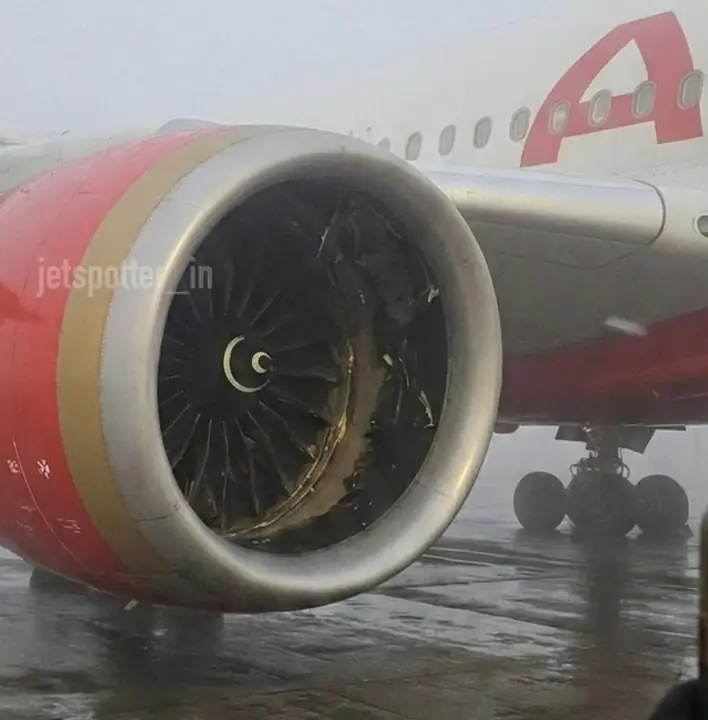
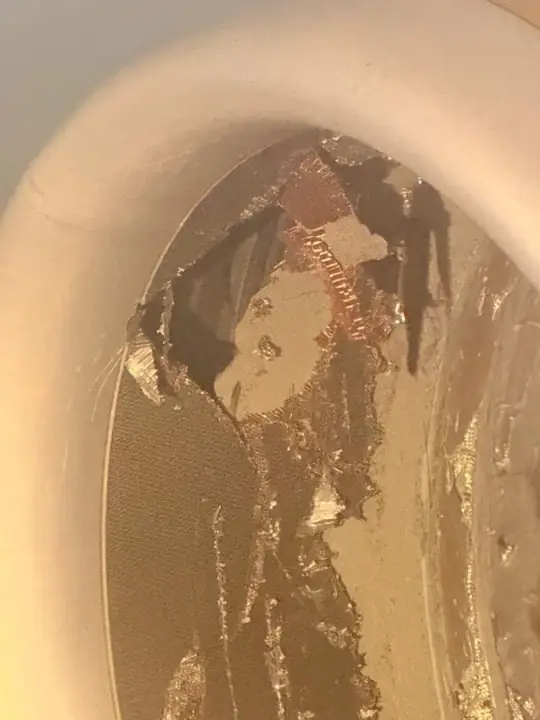
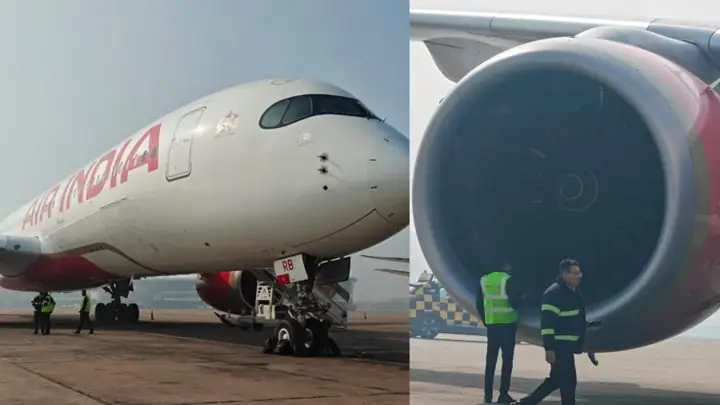
| Airline / operator | American Airlines |
|---|---|
| Aircraft (type, registration) | American Airlines Airbus A321-211 (N182UW) |
| Category (my classification) | FOD ingestion |
| What happened | American Airlines flight AAL1897 from Charlotte to Raleigh, operated by a Airbus A321-200, N182UW, ingested a hose into the number 1 engine while parking at the gate. |
| Injuries | ASN lists 0 fatalities. No injury statement in the ASN narrative. |
| Damage | Not stated |
| Time out of service | N182UW: about 4 days, ≈ 13 missed flights (ADS-B flight data) |
| Official investigation | No investigation details on the ASN entry. |
| Source | Aviation Safety Network (ASN) entry: https://aviation-safety.net/wikibase/565391 Further sources listed on that page / found: https://www.jetphotos.com/photo/11841134 |
| Airline / operator | China Airlines |
|---|---|
| Aircraft (type, registration) | Airbus A350 (B-18915), flight CI6 |
| Category (my classification) | FOD ingestion |
| What happened | After pushback, the A350's left engine ingested debris (packaging/plastic). The engine was shut down and the flight left about 90 minutes late. |
| Injuries | No injuries reported. |
| Damage | Not stated |
| Time out of service | B-18915: less than 1 day, ≈ 1 missed flights (ADS-B flight data) |
| Official investigation | No public investigation found. |
| Source | AirLive: https://airlive.net/incident/2025/11/21/a-foreign-debris-was-ingested-by-an-airbus-a350-before-takeoff-to-lax/ |
| Airline / operator | Frontier Airlines |
|---|---|
| Aircraft (type, registration) | Frontier Airlines Airbus A320-251N (N365FR) |
| Category (my classification) | FOD ingestion |
| What happened | A Frontier Airbus A320-251N, flight F93134, ingested a ground air- conditioning hose in engine no.1 while preparing for departure at the gate at Charlotte-Douglas International Airport (CLT/KCLT), Charlotte, North Carolina. The aircraft was taken out of service. |
| Injuries | ASN lists 0 fatalities. No injury statement in the ASN narrative. |
| Damage | Not stated |
| Time out of service | N365FR: about 6 days, ≈ 22 missed flights (ADS-B flight data) |
| Official investigation | No investigation details on the ASN entry. |
| Source | Aviation Safety Network (ASN) entry: https://aviation-safety.net/wikibase/538547 Further sources listed on that page / found: https://www.paddleyourownkanoo.com/2025/08/17/frontier-air-plane-damaged-after-air-conditioning-hose-gets-s… https://cdn.jetphotos.com/full/6/23851_1638249588.jpg |

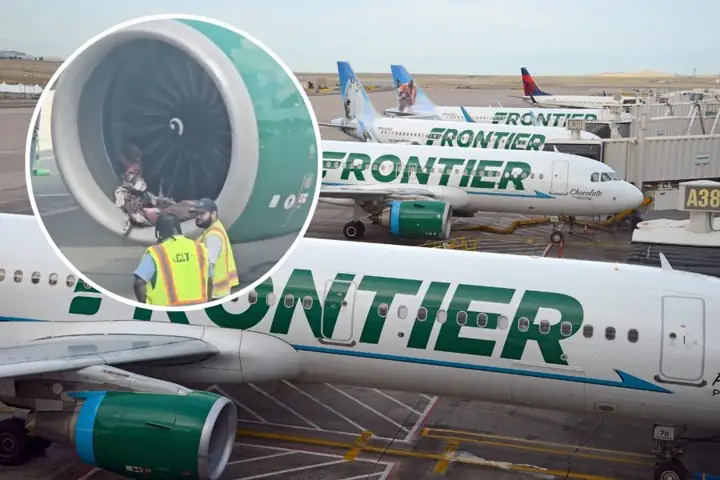
| Airline / operator | Volotea |
|---|---|
| Aircraft (type, registration) | Volotea Airbus A319-111 (EC-MTF) |
| Category (my classification) | FOD ingestion |
| What happened | At about 10:20 local time, a man who was neither a passenger nor an airport employee got into the airside area through the baggage hall and ran towards Volotea flight V73511, which was preparing to depart for Asturias. Police officers, airport staff and baggage handlers chased him. The right engine was shut down; he went under the fuselage to the running left engine and was ingested. He died at the scene. The airport suspended operations for about two hours. |
| Injuries | One person (not on board) was killed. The 154 passengers and 6 crew were not injured. |
| Damage | None to the aircraft (ASN). |
| Official investigation | No public investigator report found. |
| Source | Aviation Safety Network (ASN) entry 525436: https://aviation-safety.net/wikibase/525436 Further sources listed on that page / found: https://www.flightglobal.com/safety/person-seriously-injured-by-engine-of-taxiing-volotea-a319-at-bergamo/1… https://apnews.com/article/italy-bergamo-runway-incident-flights-suspended-f8487b6d1f17dbe36cfcbf598cfc6e44 https://www.ilpost.it/2025/07/09/uomo-suicidio-aeroporto-bergamo-sicurezza/ |
| Airline / operator | Air India |
|---|---|
| Aircraft (type, registration) | Air India Boeing 777-200 (VT-ALH), flight AI127 from Delhi |
| Category (my classification) | FOD ingestion Secondary: Jet blast |
| What happened | While the aircraft was parked at the gate between its 07:47 arrival and 12:13 departure, cargo containers were blown toward it. Reports indicate the containers were pushed by the jet blast of a passing ANA Boeing 777-300. Aviation A2Z reports the aircraft was slightly damaged, while also describing the containers as nearly striking it. It was the third time in under two weeks that containers were blown toward an aircraft at O'Hare (see GC-0430 and GC-0432). |
| Injuries | None reported |
| Damage | Slight, per Aviation A2Z (sources differ on whether the containers struck the aircraft) |
| Official investigation | No public investigation found. |
| Source | Aviation A2Z, 1 Nov 2024: https://aviationa2z.com/index.php/2024/11/01/air-india-boeing-777-hit-by-container-at-chicago/ |
| Note | Filed with the related O'Hare container cases (GC-0430, GC-0432). No engine ingestion was reported in this case. |
| Airline / operator | JetBlue Airways |
|---|---|
| Aircraft (type, registration) | JetBlue Airways Airbus A320-232 (N623JB) |
| Category (my classification) | FOD ingestion |
| What happened | JetBlue Airways flight B6811, an Airbus A320-232, taxiing to the gate at Chicago-O'Hare International Airport, IL (ORD) and ingested FOD into the no.1 engine, damaging the cowling. A similar incident occurred four days earlier when, at the same spot, a cargo container was ingested by the engine of a Boeing 787-9. |
| Injuries | ASN lists 0 fatalities. No injury statement in the ASN narrative. |
| Damage | Not stated |
| Official investigation | No investigation details on the ASN entry. |
| Source | Aviation Safety Network (ASN) entry: https://aviation-safety.net/wikibase/455850 |
| Airline / operator | American Airlines |
|---|---|
| Aircraft (type, registration) | American Airlines Boeing 787-9 Dreamliner (N834AA) |
| Category (my classification) | FOD ingestion |
| What happened | American Airlines flight AA47, a Boeing 787-9 Dreamliner, was taxiing to the gate after landing at Chicago-O'Hare International Airport, IL (ORD), when a cargo container was sucked into the no.2 engine inlet. At the time of the incident the aircraft was on Taxiway B, following Air France flight AF136, an Airbus A350-900. Reportedly a vehicle towing on or more containers crossed Taxiway B using a service road. Apparently the jet blast of the A350 blew one of the containers towards the Boeing 787. |
| Injuries | ASN lists 0 fatalities. No injury statement in the ASN narrative. |
| Damage | Minor Location: Chicago-O'Hare International Airport, IL (ORD/KORD) - United States of America Phase: Taxi Nature: Passenger - Scheduled Departure airport: London-Heathrow Airport (LHR/EGLL) Destination airport: Chicago-O'Hare International Airport, IL (ORD/KORD) Confidence Rating: Information is only available from news, social media or unofficial sources Narrative: American Airlines flight AA47, a Boeing 787-9 Dreamliner, was taxiing to the gate after landing at Chicago-O'Hare International Airport, IL (ORD), when a cargo container was sucked into the no.2 engine inlet. At the time of the incident the aircraft was on Taxiway B, following Air France flight AF136, an Airbus A350-900. Reportedly a vehicle towing on or more containers crossed Taxiway B using a service road. Apparently the jet blast of the A350 blew one of the containers towards the Boeing 787. ICAO Occurrence |
| Official investigation | No investigation details on the ASN entry. |
| Source | Aviation Safety Network (ASN) entry: https://aviation-safety.net/wikibase/454352 Further sources listed on that page / found: https://t.co/j7H8uqQBpx https://t.co/bMahnpu7S8 https://t.co/zW5bpLM4lE |
| Cross-reference | Moved from 'Jet blast' to the FOD ingestion section. |
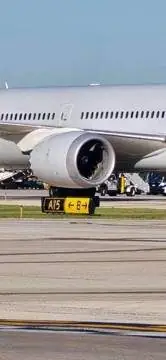
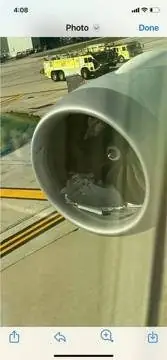
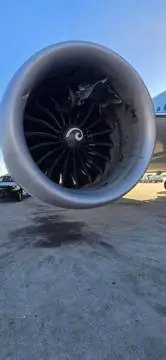
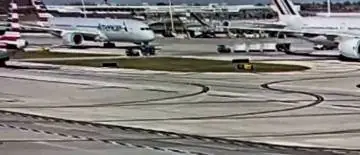 ▶ VIDEO
Still: X video preview frame, @WindyCityDriver on X
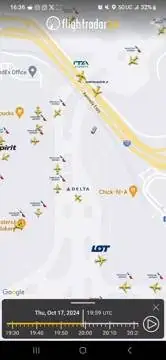 ▶ VIDEO
Still: X video preview frame, @WindyCityDriver on X
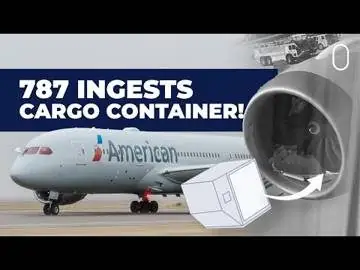 ▶ VIDEO
Still: YouTube thumbnail, Simple Flying
| Airline / operator | KLM Cityhopper |
|---|---|
| Aircraft (type, registration) | KLM Cityhopper Embraer ERJ-190STD (PH-EZL) |
| Category (my classification) | FOD ingestion |
| What happened | During pushback for flight KL1341 Schiphol - Billund, an airport employee on the platform committed suicide by jumping into one of the aircraft engines. The passengers of the aircraft were evacuated, no injuries were reported among passengers or crew. |
| Injuries | 1 fatal (airport-company employee); ruled a suicide. No passenger or crew injuries. |
| Damage | Minor |
| Official investigation | Royal Netherlands Marechaussee concluded on 30 May 2024 that the man, an employee of a company at the airport, deliberately climbed into the engine (suicide). The aircraft had just completed pushback and was about to taxi. Report / investigator link(s): https://english.marechaussee.nl/latest/news/2024/05/30/investigation-into-fatal-incident-at-schiphol-airport-concluded |
| Source | Aviation Safety Network (ASN) entry: https://aviation-safety.net/wikibase/388520 Further sources listed on that page / found: https://news.klm.com/statement-on-fatal-incident-at-schiphol/ https://www.bbc.com/news/articles/c0dd9pxnd0lo https://www.gva.be/cnt/dmf20240529_95233627 https://www.ad.nl/binnenland/persoon-komt-op-schiphol-in-draaiende-vliegtuigmotor-en-overlijdt-passagiers-z… https://www.luchtvaartnieuws.nl/nieuws/categorie/3/airports/incident-met-vliegtuigmotor-schiphol-was-zelfdo… |
| Note | Intentional act per the Marechaussee. |
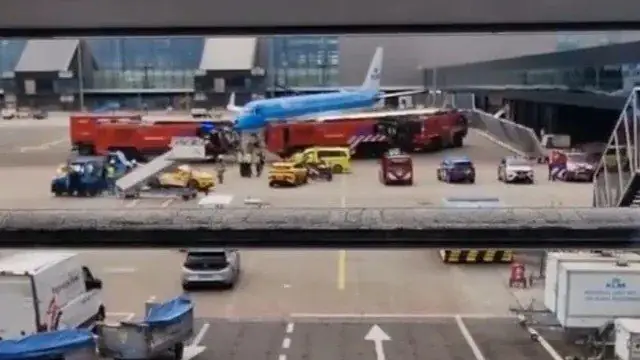
| Airline / operator | Cathay Pacific |
|---|---|
| Aircraft (type, registration) | Cathay Pacific Airbus A350-1000 (B-LXF, MSN 233), flight CX383 to Zurich |
| Category (my classification) | FOD ingestion |
| What happened | About 30 minutes before Cathay Pacific flight CX383 from Hong Kong to Zurich was due to depart, just after midnight on 3 April 2024, a worker refuelling A350-1000 B-LXF saw foreign objects in an engine and told the captain. After an engineer checked the engine, the aircraft was taken out of service for repair. Passengers flew on another A350, about 2 hours 20 minutes late (AeroTime). FL360aero's post on X places the objects in the No. 2 engine exhaust area, and gives the flight as CX373 and as cancelled; the news reports give CX383 and a delayed departure on a replacement aircraft. |
| Injuries | None |
| Damage | Engine needed repair before further flight (worker's post, quoted by AeroTime); extent not stated. |
| Official investigation | No public investigation found. |
| Source | AeroTime, 11 Apr 2024: https://www.aerotime.aero/articles/cathay-pacific-ground-worker-finds-foreign-objects-in-a350-before-takeoff Further sources listed on that page / found: https://viewfromthewing.com/cathay-pacific-worker-discovers-foreign-objects-in-airbus-a350-engine-minutes-b… https://x.com/fl360aero/status/1778449700196139270 |
| Note | The worker's Facebook post (later deleted) says the objects were "left in the engine"; no source says how they got there. Moved from the exclusions list into the FOD section on 29 Oct 2026. |
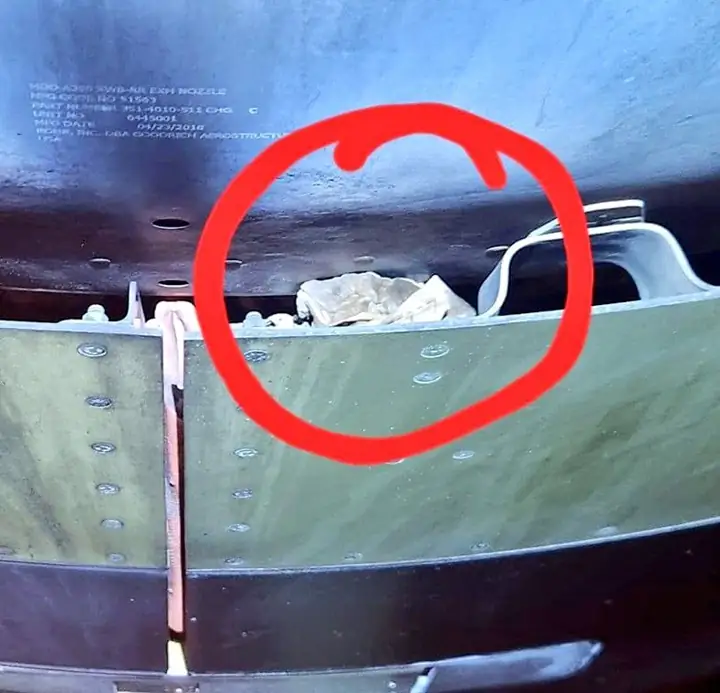
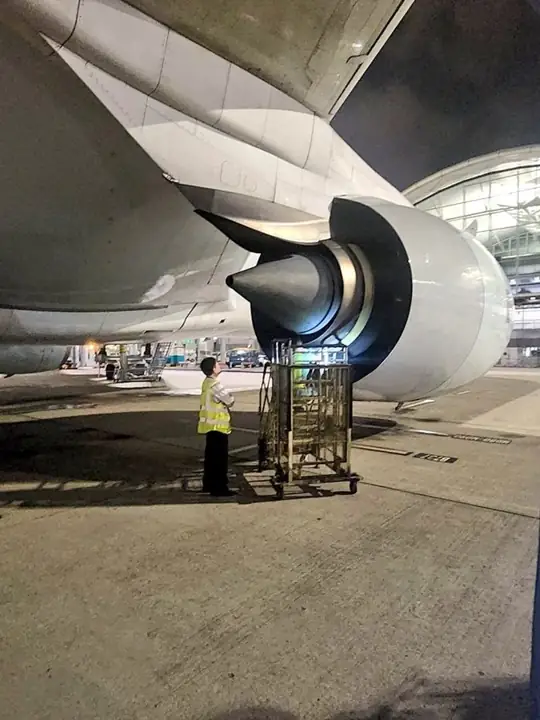
| Airline / operator | Flair Airlines |
|---|---|
| Aircraft (type, registration) | Flair Airlines Boeing 737-86J (WL) (C-FFLJ) |
| Category (my classification) | FOD ingestion |
| What happened | Flair Airlines flight F81621, a Boeing 737-86J, declared an emergency while pushing back from the gate after one of the engines ingested an absorbent pad. The aircraft was towed back to the gate and the passengers were deplaned. |
| Injuries | ASN lists 0 fatalities. No injury statement in the ASN narrative. |
| Damage | Not stated |
| Official investigation | No investigation details on the ASN entry. |
| Source | Aviation Safety Network (ASN) entry: https://aviation-safety.net/wikibase/348797 |
| Airline / operator | Frontier Airlines |
|---|---|
| Aircraft (type, registration) | Frontier Airlines Airbus A320-251N (N349FR) |
| Category (my classification) | FOD ingestion |
| What happened | Frontier Airlines flight F92424, an Airbus A320-251N, ingested a hose in the no.1 engine at the gate at Cleveland-Hopkins International Airport, OH (CLE). An Air Conditioning Unit was placed in the shadowbox. |
| Injuries | ASN lists 0 fatalities. No injury statement in the ASN narrative. |
| Damage | Not stated |
| Official investigation | No investigation details on the ASN entry. |
| Source | Aviation Safety Network (ASN) entry: https://aviation-safety.net/wikibase/343319 |
| Airline / operator | Delta Air Lines |
|---|---|
| Aircraft (type, registration) | Delta Air Lines Airbus A319-114 (N370NB) |
| Category (my classification) | FOD ingestion |
| What happened | Delta Air Lines flight DL1111, an Airbus A319-114, was approaching the gate, or at the gate at San Antonio International Airport, TX (SAT), when a ground worker was ingested into engine no.1. The man was fatally injured. It was determined that he had intentionally stepped in front of the engine. |
| Injuries | 1 fatal (Unifi ground worker); ruled a suicide. |
| Damage | Minor |
| Official investigation | NTSB did not open an investigation ("no operational safety issues with either the airplane or the airport"). Bexar County Medical Examiner ruled the death a suicide; OSHA accident summary 157531.015 records an intentional act. Report / investigator link(s): https://www.osha.gov/ords/imis/accidentsearch.accident_detail?id=157531.015 |
| Source | Aviation Safety Network (ASN) entry: https://aviation-safety.net/wikibase/315898 Further sources listed on that page / found: https://www.npr.org/2023/06/26/1184281638/airport-worker-engine-ingestion-delta-san-antonio-texas-unifi https://apnews.com/article/airport-worker-death-jet-engine-f5fdfcbc5c595319963e49e9b0080d20 https://www.kiro7.com/news/trending/san-antonio-international-airport-worker-killed-after-being-ingested-in… https://www.cbsnews.com/news/san-antonio-airport-worker-dead-ingested-plane-engine/ |
| Note | Intentional act per the medical examiner and OSHA. The aircraft was taxiing to the gate on one engine (NTSB statement quoted by NPR/CNN). |
| Airline / operator | American Eagle, opb Envoy Air |
|---|---|
| Aircraft (type, registration) | American Eagle, opb Envoy Air Embraer ERJ-175LR (ERJ-170-200 LR) (N264NN) |
| Category (my classification) | FOD ingestion |
| What happened | After an uneventful flight, Envoy Air flight 3408 (dba American Eagle) taxied with both engines operating to its assigned gate and parked at Montgomery Regional Airport, Montgomery, Alabama. The No. 1 (left) engine was still operating while they waited on ground power due to an inoperative auxiliary power unit (a minimum equipment list item). Shortly after arriving at the gate, the captain saw a “FAIL” symbol on his engine display, felt the airplane shake violently, and noticed that the left engine had shut down. The flight crew subsequently determined that one of the ramp agents had been ingested into the No. 1 engine. Ramp agents from Piedmont Airlines were responsible for supporting airplanes after arrival at the airport. Before the accident airplane arrived, the ramp agents discussed each person’s role and the safety precautions that were to be taken, which included maintaining a position away from the airplane until the engines had spooled down and the red beacon lights were turned off (except when the lead ramp agent had to approach the airplane to chock the nosewheel). Security video showed at least one of the red beacon lights was still on when the accident ramp agent walked directly in front of the left engine before being ingested into the engine. This investigation evaluated the accident ramp agent’s training and American Eagle’s procedures, her medical conditions and toxicology results, and her judgment. In addition, the investigation considered the result of the company’s drug and alcohol use policy and the benefit of classifying ramp personnel as a safety-sensitive position regarding federal drug and alcohol testing requirements. Ramp Training and Operator Procedures The accident ramp agent completed new-hire ramp training in December 2021 and recurrent training in September 2022. The training included a discussion about jetblast and ingestion zones and procedures for safely approaching an engine. The American Eagle Ground Operations Manual, which provided guidance to ground personnel supporting American Eagle regional flights, also specified jetblast and ingestion zones, engine spool down, procedures for approaching an airplane, and the importance of waiting until the airplane’s red beacon lights were turned off before doing so. The manual also stated that a ramp agent should never pass under the fuselage to move from one side of the airplane to the other. According to the lead ramp agent on the day of the accident, ramp personnel were required to stay 15 ft away from an engine, consistent with guidance in the American Eagle Ground Operations Manual. The accident ramp agent should have been familiar with the company’s ramp safety policy because her position required her to continuously work around jet-powered airplanes. The 15-ft guidance provided a buffer that was almost two times the airplane manufacturer’s boundary for the inlet hazard area (8.3 ft). In addition, the lead ramp agent ensured that the accident ramp agent participated in the safety huddle and understood her duties while providing ground support for the Envoy Air airplane. Notably, he tried to warn her, while she was at the back of the airplane, to move away from the operating engine. Thus, the accident ramp agent’s training and the operator’s procedures were not factors in this accident. Medical Conditions and Toxicology Results The accident ramp agent had relapsing-remitting multiple sclerosis, which can adversely affect cognition, including executive functioning, information processing, and working memory. Although no cognitive impairment was documented at the ramp agent’s most recent neurology visits, she had a substantial risk of such impairment because of her condition. This investigation was unable to determine whether she was experiencing a multiple sclerosis flare at the time of the accident. The accident ramp agent also had diabetes that was treated with medications, including insulin. People with medication-treated diabetes are at risk for both abnormally high (from diabetes) and abnormally low (from medication effects) blood glucose. The ramp agent’s postmortem urine glucose result was normal; thus, she was not likely experiencing a major metabolic disturbance from extreme high blood sugar at the time of the accident. The investigation was unable to determine, from the available evidence, whether the ramp agent was experiencing milder high blood sugar effects (such as fatigue) or low blood sugar effects (such as diminished concentration). The ramp agent’s toxicology testing detected delta-9-THC and its metabolites, indicating that she had used a cannabis product. Cannabis has the potential to cause cognitive and psychomotor impairment and can worsen cognitive impairment in individuals with multiple sclerosis. However, a person’s blood concentration of delta-9-THC does not directly predict that person’s impairment. Details of the ramp agent’s cannabis use, including dose, route, timing, and specific effects, could not be determined from the available toxicological evidence. The ramp agent’s toxicology testing also detected carboxy-delta-8-THC, a non-psychoactive metabolite of delta-8-THC (which was not detected). This result indicated that the ramp agent had likely used a product containing chemically synthesized delta-8-THC given that very little delta-8-THC occurs naturally in the cannabis plant. However, because no delta-8-THC or psychoactive metabolite of delta-9-THC was detected in the ramp agent’s blood, she was not likely impaired by delta-8-THC effects at the time of the accident. Ramp Agent’s Judgment Multiple cues were available to the accident ramp agent to indicate that the left engine was running. These cues included the airplane’s red beacon lights, which were on and visible; the sound of the operating engine, which would have been discernible, even with the ear protection that the ramp agents were wearing; and the accident ramp agent’s encounter with the left engine’s jetblast (as shown on security video) when placing the safety cone at the tail of the airplane. Therefore, the accident ramp agent was likely aware that the left engine was still operating. However, the accident ramp agent’s actions on the day of the accident were not consistent with those that would be expected for someone in that position. No task on the day of the accident or on any day that accident ramp agent worked would have placed her in front of the left wing and engine. The accident ramp agent’s decision to walk in front of the engine, despite operating engine cues, was also inconsistent with her training and the briefings that she received before the airplane landed. The accident ramp agent’s records showed no previous instances in which she was within the engine ingestion zone while an engine was operating, and, as previously stated, the lead ramp agent reported that he tried to alert her that the left engine was still operating. The accident ramp agent’s behavior at the time of the accident demonstrated that her judgment was deficient. Given her identified medical and toxicological cognitive risk factors, the ramp agent’s deficient judgment was likely due to cognitive impairment. The extent to which individual cognitive risk factors, such as the ramp agent’s multiple sclerosis and cannabis use, contributed to this impairment could not be determined based on the available evidence. Company Policy on Drug and Alcohol Use Piedmont Airlines had a company drug and alcohol policy that prohibited employees from reporting to work in a condition that would impair satisfactory work performance due to drugs or alcohol. The ramp agent acknowledged this policy electronically on November 10, 2021. However, toxicology results showed that the accident ramp agent had used a cannabis product at some point before her work shift. Thus, the company policy did not deter the accident ramp agent’s from working in a potentially impaired condition. The Department of Transportation does not consider ramp personnel positions to be safety sensitive, so the company was not required to provide mandatory drug and alcohol training and perform required drug and alcohol testing, including random testing on its ramp personnel. If these positions had been classified as safety sensitive, the accident ramp agent would have been subject to federally required drug testing, and the company might have been able to detect the accident ramp agent’s use of cannabis and take appropriate action in response, including removing her from safety-sensitive functions. Probable Cause: The ramp agent’s cognitive impairment, which resulted in her (1) inconsistent behavior with trained procedures and pre-landing briefings, (2) presence on the left side of the airplane while the left engine was still operating, and (3) subsequent ingestion into the engine. |
| Injuries | 1 fatal (Piedmont Airlines ramp agent), 63 uninjured (NTSB). |
| Damage | Minor |
| Official investigation | NTSB investigation DCA23LA109, final report published (Dec 2024). Defining event: "Prop/jet/rotor blast/suction". The engine was left running at the gate because the APU was inoperative (MEL item). Report / investigator link(s): https://data.ntsb.gov/carol-repgen/api/Aviation/ReportMain/GenerateNewestReport/106517/pdf https://data.ntsb.gov/Docket?ProjectID=106517 https://aviation-safety.net/wikibase/305466 |
| Source | Aviation Safety Network (ASN) entry: https://data.ntsb.gov/carol-repgen/api/Aviation/ReportMain/GenerateNewestReport/106517/pdf Further sources listed on that page / found: https://data.ntsb.gov/Docket?ProjectID=106517 https://aviation-safety.net/wikibase/305466 https://www.wsfa.com/2023/01/01/montgomery-airport-worker-killed-industrial-accident/ https://www.paddleyourownkanoo.com/2023/01/01/american-airlines-ground-worker-reportedly-killed-in-horrific… https://flightaware.com/live/flight/N264NN/history/20221231/1944Z/KDFW/KMGM |
| Cross-reference | Moved from 'Ramp worker injury' to the FOD ingestion section. |
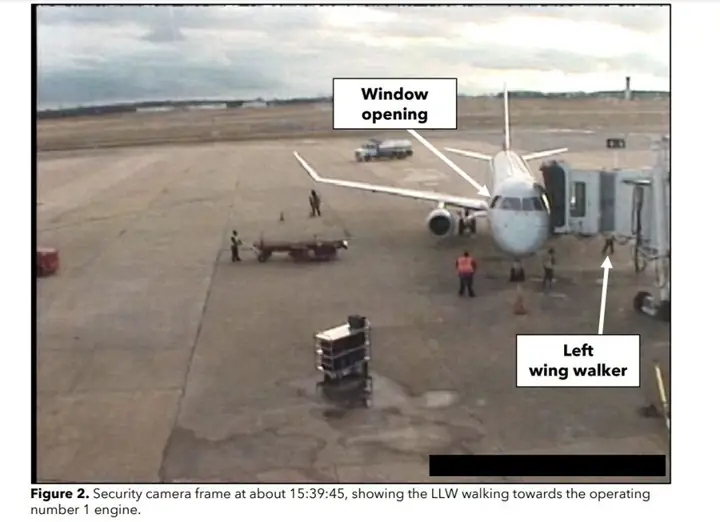
 ▶ VIDEO
Still: X video preview frame, @StuartBradly on X
| Airline / operator | Aeroflot Russian Airlines |
|---|---|
| Aircraft (type, registration) | Aeroflot Russian Airlines Boeing 777-3M0ER (RA-73142) |
| Category (my classification) | FOD ingestion |
| What happened | A Boeing 777-300ER, RA-73142, sustained damage to the no.2 engine air intake lip after a 6-step ladder was blown into the engine by the exhaust of a passing Boeing 777-300ER (RA-73142) on a taxiway. |
| Injuries | ASN lists 0 fatalities. No injury statement in the ASN narrative. |
| Damage | Minor |
| Official investigation | No investigation details on the ASN entry. |
| Source | Aviation Safety Network (ASN) entry: https://aviation-safety.net/wikibase/280541 Further sources listed on that page / found: https://t.me/aviaincident/16060 |
| Airline / operator | Kalitta Air |
|---|---|
| Aircraft (type, registration) | Kalitta Air Boeing 747-4B5F (N716CK) |
| Category (my classification) | FOD ingestion |
| What happened | The aircraft experienced a FOD ingestion to the no.3 engine during taxi for departure at Cincinnati, KY. The flight was subsequently able to depart 3,5 hours later. |
| Injuries | ASN lists 0 fatalities. No injury statement in the ASN narrative. |
| Damage | Not stated |
| Official investigation | No investigation details on the ASN entry. |
| Source | Aviation Safety Network (ASN) entry: https://aviation-safety.net/wikibase/246832 |
| Airline / operator | Spirit Airlines |
|---|---|
| Aircraft (type, registration) | Spirit Airlines Airbus A320-271N (N903NK) |
| Category (my classification) | FOD ingestion |
| What happened | An Airbus A320neo of Spirit Airlines, N903NK, was pulling into the gate after landing at Fort Lauderdale International Airport when an air conditioner duct hose from the jet bridge was ingested into the no.1 engine. The aircraft had arrived from Pittsburgh and was arriving at gate F2 (Terminal 3). |
| Injuries | ASN lists 0 fatalities. No injury statement in the ASN narrative. |
| Damage | Not stated |
| Official investigation | No investigation details on the ASN entry. |
| Source | Aviation Safety Network (ASN) entry: https://aviation-safety.net/wikibase/233316 Further sources listed on that page / found: http://www.goklerdeyiz.net/ucagin-motoru-klima-hortumunu-emdi/ |
| Airline / operator | WestJet |
|---|---|
| Aircraft (type, registration) | WestJet Boeing 737-6CT (C-GBWS) |
| Category (my classification) | FOD ingestion |
| What happened | A Boeing 737-600 aircraft operated by WestJet Airlines, was conducting flight WS557 from Kitchener/Waterloo, ON (CYKF) to Calgary, AB (CYYC) with 5 crew members and 76 passengers on board. As the aircraft was taxiing into the arrival gate position on the lead in line at CYYC, a safety cone was ingested into the #1 engine (CFM International, CFM56-7B22). The flight crew immediately shut the engine down. There were no injuries to any ground personnel and damage to the aircraft was limited to the #1 engine. The aircraft was removed form service for maintenance investigation. The #1 engine was replaced with serviceable unit and the aircraft returned to service. |
| Injuries | ASN lists 0 fatalities. There were no injuries to any ground personnel and damage to the aircraft was limited to the #1 engine. |
| Damage | Minor |
| Official investigation | No investigation details on the ASN entry. |
| Source | Aviation Safety Network (ASN) entry: https://aviation-safety.net/wikibase/219349 |
| Airline / operator | Singapore Airlines |
|---|---|
| Aircraft (type, registration) | Boeing 777-212ER (9V-SRP), flight SQ421 from Mumbai |
| Category (my classification) | FOD ingestion Earlier cases (pre-2016, photo evidence) |
| What happened | While docking at bay F37 the no.1 engine ingested an empty LD3 baggage container. The aircraft was repaired and returned to service on 22 Dec 2013. |
| Injuries | None reported. |
| Damage | Substantial (engine). |
| Time out of service | 9V-SRP: 3 days (ASN) |
| Official investigation | Investigated by the AAIB Singapore. |
| Source | Aviation Safety Network (ASN) entry: https://aviation-safety.net/wikibase/162840 |
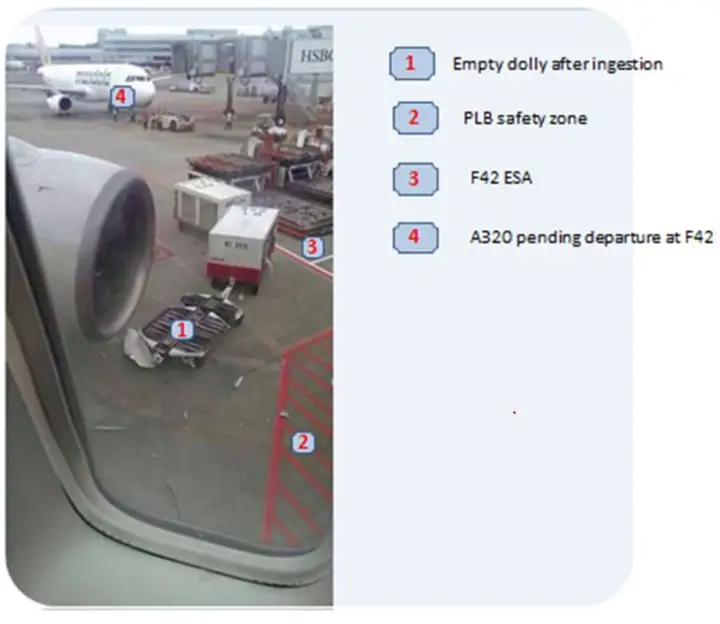
Video: https://wheeltug-collisions.netlify.app/videos/GC-0645_1.mp4
Video and still: Supplied by WheelTug.
These four clips are not matched to a dated incident, so they are not counted as incidents. They show engine intake suction on the ground: snow and water drawn into inlets by a ground vortex while taxiing, and a ground worker near a running engine at the gate.
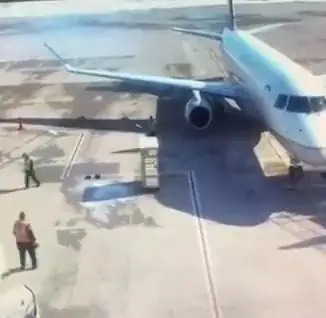 ▶ VIDEO
Still: frame at 21 s, as shared with WheelTug. TikTok watermark "@upnorthwisconsinmike".
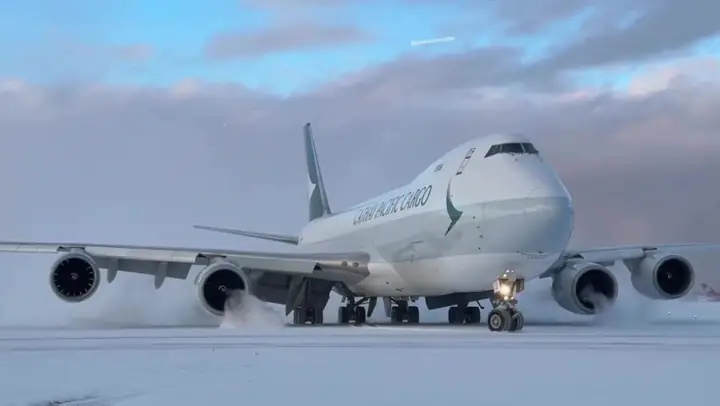 ▶ VIDEO
Still: frame at 15 s, as shared with WheelTug. Watermark reads "@klotenohareaviation" (as legible).
 ▶ VIDEO
Still: frame at 90 s, as shared with WheelTug. No watermark visible.
 ▶ VIDEO
Still: frame at 13 s, as shared with WheelTug. No watermark visible.
References and resources
References
EUROCONTROL & ACI EUROPE Sustainable Taxiing Taskforce, "Sustainable Taxi Operations: Concept of Operations & Industry Guidance", Edition 1.0, 29 March 2024, https://www.eurocontrol.int/publication/sustainable-taxi-operations. Pages cited in this report: p. 25, p. 26, p. 27, p. 41, p. 80.
Ground-safety discussions
Public videos and discussion threads on pushback, towing and ramp safety found during the photo search. They are background reading, not incidents, and are not counted.
| Platform | Title | Author | Date | Summary |
|---|---|---|---|---|
| Injuries seem constant | author/date not retrieved (Reddit rate-limited) | not retrieved | Ramp agents discuss how frequent on-the-job injuries are. (summary from search snippet) | |
| SWA ramp worker injured | author/date not retrieved (Reddit rate-limited) | not retrieved | Thread about a Southwest ramp worker injured on the job. (summary from search snippet) | |
| Injuries | author/date not retrieved (Reddit rate-limited) | not retrieved | Ramp agents share injury experiences and the safety culture behind them. (summary from search snippet) | |
| Wingwalkers, stand where I can see you! | u/MooKids | 2026-04-27 | A pushback operator complains that wingwalkers keep standing out of sight, so he cannot tell whether the push is clear. | |
| Someone does not have a job anymore | u/Maverick0528 | 2025-05-17 | A ramp employee posts a ground-damage aftermath and the thread discusses accountability for ramp collisions. | |
| After having to constantly remind our agents to maintain a visual contact during pushback, I made something to seal the deal (in Flight Simulator) | u/HardpointNomad | 2023-03-31 | A trainer uses a Flight Simulator visual to drill visual contact between crew and tug during pushback. | |
| Is ramp agent a dangerous job? | u/CrazySteveCGY | 2023-01-05 | A new ramp hire asks how dangerous the job is; replies cover engine ingestion, jet blast and vehicle hazards. | |
| YouTube | 5 Tiny Mistakes on the Ground That Turned Flights Into Nightmares | AeroDecoded | 2026-10-24 | Roundup of small ground-handling errors (towing, pushback, clearance) that caused serious incidents. |
| YouTube | Wing Walkers vs Radio Can VHF Communication Make Ramp Operations Safer | Talking Radio | 2026-09-06 | Discusses whether VHF radio links between wingwalkers and tug drivers would make ramp operations safer than hand signals. |
| YouTube | Addressing the Rise in Aviation Ground Damage (ft. Special Guest Jermaine Cadogan) | Only Human with Dr. Tony Kern | 2025-07-29 | Human-factors podcast on the rising rate and cost of aircraft ground damage, with a ground-ops guest. |
| YouTube | A Complex Choreography: The Anatomy Of The Pushback | Long Haul by Simple Flying | 2023-06-22 | Explainer on how a pushback is choreographed between flight deck, tug driver and wingwalkers, and where it goes wrong. |
| YouTube | Ingestion Zone | Ramp Worker Sucked into Jet Engine | Lady and the Ramp | 2023-01-07 | Ramp-worker channel on engine ingestion-zone hazards after a ramp worker was killed by an engine. |
| YouTube | Aircraft Pushback Safety – United Airlines Aircraft Pushback Accident Case Study Presentation | The Airport School | 2022-12-08 | Case study of a United pushback accident (tail collision at SFO, 2008) and the lessons for pushback crews. |
| YouTube | ASI Safety Tip: Marshalling Signals | Air Safety Institute | 2019-05-02 | AOPA Air Safety Institute tip on standard marshalling signals and taxiing safely around ramp staff. |
| YouTube | Think Safe. Choose Safe. Be Safe: Jet Blast | UPS Airlines | 2017-11-21 | UPS Airlines safety video on jet-blast hazards for ramp staff. |
| YouTube | Safe Tug & Tow Operations: Phraseology and Communications | FAASTeam - Safety Videos Archive -Unofficial- | 2017-08-29 | FAA Safety Team training on phraseology and communications for tug and tow operations. |
| YouTube | Boeing Jet Blast | Swissport UK&I Training | 2015-09-19 | Swissport training clip that demonstrates Boeing jet-blast force on the ramp. |
| YouTube | Wingwalker: Aircraft Collision Avoidance on the Ground | TrinityResearch | 2010-06-21 | Training on wingwalker duties for avoiding ground collisions; cites the Flight Safety Foundation estimate of about $10B/yr in ground damage. |
Exclusions
Records reviewed and left out of the report. They stay in the master data file with the reason shown. In addition, 389 pre-2016 records are excluded with the reason "pre-2016, no photo" (Incidents before 2016 are only included in cases where we have photo evidence.). The earlier screening exclusions of service vehicles and jet bridges striking parked aircraft are described in the Methodology section.
| ID | Date | Airport | Operator / aircraft | Reason |
|---|---|---|---|---|
| GC-0642 | 2026-03-22 | New York-La Guardia Airport, NY (LGA/KLGA) - United States of America | Air Canada Express, opb Jazz Aviation (CRJ-900LR C-GNJZ) / Port Authority ARFF vehicle Rescue 35 | Landing-roll collision with an airport fire truck crossing the runway (NTSB DCA26MA161). Excluded on WheelTug's judgment that WheelTug Vision probably would not have helped. |
| GC-0498 | 2026-02-07 | Philadelphia International Airport, PA (PHL/KPHL) - United States of America | Southwest Airlines | Wind-blown cart struck the aircraft; wind-blown object cases are excluded. |
| GC-0495 | 2026-01-14 | Brisbane International Airport, QLD (BNE/YBBN) - Australia | Alliance Airlines | Not a ground collision: brake-disc debris found after pushback; aircraft returned. |
| GC-0464 | 2025-06-12 | Amsterdam-Schiphol International Airport (AMS/EHAM) - Netherlands | Air France | Not a ground collision: smoke from a passenger power bank in the cabin at the gate. |
| EXCL-04 | 2025-03-23 | London Heathrow (LHR) | United Airlines / British Airways | Takeoff-thrust jet blast at the runway; WheelTug does not change takeoff thrust. |
| EXCL-03 | 2024-07-02 | Chabahar-Konarak Airport (ZBR/OIZC) - Iran | Varesh Airlines | Maintenance engine run, not taxi or pushback; WheelTug does not change maintenance engine runs. |
| GC-0294 | 2022-11-11 | O. R. Tambo International Airport (JNB/FAOR), Johannesburg - South Africa | South African Airways - SAA | Duplicate of GC-0293 (same JNB event, 11 Nov 2022); merged into GC- 0293. |
| GC-0267 | 2022-07-03 | Colombo-Bandaranaike International Airport (CMB/VCBI) - Sri Lanka | THY Turkish Airlines | Container pushed by strong wind into a parked aircraft; WheelTug/WTV would not have changed this. |
| GC-0228 | 2021-06-24 | Toronto–Lester B. Pearson International Airport, Ontario (YYZ) - Canada | Air Canada | Not a ground collision: engine fire warning during taxi (generator fault). |
| GC-0223 | 2021-05-21 | Chicago-O'Hare International Airport, IL (ORD/KORD) - United States of America | Southwest Airlines | Duplicate of GC-0222 (same MDW event, 21 May 2021); merged into GC- 0222. |
| GC-0080 | 2018-05-19 | Dublin Airport (DUB/EIDW) - Ireland | Ryanair / Aer Lingus | Departure-queue near-miss with no contact (taxi congestion/queueing); taxi congestion cases are excluded. |
| EXCL-02 | 2017-10-28 | Auckland International Airport (AKL/NZAA) - New Zealand | Jetstar Airways | Clipboard left in the cowling; it would have been ingested at any engine start, so WheelTug would not have prevented it. |
| GC-0053 | 2017-10-02 | Chicago-Midway Airport, IL (MDW/KMDW) - United States of America | Southwest Airlines | Runaway (unmanned) baggage tug struck a parked aircraft during boarding; WheelTug/WTV would not have changed this. |
| EXCL-01 | 2017-07-12 | Sint Maarten Princess Juliana (SXM), Maho Beach fence | Not identified (Boeing 737 per NZ Herald via | Takeoff-thrust jet blast at Maho Beach; WheelTug does not change takeoff thrust. |
| GC-0003 | 2016-10-30 | Belfast City Airport (BHD/EGAC) - United Kingdom | Flybe | Not a ground collision: APU exhaust-duct fault and precautionary disembarkation at the stand. |
| XN-0006 | 2016-06-15 | Madrid-Barajas Adolfo Suárez Airport (MAD/LEM | Air Europa | Not a ground collision: technician fell from the aircraft during maintenance. |
| XN-0009 | 2016-05-15 | Tel Aviv-Ben Gurion International Airport | Ukraine International Airlines | Jet bridge struck a parked aircraft (jet-bridge exclusion rule). |
| XN-0003 | 2016-03-31 | Melbourne International Airport, VIC (MEL/YMM | Malaysia Airlines | Aircraft rolled back into the aerobridge after the park brake was released with no chocks, before the tow tractor was attached; not a taxi, tow or pushback collision. |
| XN-0008 | 2016-03-25 | Karachi-Jinnah International Airport (KHI/OPK | Pakistan International Airlines - PIA | Jet bridge struck a parked aircraft (jet-bridge exclusion rule). |
| XN-0004 | 2016-02-23 | Sapporo-New Chitose Airport (CTS/RJCC) - Japa | Japan Airlines (JAL) | Not a ground collision: engine tailpipe fire and evacuation. |
| XN-0005 | 2016-02-04 | København-Kastrup Airport (CPH) - Denmark | Scandinavian Airlines System - SAS, opb Cimbe | Engine test run with a tractor standing by (maintenance run); WheelTug does not change maintenance engine runs. |
| XN-0007 | 2016-01-30 | Toronto–Lester B. Pearson International Airpo | Air Canada | Runway incursion without a ground collision (call-sign confusion). |
| XN-0002 | 2016-01-03 | Chicago-O'Hare International Airport, IL | United Express, opb GoJet Airlines | Vehicle struck a parked aircraft (parked-vehicle exclusion rule). |
| XN-0001 | 2015-12-15 | Nashville International Airport, TN (BNA) | Southwest Airlines | Pre-2016: taxiway excursion into a ditch, not a collision or near-collision. |
Further exclusions from the October 2026 review
Parked aircraft struck by a vehicle, stairs or jet bridge (WheelTug/WTV would not have changed these): Birmingham TUI (stairs); Moscow-Domodedovo A6-EDM; Moscow-Sheremetyevo (airstair); Milan-Malpensa PT-MUE; Sydney Qantas (airbridge); Bengaluru, Apr 2025; Manchester Emirates A380 A6-EVP (fuel truck); Paris-CDG A6-EDO; New York-JFK G-VDOT; St Petersburg RA-73229; Abidjan OO-SFG; Aberdeen G-TTNN; Chicago-O'Hare N75425; Luanda 9H-FOX; Riyadh HZ-FAP; San Francisco XA-DRA; Memphis Southwest; Dallas-Fort Worth (fuel truck); Newark El Al LY28, Apr 2026 (jet bridge); Santiago de Compostela Ryanair, Aug 2024 (PRM ambulift).
Remainder of a ramp-incident montage posted 4 Oct 2025 (five clips from it are cards GC-0635 to GC-0639): clips with vehicles only and no aircraft (2); parked aircraft hit by a vehicle or jet bridge (4); wind-blown (2).
Military: P-8A Poseidon, Kaneohe Bay; Iranian C-130.
Not a ground collision: Dallas-Fort Worth Iberia aircraft stuck on a taxiway; Malta Dash 8 runaway; Charlotte ATC readback video; Aeroflot grounding cable; Manchester G-EILA tyres; Newark United light pole, 3 May 2026 (struck on final approach; airborne, not a ground movement).
Left out because they could not be verified: Newcastle Geodis G-EODS, 20 Dec 2023; three further reports without a checkable source.
Methodology and gaps
Period. The main period is 1 Jan 2016 to 29 Oct 2026 (Jan–Sep 2016 was added in this edition after a manual review of each ASN entry). Incidents before 2016 are only included in cases where we have photo evidence. Pre-2016 entries without a photo, and pre-2016 entries without at least a month and year, are kept in the master data file but not shown. Sources. The core set is ASN Wikibase ground-phase occurrences (standing, pushback/towing, taxi), each read from its ASN page. Added to this: incidents from earlier monthly sweeps that were found in news or investigator releases, jet-blast events from investigator and news sources, and further incidents reported in the news that a public source confirmed. ASN entries describing the same event (one per aircraft) were merged. Scope. The report covers collisions and near-misses involving a moving aircraft (taxi, pushback, tow, or blast from a running engine), plus ramp-worker injuries around moving aircraft and running engines. My screening left out two groups as outside WheelTug's operating case: about 167 ASN entries where a service vehicle hit a parked, stationary aircraft, and about 35 where a jet bridge hit a parked aircraft. Both counts are approximate. Runway incursions and in-flight events are excluded. Categories. Each incident has one top-level category (Human factors, Equipment failure, Cause not stated, Ramp worker injury, Poor-visibility taxi, Jet blast, FOD ingestion); Human factors and Equipment failure have sub-categories, and a secondary tag notes ATC/marshalling or taxi-crew involvement. There is no separate maintenance category: maintenance tows are under Wing-walker / towing crew and maintenance-staff taxiing is under Taxi crew. Categories and assessments are my own reading of the published narratives, not investigator findings. Where an investigation exists, its status and report link are given as published on ASN or the investigator's site. Photos are real photos only, all credited. Every photo is credited to its original public source where one is known. Photos shared with WheelTug whose original source is not known are credited "As shared with WheelTug". Any uncertain match is flagged in the caption. Sources include images attached to X posts, news reports, investigator reports and ASN pages that cite the incident. No images were generated. JetPhotos and similar pages are linked, not copied. 321 of 637 incidents have a photo. The rest are text-only because I found no freely linkable image. Video stills are official platform frames: X video preview images, YouTube thumbnails (img.youtube.com) and Vimeo thumbnails (oEmbed), plus video-page images from Simple Flying and NBC 6; where a still is a frame from the same footage as the linked post, the caption says so. Each is credited. Some videos have no still: YouTube videos that return 403/404 (h6auUtd5lnc, Zn23kYHJ81g, L3_Z6e-ePaA, lKybAxJAorQ, tKjnUxb4IoE, 0Yu1CGSNW_c, HIJtCt-zLRw, i9_MMozoF_M, _4c6uTa_c2k, 6Ab5x_C-CFg), private Vimeo "manage" links in posts, Fox News/ABC7/Telegraf.rs embeds, and the Amerijet Aruba video (Instagram @24ora, exact URL not found, so not linked). These are marked "No still available". Deleted X posts. 34 X posts linked from ASN pages no longer exist, so their media could not be retrieved. Possible remaining duplicates. Merging was done by date, airport and narrative. A few events that ASN logged on different dates or under different airport spellings may still appear twice. Coverage limits. ASN is volunteer-maintained and incomplete, especially for minor ramp events outside North America and Europe, so true numbers are higher.
This edition. Added from a further review of public reports and a photo search of JACDEC, ASN and news posts: 51 new incidents, new photos and video links on existing cards, and further sources. Every new incident was checked against a public source before it was included. Photos found in the photo search are credited to their source; matches I could only partly confirm are marked "match confidence: medium".